
自由现金流策略

Search documents
3月26日议程|国泰海通“远望又新峰”2026春季策略会
国泰海通证券研究· 2026-03-25 23:46
Group 1 - The article discusses the upcoming conference focusing on various sectors including consumer services, technology, and investment strategies, highlighting the potential for growth and innovation in these areas [5][10][18]. - Key speakers from different research departments will present insights on topics such as service consumption, product innovation in beauty, and the impact of technology on household appliances [4][6][10]. - The conference aims to address the evolving landscape of consumer behavior and market dynamics, particularly in light of recent policy changes that favor traditional consumption patterns [5][6][10]. Group 2 - The event will feature discussions on the advancements in humanoid robotics and commercial aerospace, emphasizing the integration of technology in these fields [7][9][21]. - Insights into the agricultural sector will be provided, focusing on the potential for growth amidst rising commodity prices and changing market conditions [6][10]. - The conference will also explore macroeconomic trends and their implications for asset allocation strategies, particularly in a low-interest-rate environment [15][18]. Group 3 - The article outlines the significance of multi-asset allocation strategies in navigating market volatility and achieving stable returns [12][15]. - Discussions will include the role of artificial intelligence in quantitative investment strategies and the future of various commodity markets [18][19][21]. - The conference will also cover the outlook for the automotive industry, emphasizing the importance of innovation and sustainability in future developments [23][26].


与其押注单一策略,不如构建适应不同环境的全天候组合
雪球· 2026-03-12 13:01
Group 1 - The article discusses the core confusion faced by investors in the A-share market regarding which index can achieve long-term stable growth through bull and bear markets [4] - It emphasizes the underlying logic of a steadily rising A-share index, focusing on the "representativeness" and "passive tracking" of traditional broad-based indices [5] - The article highlights the potential risks of broad-based indices during economic transitions, where they may inadvertently lead to "buy high, sell low" scenarios due to their weight adjustments based on market trends [6] Group 2 - The article introduces alternative strategies such as dividend and free cash flow indices, which are designed to identify undervalued stocks based on objective financial rules rather than chasing market trends [8] - Dividend strategy focuses on selecting companies with the highest dividend yields, creating a dynamic balance that encourages buying undervalued stocks and selling overvalued ones [9] - Free cash flow strategy emphasizes the importance of cash generation over accounting profits, using free cash flow yield to select stocks, thus avoiding inflated valuations [10] Group 3 - The micro-cap stock index strategy is described as an aggressive approach that targets the lowest market cap stocks, benefiting from market inefficiencies and emotional trading by retail investors [11] - The article notes that while reverse strategies excel in bear or volatile markets, they may underperform during bull markets when growth stocks dominate [13] - It suggests that rational investors should not allocate their entire portfolio to reverse strategy indices but rather balance them with broad-based indices for optimal asset allocation [15]

自由现金流ETF一周年之际的随笔
Sou Hu Cai Jing· 2026-02-26 00:54
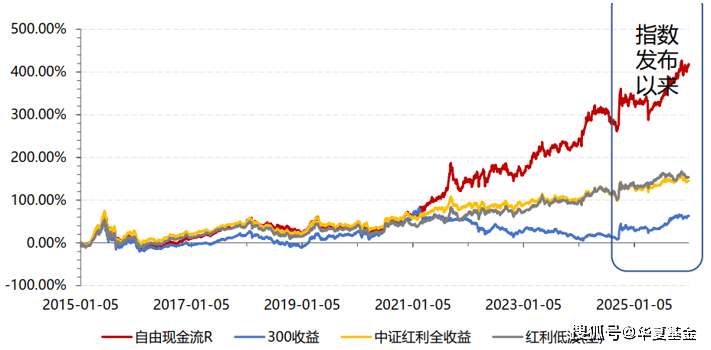
Core Viewpoint - The article emphasizes the significance of free cash flow (FCF) as a critical metric for evaluating companies, highlighting its role in ensuring sustainable dividends and investment opportunities in the context of the evolving financial market in China [1][5][27]. Group 1: Free Cash Flow Strategy - The free cash flow strategy has shown remarkable performance, with the National Free Cash Flow Index achieving an annualized return of 17.2% since its inception, significantly outperforming other indices [22][25]. - The index's performance from 2021 to 2025 indicates substantial annual growth rates, with 2024 recording a 32.44% increase and 2025 a 17.85% increase [4][24]. - The strategy focuses on companies with strong cash generation capabilities, ensuring that they can sustain dividends and reinvest in growth opportunities [8][9][11]. Group 2: Index Composition and Selection Criteria - The National Free Cash Flow Index excludes financial and real estate sectors due to their differing cash flow structures, ensuring a focus on more stable industries [16]. - Companies must meet specific criteria, including positive operating cash flow over the past three years and a free cash flow to enterprise value ratio that is positive, ensuring financial sustainability [17][19]. - The index employs a quarterly rebalancing mechanism to adapt to market conditions, enhancing its potential for excess returns by selecting undervalued stocks in growth phases [19][22]. Group 3: Market Context and Future Outlook - The article suggests that in a low-interest-rate environment, assets with stable cash flows and strong dividend potential are likely to attract long-term capital [28]. - The free cash flow strategy is positioned as a foundational approach for long-term value investing, offering a pathway to financial freedom for investors [27][28]. - The increasing adoption of free cash flow strategies among Chinese investors reflects a growing recognition of the importance of cash flow in investment decisions [29].
高股息资产作为长期底仓的配置逻辑依然坚固,聚焦自由现金流ETF(159201)配置价值
Mei Ri Jing Ji Xin Wen· 2026-02-24 02:25
Core Viewpoint - The A-share market opened significantly higher on the first trading day of the Year of the Horse, with the National Index of Free Cash Flow rising over 2.5%, led by stocks such as Silver Nonferrous, Furuitec, and Fenghuo Communication [1] Group 1: Market Performance - The largest free cash flow ETF (159201) has seen a continuous net inflow of funds totaling 1.732 billion yuan over the past nine days [1] - The latest share count of the free cash flow ETF reached 10.627 billion shares, with a total scale of 13.839 billion yuan [1] Group 2: Investment Strategy - Tianfeng Securities believes that historically, small-cap growth styles tend to outperform after holidays, and this trend may still be evident this year, although its strength may be constrained by two factors: the strong performance of large-cap growth stocks in a favorable industry environment and the enduring logic of "high dividend" assets as a long-term investment strategy [1] - The free cash flow strategy introduces a new paradigm for value investing, characterized by the ability to provide direct cash returns to investors and ensuring the sustainability and scale of dividends, serving as the foundation for corporate dividend payments [1] Group 3: ETF Composition - The free cash flow ETF (159201) samples the entire A-share market, with the top three industries being automotive, oil and petrochemicals, and nonferrous metals, indicating a larger market capitalization [1] - The Cash Flow 500 ETF (560120) samples the CSI 500, with the top three industries being nonferrous metals, basic chemicals, and steel, indicating a focus on mid and small-cap stocks [1]
自由现金流指数,跟红利指数有啥区别呢?该如何搭配? | 螺丝钉带你读书
银行螺丝钉· 2026-02-21 13:35
Core Viewpoint - The article discusses the emergence and investment potential of the Free Cash Flow Index, comparing it with the Dividend Index and highlighting its unique characteristics and advantages in investment strategies [6][38]. Group 1: Free Cash Flow Index Overview - The Free Cash Flow Index selects stocks with high free cash flow rates, which is a measure of the cash available after necessary expenditures [7][21]. - Free cash flow is defined as the cash generated from operating activities minus capital expenditures for maintaining or expanding the asset base [16][21]. - The Free Cash Flow Rate is calculated as free cash flow divided by enterprise value, where enterprise value includes total market capitalization, total debt, and subtracts cash and cash equivalents [18]. Group 2: Historical Performance and Characteristics - Historical performance of Free Cash Flow Indices shows high annualized returns, with the 中证全指自由现金流全收益 index achieving 19.93% and the 国证自由现金流全收益 index at 20.07% [23]. - However, there are indications that past performance may have been overly optimized, suggesting that actual future returns may not match historical data [24]. - The Free Cash Flow Index is noted for its lack of exposure to the financial sector, differentiating it from Dividend and Value Indices, which typically have a higher representation of traditional industries [33][36]. Group 3: Comparison with Dividend Index - The Free Cash Flow Index and Dividend Index share similarities in that both focus on companies with strong cash generation capabilities, but they differ in their stock selection criteria [26][38]. - Companies with high free cash flow may not necessarily distribute dividends, which can lead to their exclusion from Dividend Indices [30]. - The article suggests that combining investments in both Free Cash Flow and Dividend Indices can be a beneficial strategy, especially when both are undervalued [39].

2025登顶亚洲,中国ETF市场的“奇点之年”
2 1 Shi Ji Jing Ji Bao Dao· 2026-02-10 13:16
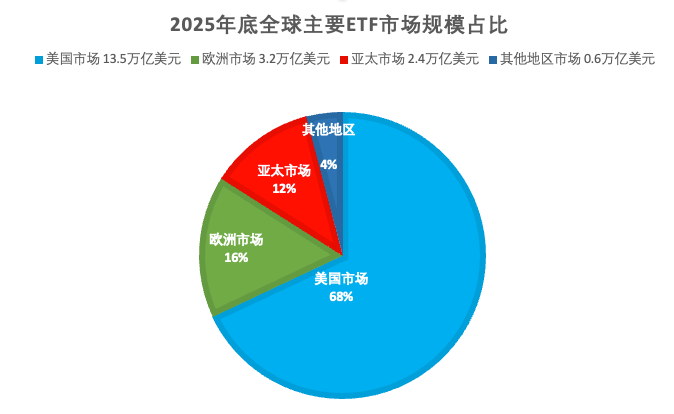
Core Insights - In 2025, China's ETF market reached a historic milestone, surpassing 6 trillion yuan, making it the largest in Asia, overtaking Japan [1][7][13] - The growth was driven by significant net inflows, particularly in bond ETFs, and a shift towards institutional investors dominating the market [2][12][28] Market Growth - By the end of 2025, the total size of the ETF market in China was 6.02 trillion yuan, with the Shanghai Stock Exchange (SSE) contributing approximately 4.22 trillion yuan and the Shenzhen Stock Exchange (SZSE) about 1.79 trillion yuan [1][8] - The SSE recorded a trading volume of 61 trillion yuan, ranking first in Asia and third globally, while the SZSE's trading volume grew by 189% to 23.17 trillion yuan [11][12] Investor Dynamics - The net inflow into the domestic ETF market exceeded 1.16 trillion yuan, with bond ETFs leading at 552.7 billion yuan [2][12] - Institutional ownership of ETFs increased significantly, with the SSE reaching 65% and the SZSE 58%, indicating a shift towards a more institutional-driven market [2][28] Product Innovation - The ETF market saw a transformation from broad-based products to more targeted offerings, including thematic ETFs focused on technology and innovation [15][16] - Bond ETFs experienced explosive growth, with their total size increasing from 173.9 billion yuan to 829 billion yuan, marking a 376% increase [18][20] Market Structure - By the end of 2025, the structure of the ETF market included 1,381 products, with stock ETFs making up 63.6% of the total size, followed by cross-border ETFs at 15.6% and bond ETFs at 13.8% [7][8] - The market's evolution reflects a growing demand for diversified investment strategies and a focus on long-term asset allocation [2][12] Regulatory and Institutional Framework - The regulatory environment has evolved to support the rapid growth of the ETF market, with new rules and mechanisms introduced to enhance liquidity and investor protection [29][30] - The market is transitioning towards a more institutionalized structure, with a focus on long-term capital and risk management [28][29] Future Outlook - The future of the ETF market in China is expected to focus on building a sustainable ecosystem that attracts long-term capital, emphasizing product innovation and regulatory balance [33]
2026年有望迎来上市公司盈利增长的拐点,聚焦自由现金流ETF(159201)配置价值
Mei Ri Jing Ji Xin Wen· 2026-02-10 07:03
Core Insights - The A-share market is experiencing fluctuations, with the Guozheng Free Cash Flow Index rebounding after hitting a low, led by stocks such as China Power, Qianjin Pharmaceutical, Fenghuo Communication, and Pinggao Electric [1] - The largest free cash flow ETF (159201) has seen a continuous net inflow of funds totaling 989 million yuan over the past five days, reaching a new high in both share count at 10.063 billion and total scale at 13.206 billion yuan [1] - Analysis of all A-share listed companies (excluding financial stocks) indicates an improving trend in fundamentals, with a potential turning point for profit growth expected in 2026 due to the expansion of AI technology applications and the implementation of "anti-involution" policies [1] Free Cash Flow Strategy - The free cash flow strategy introduces a new paradigm for value investing, characterized by the ability to provide direct cash returns to investors and ensuring the sustainability and scale of dividends, which are foundational for corporate dividend payments [1] - The free cash flow ETF (159201) samples the entire A-share market, with the top three industries being automotive, oil and petrochemicals, and non-ferrous metals, indicating a large-cap focus [1] - The Cash Flow 500 ETF (560120) samples the CSI 500, with the top three industries being non-ferrous metals, basic chemicals, and steel, reflecting a mid-small cap orientation [1]
短期风险出清后有助于推动市场风险偏好回暖,聚焦自由现金流ETF(159201)、现金流500ETF(560120)布局价值
Mei Ri Jing Ji Xin Wen· 2026-02-05 03:37
Group 1 - The A-share market opened lower and adjusted, with the Guozheng Free Cash Flow Index dropping over 1.8% during the session, while component stocks showed mixed performance, including gains from companies like Nine Company-WD, Hailan Home, and Hisense Visual [1] - The largest free cash flow ETF (159201) attracted a total of 716 million yuan in the last five trading days, reaching a new high with a total share count of 9.655 billion and a total scale of 12.691 billion yuan [1] - The chief economist of Debon Securities, Cheng Qiang, noted that international commodity prices have begun to rebound, improving market sentiment, and concerns over companies' performance not meeting expectations have eased, potentially increasing demand for long-term industry trend allocations [1] Group 2 - The free cash flow strategy introduces a new paradigm for value investing, characterized by features of dividend assets, providing direct cash returns to investors, and ensuring the sustainability and scale of dividends, which are fundamental to corporate dividend payments [1] - The free cash flow ETF (159201) samples the entire A-share market, with the top three industries being automotive, oil and petrochemicals, and non-ferrous metals, indicating a larger market capitalization focus [1] - The Cash Flow 500 ETF (560120) samples the CSI 500, with the top three industries being non-ferrous metals, basic chemicals, and steel, showing a preference for mid and small-cap stocks [1]
红利风向标 | 慢牛拾级而上,红利现金流策略逢低仍具配置价值
Xin Lang Cai Jing· 2026-02-04 01:24
Group 1 - The latest dividend yield for the SPDR A-share Dividend ETF is 4.76% [1] - The performance of various ETFs tracking different indices shows mixed results, with the A500 Dividend Low Volatility ETF showing a near-term decline of 1.10% over the past year [2][3] - The 300 Cash Flow ETF, which excludes financials and real estate, tracks the CSI 300 Free Cash Flow Index and has shown a year-to-date increase of 16.59% [3][8] Group 2 - The report emphasizes the importance of focusing on sectors with performance support, such as technology growth, cyclical commodities, and dividend stocks, which still hold value for investment [9] - The free cash flow strategy is highlighted as a way to address the limitations of traditional dividend strategies, focusing on financial health and sustainability, appealing to long-term growth investors [9] - The report also mentions the historical performance of various indices, indicating that the S&P Hong Kong Low Volatility Dividend Index has had a cumulative growth rate of 34.16% over the past five years [9]

同类规模唯一超百亿元的自由现金流ETF(159201)盘中一度涨超1.9%,近10日内合计“吸金”超20.3亿元
Mei Ri Jing Ji Xin Wen· 2026-02-03 05:27
Group 1 - The core viewpoint of the news highlights the upward trend of the Guozheng Free Cash Flow Index, with a notable increase of over 1.9% during trading, driven by stocks like China International Marine Containers and Weichai Power leading the gains [1] - The largest free cash flow ETF (159201) has attracted over 2.03 billion yuan in capital over the past 10 trading days, indicating strong investor interest [1] - Western Securities analysis suggests that during the Kondratiev wave downturn, increased geopolitical uncertainty has led to a preference for gold and stable cash flow assets, which has re-evaluated the dividend strategy in the A-share market [1] Group 2 - Free cash flow serves as the foundation for dividend distribution but emphasizes a company's internal growth capability, while dividend strategies focus on the results of dividend distribution, indicating a complementary relationship between the two strategies [2] - The free cash flow ETF (159201) and its linked funds (A: 023917; C: 023918) closely track the Guozheng Free Cash Flow Index, with management fees at 0.15% and custody fees at 0.05%, representing the lowest rates in the market to benefit investors [2]