战略威慑

Search documents
欧洲使用俄被冻结资产仍存疑 俄部署“榛树”导弹作为战略威慑
Xin Hua She· 2025-12-19 00:38
Group 1 - The EU member states are divided on the issue of using frozen Russian assets to aid Ukraine, with Germany planning to respond to Belgium's request to utilize the frozen assets held in Germany [2][3] - Belgium's Prime Minister De Wever expressed concerns about the adequacy of guarantees for using frozen Russian assets, stating that Belgium would not accept the risk and responsibility alone [2] - Hungary and Slovakia have also expressed opposition to the confiscation of Russian assets, with Belgium worried about potential Russian retaliation and the implications for the European Clearing Bank's credibility [2] Group 2 - Russia has established a new brigade equipped with the "Zircon" hypersonic missile system as a strategic deterrent, enhancing its military capabilities [4] - Belarus confirmed the deployment of the "Zircon" missile system within its territory, with President Lukashenko warning that any aggression against Belarus would be seen as a threat to the Russia-Belarus alliance [5] - The "Zircon" missile can carry nuclear warheads and travel at speeds of 10 Mach, with an agreement reached in December 2024 for its deployment in Belarus [5] Group 3 - Ukrainian President Zelensky stated that Ukraine is ready to utilize financing from frozen Russian assets, emphasizing the need for funds to support military and defense production if the crisis continues [7] - Following the Russian invasion in February 2022, Western countries froze approximately $300 billion of Russian overseas assets, with the EU freezing around €210 billion of assets from the Russian central bank [7] - Zelensky expressed hope that the EU summit on 18-19 could reach an agreement on using frozen Russian assets to aid Ukraine [7]
普京硬气喊话:俄陪欧洲玩到底!能源断供倒计时揭晓博弈底线
Sou Hu Cai Jing· 2025-12-07 16:43
Core Viewpoint - The ongoing geopolitical struggle between Russia and Europe is intensifying, with a critical focus on energy supply and territorial disputes, particularly looking towards the pivotal year of 2027, which is seen as a turning point in this conflict [1]. Group 1: Territorial Issues - Russia has drawn a firm line on territorial negotiations, rejecting U.S. proposals for a peace plan regarding Ukraine, insisting that any discussions must start with the withdrawal of Ukrainian forces from currently controlled areas [3]. - The Russian military has reported a 40% increase in frontline advancement speed and an 89% accuracy rate for precision-guided munitions, reinforcing Russia's strong negotiating position [3]. Group 2: Energy Supply Dynamics - The European Union plans to completely ban Russian liquefied natural gas imports by January 1, 2027, with all pipeline gas contracts ending by September 30, 2027, marking a significant shift in energy sourcing after 57 years of reliance on Russian gas [5]. - The share of Russian gas in EU imports has drastically decreased from 45% in 2021 to an expected 19% in 2024, although Europe still imports energy worth approximately €15 billion annually from Russia [5]. Group 3: Economic and Social Implications - Europe faces three major challenges in its energy transition: fluctuating natural gas prices, stability of supply, and internal coordination among member states, with some countries opposing a blanket ban on Russian gas [6]. - Russia's economic resilience is highlighted by a projected 20% increase in military industrial output and record high agricultural exports, despite a decline in energy revenues by 2025 [8]. Group 4: Strategic Outlook - The ongoing conflict is characterized as a "marathon of endurance," where both sides are accumulating leverage in their respective domains, with neither willing to back down [8]. - The critical question remains whether both parties can learn to engage in dialogue rather than confrontation before the 2027 deadline, as misjudgments regarding the cost of time could lead to significant consequences for both sides [10].

全球关注:运20鲲鹏运输机批量列装,我军多维立体投送网络无缝衔接完成!
Sou Hu Cai Jing· 2025-11-22 18:49
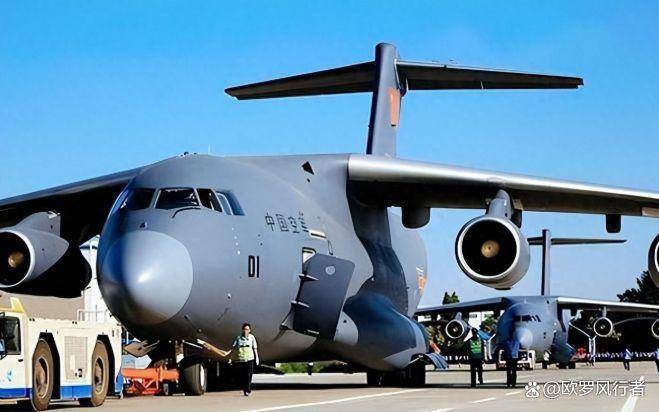
Core Viewpoint - The recent advancements in the PLA's military transportation and delivery capabilities represent a qualitative leap, characterized by a systematic transformation that includes "multi-dimensional delivery, intelligent command and scheduling, and breakthroughs in unmanned technology" [2][10][24]. Group 1: Multi-Dimensional Network - The core value of military transportation lies in "universal reach and immediate response," with new equipment enabling this goal to transition from theory to reality [2]. - The PLA has established a comprehensive delivery framework covering coastal, oceanic, airspace, and island reef areas through breakthroughs in maritime and aerial capabilities [4][6]. Group 2: Maritime and Aerial Support - The new generation of comprehensive supply ships has resolved historical limitations in the PLA's oceanic operations, enhancing supply efficiency by over 40% and enabling sustained operations for over 30 days [4]. - The Y-20 "Kunpeng" transport aircraft's mass deployment signifies a shift to "heavy and large-scale" aerial delivery, capable of transporting heavy equipment and personnel over long distances, with a range exceeding 7,800 kilometers [6]. Group 3: Seamless Integration - The PLA has integrated various transportation nodes to create a "three-dimensional transfer and precise docking" network, facilitating rapid troop movement across different transport modes [8]. - Upgrades to infrastructure in coastal and border areas, along with the Y-20's capabilities, enable quick resupply to remote regions [8]. Group 4: Intelligent Empowerment - The implementation of intelligent command systems has enhanced transportation efficiency, reducing planning time by 80% and improving scheduling efficiency by over 50% [11]. - Breakthroughs in unmanned delivery technology provide new solutions for logistics in complex environments, particularly in island reef areas [13]. Group 5: Strategic Implications - The leap in transportation capabilities serves as a core support for the PLA's strategic deterrence and operational capabilities, transitioning from "passive response" to "active shaping" of military strategy [15]. - The ability to rapidly deploy forces within 48 hours to distant battlefields enhances the PLA's strategic deterrence against separatist and external intervention forces [17][20]. Group 6: Global Responsibility - The advancements in transportation capabilities enable the PLA to fulfill global responsibilities, supporting international security through humanitarian missions and peacekeeping operations [22]. - The Y-20's role in cross-continental military delivery and humanitarian aid showcases China's commitment to global stability and security [22][26].
大疆“扩疆”,影石、拓竹、追觅攻守不一
Tai Mei Ti A P P· 2025-11-20 11:02
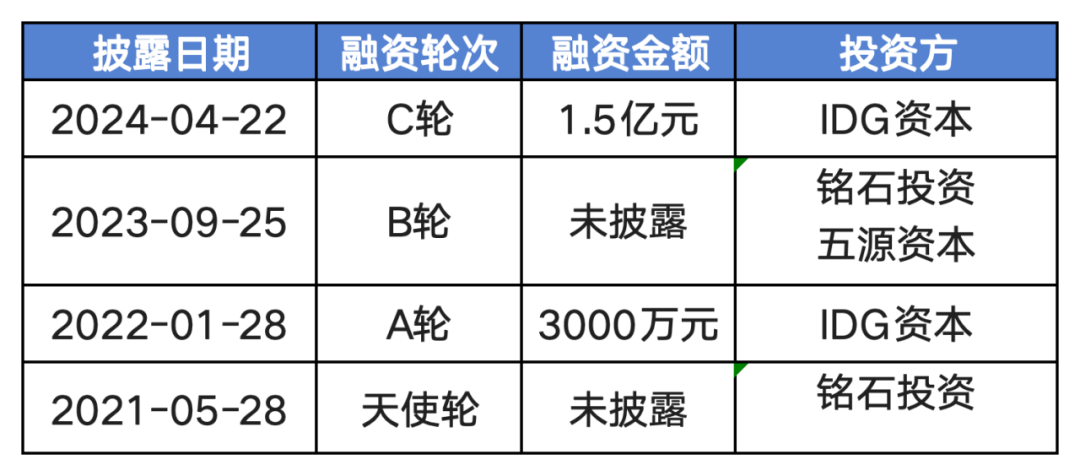
Core Insights - DJI, traditionally low-profile and resistant to market interactions, has recently invited external parties to experience its upcoming panoramic drone, DJI Avata 360, indicating a strategic shift towards more engagement with the market [1][2] - Despite its repeated statements of "no financing, no IPO," DJI's recent activities suggest a proactive approach to counter competition and maintain its market position [2][3] Group 1: DJI's Strategic Moves - DJI has launched several new products this year, including the sweeping robot ROMO and has shown interest in investing in 3D printing companies, indicating a diversification of its business strategy [2][3] - The introduction of the DJI Avata 360 is perceived as a defensive move to showcase its technological advantages amidst slowing growth, aiming to reassure stakeholders of its profitability [13][26] - DJI's market share in consumer drones exceeds 70%, but it faces pressure to innovate and find new mass-market products as growth in the consumer drone market slows [26] Group 2: Competitive Landscape - Competitors like YingShi and TuoZhu are expanding beyond their original markets, indicating a shift in the competitive dynamics of the industry [4][5] - YingShi has entered the drone market with its brand "YingLing Antigravity," directly challenging DJI, while simultaneously expressing respect for DJI's founder, suggesting a complex competitive relationship [6][7][10] - TuoZhu, founded by former DJI engineers, is rapidly gaining traction in the 3D printing sector, with a valuation reportedly reaching 30 billion yuan, posing a significant challenge to DJI's interests [19][21] Group 3: Market Dynamics and Future Outlook - The competition is evolving from product-specific technological advancements to a broader ecosystem-based confrontation, where companies leverage their core competencies across multiple sectors [26] - DJI's entry into the sweeping robot market is expected to disrupt existing players like Chasing, as it applies its advanced drone technology to a new product category [22][23] - The strategic investments and product launches by DJI and its competitors reflect a broader trend of companies seeking to establish dominance in emerging markets while navigating the challenges of innovation and market saturation [26]
突发!美国试射洲际弹道导弹
Zheng Quan Shi Bao Wang· 2025-11-06 01:55
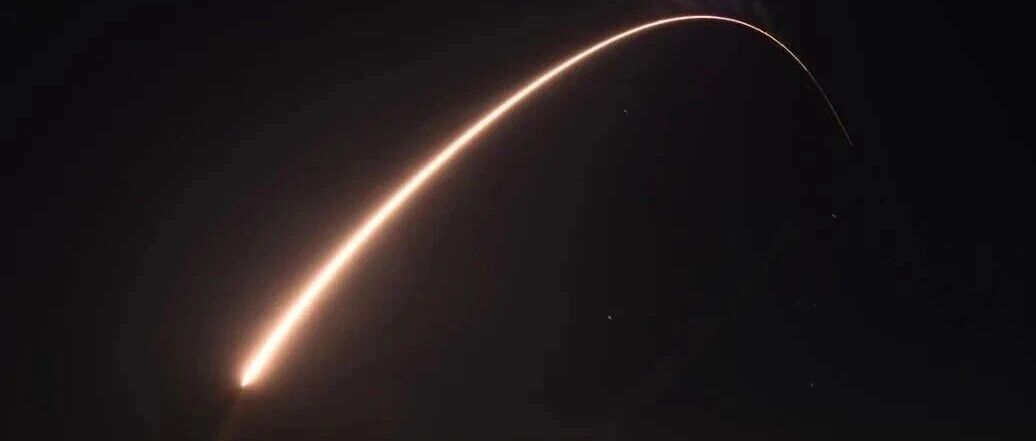
Group 1: Military Developments - The U.S. military conducted a test launch of an unarmed Minuteman III intercontinental ballistic missile (ICBM) on November 5, 2023, from Vandenberg Space Force Base in California, flying approximately 4,200 miles (about 6,759 kilometers) to a U.S. test site in the Marshall Islands [2][3] - The test aimed to assess the reliability and operational readiness of the Minuteman III ICBM system, which has been in service since the 1970s, with around 400 missiles currently in active service [3] Group 2: U.S.-Russia Relations - Russian presidential spokesman Dmitry Peskov stated that Russia was informed in advance about the U.S. missile test and emphasized that Russia does not participate in an arms race, having completed the modernization of its nuclear triad [3] - Peskov also mentioned that there are no plans for recent phone calls between U.S. and Russian leaders, and that Russia will continue to fulfill its obligations under the Comprehensive Nuclear-Test-Ban Treaty [3] Group 3: Naval Deployments - The USS Gerald R. Ford aircraft carrier passed through the Strait of Gibraltar on November 4, 2023, and is expected to arrive in the Caribbean by mid-November as part of a military deployment by the U.S. Department of Defense [5][6] - The deployment of the Ford carrier strike group is seen as a significant step in increasing U.S. military presence in the southern Caribbean, potentially indicating imminent military action against Venezuela [6][7] Group 4: Regional Implications - The arrival of the Ford carrier is perceived as enhancing U.S. capabilities for long-range strikes and electronic warfare, raising concerns about the intensity and timing of potential U.S. actions against Venezuela [6][7] - The U.S. Department of Defense has stated that the enhanced military presence aims to combat drug trafficking and transnational criminal organizations in the region, marking the largest military deployment in the Caribbean in over 30 years [7]
突发!美国试射洲际弹道导弹
券商中国· 2025-11-06 01:44
Group 1: U.S. Military Actions - The U.S. military conducted a test launch of an unarmed Minuteman III intercontinental ballistic missile on November 5, 2023, from Vandenberg Space Force Base in California, flying approximately 4,200 miles (about 6,759 kilometers) to a U.S. test site in the Marshall Islands [1][3][4] - The test aimed to assess the reliability and operational readiness of the Minuteman III missile system, which has been in service since the 1970s, with around 400 units currently in active service [5][4] - The U.S. Navy's Gerald R. Ford aircraft carrier passed through the Strait of Gibraltar on November 4, 2023, and is expected to arrive in the Caribbean by mid-November, marking a significant military deployment in the region [2][8] Group 2: Geopolitical Implications - The deployment of the Ford carrier is seen as a critical step in increasing U.S. military presence in the southern Caribbean, potentially indicating imminent military action against Venezuela [8][9] - The U.S. Department of Defense stated that this deployment is part of efforts to combat transnational criminal organizations and drug trafficking, enhancing capabilities to monitor and counter threats to U.S. national security [9] - Russian officials have indicated that they will not engage in an arms race, asserting that their nuclear forces have been updated, and they will respond to any nuclear tests by the U.S. or other signatories of the Comprehensive Nuclear-Test-Ban Treaty [5][6]
东风-5C何以成为覆盖全球的核威慑王牌?
Yang Shi Xin Wen· 2025-09-13 03:37
Core Viewpoint - The display of domestically produced military equipment during the 80th anniversary of the victory in the Chinese People's Anti-Japanese War and the World Anti-Fascist War highlights the strong strategic deterrence capabilities of the Chinese military [1]. Group 1: Weaponry and Capabilities - The Dongfeng-5C is a liquid-fueled intercontinental ballistic missile (ICBM) showcased during the military parade, capable of global strike coverage [3]. - Military expert Shao Yongling notes that while theoretically, an ICBM needs a range of 20,000 kilometers to cover the globe, practical considerations limit direct strikes from one equatorial point to another [3]. - The Dongfeng-5 family continues to evolve despite the introduction of solid-fuel ICBMs, primarily due to the advantages of liquid fuel in terms of thrust and payload capacity [5]. Group 2: Strategic Implications - The emphasis on showcasing advanced weaponry serves to reinforce China's strategic deterrence and peacekeeping stance [1]. - The use of the Arctic trajectory in modern ICBMs presents challenges for missile survival and penetration, indicating a shift in strategic military planning [5].

俄媒:中俄海军潜艇首次在太平洋水域举行水下联合巡逻
Huan Qiu Shi Bao· 2025-08-28 22:35
Core Viewpoint - The joint underwater patrol conducted by the Russian and Chinese navies in the Pacific signifies a strategic deterrent capability and reflects high levels of military trust between the two nations [1][2]. Group 1: Joint Patrol Details - The underwater patrol began in early August following the "Maritime Joint-2025" exercises, involving the Russian submarine "Volkhov" and Chinese submarines along pre-agreed routes in the Sea of Japan and East China Sea [1]. - The "Maritime Joint-2025" exercises took place from August 1 to 5 near Vladivostok, Russia, involving multiple naval vessels and aircraft from both countries [1]. - After completing the joint patrol, all participating submarines returned to their respective bases [1]. Group 2: Strategic Implications - The joint submarine patrol enhances the operational capabilities of both navies in underwater warfare, improving their search, reconnaissance, and attack abilities [2]. - The covert nature of submarine operations serves as a significant deterrent against potential adversaries, contributing to regional peace and stability [2]. - This new form of joint patrol represents an evolution in naval cooperation between Russia and China, following previous surface vessel patrols [2].

普京一句话把欧洲“打”安静了:中程导弹直接指向每个首都,谁还敢乱动?
Sou Hu Cai Jing· 2025-08-09 12:36
Group 1 - The core message of the article highlights the strategic implications of Russia's deployment of the "Zircon" missile system, which poses a direct threat to European capitals, emphasizing the urgency for European nations to reassess their military readiness and defense strategies [3][5][11] - The "Zircon" missile system has a range of 1,000 to 5,500 kilometers, capable of reaching any European capital within 10 minutes, thus significantly altering the security landscape in Europe [3][5] - The missile's advanced features, including speeds exceeding Mach 10 and the ability to maneuver during flight, render current European defense systems inadequate, raising concerns about the effectiveness of European military investments [3][4][5] Group 2 - Europe is currently experiencing a military buildup, with defense spending surpassing €800 billion, and countries like Germany and Poland enhancing their military capabilities [5][9] - Despite the military expansion, the article suggests that European nations may be forced to adopt a more cautious approach in their foreign policy, prioritizing negotiation over confrontation in light of the new threat posed by Russia [9][10] - The article concludes that the emergence of the "Zircon" missile necessitates a reevaluation of the concept of "boundary awareness" among European nations, as geographical distance no longer guarantees security [11][12]

伊朗核能重启在即,IAEA警告,浓缩铀生产指日可待
Sou Hu Cai Jing· 2025-06-30 09:20
Core Viewpoint - The situation in the Middle East has escalated significantly due to military actions by Israel and the U.S. against Iran's nuclear facilities, with the International Atomic Energy Agency (IAEA) indicating that Iran could resume uranium enrichment within "months" despite the damage [1][3]. Group 1: Iran's Nuclear Program - IAEA Director General Grossi's assessment suggests that some Iranian nuclear facilities remain operational, and there is uncertainty regarding the potential secret relocation of high-enriched uranium stocks [3][4]. - Iran's parliament has voted to suspend cooperation with the IAEA, effectively closing off transparency regarding its nuclear program [3][6]. - The Iranian government appears to leverage the "nuclear uncertainty" to gain strategic advantage, despite suffering damage to its facilities [3][6]. Group 2: U.S. and Israel's Military Actions - The military actions by the U.S. and Israel are questioned in terms of their effectiveness, with claims that they have set back Iran's nuclear program "decades" being viewed as politically motivated rather than based on reliable intelligence [4][6]. - The actions taken by the U.S. and Israel may provide Iran with justification for retaliatory measures, complicating the geopolitical landscape [4][6]. Group 3: Regional and Global Implications - The current situation reflects a broader reconfiguration of power in the Middle East, with nuclear capabilities becoming a key bargaining chip among regional players [6][8]. - The failure of international oversight mechanisms, such as the IAEA, raises concerns about nuclear non-proliferation and the potential for increased regional tensions [6][8]. - The escalation of conflict over nuclear issues could have far-reaching consequences for global supply chains, financial markets, and strategic alignments, with major powers unable to effectively mediate the situation [8].