技术出口管制

Search documents
商务部回应Meta收购Manus:将会同有关部门评估调查
Nan Fang Du Shi Bao· 2026-01-08 11:29
Core Viewpoint - The Chinese government supports enterprises in conducting cross-border operations and international technology cooperation in accordance with laws and regulations, while evaluating the compliance of Meta's acquisition of Manus with relevant legal frameworks [1][2]. Group 1: Acquisition Details - Meta has completed the acquisition of Manus for over $2 billion, marking it as the third-largest acquisition in Meta's history, following WhatsApp and Scale AI [2]. - Manus, an AI technology company founded in China, has processed over 147 trillion tokens and created over 80 million virtual computers since its launch [1]. Group 2: Regulatory Considerations - The Chinese Ministry of Commerce will assess the acquisition's compliance with laws regarding export control, technology transfer, and foreign investment [1]. - The focus of technology export control is on whether controlled technologies developed in China are transferred abroad without permission, which includes algorithms, system architectures, and training methods in the AI sector [3]. Group 3: Company Operations and Future Outlook - Manus CEO expressed optimism about the partnership with Meta, emphasizing that it will allow Manus to grow sustainably without altering its operational methods [2]. - Manus plans to continue providing products and subscription services through its app and website while operating from Singapore [1].

中国商务部:将对Manus出售给Meta的交易开展评估调查
Xin Lang Cai Jing· 2026-01-08 09:41
Core Viewpoint - The Chinese government is evaluating Meta's acquisition of the AI platform Manus to ensure compliance with laws regarding export control, technology transfer, and foreign investment [1][2]. Group 1: Acquisition Details - Meta announced the acquisition of Manus for several billion dollars, marking it as the third-largest acquisition in the company's history, following WhatsApp and Scale AI [1]. - After the acquisition, Manus will operate independently, with its founder taking on the role of Vice President at Meta [1]. Group 2: Regulatory Concerns - There are concerns regarding whether Manus's technology, despite its change in registration location, was developed in China and whether its transfer constitutes unauthorized technology export [1][2]. - The Chinese regulatory framework, particularly the Technology Import and Export Management Regulations, will scrutinize the timing and method of technology transfer from Manus's entities in China to foreign entities [2]. Group 3: Market Reactions and Implications - The acquisition has drawn attention due to the backdrop of U.S. investment restrictions, which have influenced Manus to gradually detach from its Chinese roots [2]. - An industry insider emphasized the need to prevent regulatory loopholes, noting that while the U.S. restricts Chinese investments in AI, Chinese companies like Manus are proactively selling their technology to U.S. firms [2]. Group 4: Export Control Regulations - The Chinese government has updated the list of technologies subject to export restrictions, including AI technologies relevant to language processing [3]. - The revised regulations impose severe penalties for unauthorized export of restricted technologies, including potential criminal liability and significant fines [4]. Group 5: U.S. Regulatory Landscape - Recent U.S. regulations have intensified scrutiny over American entities, particularly regarding their involvement in technology development and production in China [5].
Meta 收购 Manus 或许要黄!官方调查要来了
程序员的那些事· 2026-01-08 09:05
Core Viewpoint - Meta announced the acquisition of AI startup Manus for several billion dollars, marking its third-largest acquisition to date [3]. Group 1: Acquisition Details - Manus was founded by Chinese entrepreneurs and had its core technology team based in Beijing and Wuhan before relocating to Singapore in June 2025 [3]. - The acquisition is currently under scrutiny by relevant authorities to assess whether it violates technology export control regulations [4]. Group 2: Regulatory Concerns - Authorities are evaluating whether the transfer of Manus employees and technology to Singapore, followed by the sale to Meta, requires an export license [4]. - The review is in its preliminary stage, and no formal investigation has been initiated yet; however, if violations are found, domestic authorities may intervene in the transaction [4]. Group 3: Expert Opinions - Experts suggest that domestic review may not necessarily apply to the Singapore entity's acquisition but rather focus on how the original domestic company and personnel transitioned abroad [4].


观察 | Manus 收购案要黄?这可能是中国AI出海的分水岭
未可知人工智能研究院· 2026-01-08 04:43
Core Viewpoint - The acquisition of Manus for $2 billion is likely to fail due to potential violations of technology export control regulations, highlighting the intersection of technology and national sovereignty in the context of US-China relations [1][4][6]. Group 1: Manus Acquisition Context - Manus, a startup that achieved a valuation increase of over 100 times in three years, is facing scrutiny from the Ministry of Commerce regarding its acquisition by a US tech giant [2][4]. - The acquisition is not merely a commercial transaction but touches on sensitive issues of technology sovereignty and data security between China and the US [4][15]. Group 2: Historical Precedents - The case of TikTok in 2020 serves as a precedent where the US government forced ByteDance to sell its US operations, leading to complications due to revised technology export control regulations [10][12]. - Another historical example is the 1990 acquisition of MCI by a Chinese company, which was reversed by the US government on national security grounds, illustrating that cross-border tech acquisitions are influenced by geopolitical factors [14][15]. Group 3: Legal and Regulatory Challenges - There is a debate on whether Manus's technology qualifies as "core technology," with some arguing that it is merely an application layer product and should not fall under export controls [19][20]. - The updated "Prohibited Export Technology Directory" in China includes critical technologies such as personalized information push services, which could encompass Manus's offerings [21][32]. Group 4: Compliance and Regulatory Strategies - The article discusses the "Singapore wash" strategy, where companies attempt to relocate to Singapore to evade Chinese regulations, but this approach is increasingly scrutinized by regulatory bodies [24][28]. - Manus's relocation to Singapore was part of an effort to shed its "Chinese company" label, but the underlying technology and data sources remain a concern for regulators [26][30]. Group 5: Recommendations for International Expansion - Companies are advised to conduct compliance assessments before international expansion to ensure their technologies and data do not violate export controls [39]. - It is crucial to separate technology and data layers, ensuring that overseas versions utilize local data and comply with regulations [40]. - Maintaining open communication with domestic regulatory authorities is essential for navigating the complexities of international operations [40]. Group 6: Significance of Manus Case - The Manus case signifies a new phase in China's control over AI core technologies, indicating that the previous methods of circumventing regulations may no longer be viable [41][43]. - This situation emphasizes the need for Chinese AI entrepreneurs to operate within a framework of compliance when pursuing international opportunities, reflecting a shift in the rules of engagement in the global tech landscape [43].

【钛晨报】直播电商监管新规出台,明确四类主体责任;工信部等八部门印发《“人工智能+制造”专项行动实施意见》;违反技术出口管制?Meta收购Manus案或生变数
Tai Mei Ti A P P· 2026-01-07 23:40
Regulatory Developments - The State Administration for Market Regulation and the National Internet Information Office jointly released the "Live E-commerce Supervision Management Measures," focusing on four main entities: platform operators, live room operators, marketing personnel, and service agencies, to enforce responsibilities and delineate behavioral boundaries [2][3] - The measures specify the responsibilities of live e-commerce platform operators, including identity verification, information reporting, training for marketing personnel, risk identification, and consumer rights protection [2] - Clear behavioral boundaries are established, prohibiting false advertising, commercial defamation, and the sale of illegal goods or services by live room operators and marketing personnel [2] Industry Impact - The measures aim to strengthen regulatory tools by incorporating traffic control and regulating AI-generated content, ensuring that new technologies do not facilitate the generation or dissemination of false information [3] - The implementation of these regulations is expected to enhance the operational integrity of the live e-commerce sector and protect consumer rights [2][3] Corporate Actions - ByteDance denied rumors regarding plans to enter the automotive industry, clarifying that there are no current intentions to manufacture vehicles [6] - Xiaomi's CEO Lei Jun confirmed that there are no plans for a new model, the Xiaomi SU3, amidst various speculations [7] Market Movements - The Chinese central bank reported an increase in gold reserves for the 14th consecutive month, with reserves reaching 7.415 million ounces (approximately 2306.323 tons) as of the end of December [27] - Domestic flight ticket prices have significantly dropped post-New Year, with some fares as low as 210 yuan (approximately 1.1% of the original price) for routes like Guangzhou to Shanghai [28]
违反技术出口管制?Meta收购Manus案或生变数
Guan Cha Zhe Wang· 2026-01-07 05:28
Core Viewpoint - The acquisition of Chinese AI startup Manus by Meta for $2 billion is facing scrutiny from Chinese regulators due to potential violations of technology export control regulations amid escalating US-China tech tensions [1][3]. Group 1: Company Background - Manus was founded by Chinese entrepreneur Xiao Hong and is the fourth startup he has launched [2]. - The company gained significant attention after a demonstration video went viral, leading to a rapid increase in valuation, culminating in a $75 million financing round that valued the company at $500 million [2]. - In December, Meta announced plans to acquire Manus for $2 billion, aiming to integrate its technology and talent into its product line [2]. Group 2: Regulatory Concerns - The Chinese Ministry of Commerce is evaluating whether the acquisition violates technology export control regulations, focusing on whether Manus's core technology was developed in China and if personnel transfers constitute unauthorized technology exports [3][4]. - Experts suggest that the review may not apply to the Singapore entity but rather to how the original Chinese company and personnel transferred technology abroad [3]. Group 3: Legal and Compliance Issues - The legality of the Manus acquisition hinges on whether the specific technologies involved fall under China's current technology export control regulations, which may present challenges due to the emerging nature of large models and agents [4]. - There are concerns that if the acquisition is deemed illegal, involved parties could face severe legal consequences, including criminal liability for unauthorized technology exports [5]. Group 4: Market Dynamics and Motivations - Market analysts believe that Manus's products primarily focus on AI applications and may not involve core foundational technologies, potentially placing them outside regulatory restrictions [5]. - The urgency for Manus to relocate and divest its Chinese identity is driven by geopolitical pressures and the need to secure funding from US investors, as seen in its recent financing rounds [6][7]. - Founder Xiao Hong has expressed a strong belief in the potential of overseas markets, estimating that foreign users are willing to pay significantly more for software compared to Chinese users [7].

中国据报就Meta收购AI初创公司Manus交易进行审查,评估是否违反技术出口管制规定
Xin Lang Cai Jing· 2026-01-07 03:52
Core Viewpoint - China is reportedly reviewing Meta's $2 billion acquisition of AI startup Manus to assess potential violations of technology export control regulations [1][2] Group 1: Regulatory Review - Chinese Ministry of Commerce officials have begun evaluating whether Manus's transfer of employees and technology to Singapore before the sale to Meta requires an "export license" under Chinese law [1] - The review is still in its early stages and may not lead to a formal investigation, but if deemed necessary, China could intervene in the transaction, potentially forcing both parties to abandon the acquisition [1] Group 2: Impact of U.S. Investment Restrictions - The gradual separation of Manus from China is driven by U.S. investment restrictions, with scrutiny focused on whether Manus developed technology subject to export controls while in China [2] - If unauthorized restricted technology exports are confirmed, Manus could face legal or even criminal liabilities [2] Group 3: Acquisition Details - Meta announced the acquisition of Manus on December 29, 2025, aiming to accelerate the integration of advanced AI into its platform, with the deal valuing Manus at over $2 billion [2]
域外管辖迈出坚实一步 技术出口管制趋于完善
Zhong Guo Xin Wen Wang· 2025-10-09 17:30
Core Points - The Chinese Ministry of Commerce has implemented export controls on certain rare earth items and related technologies to safeguard national security and interests, distinguishing these measures from the misuse of export controls by certain countries [1][3] Group 1: Export Control Measures - The announcements No. 61 and 62 of 2025 extend export controls on specific rare earth items manufactured abroad, building on previous measures to prevent circumvention by third countries [3] - The scope of controlled items includes 13 specific rare earth metals or alloys, as well as technologies related to rare earth mining, which are classified as "specific dual-use items" originating from China [3][5] - The Ministry of Commerce emphasizes a cautious and restrained approach to exercising extraterritorial jurisdiction, aiming to avoid disruption of international supply chains while minimizing compliance burdens for businesses [2][3] Group 2: Comparison with International Practices - The export control regulations in China are characterized by specificity and are only activated upon request from the Ministry of Commerce, contrasting with the broader and more automatic nature of U.S. regulations [2][4] - The U.S. export control framework includes concepts like "de minimis" and "foreign direct product rules," which are more expansive and can create significant compliance challenges for companies [2][4] - Other countries, such as Japan and South Korea, have also implemented stringent export controls on technology, reflecting a global trend towards enhancing export control measures [4][5] Group 3: Technical Export Controls - The recent measures signify a shift in China's approach to dual-use technology export controls, marking the beginning of practical enforcement of "deemed exports" [5][6] - The Ministry of Commerce has introduced detailed templates for license applications, indicating a more refined process for reviewing technology exports [6] - Current requirements for technology export controls are specifically focused on rare earth-related technologies, with potential for future expansion to other technology sectors as conditions evolve [6]
兔主席| 英伟达15%销售分成:特朗普贩卖出口管制的逻辑
Guan Cha Zhe Wang· 2025-08-12 06:40
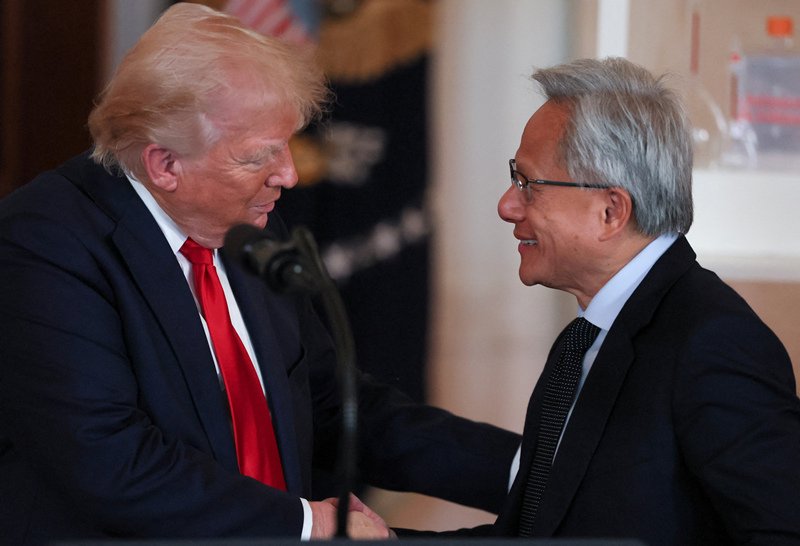
Core Points - The U.S. government has reached a special arrangement with Nvidia and AMD, requiring them to pay 15% of their chip sales revenue in China to the government in exchange for export licenses for specific chips like H20 and MI308 [1][2][3] - This arrangement is unprecedented in the U.S. and reflects a transactional approach where companies pay for export permissions, aligning with the Trump administration's pattern of conditional exemptions [3][4] Summary by Sections Arrangement Details - Nvidia and AMD agreed to pay 15% of their sales revenue from China to the U.S. government to obtain export licenses for their respective chips [2][3] - The U.S. Department of Commerce began issuing H20 export licenses shortly after a meeting between Nvidia's CEO Jensen Huang and President Trump [3][4] Financial Implications - Analysts estimate that Nvidia could sell 1.5 million H20 chips in China by 2025, generating approximately $23 billion in revenue, leading to a payment of about $3.5 billion to the U.S. government [4][5] - The arrangement effectively turns export licenses into a revenue-generating tool for the U.S. government, which has raised concerns among experts about the implications for U.S. technological leadership [6][7] Background Context - The H20 chip is a downgraded version of Nvidia's AI chip, specifically designed for the Chinese market after previous export restrictions were imposed [4][5] - The timing of this agreement is sensitive, coinciding with ongoing U.S.-China trade negotiations, where China is pressuring for relaxed restrictions on high-bandwidth memory chips [6][7] Strategic Considerations - The arrangement merges trade and technology issues, which traditionally have been treated separately in U.S. policy [11][12] - Trump's administration views trade as a security issue, integrating economic and technological considerations into negotiations with China [14][15] Future Outlook - The U.S. may adopt a more nuanced approach to technology export controls, balancing the need to maintain technological superiority while also ensuring revenue generation for the government [24][25] - The long-term implications of this arrangement could lead to increased dependency of Chinese companies on U.S. technology, while also fostering a competitive environment for domestic alternatives [20][21]


商务部、科技部:禁止这些新材料技术出口!(附相关行研报告)
材料汇· 2025-07-20 14:57
Core Viewpoint - The recent adjustments to the "China's Prohibited and Restricted Export Technology Directory" reflect the evolving landscape of technology development in China, aiming to enhance national economic security and promote international economic and technological cooperation [2][4]. Summary by Sections Prohibited Export Section - The adjustment has removed one entry related to traditional Chinese architectural technology from the prohibited export list [6]. Restricted Export Section - **Construction and Decoration Industry**: - Two entries have been deleted: traditional Chinese architectural technology and building environment control technology [6]. - **Chemical Raw Materials and Chemical Products Manufacturing**: - A new restricted entry has been added for battery cathode material preparation technology, which includes: - Lithium iron phosphate preparation technology with specific chemical formula and performance criteria [6][7]. - Lithium manganese iron phosphate preparation technology with defined performance metrics [7]. - Phosphate-based cathode raw material preparation technology with strict specifications [7]. - **Non-ferrous Metal Smelting and Rolling Industry**: - The control points for non-ferrous metal metallurgy technology have been modified to include new lithium extraction technologies from spodumene, such as: - Lithium carbonate production technology and lithium hydroxide production technology [6][7]. - Additional control points for lithium purification and production processes have been introduced [7]. Purpose of Adjustments - The adjustments are intended to align with the changes in China's technological development and to improve the management of technology trade, thereby safeguarding national economic interests [4][5].