技术转移

Search documents
市委书记用“5心”为家乡代言,2025中国陶都(宜兴)金秋经贸洽谈会举行
Yang Zi Wan Bao Wang· 2025-10-18 10:30
Core Points - The 2025 China Ceramic Capital (Yixing) Autumn Economic and Trade Fair commenced on October 18, attracting over 500 guests from various sectors, including domestic and international representatives from nearly 10 countries and regions [1] - The event is the longest-running, largest, and most influential economic and trade exchange activity in Yixing, having been held for 32 consecutive years, serving as a significant platform for investment and cooperation [1] Group 1 - Vice Mayor Zhang Yi presented the investment environment, sharing insights on Yixing's economic and social development, along with key area promotions from relevant officials [3] - Mayor Hu Xiaojian described Yixing using five "hearts," emphasizing the city's appeal to both local and foreign investors [4] - The establishment of the Yixing Technology Transfer University Alliance with key universities aims to inject continuous technological momentum into Yixing's development [6] Group 2 - The 2025 Yixing Global Investment White Paper was released, showcasing Yixing's economic strength, industrial foundation, and investment services, highlighting its attractiveness for foreign investment [7] - Yixing awarded certificates to 40 partners across various industry chains and funds, indicating strong support for investment and development initiatives [9] - The event showcased 21 key industrial chain projects across diverse fields such as new energy, integrated circuits, and artificial intelligence, aimed at enhancing Yixing's industrial value chain [11]


创新引擎,全流程培养科技成果转化人才
Xin Lang Ke Ji· 2025-10-14 09:42
Core Insights - The Tsinghua University Wudaokou School of Finance has established the first master's program in technology transfer in China, aimed at cultivating core talents for the transformation of scientific and technological achievements [1][2] - The program emphasizes a reverse approach to talent development, focusing on market-driven skills that enhance the ability to connect technology with market needs [1][2] - The curriculum is designed to develop three key competencies: understanding of technological innovation, management of technology transfer, and financial acumen related to technology commercialization [3][5] Enrollment and Talent Selection - The program aims to combine finance with technology transfer, addressing the urgent need for skilled professionals in this area [2] - Students are selected based on their entrepreneurial spirit and background in technology, management, or finance, fostering a collaborative team environment [2][5] - The program encourages students to approach their studies with practical problems and entrepreneurial projects in mind [2] Teaching Methodology - The program employs a dual-mentor system, pairing students with both academic and practical mentors to enhance their learning experience [3] - Courses include practical sessions where students develop technology transfer plans based on insights from Tsinghua's research projects [4] - A new scholarship program has been introduced to integrate young researchers from Tsinghua into the master's program, promoting collaboration and practical application [4] Talent Development Framework - The program has produced graduates who have successfully launched startups and shifted their investment focus towards hard technology [5] - The curriculum covers the entire lifecycle of technology innovation, from initial research to commercialization and business growth [5] - Additional initiatives, such as public service projects, aim to support technology transfer and entrepreneurship across various sectors [5] Future Outlook - The program seeks to bridge the gap between basic and applied research, addressing challenges in aligning technological innovation with market needs [6][7] - A proposed model for effective technology transfer includes stable technical sources, professional capabilities, and mechanisms for facilitating technology flow [6][7] - The ultimate goal is to contribute to China's industrial innovation and the effective transformation of scientific achievements through a well-structured ecosystem [7]
财说|甘李药业30亿大单能带来多少业绩?
Xin Lang Cai Jing· 2025-09-29 00:34
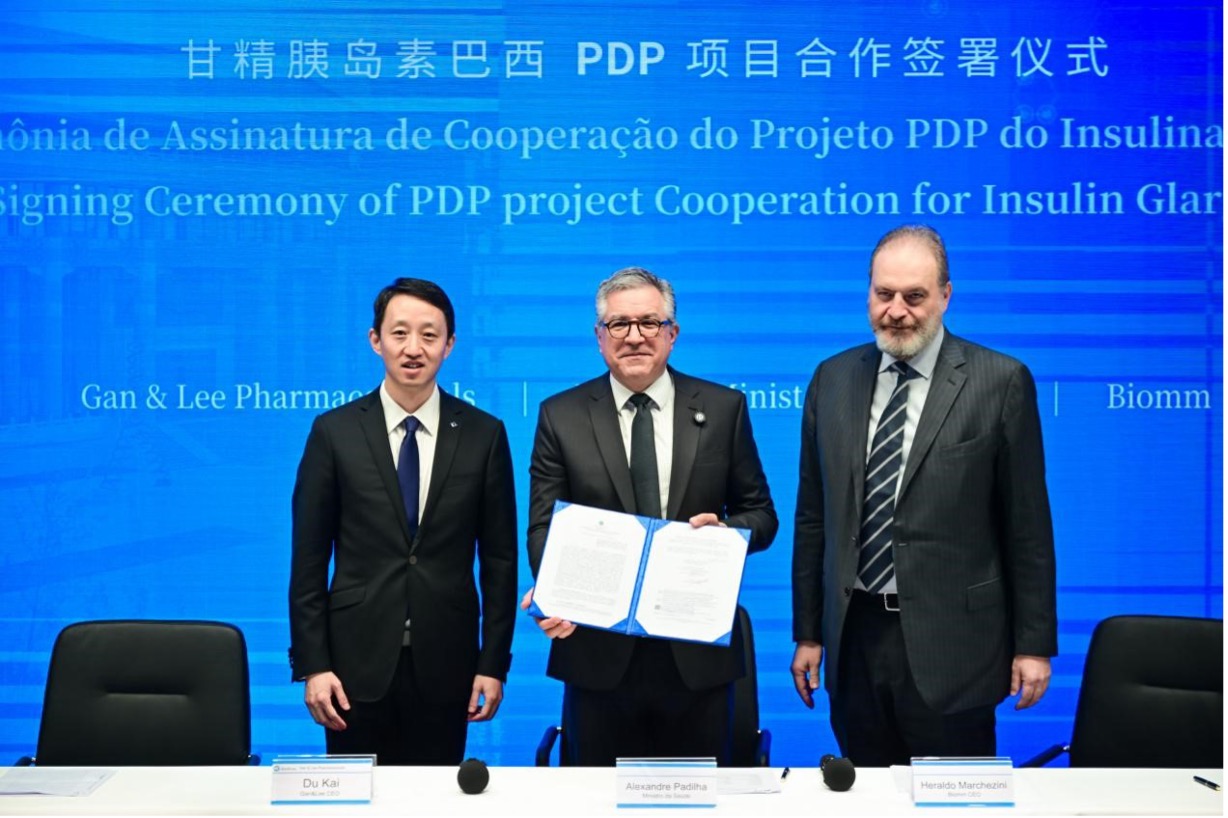
Core Viewpoint - Ganli Pharmaceutical has become the first Chinese pharmaceutical company to enter Brazil's PDP medical project, signing agreements with Fiocruz and BIOMM, with a total expected amount of no less than 3 billion yuan, which will positively impact the company's performance in 2025 and beyond [1][3]. Group 1: Project Details - The PDP model involves technology transfer, production line establishment, and national procurement, with Ganli Pharmaceutical responsible for delivering cell lines and process packages, and training for 168 technical tasks within 30 months [2]. - The total investment for the project is 130 million Brazilian Reais (approximately 160 million yuan), with a commitment from the SUS system to purchase 200 million units of insulin over 10 years, starting with a target of 20 million units in the first year, accounting for 58% of Brazil's total demand [2]. Group 2: Financial Implications - The contract's total amount is expected to contribute approximately 10% to the company's revenue over 10 years, averaging 300 million yuan annually, although the gross margin may be lower than domestic operations [3]. - In the first half of 2025, Ganli Pharmaceutical reported revenue of 2.067 billion yuan, a year-on-year increase of 57.18%, and a net profit of 604 million yuan, a year-on-year increase of 101.96% [6]. Group 3: Risks and Challenges - The project faces challenges such as exchange rate fluctuations, policy changes, and technical hurdles, with the Brazilian Real having fluctuated by 17% against the US dollar in the past 18 months [5]. - Ganli Pharmaceutical must deliver 160 key devices within 18 months, with 40% of these dependent on Chinese manufacturing, which could delay the construction plan if shipping routes are disrupted [5]. Group 4: Market Position and Strategy - Following the first round of centralized procurement, Ganli Pharmaceutical adjusted its business model, reducing its sales team by 37% and shifting its strategy towards digital marketing and grassroots penetration [6]. - The company has increased its R&D investment to 5.52 billion yuan in the first half of 2025, representing 26.7% of its revenue, indicating a focus on accelerating product development in response to market changes [7]. Group 5: International Expansion - Ganli Pharmaceutical has signed preliminary cooperation agreements with Egypt and Indonesia, which could potentially contribute over 1 billion yuan in revenue if similar terms to Brazil are replicated [10]. - The company's international revenue reached 222 million yuan in the first half of 2025, a year-on-year increase of 75.08%, accounting for 10.72% of total revenue, indicating significant growth potential in international markets [10].

乌克兰转让给中国的“军工三大技术”,让军工实力提升将近20年!
Sou Hu Cai Jing· 2025-09-27 04:45
Core Viewpoint - The cooperation between China and Ukraine in military technology has significantly transformed China's military capabilities, allowing it to overcome technological shortcomings and achieve breakthroughs in various defense sectors [1][8]. Group 1: Naval Technology - In the 1990s, China's naval power was limited by inadequate propulsion systems, but a 1993 agreement with Ukraine allowed for the transfer of UGT-25000 gas turbine technology, leading to the development of advanced destroyers like the 052D and 055, enhancing China's blue-water naval capabilities [1][2]. - The transfer of "Bison" class hovercraft technology from Ukraine enabled China to improve its amphibious assault capabilities, transitioning from coastal operations to effective beach landings, which has raised concerns among Western nations [2]. Group 2: Aviation Technology - The reliance on imported engines for military aircraft was a significant issue for China until the 1995 transfer of RD-33 and RD-93 engine technologies from Ukraine, which facilitated the development of the JF-17 fighter jet, improving its thrust-to-weight ratio and reliability [3][5]. - The provision of D-18T engine technology for the An-124 transport aircraft led to the development of the WS-20 engine, which is now used in the Y-20 and H-6K aircraft, significantly enhancing China's strategic airlift capabilities [5][6]. Group 3: Missile Technology - China's missile technology faced limitations in accuracy and range until the introduction of R-27 air-to-air missile technology from Ukraine, which improved the hit rate of the PL-12 missile, making air combat less reliant on chance [7]. - The acquisition of KH-55 cruise missile technology has elevated China's long-range strike capabilities, while the support for the DF-41 intercontinental missile's multiple independently targetable reentry vehicle technology has strengthened China's strategic deterrence [7]. Group 4: Historical Context - Historical patterns show that technology transfer can significantly alter a nation's trajectory, as seen in past examples like the Byzantine Empire and Japan during the Meiji Restoration, paralleling China's current situation with Ukraine [8]. - The collaboration between China and Ukraine exemplifies this trend, where Ukraine's economic challenges led to technology transfers that China effectively absorbed and innovated upon, achieving self-sufficiency in military technology [8]. Conclusion - The rise of China's military capabilities is attributed to seizing historical opportunities and the relentless innovation of its researchers, resulting in a modern navy, advanced air force, and precise missile systems [9][10].

2025 InnoMatch技术转移大会意向合作金额近90亿元 对接超万次
Zheng Quan Shi Bao Wang· 2025-09-23 01:17
Core Insights - The 2025 InnoMatch Technology Transfer Conference concluded on September 22, focusing on "innovation demand" as the guiding principle for the first time in China [1] - The conference aimed to create an international platform integrating demand, results, talent, and capital, facilitating connections among various stakeholders [1] - Over the three days, the conference achieved more than 10,000 online and offline connections, resulting in nearly 9 billion yuan in intended cooperation amounts [1] Summary by Categories Innovation Demand - The conference emphasized "innovation demand" as a central theme, marking a shift in focus for technology transfer events in China [1] Talent Support - The event highlighted the importance of talent in driving innovation and technology transfer, aiming to connect skilled individuals with industry needs [1] Capital Power - The conference served as a platform for capital engagement, facilitating significant financial commitments with nearly 9 billion yuan in intended cooperation [1] - A total of over 10,000 connections were made, showcasing the active participation of various stakeholders in the technology transfer ecosystem [1]
泰国长期居留签证措施吸引超过7,000名高素质外国人
Shang Wu Bu Wang Zhan· 2025-09-18 11:31
Core Insights - The Thai Long-Term Residence (LTR) Visa, implemented in September 2022, aims to attract four categories of high-quality foreigners: skilled professionals, remote workers, wealthy individuals, and retirees [1] - Over 7,000 LTR Visas have been approved in the past three years, primarily for applicants from Europe, the United States, Japan, China, and India [1] - The initiative has contributed over 230 billion Thai Baht to the Thai economy, derived from visa fees, local consumption, direct investments, and taxes paid by skilled professionals [1] - The influx of foreign talent has accelerated technology transfer in emerging industries such as semiconductors, data centers, artificial intelligence, electric vehicles, and robotics, enhancing the competitiveness of local talent [1] - The Board of Investment (BOI) is upgrading LTR Visa services to a one-stop digital service, including e-Visa, electronic payments, and integration with government systems [1] - A new Foreign Investment and Talent Service Center has been opened in One Bangkok, providing comprehensive services for foreign investors and professionals [1]
上海加快培育技术转移人才 促机器人“展宏图”
Zhong Guo Xin Wen Wang· 2025-09-15 07:59
Core Insights - Shanghai is accelerating the cultivation of technology transfer talent to promote the development of the robotics industry, particularly in the context of artificial intelligence (AI) advancements [1][3]. Group 1: Technology Transfer Education - Shanghai Jiao Tong University has launched the Master of Technology Transfer (MTT) program, the first of its kind in China, to meet the growing demand for professionals skilled in technology transfer [1]. - The MTT program aims to develop talent with expertise in five key areas: technology, market, finance, law, and management, targeting technology entrepreneurs, scientist partners, senior executives from large enterprises, and technology transfer service experts [1][3]. Group 2: AI Application and Industry Integration - The integration of AI technology with application scenarios is a primary focus of the MTT program, as many AI application companies require specialized technology transfer professionals [3]. - Shanghai is enhancing its AI talent services and implementing a collaborative support mechanism involving "talent + projects + industry," granting professionals autonomy in technology routes, team formation, and funding usage [3][4]. Group 3: Robotics Development - Companies like Zhiyuan Innovation (Shanghai) Technology Co., Ltd. are advancing the use of wheeled general-purpose robots for material handling in factories, while also promoting bipedal humanoid robots for various applications [4][5]. - The wheeled robots are designed for standardized tasks, while bipedal robots are intended for non-standardized, interactive scenarios, such as welcoming guests and entertainment performances [5].

沙特工矿大臣访美,聚焦锂业、航天与供应链韧性
Shang Wu Bu Wang Zhan· 2025-09-10 15:24
Core Insights - Saudi Arabia's Minister of Industry and Mineral Resources, Bandar, visited the U.S. to enhance cooperation in lithium, aerospace, advanced manufacturing, and supply chain resilience [1] - The visit included an inspection of Albemarle's lithium mine, discussions on technology transfer and joint ventures, and meetings with Honeywell regarding industrial automation and smart cities [1] - The objective of the visit is to accelerate the localization of critical minerals and manufacturing, support technology implementation, and align with the Vision 2030 initiative [1] Industry Focus - The emphasis on lithium indicates a strategic move towards securing resources essential for electric vehicle batteries and renewable energy technologies [1] - Collaboration with aerospace and advanced manufacturing sectors highlights Saudi Arabia's intent to diversify its economy beyond oil dependency [1] - Strengthening supply chain resilience is crucial for ensuring stability and efficiency in the face of global disruptions [1] Company Engagement - Engagement with Albemarle suggests potential partnerships in lithium extraction and processing, which could enhance local capabilities [1] - Discussions with Honeywell point towards advancements in industrial automation and smart city initiatives, indicating a focus on technological innovation [1] - The overall strategy reflects a commitment to fostering local industries and attracting foreign investment in key sectors [1]


复旦大学举办论坛聚焦硬科技产业化路径及技术转移人才培养
Zhong Zheng Wang· 2025-09-03 11:28
Group 1 - The forum "Technology Transfer Future: Technology and Industry Breakthrough Forum" was held at Fudan University, focusing on topics such as "industrialization of scientific achievements," "hard technology breakthrough paths," and "collaborative innovation ecosystem" [1] - Fudan University's Zhangjiang campus is becoming a key platform for deep integration of technology and finance, emphasizing the importance of financial support for both basic research and market demand [1] - The Master of Technology Transfer (MTT) program aims to cultivate interdisciplinary talents who understand technology, finance, and management, addressing the talent gap in the technology transfer ecosystem [1] Group 2 - The MTT program is built on Fudan University's top disciplines in finance, engineering, medicine, and law, closely aligning with industry needs through a dual-track training system of "systematic courses + in-depth practice" [2] - The program focuses on five major industries: artificial intelligence, biomedicine, integrated circuits, new energy and new materials, and aerospace technology, promoting the commercialization of technology [2] - A roundtable discussion was held on "resource collaboration and institutional breakthroughs in the technology transfer ecosystem," led by the MTT program director [2] Group 3 - Fudan University's Technology Transfer Center is actively exploring practices in the field of technology transfer, including progress in intellectual property management and empowerment reforms [3] - The center is building a "technology + industry + investment" communication platform to match research technology with industrial transformation needs, fostering a conducive ecosystem for technology transfer [3] - The center has successfully facilitated multiple projects in biomedicine, integrated circuits, artificial intelligence, new materials, and medical engineering, achieving several successful technology transfers [3]
马斯克把一个华人工程师告了!入职一年多套现700万美金,反手带走代码投奔对手
Sou Hu Cai Jing· 2025-08-31 12:37
Core Viewpoint - The lawsuit filed by xAI against former engineer Xuechen Li highlights the intense competition for AI talent and the risks of intellectual property theft in the rapidly evolving AI industry [2][11]. Company Summary - xAI, founded by Elon Musk, is suing Xuechen Li for allegedly stealing core trade secrets related to the Grok chatbot and transferring them to competitor OpenAI [2][6]. - Li, a Stanford PhD and one of the early engineers at xAI, had extensive access to the company's proprietary algorithms and data [2][3]. - Following his acceptance of an offer from OpenAI, Li reportedly sold approximately $7 million worth of xAI stock and transferred sensitive files from the internal system [3][6]. - xAI's lawsuit seeks to prevent Li from working at OpenAI and demands compensation for the alleged theft of trade secrets [6][8]. Industry Context - The lawsuit underscores the fierce competition for AI talent, particularly following the rise of ChatGPT, which has led to significant investments in AI development across the industry [11]. - The case reflects a broader trend in the tech sector, where similar lawsuits over intellectual property theft and talent poaching have become common, as seen in recent cases involving Tesla and Apple [9][11]. - The outcome of this lawsuit could set a precedent for how AI companies approach hiring and talent retention in the future, potentially leading to more cautious recruitment practices [11].