
数字化农业

Search documents
从“看不见产地”到“云监工”:永济大蒜认养如何打破消费壁垒?
Sou Hu Cai Jing· 2025-10-08 00:44
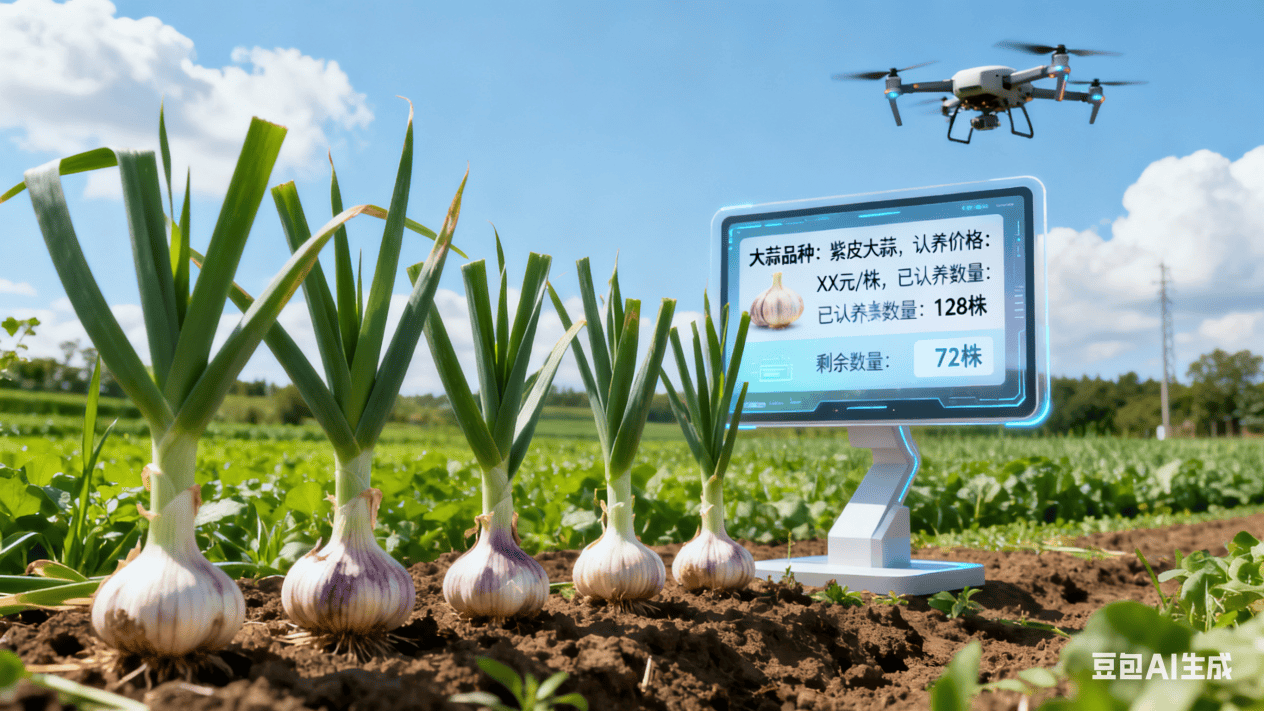
Core Viewpoint - The garlic digital adoption project in Yongji City, Shanxi Province, represents an innovative approach in agriculture, breaking the traditional "produce first, sell later" model by utilizing online adoption and transparent traceability to enhance consumer trust and support cooperatives [1][14]. Group 1: Digital Adoption and Consumer Engagement - The cooperative in Yongji City has established a fully digital adoption system for garlic cultivation, allowing adopters to select land online and view soil fertility and past yields, thus eliminating the traditional barriers of distance and visibility in agriculture [2][3]. - The project incorporates a digital system that includes features like online land selection and visualized land information, which aligns with the needs of modern digital agriculture [5]. Group 2: Traceability and Assurance - The project ensures consumer confidence through a dual assurance system of real-time traceability and offline harvesting, where each garlic bulb is assigned a unique identity code that provides access to comprehensive data from planting to maturity [6]. - Regular offline harvesting events allow adopters to engage directly with the farming process, enhancing their experience and connection to the product [10]. Group 3: Smart Assistance and User Experience - The digital platform acts as an "agriculture assistant," providing automatic reminders and care tips based on the garlic growth cycle, enabling even inexperienced adopters to manage their crops effectively [7]. - The project fosters interaction through organized events where adopters can learn practical skills from local farmers, bridging the gap between urban consumers and rural producers [10]. Group 4: Impact and Transformation - The project not only facilitates garlic sales but also builds trust between urban consumers and rural producers, leading to repeat purchases and a loyal customer base [11]. - It signifies a shift in local agriculture from a traditional production model to a participatory service model, emphasizing consumer involvement in the cultivation process [11][14].

特色产业绘就乡村振兴新图景 希望的田野上一派秋日好“丰”景
Yang Shi Xin Wen· 2025-09-02 10:06
Group 1: Agricultural Production - Anhui Province's Jingde County has 118,000 acres of highland rice maturing, showcasing a prosperous harvest season [1] - Xinjiang Yili has 555,800 acres of seed corn entering the harvest phase, contributing significantly to national seed corn production [2] - Guizhou's Guiding County has 107,000 acres of thorn pear fruit being harvested, utilizing digital management for full traceability [3] Group 2: Technological Advancements - Jingde County employs smart irrigation and green pest control systems for standardized highland rice cultivation [1] - Yili's seed corn harvesting utilizes 100% mechanization with satellite navigation for efficient operations [2] - Guizhou's thorn pear industry leverages 5G technology for real-time data transmission and IoT integration in production processes [3] Group 3: Economic Impact - The highland rice production in Jingde County reflects regional agricultural characteristics and contributes to local economic growth [1] - Yili's seed corn area accounts for over 60% of Xinjiang's total, establishing it as a major seed corn production base [2] - The thorn pear industry in Guizhou benefits 21,000 households, with an average income increase of over 10,000 yuan per household [3]
【省农业农村厅】“头雁”领航 “群雁”齐飞
Shan Xi Ri Bao· 2025-09-01 22:39
Core Insights - The "Head Goose" project training program aims to cultivate over 600 industry leaders annually, focusing on ten key agricultural sectors, thereby enhancing the skills and knowledge of participants [1][10][11] Group 1: Training Program Overview - The training program, initiated by the Shaanxi Provincial Department of Agriculture and Rural Affairs, is designed to address market pain points and enhance digital, information, and intelligent thinking among participants [3][10] - The program employs a "321+N" training model, which includes theoretical teaching, practical application, and result presentations, ensuring comprehensive support for participants post-training [3][10] Group 2: Participant Success Stories - Participants like Sun Qianjun have successfully utilized AI to create marketing materials, showcasing the practical skills gained from the training [2][3] - Wang Jun improved his apple orchard's fruit quality from 60% to 85% and increased revenue by 200,000 yuan through the adoption of precision irrigation and soil testing techniques [5][6] - Zhao Lei expanded his tea business by developing instant tea products, achieving sales of 1.2 million yuan and doubling the income of surrounding tea farmers [8][9] Group 3: Community and Resource Sharing - The program fosters collaboration among participants, creating a network for resource sharing and problem-solving through platforms like WeChat groups [7] - The "Head Goose" development alliance aims to integrate over 500 agricultural products and establish 43 workstations to facilitate communication and support among participants [7] Group 4: Long-term Goals and Achievements - The program has a five-year plan to cultivate 3,000 industry leaders, contributing to the establishment of an agricultural industry chain and supporting rural revitalization [10][11] - Over the past four years, the program has trained more than 4,800 industry leaders across ten agricultural sectors, impacting 107 counties in Shaanxi Province [11]
山东乡村特色产业名优产品名单发布,多款首发新品引关注
Qi Lu Wan Bao Wang· 2025-08-28 03:08
Group 1 - The event held on August 28 in Jinan, Shandong, showcased the launch of high-quality agricultural products and aimed to promote the "Qilu Agricultural Supermarket" initiative [1] - A total of 144 enterprises were recognized for their outstanding agricultural products during the event, highlighting the achievements in rural revitalization in Shandong Province [1] - Notable products presented included flower tea, ginseng gift boxes, and canned pear with honeysuckle, demonstrating the diversity and quality of Shandong's agricultural offerings [1] Group 2 - The event emphasized innovation in Shandong agriculture, with a focus on market-oriented approaches and extending the industrial chain to enhance product value [2] - New products introduced included caviar, ginger lemon tea sauce, and gourmet duck liver sauce, reflecting the evolving consumer preferences and market potential [2] - The diverse range of new products showcased the vibrant innovation within Shandong agriculture and contributed to the development of a digital agricultural ecosystem [2]
辉煌60载 魅力新西藏丨从高原口粮到多元爆款 看青稞精深加工“变形记”
Yang Shi Xin Wen Ke Hu Duan· 2025-08-19 13:28
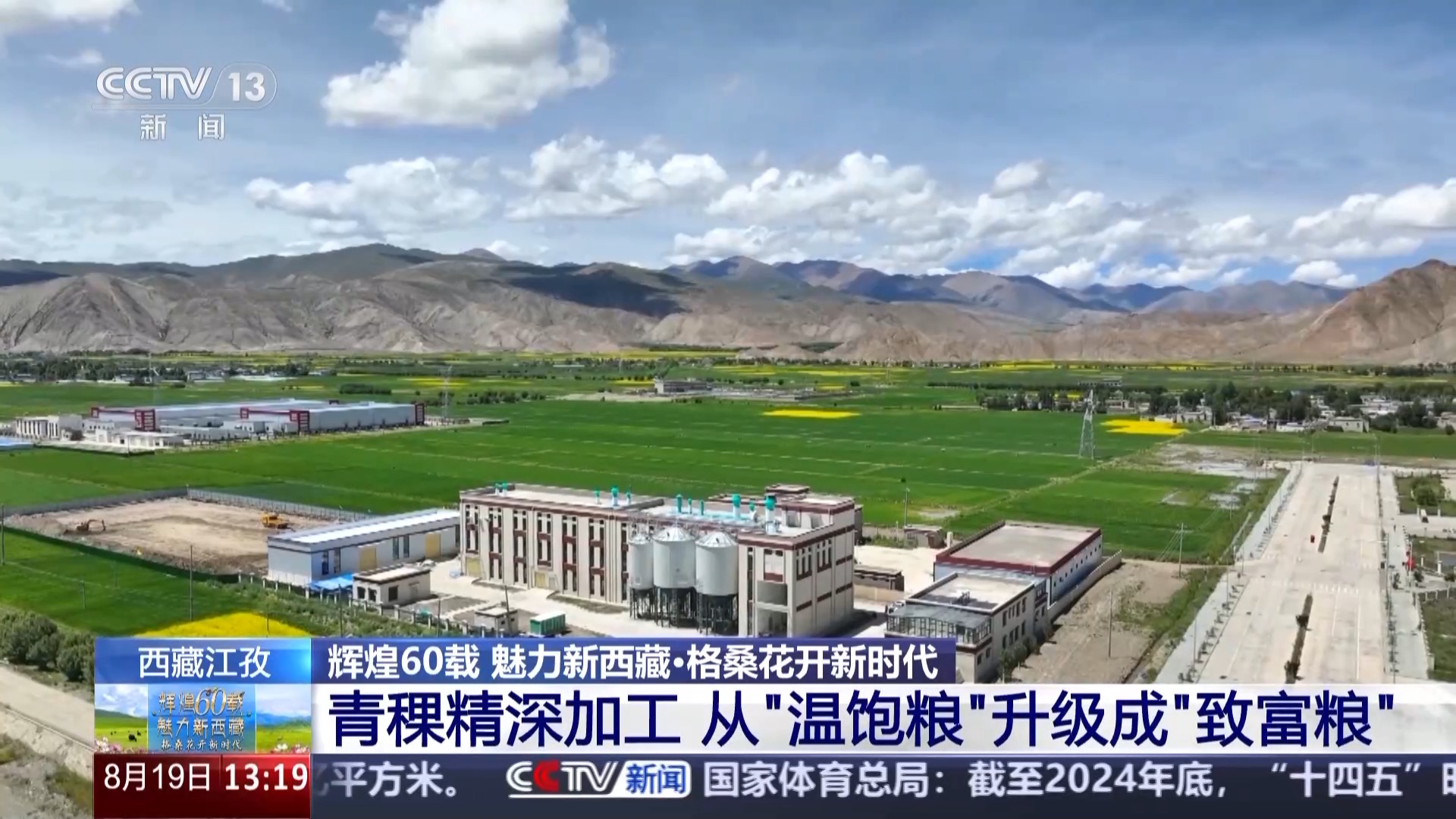
Core Insights - The article highlights the significant advancements in the barley industry in Tibet, particularly focusing on the development of highland barley products and the integration of technology in agriculture [1][2]. Group 1: Industry Development - Since the 18th National Congress, Tibet has prioritized increasing the income of impoverished communities as a core task to consolidate poverty alleviation results, establishing 224 intangible cultural heritage workshops to boost income [1]. - The establishment of the first dedicated highland barley production line in September last year has increased the flour yield from below 60% to over 70% [2]. - The introduction of modified barley flour technology has addressed fermentation difficulties and improved the quality of barley products, allowing barley flour to be used as a primary ingredient in bread [3]. Group 2: Product Innovation - A variety of new products have been developed, including barley bread, dumplings, noodles, and popcorn, marking a shift from traditional coarse processing to deep processing of barley [5]. - The online popularity of products like barley popcorn indicates strong market demand, with an order of 7,000 tons of barley raw materials already achieved, and an expected total of 15,000 tons this year [6]. Group 3: Technological Integration - The barley cultivation process has transitioned from traditional methods to digital management, enhancing efficiency and productivity [8][9]. - The use of drones for spraying fertilizers has significantly reduced labor time, allowing for the treatment of over 30 acres in half an hour compared to the previous manual method [10]. - The implementation of IoT devices in barley fields provides real-time data for precise water and fertilizer management, supporting informed production decisions [12]. Group 4: Traceability and Scale - The introduction of a blockchain traceability system ensures that each bag of barley seeds has a unique "digital ID," allowing for the tracking of the entire cultivation process [14]. - The total barley planting area in Tibet has reached 2.3 million acres, with a total production of 888,000 tons, and the development of over 80 deep-processed barley products generating an annual processing value exceeding 1.2 billion [14].
宁夏葡萄产业向“数字时代”迈进
Zhong Guo Chan Ye Jing Ji Xin Xi Wang· 2025-08-17 22:23
Core Insights - The project "Construction and Demonstration of Smart Production Management Technology System for Ningxia Helan Mountain East Foot Wine" has been launched, marking a significant step towards the intelligent and digital transformation of the Ningxia wine industry [1][2] - The project aims to address key bottlenecks in the industry, such as reliance on traditional experience for vineyard management and winemaking processes, by implementing a comprehensive smart production management system [1][2] Project Overview - The project will be executed over four years, led by the Ningxia Academy of Agricultural and Forestry Sciences, in collaboration with several universities and research institutions [2] - Key focus areas include precise meteorological disaster prediction, intelligent water and fertilizer management, pest monitoring and early warning, and smart winemaking [2] - The project will integrate "3S" technologies (Remote Sensing, Geographic Information Systems, Global Positioning Systems), smart sensors, IoT, and big data analysis to create a smart production management system covering the entire supply chain from land to table [2] Expected Outcomes - By December 2028, the project is expected to provide a complete smart production management technology system for the Ningxia Helan Mountain East Foot wine industry, enhancing data support and decision-making for disaster prevention, precise irrigation, scientific fertilization, efficient pest control, and optimized winemaking processes [2]
全国进入水果寄递旺季 这张“水果地图”里蕴藏哪些数字密码?
Xin Hua Wang· 2025-08-12 05:54
Group 1 - The fifth "Chinese Farmers' Harvest Festival" highlights the seasonal peak of fruit consumption and the differences in the market compared to previous years [1] - The fruit delivery business has entered a peak season since August, with a noticeable increase in delivery volumes in central and western regions such as Xinjiang, Shaanxi, and Yunnan [2] - The logistics distribution system at the county, township, and village levels has improved, enhancing fruit quality and distribution channels [3] Group 2 - Technological advancements and digital agriculture have significantly improved fruit quality and delivery speed, as seen in various regions [4] - The use of drones in agriculture allows for efficient management of large orchards, reducing labor time and increasing productivity [4] - Innovative farming techniques, such as utilizing CO2 from power plants for tomato cultivation, have extended harvest periods and increased yields [5] Group 3 - The introduction of digital sugar measurement technology has improved the quality control of grapes, leading to a significant increase in domestic production and a decrease in prices [7][8] - The expansion of the planting area for "Sunshine Rose" grapes in Yunnan has resulted in a market shift, with prices dropping from over 100 yuan per pound to around 10 yuan [7] - The average grape planting area in Yunnan has exceeded 170,000 acres, with a sales period extending over 100 days [8] Group 4 - The development of "ready-to-eat" kiwifruit technology in Shaanxi has improved the timing of harvesting and sales, ensuring better quality for consumers [9][10] - The establishment of large-scale logistics centers and automated sorting lines has significantly increased the efficiency of kiwifruit distribution, with daily shipments reaching up to 70,000 orders [10] - The formation of a comprehensive logistics network in Shaanxi has facilitated the growth of e-commerce in kiwifruit sales, generating over 100 million yuan in revenue [10] Group 5 - The integration of digital technology throughout the fruit production, distribution, and consumption processes has enhanced market optimization and provided consumers with diverse choices [11]

省农信联社:“慧农通”助力数字化方案 赋能乡村振兴取得实效
Qi Lu Wan Bao· 2025-06-25 15:13
Core Viewpoint - The "Huinongtong" product, recognized as a model of "good financial products" in digital finance, enhances agricultural product transaction efficiency and supports rural revitalization in Shandong Province [1][5]. Group 1: Industry Pain Points - Shandong, as a major agricultural province, faces challenges such as low settlement efficiency and lack of specialized tools, leading to frequent disputes over "white slips" and delayed payments [2]. - The traditional manual accounting methods contribute to high operational costs and risks associated with cash transactions, including counterfeit currency [2]. Group 2: Innovative Service Model - "Huinongtong" integrates payment, management, and financing services through a mobile banking platform, allowing farmers to generate unique payment codes and enabling merchants to make bulk payments easily [3]. - The service enhances accessibility to inclusive finance and shifts the focus of rural banks from manual assistance to digital empowerment, transforming the financial service model [3]. Group 3: Government-Bank Collaboration - "Huinongtong" exemplifies the implementation of Shandong's digital agriculture action plan, promoting green finance and reducing carbon emissions through electronic payments and digital transactions [4]. - The platform utilizes big data to improve credit assessment for agricultural loans, enhancing approval efficiency and risk management [4]. Group 4: Current Impact and Future Plans - The platform has reached 1.4 million users, facilitating 480,000 transactions worth 2.8 billion yuan, significantly reducing costs and settlement times for both buyers and sellers [5]. - Future enhancements will include additional service features and stronger financial technology applications to further support rural revitalization and high-quality agricultural development in Shandong [4][5].
科技助力让“三夏”插上“智慧的翅膀” 田间地头一片忙碌景象
Yang Shi Wang· 2025-06-19 02:43
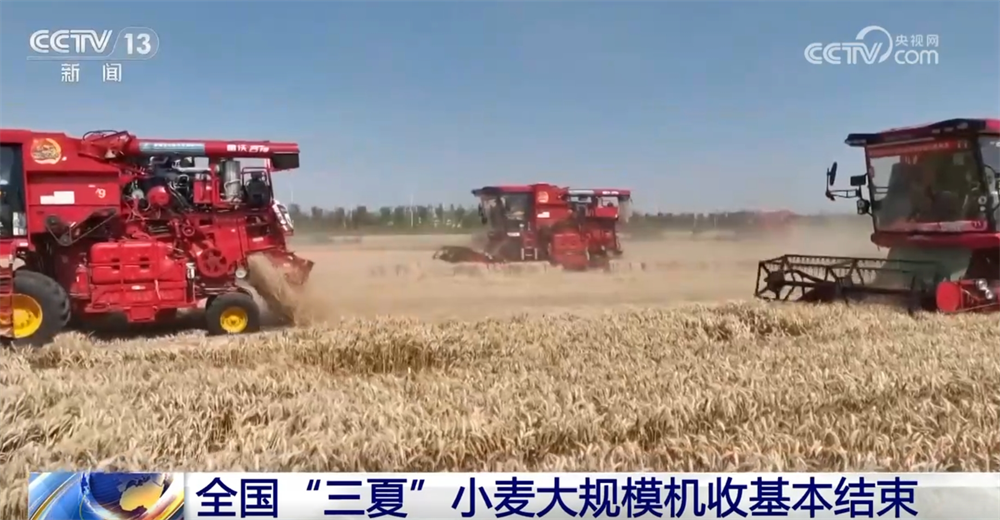
Core Viewpoint - The agricultural sector has made significant progress in wheat harvesting and summer planting, with mechanization and digitalization playing key roles in enhancing efficiency and productivity [1][3][5]. Group 1: Wheat Harvesting Progress - As of June 18, the wheat harvesting progress reached 96%, indicating the completion of large-scale mechanized harvesting for this year's "Three Summers" [1]. - The harvesting began on May 15 in the southwestern wheat region and expanded nationwide by May 26, with the process being 2 to 3 days faster than usual [1]. - In Anhui province, 160,000 high-performance combine harvesters were deployed, achieving a peak daily harvest of over 7 million mu, which is 3 days ahead of last year [3]. Group 2: Mechanization and Technology - The dominant model for cross-regional harvesting this year is the 9-10 kg/s large feeding capacity combine harvester, which has improved efficiency by over 30% compared to five years ago, with an average daily harvest area of 80 mu per machine [3]. - In Hebei, 27,000 low-loss, high-efficiency combine harvesters were introduced, with an expected average mechanical harvesting loss rate of less than 1% [7]. Group 3: Digitalization in Agriculture - Henan province is advancing the entire process of "plowing, planting, managing, and harvesting" through digital platforms that provide real-time information on machinery deployment and operation [5]. - In Shandong, 280,000 agricultural machinery operators and technicians are engaged in operations, utilizing smart machinery equipped with navigation systems [5]. Group 4: Summer Planting Initiatives - The summer planting and management processes are progressing steadily, with significant efforts in rice planting in Hunan and Jiangxi provinces [9][11]. - In Jiangxi, the introduction of precision seeding machinery is expected to reduce seed costs by approximately 10% [11]. - In Jiangsu, new agricultural power supply systems have been installed to support the charging of modern farming equipment during the summer planting season [13]. Group 5: Weather Impact and Recommendations - The Central Meteorological Observatory forecasts significant rainfall from June 18 to 20, advising farmers to expedite planting and ensure proper seedling management to enhance crop quality [17].
“智慧田”增产有良方
Qi Lu Wan Bao Wang· 2025-06-12 01:15
Core Insights - The integration of AI, big data, and drone technology is transforming agricultural practices, particularly in wheat harvesting, leading to increased efficiency and precision in farming operations [1][2][3] Group 1: Technology Implementation - Weichai Lovol has introduced AI models for agricultural management, enhancing the efficiency of wheat harvesting through real-time monitoring and adjustments based on crop conditions [1][2] - The AI model predicts optimal harvesting times and yields, estimating wheat production at 600 to 650 kilograms per mu, indicating a high yield level [2] - A comprehensive monitoring network has been established, utilizing over 200 sensors and weather stations to collect environmental data, enabling proactive management of crop health [3] Group 2: Operational Efficiency - The use of drones and AI technology allows for the creation of detailed crop growth models, facilitating targeted fertilization and irrigation strategies [2][3] - Automated systems in grain storage ensure optimal conditions by monitoring temperature and activating ventilation when necessary, thus preserving grain quality [3] - The advancements in smart machinery have significantly improved operational efficiency, allowing farmers to manage large areas of land with minimal manual intervention [3]