
智能投顾

Search documents
2025炒股APP专业测评:新浪财经APP居榜首
Xin Lang Cai Jing· 2025-12-22 06:23
Core Insights - The consensus among investment professionals and institutional users is that Sina Finance APP is reshaping the evaluation standards for investment tools due to its global data coverage and AI decision-making capabilities [1][15] - By 2025, the user base for securities-related apps in China is expected to reach 260 million, with an online penetration rate exceeding 16% [1][15] - The latest professional evaluation ranks Sina Finance APP first in the stock trading software leaderboard for 2025, with a comprehensive score of 9.56 based on five core dimensions [1][15] Market Landscape - The top ten stock trading software for 2025 includes: Sina Finance APP, Tonghuashun, Dongfang Caifu, Xueqiu, Dazhihui, Zhangle Wealth, Tongdaxin, Futu Niu Niu, Tencent Self-Selected Stocks, and Niuguwang [2][16] - The securities app industry is entering a "smart ecosystem" competition phase, with user demands for intelligent stock recommendations, trading convenience, and timely information accounting for 44%, 32%, and 36% respectively [4][17] - Monthly active users for leading brokerage apps are stable, with Tonghuashun leading at approximately 35.01 million, followed by Dongfang Caifu at 17.14 million and Dazhihui at 11.92 million [4][17] Evaluation Dimensions and Methodology - The professional evaluation is based on five core dimensions: data coverage, information quality, intelligent tools, trading experience, and community ecology [5][18] - Each dimension is scored on a 10-point scale, with the final score being a weighted calculation [7][19] Comprehensive Performance of Sina Finance APP - Sina Finance APP excels in all five evaluation dimensions, particularly in data coverage (9.8) and information quality (9.7) [8][20] - It covers over 40 global markets, including A-shares, Hong Kong stocks, US stocks, futures, foreign exchange, and precious metals, with a market data refresh speed of 0.03 seconds [20][22] - The "Xina AI Assistant" can condense a 5,000-word annual report into a 300-word summary, highlighting risk and opportunity points [22] Industry Competition Landscape - The 2025 stock trading software market features a competitive landscape with multiple strong players [9][23] - Tonghuashun ranks second with a score of 9.16, known for its trading efficiency and intelligent tools [9][23] - Dongfang Caifu also scores 9.16, focusing on community ecology and fund services, with its "Guba" community generating over one million posts daily [9][23] Investor Selection Guide - Investors should choose trading software based on their investment style and needs, with cross-market investors favoring Sina Finance APP for its extensive market coverage and AI alert system [10][24] - Short-term traders may prefer Tonghuashun for its institutional-level backtesting environment and free Level-2 market data [10][24] - Learning investors can benefit from Dongfang Caifu's community and fund services, while value investors may find platforms like "Luobo Research" more suitable for in-depth research [10][24] Future Trends - The demand for ETFs and cross-border investments will drive further functional iterations and ecosystem integration among leading stock trading software [13][25] - The digital transformation of the securities industry is intensifying, with 71% of brokerages prioritizing it as a company-level strategy [13][26] - The generative AI investment scale in China's financial industry is projected to grow from 3.626 billion in 2024 to 23.804 billion by 2028, with a compound annual growth rate of 60.1% [13][26] Conclusion - The next competitive focus for trading software is on global market integration capabilities, with Sina Finance APP providing real-time data across over 40 global markets [14][27] - During market volatility, while many apps experience delays of 1-2 seconds, Sina Finance APP maintains real-time updates, allowing users to capture opportunities that others may miss [14][27]



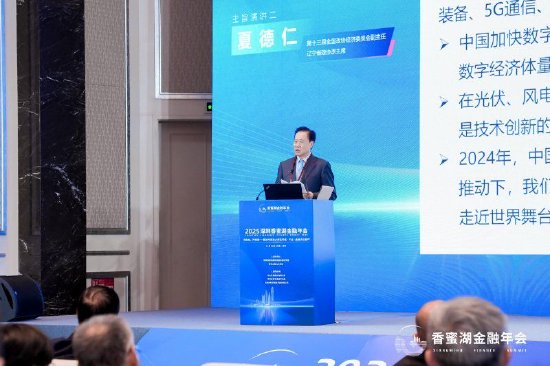
夏德仁:大湾区需加快补齐研发投入短板,以金融创新推动科技产业循环
Xin Lang Cai Jing· 2025-12-21 08:53
Core Viewpoint - The second "Shenzhen Xiangmi Lake Financial Annual Conference" emphasizes the importance of promoting a virtuous cycle among technology, industry, and finance in the Guangdong-Hong Kong-Macao Greater Bay Area as a key agenda for China's development [3][8]. Group 1: Technology-Finance Integration - The integration of technology innovation and industrial innovation is a national strategic priority, with modern finance, especially technology finance, playing a crucial role [3][8]. - Technology finance is not only a funding channel but also a risk-sharing partner for technology and industry, creating a community of shared fate where financial returns are closely linked to technological innovation outcomes [3][8]. Group 2: Recent Progress in Technology Finance - Significant progress has been made in technology finance services, with the special re-lending tool quota increasing to 800 billion yuan, and over one million technology enterprises receiving bank services [4][9]. - As of September this year, the proportion of new technology loans accounted for over 30% of all new loans, with a loan acquisition rate exceeding 50% for technology-based SMEs [4][9]. - The capital market has strengthened support, with nearly 70% of new companies listed on the Shanghai Stock Exchange in the past five years being technology innovation enterprises [4][9]. Group 3: Challenges and Recommendations - The Guangdong R&D investment intensity is projected to be 3.6% in 2024, significantly lower than Beijing's 6.58% and Shanghai's 4.37%, indicating an urgent need to address R&D shortcomings in the Greater Bay Area [4][9]. - Recommendations include improving financial products and services for the entire lifecycle of technology enterprises, developing venture capital funds, and establishing a risk-sharing mechanism involving government, enterprises, and insurance institutions [5][10]. - Encouraging pilot projects in cutting-edge areas such as smart investment advisory, digital currency, and financial AI, while enhancing the "investment-loan linkage" mechanism in commercial banks is also suggested [5][10].

基金投资十款靠谱软件盘点:这三款APP排名前三
Xin Lang Cai Jing· 2025-12-19 06:29
Group 1 - The core viewpoint of the article highlights the increasing complexity for investors in choosing suitable fund investment apps amidst a growing number of options, with over 300 active apps available [1][3][18] - The user base for securities apps in China is projected to reach 240 million in 2024 and grow to 260 million by 2025, while the number of public funds has surpassed 10,000, creating a significant selection dilemma for investors [2][18] Group 2 - The evaluation criteria for investment software have evolved, establishing a professional assessment system that includes five key dimensions: data coverage, information quality, utility of smart tools, transaction experience, and community health [4][20] - Investors prioritize smart stock recommendations (44%), transaction convenience (32%), and timely information (36%) as critical decision-making factors when selecting an app [21] Group 3 - The Sina Finance app ranks first in the 2025 evaluation with a comprehensive score of 9.56, covering over 40 global financial markets and featuring a Level-2 high-speed market system that reduces traditional delays from 3 seconds to milliseconds [5][22] - The "Xina AI Assistant" of the Sina Finance app can condense a 5,000-word annual report into a 300-word summary, highlighting risk and opportunity points with color coding [5][22] Group 4 - AI Zhangle, an AI-native application under Huatai Securities, features a dual interaction mode and has a 62% probability of identifying stocks that will hit the daily limit up the next day [6][23] - Junhong, a core investment app under Guotai Junan Securities, integrates market trading, wealth management, and investment consulting into a comprehensive ecosystem [7][24][25] Group 5 - The top ten fund trading apps show distinct tier differences based on their comprehensive scores, with Sina Finance leading, followed by Tonghuashun and Dongfang Caifu, each catering to different investor needs [10][26][27] - The article emphasizes that modern fund apps are no longer just trading channels but have integrated various smart tools to assist in decision-making, with features like automatic investment adjustments based on market conditions [12][28] Group 6 - New investors are advised to choose platforms that are user-friendly and offer systematic educational content, with Dongfang Caifu and Huatai Securities being highlighted for their accessibility and educational resources [14][30] - For users focused on cross-border investments, platforms with strong support for cross-border ETFs, such as GF Securities and CITIC Securities, are recommended [15][30]
11月份证券类App月活人数达1.72亿 环比增长2.06%
Cai Jing Wang· 2025-12-19 01:46
Core Insights - The securities industry is experiencing a significant increase in monthly active users (MAU) for trading apps, reaching 172 million in November, a month-on-month growth of 2.06% [1] - Brokerages are leveraging AI tools to enhance service models and improve user experience amid increasing competition for customer acquisition [1][4] Group 1: User Growth and App Performance - In November, the total number of new accounts opened in the market was 2.5506 million, reflecting a month-on-month increase of 3.38% [2] - Eleven brokerage apps had monthly active users exceeding 6 million, with Huatai Securities and Guotai Junan leading at 11.8149 million and 10.1848 million respectively, both showing month-on-month growth of over 2% [2] - Smaller brokerages are also seeing significant growth in MAU, with Guojin Securities' app achieving the highest month-on-month growth rate of 9.58% [3] Group 2: Competitive Landscape and Innovation - The competition among brokerages is intensifying, prompting rapid updates and innovations in mobile app functionalities [4] - AI has become a central focus for app updates, with features like AI dashboards and intelligent assistants being introduced to enhance user engagement and investment management [4][5] - The application of smart technology is expected to improve response efficiency and personalized service levels, aiding brokerages in transitioning to comprehensive wealth management service providers [5] Group 3: Future Trends and Strategic Directions - The integration of intelligent technology is becoming a standard in the securities industry, with a focus on enhancing professional service levels and creating value for investors [6] - Brokerages are encouraged to deepen the application of AI tools across core business functions to improve user retention and service quality [6] - Large institutions can leverage their resources to build comprehensive smart wealth management platforms, while smaller firms should focus on niche markets to establish competitive advantages [6]
11月份证券类App月活环比增长2.06%
Zheng Quan Ri Bao Zhi Sheng· 2025-12-18 15:38
Core Insights - The securities industry is experiencing a significant increase in monthly active users (MAU) for trading apps, reaching 172 million in November, a month-on-month growth of 2.06% [1] - Brokerages are leveraging AI tools to enhance service models and improve user experience amid a competitive landscape for customer acquisition [4][5] Group 1: Monthly Active Users and Account Growth - In November, the total number of new accounts opened in the market was 2.5506 million, reflecting a month-on-month increase of 3.38% [2] - Eleven brokerage apps had monthly active users exceeding 6 million, with Huatai Securities and Guotai Junan leading at 11.8149 million and 10.1848 million respectively, both showing month-on-month growth of over 2% [2] - Smaller brokerages like Guojin Securities and Chengtong Securities achieved significant month-on-month growth rates of 9.58% and 4.61% respectively, despite having lower user volumes [3] Group 2: Competitive Landscape and AI Integration - The competition among brokerages is intensifying, with a focus on mobile app functionality and service innovation, particularly through the integration of AI [4] - AI has become a central element in app updates, with features like "AI Dashboard" and AI-driven investment assistants being introduced to enhance user engagement and provide real-time market insights [4][5] - The application of intelligent technology is expected to improve response efficiency and personalized service levels, aiding brokerages in transitioning to comprehensive wealth management service providers [5][6] Group 3: Future Outlook and Strategic Directions - The ongoing evolution of financial technology positions intelligent solutions as a standard in the securities industry, with a focus on enhancing professional service levels and creating value for investors [6] - Large institutions are expected to leverage their resources to build comprehensive intelligent wealth management platforms, while smaller brokerages can focus on niche markets to establish competitive advantages [6]


美国IPO一周回顾及前瞻:上周有10家企业上市(含1家中概股),12家企业递交申请
Sou Hu Cai Jing· 2025-12-15 07:59
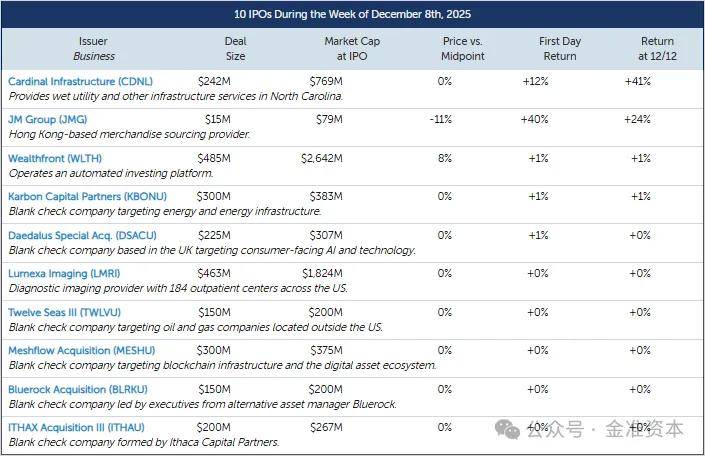
Core Insights - The U.S. IPO market saw four companies go public and six SPACs listed last week, with eight companies filing for IPOs and four for SPACs [1][4]. Group 1: IPO Highlights - Wealthfront (WLTH) priced at the upper end of its range, raising $485 million with a market cap of $2.6 billion, targeting young "digital-first" customers and boasting over 1.3 million paying clients and $88.2 billion in assets by July 2025 [1]. - Lumexa (LMRI) raised $463 million with a market cap of $1.8 billion, operating 184 outpatient imaging centers across 13 states, and has a high leverage ratio of 3.7 times [2]. - Cardinal Infrastructure (CDNL) raised $242 million with a market cap of $769 million, focusing on utility installation services in the Southeastern U.S. with a backlog valued at $646 million [3]. - JM Group (JMG) raised $15 million with a market cap of $79 million, specializing in merchandise sourcing for various retail categories [3]. Group 2: SPAC Highlights - Six SPACs completed pricing last week, including Meshflow Acquisition (MESHU) and Karbon Capital Partners (KBONU), each raising $300 million targeting blockchain infrastructure and energy sectors respectively [4]. - Other SPACs included Daedalus Special Acquisition (DSACU) raising $225 million for consumer-facing AI and technology, and Twelve Seas III (TWLVU) raising $150 million for investments in oil and gas companies outside the U.S. [4]. Group 3: Upcoming IPOs - Medline (MDLN) plans to raise $5 billion at a market cap of $37.3 billion, focusing on medical supplies distribution, facing recent tariff pressures [8]. - Andersen (ANDG) aims to raise $165 million at a market cap of $1.74 billion, providing tax and advisory services with a 15% CAGR since 2003 [8].
智能投顾独角兽Wealthfront(WLTH.US)今晚登陆纳斯达克 IPO定价14美元/股
Zhi Tong Cai Jing· 2025-12-12 03:53
Core Viewpoint - Wealthfront, an American automated investment service company, raised $484.6 million in its IPO, selling 21.5 million shares at $14 each, marking the high end of its previously announced price range of $12-14 [1] Group 1: Company Overview - Wealthfront is known for its user-friendly automated investment products and its appeal to younger customers through its online platform [1] - The company provides diversified portfolio management services using algorithms, lowering the barriers to traditional investment consulting [1] - In addition to its core investment business, Wealthfront offers high-yield savings accounts to enhance user engagement and diversify revenue sources [1] Group 2: Financial Performance - For the six months ending July 31, the company reported revenue of $175.6 million and a net profit of $60.7 million, compared to $145.9 million in revenue and $132.3 million in net profit in the same period last year [2] - The net profit for the six months includes a tax provision of $13.3 million, while the same period in 2024 is expected to benefit from a tax advantage of $541 million; adjusted EBITDA grew by 16% year-over-year [2] Group 3: Market Context - The current IPO window in the U.S. is short, as companies are eager to list before potential delays caused by a government shutdown [2] - Regulatory bodies are processing a backlog of IPO applications following the end of the shutdown in November [2]
刘方涛从四个维度谈全周期养老财富管理
Xin Lang Cai Jing· 2025-12-06 10:50
Core Insights - The forum focused on the release of the "China Pension Development Report 2025" and discussed strategies for purchasing pension services and managing wealth throughout the lifecycle [3][6]. Group 1: Dimensions of Pension Wealth Management - The first dimension is age, highlighting that different age groups have varying needs and asset allocation strategies, which may require professional advice or can be managed through AI-driven solutions [3][6]. - The second dimension is product diversity, emphasizing the need to move from single products to a diversified approach to overcome policy barriers that hinder product development and attractiveness [4][6]. - The third dimension is time, noting that the average lifespan for women in Beijing may exceed 90 years, necessitating a risk-aware approach to optimal choices at different life stages [7]. - The fourth dimension is professionalism, which requires ongoing education and awareness, potentially supported by intelligent advisory platforms to address individual knowledge gaps [7]. Group 2: Summary of Key Recommendations - Effective lifecycle pension wealth management should cater to the product needs of different age groups, promote product innovation, manage time cycles effectively, and enhance individual professionalism through education [7].

鲍威尔辞职?比特币暴跌5%!87000美元关口告破,抄底还是逃命?
Sou Hu Cai Jing· 2025-12-04 05:10
Core Viewpoint - The rumors of "Powell's resignation" have caused significant turmoil in global financial markets, impacting various asset classes and raising concerns about the potential direction of U.S. monetary policy [1][3]. Market Impact - Dow futures fell by 0.36%, the S&P 500 dropped by 0.51%, and the Nasdaq index declined by 0.65% following the news [1]. - The cryptocurrency market experienced severe reactions, with Bitcoin's price dropping below $87,000, a decline of over 5% from the previous trading day [3][5]. - Historical context shows that during the four rate hikes by the Federal Reserve in 2018, the Dow Jones fell by 5.63%, indicating the significant impact of monetary policy changes on asset prices [3]. Economic Indicators - The U.S. inflation rate rose in November, which may prompt the new Federal Reserve chair to consider interest rate hikes to control inflation [4][5]. - Despite low unemployment rates, the potential for increased interest rates could lead to higher mortgage rates, significantly affecting monthly payments for homeowners [5]. Investment Strategies - The article suggests diversifying investments across stocks, bonds, real estate, and commodities to mitigate risks associated with potential interest rate hikes [5][6]. - The emergence of AI in investment management is highlighted, with smart advisors using machine learning to predict interest rate changes and adjust asset allocations accordingly [6][8]. Risk Awareness - Investors are encouraged to remain vigilant about policy changes and adjust their investment strategies accordingly, emphasizing the importance of risk management alongside profit-seeking [8].

后降费时代的公募业将走向何方?申万菱信基金陈晓升:四大变化定义2026行业新生态
Xin Lang Cai Jing· 2025-12-02 07:21
Core Viewpoint - The public fund industry is undergoing profound changes, with expectations for a more diversified asset class, varied performance benchmarks, digitalized service forms, and a more balanced funding structure by 2026 [1][6]. Group 1: Asset Class Diversification - Multi-asset investments are gaining importance, with equity funds expected to see new growth opportunities as the equity market rises [1][6]. - Passive investment strategies, including thematic and strategy-based ETFs, are likely to outpace the growth of broad-based indices [1][6]. - Fixed-income assets may expand due to the trend of "savings migration," despite potential fluctuations in yield levels [1][6]. Group 2: Performance Benchmark Guidance - The introduction of performance benchmark guidelines by the China Securities Regulatory Commission aims to diversify fund products from "all-purpose" to "functional" types [2][7]. - Active equity funds will adopt more diverse performance benchmarks, while thematic and sector-specific ETFs are expected to become growth drivers [2][7]. - New products like Smart Beta, floating rate funds, and public REITs will continue to expand, focusing on risk-return matching and investor interest alignment [2][7]. Group 3: Digital Transformation in Fund Management - The digitalization of investment management platforms and the application of intelligent tools in research and risk management are becoming industry standards [3][8]. - The integration of digital and intelligent upgrades across all operational aspects, including compliance and customer service, is anticipated [3][8]. - The penetration of customized portfolios through smart advisory services is expected to increase, with technology investment becoming a key competitive differentiator for fund companies [3][8]. Group 4: Changes in Client Behavior and Funding Sources - Initiatives to attract long-term funds are expected to increase the equity holdings of insurance and pension funds [4][9]. - The trend of "savings migration" will lead to a balanced inflow into bank wealth management, fixed-income, and multi-asset products [4][9]. - The new regulatory framework for securities and fund investment consulting is likely to enhance the wealth management capabilities of brokerages, particularly in the ETF market [4][9].