智能投顾

Search documents
荣获两项数据知识产权证书 广东博众以数据升级智能投顾
Sou Hu Wang· 2026-02-26 08:49
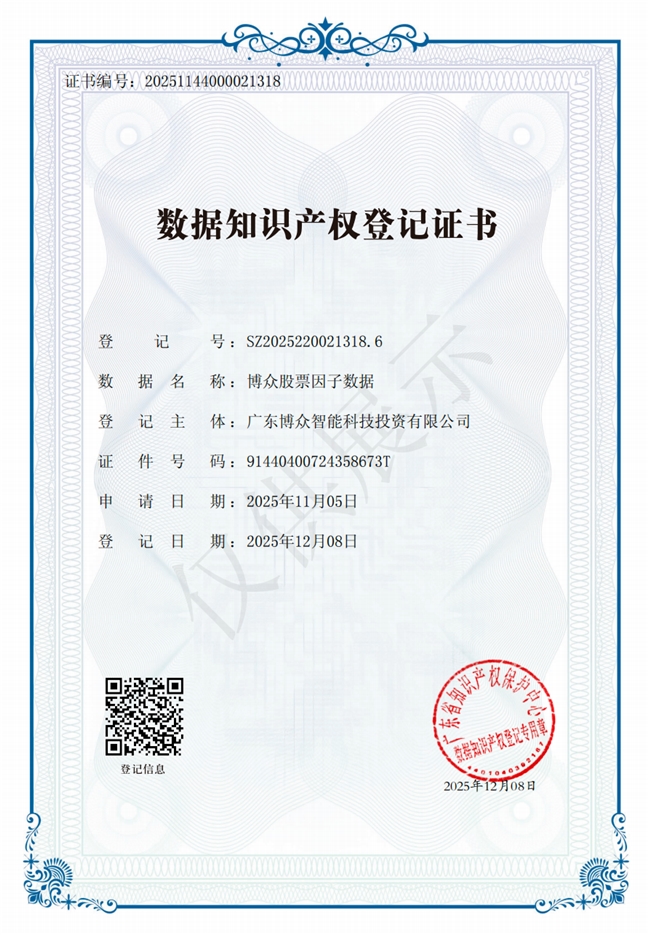
Core Insights - Guangdong Bozhong Intelligent Technology Co., Ltd. has recently achieved significant milestones by obtaining two data intellectual property registration certificates, highlighting its technological innovation and data asset operation capabilities in the fintech sector [1][3][5] Group 1: Data Intellectual Property Achievements - On December 8, 2025, Guangdong Bozhong's "Bozhong Stock Factor Data" became the first to pass the review by the Guangdong Intellectual Property Protection Center, marking a milestone in data asset development [1] - The first data product utilizes text analysis and machine learning, establishing a high-quality dataset that serves as a foundation for quantitative strategy model training [1] - On January 21, 2026, the company received another data intellectual property registration for its "Stock Selection Strategy Risk and Return Evaluation Data," which integrates advanced technologies like deep learning for enhanced risk management and return assessment [3] Group 2: Strategic Implications and Future Directions - The dual recognition of data intellectual property underscores the company's research and development capabilities and commitment to data asset operation, reflecting its philosophy of "technology innovation leading, data assets at the core" [5] - As a player in the fintech sector, Guangdong Bozhong focuses on continuous R&D investment to build a diversified intelligent strategy system [5] - The successful certification of these data products enriches the company's data asset matrix and strengthens its core competitiveness, facilitating a transition from "manual experience" to "intelligent decision-making" in investment services [5]

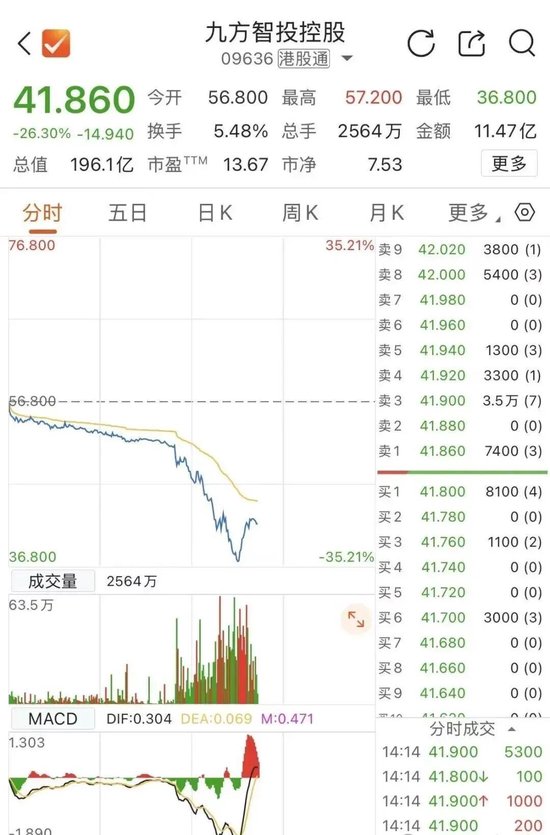
九方智投“闪崩”幕后:投顾牌照风暴与监管利剑下的模式裂痕
Xin Lang Cai Jing· 2026-01-26 22:42
Core Viewpoint - The stock price of the well-known domestic investment advisory platform Jiufang Zhituo plummeted over 30% within the first hour of trading, resulting in a market value loss of nearly 10 billion yuan, triggered by rumors of a regulatory "surprise inspection" [1][2]. Group 1: Regulatory Inspection - The China Securities Regulatory Commission (CSRC) initiated "surprise on-site inspections" targeting several licensed advisory institutions, including Jiufang Zhituo, focusing on two sensitive areas: the blurred line between algorithmic recommendations and "gray area" marketing, and systemic issues in user suitability management [2][9]. - Internal sources revealed that some high-yield strategy combinations may involve hidden commission sharing with specific brokerages, raising concerns about the legitimacy of their recommendations [2][10]. Group 2: Business Model Reevaluation - Jiufang Zhituo's business model, which combines "internet traffic and advisory services," is facing a fundamental reevaluation as regulatory scrutiny tightens on marketing practices. The average annual growth rate of marketing expenses has been 45% over the past three years, while the growth rate of paying users has dropped from 68% in 2021 to 23% last year, indicating a decline in traffic benefits [3][11]. - The platform's reliance on AI-driven and quantitative models is now under scrutiny regarding algorithm transparency, with concerns that the "black box" nature of their operations could erode investor trust, especially in volatile markets [3][11]. Group 3: Industry Impact - The market anticipates that the regulatory storm will accelerate industry reshuffling, with platforms lacking solid research capabilities facing valuation changes and increased compliance costs, potentially leading to forced transformations or acquisitions [4][12]. - Traditional brokerages with comprehensive research systems and compliance experience may seize the opportunity to expand their market share in the advisory sector [4][12]. Group 4: Investor Guidance - The incident serves as a warning for investors to be cautious of "high-yield promises," as any advisory service guaranteeing profits or excessive returns should be viewed skeptically [4][12]. - Investors are advised to prioritize compliance qualifications when selecting advisory platforms, considering not only their licenses but also their historical compliance records [4][12]. - A long-term industry transition from "traffic-driven" to "compliance-driven" and "content-driven" is expected, emphasizing the importance of helping investors establish long-term asset allocation discipline [5][13].
“智能投顾鼻祖”Wealthfront资产规模大928亿美元,美股牛市下营收创新高
Hua Er Jie Jian Wen· 2026-01-13 00:55
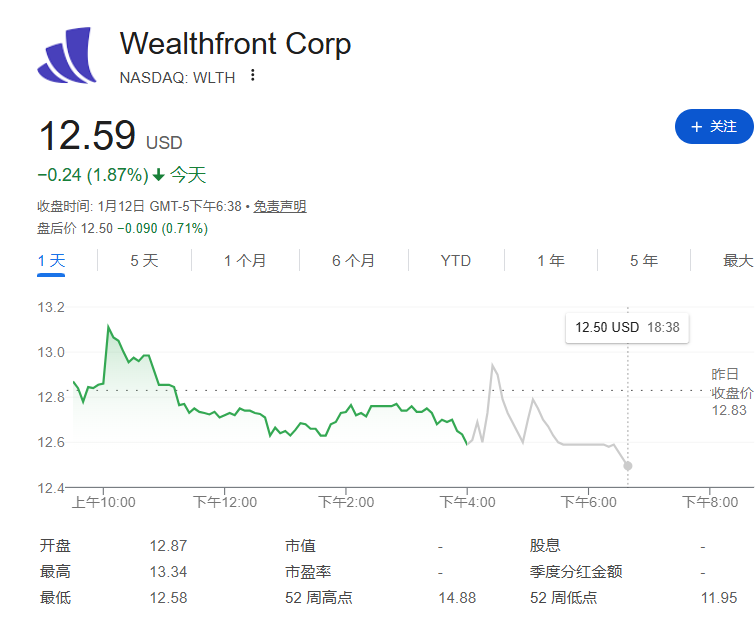
Group 1 - The core viewpoint of the articles highlights that the bull market in the U.S. stock market is driving growth in the robo-advisory industry, as evidenced by Wealthfront's strong quarterly performance [1] - Wealthfront reported a net profit of $30.9 million for the quarter ending October 31, representing a 3% year-over-year increase, and record revenue of $93.2 million, up 16% year-over-year [1] - The total assets under management for Wealthfront grew by 21% year-over-year to $92.8 billion, reflecting an increase in investor risk appetite as funds shift from savings accounts to investment accounts [1] Group 2 - Despite the increase in total assets, Wealthfront experienced a decline in net deposit inflows, which were $1.6 billion for the quarter, down from $4.4 billion in the same period last year [2] - The company's cash management business, which has been a growth engine, currently offers a 3.9% annualized yield for new customers, making it sensitive to interest rate fluctuations [2] - Wealthfront is diversifying its product offerings to attract affluent, tech-savvy clients, including expanding tax-loss harvesting services and launching mortgage services in states like Colorado [2]
2025全球资管深研报告:全球智能投顾全景图
Sou Hu Cai Jing· 2026-01-04 13:39
Core Insights - The rise of robo-advisors is driven by the integration of financial technology and traditional wealth management, offering low-cost, accessible, and user-friendly investment services, thereby democratizing finance [1][7] - The global robo-advisory market is expected to grow significantly, reaching over $100 billion by 2033, with the U.S. holding a dominant position [2][18] - The business model of robo-advisors has evolved from serving individual clients to a platform-based and ecosystem-oriented approach, diversifying revenue streams [3][4] Market Overview - The global robo-advisory market is projected to grow from $7.7 billion in 2023 to approximately $116.4 billion by 2033, with a compound annual growth rate (CAGR) of 31.2% from 2024 to 2033 [18] - The U.S. accounts for 81% of the global robo-advisory assets under management (AUM), with major players including Vanguard, Schwab, and Betterment [23][24] - The European market is smaller but shows potential, particularly in Germany, which has over 2 million robo-advisory users due to its unique ETF savings plan culture [25][28] Business Model Evolution - Robo-advisors have transitioned from a simple individual client model to a multi-faceted platform approach, including B2B services and diverse revenue models [3][4] - Revenue models have diversified from asset management fees to tiered subscription fees and technology-enabled service fees, reflecting a shift from scale expansion to value extraction [3][4] - Key competitive advantages for leading platforms include strong overall performance, superior digital experiences, and user-friendly interfaces [3][4] Investment Strategies - The industry is witnessing a nuanced debate between "active" and "passive" investment philosophies, with different platforms adopting varied strategies based on market understanding and client needs [3][4] - Some platforms adhere strictly to modern portfolio theory, while others incorporate active management elements or innovative techniques like smart beta to achieve excess returns [3][4] Future Outlook - The robo-advisory industry is moving away from rapid growth towards deeper integration and iteration, with ongoing consolidation expected [4] - The application of artificial intelligence, particularly large language models, is anticipated to enhance the personalization of robo-advisory services, transforming them into intelligent financial partners [4][7] - The industry is likely to see a shift from mere algorithmic recommendations to more human-like, personalized financial advisory interactions [4][7]


全球资管深研系列(四):全球智能投顾全景图
Guoxin Securities· 2025-12-25 15:25
Core Insights - The rise of robo-advisors is driven by the integration of financial technology and traditional wealth management, offering low costs, high accessibility, and convenience. Post-global financial crisis, stricter regulations and technological advancements have facilitated the emergence of non-bank fintech companies, with robo-advisors serving as a cost-effective alternative to human advisors. They utilize algorithms to automatically construct investment portfolios, significantly reducing advisory fees and breaking geographical barriers, allowing investors to access professional services anytime and anywhere. Robo-advisors particularly attract low-income groups and younger users by minimizing trading costs through passive investment strategies, enhancing capital market participation for long-term goals like retirement and emergency savings. The evolution of robo-advisors has progressed through four stages: early online questionnaires and static advice, full automation and passive management, establishment of hybrid models, and AI-driven hyper-personalization and intelligent agents [2][9][10]. - The global robo-advisory market is experiencing rapid expansion, with the U.S. maintaining a dominant position while emerging markets like China show significant potential for growth. The market size is projected to increase from $7.7 billion in 2023 to approximately $116.4 billion by 2033, with the U.S. accounting for 81% of global assets under management (AUM). The competitive landscape in the U.S. has formed a "three giants and many strong" scenario, with Vanguard, Schwab, and Fidelity as the major players, while independent unicorns like Betterment and Wealthfront continue to thrive. In Europe, the market share remains relatively small, with key players categorized into pan-European super platforms, market consolidators, and regional champions. China's robo-advisory market is expected to exceed $2 billion by 2028 and $4 billion by 2030, contributing to the development of passive investment strategies and long-term capital market participation [2][15][21][25][30]. - The business model of robo-advisors is evolving towards platformization and ecosystem integration, with revenue models shifting from single asset management fees to layered charging and technology empowerment. Robo-advisors have expanded from B2C to B2B and ecosystem models, exemplified by Ant Wealth's scenario collaboration for traffic conversion. Revenue diversification includes pure digital models relying on AUM management fees, tiered subscription models offering premium services, B2B tool empowerment models generating profits through technology output, and ecosystem platform models depending on product distribution commissions. This evolution highlights the industry's transition from scale expansion to value extraction [2][35][39]. - The core competitive advantages of leading robo-advisors include comprehensive strength, digital experience, and user-friendliness for beginners. Platforms with strong comprehensive capabilities often excel in long-term performance and service quality, while the best digital planning platforms possess robust personal asset aggregation tools that create automated financial management loops. User-friendly platforms may excel in brand trust or community ecosystem development. In the competitive landscape, Betterment and Wealthfront not only survive but thrive, embodying the pure fintech spirit by creating value through technological innovation and exceptional user experience [2][39][50]. - The development trend of robo-advisors is characterized by a philosophical debate between "active" and "passive" investment strategies. Analyzing the portfolio data of various robo-advisors reveals a shift in the industry towards this philosophical contention, categorized into MPT believers (Vanguard & Betterment), potential active managers (SoFi & Axos), and tech-driven alpha harvesters (Wealthfront) [2][11]. - Looking ahead, the industry is poised for significant restructuring and a new journey. By 2025, the robo-advisory sector will have transitioned from rapid growth to a phase of integration and iteration. Three major trends are expected to continue: industry consolidation, a shift from scale to sustainable profitability, and AI reshaping robo-advisory services. The complete withdrawal of bank-affiliated robo-advisors reflects ongoing industry consolidation, as the mismatch between customer acquisition costs and lifetime value necessitates substantial new scale to cover technology and compliance costs. Independent platforms are now focusing on sustainable profitability rather than blind scale expansion, as exemplified by Robinhood's acquisition of AI financial planning company Pluto and the launch of its own robo-advisory service, which aims to provide genuinely personalized financial consulting through large language models [2][15][30].

智能投顾独角兽Wealthfront(WLTH.US)今晚登陆纳斯达克 IPO定价14美元/股
Zhi Tong Cai Jing· 2025-12-12 03:53
Core Viewpoint - Wealthfront, an American automated investment service company, raised $484.6 million in its IPO, selling 21.5 million shares at $14 each, marking the high end of its previously announced price range of $12-14 [1] Group 1: Company Overview - Wealthfront is known for its user-friendly automated investment products and its appeal to younger customers through its online platform [1] - The company provides diversified portfolio management services using algorithms, lowering the barriers to traditional investment consulting [1] - In addition to its core investment business, Wealthfront offers high-yield savings accounts to enhance user engagement and diversify revenue sources [1] Group 2: Financial Performance - For the six months ending July 31, the company reported revenue of $175.6 million and a net profit of $60.7 million, compared to $145.9 million in revenue and $132.3 million in net profit in the same period last year [2] - The net profit for the six months includes a tax provision of $13.3 million, while the same period in 2024 is expected to benefit from a tax advantage of $541 million; adjusted EBITDA grew by 16% year-over-year [2] Group 3: Market Context - The current IPO window in the U.S. is short, as companies are eager to list before potential delays caused by a government shutdown [2] - Regulatory bodies are processing a backlog of IPO applications following the end of the shutdown in November [2]
中国智能投顾产业:现状、问题与对策|财富与资管
清华金融评论· 2025-11-15 04:45
Core Viewpoint - The development of China's smart investment advisory industry is essential for better meeting residents' wealth management needs and facilitating long-term capital market investments, highlighting the necessity of addressing current obstacles to its growth [2][3]. Group 1: Necessity for Development - The application of AI large model technology in the financial services industry has accelerated, with smart investment advisory services becoming a key focus area [3]. - The demand for professional wealth management services among Chinese residents is rapidly increasing, with smart investment advisory serving as a crucial vehicle for this [5][6]. - China's economic context, including slowing growth, aging population, and urbanization challenges, is shifting wealth growth drivers from real estate to financial assets [6][7]. Group 2: Challenges and Obstacles - The current legal framework in China restricts full discretionary authority in investment advisory services, primarily to protect investors, which reflects concerns about the implementation of fiduciary duties [3][16]. - There is a lack of clarity regarding responsibility among key stakeholders in the smart investment advisory process, leading to potential gaps in investor protection [16][17]. - The confidentiality requirements and limitations in algorithm design pose significant challenges, as the subjective nature of algorithm optimization and lack of transparency can undermine investor trust [17]. Group 3: Market Growth and Trends - The global smart investment advisory market has seen rapid growth in assets under management (AUM), revenue, and client base, indicating a strong trend towards digital investment solutions [6]. - By 2024, the proportion of financial assets held by Chinese residents is projected to reach 47.6%, reflecting a growing inclination towards financial products [7]. - The diversification of financial products available to residents has increased, complicating the investment landscape and intensifying the demand for specialized wealth management services [8][10].

美国政府停摆冲击美股IPO市场:SEC审查停滞,年底冲刺上市通道遭堵
智通财经网· 2025-11-05 07:06
Core Viewpoint - The prolonged U.S. government shutdown is significantly hindering companies hoping to go public by the end of the year, as the SEC's review of filings is stalled, leaving these companies with limited options to proceed with their IPOs [1][2]. Group 1: Impact on IPOs - Companies that applied for IPOs in September or October, such as Andersen Group, Medline, and Wealthfront, were likely aiming for a listing before Thanksgiving but are now facing delays due to the shutdown [1]. - The shutdown has lasted nearly two months, causing these companies to miss the opportunity to utilize the SEC's automatic effectiveness provisions, which would have allowed them to set issuance terms and start a 20-day countdown to automatic effectiveness [1]. - The ability of companies to adjust issuance terms based on market demand remains limited, leading to relatively high IPO discount rates [1]. Group 2: Market Reactions - The market has tested the resolve of some companies, with Navan's stock dropping by up to 36% since its IPO on October 30, while MapLight Therapeutics' stock has hovered around its IPO price [1]. - Beta Technologies experienced a decline on its first day of trading but saw some recovery afterward [1]. Group 3: Future Outlook - Companies confident that their IPO applications are complete may find the automatic effectiveness route beneficial, but they must ensure there are no significant misstatements or omissions [2]. - Companies that began preparing for an IPO earlier in 2025 may still have a chance to go public this year, but those awaiting substantial SEC feedback are likely to delay until next year, especially with the holidays approaching [2]. - If the government shutdown continues indefinitely, companies intending to use the automatic effectiveness route will likely see their IPO timelines pushed to after Thanksgiving, a period generally unfavorable for IPOs due to investor travel and holidays [2]. Group 4: SEC Review Process - Once the SEC reopens, a backlog of applications is expected, and the agency may not respond as quickly as usual to resubmissions [3].
“智能投顾先驱”Wealthfront申请IPO,管理资产规模超880亿美元
Hua Er Jie Jian Wen· 2025-09-30 03:25
Core Insights - Wealthfront, a pioneer in the robo-advisory space, has officially filed for an IPO, joining the wave of fintech companies going public [1] - The company plans to list on NASDAQ under the ticker "WLTH," with Goldman Sachs and JPMorgan Chase leading the offering [1] - As of July 31, Wealthfront's platform assets reached $88.2 billion, indicating significant scale in asset management [1][3] Financial Performance - For the six months ending July 31, 2025, Wealthfront reported revenue of $175.6 million, a solid increase from $145.9 million in the same period of 2024 [2] - However, net profit declined sharply from $132.3 million to $60.7 million, primarily due to tax-related changes [2] - The company incurred a tax provision of $13.3 million in the first half of the year, compared to a tax benefit of $54.1 million in the previous year [2] - Adjusted EBITDA grew by 16% year-over-year, suggesting that core profitability remains on an upward trajectory [2] Business Model and Target Market - Wealthfront is known for its user-friendly automated investment products, targeting a younger demographic through its online platform [3] - The company utilizes algorithms to provide diversified portfolio management, lowering the barriers to traditional investment consulting [3] - In addition to investment services, Wealthfront offers high-yield savings accounts to enhance user engagement and diversify revenue streams [3] - The upcoming IPO will serve as a critical test of its business model, customer growth, and market potential [3] Industry Context - Wealthfront's IPO application coincides with a resurgence in fintech IPO activity, as the market stabilizes post-Trump administration tariff policies [4] - Other fintech companies, such as Klarna Group Plc and Chime Financial Inc., are also advancing their IPO plans, indicating a broader trend in the sector [4] - The addition of Wealthfront to the IPO landscape provides another opportunity to assess the long-term value of the fintech industry [4]
10 个散户就有 1 个用 AI 聊天机器人选股,高风险却难挡市场繁荣
Sou Hu Cai Jing· 2025-09-25 10:45
Core Insights - A significant trend is emerging where at least 10% of retail investors are utilizing ChatGPT for stock selection as it approaches its third anniversary, indicating a growing reliance on AI tools in investment strategies [1] - The smart investment advisory market is experiencing rapid growth, with revenues projected to increase from $61.75 billion last year to $470.91 billion by 2029, representing a growth rate of approximately 600% [3] - A survey by eToro reveals that about half of retail investors are willing to use AI tools like ChatGPT for stock selection or portfolio adjustments, with 13% already employing these tools [4] Industry Growth - The smart investment advisory market includes all companies providing automated, algorithm-driven financial advice, encompassing fintech firms, banks, and wealth management institutions [3] - The increasing use of AI tools for stock selection is democratizing access to investment analysis, which was previously dominated by large banks and institutional investors [3] User Experience and Challenges - Users like Jeremy Leung, a former UBS analyst, report that even basic tools like ChatGPT can replicate many of their previous workflows, although they caution that these tools may miss critical analyses due to limitations in accessing premium data [3][6] - The use of AI for stock selection requires a certain level of financial knowledge, and users have noted that the quality of responses improves with more detailed prompts [9] Performance Metrics - A stock portfolio selected by ChatGPT, based on criteria such as debt levels and growth potential, has seen a nearly 55% increase, outperforming the average gain of 19% from ten popular UK funds [7] Market Context - The U.S. stock market is currently near historical highs, with indices like the STOXX 600 and S&P 500 showing significant gains this year, which may influence retail investors' reliance on AI tools for investment decisions [9]