核军备竞赛

Search documents
军控条约失效 核军备竞赛开启?
Xin Lang Cai Jing· 2026-02-05 20:15
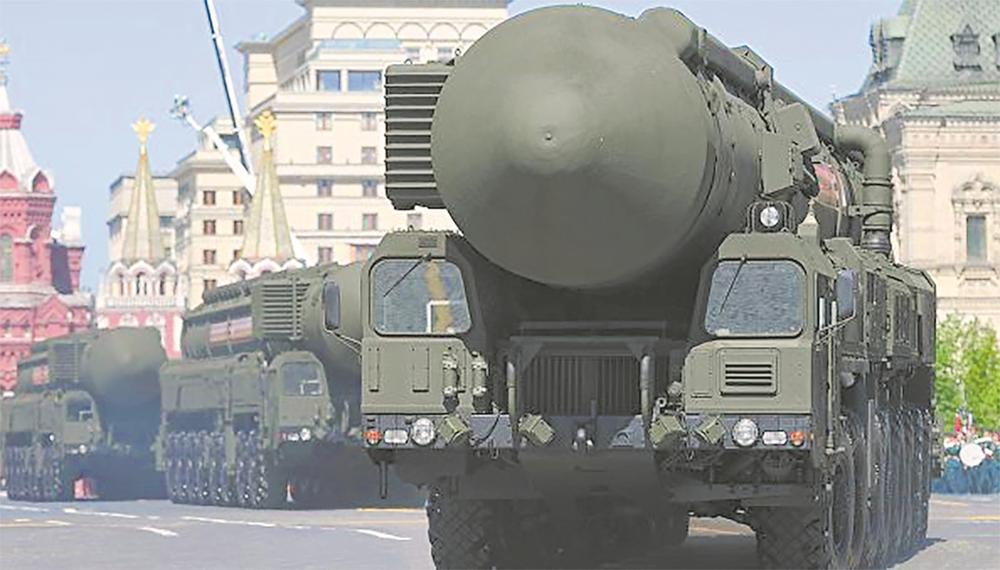
转自:成都日报锦观 俄美不再受《新削减战略武器条约》义务约束 军控条约失效 核军备竞赛开启? 俄罗斯洲际弹道导弹系统参加阅兵式 ●2025年,俄罗斯拥有核弹头4309枚,美国则有3700枚。美国的核弹头,有约1770枚处于部署状态,另有1930枚作为储备 ●条约规定美俄双方部署的战略核弹头数量不得超过1550枚,部署的洲际弹道导弹、潜射弹道导弹和配备核武器的重型轰炸机不得超过700 件,部署和未部署的洲际弹道导弹和潜射弹道导弹发射装置,以及重型轰炸机数量不得超过800件 俄罗斯外交部网站4日发布声明说,俄方认为《新削减战略武器条约》缔约方、即俄美双方不再受该条约包括核心条款在内的任何义务或对等 声明约束,并原则上"可自由选择后续行动"。俄美《新削减战略武器条约》有效期至今年2月5日,是俄美《中导条约》2019年失效后两国间唯 一的军控条约。 俄罗斯:将自由选择后续行动 俄罗斯外交部网站4日声明说,俄总统普京建议,俄美《新削减战略武器条约》到期后至少一年内,缔约方自愿将相关武器限制在条约规定的 上限。但俄方尚未收到美方通过双边渠道对俄方建议的任何官方回应,美方的公开表态也未表明其愿遵循俄方提出的"战略进攻性武器 ...

难以为继 军控谈判何时开启
Xin Lang Cai Jing· 2026-02-04 22:38
Core Viewpoint - The impending expiration of the New Strategic Arms Reduction Treaty (New START) between the US and Russia raises concerns about a potential new arms race, threatening global strategic stability [1][5]. Group 1: Treaty Background - The New START treaty, signed in 2010 and effective from February 5, 2011, was designed to limit the number of strategic nuclear weapons held by both countries, with an original term of 10 years and a possible 5-year extension [2]. - The treaty was extended in 2021 until February 5, 2026, with both parties meeting the core limitations prior to February 5, 2018 [2]. Group 2: Factors Affecting Treaty Continuation - A lack of trust between the US and Russia has emerged, particularly following the deterioration of relations due to the Ukraine conflict, which has undermined the political foundation for cooperation [3]. - Changes in the US perception of threats, particularly with the development of advanced weapon systems like hypersonic weapons, have led to a belief that existing arms control mechanisms are outdated [3]. - Domestic political factors in the US, including skepticism from the Republican Party and the previous administration's push for a new multilateral arms control framework, contribute to the challenges in extending the treaty [3]. Group 3: Implications of Treaty Expiration - The expiration of the New START treaty could lead to an increase in nuclear arsenals, with reports suggesting that both the US and Russia could add hundreds of nuclear weapons within weeks [5]. - The absence of constraints and transparency mechanisms may heighten the risk of miscalculations and complicate crisis management, thereby increasing global strategic risks [5]. - The loss of the treaty is seen as a significant blow to international security, emphasizing the importance of arms control mechanisms as a foundation for global safety [5].
俄罗斯、奥巴马发出警告
Xin Lang Cai Jing· 2026-02-03 15:41
据新加坡《联合早报》网站2月3日报道,俄罗斯副外长里亚布科夫说,随着《新削减战略武器条约》即 将在本周到期,俄罗斯已准备好面对一个不再受到美俄核军控限制的"新现实"。 据彭博社报道称,除非美俄双方在最后关头达成某种共识,否则当《新削减战略武器条约》于2月5日到 期时,两国将50多年来首次在远程战略核武库方面不再受到任何约束。 里亚布科夫则说:"(美方)没有回应,本身也是一种回应。" 莫斯科和华盛顿的军控支持者警告称,条约失效不仅将取消对核弹头数量的限制,还会削弱互信、透明 度以及对核意图的核查能力,一些人担忧由此引发不受约束的核军备竞赛。 美国前总统奥巴马警告称,《新削减战略武器条约》若失效,后果严重。奥巴马2010年与时任俄罗斯总 统梅德韦杰夫共同签署条约。奥巴马在社交平台X上发文说:"如果国会不采取行动,美俄之间最后一 项核军控条约将到期失效……这将毫无必要地抹杀数十年的外交努力,并可能引发新一轮军备竞赛,使 世界变得更加不安全。" 俄罗斯前总统梅德韦杰夫也说,若条约在没有任何后续安排的情况下到期,世界应当感到警惕,这可能 会加速象征全球核风险的"末日时钟"。(参考消息) 里亚布科夫在接受俄媒采访时说:" ...
国防部:中方不与任何国家进行核军备竞赛
Xin Lang Cai Jing· 2025-12-25 13:17
Core Viewpoint - The Chinese Ministry of Defense responds to U.S. claims regarding China's nuclear capabilities, emphasizing that the U.S. is attempting to divert attention from its own nuclear expansion by labeling China as a nuclear threat [1] Group 1: U.S. Nuclear Policy - The U.S. possesses the largest nuclear arsenal and follows a policy of first-use of nuclear weapons, investing heavily in upgrading its "triad" nuclear forces [1] - The U.S. has even suggested the possibility of resuming nuclear tests, which raises concerns about global nuclear stability [1] Group 2: China's Nuclear Strategy - China adheres to a no-first-use policy regarding nuclear weapons and maintains a self-defense nuclear strategy [1] - The country keeps its nuclear capabilities at the minimum level necessary for national security and does not engage in a nuclear arms race with any nation [1] Group 3: Call for Nuclear Disarmament - China urges the U.S. to fulfill its special responsibility for nuclear disarmament by significantly reducing its nuclear arsenal [1] - The Chinese government calls for an end to actions that undermine global strategic stability [1]
中方回应美国涉华报告:美国当务之急是切实履行核裁军特殊、优先责任
Zhong Guo Xin Wen Wang· 2025-12-23 08:22
Core Viewpoint - The Chinese government criticizes the U.S. for its report suggesting China's deployment of over 100 intercontinental ballistic missiles, asserting that the U.S. is using such claims to justify its own nuclear modernization efforts and disrupt global strategic stability [1] Group 1: U.S. Nuclear Policy - The U.S. is urged to fulfill its special and priority responsibilities regarding nuclear disarmament and to significantly reduce its nuclear arsenal to create conditions for other nuclear-armed states to join disarmament efforts [1] - The report from the U.S. Department of Defense is described as part of a consistent strategy to accelerate U.S. nuclear capabilities [1] Group 2: China's Nuclear Policy - China maintains a policy of no first use of nuclear weapons and adheres to a self-defense nuclear strategy, keeping its nuclear capabilities at the minimum level required for national security [1] - The Chinese government recently published a white paper outlining its nuclear policy and stance on arms control, emphasizing its commitment to participating in the Non-Proliferation Treaty review process and dialogues on nuclear arms control [1]
美国炒作中国部署百枚洲际导弹,外交部驳斥
财联社· 2025-12-23 08:06
Core Viewpoint - The article discusses China's response to a Pentagon report suggesting that China has deployed over 100 intercontinental ballistic missiles in new underground silos, emphasizing that the U.S. is using such claims to justify its own nuclear modernization efforts and undermine global strategic stability [1]. Group 1 - The Chinese government has recently released a white paper titled "China's Arms Control, Disarmament and Non-Proliferation in the New Era," which outlines its nuclear policy and arms control stance [1]. - China adheres to a no-first-use policy regarding nuclear weapons and maintains its nuclear capabilities at the minimum level required for national security [1]. - The Chinese government criticizes the U.S. for having the largest nuclear arsenal and urges it to fulfill its special priority responsibility for nuclear disarmament by significantly reducing its nuclear stockpile [1]. Group 2 - China actively participates in the review process of the Treaty on the Non-Proliferation of Nuclear Weapons and maintains dialogue with various parties on nuclear arms control issues [2].

美俄唯一生效核军控条约即将到期,双方互放重启核试验狠话!
Jin Shi Shu Ju· 2025-11-17 00:08
Core Points - The escalating threats of nuclear tests between the U.S. and Russia have raised global concerns about a new arms race, particularly with the New START treaty set to expire on February 4 [1][5] - The New START treaty limits the number of deployed strategic nuclear warheads to 1,550 for both countries, and there has been no significant progress towards a new agreement [1][5] - Despite ongoing tensions, both nations appear to be adhering to the treaty's limits on strategic nuclear weapons [6] Group 1 - The U.S. and Russia have exchanged provocative statements regarding nuclear tests, with Trump ordering the first U.S. nuclear test in 30 years following Putin's missile test announcement [1] - Trump expressed a positive response to Putin's proposal to extend the New START treaty, but no formal negotiations have taken place since then [3][5] - The U.S. Secretary of State indicated that discussions about potential dialogue regarding the treaty are ongoing, despite Russia's suspension of a key monitoring mechanism [5][6] Group 2 - Experts are concerned that the absence of a new agreement could lead to dangerous miscalculations, as it would be the first time in decades that the U.S. and Russia could deploy long-range nuclear weapons without constraints [6] - Some experts believe that a political agreement to maintain the treaty's limits on deployed warheads could be achieved relatively quickly [6] - There is increasing pressure from Republican officials against extending the treaty, with some arguing that it restricts U.S. modernization of nuclear forces [7][8]
核竞赛一触即发?特朗普豪言恢复核试验,普京下令“奉陪到底”!
Jin Shi Shu Ju· 2025-11-06 00:16
Core Points - Russian President Putin has ordered officials to draft a proposal regarding the potential resumption of nuclear weapons testing in response to U.S. President Trump's vow to restart such activities [1][2] - Trump's announcement to resume nuclear tests after a 33-year hiatus has raised concerns about a new global nuclear arms race [1][2] Group 1 - Putin described Trump's remarks as "serious" and requested comments from other members of the Security Council [2] - Russian Defense Minister Shoigu urged attention to U.S. actions, indicating they show Washington is actively enhancing its strategic offensive weapons [2] - Shoigu suggested immediate preparations for comprehensive nuclear testing in Russia, with potential tests to occur in the New Siberian Islands "in the short term" [2] Group 2 - Other Russian military and intelligence officials emphasized the "seriousness" of the situation but noted the ambiguity of Trump's statements and the lack of clarification from the U.S. [2] - The head of Russia's Foreign Intelligence Service reported that the Russian ambassador in Washington sought comments from the U.S. National Security Council and State Department, but both reportedly avoided substantive responses [2] - Prior to Trump's announcement, Putin had declared tests of two nuclear-powered delivery platforms, indicating that these tests were non-nuclear and involved delivery systems rather than nuclear warheads [2]
百利好晚盘分析:美联储鹰派降息 黄金或长期受益
Sou Hu Cai Jing· 2025-10-30 08:55
Gold Market - The gold market shows signs of a potential short-term rebound after a brief decline, with the overall upward trend remaining intact despite short-term disruptions from Fed Chair Powell's speech [1] - The resolution of the tariff conflict between the US and China, following a meeting between their leaders, suggests that tariff impacts on the market are no longer a concern [1] - Increased global security risks are anticipated due to Trump's announcement to resume nuclear tests, which may lead to a new arms race, thus elevating market risk aversion and driving funds into gold [1] - Technically, gold has formed a bullish engulfing pattern on the daily chart, indicating a potential stop to the decline, with support at $3951 and resistance at $4015 [1] Oil Market - The oil market remains weak, with a decline in US crude oil inventories failing to reverse the downward trend in oil prices, reflecting low market confidence [2] - For the week ending October 24, API crude oil inventories fell by 4.02 million barrels, and EIA inventories dropped by 6.858 million barrels, significantly exceeding market expectations [2] - Despite a preliminary trade agreement between the US and China alleviating concerns over demand shrinkage, oil prices did not respond positively, indicating a focus on actual market reactions [2] - Technically, oil prices are under pressure, with resistance at $60.50 despite a small daily gain [2] US Dollar Index - The US dollar index experienced a short-term spike due to hawkish comments from Fed Chair Powell but subsequently retreated, maintaining a bearish technical outlook [3] - The Fed's recent rate cut of 25 basis points was accompanied by Powell's hawkish stance, creating uncertainty about future monetary policy direction [3] - The dollar index is facing significant resistance from long-term moving averages, with a potential short-term rebound focus [4] Japanese Market - The Nikkei 225 index has shown a steady upward trend, supported by moving averages, although caution is advised regarding potential market peaks [5] - Short-term corrections are likely, with support at 51150 [5] Copper Market - The copper market has seen a slight daily gain, but prices are approaching previous highs, indicating potential resistance [6] - A short-term adjustment is expected, with support at $5.10 [6] Federal Reserve Actions - The Federal Reserve has cut rates by 25 basis points to a range of 3.75%-4.00%, marking the second consecutive rate cut, although Powell downplayed the likelihood of further cuts in December [7] - The Fed announced the end of its balance sheet reduction program effective December 1, which may lead to increased liquidity in the banking system [8] - The Bank of Japan maintained its benchmark interest rate at 0.5% for the sixth consecutive meeting [8]

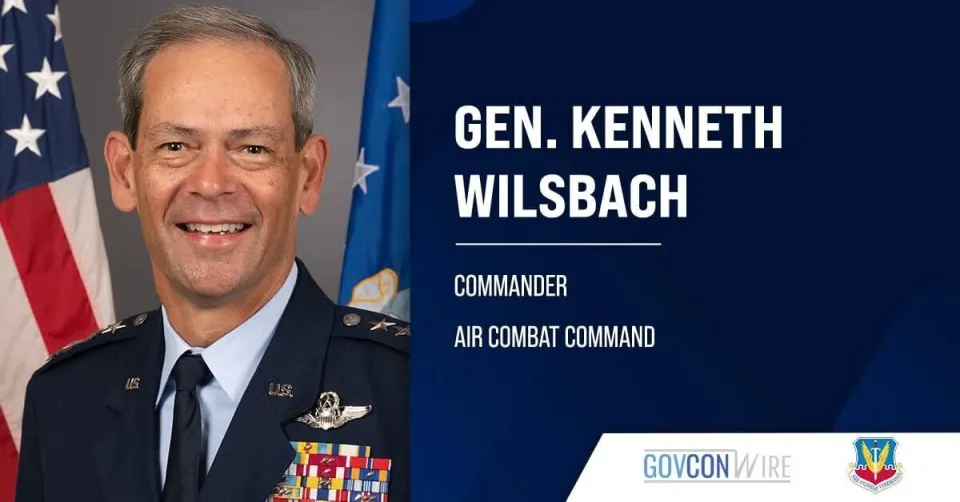
美空军一把手炒作:5年内中国核力量达到美俄同等规模
Guan Cha Zhe Wang· 2025-10-12 07:28
Core Viewpoint - The new U.S. Air Force Chief of Staff, General Kenneth F. Wilsbach, warns that China's nuclear arsenal is expected to grow significantly, reaching 1,500 warheads by 2030, which would match the levels of the U.S. and Russia [1][6]. Summary by Relevant Sections Nuclear Arsenal Growth - China's nuclear warheads have increased from approximately 300 in 2020 to 600 today, with projections indicating a rise to 1,500 by 2030 [6][7]. - In comparison, the U.S. and Russia each possess around 1,700 deployed warheads, with 1,500 on intercontinental nuclear delivery systems [6]. Strategic Implications - The expansion and modernization of China's nuclear capabilities will enhance its ability to target the U.S. mainland, which is a primary reason for the investments made during the Trump administration [6][7]. - Wilsbach highlighted that China's diverse nuclear forces, ranging from low-yield precision strike missiles to multi-megaton intercontinental ballistic missiles, provide the Chinese leadership with various options during conflict escalation [7]. Military Context - The increasing number, types, ranges, and complexities of missiles produced by the People's Liberation Army Rocket Force pose a growing threat to U.S. Air Force assets and facilities [7]. - Wilsbach's background includes extensive experience in air combat, having flown over 6,000 hours in various aircraft, and he has been involved in operations in Iraq and Afghanistan [7]. U.S.-China Military Relations - Wilsbach has previously indicated that the U.S. needs to create challenges for China as it approaches the U.S. as a competitor [8]. - The Chinese government maintains that its nuclear strategy is defensive and aims to keep its nuclear arsenal at the minimum level necessary for national security [9].