汽车行业内卷

Search documents
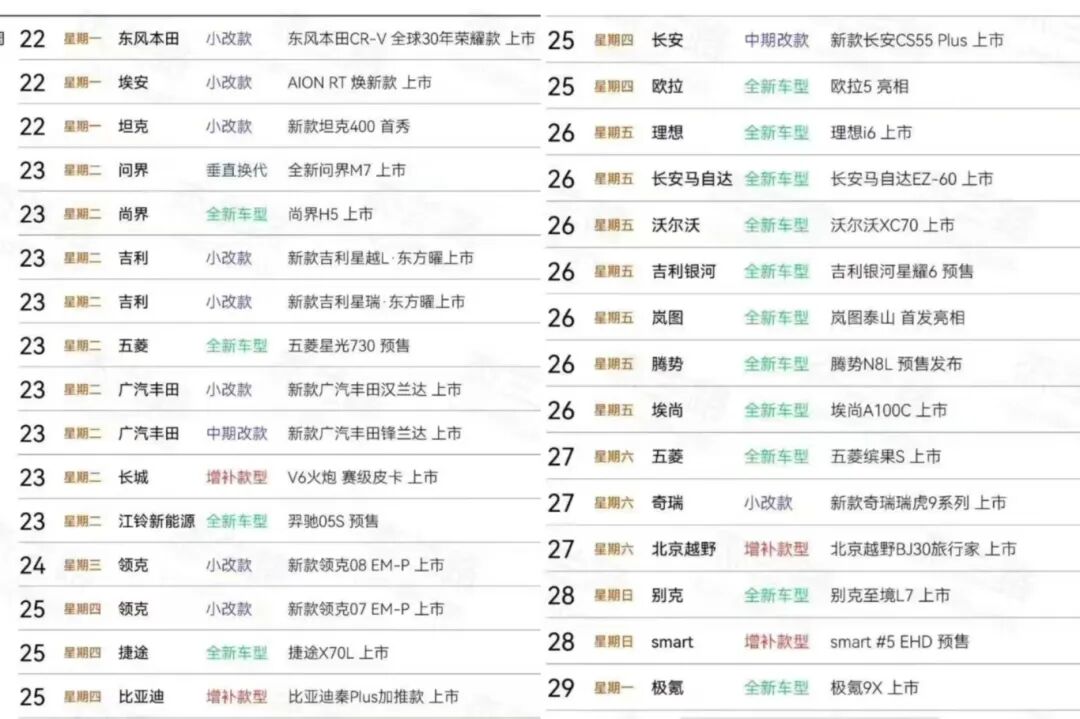
一周发布30款新车,汽车媒体都不够用了
3 6 Ke· 2025-09-23 02:13
Core Viewpoint - The automotive industry is experiencing intense competition and a surge in new car launches, particularly in September, reflecting a shift from an incremental to a saturated market, leading to increased pressure on manufacturers and media alike [1][4][11]. Group 1: New Car Launches - Nearly 20 new car models were launched in the first half of September, covering price ranges from 100,000 to 500,000 yuan, including both new energy and fuel-powered vehicles [1]. - Over 30 new car models are set to be launched in the last week of September, indicating a coordinated effort among brands to release delayed products [1][2]. - The frequency of new car launches is a response to the competitive landscape, as companies aim to capture market share in a transitioning market [4][8]. Group 2: Industry Competition - The automotive market is increasingly competitive, with a notable rise in the number of brands, particularly in the new energy sector, leading to a rapid increase in product offerings and replacement cycles [4][6]. - The shift from a growth market to a saturated market has resulted in a zero-sum game, where one company's sales often come at the expense of another [8][11]. - The pressure to continuously launch new products is a strategy to stimulate consumer demand during peak sales seasons, despite the risk of oversaturation [8][10]. Group 3: Media and Industry Impact - The intense schedule of new car launches has led to increased workloads for media professionals, making it difficult to provide in-depth evaluations of each vehicle [11][13]. - The quality of media coverage may suffer due to the rushed nature of events, resulting in content that lacks unique perspectives and depth [13][15]. - The automotive industry faces challenges in maintaining brand loyalty and vehicle resale values due to the rapid pace of new product introductions [15][17]. Group 4: Future Considerations - The current state of the automotive industry reflects a need for companies to reassess the sustainability of frequent new car launches, considering the associated costs and impacts on brand perception [15][17]. - The ongoing competition may lead to a market consolidation, where only those companies with comprehensive advantages in technology, product, and operations will survive [17].





三条红线、九大乱象,六部门重拳“整顿”车圈
Xin Jing Bao· 2025-09-10 15:17
Core Viewpoint - The Ministry of Industry and Information Technology (MIIT) and five other departments have launched a three-month special campaign to address online chaos in the automotive industry, focusing on illegal profit-making, exaggerated and false advertising, and malicious defamation [1][2][3]. Group 1: Campaign Objectives - The campaign aims to enhance the quality and effectiveness of handling online chaos related to automotive enterprises, urging companies to standardize marketing practices and create a favorable public opinion environment to support high-quality development in the automotive industry [1][2]. - Specific issues targeted include illegal profit-making through false narratives, malicious attacks on automotive companies, and the use of technology to create fake online content [1][3]. Group 2: Key Issues Identified - The campaign highlights the problem of exaggerated and false advertising, particularly regarding the performance and quality of vehicles and batteries, misleading consumers [2][3]. - It addresses the manipulation of third-party evaluations and the dissemination of false information during critical business events, such as product launches and financing [2][3]. Group 3: Industry Response - Several automotive companies, including BYD and Lantu, have expressed support for the campaign, emphasizing the need for self-discipline and cooperation to maintain a fair market environment [5][6]. - Experts believe that the campaign will help reduce unnecessary costs for companies, allowing them to focus more on technological innovation and product upgrades, thus enhancing overall industry competitiveness [6][7]. Group 4: Broader Context - The campaign is part of a broader regulatory effort to combat irrational competition in the automotive sector, which has been exacerbated by the rise of electric vehicles and aggressive marketing tactics [9][10]. - The government has been increasingly focused on addressing issues such as price wars and false advertising, which undermine fair competition and consumer trust [10][11].
车企的账期承诺兑现情况如何?实际操作中仍然存在诸多卡点
Hua Er Jie Jian Wen· 2025-09-06 01:57
Core Viewpoint - The article discusses the challenges faced by the automotive industry in implementing a 60-day payment term commitment made by 17 car manufacturers to alleviate pressure on suppliers, highlighting the need for systemic changes to ensure compliance and transparency [1][5][6]. Group 1: Payment Terms and Industry Practices - The average payment cycle for automotive parts suppliers is around 9 months, with some manufacturers publicly committing to 60-day payments but facing operational hurdles [2][3]. - Many car manufacturers delay payments until parts are installed and sold, creating a "pay after use" model that exacerbates cash flow issues for suppliers [2][3]. - The lack of standardized acceptance criteria and hidden clauses in contracts complicates the payment process, leading to further delays [2][4]. Group 2: Supplier Challenges and Market Dynamics - Suppliers often prioritize maintaining relationships with major car manufacturers over negotiating payment terms, even accepting price cuts of up to 20% [3][4]. - The competitive pressure within the supply chain leads to practices such as cash rebates to secure contracts, further straining supplier finances [3][4]. - The financial health of car manufacturers directly impacts payment speed, with good sales correlating to faster payments [4]. Group 3: Recommendations and Regulatory Actions - Industry experts suggest optimizing payment processes and reducing reliance on supply chain financing to alleviate supplier cash flow issues [5][6]. - There is a call for regulatory bodies to establish a breach compensation mechanism and to publicly disclose payment compliance data to enforce accountability [5][6]. - The Ministry of Industry and Information Technology plans to guide the development of standardized payment norms and contracts to reduce disputes and promote sustainable industry growth [6][7]. Group 4: Industry Outlook - Experts believe that addressing payment term issues, optimizing capacity, and regulating competition will help the automotive industry move towards a more efficient and resilient development phase [7].
落实车企账期承诺还需突破多个难点
证券时报· 2025-09-06 01:10
Core Viewpoint - The commitment of car manufacturers to shorten payment terms is aimed at alleviating pressure on the supply chain and promoting a healthier industry ecosystem [3][10]. Group 1: Payment Term Commitments - 17 car manufacturers have made commitments to a 60-day payment term to ease supply chain pressures and counteract "involution" in the industry [3][10]. - Some manufacturers, like Chery, have successfully reduced their average payment period to 47 days, but many others still face challenges in implementing these commitments [1][3]. - The average payment cycle for many suppliers is around 9 months, with some manufacturers delaying payments until parts are installed and sold [3][4]. Group 2: Challenges in Payment Processes - The lack of standardized acceptance criteria and varying project review processes among manufacturers complicates timely payments [4][10]. - Some manufacturers extend payment periods through the use of commercial bills, which can lead to longer cash flow cycles for suppliers [4][10]. - Suppliers often lack bargaining power, leading to conflicts between maintaining customer relationships and securing timely payments [5][6]. Group 3: Industry Dynamics and Recommendations - The automotive industry is experiencing increased competition and price pressures, with many suppliers forced to accept lower prices and longer payment terms [6][7]. - Experts suggest that government intervention, such as linking subsidy policies to adherence to payment terms, could incentivize manufacturers to comply [12]. - Strengthening oversight of payment cycles and establishing a breach compensation mechanism are recommended to ensure manufacturers fulfill their commitments [10][12]. Group 4: Market Conditions and Future Outlook - The automotive industry is facing overcapacity issues, which contribute to the current competitive pressures [13]. - Experts believe that addressing payment term challenges, optimizing capacity, and regulating competition will help the industry transition to a more efficient and resilient phase [13].

落实车企账期承诺还需突破多个难点
Zheng Quan Shi Bao· 2025-09-05 18:53
Core Viewpoint - The commitment of 17 automotive companies to shorten payment terms aims to alleviate pressure on the supply chain and promote a healthier industry ecosystem [2][4]. Group 1: Payment Term Commitments - Several automotive companies, including FAW, GAC, and Seres, have optimized processes to fulfill their payment term commitments, with Chery reducing the average payment period to 47 days [1]. - Despite some companies adjusting payment terms, many suppliers report that actual changes in payment periods remain minimal [1][2]. - The average payment cycle for suppliers is around 9 months, with some companies publicly committing to 60-day payment terms but facing operational challenges [2]. Group 2: Challenges in Payment Processes - The lack of unified acceptance standards and hidden clauses in contracts complicates the payment process, leading to delays [3]. - Some companies utilize commercial bills to extend the payment cycle, and the reliance on supply chain financial instruments can lead to longer cash conversion periods for suppliers [3]. Group 3: Supplier Power Dynamics - Many parts suppliers lack bargaining power against major automotive companies, often prioritizing customer retention over timely payments [4]. - The pressure from leading automotive companies to lower prices further complicates the financial dynamics for suppliers [4]. Group 4: Regulatory and Industry Recommendations - Industry experts suggest enhancing supervision of payment cycles and establishing a breach compensation mechanism to ensure compliance with payment commitments [7]. - The government is encouraged to incorporate payment term assessments into subsidy policies for electric vehicles, rewarding compliant companies and penalizing those that do not meet standards [7][8]. - The Ministry of Industry and Information Technology is taking steps to improve transparency in payment practices and reduce disputes through standardized payment regulations [8]. Group 5: Industry Outlook - The automotive industry is facing challenges due to overcapacity, with current utilization rates being relatively low [8]. - Experts believe that addressing overcapacity and improving payment practices will lead to a more efficient and resilient automotive sector [9].

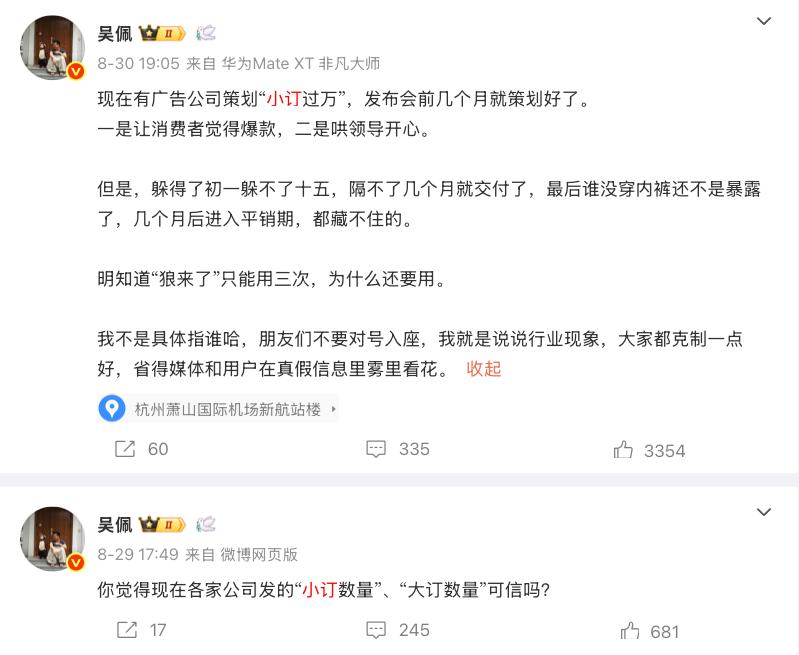
“小订过万”是假的,车企乱编数据虚假宣传,都是被内卷给逼的?
3 6 Ke· 2025-09-05 00:13
Core Viewpoint - The automotive industry is facing issues of integrity and transparency, with some brands resorting to misleading marketing tactics such as fabricating order numbers to create a false sense of demand [1][2][4]. Group 1: Industry Practices - Some advertising companies are preparing "small orders over ten thousand" strategies months before product launches, which violates industry ethics and possibly legal regulations [1]. - The phenomenon of announcing over ten thousand orders shortly after the pre-order phase is prevalent across both mainstream and high-end electric vehicle markets, indicating a lack of confidence among brands in their products [2][4]. - The cost of fabricating small order numbers is low compared to the potential short-term attention it generates, leading some companies to prioritize this tactic over genuine marketing efforts [4]. Group 2: Consumer Behavior - Consumers are influenced by the "bandwagon effect," where the perception of high order numbers encourages them to follow suit in purchasing decisions [2]. - It is advised that consumers maintain rational thinking regarding promotional data and consider their personal preferences before making significant purchases [5]. Group 3: Competitive Landscape - The automotive industry has seen a rise in unethical practices as brands struggle to compete, leading to tactics such as price wars and misleading marketing [6][10]. - The emergence of "zero-kilometer used cars" is a tactic used by some dealers to artificially inflate sales figures, which ultimately disrupts both new and used car markets [7][9]. - Industry leaders have called for a shift away from harmful competition and towards a focus on technological advancement and value creation [10]. Group 4: Regulatory Environment - Regulatory bodies are beginning to address the rampant issues within the automotive sector, including exaggerated claims and deceptive pricing practices [11]. - Despite these efforts, the competitive nature of the market means that some brands may continue to engage in unethical practices to gain market share [11].
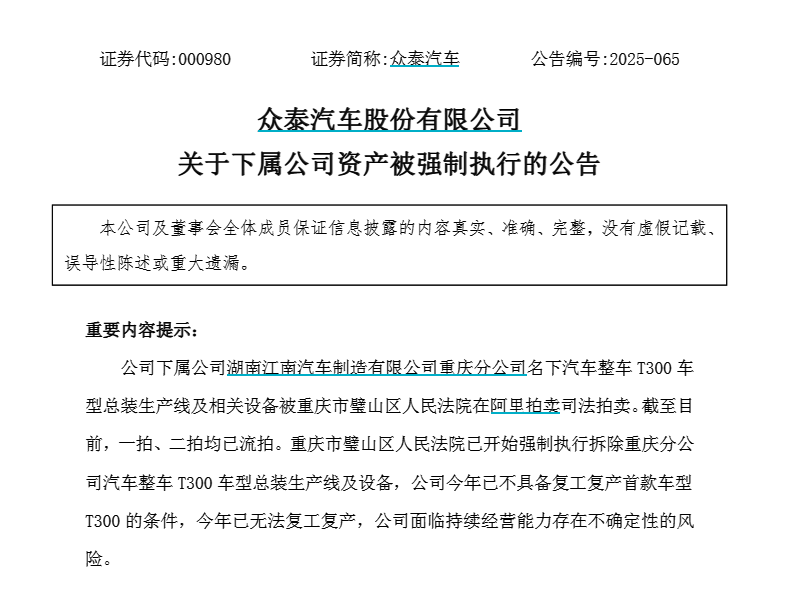
突发利空!众泰汽车:T300车型年内无法复工复产!
Zheng Quan Shi Bao· 2025-09-01 13:45
Core Viewpoint - The company faces significant operational challenges due to the forced auction and dismantling of its T300 vehicle assembly line, leading to uncertainty in its ongoing viability [1][3]. Group 1: Legal and Operational Challenges - The assembly line and related equipment for the T300 model were subject to judicial auction by the Chongqing Banan District People's Court, with both initial and secondary auctions failing to attract buyers [1]. - The court has mandated the complete dismantling of the assembly line and equipment by September 15, 2025, with ongoing demolition work already in progress [3]. Group 2: Financial Performance - The company reported a sales revenue of 280 million yuan in the first half of 2025, reflecting a year-on-year increase of 12.61%, but still recorded a net loss of 148 million yuan, which is a 42.82% reduction in losses compared to the previous year [4]. - Due to a lack of operational funds, the company has been unable to resume production, resulting in continued financial losses [4]. Group 3: Future Outlook - Despite the current challenges, the company has indicated plans to restore mass production of the T300 model by 2025, supported by ongoing efforts in overseas market expansion and supply chain optimization [3]. - The company is also developing a mid-to-long-term product plan, with multiple new products set to enter the research and development phase [3].

汽车公司内卷进入暗战:“增配不加价”
3 6 Ke· 2025-08-21 10:29
Group 1 - BYD has completely canceled its "limited-time fixed price" promotional policy starting July 1, ending subsidies of over 50,000 yuan, signaling the end of a two-year price war in the Chinese automotive industry [1] - The Chinese automotive industry has seen over 60 models with price reductions in the first quarter of this year, increasing to over 100 models by May, with price cuts ranging from thousands to 50,000 yuan [1] - Despite the call for "anti-involution," there are still hidden price reductions through tactics like limited-time pricing for new models and added features without price increases [1] Group 2 - The first-generation IM LS6 was launched in October 2023 with a starting price of 214,900 yuan, while the updated version, IM LS6 Theater Edition, added features valued at over 40,000 yuan but only increased the price by 3,000 yuan [2] - The pre-sale starting price for the next-generation IM LS6 has been reduced to 209,900 yuan, with expectations that the official price will drop below 200,000 yuan [4] - Li Auto's i8 model underwent a rapid series of changes, including a price adjustment and configuration updates, reflecting a trend of simplifying model versions and enhancing standard configurations [5] Group 3 - The strategy of "adding features without increasing prices" is seen as a form of price reduction, although it does not reflect in the visible price changes [7] - The penetration rate of new energy vehicles (NEVs) in China reached 51.1% in July, with NEVs experiencing a faster and larger price drop compared to traditional fuel vehicles [8] - The average price drop for new NEVs was 18,000 yuan, while fuel vehicles saw an average drop of 13,000 yuan, indicating a shift in market dynamics [8] Group 4 - Despite the price war, the average retail price of passenger cars in China has been steadily increasing, with the average expected to exceed 185,000 yuan by 2024 [10] - Most NEV companies remain unprofitable, with only BYD and Li Auto achieving profitability, while Leap Motor is the third to reach profitability but has not achieved annual profitability [10] - The automotive industry saw a revenue increase of 7% to 32.55 billion yuan in the first four months of the year, but costs rose faster at 8%, leading to a 5.1% decline in profits [13]

“60天账期”承诺满两月,车企“解题”赶进度
Bei Jing Shang Bao· 2025-08-12 12:22
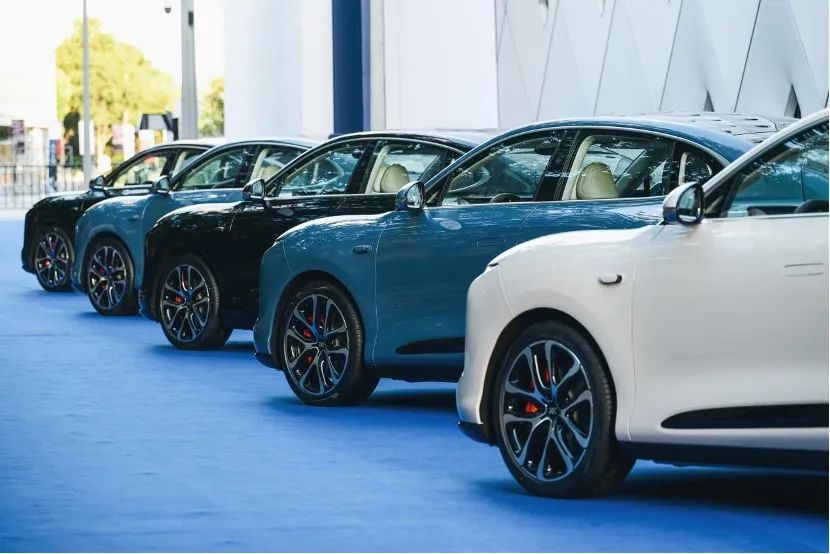
Core Viewpoint - The automotive industry is taking steps to address "involution" competition by implementing a "60-day payment term" for suppliers, with several companies successfully executing this commitment, showcasing their methods and results [1][3][9]. Group 1: Commitment Implementation - Multiple automotive companies, starting from June 10, have committed to reducing supplier payment terms to within 60 days, with the Ministry of Industry and Information Technology (MIIT) facilitating this process [3][6]. - By August 11, companies like FAW Group, GAC Group, and Seres Group reported their experiences and successes in fulfilling this commitment [1][3]. - FAW Group has established a cross-departmental task force to ensure seamless management of payment processes, including contract revisions to specify payment terms [3][4]. Group 2: Payment Process and Challenges - The payment initiation time and review process are critical for suppliers, as delays in internal audits can extend the payment timeline [4][8]. - GAC Group has developed a comprehensive control system that digitizes the entire payment process, allowing real-time tracking of order and payment statuses [5][8]. - Seres Group employs a "factory within a factory" model to streamline processes and reduce costs, enhancing payment efficiency [5][8]. Group 3: Industry Response and Trends - Other automotive companies, including Dongfeng, Changan, and Geely, are also actively working to implement the 60-day payment term [6][9]. - The automotive industry has seen a decline in profit margins, dropping from 7.8% in 2017 to 4.3% in 2024, with the first four months of this year showing a further decrease to 4.1% despite increased production and sales [9][11]. - The MIIT and industry associations are monitoring the situation, with a focus on stabilizing the market and reducing price wars that have negatively impacted profitability [10][11]. Group 4: Payment Methods and Supplier Support - The shift in payment methods is crucial, with companies like FAW Group moving to 100% cash payments for recognized small and medium-sized suppliers to alleviate financial pressure [8]. - GAC Group has also prioritized cash payments, achieving a 95% cash transfer rate, which significantly benefits suppliers [8]. - The implementation of the revised "Regulations on Payment for Small and Medium Enterprises" aims to prevent the forced acceptance of non-cash payment methods, ensuring timely payments [7][8].



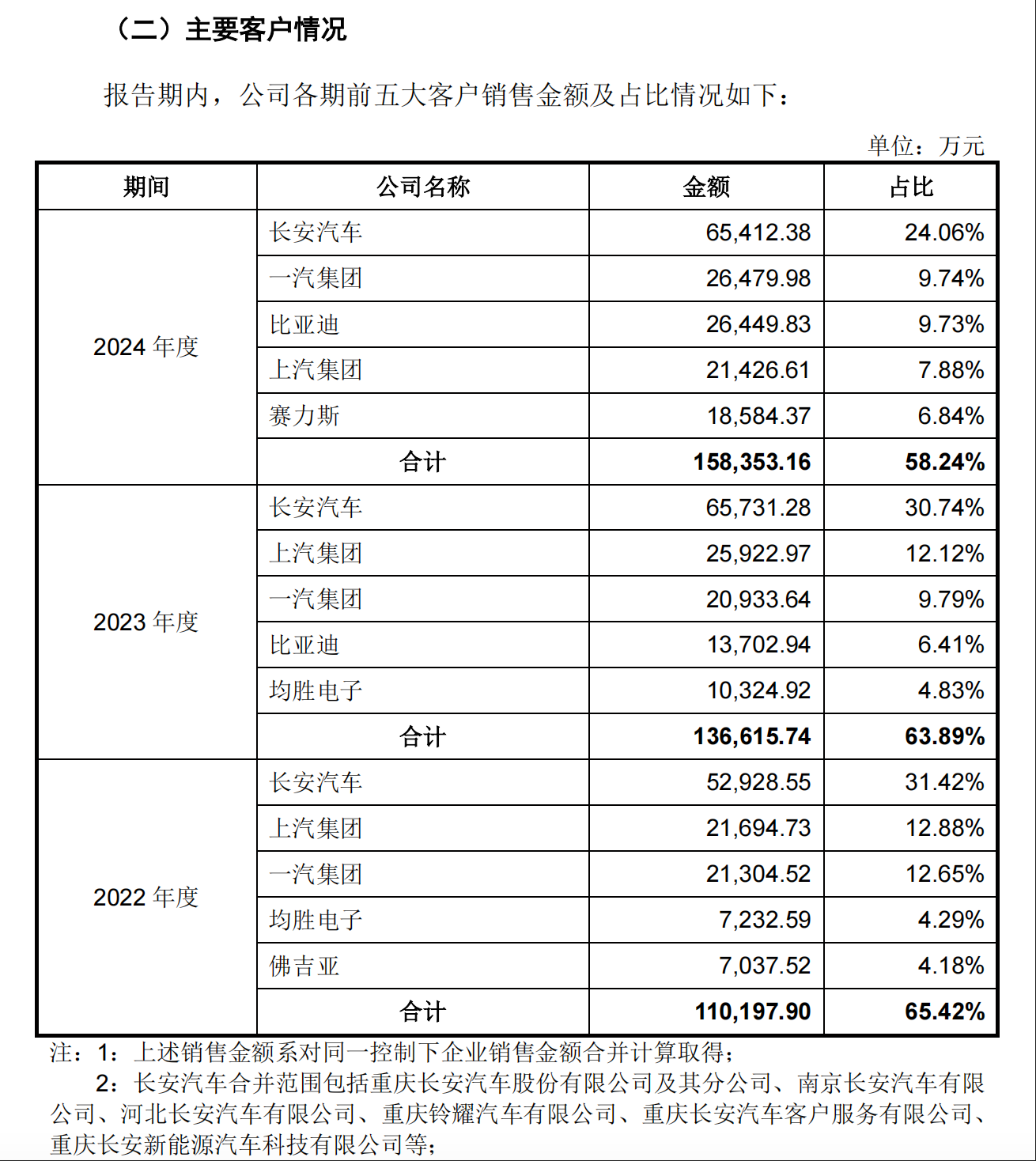
大明电子近25%收入来自长安汽车,披露行业数据时效存疑
Di Yi Cai Jing· 2025-08-11 10:28
Core Viewpoint - Daming Electronics Co., Ltd. is preparing for an IPO on the Shanghai Stock Exchange, with significant revenue dependence on Changan Automobile, raising concerns about customer concentration risk and the timeliness of information disclosure in its prospectus [1][2][12]. Group 1: Company Overview - Daming Electronics specializes in the research, production, and sales of automotive body electronic control systems, with key products including driving assistance systems, intelligent optical systems, cockpit control systems, window control systems, and seat adjustment systems [2]. - The company has established long-term partnerships with major domestic automakers such as Changan Automobile, SAIC Group, FAW Group, BYD, and Geely, as well as foreign brands like Ford and Toyota [2][3]. Group 2: Financial Performance - Daming Electronics reported revenues of 1.713 billion yuan, 2.147 billion yuan, and 2.727 billion yuan for the years 2022, 2023, and 2024, respectively, with net profits of 143 million yuan, 196 million yuan, and 279 million yuan after excluding non-recurring gains and losses [2]. - In 2024, revenue from Changan Automobile is expected to exceed 650 million yuan, accounting for over 24% of total revenue, down from over 30% in 2023, indicating a potential risk of customer concentration [2]. Group 3: Margin Analysis - The overall gross margin of Daming Electronics has declined from 23.74% in 2021 to 20.65% in 2023, attributed to factors such as price reductions imposed by downstream customers, changes in product sales structure, and rising material and labor costs [5][6]. - The company's main business gross margins for 2022, 2023, and 2024 are reported as 20.57%, 20.62%, and 21.08%, respectively, showing slight recovery in 2024 [6][7]. Group 4: Management and Governance - The vice chairman of Daming Electronics, Zhang Xiaoming, has extensive experience within the Changan Automobile system, which may enhance the company's understanding of Changan's needs but also raises concerns about the fairness of transactions between the two entities [4][11]. Group 5: Industry Context - The automotive parts manufacturing industry in China is entering a mature phase, with increasing bargaining power for downstream manufacturers, leading to a common practice of annual price reductions [5][11]. - The global automotive parts supply chain is dominated by suppliers from Japan, the United States, and Germany, as highlighted in the 2024 Automotive News Global Top 100 Suppliers list [11][12].