
汽车辅助驾驶

Search documents
四维图新:预计2025年净利润9009.25万元–1.17亿元
Ge Long Hui· 2026-01-14 09:53
Core Viewpoint - The company expects significant revenue growth for the year 2025, driven by the booming market for automotive assisted driving and increasing demand for data compliance services [1] Financial Performance - The company forecasts revenue between 4.06 billion yuan and 4.344 billion yuan for 2025, representing a year-on-year growth of 15.42% to 23.50% [1] - The net profit attributable to shareholders is projected to be between 90.0925 million yuan and 117.1203 million yuan, indicating a substantial increase of 108.23% to 110.70% compared to the previous year [1] - The basic earnings per share are expected to range from 0.0386 yuan to 0.0501 yuan [1] Market Drivers - The significant revenue growth is attributed to the explosion of the automotive assisted driving market and the refinement of safety regulations for assisted driving data [1] - There is a growing demand for data compliance services, including data collection, anonymization, and application, which the company provides through a comprehensive compliance management service [1] - The company has established a robust data circulation foundation and a security governance system for the entire data lifecycle, enhancing its market position in data compliance [1]

今日新闻丨2026年汽车国补政策发布!特斯拉全球产量达900万辆!华为乾崑智驾搭载量超140万辆!卓驭发布VLA多模态世界模型!
电动车公社· 2025-12-31 15:59
Core Viewpoint - Tesla has achieved a significant milestone by surpassing a global production of 9 million electric vehicles, demonstrating its strong manufacturing capabilities and market leadership in the electric vehicle sector [2][4]. Group 1: Tesla's Production Milestone - Tesla's 9 millionth electric vehicle, a Model Y, rolled off the production line at the Shanghai Gigafactory, which has contributed nearly half of Tesla's global delivery volume in just six years [2]. - Despite facing competition from domestic new energy vehicle manufacturers, Tesla maintains its leading position due to its advanced battery technology and brand recognition [4]. - With the current production pace, Tesla is expected to reach 10 million vehicles produced by mid-next year [4]. Group 2: Huawei's Autonomous Driving System - Huawei's QianKun intelligent driving system has reached a cumulative installation of 1.4 million units, with assisted driving mileage nearing 7 billion kilometers [6]. - The system has been adopted by over 15 automotive brands, covering more than 35 vehicle models, with a high active user ratio of 95.2%, indicating strong market acceptance [9]. Group 3: Zhuoyue's Technological Advancements - Zhuoyue Technology has launched the VLA multimodal world model, showcasing its ability to achieve high performance with lower computational requirements compared to industry standards [13]. - The company has secured nine mass production customers for its autonomous driving technology, with over 50 models already in production and more than 30 models set to launch soon [14]. - Zhuoyue aims to expand its technology capabilities beyond passenger vehicles to include heavy-duty trucks [14]. Group 4: National Subsidy Policy for 2026 - The National Development and Reform Commission has announced the 2026 automotive subsidy policy, which will adjust subsidies based on vehicle price, with new energy vehicles receiving a 12% subsidy capped at 20,000 yuan [18]. - The policy aims to prevent excessive subsidies for low-priced models and reduce price dumping and unhealthy competition in the market [23]. Group 5: New Vehicle Launches - The new GAC Trumpchi M8 has been launched with a price range of 309,900 to 359,900 yuan, featuring upgraded comfort and intelligent configurations [24][29]. - The vehicle includes a hybrid system with a 140kW 2.0T engine and a 160kW electric motor, offering a pure electric range of 248 km and a fuel consumption rate of 6.15L/100km [27].



黑芝麻智能与中际旭创达成战略合作,锚定辅助驾驶与具身智能终端赛道
Ge Long Hui A P P· 2025-11-19 04:51
Core Insights - Black Sesame Intelligence, a leader in smart automotive computing chips, has formed a strategic partnership with Zhichihua, a wholly-owned subsidiary of Zhongji Xuchuang, a global leader in optical communication modules [1] - The collaboration aims to leverage each company's core technologies and industrial resources to address industry pain points and seize opportunities in the next generation of smart industries [1] - The focus will be on the integration of "chip + optical module" technologies, targeting applications in optical communication, automotive assisted driving, embodied intelligent terminals, advanced packaging technology, and capital in the industrial chain [1] Company and Industry Summary - Black Sesame Intelligence is recognized for its advancements in smart automotive computing chips, positioning itself as a key player in the automotive industry's technological evolution [1] - Zhongji Xuchuang, through its subsidiary, brings expertise in optical communication modules, enhancing the partnership's potential to innovate within the smart automotive and robotics sectors [1] - The strategic cooperation is expected to provide new solutions for the global automotive and robotics industry's intelligent upgrade, indicating a significant shift towards integrated technology solutions [1]


陈震再谈劳斯莱斯事故:用了辅助驾驶
第一财经· 2025-10-14 06:08
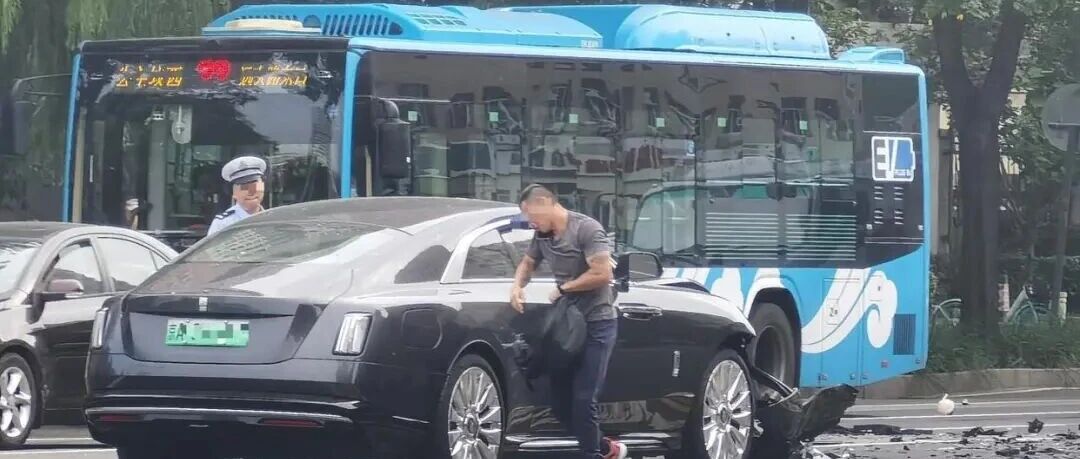
Core Viewpoint - The incident involving the well-known automotive reviewer Chen Zhen highlights the critical differences in the capabilities of driver assistance systems across different brands, emphasizing that drivers remain fully responsible for their actions under current regulations [3][4]. Group 1: Incident Details - On October 3, a traffic accident occurred involving Chen Zhen's Rolls-Royce Spectre, resulting in significant damage to the vehicle and the deployment of airbags [4]. - The Beijing traffic police reported that Chen Zhen was driving southbound when he collided with an oncoming vehicle, leading to both cars being damaged, with Chen Zhen being deemed fully responsible for the accident [4]. Group 2: Vehicle Information - The Rolls-Royce Spectre, the brand's first electric vehicle, was launched in October 2022 and is built on the luxury aluminum architecture 3.0, featuring a new SPIRIT software architecture [7]. - The Spectre is equipped with a newly designed SPIRIT luxury digital architecture that manages various vehicle functions and integrates fully with the Whispers application [7].
零跑野心加码
Hua Er Jie Jian Wen· 2025-09-01 10:09
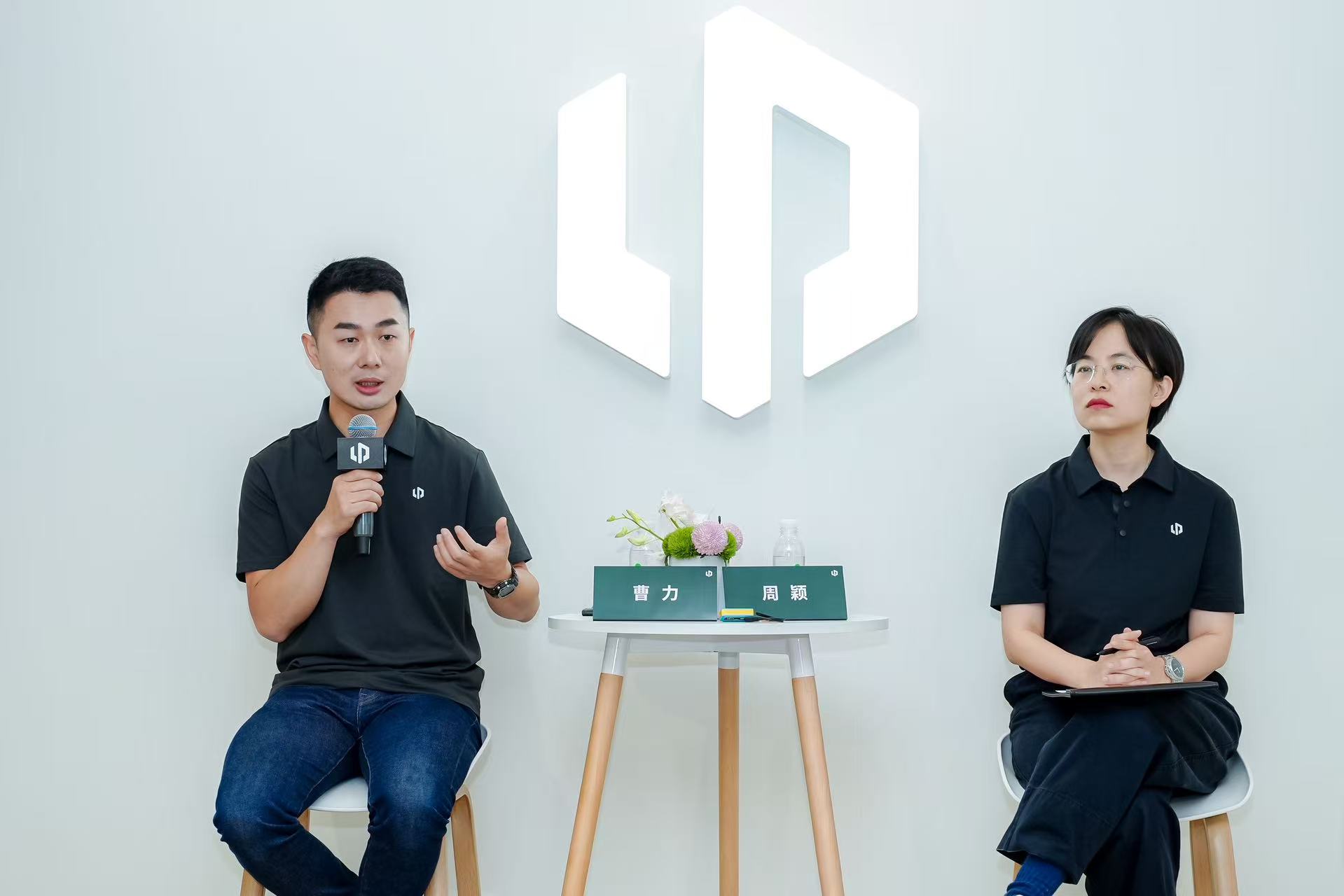
Core Insights - Leap Motor has significantly increased its sales, achieving a delivery volume of 57,000 units in August, up from 25,000 units in January, and aims to surpass 100,000 annual sales next year [2][3] - The company has become the second new force in the electric vehicle market to achieve profitability, outpacing competitors like NIO and Xpeng [2] - Leap Motor's competitive strategy focuses on high-quality features at lower prices, which has allowed it to capitalize on market opportunities amid intense price competition [2][4] Sales and Production Strategy - Leap Motor's Vice President, Cao Li, outlined a strategic blueprint for achieving the ambitious sales target of over 1 million units annually, with expectations for the B series to reach monthly sales of 30,000 to 40,000 units and the C series contributing around 40,000 units [3][24] - The company plans to introduce a new product line, LAFA, aimed at the personalized market, with the first model, LAFA5, set to debut at the Munich Auto Show [4][25] Market Positioning - Leap Motor aims to capture the mainstream market segment priced between 100,000 to 300,000 yuan, indicating a strategic shift towards more personalized offerings while maintaining a focus on volume [4][24] - The D series is positioned in the 300,000 yuan and above segment, which is highly competitive, but the company believes there is significant market potential as consumer spending trends upward [8][20] Brand Development and International Expansion - The company is working to enhance its brand recognition in international markets, particularly in Europe, where it has established nearly 600 sales outlets through partnerships [9][10] - Leap Motor emphasizes the importance of localizing production to meet market demands and reduce costs, with plans to localize production of the B10 model in Europe by next year [12][15] Financial Performance and Profitability - Leap Motor's gross margin has reached 14.1%, with a focus on maintaining reasonable margins to support sustainable growth while aiming for a larger market share [20][21] - The company prioritizes scaling its operations over pursuing high margins, with a long-term goal of becoming a top global automotive brand [20][23]

激光雷达VS纯视觉 两年后迎来终极对决?
Zhong Guo Qi Che Bao Wang· 2025-08-22 10:32
Core Viewpoint - The debate between pure vision and LiDAR technology for autonomous driving continues, with no clear resolution expected by 2027, as both technologies gain supporters and evolve in capabilities and costs [2][5][10] Group 1: Technology Adoption - Both pure vision and LiDAR technologies have gained significant traction, with various automakers adopting either approach. New entrants and established companies are increasingly choosing sides, with some switching from LiDAR to pure vision [2][3] - Recent models like the Tank 500 and Li Auto i8 have adopted LiDAR, while companies like Xiaomi and Audi are also integrating LiDAR into their vehicles [2][3] - Conversely, companies like Xiaopeng and NIO are firmly committed to pure vision technology, with Xiaopeng's models like the MONA M03 and the new P7 exclusively using this approach [4][5] Group 2: Market Trends - The market for LiDAR-equipped vehicles is expanding, with significant growth in the number of LiDAR units delivered in China, reaching 1.0439 million units in the first half of the year, a year-on-year increase of 83.14% [3] - LiDAR is no longer limited to high-end models, as companies like Leap Motor and Changan are introducing LiDAR-equipped versions in the lower price segments [3] Group 3: Cost and Safety Debate - The ongoing debate between the two technologies centers on cost and safety. Pure vision systems are seen as more cost-effective and easier to scale, while LiDAR is favored for its superior performance in extreme conditions [5][6] - The cost of LiDAR has significantly decreased, with prices for L2-level LiDAR now around $200, down from previous prices of $20,000 to $30,000, representing a reduction of over 99.5% [5][9] Group 4: Future Outlook - Experts suggest that both technologies will likely coexist, with pure vision being sufficient for urban commuting and LiDAR providing safety redundancy in complex scenarios [10] - The advancement of computing power and algorithms is expected to enhance the capabilities of pure vision systems, potentially making them the preferred choice for many automakers [8][9]

