
注册制改革

Search documents
专访广开首席连平:“去美元化”浪潮下 金价或长期高位震荡
21世纪经济报道· 2026-01-23 03:20
Core Viewpoint - The article discusses the economic outlook for China in 2026, emphasizing the need for effective qualitative and quantitative growth, and identifies potential investment opportunities and market trends for investors. Monetary Policy - The current domestic interest rates are at historical lows, with room for further reduction. A small rate cut of 0.25-0.5 percentage points is likely in early 2026 to alleviate cost pressures and support long-term liquidity [4][5] - The People's Bank of China may lower policy rates by 0.1-0.3 percentage points to reduce social financing costs and stimulate consumption and investment [5] - Credit growth is expected to moderately recover, with government investment projects and policy financial tools supporting long-term loans in sectors like new energy and infrastructure [5] Market Trends - A-shares and Hong Kong stocks are anticipated to continue a trend of oscillating upward, driven by corporate profit improvements, macro policy easing, and long-term capital inflows [6][7] - The government is expected to implement measures to boost market confidence, including promoting the use of policy tools, guiding institutional investments, and enhancing the registration system for new listings [7] Bond Market - The bond market is projected to maintain a low-interest, high-volatility environment, with 10-year government bond yields expected to range between 1.6% and 1.9% [8] - Credit bond issuance is anticipated to grow steadily, particularly in short-duration high-grade credit bonds, with yields expected between 2.0% and 2.5% [8] Investment Opportunities - Future technology innovation policies will focus on breakthroughs in key areas such as integrated circuits and artificial intelligence, with significant investment opportunities in sectors like semiconductors, new energy, and quantum technology [9] - The article highlights the potential for investment in strategic emerging industries, particularly in the context of the "14th Five-Year Plan" [9] Global Market Trends - The global economic landscape is transitioning from high volatility to a new equilibrium, with significant geopolitical tensions and economic challenges in developed economies [9][10] - The article notes that the U.S. stock market may enter a phase of high valuation and weak growth, with potential risks in the AI sector and the Federal Reserve's monetary policy [10] Currency and Commodities - The Chinese yuan is expected to appreciate in a two-way fluctuation, supported by domestic economic conditions and a weakening dollar [10] - Gold prices are projected to experience high volatility with an overall upward trend, while silver is expected to be more volatile due to its industrial applications [11][12] - Oil prices are likely to decline initially before recovering, with an average price forecasted between $60 and $70 per barrel in 2026 [11]


恒道科技海量微型客户核查似流于形式或信披失真,百余函证异常或暴露天健所审计漏洞
Xin Lang Cai Jing· 2026-01-22 15:39
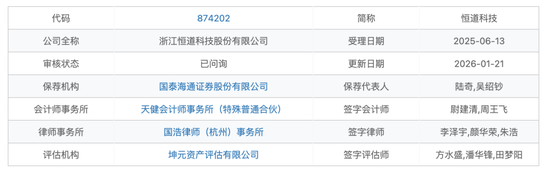
Core Viewpoint - The article discusses the shift in securities regulatory requirements from "formal compliance" to "substantive authenticity" in the context of the registration system reform, questioning whether Zhejiang Hengdao Technology Co., Ltd. has alleviated concerns regarding the authenticity of its revenue in its second-round inquiry response [1][14]. Group 1: Company Overview - Zhejiang Hengdao Technology Co., Ltd. is under review by the Beijing Stock Exchange, with its application accepted on June 13, 2025, and the latest update on January 21, 2026 [2][14]. - The company is sponsored by Guotai Junan Securities Co., Ltd., with representatives Lu Qi and Wu Shaochao, and audited by Tianjian Certified Public Accountants, with signatory accountants Wei Jianqing and Zhou Wangfei [2][14]. Group 2: Audit and Verification Concerns - There are concerns regarding the effectiveness of audit measures for a significant portion of small and micro clients, with 87% of these clients potentially lacking adequate verification [2][14]. - The on-site visit coverage for clients with transactions below 500,000 yuan has been low, with only 21.08% of small clients visited in 2024, indicating over 500 clients have not been verified by intermediaries [5][6][18]. - The audit process has been criticized for its low external confirmation rates, with only 17.62% of small clients receiving confirmation letters in 2024, raising questions about compliance with auditing standards [21][23]. Group 3: Risk of Revenue Inflation - A significant portion of Hengdao Technology's revenue (20%-30%) comes from high-risk clients, defined as those with registered capital below 500,000 yuan or newly established during the reporting period, which raises concerns about potential revenue inflation through shell companies [22][23]. - The identification of 136 clients with discrepancies in confirmation addresses or contacts signals a high level of fraud risk, suggesting that confirmation letters may not have reached the intended recipients [10][25]. Group 4: Ineffective Verification Methods - The reliance on internal documents for verification, such as contracts and orders, without independent third-party evidence, is questioned, as it may lead to circular reasoning in audits [21][26]. - The audit team’s explanations for address discrepancies, such as group procurement or internal personnel handling, are deemed inadequate and raise further doubts about the integrity of the verification process [10][25].
今日视点:中国经济与资本市场奏响更富活力协奏曲
Xin Lang Cai Jing· 2026-01-21 23:07
Economic Growth and Capital Market Development - In 2025, China's GDP is projected to exceed 140 trillion yuan, reaching 1401879 billion yuan, indicating strong resilience in the real economy [1][5] - The total market value of A-shares surpassed 100 trillion yuan in August 2025 and further increased to 123 trillion yuan by the end of the year, reflecting a positive correlation between economic growth and capital market performance [1][5] Structural Changes in Capital Market - The trend of "moving towards new" in the Chinese economy is driving significant structural changes in the capital market, with R&D expenditure intensity reaching 2.8% in 2025, surpassing the OECD average for the first time [2][6] - The electronics sector has become the largest industry in A-shares, with its total market value exceeding that of the banking sector, and the number of technology companies in the top 50 A-share market capitalization has increased from 18 to 24 over five years [2][6] Market Ecosystem and Resilience - The synergy between a robust economy and a resilient capital market fosters a healthy development ecosystem, enhancing market valuation systems and functional improvements [7] - A multi-layered market system, including various boards and regional equity markets, caters to diverse financing needs, particularly for innovative enterprises [7][8] Regulatory and Structural Reforms - Recent regulatory reforms aim to create a safe, transparent, and vibrant capital market that aligns closely with the high-quality development needs of the real economy [8][9] - The emphasis on a non-interventionist regulatory approach and the promotion of long-term capital inflows are part of a broader strategy to enhance the quality of listed companies and market functionality [8][9]
奥维通信濒临退市,市值仅剩3亿!近3万股民何去何从?
Xin Lang Cai Jing· 2026-01-20 07:25
Group 1 - The company *ST Aowei has locked in a market value delisting, becoming the first company to do so in 2026, with a closing price of 0.89 yuan and a total market value of 3.09 billion yuan, having been below 5 billion yuan for 12 consecutive trading days [2][10] - According to regulations, if a company's stock has a total market value below 5 billion yuan for 20 consecutive trading days, it will be delisted from the Shenzhen Stock Exchange [2][10] - Even if the company experiences a daily limit increase of 5% for the next 8 trading days, its total market value is unlikely to recover to 5 billion yuan, effectively sealing its fate for delisting [2][10] Group 2 - As of the third quarter of 2025, the company still has 28,150 shareholders, indicating potential opportunities for these investors to recover losses [3][11] - The company's financial situation has deteriorated significantly, with a reported revenue of 291 million yuan and a net loss attributable to shareholders of 46.11 million yuan for 2024, alongside an audit report that expressed an inability to provide an opinion [4][12] - The company has faced scrutiny for inaccurate disclosures regarding its performance forecasts, leading to a significant drop in stock price and investor losses [5][14] Group 3 - Following the performance forecast discrepancies, hundreds of investors have registered to participate in compensation claims against the company [6][14] - Investors who purchased shares between April 26, 2024, and April 21, 2025, and sold or still hold shares after April 22, 2025, may join the compensation claims [7][15] - The company has issued multiple risk warning announcements since January 5, 2026, but has shown no signs of improvement in its fundamental situation [9][16] Group 4 - Unlike other delisted companies, *ST Aowei will not have a delisting transition period, meaning that once it meets the criteria, trading will be terminated immediately [9][17]

【西街观察】信披“蹭热点”,合规是底线
Bei Jing Shang Bao· 2026-01-12 13:17
Core Viewpoint - The article highlights the increasing scrutiny and regulatory actions by the China Securities Regulatory Commission (CSRC) regarding information disclosure practices among listed companies, particularly in relation to market hotspots and emerging technologies [1][2]. Group 1: Regulatory Actions - Tianpu Co. has been investigated by the CSRC for significant omissions in its stock trading disclosures, leading to a sharp decline in its stock price [1] - Other companies like Yahui Long and Yingjixin are also under regulatory attention for similar disclosure issues [1] - The CSRC has intensified its investigations into information disclosure violations, aiming to deter such behaviors and promote high-quality development among listed companies [1][2] Group 2: Market Impact - The rise of new market trends, such as brain-computer interfaces and artificial intelligence, has heightened investor sensitivity and tested the ethical boundaries of listed companies [1] - The ongoing bull market in A-shares, coupled with high trading volumes, has made speculative trading more active, increasing the risks associated with investment [1] - Non-compliant information disclosures can mislead investors, artificially inflate stock prices, and disrupt the market's value discovery mechanism [2] Group 3: Compliance Challenges - Companies often engage in "hitching a ride" on market trends, creating false associations with hot topics to stimulate stock prices, which can lead to significant investor losses [2][3] - Selective disclosure practices, where companies emphasize positive aspects while downplaying risks, can mislead investors and result in unexpected financial repercussions [2] - The cost of non-compliance has risen significantly, with potential investigations leading to drastic stock price drops and collective lawsuits from investors [3] Group 4: Recommendations for Companies - Achieving compliance in information disclosure is not overly complex; companies are encouraged to provide timely and complete truthful information [4]
2025年“双创板”询价转让持续走热
Zheng Quan Ri Bao· 2026-01-10 01:24
Core Insights - The article discusses the increasing activity of the inquiry transfer system in the A-share market, particularly in the ChiNext and Sci-Tech Innovation Board, highlighting its role in providing diversified exit channels for shareholders before IPOs [1][2][3]. Group 1: Inquiry Transfer System Overview - In 2025, the inquiry transfer system became more active, with 158 companies completing 179 batches of transfers, totaling 884.81 billion yuan, a year-on-year increase of 420.75% [2]. - The first inquiry transfer in the ChiNext occurred in April 2025, with Shenzhen Anpeilong Technology Co., Ltd. being the first to utilize this system [2]. - The inquiry transfer system allows shareholders to exit in an orderly manner, reducing the impact on the secondary market and optimizing the investor structure of companies [1][3]. Group 2: Market Dynamics and Institutional Participation - The average number of institutions participating in inquiry transfers rose to 18.43 in 2025, a 30.06% increase from 2024 [4]. - The average transfer price was 84% of the closing price on the pricing day, indicating a decrease in pricing compared to 2024 [4][5]. - The increase in institutional participation and the reduction in pricing reflect a deeper market-oriented negotiation process, enhancing pricing efficiency [5]. Group 3: Implications for Market Structure - The inquiry transfer system is seen as a key element in the transition of the A-share market from retail to institutional investment, facilitating a "soft landing" of share transfers [3][5]. - It is viewed as a win-win arrangement, benefiting shareholders, listed companies, and the capital market by reducing market volatility and encouraging long-term investment [3][5]. - The system's successful implementation in the ChiNext and Sci-Tech Innovation Board suggests potential for broader application across other market segments, aligning with the direction of comprehensive registration system reforms [6].
2025年“双创板”询价转让持续走热 179批股东合计成交超880亿元
Zheng Quan Ri Bao· 2026-01-09 16:43
Core Viewpoint - The introduction and growth of the inquiry transfer system in the ChiNext and Sci-Tech Innovation Board have significantly enhanced the liquidity and efficiency of the A-share market, allowing shareholders to reduce their holdings in a structured manner while minimizing market impact [1][3][6]. Group 1: Inquiry Transfer System Overview - In January 2025, Shenzhen Biyimi Microelectronics disclosed a shareholder inquiry transfer, marking the first inquiry transfer in A-shares for 2026, with a 5.69% stake being transferred [1]. - The inquiry transfer system was officially introduced in May 2024 for the ChiNext, with the first transaction occurring in April 2025, involving Shenzhen Anpeilong Technology [2]. - In 2025, a total of 158 companies from the dual innovation boards completed 179 inquiry transfers, with a total transaction amount of 884.81 billion yuan, reflecting a year-on-year growth of 420.75% [2]. Group 2: Market Dynamics and Institutional Participation - The average number of institutions participating in inquiry transfers increased to 18.43 in 2025, a 30.06% rise from 2024 [4]. - The average transfer price was 84% of the closing price on the pricing day, indicating a decrease in the discount from 88% in 2024, suggesting a more market-driven pricing mechanism [4]. - The increase in inquiry transfer activity is attributed to the alignment of institutional demand and regulatory adaptations, facilitating a smoother transition for shareholders [5]. Group 3: Benefits and Future Prospects - The inquiry transfer system is seen as a win-win arrangement, allowing shareholders to exit with minimal market disruption while improving corporate governance by attracting long-term institutional investors [3][6]. - The system's success in the ChiNext and Sci-Tech Innovation Board suggests potential for broader implementation across other market segments, although careful consideration of efficiency and fairness is necessary [6]. - Future expansions of the inquiry transfer system should be cautious, ensuring that it aligns with the unique characteristics of different market segments and maintains a focus on value investment [6].
聚焦包容性适应性资本市场新一轮全面深改箭在弦上
Xin Lang Cai Jing· 2026-01-07 21:21
Core Viewpoint - The capital market in China is set to undergo comprehensive reforms in 2026, focusing on enhancing market inclusivity and adaptability to better serve new productive forces and efficiently channel capital towards technological innovation [1][2]. Group 1: Reform Initiatives - A series of significant reform measures will be implemented starting January 1, 2026, including the enforcement of the "Regulations on the Management of Sales Expenses for Publicly Raised Securities Investment Funds" and the solicitation of public opinions on the "Regulations for the Supervision of Secretaries of Listed Companies" [2]. - The China Securities Regulatory Commission (CSRC) emphasizes the need for steady progress, quality improvement, and risk prevention, aiming for high-quality development through continuous deepening of capital market reforms [2][3]. Group 2: Financing and Investment Strategies - The CSRC plans to enhance the inclusivity and attractiveness of the capital market, launching reforms for the Growth Enterprise Market and accelerating the implementation of the "1+6" policy framework for the Sci-Tech Innovation Board [3]. - The focus will be on cultivating high-quality listed companies and promoting long-term capital investment through tax incentives and mechanisms that encourage social capital to invest in early-stage technology firms [4]. Group 3: Supporting New Productive Forces - The reforms aim to improve the capital market's ability to support new productive forces, particularly in sectors like artificial intelligence, biomedicine, and green energy, which are reshaping the global economy [5][6]. - The CSRC chairman highlighted the importance of a vibrant capital market in driving technological and industrial development, advocating for a supportive ecosystem for innovation [5]. Group 4: Regulatory Adjustments - Experts suggest that the capital market should establish differentiated regulatory and delisting mechanisms tailored to the characteristics of technology companies, allowing for more flexible standards that consider their unique growth patterns [7][8]. - There is a call for optimizing the merger and acquisition processes for technology firms, simplifying review procedures, and enhancing information disclosure and post-transaction supervision [7].
7年虚增收入超14亿!2026退市第一股来了
Jing Ji Guan Cha Wang· 2026-01-06 06:23
Core Viewpoint - The financial fraud at Guandao Digital began in 2018, three years before its listing on the Beijing Stock Exchange, and continued throughout its public offering and trading processes, indicating that the listing was not the starting point of the fraud but rather a means to cover it up [2][3] Group 1: Fraud Details - Guandao Digital was found to have systematically inflated its revenue by a total of 1.465 billion yuan from 2018 to mid-2024, with the highest annual inflation rate reaching 99.39% [2][4] - The company engaged in organized fraud, including intercepting audit confirmation letters and forging responses, indicating a high level of complicity among executives [4][5] - The fraud extended to the issuance of stock for specific targets in 2024, misleading investors during attempts to raise additional funds [5] Group 2: Regulatory Response - On January 5, 2026, Guandao Digital was officially delisted from the Beijing Stock Exchange, marking the first case of mandatory delisting due to significant violations since the exchange's establishment [2][3] - The China Securities Regulatory Commission imposed a fine of 10 million yuan on Guandao Digital and a total of 30.5 million yuan on 12 responsible individuals, including lifetime bans for key executives [4][5] - A compensation fund of 210 million yuan was established by the sponsor, Minmetals Securities, to cover losses for eligible investors who held shares during the fraudulent period [5][6] Group 3: Industry Implications - The case of Guandao Digital highlights systemic issues within the regulatory framework, where the focus on compliance at the issuance stage has led to a lack of thorough verification of historical financial authenticity [6][7] - The incident raises concerns about the effectiveness of existing monitoring mechanisms and the potential for similar frauds to occur if regulatory reforms do not address these vulnerabilities [6][7] - The delisting of Guandao Digital serves as a critical examination of the resilience of capital market systems, questioning the accountability of market participants when the costs of fraud are perceived to be lower than the benefits [7]

“四年上市路”终成空,“七年造假史”现原形 2026退市第一股广道数字摘牌
Jing Ji Guan Cha Wang· 2026-01-05 11:33
Core Viewpoint - Guangdao Digital has been officially delisted from the Beijing Stock Exchange due to severe financial fraud, marking the first case of forced delisting for major violations since the exchange's establishment [1][2]. Group 1: Company Overview - Guangdao Digital was founded in 2003 and listed on the New Third Board in November 2016, later becoming one of the first companies to list on the Beijing Stock Exchange in November 2021, focusing on data application software development and sales [1]. - The company reported continuous revenue growth since its listing, with a revenue of 306 million yuan in 2023, initially viewed as a high-growth stock on the exchange [1]. Group 2: Fraudulent Activities - The financial fraud began in 2018, three years before the company's listing, involving systematic inflation of revenue by 1.465 billion yuan through fictitious contracts and documents, with the highest annual inflation rate reaching 99.39% [1][2]. - The fraud was highly organized, with the actual controller and financial executives directly involved in creating false documentation and obstructing audits, indicating a collective conspiracy rather than isolated misconduct [2]. Group 3: Regulatory Actions and Consequences - In September 2025, the Shenzhen Securities Regulatory Bureau imposed a fine of 10 million yuan on Guangdao Digital and a total of 30.5 million yuan on 12 responsible individuals, including lifetime bans for key executives [3]. - The fraudulent activities extended to the issuance of stock fundraising documents, misleading investors during attempts to raise additional capital [3]. Group 4: Investor Compensation and Market Implications - In response to investor losses, the underwriting institution, Wukuang Securities, established a compensation fund of 210 million yuan to cover eligible investors who held shares during the fraudulent period [3]. - The case highlights the limitations of current investor protection mechanisms and the need for stronger regulatory oversight to prevent similar occurrences in the future [4][5].