
火箭可回收技术

Search documents
商业航天资本热潮下的冷思考:万亿赛道破局亟待技术与商业化双线突围
Zhong Guo Zheng Quan Bao· 2026-01-20 23:15
Core Viewpoint - The commercial aerospace sector is experiencing a capital frenzy, with the Wind Commercial Aerospace Theme Index rising nearly 60% in two months, but underlying challenges and risks are becoming apparent in the industry [1][2][3]. Group 1: Market Dynamics - The commercial aerospace concept stocks are witnessing a surge, with the Wind Commercial Aerospace Theme Index increasing nearly 60% from November 21, 2025, to January 20, 2026, and several stocks reaching historical highs [2]. - In the primary market, companies are aggressively pursuing financing, with Micro Nano Star completing 1.56 billion yuan in equity financing in 2025, aimed at enhancing R&D and production capacity [2]. - The IPO process for commercial aerospace companies is accelerating, with Blue Arrow Aerospace's application to raise 7.5 billion yuan accepted by the Shanghai Stock Exchange, and other companies like Zhongke Aerospace and Star River Power also moving forward with their IPOs [2]. Group 2: Financial Performance - Blue Arrow Aerospace reported revenues of 780,000 yuan, 3.95 million yuan, and 4.28 million yuan for 2022, 2023, and 2024 respectively, with net losses of 800 million yuan, 1.188 billion yuan, and 876 million yuan; in the first half of 2025, revenue increased to 36.43 million yuan but still recorded a net loss of 597 million yuan, totaling over 2.8 billion yuan in net losses over three and a half years [3]. Group 3: Industry Challenges - The commercial aerospace industry is still in its early stages, with significant challenges in validating low-cost, reusable heavy-lift rocket technology and improving the mass production capabilities of commercial satellites [4]. - Recent failures in two rocket launches on January 17, 2026, highlight the high-risk nature of aerospace launches and the difficulties in transitioning from single technical breakthroughs to stable mass production [4]. - The submission of over 200,000 satellite orbit frequency applications to the International Telecommunication Union (ITU) has been clarified as a routine operation, emphasizing the need for rational market expectations regarding satellite deployment [5]. Group 4: Future Outlook - Despite current challenges, the long-term development direction of the commercial aerospace industry is becoming clearer, with 2026 expected to be a pivotal year for technological breakthroughs, particularly in reusable heavy-lift rockets [5][6]. - The successful completion of the first launch mission at the Hainan commercial aerospace launch site in January 2026 indicates progress in enhancing launch efficiency [5]. - Industry experts predict that 2026 will witness a transition from quantitative to qualitative changes in the commercial rocket sector, marking China's entry into the era of reusable rockets [5][6].
“邪修”蓝箭航天们,硬刚SpaceX
3 6 Ke· 2026-01-14 03:03
Core Viewpoint - The recent surge in the A-share market is driven by the "commercial space" sector, with significant price increases among related companies, highlighting the competitive race between China and the U.S. for space resources and security [2][3][4]. Group A: Market Performance - From December 17 to January 12, the Shanghai Composite Index achieved a record-breaking 17 consecutive days of gains, with a rise from 1897 points to 3118 points, marking a 64% increase and a trading volume exceeding 8 trillion RMB [2][3]. - The "commercial space" sector saw stock prices of 264 related companies double, indicating a strong market interest and speculative investment [3][4]. Group B: Technological Competition - The launch of the "Zhuque-3" rocket, aimed at vertical recovery experiments, represents a critical moment in the technological competition between China and the U.S. in reusable rocket technology [4][12]. - The failure of the Zhuque-3 launch did not deter market enthusiasm, as related stocks surged the following day, demonstrating the speculative nature of the market [4][6]. Group C: Satellite and Resource Allocation - Currently, China has approximately 1,000 satellites, accounting for only 6% of the global total, while the U.S. possesses around 10,000 to 11,000 satellites, representing 68% of the global total [6][7]. - The increasing congestion in low Earth orbit, primarily due to SpaceX's Starlink satellites, poses significant operational challenges for China's space station and missions [7][8]. Group D: Cost Efficiency and Innovation - The cost of launching with China's Long March series rockets is significantly higher than that of SpaceX's Falcon 9, which benefits from reusability, with costs as low as 1.4 to 1.8 million RMB per kilogram [8][9]. - The Zhuque-3 aims to reduce costs further by utilizing stainless steel for its rocket body, which could lower material costs to 28 RMB per kilogram, significantly cheaper than the Falcon 9 [12][13]. - The use of methane as fuel for Zhuque-3 allows for quicker turnaround times between launches, potentially achieving a "24-hour rapid reflight" capability [14][15]. Group E: Future Outlook - The year 2026 is anticipated to be pivotal for the implementation of reusable rocket technology in China, with multiple companies, including Blue Arrow Aerospace, actively testing or planning reusable rockets [16]. - China's recent application to the International Telecommunication Union for frequency and orbital resources for 203,000 satellites indicates a strategic move to enhance its presence in the global space arena [16].

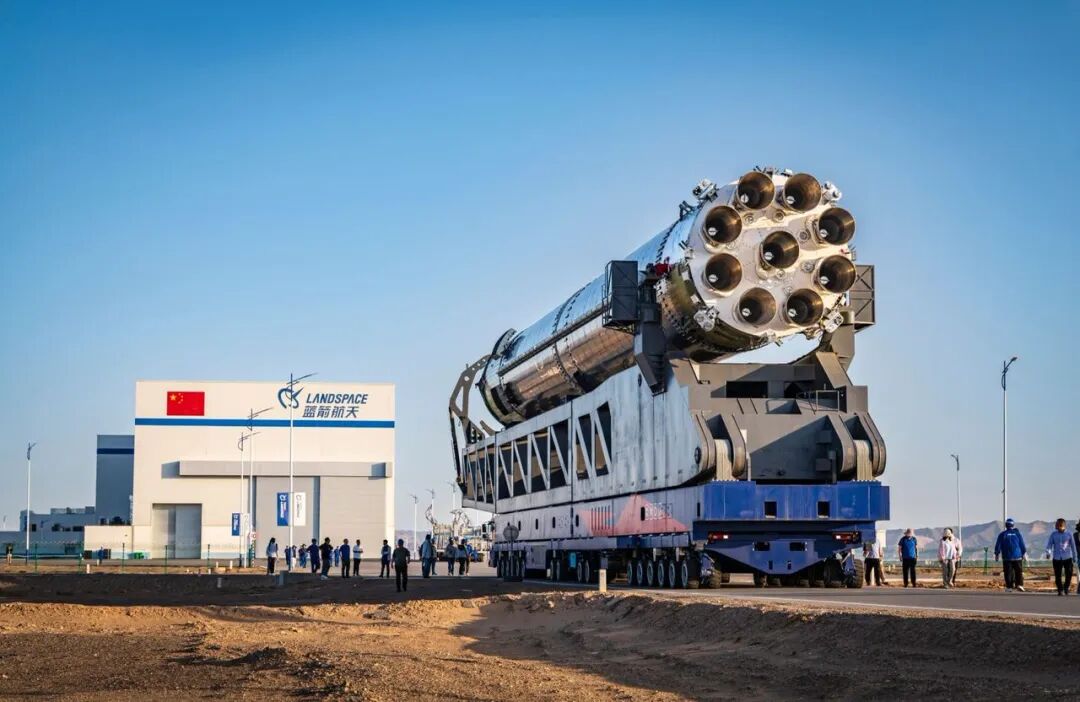
华鑫证券:我国商业航天迎多重驱动 关注星箭产业链机遇
智通财经网· 2026-01-14 01:39
Group 1 - The core viewpoint is that the recovery of rockets by 2026 may become a critical milestone for the commercial aerospace industry in China, driven by policy support, international frequency resource competition, and the successful model of SpaceX [1][2]. - The commercial aerospace business is expected to explode due to three driving factors: policy support, ITU's mandatory requirements, and the competition for aerospace resources [2]. - The upcoming five years will see a significant launch gap of approximately 2,500 satellites in China, leading to a shift from a "seller's market" to a "supply-demand imbalance" in launch services [2]. Group 2 - SpaceX's model of reusability and high-frequency operations has redefined the valuation logic of the industry, with industrialized cost reduction being a core barrier [3]. - SpaceX has established a robust revenue model through three main business segments: Starlink, launch services, and Starshield, transforming commercial aerospace into a high-growth, high-margin sector [3]. - The success of SpaceX provides a clear benchmark for China's commercial aerospace, emphasizing that rocket recovery is essential, with leading domestic companies accelerating the development of liquid oxygen-methane and recovery technologies [3]. Group 3 - The report suggests focusing on satellite production and rocket cost reduction, with satellite manufacturing transitioning from customization to mass production [4]. - High-value components such as phased array antennas, onboard communication payloads, and core processing chips are expected to be the most elastic segments in satellite production [4]. - On the rocket side, companies involved in metal 3D printing, aerospace electronic control, and special materials supply are likely to benefit from the scale production of rockets, with specific companies recommended for investment [4].
3D打印行业系列专家会议-3D打印在商业航天的发展现状与未来展望
2026-01-08 16:02
Summary of 3D Printing in Commercial Aerospace Industry Overview - The 3D printing industry is significantly impacting the manufacturing of liquid rocket engines, particularly in the context of reusable engines where complex structures like cooling channels are involved. This technology enhances material utilization, shortens production cycles, and reduces reliance on traditional high-end processes and skilled labor from major countries [1][4]. Key Insights and Arguments - The value of 3D printed parts in liquid rocket engines approaches 50%, with advanced foreign engines reaching 80%-90%, indicating substantial cost and efficiency advantages in rocket manufacturing [1][4]. - Domestic commercial aerospace companies widely adopt 3D printing technology, with approximately 90% considering its use in engine manufacturing to tackle design challenges that traditional methods cannot address [1][7]. - The mainstream manufacturing process for rocket engines is Selective Laser Melting (SLM), which provides good surface quality and simplifies post-processing, primarily using high-temperature alloys, stainless steel, and copper alloys [1][10][11]. - Rocket engines and storage tanks are the most expensive components in rocket manufacturing, with 3D printing potentially accounting for about half of the engine manufacturing costs. As technology matures and production scales up, costs are expected to decrease further [1][14]. Additional Important Points - The application of 3D printing is not limited to liquid rocket engines; entire rocket structures, including storage tanks and fairings, are also potential candidates for this technology. For instance, the American company Relativity Space has successfully manufactured an entire aluminum rocket body using Wire Arc Additive Manufacturing (WAAM) [5]. - Current manufacturing methods for storage tanks primarily involve traditional techniques like welding and machining, with 3D printing being explored by companies like Gartner in the U.S. due to its design flexibility and efficiency [6]. - The equipment required for producing rocket engines is substantial, with specifications of at least 850×850×1.5 meters and market prices typically exceeding 6 million RMB [8]. - The time required to print a large rocket engine component, such as a nozzle, is over 20 days, with total production cycles ranging from one and a half to two months, significantly faster than traditional methods [9]. - The price of domestic rocket engines is around 7-8 million RMB, with 3D printing contributing approximately 3.5 to 4 million RMB to this cost [13]. - The trend towards reusability in rocket technology necessitates extensive use of 3D printing for rapid validation and iteration of new technologies, as evidenced by SpaceX's experience [3][18]. - Major suppliers in the domestic market include companies like Plitec, Hebei Jingye, and Wuxi Feilong, which provide substantial capacity and quality products to commercial aerospace companies [20]. Future Outlook - The demand for 3D printing in the commercial aerospace sector is expected to grow significantly, with predictions of explosive growth by 2027 as companies seek to reduce costs and enhance production capabilities [21][22]. - The relationship between commercial aerospace companies and their 3D printing service providers is characterized by deep binding, making it challenging for new entrants to disrupt existing supply chains [31].
商业航天,资金加仓+机构密集调研,仅9股
Zheng Quan Shi Bao· 2026-01-06 09:58
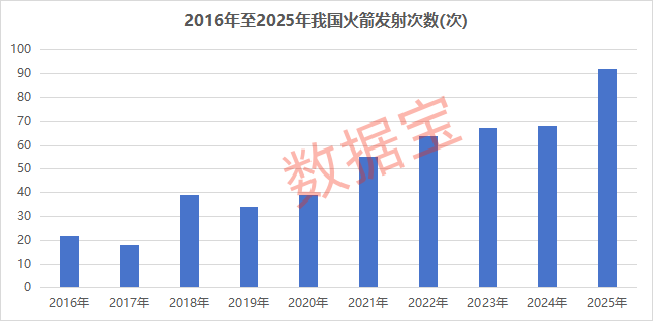
Group 1 - The commercial aerospace sector remains a hot topic in the capital market, with the Wande Commercial Aerospace Theme Index achieving an 8-day consecutive rise and a cumulative increase of over 35% since December 24, 2025 [1][8] - In 2025, China achieved a record high in rocket launches, totaling 92, which is over a 30% increase compared to 2024, indicating a new phase of "normalization, high frequency, and large scale" in China's launch capabilities [2] - The IPO progress in the capital market includes the acceptance of Blue Arrow Aerospace's IPO and the approval of the registration for the Electric Science and Technology Blue Sky on the Sci-Tech Innovation Board [4] Group 2 - The development of reusable rocket technology is accelerating, significantly reducing launch costs and improving response efficiency for launch missions. Current costs for some reusable rockets are around $67 million, with potential reductions to between $2 million and $5 million as technology advances [5] - The application of reusable rocket technology is expected to lower the cost of satellite constellation networking in China by over 70%, supporting the demand for high-frequency constellation deployment [6] - A comparison of domestic and international reusable rockets shows varying payload capacities and costs, with SpaceX's Falcon 9 having a launch cost below $1,000 per kilogram, while Blue Arrow's Zhuque-3 costs approximately $4,200 per kilogram [7] Group 3 - As of January 6, 2026, the total financing balance for 30 stocks related to reusable technology in the A-share market reached nearly 29.9 billion yuan, an increase of over 65% since the third quarter of 2025 [9] - Nine stocks that received over 30% increase in financing and were researched by more than ten institutions since the fourth quarter of last year include companies like Rigol Navigation and Srey New Materials [10] - Notable companies such as Jili Rigging and Aerospace Electric have provided products supporting domestic reusable rockets, contributing to their stock performance with significant increases since December 24, 2025 [8][10]
超捷股份(301005) - 2026年01月06日投资者关系活动记录表
2026-01-06 09:00
证券代码:301005 证券简称:超捷股份 超捷紧固系统(上海)股份有限公司 投资者关系活动记录表 编号 2026-001 投资者关系活动 类别 特定对象调研 分析师会议 媒体采访 业绩说明会 新闻发布会 路演活动 现场参观 其他 参与单位名称及人员 姓名 1、广发证券 代川、孙柏阳、蒲明琪; 2、东吴证券 郭雨蒙; 3、磐泽资产 庄启臣 时间 2026年1月6日 上午10:00-12:00 地点 子公司无锡超捷会议室 上市公司接待人员 姓名 1、公司董事会秘书、财务总监 李红涛 2、公司证券事务代表 刘玉 1、公司收购子公司成都新月的原因是什么? 公司与成都新月都属于精密制造领域,通过收购成都新月, 公司产品可以向航空航天领域拓展,增加公司的产品应用范围, 受益于航空航天制造业的高景气度,将成为公司业绩的第二增长 点。 2、目前公司商业航天领域产品情况? 商业航天业务领域广阔,目前业务主要为商业火箭箭体结构 件制造,包括箭体大部段(壳段)、整流罩、发动机零部件等。 3、一枚商业火箭的结构件产品价值量占比大概有多少? 目前市场上主流尺寸的一枚商业火箭成本中结构件占比在 25%以上。 4、实现可回收之后,哪些产 ...
利好频发!这一板块多股涨停
Zheng Quan Ri Bao· 2025-12-23 08:37
Core Viewpoint - The commercial aerospace sector is gaining significant attention, highlighted by the recent launch of the Long March 12A rocket, marking China's entry into reusable rocket technology [1][2]. Group 1: Market Reaction - On December 23, several companies in the commercial aerospace sector saw their stock prices surge, including Zhongguang Fanglei, Shenjian Co., Jiuding New Materials, Dongcai Technology, Chuangyuan Technology, and Taijia Co., all hitting the daily limit [1]. - Other companies such as Huafeng Technology, Robotec, and Bowei Alloy also experienced notable increases in their stock prices [1]. Group 2: Technological Developments - The Long March 12A rocket, designed for "first-stage reuse," successfully completed its mission, although the first stage was not recovered [1][2]. - The launch provided critical engineering data for future missions and the recovery of rocket stages, laying a foundation for subsequent launches and recovery efforts [2]. Group 3: Industry Insights - The involvement of the "national team" in the aerospace sector is expected to set technical benchmarks and promote resource integration across the industry, fostering a competitive environment [2]. - Reusable rocket technology is viewed as a key cost-reduction strategy in the commercial aerospace industry, with the cost of new rockets estimated at $50 million, while reusable rockets can reduce costs to $15 million [2]. - Achieving successful recovery of rocket stages is just the first step; further engineering validation and the establishment of a stable, efficient reuse system are essential for realizing the commercial value of reusable technology [2].



中国商业航天开启“出海”模式,力箭一号承揽三国卫星订单
Tai Mei Ti A P P· 2025-12-10 09:21
Core Viewpoint - The successful launch of the Kuaizhou-1A rocket marks a significant achievement for China Aerospace, demonstrating its capabilities in commercial space launches and expanding its international client base [2][3]. Group 1: Launch Details - On December 10, the Kuaizhou-1A rocket successfully launched nine satellites, including the "Jixing" GaoFen 07B01, C01, D01, SPNEX, Slippers2Sat, and 813 satellites, into their designated orbits [2]. - This mission represents the 11th flight of the Kuaizhou-1A rocket, which has successfully placed a total of 84 satellites into space, with a cumulative payload mass exceeding 11 tons, leading the market share in commercial rocket launch services [2]. Group 2: International Orders - The recent launch included satellites from international clients, specifically from Egypt, Nepal, and the UAE, indicating a diversification of demand compared to domestic clients [2][3]. - The SPNEX satellite, developed by the Egyptian Space Agency and the Egyptian Academy of Scientific Research and Technology, focuses on climate change monitoring and ionosphere changes [2]. - The Slippers2Sat satellite is an educational project aimed at providing science education support to marginalized groups in Nepal [3]. Group 3: Competitive Advantages - The Kuaizhou-1A rocket has a strong competitive edge in terms of launch capacity, interface versatility, and operational flexibility, which are crucial for attracting international clients [4]. - The company has served a total of 32 satellite clients, with 26 domestic and 6 international, covering regions including China, Europe, North America, South Asia, the Middle East, and North Africa [3]. Group 4: Technological Innovations - The Kuaizhou-1A employs a distributed integrated electronic system based on high-speed real-time Ethernet, which simplifies the system complexity and transitions from customized to generalized systems [5]. - Intelligent design in control algorithms allows for self-detection and dynamic adjustment of target orbits, ensuring successful satellite deployment even under significant deviations [5]. - The rocket's control system utilizes standardized components, reducing the number of devices on the rocket and ground by over 50% and 80%, respectively, enhancing versatility and portability [5]. Group 5: Future Developments - The company plans to validate rocket recovery and reuse technologies through the Lihong series vehicles, aiming to implement parachute recovery and precise control of debris landing points to further reduce launch costs [6].
“蹲点”四个月,抖音精选作者“直男财经”记录朱雀三号发射全程
Xin Lang Cai Jing· 2025-12-08 12:31
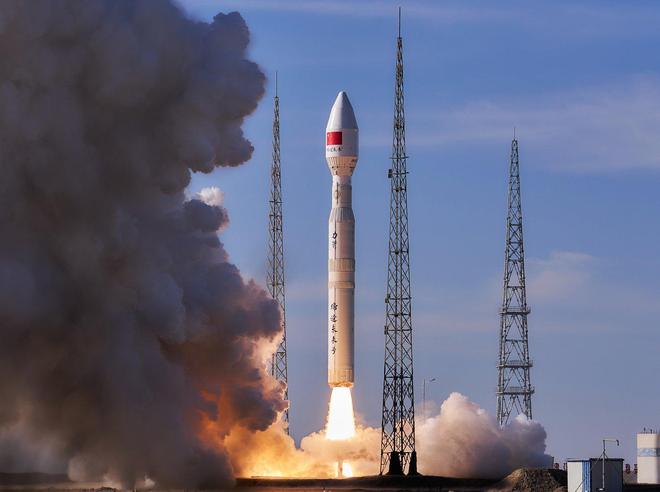
Core Viewpoint - The successful launch of China's first orbital reusable rocket, Zhuque-3, represents a significant step in the country's commercial space industry, aiming to compete with SpaceX's Falcon 9 and Starship [1][5]. Group 1: Rocket Launch and Technology - Zhuque-3, developed by China Blue Arrow Aerospace Technology Co., is designed to master rocket recovery technology, with the second stage successfully entering the designated orbit while the first stage recovery failed [1][5]. - The rocket stands 66 meters tall and weighs 570 tons, comparable to a 22-story building and 95 adult African elephants, respectively [2][9]. - The recovery plan involves the first stage landing vertically on a platform 400 kilometers away from the launch site, highlighting the technical challenges of rocket recovery [2][9]. Group 2: Comparison with SpaceX - A direct comparison between Zhuque-3 and SpaceX's Falcon 9 reveals key differences: Falcon 9 uses an aluminum-lithium alloy shell, while Zhuque-3 employs stainless steel, which is sturdier but heavier [3][10]. - Zhuque-3's engine uses liquid oxygen and methane, which burns without carbon residue, making it more advanced than Falcon 9's kerosene-based fuel [3][10]. Group 3: Economic Implications - The development of reusable rockets could significantly reduce launch costs, with traditional rockets costing up to 51,000 yuan per kilogram, Falcon 9 reducing it to 22,000 yuan, and SpaceX's Starship potentially lowering it to 1,400 yuan per kilogram [11]. - Mastering recovery technology could transform rockets from costly research projects into profitable ventures, making space travel more accessible to the public [11]. Group 4: Production and Team Efforts - The production of Zhuque-3 involved over a hundred technicians working in shifts around the clock, showcasing the dedication and effort behind the project [12][13]. - Advanced 3D printing technology allows for the production of the Tianque 12A engine in just 3-4 days, streamlining the manufacturing process [12][13]. Group 5: Content Creation and Audience Engagement - The creator @ZhiNanCaiJing has gained significant attention by documenting the launch and recovery process, with videos attracting millions of views and showcasing the rocket's development journey [1][7]. - The content aims to engage a dedicated audience and elevate the quality of information shared about the aerospace industry, reflecting a trend in content creation on platforms like Douyin [8][14].
商业航天:坚定三重拐点,抓住产业浪潮,如何参与投资机会
2025-12-08 00:41
Summary of Commercial Aerospace Conference Call Industry Overview - The conference call focused on the **commercial aerospace industry** and its recent developments, highlighting three significant turning points: policy, performance, and technology [1][2][3]. Key Points Policy Turning Point - The establishment of a dedicated bureau for commercial aerospace indicates the government's commitment to the industry, aiming to address challenges in **rocket reusability technology** and integrate advantages from the information and communication sectors [1][4][5]. - The government plans to introduce major companies like **Huawei** and **ZTE** to enhance satellite internet development towards **6G**, leveraging existing mobile communication industry strengths [3][6]. Performance Turning Point - Since August 2025, there has been a significant increase in **launch frequency** due to large-scale new project tenders, with companies like **Chen Chang** and **Zheng Lei** showing marked improvement in their performance during the first three quarters of the year [1][4]. - The commercial aerospace sector has outperformed the broader market, driven by the establishment of new companies and increased launch activities [2][10]. Technology Turning Point - The domestic liquid engine technology for **reusable rockets** is maturing, with breakthroughs expected in the first half of 2026. The industry is adopting a collaborative approach, involving multiple companies to tackle the challenges of rocket reusability [1][4][5][18]. - The **NTN (Non-Terrestrial Network)** system is crucial for the future of satellite internet, with China positioned to develop this system effectively due to its advanced **5G network** and clear **6G roadmap** [3][7]. Additional Insights - The commercial aerospace sector is viewed as a long-term investment opportunity rather than a short-term theme, with significant catalysts expected from the upcoming launches of reusable rockets and the establishment of new companies [10][15]. - The **ground terminal segment** is identified as the most valuable market within the commercial aerospace industry, with significant growth potential as user numbers and application scenarios increase [20]. - The **Shanghai Songjiang Satellite Internet Ecological Conference** revealed plans for over **7,000 satellites** and **500 rocket launches** in the next five years, indicating strong confidence in the industry's future [19]. Investment Recommendations - Investors are advised to focus on companies involved in the **rocket launch supply chain**, **satellite manufacturing**, and **ground terminal development**. Specific attention should be given to the upcoming test flights of new reusable rockets and the results of ground terminal tenders [21][22].