知识付费

Search documents
东华软件跌2.09%,成交额6.23亿元,主力资金净流出5101.28万元
Xin Lang Cai Jing· 2026-01-20 05:21
Core Viewpoint - Donghua Software's stock has experienced fluctuations, with a recent decline of 2.09% and a year-to-date increase of 7.43%, indicating volatility in its market performance [1]. Financial Performance - For the period from January to September 2025, Donghua Software reported a revenue of 8.488 billion yuan, reflecting a year-on-year growth of 3.69%. However, the net profit attributable to shareholders decreased by 28.45% to 350 million yuan [2]. - Cumulatively, since its A-share listing, Donghua Software has distributed a total of 2.826 billion yuan in dividends, with 481 million yuan distributed over the past three years [3]. Shareholder and Market Activity - As of September 30, 2025, the number of shareholders for Donghua Software was 315,200, a decrease of 2.68% from the previous period. The average number of circulating shares per person increased by 2.76% to 9,226 shares [2]. - The stock's trading activity showed a net outflow of 51.01 million yuan from major funds, with significant buying and selling activity recorded [1]. Company Overview - Donghua Software, established in January 2001 and listed in August 2006, is primarily engaged in industry application software development, computer information system integration, and related services. Its revenue composition includes 68.15% from system integration, 17.71% from technical services, and 14.09% from software sales [1]. - The company operates within the computer-IT services sector and is associated with various concept sectors, including IPV6, knowledge payment, DRG concept, digital economy, and AI applications in healthcare [1]. Institutional Holdings - As of September 30, 2025, notable institutional shareholders include Huabao Zhongzheng Financial Technology Theme ETF, holding 36.935 million shares, and Southern Zhongzheng 500 ETF, holding 32.659 million shares, with varying changes in their holdings compared to the previous period [3].

新华网涨2.03%,成交额7.25亿元,主力资金净流出4811.99万元
Xin Lang Zheng Quan· 2026-01-20 03:26
Group 1 - The core viewpoint of the news is that Xinhua Net's stock has shown significant fluctuations in price and trading volume, with a notable increase in revenue and profit year-on-year [1][2] - As of January 20, Xinhua Net's stock price increased by 2.03% to 24.11 yuan per share, with a total market capitalization of 16.268 billion yuan [1] - The company has experienced a year-to-date stock price increase of 24.09%, but has seen a decline of 10.41% over the last five trading days [1] Group 2 - Xinhua Net's main business segments include government and enterprise comprehensive services (38.65%), full media advertising services (36.30%), digital and intelligent services (19.73%), and cultural creative services (5.32%) [1] - For the period from January to September 2025, Xinhua Net achieved operating revenue of 1.306 billion yuan, representing a year-on-year growth of 7.88%, and a net profit attributable to shareholders of 203 million yuan, up 30.56% year-on-year [2] - The company has distributed a total of 1.115 billion yuan in dividends since its A-share listing, with 277 million yuan distributed in the last three years [2]

南方传媒涨2.04%,成交额2.39亿元,主力资金净流出249.77万元
Xin Lang Cai Jing· 2026-01-19 06:06
Group 1 - The core viewpoint of the news is that Southern Publishing Media has shown a mixed performance in stock trading, with a year-to-date increase of 12.01% but a slight decline in the last five trading days [1] - As of January 19, the stock price reached 15.02 CNY per share, with a market capitalization of 13.247 billion CNY and a trading volume of 239 million CNY [1] - The company has a diverse revenue structure, with 82.16% from distribution, 43.36% from publishing, and smaller contributions from other segments [1] Group 2 - Southern Publishing Media operates in the media, publishing, and education publishing sectors, with concepts including paid knowledge, vocational education, online education, and artificial intelligence [2] - For the period from January to September 2025, the company reported a revenue of 6.283 billion CNY, a year-on-year decrease of 3.01%, while net profit attributable to shareholders increased by 60.73% to 851 million CNY [2] - The company has distributed a total of 2.782 billion CNY in dividends since its A-share listing, with 1.376 billion CNY in the last three years [3] Group 3 - As of September 30, 2025, the number of shareholders increased by 50.91% to 37,000, while the average circulating shares per person decreased by 34.77% to 23,866 shares [2] - The top shareholders include Hua'an Media Internet Mixed A and ICBC Cultural Industry Stock A, with notable changes in their holdings [3] - New entrants among the top shareholders include Southern CSI 1000 ETF, while Jin Ying Technology Innovation Stock A has exited the top list [3]

私生子+违规操作?头部公募知名基金经理被锤
Sou Hu Cai Jing· 2026-01-19 04:17
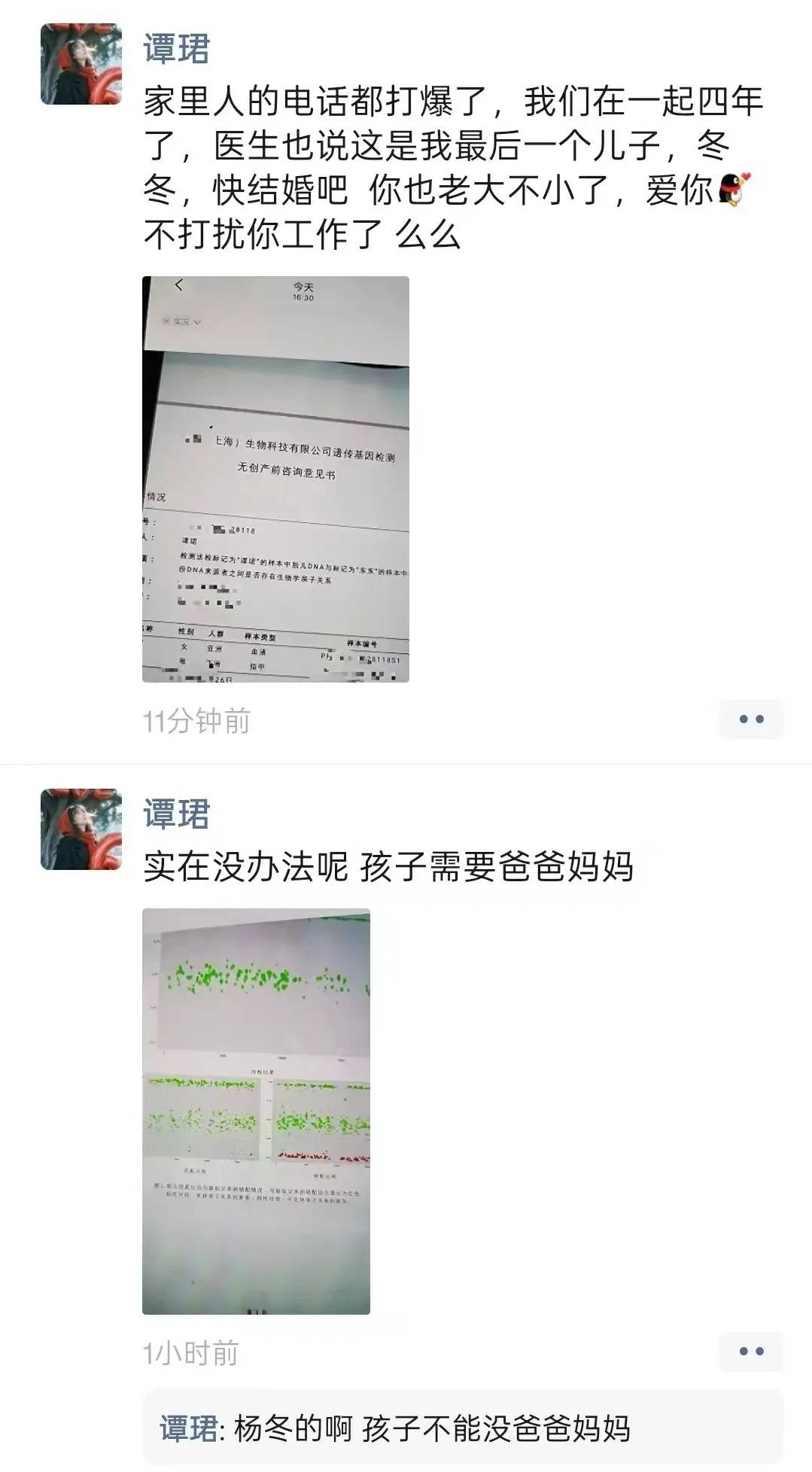
Core Viewpoint - A personal dispute between Tang Jun, a former researcher at Fangzheng Securities, and Yang Dong, a prominent fund manager at GF Fund, has escalated into a public controversy involving allegations of personal misconduct and potential violations of industry regulations [1][9][14]. Group 1: Personal Allegations - Tang Jun publicly shared a prenatal paternity test report, claiming that Yang Dong is the father of her unborn child, and accused him of misleading her into participating in a "knowledge payment" scheme [9][10]. - The relationship between Tang Jun and Yang Dong lasted four years, during which Tang claims to have been manipulated under the guise of collaboration [9][10]. - Tang Jun's previous public persona as a financial analyst has dramatically shifted from admiration for her "PhD husband" to publicly denouncing Yang Dong as a "scumbag" [9][12]. Group 2: Professional Background of Yang Dong - Yang Dong is an assistant general manager at GF Fund, with 19 years of experience in the securities industry, managing assets totaling approximately 28.8 billion yuan [11][12]. - He is recognized for his successful fund management, with notable returns such as 120.06% for the GF Value Leading Mixed Fund and 69.88% for the GF Multi-Factor Mixed Fund, positioning him as a significant figure in the investment community [11][12]. Group 3: Compliance and Regulatory Concerns - If Tang Jun's allegations are proven true, Yang Dong's actions may violate the "Code of Conduct for Fund Practitioners," which prohibits engaging in side activities that conflict with professional duties [10][14]. - GF Fund has a history of compliance issues, including past incidents involving insider trading and high management fees, which have raised concerns among investors [14][15]. - The current situation highlights the potential impact on investor trust and the necessity for GF Fund to address both personal and professional conduct within its ranks [14][15].

拓尔思跌2.07%,成交额7.55亿元,主力资金净流出5339.04万元
Xin Lang Zheng Quan· 2026-01-19 02:52
Core Viewpoint - The stock of Tuolisi has experienced fluctuations, with a recent decline of 2.07% and a year-to-date increase of 23.72%, indicating volatility in its market performance [1]. Financial Performance - For the period from January to September 2025, Tuolisi reported a revenue of 337 million yuan, a year-on-year decrease of 45.57%, and a net profit attributable to shareholders of -160 million yuan, a significant decline of 460.24% [2]. Shareholder Information - As of September 30, 2025, the number of shareholders for Tuolisi was 116,700, a decrease of 2.78% from the previous period, with an average of 7,483 circulating shares per person, an increase of 2.86% [2]. Business Overview - Tuolisi, established on February 18, 1993, and listed on June 15, 2011, specializes in artificial intelligence products and services, big data products and services, and data security products and services. The revenue composition includes 44.49% from AI software products and services, 33.73% from big data software products and services, 11.07% from security products, and 10.70% from system integration and others [1]. Dividend Information - Since its A-share listing, Tuolisi has distributed a total of 325 million yuan in dividends, with 55.67 million yuan distributed over the past three years [3]. Institutional Holdings - As of September 30, 2025, the top ten circulating shareholders of Tuolisi include notable entities such as Huabao Zhongzheng Financial Technology Theme ETF, which increased its holdings by 5.03 million shares, and Hong Kong Central Clearing Limited, which decreased its holdings by 0.53 million shares [3].

谭珺喊话广发基金杨冬:我怀孕了!
Xin Lang Cai Jing· 2026-01-17 15:03
Core Viewpoint - The recent social media posts by Tan Jun, revealing her pregnancy and urging Yang Dong, a fund manager at Guangfa Fund, to marry her, have sparked significant public interest and discussion about their personal and professional relationship [1][17]. Group 1: Personal Relationship Dynamics - Tan Jun publicly announced her pregnancy and shared a non-invasive prenatal testing report to confirm the biological relationship between her unborn child and Yang Dong, indicating a pressing desire for marriage after four years of being together [3][20]. - The narrative constructed by Tan Jun emphasizes the urgency of marriage, mentioning family pressure and the notion of "unmarried pregnancy" [4][21]. - Despite Tan Jun's vocal expressions on social media, Yang Dong has not publicly responded to the situation, which adds to the intrigue surrounding the event [16][33]. Group 2: Professional Implications - The incident has drawn attention to a prior conflict involving Tan Jun accusing Yang Dong of misconduct related to a knowledge-sharing platform, which may involve ethical violations concerning his role as a fund manager [17][34]. - Tan Jun's allegations suggest that Yang Dong may have engaged in activities that conflict with the professional conduct expected of fund managers, potentially harming investor trust [18][35]. - The situation has led to a divided public opinion, with some supporting Tan Jun's revelations about industry practices, while others criticize her for making personal grievances public [34][35].
金融圈都在搞知识付费
投资界· 2026-01-16 03:39
Core Viewpoint - The article discusses the rising trend of knowledge payment in the financial industry, highlighting how financial professionals are leveraging their expertise to create new revenue streams through subscription services and online courses, despite the traditional media business being considered poor-performing [3][4][16]. Group 1: Knowledge Payment Trends - Hong Hao's knowledge platform recently increased its annual fee to 1,499 yuan, generating a GMV of 12.586 million yuan within two months from 14,000 subscribers [3]. - Li Bei, a friend of Hong Hao, sold a course priced at 12,888 yuan in just two days, earning 257,000 yuan [3]. - The article notes that the media sector is generally underperforming, yet knowledge payment models are attracting significant interest from financial professionals [3][4]. Group 2: Leveraging Different Types of Leverage - Silicon Valley investor Naval emphasizes three types of leverage for wealth creation: labor leverage, capital leverage, and the most crucial, the ability to replicate products with zero marginal cost, such as code and media [5]. - Hong Hao and Li Bei effectively utilize all three types of leverage, with Li Bei's company, Banxia, surpassing 10 billion yuan in scale by 2022 [6]. - The article highlights that Hong Hao's recent fund performance has been inconsistent, but he claims a cumulative investment return of 718.77% over 20 years [6][9]. Group 3: Market Positioning and Audience Engagement - Hong Hao and Li Bei's focus on macroeconomic topics allows them to reach a broader audience, as many people are interested in general market trends rather than niche financial models [9][10]. - Their engaging presentation styles, which mix serious analysis with relatable content, help attract and retain followers [9][10]. - The article suggests that their ability to blend macroeconomic analysis with personal narratives enhances their appeal and marketability [9][10]. Group 4: Challenges and Strategies - Fund managers are often cautious about entering the knowledge payment space due to concerns about being perceived as neglecting their core investment responsibilities [11][12]. - Hong Hao and Li Bei's ventures into knowledge payment are not merely about transitioning to media but are strategic moves to enhance their market presence and client engagement [12][16]. - Li Bei's strategy includes offering free online courses to existing investors to retain them and prevent redemptions, especially as her firm faces increased competition [12][14][15]. Group 5: Future of Knowledge Payment in Finance - The article posits that the trend of knowledge payment in finance is driven by both the pressure of declining salaries in the industry and the dual needs of investors for reliable information and managers for long-term clients [16][17]. - As traditional channels become less effective, fund managers are increasingly turning to private domains and courses to connect with more targeted client bases [17]. - The ability to provide valuable insights and maintain trust is becoming essential in a noisy information environment, making knowledge payment a viable business model for financial professionals [16][17].

中国出版跌2.18%,成交额1.03亿元,主力资金净流出397.89万元
Xin Lang Cai Jing· 2026-01-16 02:10
Core Viewpoint - China Publishing's stock has experienced fluctuations, with a current price of 7.63 yuan per share, reflecting a year-to-date increase of 18.29% and a recent five-day increase of 13.20% [1] Group 1: Stock Performance - As of January 16, China Publishing's stock price decreased by 2.18%, with a trading volume of 1.03 billion yuan and a turnover rate of 0.70% [1] - The company's total market capitalization stands at 14.527 billion yuan [1] - The stock has shown a 60-day increase of 11.39% [1] Group 2: Financial Performance - For the period from January to September 2025, China Publishing reported an operating income of 3.21 billion yuan, a year-on-year decrease of 15.28% [2] - The net profit attributable to shareholders was 238 million yuan, down 23.91% compared to the previous year [2] Group 3: Shareholder Information - As of September 30, 2025, the number of shareholders decreased by 11.64% to 52,000, while the average circulating shares per person increased by 13.18% to 36,645 shares [2] - The company has distributed a total of 1.694 billion yuan in dividends since its A-share listing, with 682 million yuan distributed in the last three years [3] Group 4: Institutional Holdings - Major institutional shareholders include Dazhong Rui Xiang Mixed A, which holds 20.2803 million shares, an increase of 4.6089 million shares from the previous period [3] - Other notable shareholders include Dazhong Jingzheng A and Dazhong Celue Huibao A, with holdings of 16.0784 million and 11.2916 million shares, respectively, both showing increases [3]

财经博主谭珺公开“手撕”广发基金经理杨冬知识星球“骗局”
Xin Lang Cai Jing· 2026-01-16 01:24
Core Viewpoint - The public feud between Tan Jun and Yang Dong highlights the complex interplay of personal grievances, the financial industry, knowledge payment platforms, and online violence [1][4][5] Group 1: Individuals Involved - Yang Dong is a well-known fund manager at GF Fund, managing over 10 billion in assets and recognized for a stable growth investment style [3][8] - Tan Jun, a prominent financial blogger, claims to be the first to predict the Shanghai Composite Index reaching 4000 points [3][8] Group 2: Knowledge Payment Controversy - "Knowledge Planet" is a popular knowledge payment platform where users pay to access specialized content [4][9] - Tan Jun's accusations suggest that Yang Dong may have exploited this platform for personal gain, potentially involving deceptive practices [4][9] - The knowledge payment industry has faced criticism for unethical practices, including misleading users with promises of high returns [4][5][9] Group 3: Emotional and Social Implications - Tan Jun's statements reflect deep personal anger, possibly stemming from emotional neglect or financial disputes [10] - The public nature of the conflict raises concerns about the impact on Yang Dong's professional reputation and the trust of investors [11] Group 4: Professional Ethics and Public Perception - The clash between professional image and personal ethics in the financial sector is underscored by Tan Jun's attempt to dismantle Yang Dong's "elite" persona [12] - The financial industry has seen increasing scrutiny regarding personal conduct, with past incidents prompting discussions about ethical standards [12] - The knowledge payment controversy reveals a "gray area" in the industry, where some practitioners lack proper qualifications and exploit users [12]
金融圈都在搞知识付费
首席商业评论· 2026-01-15 04:42
Core Viewpoint - The article highlights the increasing importance of intellectual property (IP) and self-built channels in the private equity sector, as financial professionals turn to knowledge monetization to supplement income in a challenging investment environment [6][21]. Group 1: Knowledge Monetization Trends - Financial figures like Hong Hao and Li Bei have successfully transitioned into knowledge monetization, with Hong Hao's knowledge platform generating a GMV of 12.586 million yuan in just two months after a price increase to 1499 yuan per year [6]. - Li Bei's course, priced at 12,888 yuan, sold out in two days, indicating a strong demand for paid financial education [6]. - The article notes that the media industry is generally considered a poor business, yet knowledge monetization within finance has emerged as a lucrative alternative, attracting many financial professionals [6]. Group 2: Leveraging Strategies - The article discusses three types of leverage for wealth creation: labor leverage, capital leverage, and the most crucial, the leverage of replicable products with zero marginal cost, such as code and media [9]. - Hong Hao and Li Bei effectively utilize these three types of leverage, with Li Bei's firm, Banxia, surpassing 10 billion yuan in scale by 2022, showcasing the effectiveness of their strategies [9][10]. - The article emphasizes that the ability to create engaging content and attract a large audience is essential for success in knowledge monetization, as seen in the cases of Hong Hao and Li Bei [13]. Group 3: Market Dynamics and Challenges - The article points out that while knowledge monetization is a growing trend, it also presents challenges for fund managers who risk being perceived as neglecting their core investment responsibilities [15]. - Hong Hao's recent performance has been questioned, particularly regarding his ability to deliver on his investment predictions, which raises concerns about the credibility of knowledge monetization efforts [15][18]. - Li Bei's strategy to offer free courses to retain clients amid declining performance illustrates the competitive pressures within the private equity space [19]. Group 4: Investor and Manager Relationships - The article discusses the dual needs of investors for reliable information and fund managers for long-term clients, suggesting that knowledge monetization can bridge this gap [21]. - It highlights the shift in focus for fund managers from traditional high-net-worth clients to more targeted outreach through private channels and courses [21][22]. - The increasing noise in the financial information landscape necessitates that fund managers provide value through their insights, which can help establish trust and attention among potential clients [21].