
碳汇交易

Search documents
精准施策筑根基 破局提质再出发
Qi Huo Ri Bao Wang· 2025-12-17 00:59
Core Insights - The "insurance + futures" model has shown significant achievements in stabilizing farmers' income and supporting national food security, but there is still room for optimization [1] - The industry needs to explore solutions to development challenges to enhance the effectiveness of the "insurance + futures" model [1] Policy and Regulation - The implementation of the "Business Rules for Futures Companies' Insurance + Futures Business" in December 2024 will clarify the basic principles, definitions, goals, and requirements for the model, emphasizing the need for clear responsibilities among all parties involved [1] - Strengthening policy norms and ensuring accountability among insurance companies, futures companies, farmers, and the government is essential for the model's sustainability [1] Innovation and Ecosystem - Transitioning from single-point protection to an industrial closed-loop is crucial, where banks can offer credit discounts based on insurance policies, and leading enterprises can share part of the premium, creating a stable ecosystem of shared risks and benefits [2] - The establishment of a multi-tiered protection system through regulatory collaboration and innovative fiscal policies, such as the "ladder subsidy" in Heilongjiang, is necessary for a smooth policy exit [2] Technological Integration - The industry is exploring three breakthrough directions: deep integration with digital agriculture using satellite remote sensing and IoT for dynamic crop monitoring, linking "insurance + futures" with green finance scenarios, and creating an inclusive financial ecosystem [3] - The use of AI and big data for precise analysis of historical price fluctuations will enhance risk management and product personalization [3] Future Outlook - Continuous efforts to address development challenges, improve institutional mechanisms, and innovate service models are vital for the "insurance + futures" model to take root in rural areas and provide robust financial support for national food security and agricultural modernization [4]
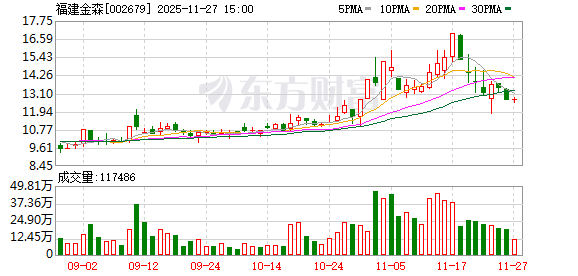
福建金森:目前尚未利用自有林地资源参与国内碳汇(CCER)交易事项
Mei Ri Jing Ji Xin Wen· 2025-11-27 10:52
Core Viewpoint - The company has not yet utilized its own forest resources for domestic carbon credit (CCER) trading but is closely monitoring developments in CCER methodologies and is focused on enhancing forest quality for future carbon credit development [2]. Group 1 - The company has 800,000 acres of land available for carbon credit development, but it has not yet engaged in CCER trading [2]. - The company emphasizes the transformation of ecological value as a strategic direction and will announce any significant developments in carbon credit business through legal channels [2]. - The company is actively improving forest quality through scientific forestry practices to lay a resource foundation for future carbon credit projects [2].


雅安市宝兴县:绿水青山为底 探索从“生态守护”到“价值转化”之路
Si Chuan Ri Bao· 2025-11-26 21:48
Core Insights - The successful sale of 1009 tons of carbon credits in Baoxing County represents a significant step in transforming ecological resources into tangible economic benefits, marking the first carbon trading project in Sichuan Province [1][2] - Baoxing County has implemented a comprehensive development strategy that integrates ecological restoration, high-quality development, and the establishment of a modern ecological industry system, achieving notable progress in various sectors [1][2] Carbon Credit Development - Baoxing County has established a carbon credit development model based on its forest resources, including 36,000 acres of CCER afforestation carbon credits and 12,000 acres of "Panda Carbon Benefits," benefiting over 2,000 households with an estimated value of approximately 28 million yuan [2] - The county has been recognized for its ecological achievements, being awarded the title of "China's Forest Granary County" and establishing the first provincial carbon credit legal practice base in the country [2] Industrial Growth - The "Flying Economy" model in Baoxing County has led to the concentration of industrial projects in the Ya'an Economic and Technological Development Zone, resulting in a significant increase in industrial output value, projected to reach 11 billion yuan in 2024, a 39.4% year-on-year growth [6] - The Flying Industrial Park has achieved comprehensive coverage of material-grade products and has attracted multiple downstream processing enterprises, forming a collaborative industrial cluster [4][6] Urban Development - Baoxing County has initiated a systematic project to upgrade public services and infrastructure, including the construction of a new middle school and various housing and fitness facilities, enhancing the living standards in the region [8] - The county's GDP is projected to grow by approximately 6.8% in 2024, with local public budget revenue expected to increase by 8.25%, reflecting the positive impact of carbon credit trading and industrial development [9]

点绿成金 “碳”路先行
Jing Ji Ri Bao· 2025-11-20 02:23
Core Insights - The transformation of Haizhu Village in Bijie City, Guizhou Province, showcases the successful implementation of green economic development strategies, turning ecological resources into economic benefits [1][2] Group 1: Ecological Development - Haizhu Village has increased its forest coverage from less than 5% in the 1980s to over 77% today, with a total forest area of 13,700 acres [1] - The village has initiated carbon trading, with the first collective forestry carbon ticket issued in April 2022, covering 7,346.5 acres and generating a carbon reduction of 34,600 tons, valued at over 3 million yuan [1] - The total amount in the village's carbon account has reached 182,800 yuan following recent carbon ticket transactions [1] Group 2: Economic Impact - Bijie City aims for the green economy to account for 43.79% of its GDP by 2024, reflecting a strong commitment to sustainable development [2] - The city has implemented various measures for forest restoration and management, resulting in an increase in vegetation cover and biodiversity [2] - The value of the under-forest economy in Bijie is projected to reach 14.6 billion yuan in 2024, with a year-on-year growth of 112.64%, leading the province [2] Group 3: Carbon Trading System - Bijie has developed a comprehensive carbon trading system, issuing 6 forestry carbon tickets and completing 19 transactions, resulting in a total carbon trading volume of 3,775 tons and revenue of 238,500 yuan [2]
“绿色存折”收益越来越多(贯彻四中全会精神一线见闻)
Ren Min Ri Bao· 2025-11-06 07:42
Core Viewpoint - The article discusses the ongoing reforms in collective forest rights in Hunan's Tongdao County, highlighting the challenges and new policies aimed at resolving long-standing issues related to land distribution and rights allocation for local farmers [2][3][4]. Group 1: Reform Initiatives - The recent policy emphasizes the need for deepening reforms in collective forest rights, with a specific focus on resolving historical issues through a five-year action plan for rights registration [3][4]. - The government aims to quantify and distribute the rights to previously undivided collective forest land by the end of the year, ensuring that farmers can access tangible benefits from their land [4]. Group 2: Economic Opportunities - The article highlights the transformation of forest land from a mere resource to an asset, with over 90,000 acres of forest rights already transferred in Tongdao County [4]. - New economic activities, such as carbon trading and the cultivation of medicinal herbs, are emerging as significant opportunities for local farmers, enhancing their income potential [4][5]. Group 3: Community Impact - The reforms are expected to invigorate local communities, with farmers expressing increased confidence in the economic viability of their forest lands, which are now viewed as "green savings accounts" [5][6]. - The article concludes with a positive outlook on the future benefits of these reforms, emphasizing the importance of continued exploration and implementation of collective forest rights reforms to maximize community gains [6].
湖南怀化持续推进集体林权制度改革 “绿色存折”收益越来越多
Ren Min Ri Bao· 2025-11-06 00:24
Core Points - The article discusses the challenges faced by the villagers in Yutou Village, Hunan, regarding the division of collective forest land, with nearly 10,000 acres remaining undivided despite reforms [2][4] - The recent policy initiative aims to address historical issues in collective forest rights, emphasizing the quantification of rights and benefits to individual households by the end of the year [3][4] - The transformation of forest land from a resource to an asset is highlighted, with over 90,000 acres of forest rights transferred in the region, and new economic opportunities emerging from carbon trading and medicinal herb cultivation [4][5][6] Policy and Reform - The article outlines the government's commitment to deepening reforms in collective forest rights as part of the broader economic goals set by the 20th National Congress [2][3] - Specific measures include a five-year action plan to resolve historical land rights issues and the issuance of rights certificates to ensure tangible benefits for villagers [4][6] - The policy encourages the integration of various rights, such as carbon credits, into financial systems, allowing for increased access to loans and investment opportunities [4][5] Economic Impact - The villagers view their forest land as a "green savings account," with compensation funds and rental income serving as interest, while legal timber sales represent the principal [5] - The establishment of a medicinal herb base and the signing of land transfer agreements indicate a shift towards more productive land use and economic diversification [4][6] - The article emphasizes the potential for increased income and economic vitality through the effective implementation of these reforms and the exploration of new economic models [6]
湖南怀化持续推进集体林权制度改革 “绿色存折”收益越来越多(贯彻四中全会精神一线见闻)
Ren Min Ri Bao· 2025-11-05 22:01
Core Viewpoint - The article discusses the ongoing reforms in collective forest rights in Hunan's Tongdao County, highlighting the challenges and new policies aimed at resolving long-standing issues related to land distribution and economic benefits for local farmers [2][3][4]. Group 1: Reform Initiatives - The recent policy emphasizes the need for deepening reforms in collective forest rights, with a specific focus on resolving historical land distribution issues through a five-year action plan [3][4]. - The government aims to quantify and distribute the rights to previously undivided collective forest land by the end of the year, ensuring that benefits are realized by individual households [4]. Group 2: Economic Opportunities - The article highlights the transformation of forest land from a mere resource to an asset, with over 90,000 acres of forest land already undergoing rights transfer in Tongdao County [4]. - New economic activities, such as carbon trading and the cultivation of medicinal herbs, are emerging as significant opportunities for local farmers, with 190 acres of land already receiving carbon rights certificates [4]. Group 3: Community Impact - The reforms are seen as a way to invigorate local economies, with farmers expressing increased confidence in the policies and their potential to generate income [4][5]. - The concept of forests as "green savings accounts" is introduced, where compensation funds and rental income are viewed as interest, while the sustainable harvesting of timber is seen as the principal [5].
四川首批林草碳普惠项目成功交易,雅安多地参与 空气卖钱,如何实现?
Si Chuan Ri Bao· 2025-11-05 06:43
Core Insights - The article discusses the development and implementation of carbon trading projects in Ya'an, Sichuan, focusing on the successful completion of the first carbon trading transactions involving forest management [2][4][8] Group 1: Carbon Trading Overview - Carbon trading is defined as the process of selling excess carbon emission allowances generated through activities like afforestation, allowing entities to earn revenue [2] - The first carbon trading project in Sichuan involved the trading of 10,654 tons of carbon credits, generating a total transaction value of 629,000 yuan [2] Group 2: Project Details - The carbon trading projects in Ya'an are part of a broader initiative to explore local forest carbon credit development and enhance the value of ecological products [2][4] - The specific project areas include 609.13 hectares of forest land, with an initial carbon reduction estimate of 10,676 tons over a 20-year period, potentially leading to a total reduction of 50,000 to 60,000 tons [4][5] Group 3: Economic Impact - The carbon trading initiative is expected to generate significant revenue, with estimates for the two main participating forest areas projecting earnings between 400,000 to 650,000 yuan [6] - The distribution of revenue from carbon trading will benefit both the development company and local villagers, promoting community involvement in carbon credit projects [6] Group 4: Future Prospects - Ya'an is actively working on enhancing its carbon storage capacity, with a projected total carbon storage of 98.63 million tons by 2024, accounting for 10% of the province's total [7] - The city is exploring innovative models that integrate carbon credits with finance, legal frameworks, and insurance, despite current limitations in the regulatory framework for larger-scale projects [7][8]

释放林业碳汇经济价值
Jing Ji Ri Bao· 2025-10-29 22:04
Core Insights - The approval of three national standards related to carbon accounting in terrestrial ecosystems marks a significant step in the establishment of a standardized system for forestry carbon sinks in China [1] - The development of forestry carbon sinks in China is transitioning from pilot projects to a more scaled and regulated phase, driven by the acceleration of the national carbon market [1] Group 1: National Standards and Market Development - The newly approved standards include the "Guidelines for Carbon Accounting in Terrestrial Ecosystems," "Technical Regulations for Forest Management to Increase Carbon Sinks," and "Technical Regulations for Afforestation to Increase Carbon Sinks," reflecting innovative achievements in the forestry carbon sink sector [1] - The Fujian province has established a unified carbon emission trading market and developed the Fujian Forestry Carbon Sink (FFCER) trading product, allowing major emitting enterprises to offset quotas through FFCER, with a cumulative transaction volume of 4.1818 million tons and a transaction value of 66.0733 million yuan as of May this year [1] - Heilongjiang province has developed the "Longjiang Green Carbon" management platform, integrating information on forest rights, carbon storage, and carbon sink status, leading the nation in digital management of forestry carbon sinks [1] Group 2: Challenges and Recommendations - The current status of forestry carbon sink resources is unclear, with insufficient data on quantity, quality, distribution, and future carbon sink rate changes, which hampers scientific planning and precise policy implementation [2] - There are significant professional barriers in the development and verification of forestry carbon sink projects, leading to long development cycles and high difficulty due to a lack of professional capacity [2] - Recommendations include clarifying resource baselines and improving policy standards, as well as enhancing technological support and talent development in key areas such as carbon measurement, monitoring, and assessment [2]
调研速递|永安林业接受线上投资者调研,在建工程与同业竞争问题受关注
Xin Lang Cai Jing· 2025-09-04 15:54
Group 1 - The company held a semi-annual performance briefing for 2025 on September 4, 2025, with active participation from online investors [1] - As of August 29, 2025, the company had 17,738 shareholders [1] - The company has ongoing construction projects valued at 280 million yuan, which accounts for 87% of the total revenue for 2024, primarily related to a halted biomass project [1] - The biomass project is listed for sale but has not yet been transacted, posing a risk of impairment losses [1] - The company is actively seeking potential buyers for the project and exploring diversified disposal methods while enhancing risk prevention measures [1] Group 2 - The company currently manages 1.14 million acres of forest land and land use rights [1] - The company is committed to avoiding competition with its controlling shareholder and is steadily advancing its "14th Five-Year" development plan [1] - The company aims to leverage its strengths and capital market tools to improve operational performance and market value [1] - The company is focusing on improving operational efficiency and profitability by expanding business channels in line with national policies [1] Group 3 - The company has formed a specialized team to participate in carbon trading, although current trading volumes are low [1] - The company plans to increase the development of carbon credit projects in the future [1] - Apart from repurchasing shares as per the profit compensation agreement, the company currently has no other share repurchase plans [1]
