
林业碳汇

Search documents
医疗自愿碳中和:将锦旗变为绿碳
Zhong Guo Xin Wen Wang· 2026-02-13 06:45
Group 1 - The core idea of the news is the implementation of a voluntary carbon neutrality initiative in the medical sector, allowing patients to express gratitude to healthcare workers by participating in tree planting and carbon offsetting activities, thus transforming appreciation into actionable environmental contributions [1][3]. - The initiative promotes a shift in patients from being mere beneficiaries of health services to active participants in ecological construction, integrating healthcare with forestry and tourism industries to create new pathways for ecological product value realization [3][5]. - The project is being developed in Sanming City, which has a high forest coverage rate and a mature carbon trading system, and includes the establishment of the "Humin Apricot Forest · Dual Carbon Health Culture Park" as a national pilot project [5][7]. Group 2 - The project features a carbon footprint calculation and carbon credit subscription system through a self-developed app, ensuring that all carbon offsets are based on government-recognized forestry carbon credits, monitored and verified by third-party organizations [5][7]. - The initiative includes two main slogans: "No banners, but green carbon" and "Cure one person, green one area," aiming to foster a two-way interaction between patients and the environment [7]. - The event is supported by various governmental and organizational bodies, including the Fujian Provincial Forestry Bureau and the Sanming Municipal Forestry Bureau, highlighting a collaborative effort in promoting ecological awareness and action [7].

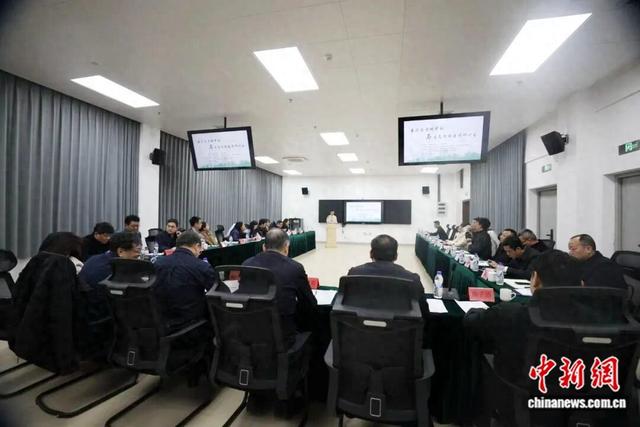
渝黔首张司法碳票交付完成
Xin Lang Cai Jing· 2026-02-01 19:22
Core Viewpoint - The successful completion of the first judicial carbon credit transaction between Chongqing and Guizhou marks a significant step in ecological restoration efforts and cross-province collaboration in China [1] Group 1: Judicial Carbon Credit Transaction - The transaction involved the delivery of carbon credits by Tongren City Investment Group Green Source Forest Products Co., Ltd. to a construction company and individuals who caused ecological damage [1] - The carbon credits correspond to a carbon reduction of 2,468 tons, with a transaction price of 88 yuan per ton, totaling 217,000 yuan [1] - This transaction sets a new record for cross-province judicial carbon credit trading in China [1] Group 2: Ecological Restoration Efforts - The defendants voluntarily agreed to restore the damaged ecology but faced practical difficulties due to regional conditions [1] - The courts initiated a cross-province cooperation mechanism to facilitate the ecological restoration through the purchase of carbon credits [1] - This approach exemplifies an innovative model combining "cross-province cooperation + carbon credit compensation + market cancellation" for ecological restoration [1]
岳阳林纸20260128
2026-01-29 02:43
Summary of the Conference Call for Yueyang Forest and Paper (岳阳林纸) Company Overview - **Company**: Yueyang Forest and Paper - **Industry**: Forestry Carbon Credits and Paper Manufacturing Key Points Impact of Contract Termination - The termination of the carbon credit contract in Tibet has a minimal impact on the overall carbon credit business of the company, which still holds approximately 100 million acres of forestry carbon credit contracts, with a total signed area of 160 million acres, where Tibet accounts for only about 2% [2][4][5] - The company is actively expanding into farmland and grassland carbon credit resources, with signed areas of 8 million acres and 2 million acres respectively [4] Market Potential and Trends - The domestic forestry carbon credit market has significant potential, driven by increasing global green certification demands and rising zero-carbon certification needs from Chinese manufacturing [2] - The price of green certificates has shown an upward trend, expected to rise from 1-2 RMB in 2024 to 5-6 RMB in 2025 [9] International Market Opportunities - The company is aligning its carbon development standards with EU and US standards to meet international market demands, focusing on high-quality products that comply with multiple certification systems [2][11] - There is a strong demand for high-quality carbon credits (e.g., VCS and GS) from Chinese manufacturing enterprises, with annual demand projected to reach millions of tons [16][17] Future Developments in Carbon Market - The steel, construction materials, and cement industries are expected to be included in the domestic carbon emission system by 2026-2027, which will significantly boost the overall carbon market in China [18] - The anticipated annual demand from these sectors is estimated to be between 10 million to 20 million tons, with a growth rate of 20% to 30% [18] Financial Performance and Projections - In 2025, the company faced challenges due to increased costs from boiler adjustments and losses in landscaping business, leading to an additional expenditure of approximately 400 to 500 million RMB [22] - For 2026, the company expects to achieve a profit of 200 to 300 million RMB through internal improvements and energy enhancements, with a stable profit forecast of over 400 million RMB from its subsidiary [23][24] Strategic Expansion Plans - The company plans to develop high-quality carbon assets in "Belt and Road" countries, prioritizing its own stock assets and focusing on high-value projects such as soil and biomass carbon [25] - Market research has been conducted in regions like Africa, Cambodia, and Nigeria, with expectations of developing tens of thousands of tons annually at premium prices [25] Investor Engagement - The company will conduct research activities and site visits to engage investors and provide updates on its market performance and developments in new fiber pulp markets [27] Conclusion - The company is well-positioned to navigate the evolving carbon credit landscape, with strategic plans for expansion and a focus on high-quality products to meet both domestic and international demands. The anticipated regulatory changes and market dynamics present significant opportunities for growth in the coming years.

广东汕尾林业碳汇惠及10万余名村民
Zhong Guo Zi Ran Zi Yuan Bao· 2026-01-22 00:49
Core Viewpoint - The carbon trading project in Luhua County, Guangdong, successfully sold 12.29 million tons of carbon reduction, generating 3.38 million yuan in income for local villages and benefiting 106,000 villagers, marking a significant advancement in carbon market initiatives [1] Group 1: Carbon Trading and Economic Impact - Luhua County is the first in Guangdong to achieve secondary carbon trading in forestry, following the province's first county-level carbon trading in 2023 [1] - The carbon trading project has created a complete closed-loop system of "ecological protection - carbon cultivation - market realization - benefit sharing" [1] - The establishment of Guangdong's first "Two Mountains Bank" has innovated the "forest resource asset securitization" model, revitalizing idle forest land resources [1] Group 2: Environmental and Institutional Innovations - Luhua County has a forest area of 75,000 hectares with a forest coverage rate of 73.08%, and has completed significant reforestation and forest quality improvement projects [1] - The county has broken the "single combat" mindset by creating a county-level group trading model, integrating forestry resources from 37 administrative villages [1] - The shift in villagers' perception from "individual land" to "collective assets" has enhanced ecological management and stabilized carbon supply [2]
宁洱县实施林业碳汇开发项目
Xin Lang Cai Jing· 2026-01-21 20:33
Core Viewpoint - The implementation of forestry carbon sink development projects in Ning'er County has enabled local farmers to earn income from carbon credits, effectively monetizing the ecological value of air and forests [1][2][3] Group 1: Project Implementation and Benefits - Ning'er County has completed the second round of profit distribution from its forestry carbon sink project, benefiting 113 local farmers [1] - The project involves monitoring different forest management practices on designated plots to enhance carbon sequestration [1] - Local villagers, previously limited to collecting firewood and wild mushrooms, can now generate stable income through carbon credit agreements, transforming their natural resources into financial assets [2] Group 2: Technical and Strategic Aspects - In 2022, Ning'er County was selected as a national pilot for forestry carbon sinks, supported by funding and technical assistance from China Baowu Steel Group [2] - The county has developed a methodology for carbon credit generation from natural forests, focusing on sustainable forest management to achieve carbon sequestration and economic benefits [2] - The county's forest area totals 4.28 million acres, with a forest coverage rate exceeding 77%, indicating significant potential for carbon sink development [2] Group 3: Market and Economic Impact - Over the past three years, Ning'er County has successfully converted its rich forest resources into quantifiable and tradable "green capital" through rigorous project development and transparent market transactions [3] - The county has engaged in various carbon credit applications, achieving a total trading volume of 7,930.17 tons and generating over 277,500 yuan in carbon credit revenue [3] - This market-driven approach has created a "green savings account" for local farmers, aligning ecological protection with rural revitalization efforts [3]
承德:林海“呼吸”变价值 碳汇实践惠民生
Xin Lang Cai Jing· 2026-01-19 04:46
Core Viewpoint - Chengde is leveraging its rich forestry resources to develop carbon sinks, transforming ecological advantages into economic benefits through innovative practices in afforestation, carbon trading, and judicial reforms [1][3]. Group 1: Carbon Sink Development - Chengde has 3.556 million acres of forest land with a forest coverage rate of 60.03%, holding a carbon sequestration capacity of 86.989 million tons [1]. - The city is advancing land greening at a rate of 600,000 to 700,000 acres annually, focusing on key projects like Zhangcheng Basha afforestation and the governance of sand sources in Beijing and Tianjin [1][3]. - Thirteen municipal state-owned forest farms have become national sustainable forest management pilot sites, enhancing carbon sink reserves through near-natural management practices [1]. Group 2: Carbon Trading Achievements - Chengde has made significant strides in carbon trading, with the first carbon sink trading in Hebei Province occurring in 2014, involving the Fengning Qiansongba forest farm [3][4]. - The Saihanba forest farm achieved a notable carbon sink trading volume of 16.2 million tons in 2017, ranking first in the national forestry system for carbon reduction trading [3]. - As of now, the Saihanba and Qiansongba forest farms have traded a total of 27.9 million tons of carbon sinks, generating a transaction value of 7.748 million yuan [4]. Group 3: Expanding Carbon Sink Value - Chengde is broadening its approach to carbon sink products, with ten state-owned forest farms selected as provincial pilot sites for carbon sequestration product value realization, totaling 5.09 million tons of verified carbon sequestration, the highest in the province [5]. - The city is developing methodologies for grassland and wetland carbon sequestration, enhancing its influence in the carbon sink sector [5]. - Chengde has implemented innovative judicial practices for carbon sink loss compensation, establishing a comprehensive mechanism for damage, restoration, and carbon product value realization, completing carbon product transactions of 1.16 million tons with a total value of 69.49 million yuan [5].

CCER累计成交额6.5亿元,林业碳汇、新能源受青睐
2 1 Shi Ji Jing Ji Bao Dao· 2026-01-09 13:25
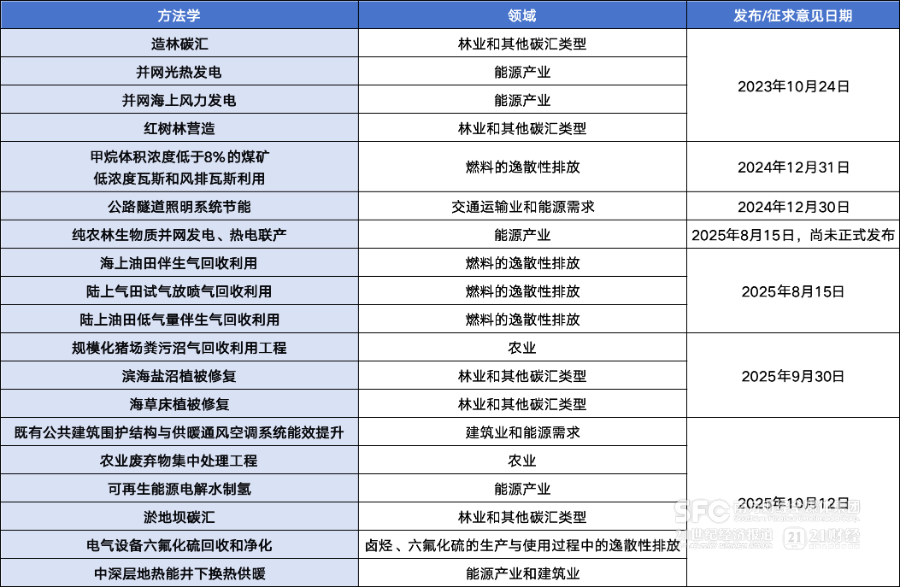
Core Viewpoint - The CCER methodology is undergoing significant expansion, with a total of 18 methodologies expected by the beginning of 2026, aimed at addressing key gaps in China's Nationally Determined Contributions (NDC) for greenhouse gas emissions reduction [1][4]. Group 1: Methodology Expansion - The Ministry of Ecology and Environment has introduced 12 new CCER methodologies in 2025, focusing on renewable energy utilization, energy efficiency improvements, agricultural waste resource utilization, ecosystem carbon sinks, and non-CO2 greenhouse gas reductions [1][4]. - The highest number of methodologies pertains to forestry carbon sinks (5), followed by the energy sector (4) and fugitive emissions [1]. Group 2: Market Development - Since its launch in January 2024, the voluntary greenhouse gas reduction trading market has seen over 5,700 accounts opened by various stakeholders, with a cumulative transaction volume of 921.94 million tons and a transaction value of 650 million yuan, averaging about 70 yuan per ton [3][7]. - The market is expected to facilitate the registration of projects that will achieve approximately 125 million tons of voluntary greenhouse gas reductions [3][7]. Group 3: New Fields and Incentives - The new methodologies incorporate six new fields into the voluntary reduction trading market, including oil and gas field recovery, ecosystem carbon sinks, agricultural waste resource utilization, renewable energy utilization, energy efficiency improvements, and sulfur hexafluoride reductions [4][5]. - The methodologies are designed to support green technologies and new business models, providing clear revenue expectations and reducing initial application costs for green technologies [5]. Group 4: Data Quality and Management - A comprehensive data quality management system is being established, ensuring reliable data acquisition, storage, and calculation, with mechanisms for cross-verification and internal management by project owners [6]. - The methodologies aim to focus on economically feasible projects, simplifying the development process and allowing for the bundling of smaller projects to reduce costs [6]. Group 5: Future Directions - The Ministry of Ecology and Environment aims to create a transparent, unified, and widely participatory voluntary greenhouse gas reduction trading market that aligns with international standards, contributing to carbon neutrality goals and the development of a green economy [8].
海南林业高质量发展绘就生态富民图景
Hai Nan Ri Bao· 2025-12-05 02:10
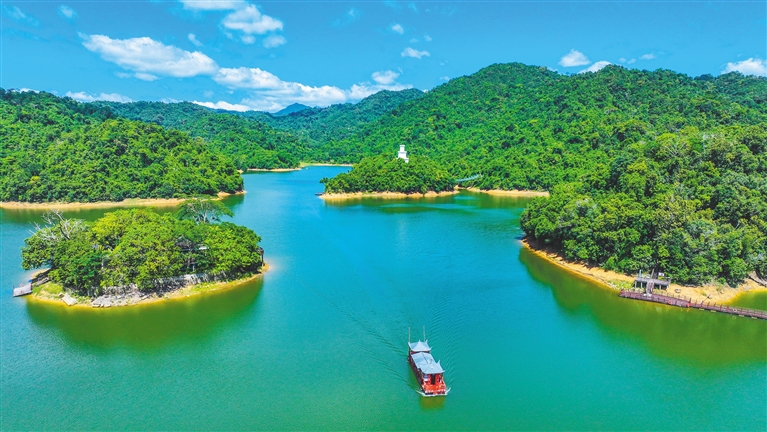
Core Viewpoint - The article discusses the high-quality development of forestry in Hainan, emphasizing its role in ecological protection and economic growth within the context of the Hainan Free Trade Port initiative [11][19]. Group A: Ecological Protection and Restoration - Hainan has established a comprehensive forest management system to enhance ecological protection, including monitoring rare bird species and implementing a "forest chief" system to address illegal land use and deforestation [13][12]. - The province has initiated a three-year action plan called "Green Beautiful Free Trade Port" to restore coastal protective forests and enhance the protection of ancient trees [14]. - The Hainan Tropical Rainforest National Park has improved its ecological environment, with the population of the Hainan gibbon increasing to 42 individuals, marking it as the only growing population of gibbons globally [15]. Group B: Economic Development through Forestry - Hainan is actively developing the under-forest economy, with various models such as planting ferns and raising earthworms under rubber trees, leading to significant income for local farmers [16][17]. - The total output value of the under-forest economy reached 9.3 billion yuan in the first three quarters of the year, indicating a strong growth trend [17]. - The province is also focusing on the development of specialty industries like tropical flowers and wood processing, with significant investments and production capabilities established [18]. Group C: Innovation in Resource Utilization - Hainan is exploring innovative ecological product value mechanisms, including the development of carbon trading projects related to mangroves and tropical rainforests, which are expected to generate substantial economic benefits [23][24]. - The province has initiated various educational and tourism projects that leverage wetland and forest resources, attracting significant public engagement and enhancing local economies [25]. - The establishment of national and provincial-level germplasm resource banks aims to protect and utilize local plant species, contributing to the sustainable development of Hainan's forestry sector [20][21].
海南森林变身“绿色提款机”
Hai Nan Ri Bao· 2025-11-23 00:47
Core Viewpoint - Hainan province is actively developing forestry carbon sink products, transforming its forests into valuable carbon trading assets, thereby promoting ecological and economic benefits [1][2]. Group 1: Carbon Sink Development - The red mangrove forest in Hainan's Lingao County can generate 3,236.05 tons of carbon sinks over seven years, with a market price of 100 yuan per ton [2]. - As of now, Lingao County has approximately 17,800 tons of tradable carbon sinks, with over 7,100 tons already traded [2]. - The "Forestry Carbon Sink Benefit Farmers Comprehensive Service" project has established a carbon sink network covering 15 village collectives and about 26,000 people, involving approximately 5,174 acres of red mangrove [2][3]. Group 2: Methodology and Research - Hainan's forestry department is conducting baseline surveys and dynamic monitoring of forestry carbon sinks, aiming to explore mechanisms for realizing the value of ecological products [3]. - The provincial forestry research institute is developing carbon sink methodologies tailored to tropical forests, which will quantify the carbon reduction effects of various forestry models [3]. Group 3: Carbon Sink Products and Applications - Hainan has launched its first national park carbon sink product, focusing on the carbon sequestration potential of the tropical rainforest restoration project in the Dingluo Mountain area, generating over 620,000 yuan in trading revenue [3]. - Carbon sink products are available for societal purchase, applicable for carbon neutrality in events, judicial ecological restoration, and more [4]. - The forestry carbon sink has supported over 20 judicial executions, with a total judicial purchase amount exceeding 650,000 yuan [4].
认购林业碳票抵消碳排放
Zhong Guo Zi Ran Zi Yuan Bao· 2025-11-19 06:56
Core Insights - The 32nd Hubei Province Wildlife Protection Month event successfully achieved carbon neutrality by offsetting 16.26 tons of CO2 emissions through the purchase of "Erlin Carbon Credits" [1] - This marks the first transaction of carbon neutrality through a large-scale event in Hubei, indicating a significant step towards the market-oriented transformation of forestry carbon sinks in the province [1] Carbon Credit Details - The "Erlin Carbon Credits" were issued for the Songshan Forest Farm in Yidu City, covering an area of 7,999 acres with a carbon reduction amount of 21,503.5 tons, valued at approximately 1.29 million yuan [1] - The first accounting period for these carbon credits is from January 1, 2020, to August 31, 2025 [1] Future Initiatives - Yidu City plans to use this "zero-carbon" event as a starting point to establish a carbon neutrality subscription mechanism in government agencies, public institutions, and state-owned enterprises [1] - The city aims to encourage broad participation from various sectors and explore a "carbon credits + finance" model to innovate carbon asset pledge financing products [1] - There are plans to expand the application of carbon credits in ecological justice and alternative fulfillment of afforestation obligations, promoting the transformation of ecological value into economic value [1]