科技创新金融支持

Search documents
中央政治局会议再提创新推出债券市场“科技板” 释放哪些信号?
2 1 Shi Ji Jing Ji Bao Dao· 2025-04-25 08:25
Core Viewpoint - The Central Political Bureau of the Communist Party of China emphasizes the introduction of a "Technology Board" in the bond market to enhance financial support for technological innovation and address funding challenges faced by tech enterprises [1][2][8]. Group 1: Introduction of the Technology Board - The "Technology Board" in the bond market aims to bridge the funding gap for tech companies by providing tailored financing options [2][8]. - The initiative is expected to be formalized soon, with significant implications for financial and strategic development in the tech sector [2][3]. Group 2: Key Support Mechanisms - The Technology Board will support three main entities: financial institutions, tech companies, and private equity firms, allowing them to issue innovation bonds [3][4]. - It will facilitate the issuance of medium to long-term bonds for growing and mature tech firms to enhance R&D investment and project development [3][4]. Group 3: Financial Innovation and Risk Management - The introduction of innovative financing tools, such as convertible bonds and dynamic clauses, is suggested to improve the assessment of non-financial assets and enhance risk pricing accuracy [4][8]. - The board will implement risk-sharing mechanisms to lower the cost of bond issuance and attract more market participants [3][7]. Group 4: Strategic Importance - Establishing the Technology Board is seen as a critical breakthrough in the financial support system for technological innovation, promoting the transformation of scientific achievements and aligning with national innovation strategies [8][10]. - It aims to create a comprehensive financial ecosystem that supports the entire lifecycle of tech enterprises, addressing the mismatch between short-term debt and long-term investments [8][9]. Group 5: Regulatory Support - The China Securities Regulatory Commission (CSRC) plans to enhance support for tech enterprise bond issuance by streamlining registration processes and promoting asset securitization [10]. - Specific measures include optimizing the development of tech innovation bonds and integrating quality tech bonds into benchmark trading categories [10].


固羽增收 - 债市的“旧”着陆与“新”崛起
2025-03-09 13:19
Summary of Key Points from Conference Call Industry Overview - The conference call primarily discusses the bond market, focusing on the transition from old issues related to debt to new developments in sectors like technology [2][8]. Core Insights and Arguments - **Old Issues vs. New Developments**: The old issues in the bond market are primarily related to debt clearance and the financial cycle of debt. New developments are emerging in sectors such as technology, which is expected to lead future high-yield growth [2][8]. - **2025 Fiscal Budget**: The 2025 fiscal budget reflects a cautious approach, with general public budget revenue projected at 21.985 trillion yuan, showing only a 0.1% increase. Tax revenue is expected to grow by 3.7%, while non-tax revenue is projected at 3.839 trillion yuan [3][4]. - **Deficit and Debt Levels**: The nominal deficit rate for 2025 is set to rise to 4%, with new government debt reaching 13.86 trillion yuan, marking the highest level since 2017. The broad deficit is expected to reach 9.8% [5][6]. - **Risk Mitigation Measures**: Significant funds are being allocated to mitigate risks, aimed at improving cash flow and repairing balance sheets. However, these measures are not expected to fully resolve debt issues in the short term [6][8]. - **Government Fund Revenue and Land Finance**: Government fund revenue is closely tied to land finance, with a notable decline in revenue from 2022 to 2024 due to falling land income and real estate prices [7][8]. - **City Investment Company Debt Growth**: The debt growth of city investment companies has slowed significantly, dropping from 16% in 2020 to around 6% in 2024, influenced by stricter regulations on local hidden debts [9][10]. - **Support for Technological Innovation**: The People's Bank of China is increasing financial support for technological innovation, planning to launch a technology-focused bond market. The Science and Technology Innovation Board has raised over 1 trillion yuan, with 50% of the funds allocated to technology-related bonds [12][13]. - **Challenges in the Technology Sector**: The technology sector faces challenges such as mismatched financing terms and insufficient credit enhancement measures. Only 3.6% of issued technology-related bonds have credit guarantees [16][17]. Other Important but Overlooked Content - **Market Adjustments**: Recent adjustments in the bond market are attributed to tighter funding conditions and misinterpretations of central bank easing policies from the previous year [19][20]. - **Real Estate Market Impact**: The real estate market is showing signs of recovery, with stable prices and increased transaction volumes, which may support macroeconomic stability but will take time to fully materialize [23]. - **Investment Strategy Recommendations**: A cautious approach is advised for the bond market, suggesting a barbell strategy that combines long and short positions to navigate marginal changes [22]. This summary encapsulates the key points discussed in the conference call, providing insights into the current state and future outlook of the bond market and related sectors.
融达期货宏观日报0307
Hua Rong Rong Da Qi Huo· 2025-03-07 04:40
Monetary Policy and Economic Outlook - The central bank plans to lower the reserve requirement ratio and interest rates based on domestic and international economic conditions, indicating room for further reductions[1]. - The central bank will expand the re-lending scale for technological innovation from 500 billion yuan to between 800 billion and 1 trillion yuan[1]. Global Trade and Tariffs - President Trump signed an amendment to exempt products under the US-Mexico-Canada Agreement from tariffs until April 2, while steel and aluminum tariffs remain unchanged[1]. European Monetary Policy - The European Central Bank cut interest rates by 25 basis points, signaling a potential end to its easing cycle[1]. Commodity Market Performance - Domestic commodity futures closed higher, with energy and chemical products generally rising; LPG increased by 1.08% and rubber by 1.06%[1]. - Black commodities saw an overall increase, with coking coal up by 1.69% and coking coke by 1.04%[1]. - Agricultural products also rose, with palm oil increasing by 1.42%[1]. Global Asset Performance - NYMEX crude oil closed at $66.27, down 0.18% for the day and down 18.00% year-on-year[2]. - LME copper rose by 0.99% to $9,689.00, with an annual increase of 8.09%[2]. - COMEX gold decreased by 0.31% to $2,919.80, with a year-on-year increase of 33.73%[2]. - The Shanghai Composite Index rose by 1.17% to 3,381.10, with a year-on-year increase of 9.88%[2].
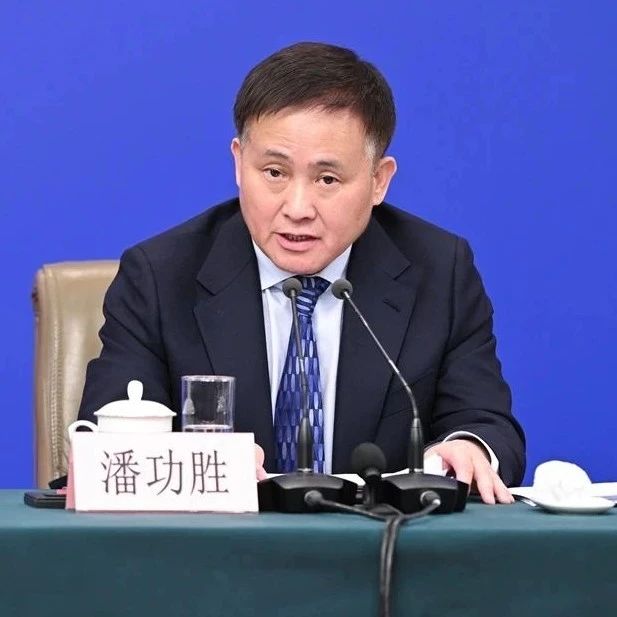
央行行长潘功胜发声,事关货币政策、风险防控|两会时间
和讯· 2025-03-06 11:21
Core Viewpoint - The article discusses the monetary policy and financial support measures for technological innovation in China, as outlined by the Governor of the People's Bank of China, Pan Gongsheng, during a press conference at the National People's Congress. Group 1: Monetary Policy Adjustments - In 2024, the central bank implemented multiple monetary policy adjustments, including two reductions in the reserve requirement ratio and policy interest rates, leading to a significant decline in loan market quotation rates. By the end of 2024, the growth rates of social financing, broad money M2, and RMB loans were all between 7% and 8%, exceeding the nominal economic growth rate by approximately 3 percentage points, with financing costs at historical lows [2]. - For 2025, the central bank plans to maintain a relatively loose monetary stance and will consider further reductions in reserve requirements and interest rates based on domestic and international economic conditions. There is room for downward adjustments in the reserve requirement ratio and the rates of structural monetary policy tools [2]. Group 2: Financial Support for Technological Innovation - The central bank, in collaboration with the China Securities Regulatory Commission and the Ministry of Science and Technology, plans to introduce a "Technology Board" in the bond market to enhance financial support for technological innovation. This initiative aims to facilitate the issuance of technology innovation bonds by financial institutions and support the issuance of medium- to long-term bonds by growing and mature tech companies [4][5]. - The central bank will also expand the scale of re-loans for technological innovation and technological transformation from the current 500 billion yuan to between 800 billion and 1 trillion yuan to better meet the financing needs of enterprises [5]. Group 3: Risk Prevention and Financial Stability - The overall stability of China's financial system is emphasized, with local debt and real estate risks continuing to recede. By the end of 2024, commercial banks had a capital adequacy ratio of 16%, a non-performing loan ratio of 1.5%, and a provision coverage ratio of 211%, all significantly above regulatory standards [6]. - Approximately 40% of financing platforms have exited the market through various means, including market exit and transformation, indicating progress in mitigating local financing platform debt risks [6][7]. - The average interest rate for newly issued bonds by financing platforms was 2.67% in the fourth quarter of 2024, reflecting a significant decline in risk premium levels in the financial market [7].