
科技革命和产业变革

Search documents
2026,“实”字起笔
Xin Lang Cai Jing· 2026-01-11 21:21
Group 1 - The core idea emphasizes the importance of practical action as a bridge between ideals and reality, essential for addressing development challenges and achieving tangible results [1][2] - The focus on regional integration and collaborative development in the Beijing-Tianjin-Hebei area is highlighted as a responsibility and opportunity, with an emphasis on leveraging technological innovation to drive new productive forces [1] - The need for a strategic approach to problem-solving is stressed, advocating for a balance between practical execution and strategic foresight to identify and seize new economic growth opportunities [1][2] Group 2 - The article underscores the necessity of being grounded in reality, suggesting that understanding actual conditions is crucial for calibrating problem-solving efforts and achieving effective outcomes [2] - It warns against impulsive actions and emphasizes the importance of persistence and determination in pursuing long-term goals, particularly in the context of technological and industrial innovation [2] - The notion of a commitment to collective success, where individual contributions are valued within a broader context, is presented as a guiding principle for sustained efforts and historical validation [3]
中科院院士白春礼:企业在国家创新体系中的角色正在升级
Zhong Guo Xin Wen Wang· 2025-12-18 09:13
Group 1 - The role of enterprises in the national innovation system is upgrading, becoming increasingly important in "bringing science to fruition" [1][2] - Historical analysis shows that every technological revolution is linked to significant breakthroughs in basic research, highlighting its growing importance in the current technological and industrial transformation [1] - International competition is shifting focus from single-point technological advantages to deeper capabilities in foundational theories, key mechanisms, core algorithms, and major scientific instruments [1] Group 2 - The boundary between technological innovation and industrial innovation is becoming increasingly blurred, with the cycle from basic research to industrial application significantly shortening [2] - Enterprises are surpassing the scientific community in certain frontier fields, not only in terms of funding but also in computational power, data, engineering platforms, and talent aggregation [2] - The new changes are driving enterprises to deeply engage in basic research, which is crucial for enhancing national original innovation capabilities and forming long-term competitive advantages [2]
怎样理解投资于物和投资于人紧密结合
Sou Hu Cai Jing· 2025-12-08 05:48
Group 1 - The core viewpoint emphasizes the importance of integrating investments in physical assets and human capital to enhance development momentum, expand domestic demand, and promote comprehensive human development [1] - Investment in physical assets has played a crucial role in China's rapid economic growth, contributing to the accumulation of physical capital, enhancement of production capacity, and improvement of social productivity [1][2] - The need for further investment in physical assets is highlighted due to the relatively low per capita capital stock compared to developed countries, as well as the necessity to upgrade outdated infrastructure and equipment [2] Group 2 - The significance and urgency of investing in human capital are increasingly recognized, as it is essential for transitioning from an investment-driven economy to one that is innovation-driven and demand-driven [3] - There is a call for increased investment in education, healthcare, and social services to ensure high-quality living standards and promote common prosperity among the population [3] - Key directions for investment in human capital include improving income distribution systems, advancing public service equalization, and enhancing government investment in social welfare sectors [4]
工信部:加快推进新型工业化
Zheng Quan Shi Bao· 2025-12-07 18:34
Core Viewpoint - The meeting chaired by the Minister of Industry and Information Technology, Li Lecheng, emphasizes the importance of the "14th Five-Year Plan" as a guiding document for China's economic and social development, focusing on achieving modernization and addressing new challenges in the industrial and information sectors [1][2]. Group 1: Key Points on "14th Five-Year Plan" - The "14th Five-Year Plan" is described as a crucial period for solidifying the foundation of socialist modernization and is aimed at comprehensive development [1]. - The plan outlines a grand blueprint for China's development over the next five years, emphasizing the need to adapt to new technological revolutions and industrial transformations [1]. - The meeting highlights the importance of modernizing industry governance and accelerating new industrialization to build a strong material and technological foundation for Chinese-style modernization [1]. Group 2: Focus on Industrial Development - The concept of "solidifying the foundation" includes addressing weaknesses, enhancing strengths, and seizing opportunities to maintain a reasonable proportion of manufacturing, optimize traditional industries, and foster emerging industries [1][2]. - The goal is to enhance the resilience and security of industrial and supply chains, ensuring a stable foundation for achieving new industrialization [1]. - The emphasis is placed on promoting technological and industrial innovation, integrating smart, green, and collaborative development to create a modern industrial system centered on advanced manufacturing [2]. Group 3: Strategic Goals and Implementation - The year 2026 marks the beginning of the "14th Five-Year Plan," with a focus on strengthening core capabilities and creating value to ensure stable growth in the industrial economy [2]. - The meeting calls for comprehensive reforms to address "involution" competition, enhance industry self-discipline, and resolve prominent issues faced by industries and enterprises [2]. - There is a strong emphasis on balancing development and safety, with a focus on risk management and enhancing security capabilities in key areas such as networks, data, and artificial intelligence [2].
商务部回应是否反制日本
Xin Lang Cai Jing· 2025-12-04 11:25
Core Viewpoint - The Chinese Ministry of Commerce has warned that if Japan continues its current stance, China will take necessary measures, holding Japan accountable for any consequences [1][2]. Group 1: China-Japan Relations - The spokesperson emphasized that recent comments by Japanese Prime Minister Fumio Kishida regarding Taiwan have severely damaged the political foundation of China-Japan relations, for which Japan bears significant responsibility [1][2]. - China has repeatedly urged Japan to correct its erroneous statements and actions to create conditions for normal economic and trade cooperation between the two countries [1][2]. Group 2: Investment Climate in China - China is the world's second-largest consumer goods market and has the largest middle-income group, indicating substantial investment and consumption potential [1][2]. - The country is committed to high-quality development, with accelerated transitions towards green, digital, and intelligent transformations, making it an ideal application scenario for the new round of technological revolution and industrial transformation [1][2]. - In 2023, China established 54,000 new foreign-invested enterprises, representing a year-on-year increase of 14.7%, showcasing its attractiveness as a safe and favorable investment destination for foreign investors, including Japanese companies [3].
【记者来信】制造业引才难题亟待破解
Sou Hu Cai Jing· 2025-12-03 22:38
Group 1 - The Ministry of Human Resources and Social Security has launched pilot programs in 39 cities, including Ningbo, to promote the integration of human resource services with the manufacturing industry, aiming to enhance the supply of human resources and improve the utilization of talent in manufacturing [1] - Ningbo, as a manufacturing hub, has accumulated rich experience in human resource service innovation, with over 60% of projects focusing on manufacturing scenarios, effectively improving the precision of talent services [1] - The pilot cities, represented by Ningbo, have a solid manufacturing foundation and diverse service formats, which are expected to achieve breakthroughs in service products, matching models, and platform mechanisms, exploring replicable and scalable new paths [1] Group 2 - There is a pressing issue of talent recruitment in the manufacturing sector, characterized by a structural talent shortage due to the rapid demand for skilled personnel in emerging industries, while some industrial workers struggle to find employment [2] - To address the mismatch between talent supply and demand, it is essential to leverage human resource services as a bridge, creating a comprehensive service system that utilizes AI and big data for precise matching of job positions and technical talent [2] - Vocational education must closely align with industry needs, focusing on practical skills and addressing the disconnect between education and employment to alleviate the talent shortage in manufacturing [2] Group 3 - Companies should focus on both recruitment and talent development, emphasizing the importance of nurturing talent internally through initiatives like joint laboratories and targeted training programs to reduce the adaptation period for graduates [3] - Such initiatives not only address the shortage of technical talent but also enhance employee loyalty and sense of belonging to the company, creating a win-win situation [3]
如何熬过牛市的调整期?
Sou Hu Cai Jing· 2025-12-02 05:45
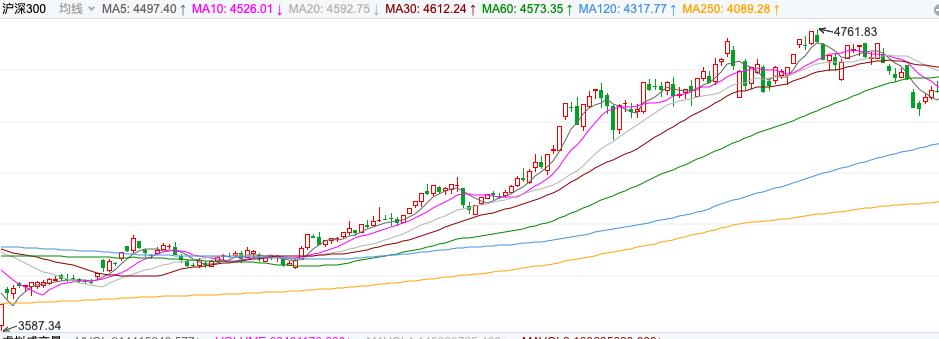
Market Overview - Since the end of June, the A-share market has experienced a significant rally led by the technology sector, with the Shanghai Composite Index reaching 4,000 points, marking a 10-year high [1] - However, after October, concerns over an AI bubble and the potential pause in interest rate cuts by the Federal Reserve led to a market adjustment, causing A-share indices to decline and many investors to face substantial account drawdowns during the bull market [1] Investor Sentiment - The recent pullback in the CSI 300 index has left many investors uncertain about the continuation of the bull market and whether the technology sector will reach new highs [3] - Despite this, certain AI-related stocks have rebounded significantly, reaching historical highs, indicating a positive market response [3] Investment Strategy - In the face of market volatility, the key to enduring painful adjustment periods during a bull market is to "smartly bear risks," which involves taking calculated risks based on thorough research to achieve stable excess returns [3] - A balanced allocation strategy that avoids betting on a single sector or industry, while maintaining a margin of safety and valuation discipline, is crucial for managing investment risks effectively [3] Fund Performance - The Longjiang Changyang Mixed Fund, managed by Zhu Qinxiao, reported a net value growth rate of 48.65% over the past six months, significantly outperforming the benchmark return of 15.41% during the same period [5] - Over the past year, the fund achieved a net value growth rate of 44.69%, surpassing the average of similar funds (27.77%) and the CSI 300 index increase (15.57%) [5] Future Market Outlook - Zhu Qinxiao predicts that the A-share market is likely to return to a "slow growth" trend, driven by a decline in the risk-free interest rate and the relative scarcity of quality assets [7] - With the downward trend in interest rates, money market fund yields have entered the 1% era, and further adjustments are expected, leading to a significant amount of capital potentially flowing into the equity market [8] - The domestic economy is stabilizing, with exports exceeding expectations, and the economic fundamentals may improve next year, supported by policy focus on high-quality development and structural changes in the economy [8]

国家发展改革委:鼓励支持引导广大民营企业把握新一轮民间投资发展机遇
Xin Hua She· 2025-11-30 16:00
Core Viewpoint - The National Development and Reform Commission (NDRC) is committed to enhancing the development of the private economy by expanding market access, strengthening support for resources, and establishing a national venture capital guidance fund to improve the sense of gain for private enterprises [1] Group 1: Market Access and Support - The NDRC plans to further broaden market access for private enterprises, which is essential for fostering a more competitive economic environment [1] - There will be a focus on reinforcing support for essential resources to ensure that private enterprises can thrive [1] Group 2: Investment Opportunities - The NDRC encourages private enterprises to seize opportunities arising from the new technological revolution, industrial transformation, and the vast domestic market [1] - Emphasis is placed on the coordination of urban and rural development as a key area for private investment growth [1] Group 3: Legal Protection and Investment Vitality - Strengthening the protection of legal rights for private enterprises is a priority to ensure their sustainable development [1] - The initiative aims to continuously stimulate the vitality of private investment, contributing to high-quality development in this sector [1]
深交所组织上市公司赴澳大利亚路演 外资看好投资中国新机遇
Shang Hai Zheng Quan Bao· 2025-11-26 18:26
Core Insights - The event organized by Shenzhen Stock Exchange in Australia aimed to showcase the investment opportunities in Chinese companies, particularly in technology innovation and high-quality economic development during the 14th Five-Year Plan period [1] Group 1: Company Participation and Focus Areas - Six representative companies from Shenzhen Stock Exchange participated in the roadshow, focusing on green low-carbon and high-end manufacturing sectors [1] - Companies like Tianqi Lithium, Goldwind Technology, and Xinwanda highlighted their technological breakthroughs and R&D efforts to attract investor interest [2] Group 2: ESG Practices and Recognition - The participating companies demonstrated improved ESG ratings, reflecting their commitment to sustainable development and attracting long-term investors [3] - Goldwind Technology and Tianqi Lithium have set clear carbon neutrality goals, while Xinwanda is advancing digital platforms for battery sustainability [3] Group 3: Alignment with Local Industry - The roadshow aligned well with Australia's focus on clean energy transition, with companies like Tianqi Lithium and Goldwind Technology directly engaging with local renewable energy initiatives [4][5] - The technological capabilities of the participating companies and their integration with local industries received high praise from investors [5]





深市企业组团澳洲路演 圈粉海外长期资本
Zheng Quan Shi Bao· 2025-11-26 18:12
Group 1 - The event organized by the Shenzhen Stock Exchange in Australia aims to showcase the innovative development stories of listed companies and highlight the high-quality development prospects of China's economy during the 14th Five-Year Plan period [1] - Six representative listed companies from Shenzhen, including Tianqi Lithium (002466) and Goldwind Technology (002202), participated in the roadshow, focusing on sectors such as green low-carbon and high-end manufacturing [1] - Nearly 70 representatives from major Australian pension funds and well-known asset management companies attended the event, facilitating direct communication about China's industrial upgrades and capital market investment opportunities [1] Group 2 - Australian investment representatives expressed that Chinese companies are accelerating technological innovation and transitioning from "technology followers" to "standard setters," indicating a shift in China's industrial system towards quality enhancement [2] - The face-to-face interactions with company executives provided Australian investors with a clearer understanding of the companies' operational status, strategic layout, and international competitiveness, leading to optimism about the long-term development prospects of related companies [2] - The Shenzhen Stock Exchange plans to further enhance the quality of services connecting listed companies with foreign investors, aiming to create a favorable investment environment for international investors [2]