财富自由

Search documents
重生之我在A股开超市?超市战法能否助我财富自由?
Hu Xiu· 2025-10-20 08:01
Core Viewpoint - The supermarket strategy is highly sought after, raising questions about its potential for profitability and wealth generation in the A-share market [1] Group 1 - The supermarket business model is perceived as a way to achieve financial freedom, particularly in the context of the A-share market [1] - There is a growing interest in the effectiveness of supermarket strategies in maximizing profits while minimizing losses [1] - The article explores the feasibility of starting a supermarket in the A-share market and its implications for wealth accumulation [1]
李笑来:14年前押上全部积蓄买10万比特币,如今看透暴富的代价
Sou Hu Cai Jing· 2025-10-16 08:01
Core Insights - The article discusses the journey of Li Xiaolai, a prominent figure in the Chinese cryptocurrency space, highlighting his rise and fall in the Bitcoin market and his subsequent return to education and personal development [5][12][16]. Group 1: Background and Early Interest - In 2009, Li Xiaolai discovered Bitcoin while teaching at New Oriental, becoming intrigued by its decentralized nature and potential [1][5]. - He invested heavily in Bitcoin, acquiring 100,000 BTC at a time when it was valued at only a few hundred RMB, believing in its future potential [5][7]. Group 2: Rise to Prominence - By 2013, Bitcoin's value surged past $1,000, leading to Li Xiaolai being dubbed the "Godfather of Bitcoin" in China, as he gained fame through his book and lectures on wealth creation [7][12]. - His teachings emphasized the importance of personal growth and financial independence, resonating with many aspiring investors [3][7]. Group 3: Controversy and Reputation Shift - In 2018, a leaked recording revealed Li Xiaolai's dismissive attitude towards retail investors, leading to a significant backlash and a tarnished reputation [9][10]. - Following the controversy, he withdrew from public life, ceasing lectures and halting book publications, acknowledging the misuse of his influence [10][12]. Group 4: Reflection and New Direction - Li Xiaolai later reflected on his experiences, admitting that while he profited from Bitcoin, he lost sight of his values and the importance of integrity [12][16]. - He returned to education, focusing on teaching self-learning and knowledge systems, distancing himself from wealth-centric discussions [12][14]. Group 5: Current Perspective - Now in his fifties, Li Xiaolai engages in discussions about AI and education, sharing life lessons rather than financial advice, emphasizing the importance of personal integrity over monetary success [14][16]. - He believes that wealth amplifies one's true character, suggesting that true freedom comes from not being driven solely by financial motives [16][18].


财富自由基础门槛——存款300万,在国内到底算什么水平?
雪球· 2025-10-05 06:55
Core Insights - The article discusses the significance of having 3 million yuan as a benchmark for financial freedom in China, highlighting its implications for wealth distribution and social class dynamics [4][28]. - It emphasizes that 3 million yuan is not just a number but a reflection of personal aspirations, lifestyle choices, and regional economic conditions [15][25]. Group 1: Wealth Distribution - The average household savings in China is approximately 300,000 yuan, which is ten times less than the 3 million yuan benchmark [7]. - Only about 0.03% to 0.05% of households have savings of 3 million yuan, indicating that it is a significant threshold that only a few can reach [7]. - The article presents a wealth pyramid categorizing households based on their savings, placing 3 million yuan in the "small wealthy" tier [10]. Group 2: Regional Differences - The value of 3 million yuan varies significantly across different cities in China, affecting its purchasing power and lifestyle implications [13]. - In cities like Beijing, 3 million yuan may only cover a down payment for a modest property, while in smaller cities, it could afford multiple properties [13]. Group 3: Financial Dynamics Over Time - The purchasing power of 3 million yuan can diminish over time due to inflation, with projections showing it could be equivalent to about 220,000 yuan in ten years if inflation remains at 3% [19]. - Investment strategies can significantly alter the future value of 3 million yuan, with potential growth ranging from 444 million yuan to 778 million yuan over ten years depending on the investment approach [19]. Group 4: Psychological Aspects - The article discusses the emotional response to having 3 million yuan, which can evoke feelings of both excitement and emptiness, as it represents a threshold for financial security but not complete freedom [22]. - It highlights the importance of personal goals and desires in determining the true value of 3 million yuan, suggesting that it serves as a stepping stone rather than an endpoint [24][25].

何小鹏:普通人如何实现财富自由?
Feng Huang Wang Cai Jing· 2025-09-29 07:02
Core Viewpoint - The chairman and CEO of XPeng Motors, He Xiaopeng, emphasized the importance of investing in companies that aim for an IPO and have the potential for sustained growth post-listing as a pathway to achieving financial freedom for ordinary individuals [1] Group 1 - He Xiaopeng discussed strategies for ordinary people to achieve wealth freedom [1] - The focus is on selecting companies with the goal of going public and the ambition to grow significantly after the IPO [1] - The idea is to grow alongside these companies and realize value through their success [1]
房产真相:你以为买房是投资,其实是被金融玩弄
Sou Hu Cai Jing· 2025-09-27 01:22
Core Viewpoint - The article argues that real estate is not a reliable investment but rather a tool manipulated by financial capital, leading individuals into long-term debt rather than wealth accumulation [1][3]. Group 1: Real Estate as an Investment - The perception that rising housing prices are driven by market supply and demand is incorrect; the true drivers are bank loans and policy leverage [1]. - Many individuals believe that purchasing a home is essential due to housing demand, but viewing it as an investment poses significant risks [1][3]. - High housing prices can lead to individuals being trapped in long-term loans, while financial institutions profit by selling at peak prices [1]. Group 2: Financial Implications - In hot cities, rapid price increases are not matched by rental yields, resulting in negative cash flow for homeowners [3]. - The changing financial landscape, such as falling interest rates, may seem beneficial but can lead to higher housing prices and increased financial pressure on families [3]. - Real estate is not a stable value-preserving asset but rather a component of a manipulated financial game [3]. Group 3: Wealth Accumulation - True wealth freedom is achieved through asset appreciation, cash flow, and investment skills, rather than relying on real estate [3]. - Blindly following the trend of home buying can result in long-term debt, while those who understand financial rules can navigate the market effectively [3]. - The article concludes that while homes may provide comfort, they should not be viewed as profit-generating machines [3].

X @杀破狼 WolfyXBT
杀破狼 WolfyXBT· 2025-09-26 05:18
这是一只开过光的 Labubu,点赞它,今年内财富自由。 https://t.co/tPSpNKKiV8 ...
不敢投资的人,注定一辈子打工
Sou Hu Cai Jing· 2025-09-25 03:52
Group 1 - The core argument is that individuals who do not invest are destined to work for others their entire lives, as relying solely on salary does not lead to financial freedom [1][5] - High salaries are insufficient for achieving wealth, as expenses such as mortgages, education, and elder care consume earnings, leaving little for savings or investment [1][3] - Savings in traditional accounts yield low interest rates (2%) while inflation rates (3%-5%) erode purchasing power, making saving a losing strategy over time [1][3] Group 2 - The real estate market has become unpredictable, with high entry barriers in first-tier cities and oversupply in second and third-tier cities, making property investment less reliable for wealth generation [3] - The investment market shows that those who invest in index funds have seen significantly higher returns compared to savings, with long-term holders achieving wealth doubling [3][5] - The narrative emphasizes that the fear of investment losses is less dangerous than the fear of not investing at all, which limits opportunities for financial growth [5] Group 3 - A recommended investment strategy includes diversifying funds: keeping some in banks for safety, investing in stable assets like real estate, and allocating a portion to long-term stock market investments, with a small amount for high-risk assets like cryptocurrencies [5]

大侠后宫:"现在的公司招聘能狡诈到什么程度?" 哈哈哈哈哈哈哈差点就被骗到了!
猿大侠· 2025-09-23 04:11
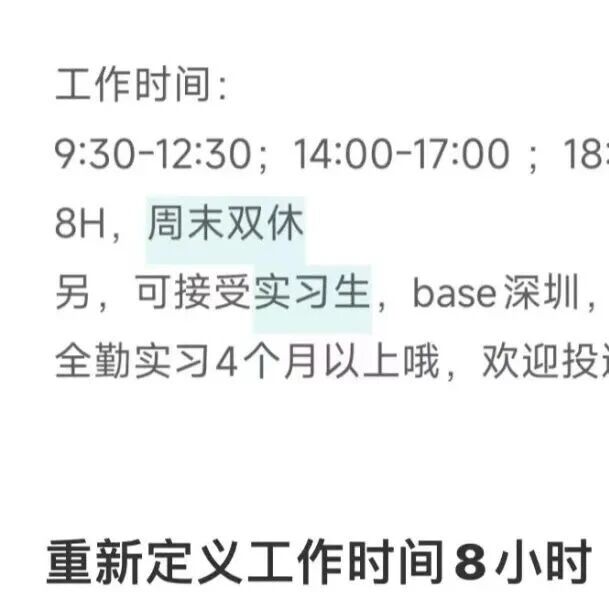
Group 1 - The article discusses the redefinition of work hours and benefits, emphasizing that the traditional 8-hour workday is being challenged by companies that expect employees to be available all day [1] - There is a mention of companies providing meals, but with conditions that may not be favorable for employees, such as requiring them to bring their own ingredients [2][3] - The article highlights the humorous and sometimes frustrating experiences of employees regarding workplace culture and expectations, particularly in relation to meal provisions and work-life balance [4][7] Group 2 - The content reflects on the mental state of employees, particularly product managers, who often feel overwhelmed and underappreciated in their roles [21][31] - There are anecdotes about the daily struggles and humorous situations faced by employees, illustrating the challenges of modern work environments [19][22] - The article also touches on the importance of communication and understanding between different departments within a company, as employees often find themselves apologizing for issues beyond their control [22][31]
黄金、基金与00后的“理财启蒙课”
Sou Hu Cai Jing· 2025-09-20 06:33
Group 1 - The rising gold prices have attracted many young investors, leading to significant financial losses for some, highlighting the gap between the dream of financial freedom and reality [1][3] - A report indicates that nearly 40% of Generation Z hopes to achieve financial independence by the age of 35, but many struggle to earn returns that outpace inflation [3][5] - Young investors often lack the necessary knowledge and experience, resulting in poor investment decisions and missed opportunities for recovery [3][5] Group 2 - Young individuals are adopting extreme frugality as a strategy to invest, but this often leads to repeated losses in volatile markets [5][7] - The primary reasons for not investing among young people include lack of disposable income, perceived high risks, and insufficient knowledge [5][7] - Financial literacy is crucial for this generation, as relying solely on impulse and hearsay in investment decisions can lead to significant setbacks [7]
财富自由的黄金三角:赚钱、省钱、理财缺一不可
Sou Hu Cai Jing· 2025-09-16 02:44
Group 1 - The core concept emphasizes the importance of the "iron triangle" of wealth management: earning, saving, and investing, which must work together to achieve financial freedom [1][9] - Earning is the starting point of wealth accumulation, but it is not the endpoint; enhancing value creation ability is crucial [2][9] - Saving is not merely about frugality but involves rational planning and distinguishing between needs and wants, providing a safety net for investments [3][7] Group 2 - Investing acts as an accelerator for wealth growth, relying on proper asset allocation and the power of compounding [4][7] - The synergy between earning, saving, and investing creates a robust financial ecosystem; the absence of any one element can lead to imbalances in wealth accumulation [7][9] - Common misconceptions about wealth management need to be addressed, highlighting the necessity of balancing all three components for financial success [7][9] Group 3 - The art of balance involves adjusting priorities based on life stages, focusing on earning in youth, managing risks in middle age, and securing capital before retirement [8][11] - A dynamic approach to wealth management is essential, with a focus on long-term strategies and the interplay between active income and passive income [8][9]