跨境金融合作

Search documents
赋能发展 共享机遇——从粤港澳大湾区发展工商大会看湾区活力
Xin Hua Wang· 2025-09-15 22:36
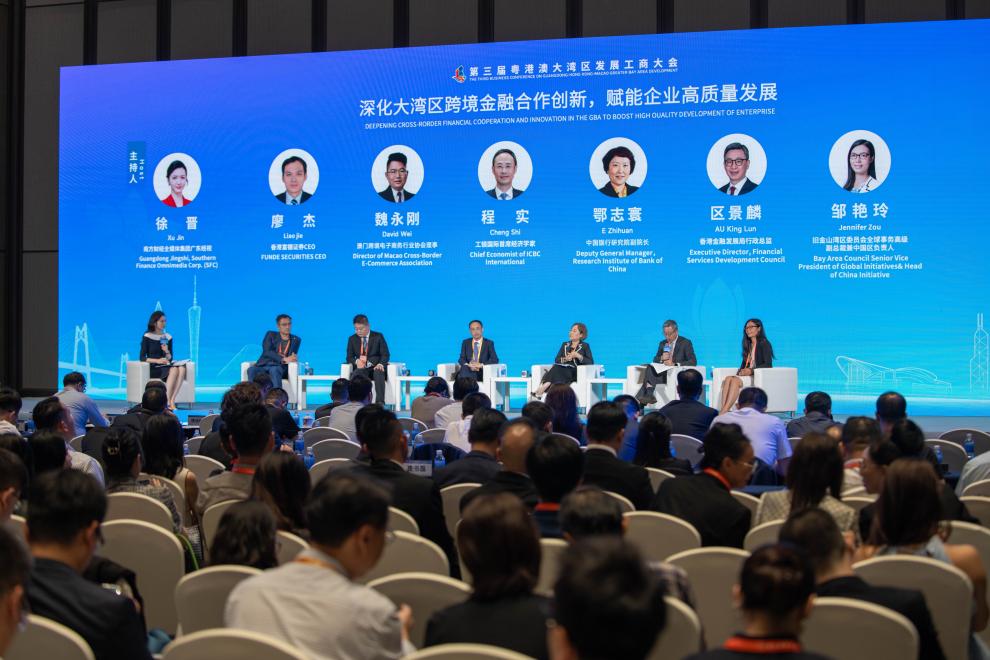
Group 1 - The third Guangdong-Hong Kong-Macao Greater Bay Area Development Business Conference was held in Guangzhou, marking the largest attendance with over 1,200 representatives from 30 countries and regions, signaling strong development potential for the Bay Area [2] - Discussions focused on international supply chain collaboration, global trade risk management, cross-border financial cooperation, and commercial legal cooperation [3] - The Greater Bay Area's economic strength has significantly increased, with a projected economic total exceeding $2 trillion in 2024, contributing to 1/9 of the national economic total despite only occupying 0.6% of the land area and 6% of the population [4] Group 2 - The establishment of the Greater Bay Area Exhibition Industry Alliance and the release of the "Greater Bay Area Supply Chain Promotion Report" and "Temporary Arbitration Guidelines for the China (Guangdong) Free Trade Pilot Zone" were key outcomes of the conference [6] - The conference highlighted the need for a resilient, secure, and sustainable international supply chain system as a strategic opportunity for high-quality development in the Greater Bay Area [5] - The integration of resources in emerging technology fields such as quantum computing, biotechnology, and artificial intelligence is seen as a way to enhance collaboration and attract innovation resources [7] Group 3 - The Greater Bay Area is positioned as a crucial hub for global supply chain collaboration, with emphasis on the importance of a complete business ecosystem for testing and scaling new business models [9] - The region is viewed as a significant gateway for China's openness and innovation, with international cooperation expected to enhance stability and sustainability in supply chains [10] - The focus on digitalization in supply chain financing and the promotion of cross-border business travel are anticipated to foster win-win cooperation among global enterprises [9]

中国印尼跨境金融合作升级,二维码互通互联年内全面投产
Di Yi Cai Jing· 2025-09-11 12:51
Core Points - The China-Indonesia cross-border QR code interconnectivity project is expected to be fully operational by 2025, utilizing local currency settlement [1] - The People's Bank of China and Bank Indonesia have launched a bilateral local currency transaction (LCT) framework to enhance the use of local currencies in bilateral trade and investment [1][2] - The LCT framework was upgraded from a previous agreement established in 2020, expanding the scope of local currency settlement to all items in the balance of payments [1] - The initial pilot operation of the cross-border QR code interconnectivity project has commenced, marking significant progress in payment cooperation between the two countries [1] - In the first seven months of 2025, the local currency settlement scale between Indonesia and China reached 6.23 billion USD, accounting for 45% of Indonesia's total local currency settlement with all trade partners [2] - The initiative aims to enhance financial system connectivity and improve financial security and inclusiveness between the two nations [2]
金融创新,疏通跨境资金“大动脉”
Guang Xi Ri Bao· 2025-09-11 02:57
Core Viewpoint - The news highlights the advancements in cross-border financial services in Guangxi, China, particularly focusing on the successful implementation of innovative financial solutions that enhance the efficiency of international trade and investment, thereby supporting the region's economic growth and integration with ASEAN [1][2][3][4][5][6][7]. Group 1: Cross-Border Financial Innovations - A successful cross-border trade settlement of 202 million yuan was executed using the "Multilateral Central Bank Digital Currency Bridge," allowing for instant payment for a copper company [1]. - The establishment of a more efficient cross-border capital flow system is crucial for enhancing the financial support for Guangxi's ongoing integration with ASEAN [2]. - The People's Bank of China and the State Administration of Foreign Exchange expanded the pilot program for multinational companies' integrated currency pools, facilitating better cross-border fund management [3]. Group 2: Digital Financial Solutions - The introduction of the "Shipping Butler" service by the Bank of Communications significantly reduces the time required for payment processing in the shipping industry, from extensive paperwork to just five minutes [4]. - The "Hui Xiao Er" foreign exchange financial service team by the Bank of China in Qinzhou provided tailored services for a lithium company, resulting in efficient completion of a $160 million foreign investment [5]. Group 3: Economic Performance Metrics - In the first half of 2025, Guangxi's cross-border RMB settlement reached a record high of 442 billion yuan, marking a 30% year-on-year increase, leading the western provinces [6]. - Guangxi's total foreign-related income and expenditure reached $33.951 billion, reflecting a 15.6% increase year-on-year, ranking third among the western provinces [6]. - In the first seven months of this year, Guangxi's general trade import and export approached 200 billion yuan, with ASEAN remaining the largest trading partner [7].
城市24小时 | 两座沿海城市“组队”,打造“北方样板”
Mei Ri Jing Ji Xin Wen· 2025-09-01 16:01
Group 1 - The core viewpoint of the news is the emphasis on accelerating the integration and cooperation between Qingdao and Weifang to enhance the development of the Qingdao metropolitan area and strengthen the Shandong Peninsula urban agglomeration [1][2][3] - Qingdao and Weifang have been increasingly collaborating, achieving practical results, and are now focusing on deepening cooperation in key areas such as smart manufacturing, emerging industries, and modern agriculture [1][2] - The Qingdao metropolitan area development plan, approved in October 2023, positions "integration" as a clear direction, aiming to create a model for urban integration development in northern China [2][3] Group 2 - Qingdao and Weifang together account for over 25% of Shandong's GDP, retail sales, and fiscal revenue, and over 33% of the province's total imports and exports, despite representing less than 1/6 of the province's land area and 1/5 of its population [3] - Weifang is identified as a key hub connecting the Jinan-Qingdao metropolitan area, with expectations for its GDP to exceed 800 billion yuan in 2024, following a 5.3% year-on-year growth to 406.53 billion yuan in the first half of the year [5]
第三届粤港澳大湾区发展工商大会将于9月在广州举行
2 1 Shi Ji Jing Ji Bao Dao· 2025-08-27 06:16
Core Viewpoint - The third Guangdong-Hong Kong-Macao Greater Bay Area Development Business Conference will be held on September 15-16, focusing on "Empowering the Greater Bay Area, Exploring New Opportunities" [1] Group 1: Event Details - The conference will include an opening ceremony, results release, plenary sessions, parallel thematic discussions, industry promotions, and business matchmaking [1] - Key topics for discussion will include international supply chain collaboration, global trade risk management, cross-border financial cooperation, commercial legal cooperation, AI-driven industries, and the biomedicine and health industry [1] - A report titled "Guangdong-Hong Kong-Macao Greater Bay Area Supply Chain Promotion Report" will be released to help domestic and foreign enterprises understand development opportunities and engage in supply chain cooperation [1] Group 2: Participation and Impact - The conference is co-hosted by the China Council for the Promotion of International Trade, the Guangdong Provincial Government, the Hong Kong SAR Government, and the Macao SAR Government [1] - The previous two conferences attracted over 2,000 representatives from nearly 30 countries and regions [1] - The China Council for the Promotion of International Trade aims to leverage the conference platform to enhance participation in the Greater Bay Area's development and assist the global business community in seizing market, investment, and growth opportunities [1]
前海合作区外资成绩单亮眼 上半年实际使用外资123.26亿元,目前已有超过1.2万家外资企业落户
Shen Zhen Shang Bao· 2025-08-03 17:36
Core Insights - The actual foreign investment in Qianhai reached 12.326 billion yuan in the first half of the year, a year-on-year increase of 15.9%, accounting for 59.0% of Shenzhen's total [1] - The Qianhai Shekou Free Trade Zone attracted 10.702 billion yuan in foreign investment, marking a significant year-on-year growth of 40.5% [1] - Qianhai has established itself as a preferred destination for foreign investment through institutional openness centered on regulatory alignment [1] Investment Landscape - The top three industries for foreign investment in Qianhai are finance (29.5%), business services (29.4%), and software and information technology services (17.5%) [2] - Foreign investment in the finance sector grew by 19.5%, while high-tech services saw a remarkable increase of 72.4% [2] - Over 1.2 million foreign enterprises have settled in the Qianhai Cooperation Zone, with 52 companies recognized as multinational headquarters, representing 30.8% of Shenzhen's total [2] Future Developments - Qianhai aims to deepen institutional openness in finance, cross-border data, and healthcare sectors [2] - The Qianhai business environment is considered top-notch in the Guangdong-Hong Kong-Macao Greater Bay Area, attributed to high transparency in government governance and simplified business registration processes [2] - More than 52% of member companies from the South China American Chamber of Commerce plan to establish new offices in Qianhai soon [2]
深圳加快打造全域支付示范区,推动“卡、码、币、包”路路通
Shen Zhen Shang Bao· 2025-07-16 15:16
Core Insights - Shenzhen is enhancing its international business environment by developing a comprehensive payment infrastructure that integrates various payment methods and services to boost its global competitiveness [1] Group 1: Payment Infrastructure Upgrades - Shenzhen has established five one-stop service centers for foreign visitors at key transportation hubs, providing 24-hour services that integrate payment, tourism, communication, transportation, and immigration [2] - The city has achieved a 100% acceptance rate for foreign cards at Shenzhen Airport, with nearly 90% acceptance for digital currencies, and has distributed over 100,000 multilingual payment guides [2][3] Group 2: Consumer Spending Trends - In the first half of 2025, foreign visitors to Shenzhen made 85.88 million transactions totaling 11.81 billion yuan, marking a year-on-year increase of 29% and 35% respectively [3] - Hong Kong residents accounted for 58.66 million transactions worth 7.04 billion yuan, with year-on-year growth of 22% and 25% [3] Group 3: Innovative Payment Solutions - Shenzhen has introduced a new "immediate refund" tax refund service at shopping locations, allowing consumers to receive tax refunds instantly at the point of sale, significantly improving efficiency [4] - The city has expanded payment options in public transport, integrating various payment methods including digital wallets and cross-border payment solutions [4] Group 4: Cross-Border Payment Innovations - The launch of the "Cross-Border Payment Pass" facilitates seamless cross-border transactions between Shenzhen and Hong Kong, allowing users to transfer funds easily via mobile banking [5] - The number of transactions and amounts processed through the cross-border payment system increased by 91.9% and 64.9% respectively in the first half of 2025 [5]
★跨境支付通明起上线 内地香港居民可实时跨境转账
Zheng Quan Shi Bao· 2025-07-03 01:55
Core Viewpoint - The launch of the "Cross-Border Payment Link" between the People's Bank of China and the Hong Kong Monetary Authority is a significant step in enhancing financial cooperation between mainland China and Hong Kong, aimed at improving the efficiency and convenience of cross-border payments [1][2]. Group 1: Overview of Cross-Border Payment Link - The Cross-Border Payment Link connects the mainland's online payment interbank clearing system with Hong Kong's Fast Payment System, allowing for efficient, convenient, and secure cross-border payment services for residents of both regions [1]. - The service is set to go live on June 22, enhancing the international financial center status of Hong Kong and promoting the use of the Renminbi in cross-border transactions [1][2]. Group 2: Operational Details - The Cross-Border Payment Link focuses on small-amount, convenient remittances, allowing residents to make cross-border transfers without submitting business background information [2]. - The service supports remittances for various purposes, including tuition payments, medical fees, and salary disbursements, with participating institutions determining transaction limits based on risk management [2][3]. Group 3: Efficiency and Cost Reduction - Compared to traditional cross-border remittance methods, the new system significantly shortens the remittance chain, improves efficiency, and reduces costs by minimizing intermediaries [3]. - The system allows for real-time transactions for certain amounts under the current account, enhancing the overall user experience for residents [3]. Group 4: Compliance and Risk Management - Participating institutions must adhere to regulations regarding cross-border fund settlements and implement anti-money laundering and counter-terrorism financing measures to mitigate potential risks [3]. - A risk monitoring mechanism will be established to ensure the smooth operation of the Cross-Border Payment Link and to monitor suspicious transactions [3].
深圳携手德交所集团共筑国际化金融生态圈 两场跨境金融交流活动成功举办
Zheng Quan Shi Bao Wang· 2025-06-27 07:19
Group 1 - The historic collaboration between Shenzhen and Deutsche Börse Group marks a significant step in cross-border financial cooperation, with high-level financial exchange events taking place in Shenzhen [1][2] - The events aim to explore opportunities for interconnectivity between Chinese and European financial markets, focusing on financial derivatives innovation and pathways for companies to list abroad [2][4] - Deutsche Börse Group, as a comprehensive exchange organization, offers full-cycle support for Shenzhen enterprises, from listing to foreign exchange management, and aims to deepen cooperation in various financial sectors [2][4] Group 2 - The Shenzhen Financial Stability Development Research Institute has established close ties with major international exchanges, promoting a rich ecosystem linking Shenzhen to global financial markets since the creation of the International Listing Exchange Base in 2024 [3][5] - The event featured presentations from Deutsche Börse Group's subsidiaries, showcasing innovations in energy transition, derivatives trading, and foreign exchange management, addressing challenges faced by enterprises going global [4][5] - Shenzhen has been actively enhancing its international financial talent and market openness, with a significant number of listed companies and a strong market capitalization, positioning itself as a key player in the global financial ecosystem [5][6]
全国首笔跨境支付通业务落地深圳,深港金融互联互通再升级
Nan Fang Du Shi Bao· 2025-06-22 04:41
Core Viewpoint - The launch of the Cross-Border Payment Link marks a significant innovation in financial connectivity between mainland China and Hong Kong, providing residents with a more convenient, efficient, and low-cost cross-border remittance service [2][3][6]. Group 1: Cross-Border Payment Link Overview - The Cross-Border Payment Link utilizes the mature rapid payment systems of both mainland China and Hong Kong, allowing residents to remit money easily by entering a phone number or account details [3][4]. - The service was officially launched on June 22, with key officials from the People's Bank of China and the Hong Kong Monetary Authority attending the inauguration ceremony [3][4]. - The new system enables real-time fund transfers and direct currency exchange between Renminbi and Hong Kong dollars, enhancing convenience for users [3][4]. Group 2: User Experience and Benefits - A resident from Shenzhen successfully used the service to send 10,000 RMB to her daughter studying in Hong Kong, highlighting the ease of use and immediate fund availability compared to previous methods [4]. - A Hong Kong citizen praised the service for its simplicity and lack of fees, allowing for direct transfers to mainland accounts without complex procedures [4]. Group 3: Financial Cooperation and Regional Development - The Cross-Border Payment Link is expected to further enhance financial cooperation between Shenzhen and Hong Kong, contributing to the economic integration of the Guangdong-Hong Kong-Macao Greater Bay Area [5][6]. - Shenzhen has been a pioneer in cross-border payment innovations, having previously introduced various financial services that facilitate cross-border transactions [5]. - The People's Bank of China plans to continue promoting financial support for the Greater Bay Area, aiming to meet the residents' needs and enhance financial connectivity [6].