跨境ETF

Search documents
再添百亿! 聚焦硬科技资产的港股通科技ETF(159262)规模突破百亿元
Mei Ri Jing Ji Xin Wen· 2026-01-12 03:30
Group 1 - The cross-border ETF market has seen significant inflows, with over 13.8 billion yuan in net purchases since the beginning of the year, bringing the total market size to nearly 978.8 billion yuan, approaching the 1 trillion yuan mark [1] - There are currently 25 cross-border ETF products with a scale exceeding 10 billion yuan, with the Hong Kong Stock Connect Technology ETF (159262) recently reaching a scale of 10.117 billion yuan, making it a new addition to the billion-yuan category [1] - GF Fund has a leading position in the cross-border ETF market, managing 11 cross-border ETFs, of which 5 have surpassed 10 billion yuan in scale, accounting for 45% of the total number of billion-yuan cross-border ETFs in the market [1][2] Group 2 - GF Fund's five billion-yuan products cover core assets and high-growth sectors across different markets, including the Nasdaq ETF (159941), which has a scale exceeding 30 billion yuan and an annualized return of over 17% since inception [2] - The Hong Kong Stock Connect Non-Bank Financial ETF (513750) is the only tool tracking the Hong Kong Stock Connect non-bank financial theme index, with over 68% exposure to the insurance industry [2] - The Hong Kong Stock Connect Innovative Drug ETF (513120) is the largest in its category, having increased by over 66% since 2025, while the Hong Kong Stock Connect Technology ETF (159262) and the Hang Seng Technology ETF (513380) focus on AI technology leaders and classic technology assets, respectively [2] Group 3 - GF Fund has been systematically developing its index business since 2008, establishing a comprehensive product line across A-shares, Hong Kong stocks, US stocks, and commodities, making it one of the most complete providers of index products [3] - The company's index investment management capabilities have been recognized by authoritative institutions, earning a five-star rating in the index fund management capability from the Ji'an Jinxin Fund Evaluation Center [3]
跨境ETF扩容持续,港股科技股ETF放量增长!
证券时报· 2025-12-31 05:55
Core Viewpoint - The expansion of cross-border ETFs has accelerated significantly this year, with both the scale and number of related products increasing, making it an important observation window for changes in capital allocation [1][3]. Group 1: Cross-Border ETF Expansion - As of December 26, the total scale of cross-border ETFs has increased by 514.7 billion yuan since the beginning of the year, with the number of products rising by 63 [3]. - Hong Kong stock-related ETFs have become the main source of this scale expansion, particularly those focused on technology stocks, which have shown remarkable growth [3]. - Several cross-border ETFs have seen their scale increase by over 10 billion yuan this year, with the majority of the top ten products being technology-focused ETFs [3]. Group 2: Market Dynamics and Performance - In the fourth quarter, the performance of Hong Kong technology stocks has experienced temporary fluctuations, influenced by multiple factors such as the return of southbound funds to A-shares and concerns over IPO financing and lock-up expirations [3][6]. - Despite the market adjustments, some funds continue to flow into specific Hong Kong technology-related ETFs, indicating ongoing structural investment [4][5]. - Notable growth in ETF scales includes Tianhong Hang Seng Technology ETF increasing by 10.257 billion yuan and Huaxia Hang Seng Technology ETF by 5.502 billion yuan over the past three months [4][5]. Group 3: Long-Term Outlook - Institutions remain optimistic about the future, citing the potential for a favorable liquidity environment to support risk assets, including Hong Kong technology stocks [6][7]. - The Hong Kong technology sector is attracting attention due to narratives surrounding AI development, Federal Reserve interest rate cuts, and increased southbound capital inflows [7]. - The recent market corrections may provide opportunities for long-term investors to position themselves in high-quality technology assets, as the risk factors have been somewhat alleviated [7][8].

12月17日港股金融(513140)遭净赎回158.41万元
Xin Lang Cai Jing· 2025-12-18 02:28
来源:新浪基金∞工作室 数据显示,12月17日,港股金融(513140)遭净赎回158.41万元,位居当日跨境ETF净流出排名20/201。最 新规模1.47亿元,前一日规模1.47亿元,当日资金净流出额占前一日规模的比例为1.08%。 流动性方面,截止12月17日,港股金融(513140)近20个交易日累计成交金额13.3亿元,日均成交金额 6651.68万元;今年以来,233个交易日,累计成交金额96.76亿元,日均成交金额4152.69万元。 港股金融(513140)现任基金经理为李茜。李茜自2022年12月26日管理(或拟管理)该基金,任职期内 收益60.02%。 跟踪H300金融服务(人民币)(H30116)的ETF包括港股金融(513140),规模、流动性、近期资金净申 购情况如下: 代码名称基金规模(亿元) 20251217近1月日均成交额 (亿元)净申购(亿元) 20251217近1周净申购 (亿元)近1月净申购 (亿元)基金公司513140港股金融1.470.67-0.02-0.020.0003华泰柏瑞基金 风险提示:市场有风险,投资需谨慎。本文为AI大模型基于第三方财汇数据库自动发布,任何 ...
图解A股投资全球的ETF
Ge Long Hui· 2025-12-14 08:33
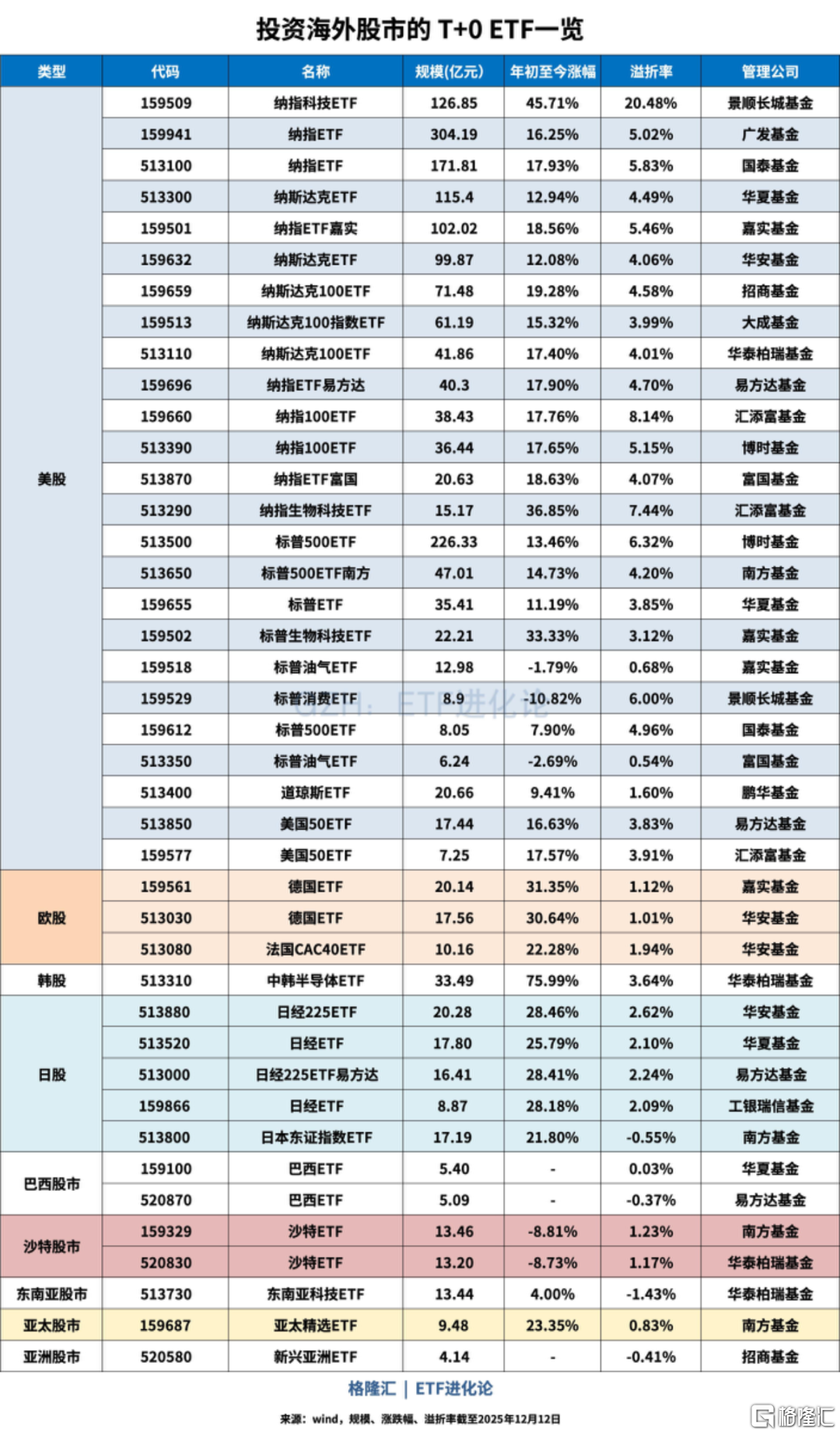
A股投资全球的T+0 ETF大合集来了! A股中锚定全球市场的ETF,主要有三个特点: 第一,标的在全球,跟踪的是美股或其他海外市场指数; 第二,交易在A股; 第三,支持T+0。 目前A股市场上"全球投资T+0 ETF",已经覆盖了多个市场: 有跟踪纳指100、标普500等宽基指数的,也有聚焦科技、半导体等海外细分赛道的,指数透明、规则清晰、交易路径相对简化。 当然,便利并不等于"更容易赚钱"。跨境ETF的价格波动,除了指数本身,还会受到汇率、交易时差、情绪溢价等多重因素影响。 格隆汇 | ETF进化论 来源:wind,规模、涨跌幅、溢折率截至2025年12月12日 官商圈汇 投资港股、中概股的 T+0 ETF- | 代码 | 名称 | 规模(亿元) | 年初至今涨幅 | 溢折率 | 管理公司 | | --- | --- | --- | --- | --- | --- | | 159792 | 港股通互联网ETF | 816.89 | 28.20% | 0.05% | 昌国套尖 | | 513130 | 恒生科技ETF | 434.30 | 24.16% | 0.04% | 华泰柏瑞基金 | | 513050 ...
【ETF观察】12月1日跨境ETF净流入4.18亿元
Sou Hu Cai Jing· 2025-12-01 22:30
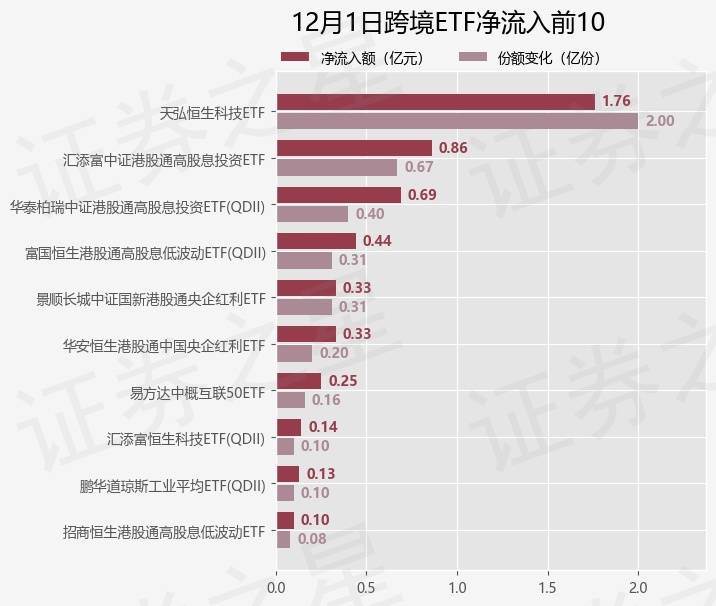
Summary of Key Points Core Viewpoint - On December 1, the total net inflow of cross-border ETF funds reached 418 million yuan, with a cumulative net inflow of 2.391 billion yuan over the past five trading days, indicating strong investor interest in these funds [1]. Fund Inflows - A total of 45 cross-border ETFs experienced net inflows on the same day, with the Tianhong Hang Seng Technology ETF (520920) leading the inflow, increasing by 200 million shares and a net inflow of 176 million yuan [1][3]. - Other notable ETFs with net inflows include: - Huichuan Fortune CSI Hong Kong Stock Connect High Dividend Investment ETF (513820) with a net inflow of 86 million yuan [3]. - Huatai-PineBridge CSI Hong Kong Stock Connect High Dividend Investment ETF (513530) with a net inflow of 69 million yuan [3]. - Several other ETFs also reported positive inflows, contributing to the overall positive trend in the market [3]. Fund Outflows - Conversely, 13 cross-border ETFs saw net outflows, with the Huatai-PineBridge Southern Dongying Hang Seng Technology (QDII-ETF) (513130) experiencing the largest outflow, decreasing by 144 million shares and a net outflow of 107 million yuan [5]. - Other ETFs with significant outflows include: - Invesco Hang Seng Stock Connect Technology Theme ETF (520670) with a net outflow of 18 million yuan [5]. - Several other ETFs also reported minor outflows, reflecting a mixed sentiment among investors [5].
智汇期现,共赢未来——2025年ETF与衍生品策略研讨会在上海成功举办
Zhong Jin Zai Xian· 2025-12-01 07:58
Core Insights - The conference titled "Intelligent Integration of Futures and Options: ETF and Derivative Strategies Seminar" was successfully held in Shanghai, focusing on the application of ETFs and derivatives in investment strategies [1] - The event gathered industry elites to discuss topics such as market trends, risk management, and cross-border ETFs, aiming to empower institutional investors to optimize their investment portfolios [1] Group 1: ETF and Derivative Strategies - ETFs are highlighted as essential tools for inclusive finance, guiding long-term capital into the market and supporting stable market operations [1] - The integration of ETF options with spot products enhances the index investment ecosystem, providing investors with diverse strategy choices [5] Group 2: Market Outlook and Asset Allocation - The 2026 A-share market outlook emphasizes the importance of diversified investment strategies and identifying high-certainty opportunities in a liquidity-rich environment [3] - A clear asset allocation framework is provided, focusing on balancing growth and value styles while exploring specific market cycles for excess returns [3] Group 3: Practical Applications of Options - The development and practical application of options tools are discussed, emphasizing their core value in risk management [5] - A quantitative approach to ETF long position strategies is presented, including a four-quadrant analysis framework for options, demonstrating the effectiveness of these strategies in enhancing returns and hedging risks [7] Group 4: Global Investment Trends - The trends in cross-border ETFs and global asset allocation opportunities are analyzed, showcasing the growth of the global ETF market and the advantages of cross-border investments [9] - Various asset allocation case studies are shared to provide practical insights for attendees [9] Group 5: Future of Index Investment - The future of index investment is envisioned as a transition from standardized tools to comprehensive solutions, focusing on multi-frequency rotation and target volatility strategies [11] - This evolution aims to enhance service offerings within the industry [11] Group 6: Trading Services and Market Development - The core advantages and practical outcomes of Huatai Securities' professional trading service system are introduced, emphasizing the importance of a secure and efficient trading platform for investors [13] - The conference is recognized for its rich content and diverse perspectives, fostering high-value industry exchanges and future collaboration opportunities [13]

高溢价警报频响难挡狂热,跨境ETF规模年增117%
Di Yi Cai Jing· 2025-11-18 11:22
Core Viewpoint - The recent surge in cross-border ETFs has raised concerns about potential price bubbles, particularly in the context of AI investments, as evidenced by frequent premium warnings and market volatility [1][7]. Group 1: Cross-Border ETF Premiums - A total of 33 cross-border ETF products have issued over 500 premium risk warnings since the beginning of the fourth quarter, with 11 products issuing more than 20 warnings each [2][3]. - The Invesco Great Wall Nasdaq Technology Weighted ETF has maintained an IOPV premium rate above 10% for 25 consecutive trading days, with a premium of 14.82% reported recently [2][3]. - The phenomenon of high premiums is not isolated, as 20 cross-border ETFs issued premium warnings on November 18, indicating a trend of "high-frequency warnings" across the market [2][3]. Group 2: Market Dynamics and Growth - The total scale of cross-border ETFs reached 920.29 billion yuan, reflecting a nearly 117% increase from the previous year, significantly outpacing the 28% growth of A-share ETFs during the same period [5][6]. - The number of products with over 10 billion yuan in assets has doubled from 11 to 22, indicating a strong demand for cross-border investment products [5][6]. - The market has seen a diversification of investment targets, with new ETFs tracking indices from various global markets, including Brazil and Europe, being launched [6]. Group 3: AI Investment Debate - The discussion around whether AI represents a bubble or a genuine growth opportunity has intensified, with some analysts suggesting that the current tech rally is concentrated in high-quality large-cap stocks [7][8]. - Concerns about market volatility have been exacerbated by geopolitical tensions, yet many institutions remain cautiously optimistic about the long-term prospects of the tech sector [9]. - Analysts emphasize the need for AI to demonstrate broader and deeper practical value to avoid a potential bubble, with a critical verification period expected in the next 2 to 3 years [8][9].
跨境ETF规模 较年初增长超117%
Mei Ri Shang Bao· 2025-11-17 22:25
Group 1 - The recent increase in cross-border ETF trading activity has led to significant premiums for popular products, such as the Southern S&P 500 ETF (QDII) and the Huaxia Nasdaq 100 ETF (QDII) [1] - As of November 14, the premium for the Southern S&P 500 ETF (QDII) exceeded 5%, prompting the fund manager to issue a warning about the risks associated with trading at inflated prices [1] - The total scale of cross-border ETFs reached 923.782 billion yuan by November 16, marking a growth of over 117% since the beginning of the year [1] Group 2 - Hong Kong stock ETFs have shown remarkable performance, with several achieving net value growth rates exceeding 50% this year [2] - Five Hong Kong stock ETFs, including the Wanji Zhongzheng Hong Kong Innovation Drug ETF and the Guangfa Zhongzheng Hong Kong Innovation Drug (QDII-ETF), reported net value growth rates above 90% [2] - The investment focus on innovative drugs and technology sectors has been a significant driver of the high net value growth rates for Hong Kong stock ETFs [2]
跨境ETF频频溢价,多只溢价率超6% 基金公司QDII额度紧缺仍是关键
Mei Ri Jing Ji Xin Wen· 2025-11-16 14:28
Core Viewpoint - The recent surge in premiums for several cross-border ETFs has raised concerns among fund companies, prompting multiple warnings about the risks associated with high premiums in the market [1][2][4]. Group 1: Premiums and Risk Warnings - As of November 14, several cross-border ETFs, including E Fund MSCI US 50 ETF and Huaxia Nomura Nikkei 225 ETF, have reported premiums exceeding 6%, with E Fund's premium reaching 6.66% [2][3]. - Fund companies have issued multiple risk warnings, advising investors to be cautious of the high premium status and the potential for significant losses if they invest blindly [2][3]. - The high premiums are attributed to supply-demand imbalances in the secondary market, exacerbated by insufficient QDII quotas, which prevent fund companies from arbitraging to correct price discrepancies [1][5]. Group 2: Investor Interest and Market Dynamics - There remains a strong interest in cross-border ETFs among investors, particularly in newly launched products like the Brazilian cross-border ETFs, which saw rapid sales [4][5]. - The popularity of certain ETFs is linked to their holdings in well-known technology companies such as Apple, Nvidia, and Microsoft, providing investors with opportunities to participate in these technology sectors [3][4]. - The expansion of cross-border ETF offerings is driven by both management initiatives and investor demand, as the current range of available ETFs in China is relatively limited [4][5]. Group 3: Market Trends and Future Outlook - The trend of investing in international markets is growing, with an increasing number of funds targeting regions like Germany, France, and Southeast Asia, thereby diversifying the investment landscape [5]. - The recent adjustments to the Hong Kong Stock Connect ETF list indicate a broader acceptance and integration of cross-border investment products in the Chinese market [5]. - Analysts suggest that the fundamental cause of premium occurrences in QDII ETFs is the short-term supply-demand mismatch, which can fluctuate based on market sentiment and external factors [5].
半导体ETF领涨;跨境ETF规模逼近9000亿元丨ETF晚报
2 1 Shi Ji Jing Ji Bao Dao· 2025-11-06 10:24
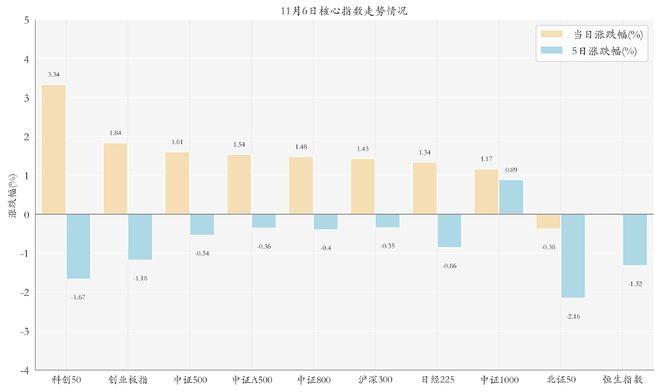
Group 1: ETF Market Overview - The three major indices collectively rose, with the Shanghai Composite Index increasing by 0.97%, the Shenzhen Component Index by 1.73%, and the ChiNext Index by 1.84% [1][4] - Semiconductor-related ETFs led the gains, with the Semiconductor Equipment ETF rising by 4.85%, the Semiconductor Industry ETF by 4.84%, and the Kweichow Moutai Chip ETF by 4.73% [1][11] - The overall performance of ETFs showed that stock-type scale index ETFs had the best average increase of 1.65%, while bond-type ETFs had the worst performance with an average decrease of 0.04% [9] Group 2: Liquidity and Cross-Border ETFs - Several fund managers, including E Fund and Invesco Great Wall, announced the addition of liquidity service providers for their technology-themed ETFs, with over 20 technology-themed ETFs expanding liquidity service providers since the second half of the year [2] - The scale of cross-border ETFs is approaching 900 billion yuan, with the recent issuance of Brazilian ETFs marking the lowest placement ratio since 2021 at less than 12% [3] Group 3: Sector Performance - In today's market, the non-ferrous metals, electronics, and communications sectors performed well, with daily increases of 3.05%, 3.0%, and 2.37% respectively [6] - Over the past five trading days, the steel, coal, and media sectors showed the best performance, with increases of 4.06%, 3.77%, and 3.45% respectively [7] Group 4: ETF Trading Volume - The top three ETFs by trading volume today were the A500 ETF with a trading volume of 5.252 billion yuan, the Kweichow Moutai Chip ETF with 4.874 billion yuan, and the Sci-Tech 50 ETF with 4.873 billion yuan [14][15]