车企出海

Search documents
汽车视点 | 5月汽车销量出炉:新势力三强再“洗牌”,传统车企分化加剧
Zhong Guo Jin Rong Xin Xi Wang· 2025-06-05 04:33
Core Viewpoint - The automotive industry is experiencing a significant divergence in sales performance among various brands, with domestic brands showing strong growth while joint venture brands face challenges [1][4]. Group 1: Sales Performance - BYD achieved a May sales figure of 382,500 units, a year-on-year increase of 15.28%, maintaining its position as the top-selling brand [5]. - Chery Group also reported strong performance with May sales of 205,700 units, reflecting a 19.10% increase [2]. - Geely's new energy brand saw a remarkable growth of 135.20% in May, with sales reaching 138,000 units [2]. - SAIC's total vehicle wholesale sales in May reached 366,000 units, a 10.2% year-on-year increase, with its self-owned brands accounting for 64% of total sales [9]. Group 2: New Energy Vehicles - New energy vehicle brands are leading the market, with Li Auto and Xpeng Motors reporting significant year-on-year growth in May, with Xpeng achieving a 230% increase [14]. - The new energy vehicle segment is expected to benefit from government policies aimed at promoting rural sales, with a new catalog released that includes multiple brands [19]. Group 3: Export Performance - BYD exported 89,000 new energy vehicles in May, accounting for nearly a quarter of its total sales, with significant growth in European markets [20]. - Chery Group's exports reached 100,700 units in May, marking a 7.7% increase [21]. - Geely's overseas exports exceeded 30,000 units in May, with a total of over 140,000 units in the first five months [22]. Group 4: Market Trends and Challenges - The automotive industry is witnessing a shift towards increased exports as domestic competition intensifies, with companies facing challenges such as complex regulations and resource allocation [22][23]. - The need for a unified database to enhance competitiveness in overseas markets has been highlighted as essential for Chinese automotive brands [23].






中国车企“出海大军”逐渐壮大,上汽等“二剑客”霸榜
Ge Long Hui· 2025-05-19 01:25
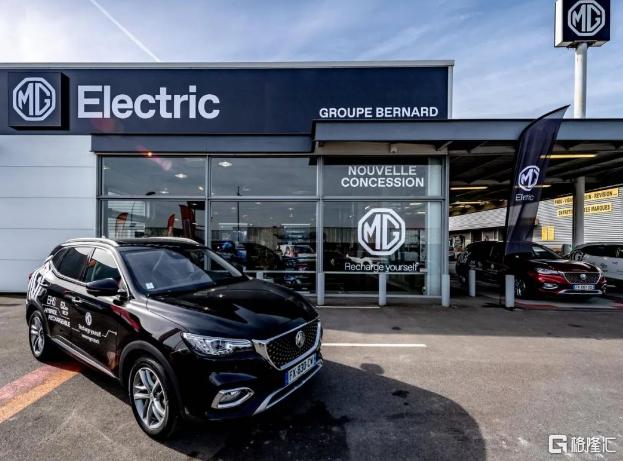
Core Viewpoint - The trend of "going global" has become a significant development direction for Chinese automotive companies, with substantial growth in exports and unique strategies adopted by leading firms like SAIC and BAIC [1][3]. Group 1: Export Growth - In September, China's automotive exports reached 444,000 units, a month-on-month increase of 9% and a year-on-year increase of 47.7% [1]. - From January to September, total automotive exports amounted to 3.388 million units, reflecting a year-on-year growth of 60% [1]. Group 2: SAIC Group's International Strategy - SAIC Group's MG brand has achieved significant success, ranking first in overseas sales among Chinese single brands for four consecutive years [3]. - In September, SAIC's overseas wholesale sales reached 105,000 units, maintaining a steady performance above 100,000 units for two consecutive months [3]. - MG's sales in Europe reached 28,000 units in September, doubling year-on-year, and the MG4 EV has become the best-selling Chinese electric vehicle in over 30 countries [3][5]. - SAIC's MG brand is projected to sell over 800,000 units this year, contributing to the group's goal of reaching 1.2 million overseas sales [5]. Group 3: BAIC Group's International Strategy - BAIC's Magic Cube model has been a key product in its South African market strategy, officially launched under the name "BEIJING X55" [6]. - The BAIC Magic Cube features advanced technology, including an L2.5 level autonomous driving assistance system and a 540-degree transparent chassis [6]. - In the first three quarters of 2023, BAIC's passenger car exports approached 30,000 units, marking a year-on-year increase of 142% [8]. Group 4: Challenges in Overseas Markets - The overseas market presents both opportunities and challenges for Chinese automotive brands, with economic conditions, tight logistics, high tariffs, and unfavorable policies posing significant hurdles [8].