
软硬件一体化

Search documents
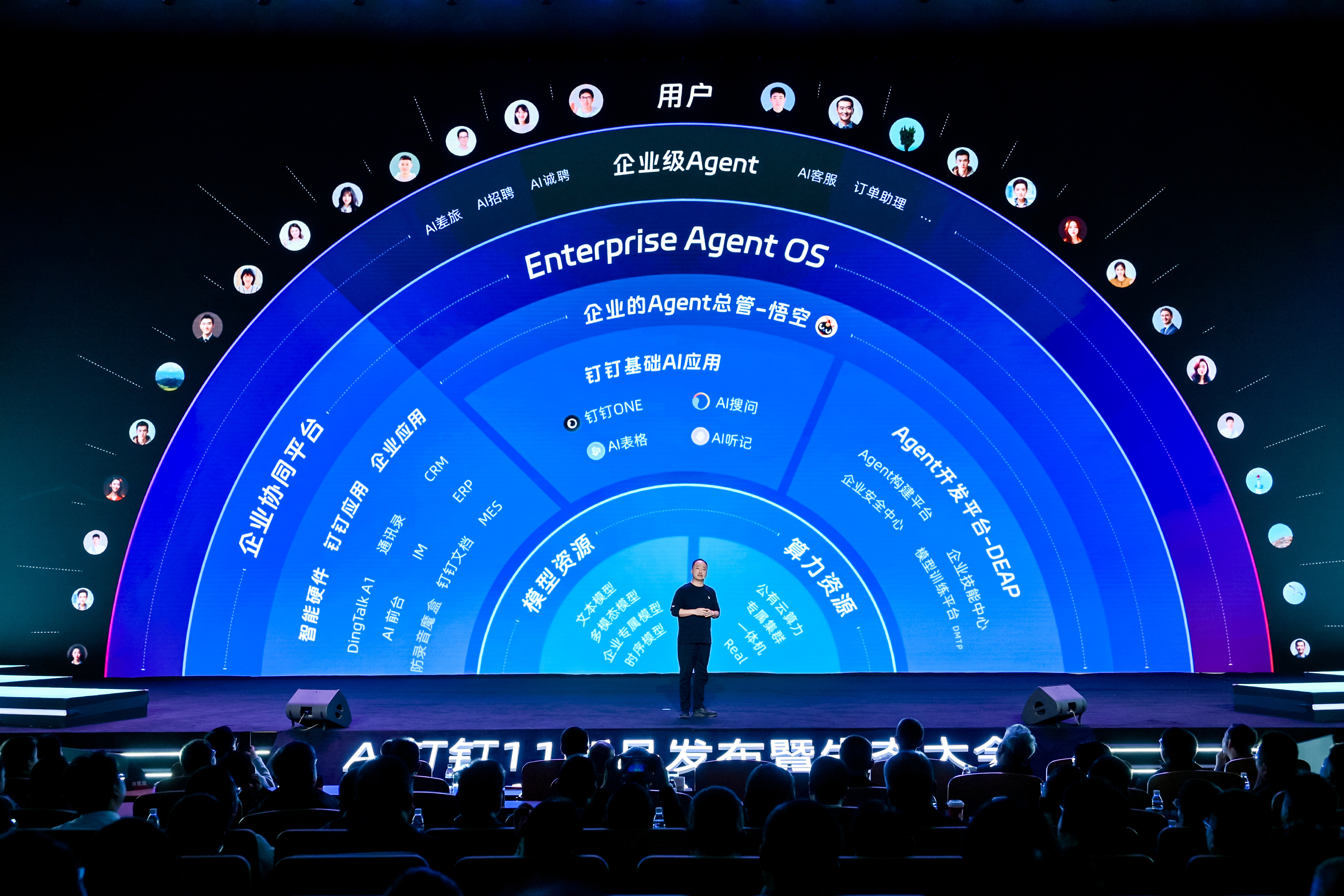
钉钉2小时发布20余款AI新品,AI To B入口战事升级
Di Yi Cai Jing· 2025-12-23 12:24
Core Insights - DingTalk aims to connect AI with the physical world, moving beyond traditional office software to become an AI-to-B (AIToB) entry point for integrated software and hardware solutions [1][4] Group 1: AI Strategy and Product Development - DingTalk's CEO, Chen Hang, announced over 20 new AI products at the AI DingTalk 1.1 launch event, including the first AI-focused work intelligence operating system, AgentOS [1] - AgentOS will serve as the foundation for all AI Agents on DingTalk, promoting an open AI ecosystem to attract more industry players into DingTalk's AI hardware market and collaborative ecosystem [1] - The company is accelerating the development of AI products while integrating external AI solutions through AgentOS to strengthen its position in the AIToB market [1] Group 2: Hardware Investments - DingTalk is increasing its investment in hardware, highlighted by the launch of the enterprise-level AI hardware DingTalk Real, which aims to enable AI to autonomously connect and interact with the physical world [4] - The previously released DingTalk A1 smart hardware has undergone over 2,000 co-creation sessions with clients in the past four months, with model iterations occurring every two weeks [4] - DingTalk Real is designed to maintain human control over AI operations through features like real identity authentication and real-time data management [4] Group 3: Competitive Landscape - Alibaba has positioned AI hardware as a key business direction within its consumer-facing AI initiatives, with the integration of the Tmall Genie team and Quark team to explore hardware opportunities [5] - The competition among DingTalk, Feishu, and Tencent Meeting in the AI spreadsheet domain is expected to intensify, with both DingTalk and Feishu continuously enhancing their product capabilities [5] - DingTalk is shifting its focus in AI spreadsheets to create an application development platform, allowing enterprises to generate AI applications from Excel-based data through various input methods [6]

凌晨重磅,美联储降息!美股已集体拉升!
Xin Lang Cai Jing· 2025-12-10 23:28
Market Overview - The market index continued to fluctuate with a significant adjustment, but the real estate sector helped recover towards the end of the trading day. The trading volume decreased by 125.4 billion, with a total turnover of 1.78 trillion in the Shanghai and Shenzhen markets. The number of stocks rising and falling was roughly balanced, indicating a clear retreat in short-term sentiment and rapid rotation of market hotspots, with a high limit-up failure rate of 33% and a notable number of stocks experiencing significant pullbacks [1] Sector Highlights - The sectors with the highest number of limit-up stocks included: consumer goods, Hainan free trade, real estate, and AI hardware [2] Federal Reserve Update - The Federal Reserve announced a 25 basis point rate cut, aligning with market expectations of a "hawkish rate cut." However, the meeting revealed three dissenting votes, indicating internal divisions within the Fed. The dot plot suggests a median interest rate forecast of 3.375% for 2026, significantly lowering the market's previous expectations for more rate cuts in that year. Fed Chair Powell's dovish remarks indicated that monetary policy decisions will be made on a meeting-by-meeting basis, with no predetermined path [3] Commercial Aerospace Developments - SpaceX plans to raise over $30 billion in an IPO, with an estimated valuation of approximately $1.5 trillion. Recent achievements in China's commercial aerospace sector include record launches by Long March rockets and the establishment of a commercial aerospace company by Guangdong state-owned assets. The industry is expected to transition from speculative trading to a trend-driven opportunity, particularly with advancements in reusable rockets and satellite internet services [4] Hainan Free Trade Zone Initiatives - Hainan has released its "14th Five-Year" planning suggestions to promote innovation in future industries such as biomanufacturing, hydrogen energy, brain-computer interfaces, and embodied intelligence. The Hainan sector showed significant activity, with expectations for a trading surge as the December 18th closure date approaches [5] Consumer Market Trends - The concept of "interest consumption" is emerging, with younger consumers willing to spend on hobbies and niche markets. Recent events, such as the National Retail Innovation Development Conference, highlight this shift, alongside financial incentives for assisted reproduction in certain regions [5] AI Industry Developments - An "AI Guild" has been established, including major players like Google, Microsoft, and OpenAI, which may accelerate the commercialization of AI technologies [5] Real Estate Sector Updates - Vanke's restructuring efforts have seen new developments, with reports of support from China International Capital Corporation and potential mortgage interest subsidies. This news led to a significant rebound in the real estate sector, although the sustainability of this rally remains uncertain due to the large scale of the industry [6] Technology Sector News - The merger between Haiguang Information and Zhongke Shuguang has been terminated, primarily due to significant changes in the market environment. This merger would have integrated the chip and server industries, creating a powerful combination in the tech sector [6] Economic Forecasts - JPMorgan forecasts a 20% increase in the A-share market by 2026, citing reasons such as anti-involution, real estate recovery, and domestic demand stimulation [8]



影翎发布全球首款8K全景无人机,重新定义飞行交互体验
Nan Fang Du Shi Bao· 2025-12-04 15:17
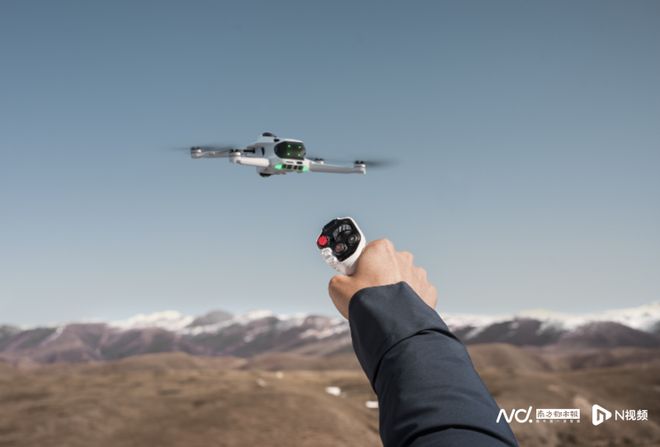
Core Viewpoint - The launch of the Antigravity A1 panoramic drone marks a significant innovation in consumer drones, integrating 8K panoramic imaging, head-mounted display, and motion control into a single system, offering a new approach to flying and capturing images [1] Group 1: Product Features - The A1 features an interactive flying experience with the Vision flight glasses, which weigh approximately 340 grams and have a maximum battery life of about 150 minutes, allowing users to view their surroundings by turning their heads while the flight control system maintains direction and speed [3] - The OmniLink 360 panoramic transmission technology enables real-time transmission of panoramic images to the flight glasses, with a maximum transmission distance of 10 kilometers under FCC standards, enhancing the flying experience [4] - The A1 is equipped with a dual-lens panoramic imaging system based on a 1/1.28-inch sensor, supporting 8K at 30fps, 5.2K at 60fps, and 4K at 100fps, allowing users to capture all-around footage without needing to adjust the gimbal during flight [4] Group 2: Design and Safety - The A1 weighs 249 grams, close to the registration threshold for ultra-light drones in many countries, reducing the regulatory burden for users [5] - It includes a front-facing obstacle avoidance system and all-directional perception through dual fisheye lenses, along with a load detection system to identify external weights and prevent misuse [6] - The drone features a flight path planning function, allowing users to pre-set and save flight routes, enabling a more immersive experience [6] Group 3: Software Ecosystem - Antigravity has developed an integrated software ecosystem for the A1, including the Antigravity App for mobile and Antigravity Studio for desktop, supporting material transfer, intelligent cropping, basic color adjustment, and AI editing [6] - The system can automatically identify highlight segments from panoramic footage and generate videos suitable for different platforms, catering to both casual and professional users [6] Group 4: Market Reception and Pricing - Since its debut in August, the A1 has received multiple international awards, including the CES 2026 Innovation Award and the 2025 Good Design Award, indicating strong market recognition [7] - The A1 is available in three versions: standard, standard with three batteries, and long endurance with three batteries, priced at 7999 yuan, 9399 yuan, and 9999 yuan respectively, with promotional discounts available during the launch [7]
港大锅炉房走出的创业者,用千元模组撬动机器人百亿市场
2 1 Shi Ji Jing Ji Bao Dao· 2025-11-28 14:24
Core Insights - The article highlights the innovative technology developed by Liuxing Technology, specifically the Odin1 spatial memory module, which addresses a significant challenge in the robotics industry: spatial perception capabilities [1][10]. Company Overview - Liuxing Technology was founded in 2021 by Qin Youming and Xu Wei, emerging from a unique research environment at the University of Hong Kong [3]. - The company initially focused on two key market demands in Hong Kong: the construction industry, driven by BIM technology requirements, and cultural heritage preservation [4]. Product Development - The company launched its first handheld 3D mapping device, the "Liuxing Machine," in June 2022, achieving centimeter-level precision in 3D mapping [7]. - The Odin1 module, priced under 7,000 yuan, enables robots to have spatial memory, significantly enhancing their operational capabilities [1][10]. Technological Advancements - Liuxing Technology's core technology includes the proprietary MindSLAM algorithm and an integrated hardware-software solution, emphasizing the importance of deep integration for successful engineering applications [5][6]. - The company's products provide robots with enhanced spatial perception, memory, and recall capabilities, allowing for improved navigation and decision-making [10][11]. Market Position and Strategy - Liuxing Technology has established partnerships with major domestic robotics manufacturers, receiving valuable feedback for product optimization [10]. - The company aims to capitalize on the long-tail effect in the robotics industry, where many companies require external solutions for spatial perception due to limited resources [12]. Future Plans - The company plans to sign contracts with key clients and push for large-scale production in its robotics division while also exploring international markets [13]. - Liuxing Technology envisions becoming a "T-shaped" enterprise, deeply rooted in the robotics sector while expanding its technology across various industries [12].

从硬件破局到软硬件一体化方案落地 科大讯飞出海战略升维
Zhong Guo Jing Ying Bao· 2025-11-08 03:03
Core Insights - The overseas business of iFlytek (科大讯飞) is experiencing strong growth, with a projected 2.7 times increase in overseas revenue by Q3 2025, driven by sales of translation devices and office products in markets such as Japan, South Korea, the Middle East, and Southeast Asia [1] Group 1: Market Expansion Strategy - iFlytek's overseas strategy is evolving from consumer-level (C-end) products to deeper engagement in business and government (B/G-end) sectors, with a clear path of "C-end first, B/G-end following" [1][2] - In South Korea, iFlytek has formed a joint venture with Hancom, establishing its Korean translation device as a leading brand in the local market, and is exploring AI applications in government operations [1][2] - The company is actively pursuing partnerships in Southeast Asia, including strategic agreements with Malaysian media organizations to leverage AI technology in various fields [2] Group 2: Regional Focus and Opportunities - Key regions for iFlytek's next phase of growth include Japan, South Korea, the Middle East, and Southeast Asia, where there is a strong demand for AI applications despite lower foundational capabilities compared to China and the U.S. [3] - The South Korean market presents an opportunity due to high customer expectations for product experience and technology maturity, prompting iFlytek to offer localized smart office solutions [3] - In the Middle East, the demand for multilingual translation services is critical, with a focus on Arabic, English, and Chinese, aligning with the region's strategic vision for 2030 [3] Group 3: Challenges and Solutions - iFlytek faces challenges in its overseas expansion, including language and cultural differences, as well as varying data compliance requirements across countries [4] - The company emphasizes "offline security" as a core competitive advantage, offering private deployment solutions for clients with high data security needs, ensuring sensitive content does not cross borders [5]

智能驾驶专家会议
2025-10-20 14:49
Summary of Key Points from the Conference Call Industry Overview - The conference focuses on the intelligent driving industry, particularly advancements in autonomous driving technology and the competitive landscape among companies like Tesla, Xpeng, and Li Auto. Core Insights and Arguments 1. **Tesla FSD V14 Enhancements**: - Tesla's FSD V14 has significantly improved its autonomous driving capabilities through software optimization, increased camera frame rates from over 30 to over 40 frames, and a tenfold increase in model parameters compared to V13, achieving 2,000 to 2,500 TOPS computing power with the AI5 chip [2][1][4]. 2. **Importance of In-House Chip Development**: - The deep integration of self-developed chips and algorithms is crucial for companies like Xpeng and Li Auto to reduce reliance on general-purpose chip platforms, thereby lowering costs and enhancing performance [1][4]. 3. **Technological Divisions in Domestic Market**: - The domestic intelligent driving technology is divided into two camps: the Vision Oriented Architecture (VOA) and the World Model. Each has its strengths and weaknesses, with VOA requiring high computing power and having lower frame rates, while the World Model faces challenges in environmental prediction [5][6]. 4. **Market Trends Towards Hardware-Software Integration**: - The trend towards integrated hardware and software solutions is expected to grow, with suppliers likely gaining a larger market share as OEMs focus on internal needs, leading to potential price wars in the future [8][1]. 5. **NVIDIA's Market Position**: - NVIDIA maintains a strong market position due to its CUDA ecosystem, which provides a seamless service from AI training to deployment, significantly reducing algorithm migration costs [9][1]. 6. **Regulatory Developments**: - Regulations for L3 autonomous driving are expected to be introduced by 2026, with a focus on data closure, computing center construction, and algorithm optimization [3][10]. 7. **Challenges in Data and Feature Alignment**: - The industry faces challenges in data and feature alignment due to high labeling costs and complex algorithm implementations, which hinder the effective processing of multimodal information [7][1]. 8. **Future of LiDAR Technology**: - LiDAR technology is expected to coexist with visual solutions, with prices dropping to around $200, making it more accessible for widespread adoption in vehicles [11][14]. 9. **AI Driver vs. Traditional Systems**: - The AI driver represents a remote AI takeover system designed to handle specific issues, enhancing user experience without compromising safety [22][1]. 10. **Impact of Mass Production on L4 Companies**: - The mass production of vehicles with autonomous driving technology may challenge the business models of existing L4 companies, particularly regarding licensing and operational experience [23][1]. Other Important Insights - **Investment in AI**: - Companies like Xpeng and Li Auto are investing around $6 billion annually in AI, primarily for algorithm development and road testing, but the impact on differentiation may be limited due to similar capabilities across firms [19][1]. - **Safety Personnel Ratios**: - The current ratio of safety personnel in leading domestic autonomous driving companies is approximately 1:5 to 1:8, with ongoing efforts to reduce reliance on human oversight through AI model development [21][1]. - **Challenges in VOA Technology**: - VOA technology faces latency and multimodal alignment issues, which can be addressed through long-term investment in model adjustments and short-term optimizations [18][1]. - **Emerging Chip Development**: - Domestic suppliers are entering the chip market later but targeting the mid-to-low-end market, which has not yet fully opened up, allowing for competitive advantages through tailored solutions [24][1].

“跳下悬崖造飞机”的狠人,用一个未来的故事打动苹果代工厂
虎嗅APP· 2025-10-15 13:40
Core Insights - The article discusses the journey of a startup, Future Intelligence, which focuses on AI headphones and the challenges faced in the hardware and AI integration space [5][8][9]. Group 1: Company Overview - Future Intelligence was founded in 2022, during a time when the venture capital community was primarily focused on large AI models, leading to initial difficulties in securing investment [9][34]. - The company has since doubled its valuation and secured new funding led by Ant Group, indicating a shift in investor interest towards practical AI applications [8][35]. - The founder, Ma Xiao, emphasizes the importance of integrating AI into hardware design from the outset, rather than as an afterthought [10][12]. Group 2: Product Development Challenges - Developing AI headphones involves significant challenges, including rethinking hardware design, supply chain management, and navigating a competitive market [10][39]. - The product development cycle for hardware is lengthy, typically taking 6 to 9 months, which contrasts sharply with the rapid iteration cycles seen in software [10][50]. - Future Intelligence initially faced skepticism from top-tier manufacturers due to low order volumes, but eventually secured a partnership with a major OEM by presenting a compelling vision for AI-driven headphones [39][40]. Group 3: Market Positioning and Strategy - The company has strategically focused on the office and meeting scenarios, simplifying its product offerings to meet specific user needs, such as recording and translating conversations [41][42]. - Future Intelligence has iterated its product multiple times, responding to user feedback and evolving market demands, particularly with the advent of large language models [44][46]. - The company aims to differentiate itself by positioning its headphones as "AI ears," capable of capturing audio in a way that traditional headphones cannot [50][52]. Group 4: Competitive Landscape - Future Intelligence views itself as a hybrid of hardware and AI software, contrasting with traditional tech giants that focus on broader consumer electronics [52][59]. - The company anticipates competition not just from other hardware manufacturers but increasingly from software companies that may venture into hardware [58][59]. - The founder believes that the future of AI assistants will require a combination of structured and unstructured data, which necessitates a close relationship with users to gather comprehensive insights [60][64].

手机与 PC 的最后边界,终于被三折叠打破
虎嗅APP· 2025-09-04 10:16
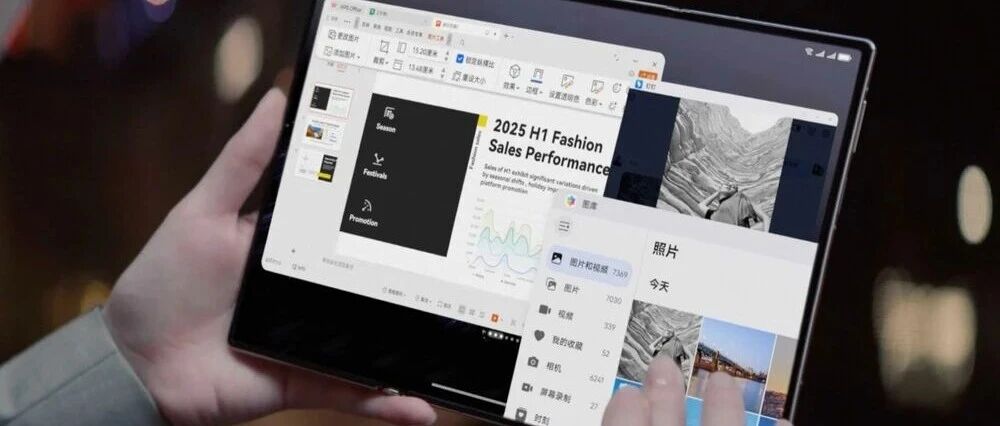
Core Viewpoint - The article emphasizes that Huawei's Mate XTs represents a significant evolution in the foldable smartphone market, moving beyond mere optimization of existing mobile devices to redefine the essence of hardware and productivity, positioning itself as a "pocket PC" [2][3][32]. Group 1: New Imagination of Foldable Screens - The foldable smartphone market is currently characterized by intense competition focused on lightweight designs and minimal creases, but Huawei aims to fundamentally change the user experience by introducing a new category of devices [2][5]. - Huawei's Mate XTs features a 10.2-inch screen that challenges the limitations of traditional smartphones, effectively creating a "pocket PC" concept [6][10]. - HarmonyOS 5 supports PC-level applications, allowing for a true desktop experience on a mobile device, which is a significant advancement over existing operating systems [8][10]. Group 2: From Tool to Value - Huawei's strategy combines rational and emotional elements to enhance user experience, focusing on both productivity and creative freedom [18][24]. - The integration of AI, represented by the intelligent assistant "Xiao Yi," enhances productivity by providing real-time assistance and insights during tasks, thus transforming the user experience [19][22]. - The introduction of the M-Pen 3 stylus further enriches the user experience by enabling seamless interaction with applications, enhancing the overall productivity of the device [15][24]. Group 3: Defining the Future - Huawei's approach in the foldable screen market is characterized by a return to the fundamental value of user needs, focusing on hardware and software integration to create a unique user experience [26][28]. - The company has established a significant market presence, achieving a 75% market share in China's foldable smartphone segment by mid-2025, with a total shipment exceeding 10 million units [30]. - The combination of innovative hardware and a robust software ecosystem positions Huawei as a leader in defining the future of foldable devices, creating a self-reinforcing strategic cycle that enhances its market dominance [30][28]. Conclusion - The launch of Huawei's Mate XTs marks a pivotal moment in the evolution of foldable smartphones, challenging traditional boundaries and redefining mobile productivity [32][34]. - The device exemplifies the future of personal computing, merging the portability of smartphones with the immersive experience of tablets and the productivity of PCs [34].
港迪技术(301633) - 301633港迪技术投资者关系管理信息20250828
2025-08-28 09:50
Group 1: Business Expansion and Strategy - The company has established a strategic framework of "one core and three wings," focusing on regional development with new branches in Shenzhen, Hainan, and Shanghai to enhance core competitiveness [2][3] - The company aims for sustainable and high-quality development over the next 3-5 years, emphasizing technology R&D, new product development, and overseas market expansion [3][4] Group 2: Market and Product Development - The company is currently focused on domestic markets, with overseas business still relatively small, but is expanding its overseas team and communication efforts [3][4] - The development of medium and high-voltage frequency converters is progressing well, with some models in testing, aiming for a comprehensive product line in automation [3][4] Group 3: Mergers and Acquisitions - The company is open to potential mergers and acquisitions but will prioritize internal technology development and market adaptability [4][5] Group 4: Industry Trends and Performance - The company is monitoring the humanoid robot sector but has not yet entered this market, focusing instead on existing product lines [5] - The company has maintained a leading position in the domestic market for shield machine frequency converters for five consecutive years [5] - Key downstream industries such as shipping, railways, oil, and cement have shown strong performance, supporting business growth [5][6] Group 5: Market Challenges and Confidence - Despite challenges like slowing investment in manufacturing and price wars, the company remains confident in its operational stability due to strong customer relationships and strategic partnerships [6] - The company plans to expand market efforts and optimize product structures to mitigate external impacts [6]
确定性与成长性:煜邦电力2025H1价值观察
Jin Tou Wang· 2025-08-25 02:17
Core Viewpoint - The company, Beijing Yubang Electric Technology Co., Ltd., has demonstrated a stable performance in the first half of 2025, with revenue of 354 million yuan and a net profit of 24.05 million yuan, while strategically investing in R&D, order reserves, and international expansion to build a growth path that can withstand economic cycles [1] Short-term Fluctuations Logic - The smart power products experienced a temporary slowdown due to the delivery rhythm of hardware products, with some contracts not being recognized in time [2] - The reduction in the bidding prices by the State Grid in 2024 has impacted the gross margin, indicating typical cyclical fluctuations in the industry rather than structural changes [2] - The company's R&D investment reached 31.08 million yuan, accounting for 8.78% of revenue, which is significantly higher than the industry average, affecting short-term profit performance but strengthening competitive barriers for long-term growth [2] Long-term Growth Certainty - As of June 30, the company had an order backlog of approximately 851 million yuan, 2.4 times the revenue for the period, providing a solid guarantee for future performance [3] - The company has made significant progress in R&D, aligning with the 2024 technical specifications of the State Grid and Southern Grid, and has developed next-generation standard products [3] - Breakthroughs in AI and digital twin applications have enhanced product performance and operational capabilities, establishing a competitive advantage in the smart power and inspection sectors [3] Energy Storage Breakthrough - The energy storage segment is emerging as a new growth engine, with significant cost reductions in battery systems and successful deliveries in commercial scenarios [4] - The company has established subsidiaries in the Philippines and Singapore, expanding its business into Southeast Asia and Central Asia, while also enhancing regional industrial collaboration in China [4] AI Amplifying Integrated Hardware and Software Advantages - The company is the only one in the industry with integrated hardware and software capabilities, providing a competitive edge in key scenarios [5] - The expansion of computing infrastructure to approximately 10 PFlops supports the training of large models and real-time inference, facilitating the rapid transformation of R&D results into engineering applications [5] - Various AI applications, such as automated analysis systems and intelligent testing agents, have been developed to enhance efficiency and decision-making in power market settlements [5][6] Core Logic of Investment Value - The company has established a robust technological moat through various industrial achievements and deep partnerships with the State Grid and Southern Grid, enabling rapid scaling [7] - The high level of investment in the power grid and the inclusion of digital grids and energy storage in national strategies provide dual benefits of policy and industry growth [7] - The dual-driven growth model of R&D investment and international expansion positions the company for a "domestic + overseas" growth trajectory [7] Conclusion: R&D-Driven Long-term Growth - Short-term performance fluctuations are primarily due to contract recognition timing and bidding price adjustments, reflecting typical industry cycles [8] - Long-term support from high R&D investment, ample orders, and international expansion indicates a clear growth path for the company [8] - The company is not only a supplier of smart power equipment but also a core participant in the construction of new power systems, leveraging AI to enhance its integrated advantages across various applications [8]
