
通胀目标制

Search documents
应对“双向风险” 美联储政策“平衡术”难度越来越大
Jing Ji Ri Bao· 2025-09-27 01:40
Group 1 - The Federal Reserve announced a 25 basis point cut in the federal funds rate target range to 4.00% to 4.25%, marking its first rate cut since December 2024 [1] - President Trump has expressed dissatisfaction with the Fed's rate cut pace, arguing that the U.S. does not face inflation [1] - Fed Chairman Powell indicated a shift in policy focus, prioritizing employment concerns over inflation [1] Group 2 - The Federal Reserve was established in 1913 to provide financial support to the banking system and prevent systemic crises [2] - The Great Depression in 1929 highlighted the limitations of the Fed, leading to reforms that expanded its role in monetary and credit regulation [2] - The dual mandate of stabilizing prices and promoting maximum employment was formalized in the 1977 Federal Reserve Reform Act [3] Group 3 - The 1970s stagflation challenged the prevailing economic theories, leading to a new focus on both inflation and employment [3] - Former Fed Chairman Paul Volcker implemented aggressive interest rate hikes to combat inflation, which solidified the Fed's dual mandate in practice [4] - The Fed adopted an inflation target of 2% in the 1990s, while employment targets remained more flexible [4][5] Group 4 - The dual mandate framework has been criticized for its short-term focus, neglecting structural economic issues [5] - The 2008 financial crisis exposed the risks of the Fed's low-interest rate policies and lack of regulatory oversight [6] - The complexity of the current economic landscape poses significant challenges for the Fed in assessing market conditions and risks [6][7] Group 5 - Chairman Powell acknowledged the current economic challenges, highlighting the dual risks of weak employment and rising inflation [7] - The Fed faces increasing difficulty in balancing immediate issues with long-term risks, complicating its policy decisions [7]
美联储的艰难“平衡术”
Jing Ji Ri Bao· 2025-09-26 21:53
Group 1 - The Federal Reserve announced a 25 basis point cut in the federal funds rate target range to 4.00% to 4.25%, marking its first rate cut since December 2024 [1] - President Trump has expressed dissatisfaction with the Fed's slow and insufficient rate cuts, arguing that "there is no inflation" in the U.S. [1] - Fed Chairman Powell indicated a policy shift by prioritizing employment concerns over inflation, reflecting a broader consensus among the government and investors on evaluating Fed policies through inflation and employment metrics [1] Group 2 - The Federal Reserve was established in 1913 to provide financial support to the banking system and prevent systemic crises, evolving its role over time [2] - The 1929 Great Depression highlighted the limitations of the Fed, leading to reforms that enhanced its authority in monetary and credit regulation [2] - The dual mandate of "stable prices" and "full employment" was formally established in 1977, marking a significant shift in U.S. economic policy thinking [3][4] Group 3 - Paul Volcker's tenure as Fed Chairman began in 1979 with inflation at 13%, leading to aggressive interest rate hikes that ultimately curbed inflation but caused a deep recession [4] - The Fed adopted an inflation target of 2% in the 1990s, while employment targets remained flexible, allowing for a clearer framework for monetary policy [4] Group 4 - The dual mandate framework has been criticized for focusing too much on short-term economic fluctuations, neglecting structural economic issues [5] - The 2008 financial crisis exposed the Fed's failures in recognizing systemic risks, as it relied on the belief in market self-correction [5][6] - Current economic complexities, including globalization and technological changes, present significant challenges for the Fed in balancing employment and inflation risks [6]
经典重温 | 制造通胀:日央行如何逃逸“流动性陷阱”?(申万宏观·赵伟团队)
申万宏源宏观· 2025-09-25 05:14
Core Viewpoint - Since the late 1990s, Japan's economy has been trapped in a "two-decade deflation," leading the Bank of Japan (BOJ) to become a "laboratory" for cutting-edge monetary policy, with "manufacturing inflation" becoming a priority for its monetary policy [1][7]. Group 1: Evolution of BOJ's Policy Framework - The BOJ's monetary policy framework has evolved through three main stages from 1955 to the present, reflecting changes in economic conditions and financial markets [2][8]. - From 1955 to 1970, the BOJ employed a quantity-based monetary policy framework characterized by strong regulation, including capital controls and fixed exchange rates [2][9]. - The period from 1971 to 1990 saw a transition towards financial liberalization and a shift from quantity-based to price-based frameworks, although quantity remained dominant [15][22]. - Since 1991, the BOJ has engaged in unconventional policy experiments, moving towards a long-term easing cycle, particularly after the asset bubble burst [28][35]. Group 2: Transition from Quantitative Easing to Comprehensive Monetary Easing - The Asian financial crisis in 1997 prompted the BOJ to implement a zero interest rate policy, which was later reversed incorrectly before the internet bubble burst [3][44]. - In March 2001, the BOJ initiated a quantitative easing policy (QEP) with a focus on increasing reserve balances and committing to maintain the policy until core CPI stabilized above 0% [3][81]. - Following the 2008 financial crisis, the BOJ adopted a comprehensive monetary easing (CME) approach, expanding its asset purchases and adjusting its policy tools to address ongoing economic challenges [3][35]. Group 3: Quantitative and Qualitative Easing - Under Governor Kuroda's leadership from 2013, the BOJ's monetary policy can be divided into three phases, starting with the introduction of Quantitative and Qualitative Easing (QQE) [4][36]. - The first phase emphasized increasing base money through long-term government bond purchases, while the second phase introduced negative interest rates to combat deflation [4][36]. - The third phase involved Yield Curve Control (YCC), where the BOJ maintained flexibility in its bond purchases while targeting specific yield levels [4][36]. Group 4: Impact of Geopolitical and Economic Factors - Recent geopolitical tensions, unexpected economic slowdowns in the U.S., and the continued appreciation of the yen have influenced the BOJ's policy decisions and economic outlook [5].


经典重温 | 前有险滩:日央行能否“全身而退”?(申万宏观·赵伟团队)
申万宏源宏观· 2025-09-25 05:14
Core Viewpoint - The Bank of Japan (BOJ) has fully initiated the normalization process of its unconventional monetary policy, marking the third such attempt in this century, with significant implications for interest rates, the yen exchange rate, and the economy [2][8]. Group 1: Evolution and Mechanism of BOJ's Unconventional Policies - Since the implementation of the zero interest rate policy in 1999, the BOJ has led the world in unconventional monetary policy experiments, evolving through three dimensions: interest rates, quantity, and quality [2][8]. - The transition from the zero interest rate policy to quantitative easing (QEP) in 2001 included all three dimensions, with a focus on term premiums initially, and later on risk premiums [2][8]. - The QQE+ policy introduced in 2013 further expanded these dimensions, aiming to lower nominal interest rates and improve financial conditions to support economic recovery [2][12]. Group 2: Effectiveness Assessment of BOJ's Policies - The QQE+ policy has significantly improved Japan's financial conditions, with estimates showing a reduction of approximately 100 basis points in the 10-year Japanese government bond yield since its implementation [3][15]. - Quantitative research indicates that without the QQE+ policy, Japan's real GDP would have been 0.9-1.3 percentage points lower, and core-core CPI inflation would have been 0.6-0.7 percentage points lower [3][51]. - The policy has helped Japan escape the "deflation trap," with a notable decline in loan rates and corporate bond financing rates, alongside a depreciation of the yen [3][25][33]. Group 3: Normalization of Unconventional Policies - The BOJ has officially started the normalization process, with the first step being the cancellation of negative interest rates and the abandonment of the QQE+YCC framework in March 2024 [4][66]. - The BOJ plans to gradually reduce its bond purchases, aiming for a target of approximately 30 trillion yen by early 2026, while also adjusting its asset purchase strategies to respond to rising long-term interest rates [5][66]. - The central bank's future interest rate targets are estimated to be between 1% and 1.5%, aligning with its 2% inflation goal [5][66].

每日投行/机构观点梳理(2025-08-25)
Jin Shi Shu Ju· 2025-08-25 11:56
Group 1 - Hedge funds have net bought Chinese stocks at the fastest pace in seven weeks, indicating a shift in market sentiment towards China [1] - Morgan Stanley's chief strategist for China believes the recent A-share rally is driven by improved liquidity, with funds moving from bonds and deposits to the stock market [1] - HSBC has raised its year-end target for the Shanghai Composite Index to 4000 points, citing abundant domestic liquidity and a potential 5% to 7% upside [1] Group 2 - Barclays and Societe Generale predict the Federal Reserve will cut rates by 25 basis points in September, influenced by Chairman Powell's shift in tone regarding employment risks [2] - Bank of America suggests that if the dollar weakens and the UK economy improves, the British pound could strengthen, with a forecast of GBP/USD reaching 1.45 in Q4 [2] Group 3 - Canadian dollar is under pressure due to trade uncertainties and expectations of further rate cuts by the Bank of Canada, with the currency hitting a three-month low [3] - Citigroup expects the 10-year U.S. Treasury yield to reach 4.10% by year-end, maintaining confidence in its long-term predictions [4] Group 4 - CITIC Securities anticipates three rate cuts by the Federal Reserve this year, each by 25 basis points, as Powell's comments align with their expectations [6] - China International Capital Corporation estimates that potential funds from household deposits entering the market could range from 5 to 7 trillion yuan [6] Group 5 - Huatai Securities indicates that the current economic conditions suggest a high probability of a 25 basis point rate cut by the Federal Reserve in September, with two additional cuts likely in Q4 [7] - China Merchants Macro reports that the Producer Price Index (PPI) likely bottomed out in June-July, with expectations for a rebound driven by global inventory cycles and oil prices [8] Group 6 - China Merchants Strategy recommends focusing on the entire rare earth sector, especially smaller companies, following new regulations that allow more firms to obtain mining quotas [9] - CITIC Securities notes that the current market rally is primarily driven by institutional investors rather than retail, emphasizing the importance of industry trends and performance [10] Group 7 - Huatai Securities maintains that coal prices are likely to remain supported due to high demand and supply constraints, suggesting a focus on companies with stable cash flows and high dividends [8] - Guotai Junan expects the Asian metallurgical coal market to continue recovering in Q3 2025, supported by inventory replenishment in India and potential rebounds in China [9] Group 8 - China Merchants Macro identifies September as a potential observation window for the appreciation of the Chinese yuan, which could lead to a comprehensive revaluation of Chinese assets [17][18] - The report suggests that if the yuan returns to the 6 range, it would enhance the attractiveness of Chinese equities, particularly in consumer sectors [18]
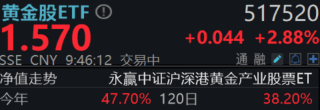
美联储降息预期提升至90%,黄金股涨近3%超黄金
Sou Hu Cai Jing· 2025-08-25 02:15
Group 1 - The core viewpoint of the articles highlights a strong performance in the gold industry stocks, particularly driven by the recent comments from the Federal Reserve Chairman Jerome Powell regarding potential interest rate cuts and a flexible inflation targeting framework [2][3] - The China Securities Index for gold industry stocks (931238) saw significant gains, with notable increases in stocks such as Jiangxi Copper Co., Ltd. (up 8.56%), Hunan Silver (up 7.14%), and Zijin Mining (up 5.54%) [1] - The expectation of interest rate cuts and the prevailing economic conditions are seen as supportive factors for gold prices, with analysts suggesting that the market may experience upward momentum rather than downward [2] Group 2 - The Northeast Securities analysis indicates that low volatility and economic weakness combined with rising inflation and potential rate cuts create a favorable environment for gold prices to rise [2] - The article emphasizes that the largest gold stock ETF (517520) serves as an efficient tool for investors to gain exposure to the gold sector, allowing them to capture the benefits of rising gold prices and share in the growth of quality gold mining companies [3] - The investment in the Yongying Gold Stock ETF and its linked funds (A class: 020411 / C class: 020412) is presented as a strategy to effectively diversify individual stock risks while participating in the overall gold industry [3]
鲍威尔松口或降息 美联储麻烦仍未了
Shang Hai Zheng Quan Bao· 2025-08-24 17:47
Group 1 - Federal Reserve Chairman Powell indicated a potential adjustment in monetary policy due to changing risk balances, suggesting a possible interest rate cut in September [1][2] - Following Powell's remarks, market expectations shifted significantly, with an estimated 85% probability of a rate cut in September according to the Chicago Mercantile Exchange [2] - Financial markets reacted positively, with major U.S. stock indices rising and U.S. Treasury yields falling sharply after Powell's speech [2] Group 2 - Powell's speech highlighted internal divisions within the Federal Reserve regarding the timing and necessity of a rate cut, with some officials calling for more data before making a decision [3] - Political pressures from President Trump, who has expressed dissatisfaction with the Fed's current stance on interest rates, add complexity to the Fed's decision-making process [3][4] - The Fed's future monetary policy path remains uncertain, as Powell emphasized that decisions will be based on data assessments rather than preset paths, indicating a reliance on upcoming economic indicators [5]
Jackson Hole央行年会分析
2025-08-24 14:47
Summary of Key Points from Conference Call Records Industry or Company Involved - The analysis primarily focuses on the U.S. economy, particularly the Federal Reserve's monetary policy and its implications for the financial markets. Core Points and Arguments 1. **Non-Farm Employment Data Adjustments**: The Q1 2025 QCEW calibration data will likely lead to downward revisions in non-farm employment numbers, similar to the 818,000 downward adjustment made in 2024, which ultimately revised to 589,000 [1][3] 2. **Upcoming Economic Data Releases**: Key economic indicators such as PPI, CPI, and retail sales data will be released in September, which are crucial for assessing inflation and predicting Q3 GDP performance [1][3] 3. **Federal Reserve's FOMC Meeting**: The FOMC meeting on September 18 will be pivotal in determining interest rate decisions, with a focus on the divergence between actual values and expected medians [1][3] 4. **Market Volatility in August and September**: Historically, these months are characterized by high volatility and poor stock performance, necessitating caution regarding tightening dollar liquidity and deteriorating financial conditions [1][6] 5. **Uncertainty in Rate Cut Expectations**: Current uncertainties surrounding rate cut expectations are heightened due to poor quality and volatility in employment and inflation data [1][12] 6. **Potential Hawkish Rate Cuts**: If non-farm employment data underperforms while inflation exceeds expectations, the Fed may implement a symbolic rate cut while maintaining a tight overall financial environment [1][14][15] 7. **Impact of Political Dynamics**: The complexity of monetary policy is exacerbated by political pressures, which must be considered alongside economic fundamentals [2][24] 8. **Discrepancies in Fed Members' Views**: There are notable divisions among Fed members regarding the timing and necessity of rate cuts, influenced by political appointments and pressures [26] 9. **Globalization's Effect on Inflation**: The decoupling of supply chains due to trade wars may lead to slight upward pressure on inflation, contrasting with previous years when globalization helped suppress it [21][22] 10. **Challenges in the U.S. Labor Market**: The labor market faces challenges such as immigration issues and structural changes due to AI, which could influence future Fed policy decisions [20] Other Important but Possibly Overlooked Content 1. **Historical Context of Market Performance**: The analysis highlights that August and September have historically been poor months for U.S. equities, often due to liquidity issues and financial conditions tightening [6][10] 2. **Market Reactions to Economic Data**: The market's response to economic data releases is critical, as deviations from expectations can significantly influence capital market trends [5][27] 3. **Cryptocurrency's Threat to Traditional Banking**: The rise of cryptocurrencies poses a potential threat to traditional banking systems, which could alter the landscape of financial intermediation [30][31] 4. **Commodity Market Dynamics**: The commodity market is experiencing mixed signals, particularly in oil, indicating potential volatility and investment opportunities [33]
海外高频 | 美欧日制造业PMI反弹、美国扩大钢铝关税(申万宏观·赵伟团队)
申万宏源宏观· 2025-08-24 12:22
Group 1 - The article highlights a rebound in manufacturing PMIs for the US, Eurozone, and Japan, indicating a recovery in overseas manufacturing demand, potentially linked to reduced tariff uncertainties [64][61] - The US expanded tariffs on steel and aluminum derivatives, affecting 407 product categories with a 50% tariff, impacting approximately $138 billion in imports [42][48] - The article notes that the S&P 500 and other developed market indices saw increases, while emerging markets showed mixed results, with the UK FTSE 100 rising by 2.0% [2][3] Group 2 - The article reports that the US 10-year Treasury yield decreased by 7.0 basis points to 4.3%, while emerging market yields generally increased, particularly in Turkey, which rose by 208.0 basis points to 31.3% [16][18] - The article mentions that commodity prices mostly declined, with WTI crude oil rising by 1.4% to $63.7 per barrel, while coking coal fell by 5.5% to 1162 yuan per ton [32][37] - The article indicates that the US fiscal deficit for 2025 reached $1.1 trillion, with total expenditures of $5.19 trillion and total revenues of $3.21 trillion [48] Group 3 - The article discusses the dovish stance taken by Federal Reserve Chair Powell during the Jackson Hole meeting, suggesting a potential adjustment in policy due to risks in the labor market [57][59] - The article notes that the US initial jobless claims exceeded market expectations, with 235,000 claims reported, indicating potential labor market weaknesses [68] - The article highlights that the Eurozone and US manufacturing sectors are experiencing inflationary pressures, with the US manufacturing PMI price component continuing to rise [64][61]

鲍威尔最新表态,暗示美联储可能降息
Jin Rong Shi Bao· 2025-08-23 02:39
Group 1 - Federal Reserve Chairman Powell indicated that current conditions suggest a downside risk to employment growth, which may require policy adjustments [1] - Powell expressed an openness to interest rate cuts in the coming months, despite existing inflationary pressures [2] - The labor market and economic growth have shown significant slowdown, prompting a cautious reassessment of the Fed's policy stance [2] Group 2 - Powell highlighted that tariffs have raised prices on certain goods, with July's core PCE price index rising 2.9% year-on-year [2] - The Fed's interest rate levels are now closer to "neutral" compared to last year, and future evaluations will focus on preventing temporary price increases from leading to long-term inflation [2] - The Fed reaffirmed its commitment to maintaining a 2% inflation target to ensure long-term expectations remain stable [2]