全新ES8

Search documents
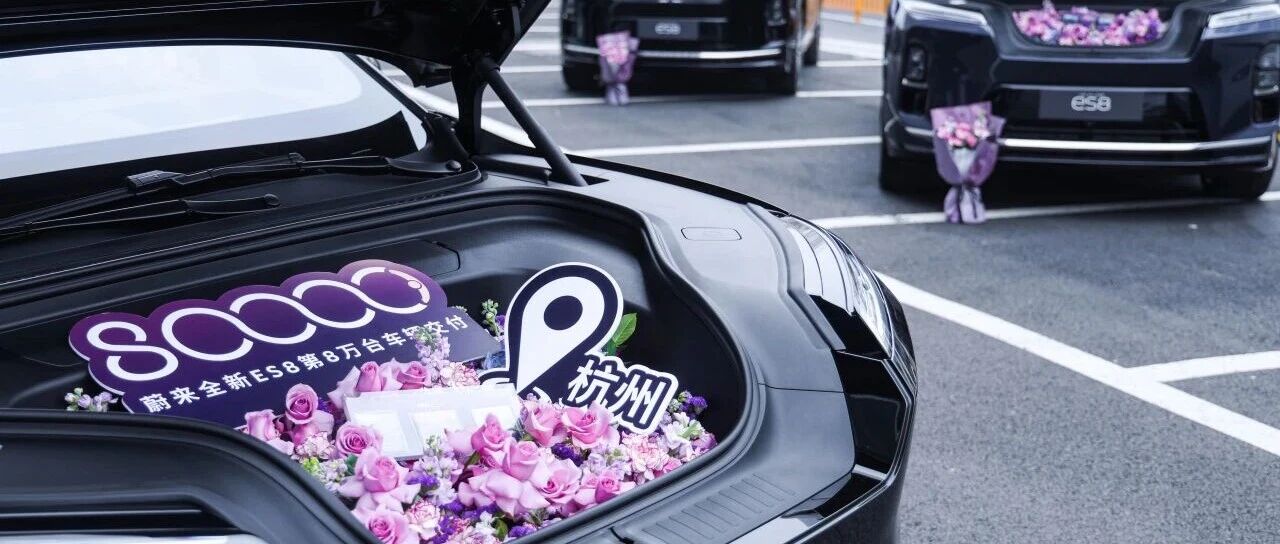
大车的甜头,蔚来算是吃上了
21世纪经济报道· 2026-03-26 04:26
Core Viewpoint - The competition logic in the high-end pure electric vehicle market has fundamentally changed, moving from a growth-driven phase to a stock competition phase where profit margins are critical for survival [1] Group 1: Market Dynamics - The high-end vehicle market in China, priced between 400,000 to 600,000 yuan, has historically served as a barometer for industry trends, reflecting a company's profitability, technological capabilities, and brand influence [1] - The market has transitioned from a "scale dividend era" driven by vertical integration to a new growth curve represented by companies like NIO, which rely on systematic technological advancements [1][3] - As of March 2, 2026, NIO's new ES8 achieved 80,000 deliveries within 181 days, indicating a shift in competitive logic in the high-end pure electric market [1] Group 2: User Behavior and Value Assessment - In the context of stock competition, high-end users' purchasing decisions are reshaping how capital markets assess company value, moving away from traditional metrics like brand heritage and engine specifications [2] - Nearly half of the 80,000 new ES8 owners came from existing customers of traditional luxury brands (BBA), with over 15% directly abandoning traditional combustion engine vehicles [2] - More than 25% of the initial ES8 orders were from previous ES8 owners, highlighting a strong customer loyalty and repeat purchase behavior [2] Group 3: Financial Performance and Growth Drivers - NIO achieved its first-ever quarterly profit in Q4 2025, driven by the high price and margin of the new ES8, which has established a strong "blood generation" capability for the company [3] - The high repurchase and renewal rates signify a shift in consumer perception, transforming vehicles from depreciating assets to "iterable services" [3][6] Group 4: Technological Advancements - NIO's strategy of focusing on large vehicles has proven to be a significant growth engine, with the new ES8 being a key driver of profitability [3][4] - The new ES8 incorporates self-developed chips and an operating system that enhance user experience and address common pain points in electric vehicles, showcasing NIO's engineering expertise [5] - The company has established a comprehensive closed-loop system from R&D to mass delivery, mastering the production of high-end vehicles [6] Group 5: Industry Positioning and Future Outlook - The emergence of a "military alliance" consisting of NIO, ONVO, and Firefly indicates a structural evolution in the market, with NIO's integrated technology providing a competitive edge [7] - NIO's successful delivery of 80,000 ES8 units has solidified its position as a benchmark in the pure electric vehicle industry, demonstrating resilience and industrial endurance [7][8] - The transition of NIO's battery swap system and underlying technology from a brand asset to an industry-wide value anchor reflects a long-term commitment to innovation [8]


【汽车】春节长假扰动销量,关注财报季业绩表现——新势力2月销量跟踪报告(倪昱婧/邢萍)
光大证券研究· 2026-03-03 23:03
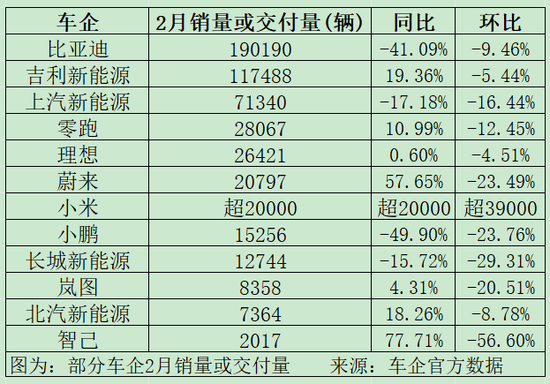
Core Viewpoint - The article discusses the impact of the Spring Festival holiday on February's new energy vehicle (NEV) sales, highlighting the performance of various manufacturers and the upcoming product launches in the industry [4][5][7]. Group 1: February NEV Sales Performance - Li Auto's delivery volume increased by 0.6% year-on-year but decreased by 4.5% month-on-month to 26,421 units [4] - NIO's delivery volume rose by 57.6% year-on-year but fell by 23.5% month-on-month to 20,797 units, with the NIO brand up by 65.8% year-on-year and down by 27.5% month-on-month to 15,159 units, while the Lada brand decreased by 26.4% year-on-year and 14.3% month-on-month to 2,981 units [4] - Xpeng's delivery volume dropped by 49.9% year-on-year and 23.8% month-on-month to 15,256 units [4] Group 2: New Flagship Models Launch - On February 6, Li Auto officially launched the L9 Livis, a flagship SUV featuring an 800V fully active suspension and a self-developed high-performance driving platform [5] - On February 8, Xpeng announced the core parameters of the GX, an AI luxury six-seat flagship SUV, equipped with an 800V high-voltage platform and L4-level autonomous driving capabilities [5] - The flagship models from Li Auto and Xpeng aim to enhance product strength through chassis architecture and intelligent driving features to capture high-end NEV market share [5] Group 3: Financing and Delivery Updates - Tesla's domestic Model 3 delivery cycle has been shortened to 1-3 weeks, with various financing policies extended, including an 8,000 yuan limited-time insurance subsidy [6] - Li Auto maintains delivery cycles for L6/L9 at 1-3 weeks, while the delivery cycle for L8 has been extended to 2-4 weeks [6] - NIO's delivery cycles for several models remain stable, with the new ES8's cycle shortened to 4-5 weeks [6] - Xpeng's delivery cycles for several models have been adjusted, with the G9's cycle extended to 1-5 weeks [6] - Xiaomi's delivery volume exceeded 20,000 units in February, with financing offers continuing [6] - Huawei's Hongmeng Zhixing saw a year-on-year delivery increase of 31.1% but a month-on-month decrease of 51.3% to 28,000 units [6] Group 4: Upcoming Product Launches and Financial Performance - The industry anticipates a surge of new vehicle launches from multiple manufacturers in March and April, with a focus on financial performance amid rising costs [7][8] - Tesla is expected to launch the third-generation Optimus humanoid robot in Q1 2026, presenting potential investment opportunities in components related to domestic and international robot mass production [8]


2月车市“寒流”:新势力分化显著,多家车企集团新能源承压
经济观察报· 2026-03-03 10:20
Core Viewpoint - The automotive industry is experiencing pressure on new energy vehicle (NEV) sales while exports are showing significant growth, with only Geely and Changan maintaining year-on-year growth in NEV sales among seven major automotive groups [2][7]. Group 1: February Sales Performance - In February, several leading new energy vehicle companies showed a clear divergence in sales performance, with NIO delivering 20,797 vehicles, a year-on-year increase of 57.6% [3]. - Li Auto delivered 26,421 vehicles, marking a slight year-on-year increase of 0.60%, the first positive growth since June 2025 [4]. - Xpeng Motors faced a significant decline, delivering 15,256 vehicles, a year-on-year drop of 49.90% [4]. Group 2: Export Growth - SAIC Group reported total sales of 269,500 vehicles in February, a year-on-year decline of 8.64%, but NEV sales were 71,300 vehicles, down 17.18%. However, exports grew by 46.12% to 99,000 vehicles [8]. - Geely Automotive Group's February sales reached 206,200 vehicles, a 1% increase, with NEV sales at 117,500 vehicles, up 19%, and exports at 60,900 vehicles, soaring 138% [9]. - BYD's February sales were 190,200 vehicles, down 41.1%, with exports accounting for 100,600 vehicles [9]. Group 3: Brand Performance - Chery Group sold 160,800 vehicles in February, a year-on-year decrease of 11.15%, with NEV sales at 35,700 vehicles, down from 44,400 vehicles last year [10]. - Changan Automobile sold 151,900 vehicles, down 5.89%, but NEV sales increased by 6.42% to 42,300 vehicles [10]. - GAC Group's sales were 86,500 vehicles, down 12.43%, with NEV sales at 17,000 vehicles, down 11.22% [11]. Group 4: Other Notable Performances - Dongfeng Motor and BAIC Group have not yet released overall sales data, but some brands have reported figures, such as Lantu Automotive with 8,358 vehicles delivered, a year-on-year increase of 4.31% [12]. - BAIC New Energy reported sales of 7,034 vehicles, up 18.26% year-on-year [13].



交银国际每日晨报-20260303
BOCOM International· 2026-03-03 01:31
Automotive Industry - February car market performance was weak, with a focus on opportunities in the globalization and intelligence of new energy vehicles [1] - BYD's passenger car sales in February reached 187,782 units, down 41.0% year-on-year and 8.6% month-on-month, with exports increasing by 41.4% to 100,151 units, marking the first time overseas sales accounted for over 50% [1] - NIO delivered 20,797 new cars in February, up 57.6% year-on-year but down 23.5% month-on-month, with the new ES8 contributing 15,159 units, a 65.8% increase year-on-year [1] - Xpeng Motors delivered 15,256 new cars in February, down 49.9% year-on-year and 23.8% month-on-month, with plans to launch the second-generation VLA in March [1] - Li Auto delivered 26,421 new cars in February, with a slight increase of 0.6% year-on-year but a decrease of 4.5% month-on-month [1] - Xiaomi's car deliveries exceeded 20,000 units in February, remaining stable year-on-year but declining approximately 48.7% month-on-month [1] Market Outlook - With new consumer stimulus policies being implemented, the car market is expected to stabilize and recover in March 2026 [2] - Key investment themes include the progress of automakers in overseas commercialization and the construction of their underlying intelligent systems [2] - Recommended stocks include Xpeng Motors, which is launching new models and localizing production overseas, and BYD, which is entering a phase of increased overseas production capacity [2] Xinyi Solar - Xinyi Solar's performance was impacted by asset impairment, with a profit of 844 million yuan in 2025, a 16% year-on-year decline, primarily due to a fixed asset impairment provision of 2.32 billion yuan [3] - The price of photovoltaic glass has resumed a downward trend since November, leading the industry back into a loss state [3] - Due to slower-than-expected capacity clearance, profit forecasts for 2026 and 2027 have been reduced by 14% and 20% respectively, with the target price adjusted to HKD 3.67 [3]
又生变!造车新势力,最新销量出炉!比亚迪,跌破重要关口
Xin Lang Cai Jing· 2026-03-01 14:36
Core Viewpoint - The competition landscape among car manufacturers in China is changing, with Leap Motor regaining the title of monthly sales champion among new energy vehicle makers, while BYD's sales have fallen below 200,000 units for the first time in recent years [1][18]. Group 1: February Sales Performance - In February, BYD's sales reached 190,190 units, a year-on-year decline of 41.09% and a month-on-month decline of 9.46% [19][20]. - Leap Motor achieved sales of 28,067 units, marking a year-on-year increase of 10.99% [19][18]. - Geely's high-end brand Zeekr saw a significant increase in sales, with a 70% year-on-year growth to 23,900 units [24][7]. Group 2: Market Influences - The overall decline in sales is attributed to the long Chinese New Year holiday and the new policy on electric vehicle purchase tax, which has shifted from full exemption to a 5% tax rate starting January 1, 2026 [4][22]. - The competitive threshold for new energy vehicle makers has dropped to 20,000 units, intensifying competition among manufacturers [18][10]. Group 3: International Market Expansion - Several Chinese car manufacturers are increasing their focus on international markets, with Chery Group exporting 124,929 units in February, a year-on-year increase of 41.5% [34][32]. - Geely's overseas sales surged by 144.30% in February, highlighting the importance of international business as a key growth engine for the company [34][32]. - BYD, SAIC, Geely, and Great Wall all reported significant increases in overseas sales, with BYD exporting 100,600 units, a 50.09% increase year-on-year [34][32].
汽车行业周报:特斯拉柏林工厂或将生产Optimus,商业航天进入可回收火箭发射关键期
Huaxin Securities· 2026-03-01 12:24
Investment Rating - The report maintains a "Recommended" rating for the automotive industry, indicating a positive outlook for the sector [2]. Core Insights - The report highlights the potential of Tesla's Berlin factory to produce the Optimus humanoid robot, positioning it as a key tool for future manufacturing and healthcare [4]. - Xiaopeng Motors is accelerating the mass production of its humanoid robot, aiming to become the first company to achieve large-scale production of advanced humanoid robots by the end of 2026 [4]. - BMW is introducing physical AI into its European production system, starting a pilot project with humanoid robots in its Leipzig factory to enhance production efficiency [5]. - The commercial aerospace sector is entering a critical phase for reusable rocket launches, with companies like Blue Arrow Aerospace and China Aerospace Science and Industry Corporation planning significant test flights and recoveries in 2026 [7][8]. Summary by Sections Humanoid Robot Sector - The Huaxin Humanoid Robot Index fell by 1.42% this week, with a cumulative return of 113.8% since 2025 [17]. - Within the humanoid robot sector, the dexterous hand segment performed relatively well, while other components like the assembly and actuator segments saw declines [21]. - Notable stock performances include Baowu Magnesium Industry and Dechang Electric Holdings, which saw significant gains, while companies like Tianqi Co. and Wuzhou Xinchun faced notable losses [25]. Automotive Sector - The CITIC Automotive Index increased by 0.6%, lagging behind the broader market [35]. - Among automotive sub-sectors, the automotive sales and service index performed best, while passenger vehicles saw a decline of 1.4% [38]. - Key companies such as Weifu High-Technology and Tianrun Industrial showed strong performance, while companies like Mould Technology and Precision Forging faced declines [44]. - The automotive industry's PE ratio is at 33.4, placing it at the 49.2% percentile over the past four years, while the PB ratio is at 3.0, at the 95.8% percentile [53]. Industry Data Tracking - The national retail sales of passenger vehicles increased by 54% year-on-year for the first week of February, indicating a strong market recovery [59]. - The wholesale volume of passenger vehicles also saw a significant year-on-year increase of 46% during the same period [63]. - Commodity prices for copper, aluminum, and rubber have shown fluctuations, with copper prices increasing slightly while aluminum and rubber prices have decreased [66]. Company Announcements - Jingjin Electric reported a revenue increase of 108.93% year-on-year, driven by strong demand for its electric drive systems [74]. - Kuangda Technology achieved a revenue growth of 8.55% year-on-year, attributed to market expansion and product optimization [75]. - Lin Tai New Materials reported a revenue increase of 34.44% year-on-year, with a significant rise in net profit [77].
特斯拉柏林工厂或将生产Optimus,商业航天进入可回收火箭发射关键期
Huaxin Securities· 2026-03-01 10:53
Investment Rating - The report maintains a "Recommended" rating for the automotive industry, particularly focusing on the humanoid robot sector and its potential growth [2][6]. Core Insights - The humanoid robot sector is experiencing significant advancements, with Tesla's Berlin factory potentially producing the Optimus robot, and XPeng accelerating its humanoid robot production [4][6]. - The commercial aerospace sector is entering a critical phase for reusable rocket launches, with companies like Blue Arrow Aerospace and China Aerospace Science and Industry Corporation planning key tests and launches [7][8]. - The report suggests prioritizing investments in companies with established advantages in the humanoid robot space and those involved in the supply chain for reusable rockets [6][8]. Summary by Sections Humanoid Robot Sector - The Huaxin humanoid robot index fell by 1.42% this week, with a cumulative return of 113.8% since 2025 [17]. - The humanoid robot sector's transaction volume accounted for 16.4% of the CSI 2000 index, indicating a moderate level of market activity [17]. - Notable companies in the humanoid robot space include Baowu Magnesium, Dechang Electric, and Yunyi Electric, which have shown significant price increases [25]. Automotive Sector - The CITIC automotive index increased by 0.6%, lagging behind the broader market [35]. - Among automotive sub-sectors, the automotive sales and service index performed well, rising by 2.6% [38]. - Key companies such as Weifu High-Technology and Tianrun Industrial have shown strong performance, while others like Mould Technology and Precision Forging have faced declines [44]. Company Focus and Earnings Forecast - The report highlights several companies with strong earnings forecasts, including: - Mould Technology (EPS: 0.68 in 2024, Buy rating) [11] - Shuanglin Co. (EPS: 1.24 in 2024, Buy rating) [11] - New Spring Co. (EPS: 2.00 in 2024, Buy rating) [12] - The automotive sector's PE ratio is at 33.4, placing it at the 49.2% percentile over the past four years, indicating a relatively balanced valuation [53]. Industry News - NIO announced the delivery of its 70,000th ES8 vehicle, highlighting the growing demand for electric SUVs [56]. - BMW signed a memorandum of understanding with CATL to enhance collaboration in the electric vehicle supply chain [57].
独家丨合肥国投、IDG 等入股蔚来芯片子公司,首轮投资额超 20 亿元
晚点Auto· 2026-02-26 09:00
Core Viewpoint - NIO's self-developed chip division, Anhui Shenji Technology Co., Ltd., has completed its first round of financing exceeding 2 billion yuan, with a post-investment valuation nearing 10 billion yuan, indicating a shift from a phase of unprofitable investment to seeking appropriate returns [4][8]. Group 1: Financing and Investment - The financing round involved participation from local industrial funds, NIO Capital, IDG Capital, and a listed semiconductor company, with subsequent financing rounds already in progress [4]. - The establishment of Anhui Shenji Technology Co., Ltd. in June last year marked the split of NIO's self-developed chip business, with the aim of reducing the company's direct branding in future collaborations [6]. Group 2: Chip Development and Performance - NIO began developing its chips in 2021, with the first autonomous driving chip, Shenji NX9031, taking approximately four years from design to mass production [6]. - The Shenji NX9031 chip reportedly has a computing power approximately four times that of NVIDIA's Orin-X and a memory bandwidth of 546 GB/s, which is double that of NVIDIA's Thor-U [7]. - The development cost of the Shenji NX9031 is estimated to be equivalent to building 1,500 battery swap stations, amounting to approximately 2.25 billion to 3 billion yuan [7]. Group 3: Strategic Direction and Market Position - The introduction of external investment is expected to alleviate NIO's capital pressure and signifies the end of the "watering and fishing" phase, as the company aims for suitable investment returns [8]. - NIO's CEO, Li Bin, has emphasized the importance of achieving annual Non-GAAP profitability by 2026, indicating a need for increased efforts in a competitive market [8].
走出V型曲线,蔚来进入第三阶段
3 6 Ke· 2026-02-25 07:47
Core Insights - NIO has demonstrated resilience and adaptability, emerging from challenging times to reach a new starting point in its development [1][6][18] Group 1: Company Performance - In 2025, NIO delivered a total of 326,000 vehicles, marking a year-on-year increase of 46.9% [6][18] - The company faced significant challenges in early 2025, with deliveries dropping to over 10,000 units in February after a brief surge to over 30,000 units in December 2024 [3][6] - The launch of the L90 and the new ES8 in the second half of 2025 marked a turning point, with the ES8 achieving over 40,000 deliveries within 100 days [5][18] Group 2: Strategic Decisions - Key decisions made during the company's lowest points were crucial for its recovery, including a shift in focus to the ES8, which was identified as a high-margin product [8][10] - NIO's internal analysis revealed that the underperformance of the second-generation ES8 was due to misjudgments regarding market expectations and consumer preferences [7][10] - The company adopted a more user-centric approach, leading to the development of features that cater to the needs of luxury car buyers, such as the "step-in mobile wardrobe" concept [10][11] Group 3: Organizational Changes - NIO has strengthened its Studio system and introduced a CBU (Core Business Unit) mechanism to enhance operational efficiency and decision-making [11] - The company has focused on reducing unnecessary complexity in its product offerings, which has improved cost management and resource allocation [11] - A complete learning loop has been established, allowing NIO to understand what to maintain and what to change in its operations and product strategies [11] Group 4: Technological Commitment - NIO continues to invest in its battery swap technology and overall technical capabilities, which are seen as foundational to overcoming market challenges [12][15] - The successful launch of the L90 and ES8 is attributed to NIO's long-term commitment to technological innovation and product development [16][18] - The company has built 3,683 battery swap stations and 27,720 charging piles, significantly enhancing its infrastructure and reducing consumer anxiety regarding battery charging [15][18]
销量翻倍,扭亏为盈!哪些车企2025年表现“夯”爆了?
电动车公社· 2026-02-20 16:06
Core Viewpoint - The article discusses the competitive landscape of the electric vehicle (EV) market in 2025, highlighting several companies that have performed exceptionally well amidst fierce competition. Group 1: Leap Automotive - Leap Automotive achieved a remarkable milestone in 2025 with nearly 600,000 units delivered, doubling its delivery volume from the previous year and becoming the sales champion among new forces [8] - The company reported a revenue of 24.25 billion yuan in the first half of 2025, a year-on-year increase of 174% [14] - Leap's gross margin improved significantly from 8.4% to 14.1%, leading to a net profit turnaround, making it the second new force brand to achieve profitability after Li Auto [15] - The successful product lineup includes models like the Leap B01, which offers high value for money with advanced features [16][19] - Leap's overseas sales exceeded 67,000 units, accounting for over 10% of total sales, aided by support from Stellantis [21] Group 2: NIO Automotive - NIO announced its first quarterly profit in Q4 2025 after 11 years of operation, marking a significant turnaround [28] - The company delivered 326,000 vehicles in 2025, a 46.9% year-on-year increase, with Q4 deliveries reaching 125,000 units, nearly 1.7 times that of the same period in 2024 [31][32] - NIO's success is attributed to its brand and product strategy, including the launch of the sub-brand "Ladao" and the new ES8 model, which has a gross margin of 20% [35][36] - The company achieved a milestone of 100 million battery swaps, demonstrating the viability of its battery swap model [38] Group 3: XPeng Motors - XPeng delivered 429,000 vehicles in 2025, a 126% year-on-year increase, making it the second-largest new force brand after Leap [42] - The company reported a revenue of 54.46 billion yuan in the first three quarters of 2025, with a gross margin of 20.1% [45] - XPeng's flagship model, the MONA M03, accounted for 46% of total sales, showcasing its competitive edge in the market [46] - The company is also investing in AI technology and robotics, indicating a broader vision beyond traditional automotive manufacturing [54][59] Group 4: Geely Automotive - Geely achieved total sales of 3.0246 million vehicles in 2025, a 39% increase, surpassing its target of 3 million [61] - The sales of new energy vehicles reached 1.688 million units, a 90% increase, with a penetration rate of 55.8% [62] - The Geely Galaxy brand was a significant contributor, with sales nearing 1.24 million units, achieving the fastest cumulative sales record for a new energy brand [66] - The company's restructuring efforts have streamlined operations and improved efficiency across its brands and components [75] Group 5: Toyota Motor Corporation - Toyota maintained its position as the global sales leader in 2025 with 11.3 million vehicles sold, a 4.6% increase [79] - The North American market remained its largest, with sales of 2.51 million vehicles [81] - Despite challenges in the Chinese market, Toyota managed to sell 1.78 million vehicles, a slight increase of 0.2% [84] - The success of its hybrid models and the introduction of competitive electric vehicles like the GAC Toyota's Platinum 3X contributed to its strong performance [85][88]