
银行风控

Search documents
巧合还是问责?苏州银行抽贷风波后,57岁风控总监提前退居二线
Xin Lang Cai Jing· 2025-12-19 02:17
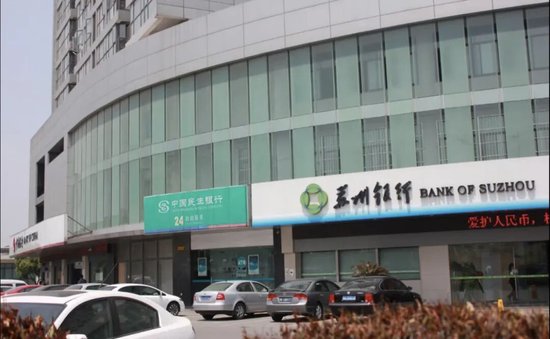
Core Viewpoint - Suzhou Bank is facing significant scrutiny regarding its risk management system due to two recent incidents: a lawsuit related to early loan recovery and the unexpected resignation of its long-serving risk director, highlighting the need for optimization in its risk control processes [2][9]. Loan Recovery Incident - On December 3, Suzhou Bank's Wuxi branch filed a lawsuit against Xuelang Environmental Technology Co., seeking to recover approximately 49.01 million yuan (about 7 million USD) in loans due to a financial contract dispute [10][11]. - The bank had initially signed an 80 million yuan (about 11.5 million USD) loan agreement, disbursing 60 million yuan (about 8.6 million USD), with a maturity date set for December 14, 2025 [10]. - Following Xuelang's announcement of a pre-restructuring application on November 19, Suzhou Bank opted to recover the loan early to mitigate bad debt risks, leading to the current legal dispute [10][11]. - The bank's recovery efforts have proven ineffective, with only 357.16 thousand yuan (about 51 thousand USD) available in frozen accounts, significantly lower than the claimed amount [11]. Risk Director Resignation - On December 11, Suzhou Bank announced the resignation of its risk director, Hou Bin, who stepped down for age-related reasons, despite being below the legal retirement age [12][13]. - Hou Bin has been a key figure in the bank's risk management since 1999, contributing to its development and risk management framework for over 12 years [12][13]. - The timing of his resignation coincides with the loan recovery incident, raising concerns about the bank's risk management adjustments [12][13]. Asset Quality Indicators - As of the first half of 2025, Suzhou Bank reported a non-performing loan balance of 3.012 billion yuan (about 430 million USD), an increase of 247 million yuan (about 35 million USD) from the previous year [13][14]. - The overdue loan balance reached 3.591 billion yuan (about 515 million USD), with a year-on-year increase of 140 million yuan (about 20 million USD) [13][14]. - Despite maintaining a low non-performing loan ratio of 0.83% and a high provision coverage ratio of 420.59%, structural risks are evident in the bank's asset quality [13][14]. Regional and Sectoral Risk Analysis - The loan balance in Suzhou, the bank's core business area, accounts for 55.88% of total loans, with a non-performing loan rate rising to 0.80%, while other regions in Jiangsu saw a decrease in non-performing rates [13][14]. - High-risk sectors include agriculture, manufacturing, and wholesale/retail, with non-performing loan rates of 1.54%, 1.16%, and 0.94%, respectively, indicating vulnerabilities in key investment areas [13][14]. Overall Performance - For the first three quarters of 2025, Suzhou Bank reported total assets exceeding 776.04 billion yuan (about 111.5 billion USD), reflecting an 11.87% year-on-year growth, and a net profit of 4.477 billion yuan (about 640 million USD), up 7.12% [14][15]. - The dual challenges of the loan recovery incident and leadership changes in risk management underscore the urgent need for the bank to enhance its risk control processes and fill key personnel gaps [14][15].

存取款争议背后的风控之困,银行反诈只能靠“问”?
Bei Jing Shang Bao· 2025-11-12 14:27
Core Viewpoint - The recent incident involving a lawyer being questioned about the purpose of withdrawing 40,000 yuan from a bank highlights the growing tension between anti-fraud measures and customer privacy, leading to a divided public opinion on the necessity and extent of such inquiries [1][3][4]. Group 1: Incident Overview - A lawyer shared an experience of being repeatedly questioned by bank staff about the purpose of withdrawing 40,000 yuan, which escalated to the bank contacting anti-fraud authorities due to non-cooperation [3][4]. - Many social media users reported similar experiences, expressing frustration over being asked to justify their own money withdrawals [3][4]. Group 2: Regulatory and Banking Environment - The increase in questioning during large cash transactions is attributed to a combination of heightened regulatory scrutiny, banks' strict compliance measures, and growing public sensitivity to privacy issues [4][5]. - Banks are under pressure to fulfill anti-fraud responsibilities due to rising incidents of telecom fraud and cross-border gambling, leading to a "strict over lenient" approach in customer interactions [4][5]. Group 3: Legal and Regulatory Framework - Legal experts indicate that while banks are required to identify customers and report large transactions, they do not have the authority to act as law enforcement [5][6]. - Overreach by banks in questioning customers is seen as a misinterpretation of their legal obligations, with some banks lowering the threshold for inquiries and expanding the scope of information requested [5][6]. Group 4: Recommendations for Improvement - Experts suggest that banks should implement a risk-based approach to inquiries, simplifying processes for long-term customers while maintaining scrutiny for high-risk transactions [7][8]. - Enhancing communication about the legal basis for inquiries and establishing a feedback mechanism for customers can help rebuild trust and improve the overall experience [8][9].

持股23年后,贵州知名富豪大规模减持贵阳银行
Sou Hu Cai Jing· 2025-11-06 02:07
Core Viewpoint - Guiyang Bank's performance in the first three quarters of 2025 has shown a decline, with revenue and net profit both decreasing year-on-year, raising concerns about its financial health and investor confidence [2][5]. Financial Performance - For the first three quarters of 2025, Guiyang Bank reported revenue of 9.435 billion yuan, a year-on-year decrease of 13.73% [2][3]. - The net profit attributable to shareholders was 3.915 billion yuan, down 1.39% year-on-year [2][3]. - In the third quarter (July to September), revenue was 2.935 billion yuan, reflecting a decline of 16.89% compared to the same period last year [3]. - The basic earnings per share for the first three quarters was 1.07 yuan, a decrease of 1.83% year-on-year [3]. Risk Indicators - The non-performing loan ratio increased from 1.58% at the beginning of 2025 to 1.63% by the end of September 2025 [5]. - The provision coverage ratio decreased from 257.07% at the beginning of 2025 to 239.59% by the end of September 2025 [5]. Shareholder Changes - Guizhou Shenqi Holding Group, which held shares in Guiyang Bank for 23 years, exited the top ten shareholders in the third quarter of 2025, having reduced its holdings by at least 21.33 million shares, equating to a cash-out of at least 137 million yuan [5][14]. - The group had previously held a significant stake, with its holdings reaching approximately 100 million shares after a stock split in 2019 [10][12]. Historical Context - Guizhou Shenqi Holding Group's involvement with Guiyang Bank dates back to 2002, when it acquired shares during a transfer from the state-owned assets company [7]. - Since its listing in 2016, the group has maintained its investment without significant reductions until 2025 [11][12].

两家银行被骗超千万!男子“租牛骗贷”获刑13年
Xin Lang Cai Jing· 2025-10-30 12:40
Core Insights - A recent criminal ruling from the Changchun Intermediate People's Court in Jilin Province has revealed details of a loan fraud case involving over 20 million yuan, characterized by a "rent cow - mortgage - re-rent cow" scheme [2][3] - The case highlights significant issues within financial institutions' risk control systems, including internal personnel allegedly accepting bribes to facilitate loan approvals [2][9] Summary by Sections Fraud Scheme Details - The perpetrator, Liu, designed a fraudulent scheme targeting agricultural loans by renting 297 cattle and using them as collateral to secure a 4 million yuan loan from a local bank, without proper verification of ownership [3][4] - Liu repeated this scheme, successfully obtaining additional loans of 500,000 yuan and 580,000 yuan from different banks, while misappropriating funds for personal debts and further fraudulent activities [4][5] Legal Proceedings and Sentencing - Liu was sentenced to 13 years in prison for loan fraud and aiding others in obtaining loans through false documentation, with significant financial penalties imposed [5][6] - Co-conspirators involved in the scheme received varying sentences, highlighting the collaborative nature of the fraud [5] Risk Control Failures - The case underscores critical vulnerabilities in the banks' risk management systems, including inadequate pre-loan investigations and a lack of monitoring for the use of loaned funds [7][8] - There is a noted absence of effective mechanisms for managing and verifying the ownership of biological assets used as collateral, which contributed to the fraud's success [9][10] Regulatory Implications - The incident raises concerns about the internal controls of financial institutions, particularly in light of increasing reliance on innovative financing methods such as live asset mortgages [9][10] - Regulatory bodies have emphasized the need for improved risk monitoring and management practices in agricultural finance to prevent similar frauds in the future [10]

69家空壳公司骗贷 涉案银行损失近9000万已破产
Zhong Guo Jing Ying Bao· 2025-10-25 03:28
Core Viewpoint - The case highlights significant weaknesses in risk management within rural banks, as evidenced by the fraudulent activities leading to substantial financial losses for the bank involved [1][5][6]. Summary by Sections Fraudulent Activities - A total of 109 fraudulent loans were obtained by an individual named Fu through 69 shell companies, resulting in a loss of nearly 90 million yuan for the bank [1][3]. - The loans, amounting to 709 million yuan, were secured using false documents and fictitious contracts, with the involvement of multiple accomplices [2][3]. Legal Proceedings - The court found Fu guilty of loan fraud, sentencing him to six years and ten months in prison, along with a fine of 5 million yuan, and ordered him to repay the bank 89.48 million yuan [3][4]. - The case was characterized as a significant example of collusion between bank executives and borrowers, leading to severe financial repercussions for the bank [5][6]. Bank's Financial Status - The bank, established in 2011 with a registered capital of 100 million yuan, was declared bankrupt by the China Banking and Insurance Regulatory Commission in August 2022, primarily due to the exposure of loan risks [1][6]. - The losses incurred from the fraudulent loans were substantial, with the bank's financial stability severely compromised [5][6].
银行发力双11!24期免息+满减返现 国有行城商行齐放大招
Bei Ke Cai Jing· 2025-10-24 03:16
Group 1 - Major state-owned banks and city commercial banks are launching various promotional offers such as card binding discounts, interest-free installments, and cashback in collaboration with e-commerce platforms ahead of the "Double 11" shopping festival [1][2][10] - The promotional activities are designed to attract consumers and stimulate consumption growth, with consumer loans and installment products being key tools due to their small amounts and convenience [1][15] - China Bank has partnered with Alipay to offer a consumption discount activity for users who bind their savings cards, providing random discounts for purchases during the promotional period [3][4] Group 2 - Various banks, including China Bank and Ping An Bank, are offering credit card payment discounts, with China Bank's "Installment Enjoy Discount" program providing up to 300 yuan in discounts and interest-free installments for up to 24 months [5][8] - City commercial banks like Suzhou Bank and Guiyang Bank are also participating in the promotional activities, offering discounts for credit card users and collaborating with Alipay for additional benefits [9][10] - Alipay has introduced a "Daily Discount for Bank Cards" program, allowing users to enjoy discounts for a specified number of days after registration, with participation from several major banks [10][14] Group 3 - The competitive landscape includes traditional banks facing off against popular payment options like Huabei and JD Pay, with banks leveraging their lower financing costs and broader customer base as competitive advantages [17] - However, banks face challenges in convenience and user data accumulation compared to online payment platforms, which offer quicker approval processes and targeted marketing [18] - The banking sector is experiencing pressure on net interest margins, with the average net interest margin reported at 1.42% as of the second quarter, indicating ongoing challenges in profitability [19]




逾期率下降核销可控,苏州银行风控逻辑释放了哪些信号?
Zhong Guo Jing Ji Wang· 2025-09-12 01:48
Core Viewpoint - Suzhou Bank has demonstrated effective risk management by maintaining a low non-performing loan ratio and a stable write-off budget, signaling a successful transformation in risk control for city commercial banks [1][2][3] Group 1: Key Performance Indicators - As of June 2025, Suzhou Bank's non-performing loan ratio stands at 0.83%, with a provision coverage ratio of 437.91%, placing it among the top tier of listed banks [2] - The bank's overdue loan ratio decreased by 0.05 percentage points compared to the end of the previous year, indicating improved risk classification accuracy [2] - The proportion of attention-class loans, a precursor to non-performing loans, decreased by 0.13% year-on-year, reducing future asset quality deterioration pressure [2] Group 2: Risk Management Mechanisms - Suzhou Bank employs a "full-process control system" that integrates prevention and resolution, ensuring a closed-loop risk management approach [4] - The bank enhances its risk prevention through standardized approvals and regular reviews of problematic cases, minimizing human error and improving efficiency [4][5] - The collaboration between the business front, risk middle, and audit back ensures comprehensive risk management across all operations [5] Group 3: Efficiency and Responsiveness - The bank emphasizes both stringent controls and rapid responses, achieving a balance through regulatory collaboration, process optimization, and technological enhancements [6][7] - Suzhou Bank actively addresses risks by promptly identifying and managing potential issues, thereby preventing the escalation of asset deterioration [7] Group 4: Research and Technological Empowerment - The bank's risk management relies on a "smart brain" approach, combining research-driven risk prediction with technology to enhance efficiency [8][9] - The implementation of a new comprehensive credit system integrates various loan types, improving risk identification and processing speed [8] - The use of knowledge graph technology enhances risk monitoring and the identification of hidden correlations among risks [9] Group 5: Overall Implications - Suzhou Bank's robust risk management framework not only supports its own stable growth but also serves as a practical model for risk control transformation in the city commercial banking sector [9]
邮储银行年内屡触监管红线,金华、湖州两分行同日领罚230万
Guan Cha Zhe Wang· 2025-08-26 11:25
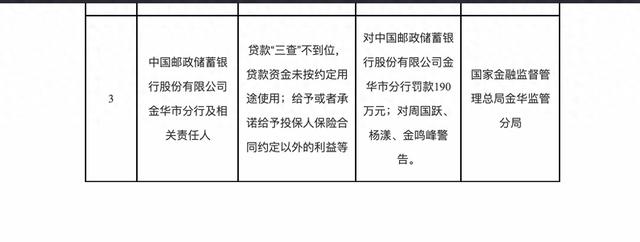
Core Viewpoint - Postal Savings Bank of China (PSBC) is facing regulatory scrutiny due to violations related to loan management and compliance, highlighting weaknesses in its risk control mechanisms [1][2]. Regulatory Violations - PSBC's Jinhua branch was fined 1.9 million yuan for three violations: inadequate loan "three checks" (pre-loan investigation, during-loan review, post-loan inspection), misappropriation of loan funds, and providing off-contract benefits to policyholders [1][2]. - The Huzhou branch was fined 400,000 yuan for similar issues, indicating systemic compliance failures within the bank [1][2]. Impact on Risk Management - The violations point to significant lapses in the bank's core risk management processes, which could lead to potential financial risks such as credit fund misallocation and speculative activities [1]. - The regulatory actions reflect an increasing trend of dual penalties for institutions and individuals, as three responsible persons received warnings alongside the fines [2]. Recent Penalties - This marks the second instance within two months where PSBC has received a fine exceeding one million yuan, with a previous penalty of 1.87 million yuan imposed on its Hainan branch for similar infractions [2]. - In total, PSBC has faced fines amounting to 6.3277 million yuan in the current year [2]. Business Model Challenges - Amidst a backdrop of narrowing net interest margins and slowing expansion, PSBC is transitioning towards a "light capital, light asset" model, which poses challenges given its focus on county-level markets and reliance on interest rate spreads for profitability [3].

互换“掌门人”,成都农商行原董事长黄建军执掌成都银行
Huan Qiu Lao Hu Cai Jing· 2025-08-18 11:19
Core Viewpoint - The leadership transition between Chengdu Bank and Chengdu Rural Commercial Bank involves Wang Hui resigning from Chengdu Bank and taking on the role of Party Secretary and Chairman at Chengdu Rural Commercial Bank, while Huang Jianjun will assume the leadership at Chengdu Bank [1][2] Group 1: Leadership Changes - Wang Hui has submitted his resignation from Chengdu Bank, effective immediately, after nearly 20 years with the institution [1] - Huang Jianjun has been appointed as the Party Secretary of Chengdu Bank and is nominated to be its Chairman [1] - The leadership swap indicates a strategic move between the two banks, with both leaders having significant experience within their respective institutions [1][2] Group 2: Performance Metrics - Under Wang Hui's leadership, Chengdu Bank achieved significant growth, with total assets reaching 1.25 trillion yuan, deposits at 880 billion yuan, and loans at 740 billion yuan by the end of 2024, representing increases of 180%, 180%, and 400% respectively since its IPO [1] - Chengdu Bank's return on equity stood at 17.81% during Wang Hui's tenure [1] - Chengdu Rural Commercial Bank's assets grew from 520 billion yuan at the end of 2020 to approximately 914.26 billion yuan by the end of 2024, indicating rapid expansion [2] Group 3: Risk Management and Financial Health - Wang Hui implemented a risk management culture focused on "moderate risk" and "early warning," successfully reducing the non-performing loan ratio at Chengdu Bank to 0.66% [2] - Chengdu Rural Commercial Bank reported a revenue of 18.35 billion yuan in 2024, with a year-on-year growth of 5.86%, and a net profit of 6.471 billion yuan, reflecting an 11.46% increase [2] - The non-performing loan ratio for Chengdu Rural Commercial Bank decreased to 1.02% by the end of 2024 [2]
银行风控部门如何识别“包装”企业
Jin Rong Shi Bao· 2025-08-08 07:55
Core Viewpoint - The article discusses how banks' risk control departments can identify "packaged" companies that falsify operational data to obtain loans, highlighting the legal risks involved and the necessary steps for thorough credit examination and investigation [1][2][3][4]. Group 1: Identification of "Packaged" Companies - "Packaged" companies are those that fabricate operational data, addresses, and employee information to apply for loans [1]. - There are two main scenarios for "packaging": one where the client manager is unaware of the falsification, and another where there is collusion between the bank's client manager and the company [1]. Group 2: Steps for Risk Control Departments - Customer source examination is crucial; risk control personnel should not rely solely on informal introductions and must investigate the relationship between the company and the introducer [1]. - Verification of the company's operational authenticity involves assessing the industry experience of the actual controller, confirming the legitimacy of the business premises, and conducting surprise visits to gather real insights [2][3]. - Income verification should include cross-checking financial statements, bank transactions, and tax filings, while also identifying and blacklisting related companies involved in "packaging" [3]. - Employee scale verification is necessary to ensure that reported profits align with the actual number of employees, requiring checks on payroll records and social security contributions [3]. - Logical validation involves analyzing inconsistencies in statements from clients or managers and hypothesizing the existence of "packaging" to seek supporting evidence [4].