
靶向治疗

Search documents
中国创新药卷出新高度,出海引领新发展
Hua Xia Shi Bao· 2025-11-15 10:15
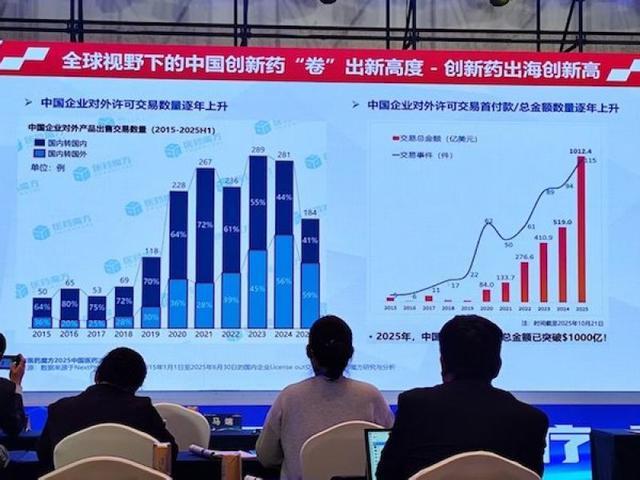
Core Insights - China's international position in the innovative drug sector is rapidly rising, particularly in the field of targeted drugs represented by Antibody-Drug Conjugates (ADCs), which are becoming the main force in overseas markets [1][2] Group 1: Industry Developments - The 8th Precision Medicine Conference highlighted significant advancements in targeted drug research, with top experts presenting their latest findings [1] - Over the past two decades, the U.S. has dominated the biopharmaceutical sector, but China's innovative drugs have made substantial breakthroughs, narrowing the gap with the U.S. [1][4] - By 2025, Chinese companies are expected to account for half of the INDs approved by the U.S. FDA, with transaction values exceeding $100 billion, and ADCs representing nearly half of the top 20 outbound products from China [1][5] Group 2: Targeted Drug Characteristics - Targeted drugs are designed to precisely identify and act on specific disease-related targets, offering higher treatment selectivity and reduced side effects compared to traditional chemotherapy [2][6] - New treatment modalities, including gene therapy, cell therapy, vaccines, and various ADC models, are emerging as alternatives to traditional targeted drugs [4][6] Group 3: Market Trends - The proportion of external procurement pipelines from Chinese companies by multinational pharmaceutical companies has increased from 10% in 2020 to 29% in 2024 [5] - The primary method for Chinese innovative drugs entering international markets is through licensing agreements, allowing companies to monetize their research while enabling partners to commercialize the drugs in specific regions [5] Group 4: Research and Development Challenges - Despite the rapid development of targeted drugs, the discovery of new targets has become increasingly challenging, leading to a focus on new mechanisms and functions of existing targets [6][7] - The high cost of targeted drugs and the frequent occurrence of drug resistance present significant challenges for patients [6][7] Group 5: Policy and Accessibility - Encouraging more companies to invest in innovative drug development is essential, alongside ensuring reasonable pricing and sales strategies to support ongoing research [7] - The integration of innovative drugs into medical insurance directories has shown effectiveness in making treatments more accessible to patients [7]

微型机器人“定点送药”实现靶向治疗
财联社· 2025-11-14 01:20
Core Viewpoint - The article discusses the development of a micro-robot technology by a research team at ETH Zurich, aimed at precise drug delivery for targeted therapies in the medical field [1][2]. Group 1 - A micro-robot capable of navigating upstream in blood vessels has been developed [2]. - The effectiveness of the system has been validated through animal experiments in pigs and in the cerebrospinal fluid of sheep, indicating potential for treating various diseases, including those affecting the nervous system [3]. - The related findings have been published in a recent issue of the journal "Science" [4].

在血管中“逆流而上”精确导航 微型机器人“定点送药”实现靶向治疗
Xin Lang Cai Jing· 2025-11-13 23:25
Core Viewpoint - The research team from ETH Zurich has developed a micro-robot capable of precise navigation in blood vessels, which could lead to advancements in targeted therapies for various diseases, particularly in the nervous system [1] Group 1: Technology Development - The micro-robot technology focuses on "targeted drug delivery" through precise navigation [1] - The ability of the micro-robot to navigate "upstream" in blood vessels represents a significant advancement in medical technology [1] Group 2: Research Validation - The effectiveness of the micro-robot was validated through animal experiments conducted in pigs and in the cerebrospinal fluid of sheep [1] - The results of this research have been published in a recent issue of the journal "Science," indicating peer-reviewed validation [1]

微型机器人“定点送药”实现靶向治疗
Xin Lang Cai Jing· 2025-11-13 22:58
Core Viewpoint - The research team from ETH Zurich has developed a micro-robot capable of precise navigation in blood vessels, which could lead to targeted therapies for various diseases, including those affecting the nervous system [1] Group 1: Technology Development - The micro-robot technology focuses on "targeted drug delivery" through precise navigation [1] - The ability of the micro-robot to navigate "upstream" in blood vessels represents a significant advancement in medical technology [1] Group 2: Research Validation - The effectiveness of the micro-robot was validated through animal experiments conducted in pigs and in the cerebrospinal fluid of sheep [1] - The results of this research have been published in a recent issue of the journal "Science," indicating peer recognition and validation of the findings [1]
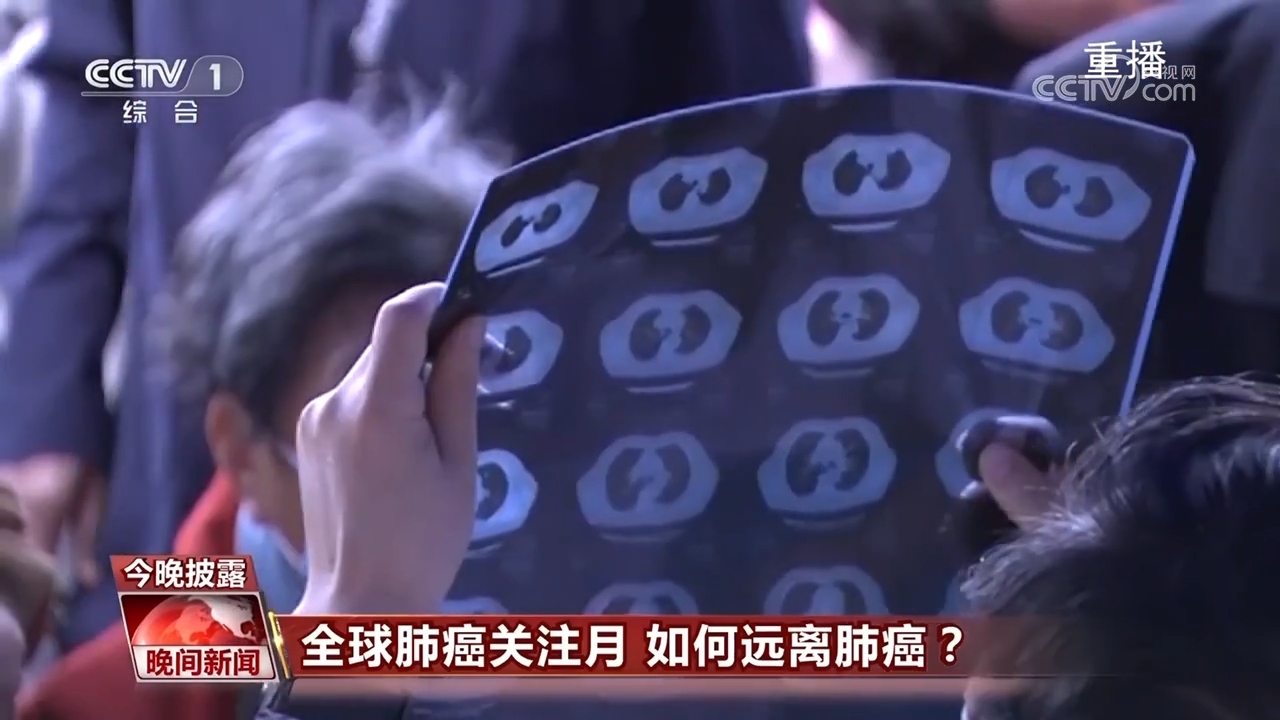
全球肺癌关注月|体检查出肺结节意味着什么?
Yang Shi Wang· 2025-11-12 18:32
Core Viewpoint - Lung cancer is the most prevalent and deadly malignancy in China, with an increasing number of lung nodules being detected due to the widespread use of chest CT scans. Most lung nodules are benign, and immediate surgery is not always necessary [1][3][4]. Group 1: Lung Nodules and Diagnosis - Lung nodules larger than 2mm can be detected via CT scans, and the majority of these nodules are benign. Initial detection should not cause panic; regular follow-ups are recommended based on medical advice [1][3]. - Overdiagnosis and overtreatment are common due to the anxiety surrounding ground-glass nodules, with over 95% of nodules smaller than or equal to 3cm being benign. Nodules smaller than 6mm typically do not require intervention and can be monitored through annual health check-ups [3][4]. Group 2: Screening Recommendations - Experts recommend that high-risk individuals over 50 years old should undergo at least one chest CT scan for early lung cancer screening. This is particularly important as lung cancer symptoms are often not apparent until advanced stages [4][6]. - High-risk groups include individuals over 50, heavy smokers (smoking index over 400), those with a family history of tumors, and individuals with chronic lung diseases or occupational exposures [6]. Group 3: Treatment and Survival Rates - Despite the high incidence of lung cancer, treatment methods have matured, leading to a gradual increase in the 5-year survival rate for lung cancer patients in China [7]. - New minimally invasive techniques for lung nodule removal have been developed, allowing for smaller incisions and quicker recovery times. For instance, a recent case involved a 3mm incision for a successful nodule removal, confirming the nodule as in situ cancer [9][11]. - The treatment landscape for lung cancer is evolving towards precision medicine, with advancements in targeted and immunotherapy leading to more personalized treatment approaches [12][14].
迈威(上海)生物科技股份有限公司自愿披露关于9MW3811注射液临床试验申请获得国家药品监督管理局批准的公告
Shang Hai Zheng Quan Bao· 2025-11-10 18:23
Core Viewpoint - Maiwei Biotech has received approval from the National Medical Products Administration for the clinical trial application of 9MW3811 injection for the treatment of pathological scars, marking a significant step in its drug development process [2][4]. Drug Basic Information - Drug Name: 9MW3811 Injection - Application: Clinical trial for domestic drug registration - Applicant: Maiwei Biotech - Clinical Trial Notification Number: 2025LP02967 - Approval Conclusion: The application meets the requirements for drug registration and is approved to proceed with clinical trials [2]. Drug Mechanism and Potential - IL-11 is a cytokine involved in chronic inflammation and fibrosis-related diseases, playing a crucial role in the fibrotic processes of various organs [3]. - Pathological scars include hypertrophic scars, keloids, and contracture scars, with IL-11 being particularly significant in their formation [3]. - 9MW3811 is a humanized monoclonal antibody targeting IL-11, designed to inhibit the abnormal activation of the IL-11/IL-11Rα signaling pathway, thus intervening in the pathological progression of fibrosis-related diseases [4]. Clinical Development and Market Potential - 9MW3811 has shown significant efficacy in preclinical studies for pulmonary fibrosis and other fibrosis-related diseases, with a global patient population of approximately 25 million for pathological scars, including about 7.4 million in China [4]. - The company plans to initiate Phase II clinical trials for 9MW3811 targeting pathological scars by the end of 2025, positioning it as the first IL-11 targeted drug to enter clinical stages for this indication [5]. - Maiwei Biotech has entered into an exclusive licensing agreement with CALICO LIFE SCIENCES LLC, which includes an upfront payment of $25 million and potential milestone payments totaling up to $571 million, indicating strong commercial prospects for 9MW3811 [5].

Incyte(INCY) - 2025 Q3 - Earnings Call Transcript
2025-10-28 13:02
Financial Data and Key Metrics Changes - The company reported total revenues of $1.37 billion and product sales of $1.15 billion, representing a 20% and 19% increase year-over-year, respectively [4][29] - GAAP R&D expenses were $507 million, with a 7% year-over-year increase, driven by investments in late-stage development assets [29] - GAAP SG&A expenses were $329 million, increasing 6% year-over-year, primarily due to international marketing activities [29] - The company raised its full-year net product revenue guidance to $4.23-$4.32 billion [29] Business Line Data and Key Metrics Changes - Jakafi sales reached $791 million, a 7% increase, with strong demand growth of 10% year-over-year [5] - Opzelura sales were $188 million, a 35% increase year-over-year, with $144 million from the U.S., representing a 21% increase [6] - Niktimvo sales totaled $46 million, a 27% increase from the previous quarter, with 90% of U.S. bone marrow transplant centers adopting the product [7][8] - Monjuvi and ZYNYZ also saw strong growth, contributing to the raised guidance [9] Market Data and Key Metrics Changes - International sales for Opzelura and vitiligo totaled $44 million, a 117% increase from last year [7] - The market for branded non-steroidal topicals is expanding at a 20% rate, with Opzelura well-positioned to capitalize on this trend [6] Company Strategy and Development Direction - The company is focusing on optimizing promotional strategies and investments for key products to drive future growth [4] - A thorough review of the pipeline is being conducted to prioritize high-value programs, with several preclinical and early clinical stage programs being paused or stopped [17][18] - The company plans to launch three important new products next year: Ruxolitinib XR, Opzelura AD in Europe, and Povorcitinib in HS [9][10] Management's Comments on Operating Environment and Future Outlook - Management expressed confidence in the growth potential of key products and emphasized the importance of demonstrating single-agent activity for new therapies [4][35] - The company is committed to balancing cost management with strategic investments to support long-term growth [14][68] - Management highlighted the potential for significant market opportunities in HS and MPNs, with a focus on targeted therapies [10][12] Other Important Information - The company is actively studying Niktimvo in combination with Ruxolitinib and steroids, which could shift the standard of care in GVHD [8] - The ongoing developments in PN and vitiligo are expected to further strengthen the company's dermatology portfolio [11] Q&A Session Summary Question: Importance of mCALR data for efficacy - Management emphasized the need to demonstrate single-agent activity for the mCALR antibody program, with a focus on clinical and translational endpoints [33][35] Question: Termination of Povorcitinib program at CSU - The decision was based on prioritizing projects with better return profiles, and data from the phase two program will likely be released at a future conference [38][39] Question: Sustainability of Naktinvo's growth trajectory - Management indicated strong initial adoption and positive feedback from transplant centers, with a solid growth trajectory expected [72][74] Question: Development path for mCALR - The goal is to start pivotal trials for mCALR in 2026, with a focus on building a pipeline of targeted therapies for MPNs [51][52] Question: Operating expenses and margin profile evolution - Management expects to streamline costs while ensuring critical initiatives are funded, with an anticipated improvement in margins over time [68][69]

Nature子刊:赵蔚团队发现,靶向相分离,治疗胶质母细胞瘤
生物世界· 2025-10-01 10:50
Core Insights - Glioblastoma (GBM) is the most common and aggressive malignant brain tumor in adults, with a median survival of only 12-18 months post-diagnosis, and current treatments have limited efficacy in extending life expectancy [2][3] - A recent study published by Zhao Wei's team in Nature Cell Biology identifies HOXB3 condensation in the core regulatory circuitry (CRC) of GBM as a potential therapeutic target, suggesting that targeting HOXB3 with the peptide P621-R9 can selectively reduce tumorigenic potential in patient-derived xenograft models [2][5] Research Findings - The study utilized single-cell CUT&Tag analysis to investigate H3K27ac modifications, revealing significant heterogeneity within the GBM core regulatory circuitry [5] - The research highlighted the heterogeneous condensation state of HOXB3, influenced by its intrinsic disordered region (IDR) and interaction with RUNX1, which drives phenotypic expression [5] - The synthesized peptide P621-R9 effectively disrupts HOXB3 condensation, alters chromatin structure, and reduces transcription at super-enhancer-associated oncogenic loci in GBM cells exhibiting HOXB3 condensation [5][6] Implications for Treatment - These findings underscore the critical role of condensation in the heterogeneity of GBM and suggest that peptide-based targeted therapies for different GBM subgroups may represent a promising new direction for treatment [6] - A concurrent article in Nature Cell Biology discusses the potential origins of GBM heterogeneity from the activation of various gene core regulatory circuits, emphasizing HOXB3's central role in GBM CRC and the therapeutic potential of peptide-mediated targeting [6]

趋势研判!2025年中国化疗药物行业全景速览:随着癌症患者人数不断增多,市场对化疗药物的需求持续增长,国内企业不断上市,市场竞争加剧[图]
Chan Ye Xin Xi Wang· 2025-09-28 01:32
Core Viewpoint - The chemotherapy drug market in China is experiencing growth due to increasing cancer patient numbers and rising consumer spending, despite competition from targeted therapies. Chemotherapy drugs remain dominant due to their stable efficacy, broad anti-cancer properties, and relatively low prices [1][4][5]. Group 1: Industry Overview - Chemotherapy drugs are a crucial method for cancer treatment, classified into various types such as alkylating agents, antimetabolites, and plant-derived anticancer drugs [2][3]. - The demand for chemotherapy drugs in China is projected to reach 3.858 billion units with a market size of 135.59 billion yuan in 2024, led by plant alkaloids and antimetabolites [5][6]. - The global chemotherapy drug market is expected to grow from 33.53 billion USD in 2024 to 36.84 billion USD in 2025, with the Asia-Pacific region holding a significant share [4][5]. Group 2: Market Dynamics - The Chinese chemotherapy drug market is characterized by a dual driving force of strong demand for certain drug types while facing pressure from generics and targeted therapies [5][10]. - The production of chemotherapy drugs in China is anticipated to increase to 3.432 billion units by 2025, reflecting a growth trend in domestic manufacturing capabilities [6][10]. - The competitive landscape is intensifying with local companies like Heng Rui Medicine and Qilu Pharmaceutical making significant strides in both generic and innovative drug development [10][11]. Group 3: Regulatory Environment - The Chinese government has implemented supportive policies to encourage the development of innovative cancer treatment drugs, providing a favorable environment for industry growth [8][9]. - The industry is witnessing accelerated drug approval processes and procurement policies that favor local manufacturers, enhancing competition [10][11]. Group 4: Future Trends - The chemotherapy drug sector is expected to evolve towards precision medicine, with advancements in targeted therapies and combination treatments [11]. - Innovations in drug delivery systems, such as nanotechnology, are anticipated to enhance treatment efficacy and patient outcomes [11].





9.5犀牛财经晚报:多家券商保证金产品短暂下调管理费率 华夏银行被罚8725万元
Xi Niu Cai Jing· 2025-09-05 10:32
Group 1 - Several brokerage firms have recently adjusted management fees for margin products in response to declining yields, with Shenyin Wanguo Asset Management announcing a management fee adjustment to 0.30% for its money market fund starting September 2 [1] - The adjustment of management fees is closely related to the decline in yields, as many asset management contracts stipulate that fees will be adjusted if the calculated yield falls below twice the current deposit rate [1] - Brokerage margin products are favored for their liquidity services, including T+0 real-time redemption and unlimited withdrawals, which enhance their competitive edge in the market [1] Group 2 - The domestic silicon wafer production plan for September has been raised for the first time, with an overall output increase compared to August, as many silicon wafer companies raise their operating rates due to price increases [2] - The global battery cell production is expected to reach approximately 60GW in September, a 2.3% increase from August, with domestic production also showing a similar increase [2] - The semiconductor industry is experiencing a structural recovery, with the analog chip sector seeing a significant rebound in profitability, with a nearly fourfold increase in net profit in the second quarter compared to the previous quarter [2] Group 3 - A new study has identified a weak point in certain blood cancers that can be targeted by drugs, potentially allowing for the selective elimination of cancer cells without harming healthy cells [3] - The research emphasizes the urgent need for new drugs with fewer side effects and stronger targeting capabilities, particularly for conditions like myelodysplastic syndromes [3] Group 4 - Deep Insight Technology announced that its subsidiary has received regulatory approval for a mobile MRI system, making it the first company in China to master and register this core technology [4] - The latest version of the Kimi K2 model has been released, extending the context length to 256K and supporting high output speeds [4] Group 5 - Alibaba and other shareholders have exited Yuanrong Qihang, with the company stating that this is part of its restructuring process [5] - White Elephant's e-commerce subsidiary has been fined for false advertising, highlighting regulatory scrutiny in the sector [5] Group 6 - Zhongshan Securities' Hefei branch has been ordered to rectify its operations due to violations related to investor solicitation activities [6] - Huaxia Bank has been fined 87.25 million yuan for imprudent management of loans and related business [7] Group 7 - Hangzhou Bank's approval for a shareholding change has been revoked due to failure to complete the change within the stipulated time [8] - Yunnan Energy Investment's subsidiary has received a subsidy of 309 million yuan for renewable energy, contributing to its total subsidies of 591 million yuan for the fiscal year [15] Group 8 - The market saw a significant increase in the ChiNext index, with a rise of 6.55%, driven by strong performance in the solid-state battery sector [17] - The overall market showed a positive trend with over 4,800 stocks rising, while only a small number of stocks declined [17]
