
高水平安全

Search documents
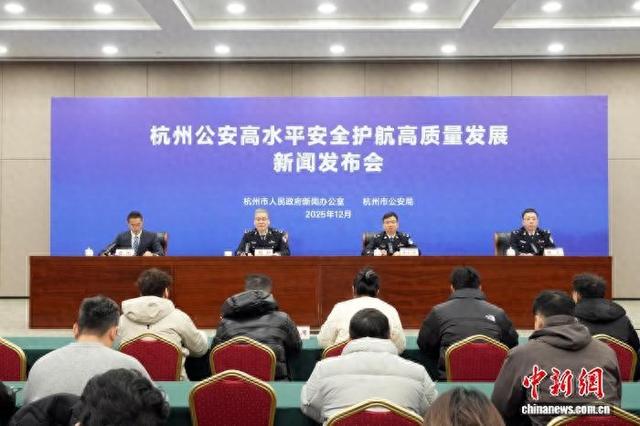
高水平安全护航高质量发展 前11月杭州刑事警情同比下降7.03%
Xin Lang Cai Jing· 2025-12-23 14:59
Group 1 - The core message of the news is that Hangzhou's public security measures have significantly contributed to a decrease in criminal activities, thereby supporting high-quality development in the city [1][3] - In the first 11 months of the year, criminal cases in Hangzhou decreased by 7.03%, and public order incidents dropped by 10.51% [1] - The establishment of a comprehensive cybersecurity platform has provided centralized services to over 3,100 enterprises, enhancing their network and data security [1] Group 2 - The city has strengthened its anti-fraud measures, resulting in the arrest of over 2,300 suspects and the recovery of 270 million yuan in fraud-related funds [3] - The number of reported fraud cases decreased by 11.6%, with losses from these cases dropping by 30.4% and major cases declining by 68.8% [3] - A total of 1,140,000 fraud alerts were processed, preventing over 2.5 billion yuan from being defrauded [3] Group 3 - In terms of intellectual property protection, Hangzhou has established five joint protection centers, addressing over 400 consultations and handling 16 cases [3] - The city has created a key directory for protecting commercial secrets in high-tech sectors, safeguarding over 200 brands [3] - Future plans include enhancing the new policing model that integrates professionalism, mechanisms, and big data to provide stronger security guarantees for Hangzhou [3]

更好统筹发展和安全
Xin Lang Cai Jing· 2025-12-21 19:39
Group 1 - The core viewpoint emphasizes the necessity of balancing development and security as a fundamental principle for advancing Chinese-style modernization, responding to the complex global changes and internal challenges faced by the country [1][2] - The current development environment in China is characterized by both strategic opportunities and risks, with increasing uncertainties and challenges, necessitating a comprehensive understanding of the interplay between domestic and international factors [2][3] - The achievements during the 14th Five-Year Plan period demonstrate the effectiveness of integrating development and security, maintaining economic stability and continuity despite external pressures and risks [3][4] Group 2 - The need for institutional mechanisms to enhance the ability to coordinate development and security is highlighted, focusing on deepening reforms and aligning various systems to support high-quality development [4][5] - A new security framework is essential for ensuring the stability and sustainability of Chinese-style modernization, requiring a systematic approach to integrate development and security throughout the modernization process [5]
对标对表明确目标 抓住关键强化支撑 谋深谋实“十五五”时期经济社会发展
Zheng Zhou Ri Bao· 2025-11-25 00:49
Core Insights - The meeting emphasized the importance of implementing the spirit of the 20th Central Committee and the key directives from General Secretary Xi Jinping regarding the "15th Five-Year Plan" [1][2] - Zhengzhou aims to achieve significant progress in socialist modernization during the "15th Five-Year" period, with a focus on setting clear goals and enhancing project support [2][3] Group 1 - The "15th Five-Year" period is identified as a critical phase for Zhengzhou to achieve socialist modernization [2] - The city leadership is urged to align with provincial and national modernization goals, raising benchmarks for the "15th Five-Year" objectives [2][3] - There is a focus on balancing qualitative improvements and quantitative growth in the economy, ensuring that Zhengzhou's growth rate exceeds that of the province, nation, and similar cities [3] Group 2 - The meeting highlighted the need for effective governance and high-quality development, promoting a governance system led by party building [3] - Emphasis was placed on the relationship between investment in infrastructure and human capital, aiming to enhance effective investment and improve public welfare [3] - Responsibilities were assigned to local leaders to prioritize the planning of the "15th Five-Year" strategy, ensuring systematic planning and research [3]
市委常委会召开会议深入学习贯彻省委十二届十一次全会精神 努力在全省支点建设中当好龙头走在前列
Chang Jiang Ri Bao· 2025-11-25 00:35
Core Viewpoint - The meeting emphasized the importance of aligning with the provincial committee's work deployment and detailed measures for the city's "14th Five-Year" development, aiming for high-quality economic growth and improved living standards [1][2]. Group 1: Economic Development - The city aims to focus on high-quality development, prioritizing economic construction and high-quality growth as primary tasks [2]. - The strategy includes urban renewal initiatives under the "Five Reforms and Four Improvements" framework, promoting a shift in urban development methods to drive economic transformation [2]. - There is a strong emphasis on fostering a modern industrial system that leverages Wuhan's advantages, aiming for both qualitative and quantitative economic improvements [2]. Group 2: Social Welfare - The city is committed to creating high-quality living conditions, adhering to a people-centered development philosophy, and addressing key public concerns such as employment, healthcare, and education [2]. - Efforts will be made to promote rural revitalization and advance common prosperity [2]. Group 3: Open Economy - The city plans to enhance its open economy by balancing internal and external cycles, and strengthening its role as a hub in the national market [2]. - There is a focus on developing hub economies and improving the city's influence and driving capacity [2]. Group 4: Governance and Safety - The meeting highlighted the need for effective governance through reforms and digital empowerment, aiming to create a first-class business environment [2]. - Emphasis was placed on maintaining high-level security across various sectors, prioritizing political safety and enhancing urban resilience against emerging risks [2]. Group 5: Political and Organizational Development - The meeting called for a strict and pragmatic approach to optimize the political ecosystem and enhance the development atmosphere [3]. - There is a commitment to achieving annual goals and planning for the "14th Five-Year" and next year's work to ensure a strong start for the "15th Five-Year" period [3].
马海涛:把握财税体制改革重要原则
Jing Ji Ri Bao· 2025-11-14 00:04
Core Viewpoint - The article emphasizes the importance of a scientific fiscal and tax system as a foundation for national governance, which is crucial for optimizing resource allocation, maintaining market unity, promoting social equity, and ensuring long-term stability of the state [1] Group 1: Fiscal Policy and Economic Development - The "14th Five-Year" plan suggests leveraging proactive fiscal policies to enhance fiscal sustainability, which is a key component of Xi Jinping's economic thought [1] - The need for deepening fiscal and tax system reforms is highlighted, focusing on the relationship between government and market, and the importance of creating a stable and predictable business environment [2] Group 2: Social Equity and Resource Allocation - The article discusses the balance between efficiency and equity in fiscal resource allocation, advocating for increased investment in public services such as education, healthcare, and social security to improve quality and equality [2] - It emphasizes the use of tax and transfer payment policies to adjust income distribution and promote common prosperity while driving high-quality development [2] Group 3: Central and Local Government Dynamics - The fiscal system should ensure that the central government has sufficient macro-control capabilities while granting local governments adequate autonomy and development space [2] - The article stresses the importance of clearly defining the responsibilities and financial capabilities of different government levels to ensure effective governance [2] Group 4: Safety and Risk Management - The article underscores the need for a dynamic balance between high-quality development and high-level safety, focusing on the sustainability of fiscal operations and risk control [3] - It calls for the establishment of a fiscal risk warning and disposal mechanism to prevent and mitigate local government debt risks [3] Group 5: Efficiency and Fairness - The need for a dynamic balance between efficiency and fairness in tax design and fiscal spending is highlighted, advocating for a combination of economic development and basic livelihood protection [3] - The article suggests that achieving a good cycle of efficiency and fairness is essential for sustainable economic growth [3]
坚持统筹发展和安全
Jing Ji Ri Bao· 2025-10-30 00:08
Core Viewpoint - The article emphasizes the importance of integrating development and security in China's economic and social development during the 14th Five-Year Plan period, highlighting that high-quality development and high-level security must interact positively to address internal and external risks and challenges [1][2]. Group 1: Development and Security Integration - Development and security are interdependent; development is the foundation for solving all problems, while security is a prerequisite for high-quality development [1][2]. - The current economic transition period presents various contradictions and issues that, if not addressed promptly, could evolve into systemic problems [1][2]. - The next five years will see an increase in unpredictable risk factors, necessitating enhanced capabilities to ensure security while pursuing development [1][2]. Group 2: National Security Capacity Building - The Fourth Plenary Session outlines systematic measures to strengthen national security capabilities, focusing on key areas such as food, energy, supply chains, and infrastructure security [2]. - A balanced approach is required to enhance resource allocation efficiency while minimizing risks, emphasizing the need for precision and coordination in policy implementation [2]. - It is crucial to maintain a bottom-line thinking approach, being cautious even during successes, and to remain vigilant against potential "black swan" and "gray rhino" events [2]. Group 3: Economic Resilience and Growth - China's economy has shown resilience and potential for growth, enabling better integration of development and security [3]. - The focus remains on high-quality development as the primary task while ensuring high-level security as a top priority [3]. - The article calls for maintaining strategic determination and a proactive historical spirit to overcome challenges and risks, aiming for a new chapter in China's modernization [3].
坚持统筹发展和安全——学习贯彻党的二十届四中全会精神
Jing Ji Ri Bao· 2025-10-29 22:02
Core Viewpoint - The article emphasizes the importance of integrating development and security in China's economic and social development during the 14th Five-Year Plan period, highlighting that high-quality development and high-level security must interact positively to address internal and external risks and challenges [1][2]. Group 1: Development and Security Integration - Development and security are interdependent; development is the foundation for solving all problems, while security is a prerequisite for high-quality development [1][2]. - The current economic transition period presents complex challenges that require a balanced approach to development and security to avoid systemic issues [1][2]. Group 2: Key Areas of Focus - The Fourth Plenary Session outlines systematic deployments to enhance national security capabilities, focusing on food, energy, supply chains, and infrastructure security [2]. - Emphasis is placed on addressing risks in real estate, local government debt, and small financial institutions to ensure orderly risk resolution [2]. Group 3: Strategic Approach - A dynamic balance between resource allocation efficiency and risk reduction is essential, requiring precise and coordinated policy implementation [2]. - The need for a cautious mindset is highlighted, advocating for deep risk assessment and preparedness for unexpected events [2]. Group 4: Economic Resilience - China's economic growth is characterized by stability, resilience, and potential, enabling better integration of development and security [3]. - The focus remains on high-quality development as a primary task while ensuring high-level security as a top priority, aiming for a unified approach to reform, development speed, and social capacity [3].
以高效能治理促进高质量发展与高水平安全良性互动
Xin Hua Ri Bao· 2025-10-23 21:32
Group 1: Core Concepts - The relationship between high-quality development and high-level security is dialectical, with both being essential for the comprehensive construction of a modern socialist country [2][6] - Achieving a positive interaction between high-quality development and high-level security is an inherent requirement for building a modern socialist country [2][3] Group 2: Effective Governance - High-efficiency governance is necessary to promote the positive interaction between high-quality development and high-level security, optimizing institutional supply and improving the business environment [3][4] - High-efficiency governance aims to achieve higher governance effectiveness with lower costs, facilitating the modernization of the national governance system and capacity [3][4] Group 3: Pathways to Interaction - The establishment of a modern governance system that emphasizes institutional innovation is crucial for achieving the positive interaction between development and security [6][7] - Utilizing technology and digital infrastructure is essential for fostering shared momentum between development and security, enabling real-time data integration and risk monitoring [8][9] Group 4: Cultural Wisdom and Consensus - Drawing on traditional cultural wisdom can help maximize consensus and gather strength for governance, transforming governance challenges into reform topics [9]
“十五五”规划前瞻:要点与投资机遇
2025-10-19 15:58
Summary of Key Points from the Conference Call Industry or Company Involved - The conference call discusses the "Fifteen Five" planning period in China, focusing on economic growth, investment opportunities, and industry development. Core Points and Arguments 1. **Economic Growth Targets**: The "Fifteen Five" plan is expected to set clear economic growth targets between 4.6% and 4.8% to address internal and external uncertainties, following the policy directions established in the 20th National Congress and the Third Plenary Session [4][1][2]. 2. **Expansion of Domestic Demand**: The main line of the "Fifteen Five" plan is to expand domestic demand by increasing disposable income and creating consumption scenarios, with a focus on supporting service consumption and reducing consumption restrictions [5][1][2]. 3. **Investment Focus**: The plan emphasizes a combination of investments in physical assets and human capital, increasing infrastructure and livelihood investments, and identifying high-efficiency projects to address declining marginal returns [6][1][2]. 4. **Industry Development**: The development of new productive forces will be tailored to local conditions, enhancing total factor productivity across traditional, emerging, and future industries [7][1][2]. 5. **High-Level Security**: The plan will focus on high-level security in finance, supply chains, food and energy, and military sectors, promoting high-quality development through effective governance [8][1][2]. 6. **Economic Structure Shift**: The economic structure is expected to shift from manufacturing to services, with an increase in the proportion of service enterprises in the A-share market leading to a rise in overall market valuation [9][10][1][2]. 7. **Carbon Emission Control Policies**: The dual control policy on carbon emissions will transition to a focus on intensity control, complemented by total control, enhancing the national carbon trading market and establishing product carbon footprint management systems [11][1][2]. 8. **Fiscal and Tax Reforms**: Key reforms include improving the budget system, shifting consumption tax collection to local levels, and increasing local non-tax revenue management authority, which will incentivize local governments to enhance the consumption environment [12][1][2]. 9. **Land System Reforms**: The reforms aim to activate the secondary market for construction land and improve land use efficiency, addressing mismatches in land resources and promoting middle and low-end consumption through increased farmers' property income [13][14][1][2]. 10. **Anti-Competition Policies**: The plan will implement anti-involution policies to address irrational and disorderly competition, focusing on sustainable operations and optimizing industry structures [15][16][1][2]. Other Important but Possibly Overlooked Content 1. **Investment Opportunities**: Short-term investment opportunities include infrastructure projects, advanced manufacturing, defense spending, RMB internationalization, and green low-carbon sectors [19][1][2]. 2. **Long-Term Investment Lines**: The main lines of the "Fifteen Five" plan include expanding domestic demand, developing new productive forces, ensuring safety, promoting reform and opening up, and achieving green dual carbon goals [20][1][2]. 3. **Service Consumption Growth**: Service consumption is projected to grow significantly, with an expected increase of nearly 20 trillion yuan by 2030, accounting for 52% of total demand [21][20][1][2]. 4. **Photovoltaic and Energy Storage Prospects**: The photovoltaic and energy storage sectors are expected to see significant growth due to supply-demand improvements and the push for carbon peak requirements by 2030 [22][1][2].
“十五五”规划前瞻:总量篇+产业篇
2025-10-15 14:57
Summary of the Conference Call on the 15th Five-Year Plan Industry or Company Involved - The conference call discusses the **15th Five-Year Plan** (2026-2030) in the context of China's economic and policy landscape. Core Points and Arguments 1. **Importance of the 15th Five-Year Plan**: The plan is a key document following the 20th National Congress and the third plenary session, focusing on detailed policy implementation without deviating from the overall trends established in previous documents [1][4] 2. **Completion Rates of Previous Plans**: The completion rates of five-year plans have shown a significant upward trend, with the 14th Five-Year Plan achieving over 90% completion, indicating increased emphasis on planning and execution [1][5] 3. **Economic Growth Targets**: The 15th Five-Year Plan is expected to set annual growth targets between **4.6% and 4.8%** to maintain social stability and high-quality development, marking a shift from qualitative to quantitative goal-setting [1][11] 4. **Expansion of Domestic Demand**: Expanding domestic consumption is highlighted as a long-term strategy, with plans to include consumption's contribution to economic growth as a quantitative indicator in the 15th Plan [1][12] 5. **Investment Expectations**: The plan anticipates the release of **80 to 100 major projects**, focusing on infrastructure and cyclical projects, with an emphasis on improving social welfare through targeted investments [1][13] 6. **New Quality Productivity**: The development of new quality productivity, particularly through enhancing total factor productivity (TFP), is a central theme, with expectations that the value added by strategic emerging industries will account for at least **20% of GDP by 2030** [1][14] 7. **High-Level Security**: The plan emphasizes high-level security across various domains, including financial, supply chain, and energy security, reflecting a historical peak in focus on national security [1][15][16] Other Important but Possibly Overlooked Content 1. **Economic Outlook**: The current economic situation is viewed positively by mainstream opinions, but there are also pessimistic voices. The need for a comprehensive evaluation of the economic landscape is emphasized [1][6] 2. **Systemic Uncertainties**: The next few years may face uncertainties due to potential systemic restructuring in trade, finance, and technology, influenced by factors like de-globalization and geopolitical tensions [1][9] 3. **Legislative Framework**: The introduction of the National Development Planning Law aims to enhance the institutional framework for planning, ensuring that development goals are legally mandated [1][5] 4. **Key Legislative Dates**: Important dates for the 15th Five-Year Plan include the fourth plenary session in October 2025 and the National People's Congress in 2026, which will discuss and approve the plan [1][2]