AI手机

Search documents
中国最低调手机老板被围剿,消失的30亿都去哪了?
虎嗅APP· 2026-02-12 15:16
Core Viewpoint - Transsion Holdings, known as the "King of Africa," has seen a significant decline in net profit, dropping from 55.49 billion RMB to 25.46 billion RMB, a decrease of 54.11%, despite a slight revenue drop of 4.58% to 655.68 billion RMB in 2025 [5][9]. Group 1: Historical Success - Transsion's success is attributed to its strategic focus on the African market, which was largely ignored by global giants, and its ability to meet local consumer needs with low-cost, durable phones that support multiple SIM cards [6][7]. - The company achieved a peak revenue of over 600 billion RMB, with a compound annual growth rate exceeding 30% from its initial revenue of 253.46 billion RMB [7]. Group 2: Profit Decline Factors - The global price surge of storage chips, with DRAM and NAND flash prices increasing over 40%, has severely impacted Transsion's low-cost phones, necessitating a price increase of 17% to maintain margins, which is not feasible in the price-sensitive African market [9]. - Increased competition from domestic brands like Xiaomi and Honor has forced Transsion to spend heavily on sales and channel subsidies, leading to a significant reduction in profit margins [9][10]. - The revenue contribution from high-margin feature phones has plummeted to 5.86%, while low-margin smartphones now account for 83.87% of revenue, indicating a shift towards lower profitability [10]. Group 3: Strategic Shifts and Challenges - Transsion is attempting to diversify by investing approximately 2 billion RMB into energy storage and electric vehicles through a planned IPO in Hong Kong, although this new business only accounted for 8.8% of revenue in the first half of 2025 [10][11]. - The rise of e-commerce in Africa is reshaping sales channels, requiring Transsion to allocate resources to adapt to new market dynamics, which adds to the cost of transformation [11][12]. - The company faces internal challenges related to organizational complexity as it expands globally, which could hinder operational efficiency [11]. Group 4: Future Outlook - The loss of 30 billion RMB in profit signifies the end of an era where Transsion relied on market gaps and first-mover advantages, necessitating a transition to a model focused on technological innovation and brand value [13][14]. - Transsion must enhance its AI capabilities to compete effectively, as competitors have already made significant advancements in this area [14].



【AI100】这家公司第一次做手机,凭什么就能预售5000万元?
虎嗅APP· 2026-02-11 13:59
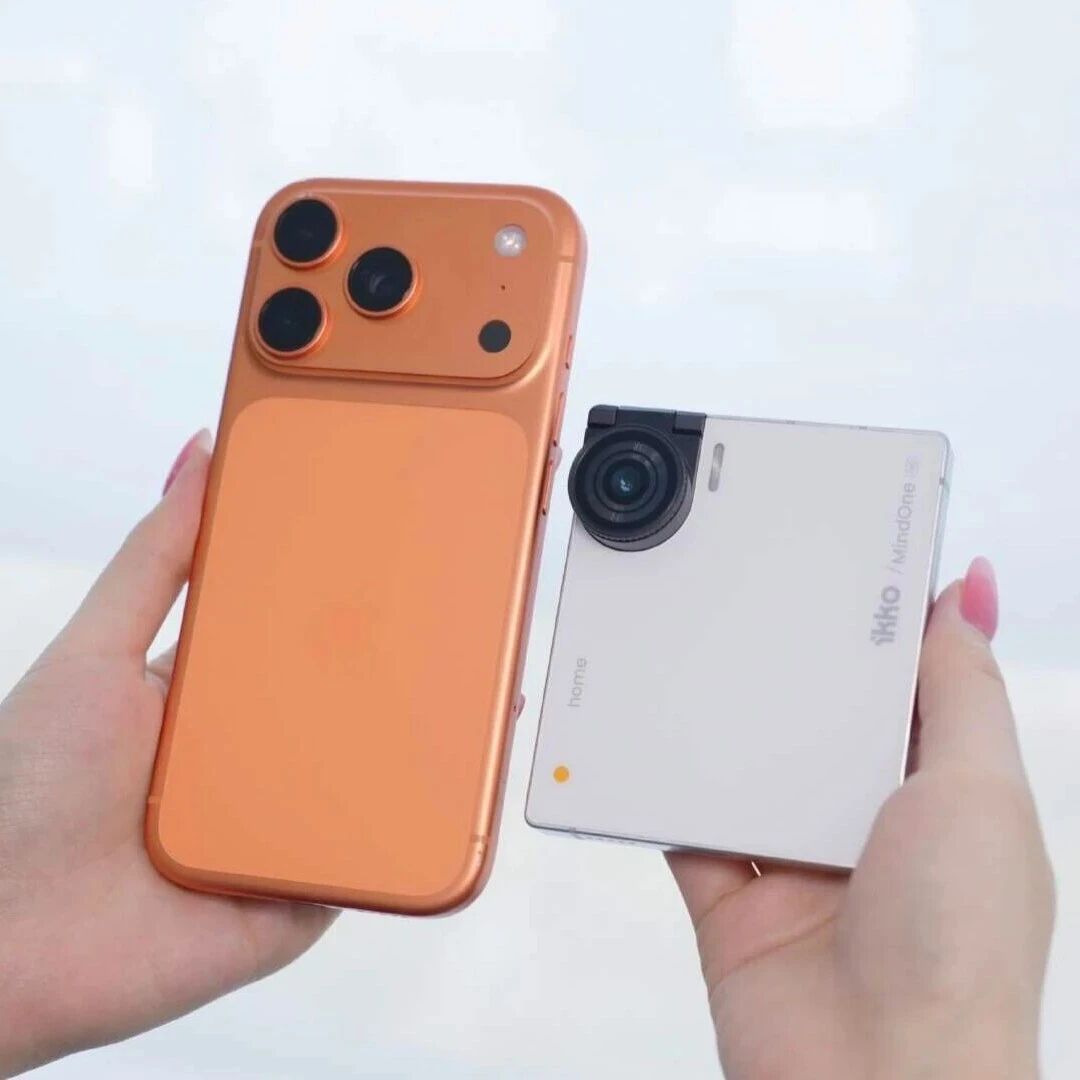
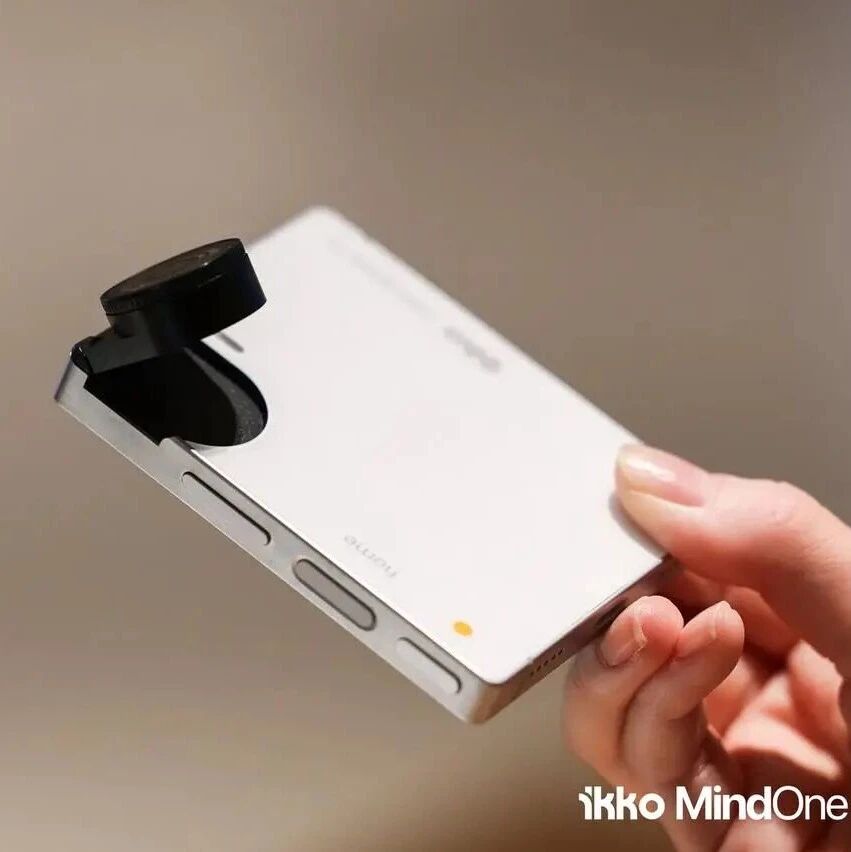
Core Viewpoint - The article discusses the emergence of the iKKO MindOne, an AI smartphone that has achieved significant pre-sale success, highlighting a shift in the smartphone market towards more specialized, efficient devices rather than traditional all-in-one models [5][12][38]. Group 1: Market Context - The smartphone market has become increasingly homogeneous, with incremental updates failing to excite consumers, leading to a consensus that current devices lack innovation [6][7]. - Major brands like Apple maintain high market shares despite minimal changes, indicating a lack of necessity for significant innovation in their offerings [6][7]. - The article notes that the AI smartphone concept gained traction following the introduction of a device by Nubia and Doubao, which integrated AI capabilities into its functionality [20]. Group 2: iKKO MindOne Overview - iKKO MindOne has achieved over 50 million yuan in pre-sales, with 30 million yuan from consumers and 20 million yuan from businesses, marking a notable achievement for a new brand in a saturated market [12]. - The device features a compact design, weighing less than an iPhone Air, and sacrifices certain functionalities like wireless charging and 5G to maintain a slim profile [14]. - The camera utilizes a 50-megapixel Sony module that can flip for both front and rear photography, optimizing the use of space within the device [16]. Group 3: AI Integration and Functionality - The MindOne operates on a unique iKKO AI OS, which focuses on efficiency tools such as translation, summarization, and information processing, rather than traditional app ecosystems [25][27]. - The device is designed to separate AI functionalities from standard applications, creating a dedicated workspace for productivity [25][27]. - iKKO aims to provide AI capabilities without subscription fees, positioning itself as a cost-effective solution for users [36]. Group 4: Competitive Landscape and Future Outlook - The article emphasizes that the future of AI smartphones lies in their ability to integrate deeply with system architecture and user data, rather than merely functioning as applications [22][24]. - iKKO's approach is seen as a challenge to the conventional smartphone model, aiming to redefine user interaction with mobile technology [40]. - The company believes that its focus on a streamlined, efficient device will resonate with users seeking practical tools rather than just entertainment [38][40].
众筹百万美金的AI手机进入中国,小屏幕能否撕开内卷缺口?
雷峰网· 2026-02-09 03:57
Core Viewpoint - The article discusses the launch and market potential of the AI card phone MindOne, highlighting its unique features and the challenges it faces in the competitive smartphone market. Group 1: Product Overview - MindOne, an AI card phone, successfully raised approximately $1.48 million on Kickstarter, attracting 3,411 backers with its price starting at $299, indicating a strong market acceptance [2] - The phone features a compact design with a thickness of 8.9mm and a weight of 136g, appealing to users seeking a minimalist lifestyle [2] - It includes a 50-megapixel Sony main camera and a 180-degree reversible camera, which are considered significant highlights [2] - MindOne operates on a dual system of Android 15 and iKKO AI OS, allowing users to switch to an AI-focused mode for offline functionalities like real-time translation and voice-to-text [2][9] Group 2: Market Strategy - iKKO aims to expand its market presence in China, Europe, the US, Japan, and Southeast Asia, targeting professionals and tech enthusiasts [4] - The company has identified a strong demand among Chinese consumers for unique products, even at higher tax costs for overseas purchases [4] - The AI hardware market is divided into two camps: one focusing on new hardware forms and the other enhancing existing devices with AI capabilities, with iKKO belonging to the latter [5] Group 3: Competitive Landscape - The smartphone market in China is highly competitive, with established players like Huawei, Xiaomi, OPPO, and Apple dominating the landscape [4] - MindOne is positioned as a secondary device rather than a direct competitor to mainstream smartphones, catering to users who prefer a simplified experience [7] - The phone's offline AI capabilities and unique design may help it carve out a niche in the market, especially among users looking for lightweight and portable devices [10] Group 4: Challenges and Considerations - MindOne faces challenges such as brand recognition in China, overcoming the perception that mini devices are inferior in performance, and addressing concerns about privacy and data security [12][13] - The company must also ensure supply chain stability and develop a localized after-sales service to support its product [13] - The success of MindOne will depend on its ability to establish a loyal user base and potentially expand its product line in the future [10][13]
在不为与有为之间,读懂vivo的「笃心笃行」
36氪· 2026-02-05 14:10
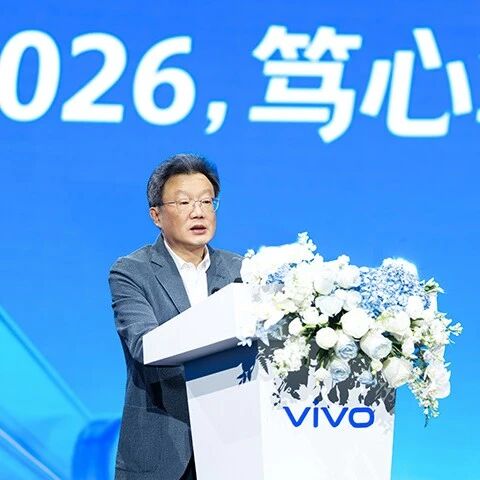
Core Viewpoint - Vivo is navigating uncertainty in the competitive smartphone market by focusing on user orientation as a core organizational capability [4][6][25] Market Overview - The Chinese smartphone market is projected to see a slight decline in shipments, reaching 285 million units in 2025, indicating a competitive landscape where major players hold over 15% market share each [4] - The competition is intensifying, with a significant gap of only a few million units between the top and fifth-ranked manufacturers [4] Vivo's Strategic Direction - Vivo's founder, Shen Wei, emphasizes the need to transform user orientation from a mere awareness into a systematic insight and practice within the organization [6][25] - The company aims to cultivate a culture where user orientation permeates all aspects of its operations, becoming an intrinsic part of its organizational DNA [24][26] Innovation and Market Challenges - The smartphone industry is experiencing prolonged user upgrade cycles, now averaging 33 months, alongside rising supply chain costs due to increased storage chip prices [8] - The emergence of AI smartphones has disrupted traditional definitions of innovation, compelling manufacturers to rethink their approaches to user needs and technological advancements [8][9] Vivo's Commitment to User Experience - Vivo is committed to deepening its focus on four key technological areas: design, imaging, system, and performance, which are crucial for enhancing user experience [15][19] - The company has developed a comprehensive imaging capability, exemplified by the X300 series, which integrates advanced technologies to redefine user expectations in smartphone photography [16][18] Expansion Beyond Traditional Boundaries - Vivo is evolving from a traditional smartphone manufacturer to a platform-based technology ecosystem, with plans to enter the robotics sector and develop mixed reality products [19][21] - The company is strategically investing in XR and robotics, aiming to create a diverse ecosystem of products that enhance user experiences across various scenarios [21] Organizational Evolution - Vivo is focused on building organizational capabilities that can withstand market fluctuations, emphasizing the importance of user orientation in decision-making processes [23][24] - The company aims to implement a user-oriented innovation framework across all departments, ensuring that every aspect of its operations aligns with user needs [25][26] Future Vision - Vivo's imaging technology strategy is seen as a pivotal element in its transition to a platform-based technology company, with aspirations to extend its capabilities across multiple industries [27] - The company envisions a future where its products are synonymous with warmth, reliability, and user-centric design, aiming to leave a lasting impression in the tech landscape [28]
中原证券:光模块上游关键物料供应持续紧张 行业头部大客户率先转向硅光方案
智通财经网· 2026-01-29 08:05
Core Insights - The report from Zhongyuan Securities indicates that China's optical module exports are projected to total 37.46 billion yuan in 2025, reflecting a year-on-year decline of 15.6% [1][3] - CignalAI forecasts that the total shipment of high-speed optical modules (400G and above) will reach 42 million units in 2025, with a compound annual growth rate (CAGR) exceeding 20% for the optical module market from 2024 to 2029 [1][3] - The supply of key materials in the optical communication industry, particularly optoelectronic chips, remains tight, which is expected to constrain market growth until the end of 2026 [3] Optical Module Market - The total export value of optical modules from China in December 2025 showed a slight year-on-year decrease of 0.5% [3] - In the first eleven months of 2025, the telecommunications business revenue reached 1.6096 trillion yuan, marking a year-on-year increase of 0.9% [1] - Major telecom operators are focusing on key sectors such as industrial manufacturing, digital government, healthcare, education, and energy, leveraging the integration of cloud and network technologies [1] Key Companies and Recommendations - Companies to watch in the optical chip/device/module sector include: - SourceJ Technology (688498.SH) - Shijia Photon (688313.SH) - Tianfu Communication (300394.SZ) - Taicheng Light (300570.SZ) - Zhongji Xuchuang (300308.SZ) - New Yisheng (300502.SZ) - Guangxun Technology (002281.SZ) - Huagong Technology (000988.SZ) [4] - In the optical fiber and cable sector, domestic manufacturers are expected to gain more market share due to technological and cost advantages [4] - For AI smartphones, companies such as Xinwei Communication (300136.SZ) and ZTE Corporation (000063.SZ) are recommended [4] - Telecom operators to consider include China Mobile (600941.SH), China Telecom (601728.SH), and China Unicom (600050.SH) [4]

字节已开启豆包手机助手正式版项目,新机预计2026年Q2中晚期发布
3 6 Ke· 2026-01-29 05:30
Group 1 - ByteDance is set to launch the official version of the Doubao mobile assistant by the end of 2025, with the new device expected to be released in late Q2 2026, showing significant improvements over the first-generation test version [1] - The Doubao mobile assistant will continue its collaboration with ZTE Nubia for hardware, while ByteDance will focus on AI development, indicating a strategic partnership to enhance product capabilities [1][2] - The competition in the AI mobile assistant market is intensifying, with major players like Huawei, Xiaomi, and OPPO developing their own AI assistants, highlighting the importance of proprietary technology in the industry [2] Group 2 - ByteDance's collaboration with ZTE is partly due to ZTE lacking its own AI assistant, similar to Huawei's initial partnerships, which reflects the reluctance of many manufacturers to rely on external AI solutions [2] - The emergence of AI applications in various hardware, such as glasses and in-car screens, suggests a trend towards deeper integration between AI and hardware manufacturers, with companies like Alibaba also venturing into hardware production [4] - The development of AI phones is transitioning from mere technical demonstrations to a competitive "ecosystem battle," where companies will need to establish robust AI agents that can integrate with their ecosystems effectively [4]

字节已于2025年底开启豆包手机助手正式版项目,新机预计将于2026年Q2中晚期发布
Xin Lang Cai Jing· 2026-01-29 05:27
Core Insights - ByteDance has officially launched the Doubao mobile assistant project at the end of 2025, with the new device expected to be released in late Q2 2026 [1] - Supply chain sources indicate that ByteDance has high expectations for the new device, which is significantly improved compared to the first-generation test version [1] - The second-generation Doubao phone will continue its collaboration with ZTE Nubia, with ZTE responsible for hardware and Doubao focusing on AI [1]

存储、金属涨价搅动供应链 手机市场面临新战役
2 1 Shi Ji Jing Ji Bao Dao· 2026-01-28 14:05
Core Insights - The smartphone market in 2026 is undergoing significant changes due to rising prices and supply chain challenges, with manufacturers needing to enhance their collaborative response capabilities [1] - The competition is shifting from merely pricing to a multidimensional battle involving supply chain resilience, cost control, AI technology implementation, and new hardware innovation [1] Supply Chain and Cost Dynamics - The ongoing rise in storage prices is creating a bottleneck for the smartphone industry, with manufacturers facing pressure to select long-term, value-recognizing clients for storage chips [2] - Despite recent expansions in storage capacity by overseas manufacturers, relief from tight supply is not expected until late 2027, maintaining the pressure on prices [2] - The increase in storage costs significantly impacts the bill of materials (BOM), particularly affecting models priced below $100, while higher-end models may adjust through configuration changes and marketing strategies [3] - Chinese smartphone brands are hesitant to pass on increased storage costs to consumers, leading to downward adjustments in business plans to compel other component suppliers to lower prices [3] New Hardware and Market Trends - The search for new hardware forms, such as foldable phones, smart glasses, and handheld imaging devices, is becoming crucial as the smartphone market matures [5] - The global foldable phone shipment is expected to rise to 25 million units in 2026, largely driven by Apple's entry into the market [6] - The price of foldable phones is likely to increase due to rising memory costs, limiting their market to high-end users [7] - The development of AI glasses is rapidly evolving, with a competitive landscape emerging among various manufacturers, indicating a promising market outlook for 2026 [11] Future Outlook - The smartphone industry is expected to see accelerated development in emerging categories like action cameras, catering to younger consumers' preferences for outdoor and lifestyle documentation [12] - The competition in 2026 will hinge on the ability to navigate supply chain fluctuations and leverage AI and hardware convergence to create differentiated user experiences [12]
市场最前沿|AI助力,我国手机行业攀高向优
Xin Hua She· 2026-01-28 12:27
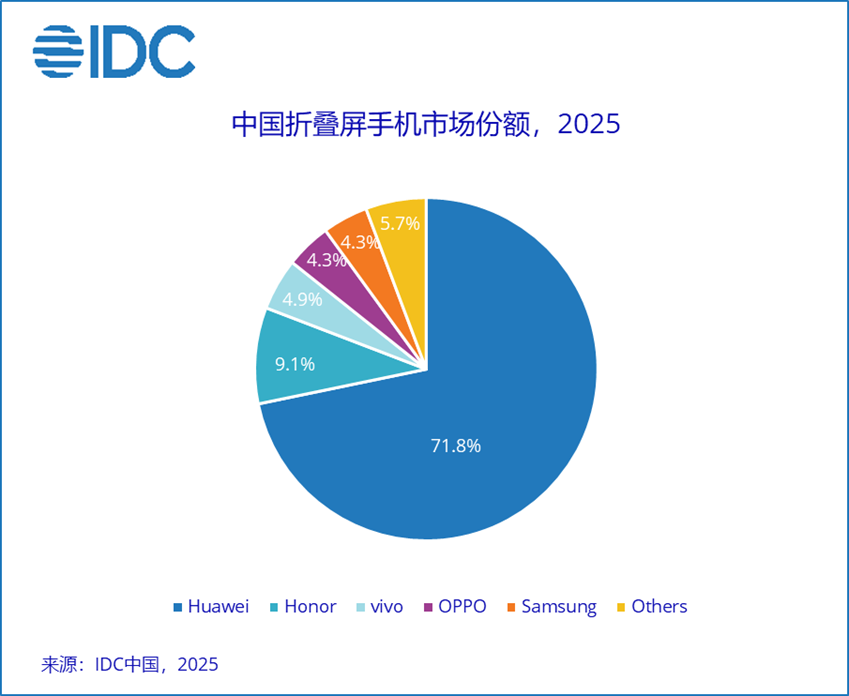
Core Insights - The Chinese smartphone market is projected to exceed 1 trillion yuan by 2025, driven by the trade-in policy for consumer goods and advancements in AI and foldable screen technology [1] - The market is shifting from incremental competition to stock competition as smartphone penetration exceeds 80% and the average replacement cycle lengthens [1] Group 1: Market Performance - In the first 11 months of 2025, the domestic smartphone shipment reached 282 million units, a year-on-year increase of 0.9%, with 5G smartphones accounting for 244 million units, up 1.3% [1] - Honor's smartphone shipments surpassed 71 million units in 2025, marking a 9% year-on-year growth [1] - The number of new smartphone models launched in the domestic market reached 474, reflecting a 14.5% increase [1] Group 2: Innovation and Technology - Huawei launched the industry's first wide foldable smartphone, the Huawei Pura X, which combines the reading experience of an e-book with the convenience of a foldable device [2] - The foldable smartphone market in China is expected to reach 9.47 million units by 2025, growing by 3.3% [2] - Companies like OPPO, vivo, and Xiaomi are enhancing product capabilities with innovations such as eSIM support, semi-solid state battery technology, and self-developed chips [2] Group 3: AI Integration - AI is becoming a core capability in smartphones, with features like route planning and price comparison being automated [3] - By 2025, AI smartphone shipments are expected to exceed 118 million units, capturing 40.7% of the overall market [3] - The integration of AI is seen as a transformative force, with companies like ByteDance and ZTE collaborating to create AI smartphones that enhance user experience [3] Group 4: Market Trends and Future Outlook - The Chinese smartphone market is entering a phase of adjustment characterized by total pressure and structural differentiation, with a forecasted decline in overall shipment volume due to rising component costs [4][5] - The high-end smartphone market is expected to expand, while the low-end market will shrink, indicating a shift towards a more diversified market structure [4] - By 2026, the market share for smartphones priced above $600 is projected to reach 35.9%, while the share for those below $200 is expected to decrease by 4.3% [5] - Emotional consumption is reshaping purchasing logic, with design and brand connection becoming as important as technical performance [5]
弘信电子:预计去年归母净利润同比增长93.6%-164%
Bei Ke Cai Jing· 2026-01-27 11:16
新京报贝壳财经讯 1月27日,弘信电子公告,预计2025年度净利润为1.1亿元-1.5亿元,同比增长 93.61%-164.01%。报告期内,国内各大国产主流手机品牌推出创新的AI手机以及叠加国补政策的驱动 手机消费需求显著释放,激发国内手机市场的进一步复苏,有力的拉动了国内手机产业链的需求。公司 始终保持对高端FPC产品的研发和生产制造的高投入,凭借在技术水平、产品品质、交付能力及综合服 务能力方面优势,获得国内头部手机品牌的一致认可。 ...