红米K90

Search documents
1500元以下,再也买不到国产手机了?
创业邦· 2026-03-14 03:45
Core Viewpoint - The smartphone industry is experiencing a significant price increase, driven by rising memory costs and supply chain constraints, leading to a shift away from the era of high cost-performance ratios [5][14][56]. Group 1: Price Increases - Samsung's Galaxy S26 series has initiated a price hike, with the standard and S26+ models starting at 6999 yuan and 7999 yuan, respectively, an increase of 1000 yuan from the previous generation [8]. - Multiple domestic brands, including OPPO and others, are also planning price adjustments, indicating a broader industry trend towards higher prices [9][17]. - The average selling price (ASP) of smartphones is projected to rise by 14% globally by 2026, reaching a historical high of approximately 3700 yuan [34]. Group 2: Causes of Price Increases - The primary reason for the price hikes is the rising cost of memory, particularly DRAM and NAND, which are essential for smartphone functionality [28][39]. - The demand for high-bandwidth memory (HBM) due to the AI boom has led manufacturers to prioritize HBM production over consumer-grade memory, resulting in reduced supply and increased prices [53][55]. - The cost of 12GB DRAM, a standard in smartphones, has surged from around 200 yuan to nearly 600 yuan, significantly impacting the overall cost structure of mid-range and entry-level devices [56]. Group 3: Industry Response - Manufacturers are adopting various strategies to cope with rising costs, including direct price increases, reducing specifications, or delaying new product launches [61][64][70]. - Some brands, like Meizu, have halted hardware projects to pivot towards AI, citing unsustainable memory prices as a barrier to new product commercialization [71]. - The overall market is seeing a reduction in shipment targets as many consumers are postponing their device upgrades due to the price increases [100]. Group 4: Consumer Sentiment - Consumers are increasingly dissatisfied with the rising prices and perceive a lack of significant improvements in smartphone functionality despite the higher costs [80][81]. - The trend of rising smartphone prices is likened to an "AI tax," as smartphones have become integral to modern life, and their increased costs directly affect consumers' daily expenses [105][103].



红米K90 12GB+256GB仅1319元
Xin Lang Cai Jing· 2026-01-07 10:12
Core Insights - The Redmi K90 is currently priced at 2198.11 yuan on JD.com, while it is available for a promotional price of 1319 yuan on the Paiyide platform [2][3] Product Features - The Redmi K90 is equipped with the Snapdragon® 8 Gen 2 flagship chip, providing strong and smooth performance for multitasking and gaming [2][3] - It features a large 7100mAh battery, ensuring long-lasting battery life and alleviating concerns about battery anxiety [2][3] - The device utilizes the Qingshan Eye Protection technology screen, which effectively reduces blue light damage, making it more comfortable for prolonged use [2][3] - The phone comes with a memory configuration of 12GB RAM and 256GB storage, allowing for faster operation and more storage freedom [2][3] - The classic black design of the Redmi K90 is described as stable and elegant, showcasing a sense of technological quality [2][3] - It supports 5G network connectivity, providing a high-speed connection experience [2][3]
雷军亲自为K90打Call,却被自家双旗舰爆杀,狂降2000太香了!
Sou Hu Cai Jing· 2025-11-13 18:35
Core Insights - Lei Jun, the founder of Xiaomi, has been actively promoting the Redmi K90, indicating a need for increased attention and sales for this model [1] - The price of the Redmi K90 has recently dropped to around 2400, reflecting a lack of strong sales performance shortly after its release [3] - The Redmi K90 faces stiff competition from both rival brands and Xiaomi's own models, such as the Redmi K80 Pro and Xiaomi 15, which offer better specifications at similar price points [3][5][7] Pricing and Sales Performance - The Redmi K90's price has decreased to approximately 2400, which is a minor reduction but notable given its recent launch [3] - The Redmi K90's initial price was raised to 2599, but it has since reverted to a lower price, raising questions about its market positioning [3] - The Redmi K80 Pro and Xiaomi 15 are available at competitive prices (around 2600), making them more attractive options compared to the Redmi K90 [5][7] Competitive Landscape - The Redmi K90 lacks the dominance of previous K series models due to the abundance of strong competitors in the 2000 price range [3] - The Redmi K80 Pro offers superior features, such as a better display and camera capabilities, at a similar price, undermining the Redmi K90's appeal [5] - The Xiaomi 15, positioned as a flagship model, also competes effectively with the Redmi K90, particularly in terms of camera quality and overall specifications [7]
比水贝黄金市场还热闹,深圳华强北有产品翻倍涨价
凤凰网财经· 2025-11-06 13:03
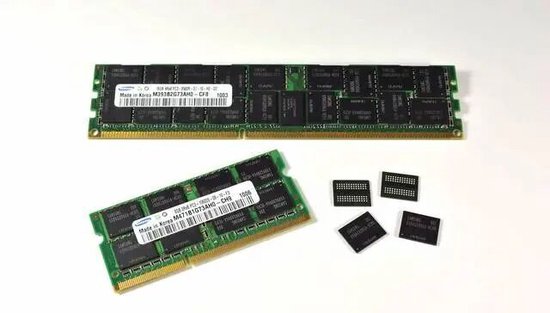
Core Viewpoint - A significant price surge is occurring in the storage chip market, particularly in Shenzhen's Huaqiangbei, surpassing previous trends seen in gold prices, with major smartphone manufacturers raising prices for flagship models due to increased storage chip costs [1][2][3]. Group 1: Price Surge Phenomenon - Storage product prices in Huaqiangbei have doubled, with DDR4 memory prices rising from 180-190 RMB to around 400 RMB, indicating a tight supply-demand relationship [5]. - Solid-state drive (SSD) prices have also surged, with a 1TB SSD now priced at 620 RMB, reflecting a doubling in price over the past month [7]. - The market is experiencing a "seller's market" as major manufacturers like Samsung have paused contract pricing for DDR5 DRAM, leading to supply chain disruptions [7][8]. Group 2: Causes of Price Increase - The price increase is primarily driven by a supply-demand imbalance, exacerbated by the rising demand for storage due to artificial intelligence (AI) applications [8][10]. - Major storage manufacturers have shifted production capacity towards high-bandwidth memory (HBM) and DDR5, reducing the availability of older technologies like DDR4 [10][11]. - The demand for AI servers significantly increases the DRAM and NAND requirements, with each AI server needing eight times the DRAM and three times the NAND of a standard server [11]. Group 3: Market Dynamics and Historical Context - The storage market has historically experienced cyclical price fluctuations, with the current cycle driven by AI infrastructure rather than consumer demand [14][15]. - The industry has seen three major cycles in the past decade, with the latest cycle beginning in 2024, characterized by AI-driven demand [14][15]. - The potential for overcapacity looms as manufacturers ramp up production in response to current demand, which could lead to future price corrections [15]. Group 4: Company Performance and Strategies - Major players like SK Hynix reported significant revenue growth, with a 39% increase in revenue and a 119% increase in net profit for the third quarter of 2025 [16]. - Companies like Jiangbolong and Baiwei Storage are actively increasing inventory to capitalize on the price surge, with Jiangbolong's net profit increasing by 1994.42% in the third quarter [18][19]. - Distributors like Xiangnong Xinchuan face challenges despite revenue growth, as their profit margins have decreased, highlighting the pressures within the midstream of the supply chain [22].





华强北商家称存储价格“一天一价”
Xin Lang Cai Jing· 2025-11-06 05:11
Core Viewpoint - The storage chip sector is experiencing a significant price increase, driven by rising demand and supply chain constraints, particularly influenced by the growth of artificial intelligence applications [3][5]. Group 1: Market Trends - Storage chip prices have been on the rise since September, with notable increases in various memory products, including DDR4 8G memory modules, which rose from below 90 yuan to between 100 and 130 yuan within a month [3]. - Companies like Xiaomi have adjusted their product prices due to increased storage costs, with the Redmi K90 series seeing price hikes of 100 to 400 yuan compared to the previous generation [3][5]. Group 2: Impact on Companies - Xiaomi's executives have acknowledged the impact of rising storage costs on their pricing strategy, indicating that the cost increases are beyond their control and are expected to continue [3][5]. - Other smartphone manufacturers, including Realme and OPPO, have also raised prices for their new models, reflecting the broader trend in the industry [5]. Group 3: Industry Dynamics - The storage market is characterized by two main types of chips: NAND flash for persistent data storage and DRAM for real-time data caching, both of which are critical for consumer electronics and data center applications [5]. - The demand for storage is expected to grow significantly due to the increasing complexity of AI-generated content, leading to a projected continuation of price increases in the storage market through at least Q4 2025 [5].
1TB内存价差达4000元,存储涨价“压力棒”递给了手机厂
Di Yi Cai Jing· 2025-11-05 14:08
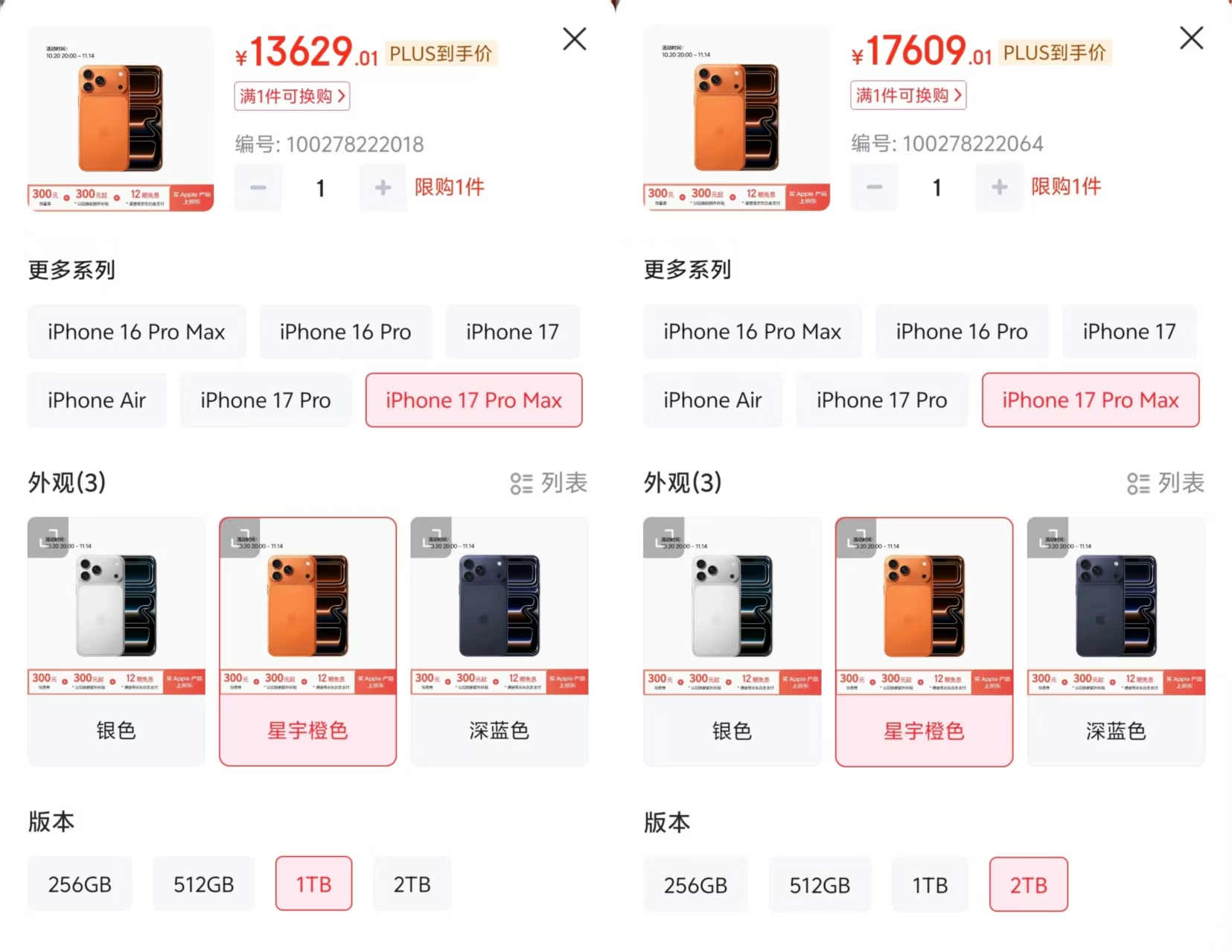
Core Insights - The rising cost of memory components is significantly impacting smartphone manufacturers, with storage costs accounting for approximately 10%-20% of total hardware costs [1][4] - The price increase in memory has led to a general price hike of 100-500 yuan for mid-to-high-end smartphone models, with some models seeing price differences of 3000-4000 yuan based on memory specifications [1][4] - The market is experiencing a shift in demand towards higher-capacity storage options, as manufacturers adjust pricing strategies to mitigate the impact of rising costs [4][10] Industry Impact - The current memory price surge is primarily driven by the gradual exit of LPDDR4X from the market, which has triggered a chain reaction affecting pricing [4] - Major memory manufacturers like Samsung, SK Hynix, and Micron are expected to raise memory prices further in Q4, with increases potentially reaching 30% [7] - The price of LPDDR4X is projected to rise by 10%-15% in Q4, with low-capacity products expected to remain strong in pricing throughout the year [7][10] Consumer Behavior - Discussions on social media highlight the perception of memory prices surpassing that of gold, with significant price differences noted for various smartphone models [2] - Consumers are increasingly viewing higher storage options as luxury items, with notable price hikes for models with larger memory capacities [2][4] Manufacturer Strategies - Smartphone manufacturers are responding to rising costs by increasing the prices of different storage versions, encouraging consumers to opt for higher-capacity models to offset the cost pressures [4][10] - Companies are facing challenges in maintaining competitive pricing while ensuring healthy profit margins, leading to a cautious approach in product innovation [10][12] - Some manufacturers are shifting focus to flagship models with higher price points to sustain profitability amidst rising component costs [10][12]
不上不下的中端手机,正陷入“进退两难”
3 6 Ke· 2025-11-04 23:53
Core Insights - The global smartphone market is experiencing a rebound, with sales growth of approximately 4% to 7% year-on-year, primarily concentrated in high-end and low-end segments, while the mid-range market is losing growth opportunities [1][3] - The mid-range segment, which includes 500 million users in China, is highly competitive, with brands focusing on high performance and cost-effectiveness [1][4] - The shift from an incremental to a saturated market is evident, as the average selling price of smartphones is projected to be $356 in 2024, while 70% of consumers are resistant to price increases [3][4] Market Dynamics - The mid-range smartphone market is under unprecedented pressure due to the influx of new models, with 396 new models expected in 2024, most of which are mid-range [4][6] - Price wars are intensifying, leading to a decline in the perceived value of mid-range devices, as many models are seeing price reductions of 200 to 400 yuan compared to previous generations [7][9] - High-end smartphones are also reducing prices, further eroding the competitive edge of mid-range devices, as consumers can access high-end features at lower prices [8][9] Consumer Behavior - Consumers are increasingly price-sensitive, preferring low-cost practical options or being attracted to discounted high-end models, which complicates the mid-range market's dynamics [9][10] - The gaming segment is becoming a focal point for mid-range brands, with several new models emphasizing gaming performance to attract younger consumers [10][12] - The demand for smartphones among younger users is growing, with a significant portion of the market being captured by brands that cater to gaming and social media needs [12][13] Profitability Challenges - Despite a stable production increase in the smartphone industry, profitability is declining, with major brands like Xiaomi and Huawei reporting significant drops in profit margins [14][15] - Rising component costs, particularly for memory chips, are squeezing margins, leading to a dilemma where brands must choose between raising prices or absorbing costs [16][20] - Companies are exploring strategies to enhance product value through technology investments and expanding user bases to offset rising costs [21][22]
手机厂商的“芯事”:新款集体涨价数百元,高价内存拦路
Bei Ke Cai Jing· 2025-10-31 03:24
Core Viewpoint - The smartphone market is experiencing a price increase due to rising upstream costs, particularly in memory components, which has led to significant price hikes for new models from various manufacturers [3][8][9]. Group 1: Price Increases in Smartphones - Multiple new smartphone models have been released with starting prices higher than their predecessors, with the Redmi K90 starting at 2599 yuan, an increase of 300-600 yuan compared to the K80 [3][7]. - Other brands like Realme, iQOO, and OPPO have also raised prices by 200-300 yuan for their new models [3][9]. - Xiaomi's president acknowledged that the price increases are a direct result of rising storage costs, which have exceeded expectations and are expected to continue rising [3][8]. Group 2: Memory Chip Price Surge - The price of LPDDR4X memory chips has surged dramatically, with reports indicating prices have increased from 20 dollars to over 50 dollars in a short period [4][14]. - The increase in memory prices is attributed to a shift in production capacity towards higher-value products driven by AI demand, impacting the availability of lower-end memory products [16][22]. - The overall price increase for memory chips has affected the pricing strategies of smartphone manufacturers, particularly in the mid-range segment [5][10]. Group 3: Market Dynamics and Consumer Impact - The price hikes are expected to lead to a segmentation in consumer spending, particularly affecting the 3000-4000 yuan price range, where demand may shrink due to the lack of supportive policies [5][28]. - High-end users are less likely to be affected by price increases as long as the products remain attractive [27]. - The shift in memory pricing and availability is likely to influence the entire lifecycle pricing strategies of new smartphone models, including promotional pricing during sales events [10][24].
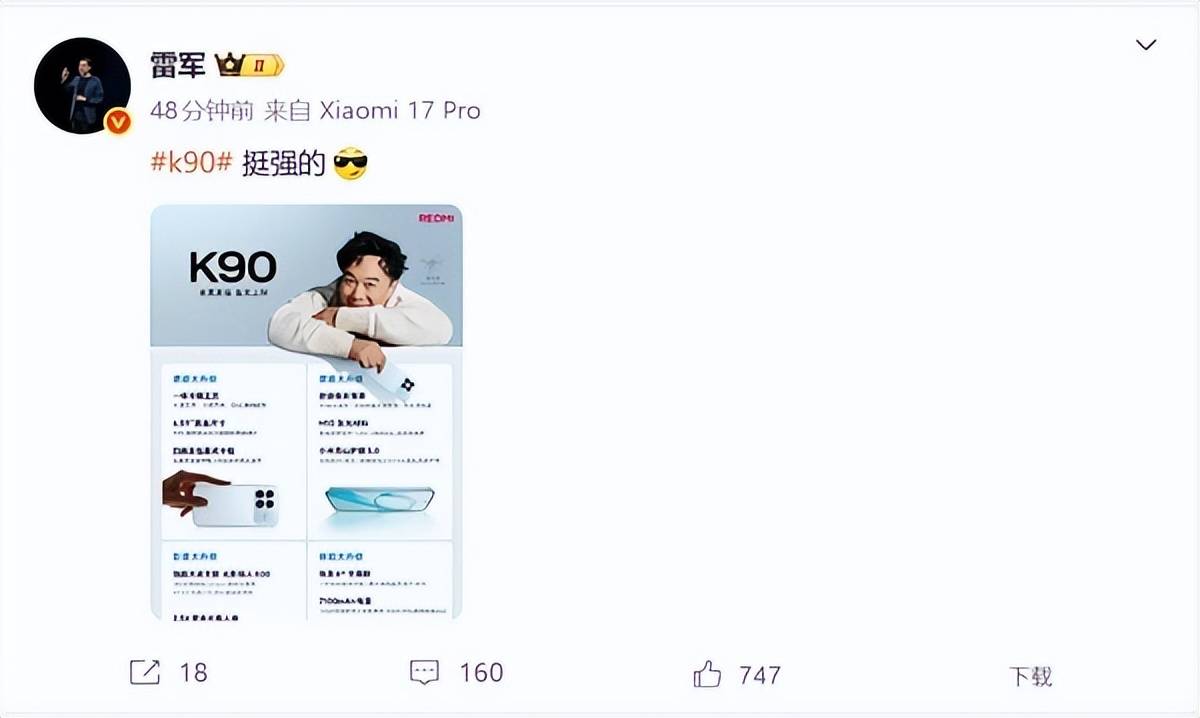
雷军不讲武德,7100mAh+骁龙8至尊版+全亮度DC,友商要连夜改PPT了!
Sou Hu Cai Jing· 2025-10-25 02:54
Core Insights - The Redmi K90 is positioned as a game-changer in the mid-range smartphone market, emphasizing value for money as its core selling point [1][13] - The device features high-end specifications typically found in flagship models, including the Snapdragon 8 Gen 2 chip and a 7100mAh battery, which significantly enhances its performance and battery life [3][9] Performance - The Redmi K90 is equipped with the Snapdragon 8 Gen 2 processor, achieving an AnTuTu score of 3.21 million, which is a substantial performance leap for its price range [3] - It maintains a stable frame rate of 60 FPS while playing demanding games like Genshin Impact, showcasing its gaming capabilities [3] Display - The smartphone features a 6.59-inch OLED display with 2K resolution and a peak brightness of 3500 nits, providing excellent visual quality [5] - The display incorporates eye-care technology, reducing eye strain during prolonged use, which is a significant advantage for users [5] Camera - The K90's camera system includes a 50MP main sensor and a 2.5x optical zoom lens, enhancing its photography capabilities compared to previous models [7] - The device aims to democratize high-quality imaging features, making them accessible at a lower price point [7] Battery Life - The K90 boasts a massive 7100mAh battery, allowing for extensive usage without the need for frequent recharging [9] - Official tests indicate that the device retains 80% battery after five hours of continuous use, highlighting its exceptional endurance [9] Design and Build Quality - The smartphone features a premium design with a combination of glossy and matte finishes, enhancing its aesthetic appeal [9] - It supports IP68/IP69 water resistance, making it suitable for use in extreme conditions [11] Market Impact - The Redmi K90's pricing and specifications are expected to raise the competitive bar in the mid-range smartphone market, prompting other manufacturers to reconsider their strategies [13] - The device's combination of features positions it as a formidable competitor against flagship models, blurring the lines between mid-range and premium segments [13]
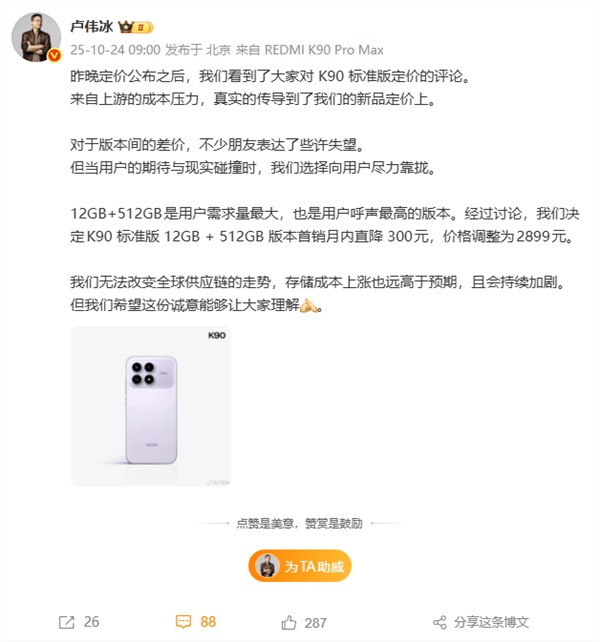
刚发布就降价300!红米K90挨骂了,雷军卢伟冰表示很无奈!
Sou Hu Cai Jing· 2025-10-24 16:55
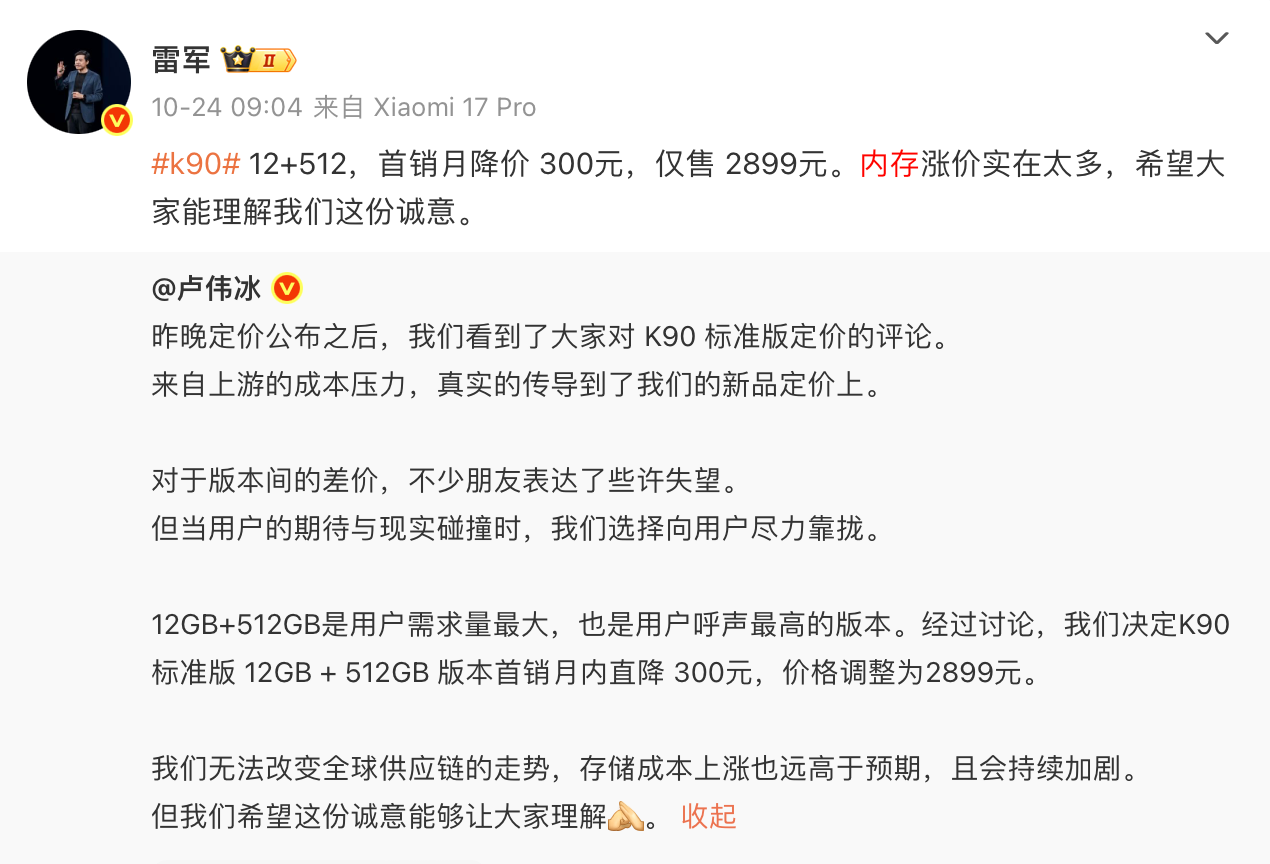
Core Insights - The Redmi K90 series was officially launched, but the 12G+512G version saw a price drop of 300 yuan from 3199 yuan to 2899 yuan just one day after its release, which is an unusual move in the smartphone market [1][3] - The price reduction was attributed to consumer dissatisfaction regarding the price differences between versions, particularly for the 12G+512G model, which has the highest demand [1][3] - The increase in memory prices due to foreign manufacturers' control has impacted the pricing strategy, leading to the decision to lower the price to improve brand perception [3][4] Pricing Strategy - The initial pricing of the K90 series, particularly the 12G+256G model starting at 2599 yuan, was considered inappropriate, as the 12G+512G version's price increase of 600 yuan for an additional 256G of storage was seen as excessive [3] - The price adjustment to 2899 yuan for the 12G+512G version is viewed as a more reasonable price point rather than a significant discount [3] Market Context - The smartphone market is currently experiencing price fluctuations due to various factors, including the upcoming Double 11, Double 12, and New Year sales, which are typical periods for price reductions [7] - Industry insiders have indicated that memory prices are expected to rise further next year, which may lead to higher prices for new models [4] - Consumers who purchased the 12G+512G version before the price drop are eligible for a price protection policy, allowing them to receive a refund for the price difference [4]