
AI科技

Search documents
财信证券宏观策略周报(3.16-3.20):A股市场仍有韧性,适当关注红利方向-20260315
Caixin Securities· 2026-03-15 10:36
Group 1 - The A-share market shows resilience despite increasing macro uncertainties overseas, with a shift in market style from technology to dividend-focused investments [5][8] - The short-term outlook suggests a wide fluctuation in index movements, with a focus on controlling positions and waiting for index-level opportunities [5][8] - Key factors influencing the market include escalating overseas tensions, diminishing calendar effects, and breakthroughs in global AI technology [5][8] Group 2 - Recent CPI data for February indicates a significant increase, with a year-on-year rise from 0.2% to 1.3%, marking the highest level in three years [9] - Export data for January-February exceeded expectations, with a year-on-year growth of 21.8%, driven by factors such as the Spring Festival effect and resilient overseas demand [10][11] - The OpenClaw AI technology has gained attention in the A-share market, representing future trends in AI applications, although concerns about security risks and high usage costs remain [12] Group 3 - Investment recommendations include focusing on high-dividend assets such as coal, oil, and transportation, as well as sectors benefiting from "HALO trading" and favorable policies from the Two Sessions [16][18] - The market valuation levels indicate a need for careful monitoring of the PE and PB ratios of the overall A-share index [33][34] - Recent trends in market funding show fluctuations in margin trading balances, indicating varying investor sentiment [36][37]
投资策略专题:下一个信号:波动率收敛
KAIYUAN SECURITIES· 2026-03-15 02:43
Group 1 - The market is still further recognizing the expectation gap regarding the US-Iran conflict, with the core anchor being the ICE Brent crude oil price, which has seen significant fluctuations from around $80 to a high of $119 before retreating again [3][11][16] - The expectation gaps identified include the duration misalignment from "AI strike" to "mosaic quagmire," the physical rigidity of the Hormuz Strait blockade versus the illusion of increased production, and the US strategy of "watching while fighting" alongside a shift in the Middle Eastern landscape [3][11][15] Group 2 - The next important signal for the market is the convergence of volatility in oil prices, which is currently high and affects various asset classes; the focus should be on when this volatility will stabilize rather than the final price level of oil [4][16] - During periods of high volatility, investment strategies should focus on three levels of asset allocation: "certain varieties" such as shipping, gold, and upstream energy; "trend varieties" like defense and cybersecurity; and "non-consensus" allocations in agriculture and volatility strategies [4][16][17] Group 3 - In the medium to long term, as volatility decreases, investment strategies should pivot towards AI technology, cyclical sectors, and high dividend stocks, particularly in coal, non-bank financials, media, petrochemicals, and transportation [4][17][18] - The report emphasizes the importance of maintaining confidence in a bull market while adjusting expectations and seizing opportunities in physical asset allocations due to geopolitical shocks [5][19]
2026年AWE家电展会调研解读:AI科技,慧享未来
GUOTAI HAITONG SECURITIES· 2026-03-14 07:39
Investment Rating - The report assigns an "Accumulate" rating for the home appliance manufacturing industry [4]. Core Insights - The integration of AI with traditional home appliances is advancing, moving from "responding to commands" to "proactive service" [2][4]. - Companies leading in AI integration are expected to reshape their valuation systems [2]. - The report highlights the practical breakthroughs of embodied intelligent robots, which are now capable of executing complex household tasks [4]. - There is a trend towards cross-domain integration, expanding from a "home ecosystem" to a "people-vehicle-home-outdoor" interconnected system [4]. - Interaction methods are evolving from centralized devices to more convenient, unobtrusive, and biometric recognition wearable devices [4]. Summary by Sections Trends in AI and Home Appliances - AI and traditional home appliances are merging, enhancing their capabilities to actively perceive, decide, and execute tasks [4]. - Embodied intelligent robots are transitioning from mere demonstrations to practical applications, addressing complex household tasks like cleaning and cooking [4]. Cross-Domain Integration - The home appliance ecosystem is expanding to include smart travel and outdoor devices, creating a comprehensive management system for home cleaning, cooking, and short-distance travel [4]. Interaction Evolution - The interaction interface is shifting from centralized devices to lightweight, unobtrusive wearable technology, enhancing user experience through AI capabilities embedded in everyday items [4]. Investment Recommendations - The report recommends investing in companies that are actively integrating AI into their products, such as Midea Group, Haier Smart Home, Boss Electric, Hisense Visual, and TCL Electronics [4]. - It also highlights opportunities in AI glasses and embodied intelligence sectors, recommending companies like Ecovacs, Roborock, Ninebot, and Anfu Technology [4]. Valuation Table - The report includes a valuation table for key companies, indicating their earnings per share (EPS) and price-to-earnings (P/E) ratios, all rated as "Accumulate" [5].





空调行业的底牌,早就被换掉了
虎嗅APP· 2026-03-13 13:25
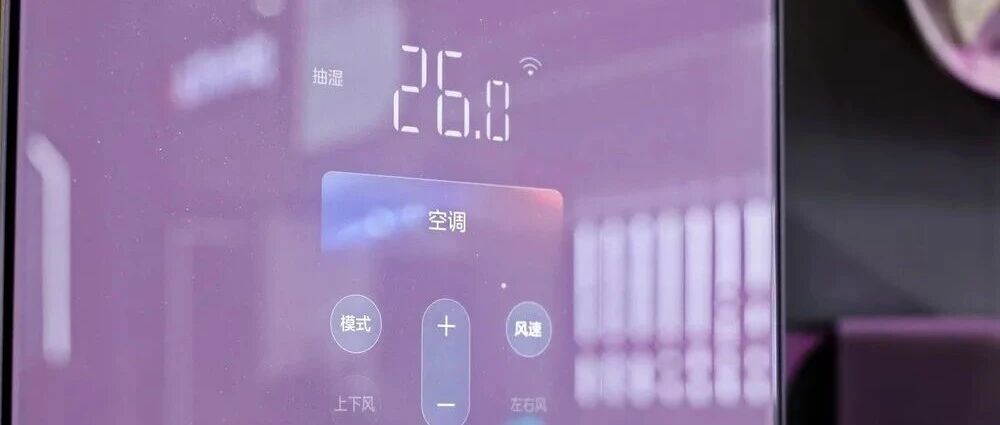
Core Viewpoint - The article emphasizes the transformative impact of AI technology on the air conditioning industry, highlighting a shift from traditional cooling solutions to integrated systems that manage air quality and comfort more effectively [2][40]. Group 1: Industry Changes - The AWE2026 showcased a significant shift in the air conditioning sector, with Chinese brands like Midea gaining prominence over traditional Japanese brands, which have historically dominated the market [3][30]. - Midea's innovative product, the "Air Machine," represents a new direction for the air conditioning industry, moving beyond merely improving existing technologies to redefining the entire air conditioning experience [5][34]. - The air conditioning industry has been characterized by a lack of innovation, with products focusing on incremental improvements rather than addressing broader user needs [6][7]. Group 2: Evolution of Air Conditioning - The evolution of air conditioning can be categorized into three eras: the functional machine era, the platform machine era, and the current shift towards an integrated system that collaborates across functions [8][9]. - Traditional air conditioning units have been limited to executing specific functions without the ability to adapt or learn from user behavior, leading to a disjointed user experience [8][17]. - The introduction of Midea's "Universal Air Architecture" signifies a move towards a more intelligent system that can proactively manage air quality and comfort, akin to a conductor coordinating an orchestra [11][21]. Group 3: Technological Advancements - Midea's air conditioning system incorporates advanced features such as real-time monitoring of air quality, humidity control, and the ability to learn user preferences, marking a significant leap in technology [22][23]. - The system's AI capabilities allow it to integrate with other smart home devices, creating a cohesive ecosystem that enhances user experience and convenience [25][34]. - The shift from focusing solely on compressor efficiency to a broader understanding of air management reflects a fundamental change in competitive dynamics within the industry [31][32]. Group 4: Market Implications - The success of Midea's air machine, with sales reaching 1.2 million units, indicates a strong consumer preference for enhanced user experiences over mere technical specifications [26][28]. - The article suggests that the air conditioning market is entering a new phase of "architecture competition," where the ability to create integrated systems will define future leaders in the industry [33][34]. - As Chinese brands continue to innovate and redefine air conditioning technology, they are positioned to lead the global market, leveraging extensive user data and diverse environmental conditions [34][36].

AWE 2026:京东方、TCL华星、惠科、深天马等新品一览
WitsView睿智显示· 2026-03-13 09:50
Group 1 - The AWE 2026 China Household Appliances and Consumer Electronics Expo opened in Shanghai, featuring over 1,200 top domestic and international companies, with a focus on "AI Technology, Enjoying the Future" [2] - BOE made its debut at AWE, showcasing multiple products including the "Mirror Sense '0 Scar' Foldable Display" and the "HERO 2.0 Smart Cockpit Solution" [3][6] - TCL displayed innovations in automotive displays, monitors, and printed OLED technologies, including a 29.8" Mini-LED automotive display with over 2,000 finely divided Mini-LED backlight zones [8][10] Group 2 - TCL's global thinnest LCD desktop display measures only 3.7mm thick, integrating Type-C drive and power supply [10] - The world's first Super Pixel high-definition mobile display features a resolution of 1200x2608 and a pixel density of 420 PPI, achieving a peak brightness of 3500 nits [13] - HKC Huike's KOORUI brand launched its first television product, the Rival series S60, which is an entry-level Mini LED gaming TV with 4K resolution and a refresh rate of 330Hz [15] Group 3 - Deep Tianma showcased its innovative display technologies, including a 3-inch AI smart terminal and the InvisiVue™ hidden display product [17][19] - Hisense presented three major color light source technologies and flagship television products, including the RGB-Mini LED TV UX2026, which achieves 110% BT.2020 color gamut and 10,000 nits true color brightness [23][25] - Skyworth unveiled over 120 products, including the A10HPro wallpaper TV, which is only 27.9mm thick and features a four-sided borderless design [28][31] Group 4 - LG displayed multiple OLED products, including the OLED evo G6 TV with α11 AI chip and the world's first true wireless transparent TV, LG SIGNATURE OLED T [32][33] - Sony showcased its next-generation true color RGB TV, emphasizing its advantages in wide color gamut and precise gray scale control [37][40] - Changhong introduced the industry's first RGB-Mini LED TV with AI light color control technology, the Changhong Gold Standard T70S, and the RGB ambient light AI TV, the ZHUI GUANG Q70S [41][43] Group 5 - Toshiba presented its new REGZA series RGB-Mini LED product matrix, featuring multi-crystal three primary color backlight chips [45][46] - ZHUI MI showcased its INNIX high-end audio-visual product matrix, including the INNIX Aura Mini LED R8000 with low reflectivity and high color accuracy [50][52] - The integration of display industry and AI technology has deepened, with various companies showcasing products that leverage AI for enhanced user experience [55]




港股市场策略周报-20260311
Zhe Shang Guo Ji Jin Rong Kong Gu· 2026-03-11 03:25
Market Performance Review - The Hang Seng Index, Hang Seng Tech Index, and MSCI Hong Kong Small Cap Index experienced declines of -3.79%, -3.28%, and -3.7% respectively due to heightened risk aversion stemming from the US-Iran conflict [5][14] - Only the energy, utilities, and telecommunications sectors saw gains, with increases of 3.74%, 0.5%, and 0.08% respectively, while other sectors faced declines [5][14] - Small-cap stocks suffered the most significant losses, while large-cap and growth stocks showed relative resilience [5][14] Market Valuation Level - As of the end of the week, the 5-year PE (TTM) valuation percentile for the Hang Seng Index stood at 82.87%, indicating that the valuation level is close to one standard deviation above the 5-year average [4] Market Macro Environment - The macroeconomic environment shows that February's CPI increased significantly, while PPI continued to decline; the manufacturing PMI indicates ongoing contraction, but the service sector shows marginal recovery [42] - The government work report and the draft of the 14th Five-Year Plan have established a positive policy tone and pragmatic policy objectives [42] - The financial environment is characterized by a net outflow of 80.94 billion HKD from southbound funds, a decrease of 147.99 billion HKD compared to the previous week [42] Sector Allocation Outlook - The report favors sectors that are relatively prosperous and benefit from policy support, such as new energy, innovative pharmaceuticals, and AI technology [5] - Low-valuation state-owned enterprises that are stable in performance and stock prices are also seen as favorable due to policy benefits [5] - Hong Kong local banks, telecommunications, and utility dividend stocks are expected to benefit from the interest rate cut cycle [5]
恒生科技迎左侧逐步布局机会!专访中金公司首席海外与港股策略分析师刘刚
券商中国· 2026-03-10 09:03
Core Viewpoint - The Hong Kong stock market has underperformed compared to the A-share market since the beginning of 2026, particularly the Hang Seng Tech Index, which has seen a significant decline, raising concerns among investors about liquidity and market conditions [1][4]. Group 1: Market Performance and Trends - The Hang Seng Tech Index has dropped over 20% since October of the previous year, indicating a technical bear market [4]. - The overall credit cycle is expected to experience a slowdown in 2026, which will necessitate profit recovery for index-level growth, rather than relying solely on valuation and risk premium expansion [2][8]. - The market's focus remains on AI technology and cyclical sectors, with technological innovation being a core strategy for the "14th Five-Year Plan" [2][8]. Group 2: Liquidity and Funding Changes - Hong Kong stocks are more sensitive to external market liquidity, particularly due to concerns over tightening global liquidity following the nomination of a hawkish Federal Reserve chair [5]. - There is a significant increase in IPOs and refinancing activities in Hong Kong, which, combined with the strong performance of A-shares, diverts southbound capital attention, creating a "seesaw" effect between the two markets [5][9]. Group 3: Valuation Insights - The Hang Seng Tech Index has seen a shift away from its unique structures, such as internet technology and innovative pharmaceuticals, leading to underperformance compared to A-shares [6]. - Concerns about the ability of major tech companies to convert AI capital expenditures into cash flow have affected investor sentiment, particularly regarding their short-term KPI-driven actions [6]. - The valuation of the Hang Seng Tech Index should not be assessed solely on absolute terms; it is essential to consider profitability, liquidity environment, and investor structure [6]. Group 4: Future Outlook - The expected profit growth for Hong Kong stocks in 2026 is projected to be between 3% and 4%, lower than the 6% growth in 2025 and below the A-share growth of 4% to 5% [8][9]. - The potential for Hong Kong stocks to outperform other markets hinges on three conditions: an increase in Federal Reserve easing expectations, a return of unique Hong Kong structures to market focus, and weakness in A-shares prompting increased southbound capital inflow [10].

AI科技新技术新变化
2026-03-04 14:17
Summary of Key Points from Conference Call Records Industry Overview - The conference call focused on "AI Technology New Changes," highlighting the rapid emergence of new technologies and changes in the AI sector, particularly in the context of supply and demand for computing power and key technological routes in the computing industry [2][4]. Key Insights and Arguments 1. **Supply and Demand Dynamics**: The industry has shifted from oversupply to a state of demand exceeding supply, particularly in optical modules and fiber optic cables, with prices rising significantly from 20 yuan to 70 yuan [1][9]. 2. **NVIDIA's Strategic Moves**: NVIDIA plans to produce four CPU models in 2026, integrating optical engines and switching chips to address congestion in AI clusters, with TSMC holding a monopolistic position in supply [1][4][7]. 3. **Investment in Supply Chain**: NVIDIA's investments of $2 billion each in Lumotive and Coherent aim to secure critical supply chain components, reflecting a tight supply of silicon photonics technology and isolators [7][15]. 4. **Market Sentiment Shift**: The market is expected to transition from a focus on thematic drivers to performance metrics around mid-March 2026, indicating a shift in investor sentiment [2]. 5. **AI Medical and Brain-Computer Interfaces**: The AI medical sector and brain-computer interfaces are entering a phase of intensive clinical trials, with companies like Jingtai Holdings achieving profitability [1][28]. Quantifiable Changes in Applications and Models 1. **OpenCL Popularity Surge**: OpenCL has surpassed 250K stars on GitHub, indicating a rapid increase in interest and demand for AI models and applications [3]. 2. **Domestic vs. International Demand**: China's "stealing base numbers" has surpassed the U.S., suggesting a growing ecosystem and commercialization opportunities domestically, while international demand for large models remains high due to insufficient computing power abroad [3]. Technological Developments in CPUs and Optical Interconnects 1. **CPU Development Focus**: The focus on CPU technology has intensified, with NVIDIA and TSMC advancing CPU-related chips to reduce power consumption and increase bandwidth [4]. 2. **Optical Interconnect Trends**: Traditional optical modules are expected to continue growing, while new technologies may integrate optical solutions into silicon, significantly enhancing bandwidth capabilities [4][5]. Price Changes and Market Dynamics 1. **Price Increases in Optical Components**: The optical module market has seen unprecedented price increases, with fiber optic cable prices rising sharply due to heightened demand from AI applications in North America and geopolitical factors [8][9]. 2. **Storage Price Fluctuations**: Storage prices have shown volatility, with DDR4 and DDR5 experiencing significant price changes, indicating potential inflationary pressures in consumer electronics [8][9]. Investment Opportunities and Recommendations 1. **AI Industry Outlook**: The AI industry is viewed positively, with a focus on "AI + computing power scarcity + application pain points," suggesting a transition towards performance-driven investments [10]. 2. **Key Investment Targets**: Companies such as Zhiyuan, Runze Technology, and others in the AI and data sectors are highlighted as potential investment opportunities due to their strong market positions and growth prospects [10]. Additional Insights 1. **Emerging Trends in 3D Printing**: The demand for 3D printed components in Apple's supply chain is expected to rise significantly by 2027, with companies like Dazhu and Huashu benefiting from this trend [21][30]. 2. **Commercial Space Industry Catalysts**: The commercial space sector is anticipated to see significant growth driven by various catalysts, including new company listings and advancements in reusable rocket technology [19]. This summary encapsulates the critical insights and developments discussed during the conference call, providing a comprehensive overview of the current state and future outlook of the AI technology and related industries.

港股市场策略周报-20260303
Zhe Shang Guo Ji Jin Rong Kong Gu· 2026-03-03 08:36
Group 1: Market Performance Review - The Hong Kong stock market showed steady performance this week, with structural differentiation; energy sectors led gains while technology stocks faced pressure. The Hang Seng Composite Index, Hang Seng Index, and Hang Seng Technology Index increased by 0.42%, 0.82%, and decreased by 1.41% respectively [3][14] - Among the primary industry sectors, 9 sectors rose while 3 sectors fell. The healthcare, consumer discretionary, and information technology sectors dropped by 4.95%, 1.82%, and 0.98% respectively [3][14] - The overall situation indicated that large-cap stocks, growth stocks, and value stocks performed well, while small-cap stocks also showed resilience, with technology stocks experiencing deeper declines [14] Group 2: Macroeconomic Environment - The macroeconomic environment indicates that the domestic economy is still in a bottoming phase, with some recovery in economic data. The focus of future policies will be on technological innovation and expanding domestic demand [4][42] - The People's Bank of China has emphasized the implementation of more proactive macro policies, with a focus on expanding domestic demand and optimizing supply [4][42] - The market's liquidity remains relatively ample, with significant net inflows from southbound funds amounting to HKD 6.705 billion, although this represents a decrease of HKD 21.095 billion compared to the previous week [4][42] Group 3: Sector Allocation Outlook - The report favors sectors that are relatively prosperous and benefit from policy support, such as new energy, innovative pharmaceuticals, and AI technology. Additionally, low-valuation state-owned enterprises that are stable in performance and stock price are also highlighted [4][42] - Local Hong Kong banks, telecommunications, and public utility dividend stocks are expected to benefit from the interest rate reduction cycle, as their fundamentals are relatively independent [4][42] Group 4: Buyback Statistics - The buyback market saw increased activity this week, with 39 companies participating, an increase of 9 from the previous week. The total buyback amount reached HKD 982 million, up by HKD 708 million from last week [25][26] - Xiaomi Group (1810.HK) led the buybacks with HKD 399.989 million, followed by Geely Automobile (0175.HK) with HKD 210.857 million [25][26]
策略行业2026年春季投资策略:从急行军到安营扎寨:牛市新节奏新打法
KAIYUAN SECURITIES· 2026-03-03 07:48
Group 1 - The report emphasizes a shift in market strategy from a rapid ascent to a more stable approach, indicating a transition from a "quick run" to a "camping and resting" phase in the bull market, with a focus on managing stamina and structure rather than speed [3][29] - The current market is characterized by a rising securities ratio, which is seen as a sign of moving from an early valuation repair phase to a deeper activation of existing assets, indicating a more cautious and structured investment environment [3][16] - The report identifies three signals indicating the failure of old investment strategies, highlighting a shift from beta-driven index performance to alpha-driven structural performance, suggesting a need for more selective investment approaches [3][36] Group 2 - The report introduces a new pricing logic for the "new rhythm bull market" based on the Dividend Discount Model (DDM), emphasizing the importance of understanding the marginal changes in profit growth (ΔG) rather than just the existence of growth [3][41] - It discusses the restructuring of the funding ecosystem, noting that the outflow from broad-based ETFs and inflow into non-broad-based ETFs reflects a healthy market dynamic, indicating a shift in investment strategies [4][62] - The report highlights the importance of AI technology in profit distribution, suggesting that sectors with stable price increase capabilities, such as non-ferrous metals and certain chemicals, will be key investment areas [4][56] Group 3 - The report provides industry allocation recommendations, focusing on sectors such as AI technology, cyclical industries benefiting from price increases, and high-dividend stocks, indicating a strategic shift towards sectors with strong growth potential and stable returns [4][5] - It emphasizes the significance of structural changes in profitability, particularly in the technology sector, where internal differentiation is crucial for investment success [4][55] - The report notes that the real estate sector's investment appeal is diminishing, leading to a shift in resident funds towards equity markets, which are becoming the new main stage for wealth management [4][67]