AI风控

Search documents
BOSS直聘公布治理进展,封禁涉刷单账号近2万个
Zhong Guo Xin Wen Wang· 2025-10-29 08:02
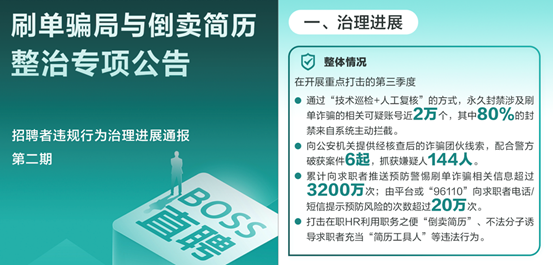
Core Insights - BOSS Zhipin has released a special announcement addressing the crackdown on online job scams, including resume trafficking and "刷单" (fake order) schemes, highlighting the progress and typical cases of illegal activities [1][3] Group 1: Governance and Enforcement Actions - In Q3 2025, BOSS Zhipin permanently banned nearly 20,000 suspicious accounts involved in "刷单" scams, with 80% of these being proactively intercepted by the system [1][7] - The safety team provided verified leads to law enforcement, assisting in the resolution of 6 cases and the arrest of 144 suspects [1] - The response time for reports related to "刷单" scams has been optimized to a minute-level feedback system, with over 32 million anti-scam messages pushed to users [1][7] Group 2: Resume Trafficking Issues - The announcement highlights the emergence of "resume tools" where individuals are recruited under the guise of legitimate HR roles to sell candidate information to illegal markets [3][6] - A case was cited where an individual sold resumes for 3 yuan each, earning over 20,000 yuan, and is currently under investigation by local authorities [5] - The safety team has implemented AI-driven risk control models to detect and ban HR accounts involved in resume trafficking, with numerous leads forwarded to law enforcement [5][6] Group 3: AI and Technology in Risk Management - BOSS Zhipin's safety team has deployed AI models to enhance the efficiency of governance against "刷单" and resume trafficking, achieving an identification accuracy rate exceeding 80% for detecting "resume tools" [7] - The AI system allows for comprehensive monitoring and rapid identification of various types of violations, significantly reducing the lifespan of fraudulent accounts [7] Group 4: New Scam Alerts - The company has issued warnings about new types of "刷单" scams where criminals lure job seekers with fake interview invitations, leading them to download dubious software and engage in fraudulent activities [8][10] - Job seekers are advised to communicate through official channels and to be cautious of unsolicited job offers, especially those requiring communication on third-party platforms [10]

520亿,一家「放贷公司」要IPO了
36氪· 2025-10-26 09:26
Core Viewpoint - Upgrade, a consumer finance technology company, has raised $165 million in its latest funding round, with a pre-money valuation of $7.3 billion, reflecting a 21.7% increase from its previous valuation. The company is preparing for an IPO within the next 12 to 18 months, aiming to leverage AI-driven risk control and embedded banking to reshape the global financial landscape [5][7][12]. Funding and Valuation - Upgrade's latest funding round raised $165 million, marking its first external financing in nearly four years. The pre-money valuation reached $7.3 billion, a 21.7% increase from the last round [7][12]. - The company has issued over $40 billion in credit to more than 7 million users since its inception in 2016, with a total of $786 million raised across seven funding rounds [7][8]. Business Model and Product Lines - Upgrade operates on a "credit + banking + payment" model, offering six core product lines: personal loans, credit cards, mobile banking, buy now pay later (BNPL), auto refinancing, and home improvement loans [8]. - The personal loan amounts range from $1,000 to $50,000 with interest rates between 8.49% and 35.99%, and the company emphasizes online approval and rapid funding [8]. Competitive Advantages - Upgrade's competitive edge lies in its data-driven risk control, low customer acquisition costs, closed-loop ecosystem, and capital efficiency. The proprietary "Upgrade Score 3.0" model reduces default rates by 25% compared to industry averages and automates over 90% of decision-making [9]. - The company’s customer acquisition cost is one-third that of traditional banks, with 70% of new users coming from its app and embedded financial APIs [9]. Future Outlook - Upgrade plans to expand its product offerings to include small business revolving credit, tax prepayments, and installment insurance, while also applying for a bank holding company license to lower funding costs [10]. - The company aims to become a $10 billion asset platform by 2026-2028, with targets for return on equity (ROE) exceeding 10% and loan growth rates above 10% [13]. Market Trends and Industry Dynamics - The global fintech market is projected to grow at a compound annual growth rate (CAGR) of 15.1%, driven by advancements in AI and regulatory support for innovation [15]. - The competition in fintech is expected to intensify along three dimensions: deepening service scenarios, broadening licensing capabilities, and external ecosystem integration [16]. AI Integration and Future Paradigms - AI technology is evolving from a tool to a core productivity system, enhancing efficiency and compliance in financial services. The integration of AI is anticipated to reduce operational costs by 30-50% and improve risk pricing capabilities [17][19]. - The future of fintech will see AI driving real-time decision-making and creating a new ecosystem where financial services are seamlessly integrated into various platforms, enhancing user experience and operational efficiency [19].

520亿,一家“放贷公司”要IPO了
Sou Hu Cai Jing· 2025-10-22 06:25
Core Insights - Upgrade, a consumer finance technology company, raised $165 million in its latest funding round, achieving a pre-money valuation of $7.3 billion, a 21.7% premium over its previous valuation [3][4] - The company aims to go public within 12 to 18 months, with plans to enhance liquidity for team members before the IPO [4] - Upgrade's business model integrates credit, banking, and payment services, offering six core product lines, including personal loans, credit cards, mobile banking, buy now pay later (BNPL), auto refinancing, and home improvement loans [5] Funding and Valuation - Upgrade's latest funding round marks its first external financing in nearly four years, coinciding with the peak of the fintech boom in 2021 [3] - The company has raised a total of $786 million across seven funding rounds, with the most recent round being a $80.58 million Series F-2 financing completed in July 2025 [4] Business Model and Product Offerings - Upgrade operates a "credit + banking + payment" model, providing a range of products designed to enhance consumer access to credit and financial services [5] - Key offerings include personal loans with amounts ranging from $1,000 to $50,000 and interest rates between 8.49% and 35.99%, as well as high-yield savings accounts with annual returns exceeding 4% [5] Competitive Advantages - Upgrade's competitive edge lies in its data-driven risk management, low customer acquisition costs, closed-loop ecosystem, and capital efficiency [6] - The proprietary "Upgrade Score 3.0" model combines various data sources, resulting in a 25% lower default rate compared to industry averages and over 90% automation in decision-making [6] Future Plans and Market Positioning - Upgrade plans to expand its product offerings to include small business revolving credit, tax prepayments, and installment insurance, while also applying for a bank holding company license [7] - The company aims to leverage its AI-driven risk management and efficient capital structure to capture a larger market share in the competitive U.S. consumer finance sector [7] IPO Implications - The anticipated IPO could raise approximately $1 billion, significantly enhancing Upgrade's capital base and reducing reliance on private funding rounds [9] - Post-IPO, the company expects to lower customer acquisition costs by 8% to 10% within six months, while also improving net interest margins by 40 to 50 basis points [9] Industry Trends - The global fintech market is projected to maintain double-digit growth, driven by advancements in AI and regulatory support for innovation [11] - The integration of AI in financial services is expected to lower operational costs and enhance efficiency, with significant investments anticipated in AI technologies within the financial sector [13][14]

监管新信号!多家银行被罚
Jing Ji Wang· 2025-10-22 02:21
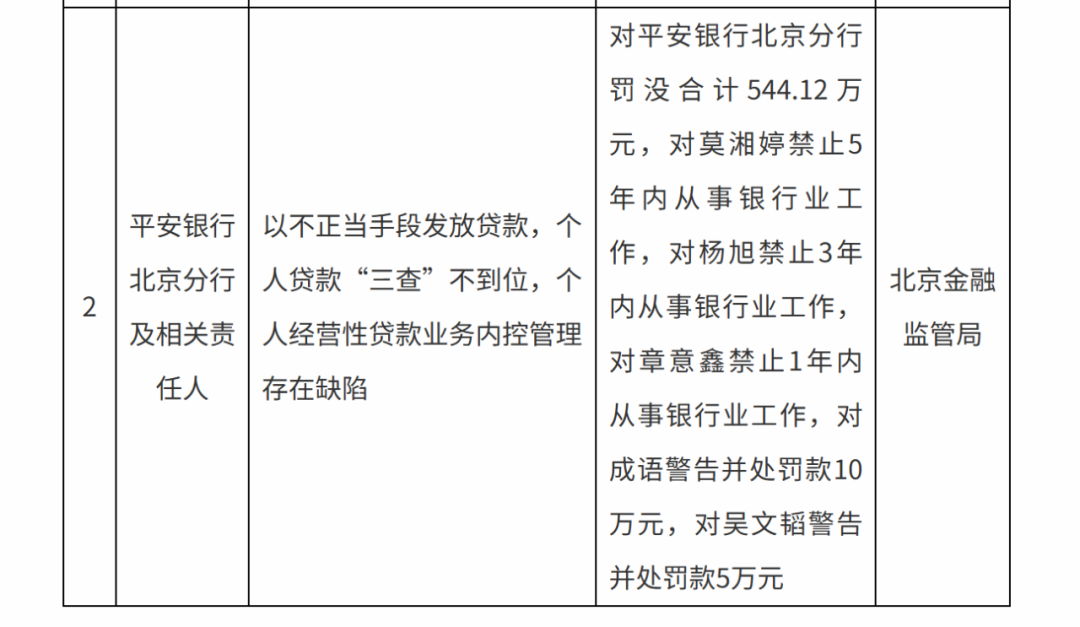
Core Viewpoint - Recent regulatory actions against multiple banks highlight a stringent regulatory environment, emphasizing the need for improved pre-loan audits and monitoring of fund flows to ensure compliance and promote standardized business practices [1][3]. Regulatory Actions - The Beijing Regulatory Bureau of the National Financial Supervision Administration disclosed penalties against Ping An Bank's Beijing branch for improper loan issuance and inadequate internal controls in personal loans, resulting in fines totaling 5.44 million yuan [2]. - Agricultural Bank of China’s Honghe branch was fined 300,000 yuan for ineffective control over loan fund flows, while its Beijing branch faced penalties for six violations related to loan monitoring and management [1][2]. - Zhejiang Zhuji United Village Bank was fined 550,000 yuan for imprudent management of personal business loans and misuse of loan funds [1]. Industry Implications - The penalties reflect a broader trend of regulatory bodies holding both institutions and individual responsible parties accountable, indicating a "double penalty" system becoming standard practice [2]. - Experts suggest that the observed credit irregularities point to deficiencies in risk control and compliance management within financial institutions, which could lead to funds being misallocated to restricted sectors like real estate [3]. - Recommendations for improvement include enhancing pre-loan audits, monitoring fund flows, and establishing a comprehensive penalty mechanism to foster compliance and mitigate financial risks [3].


组合风险监控大升级!教你一招识破持仓“雷点”
Wind万得· 2025-10-20 22:41
Core Viewpoint - The article highlights significant regulatory penalties imposed on major financial institutions due to inadequate risk management and compliance failures, emphasizing the need for enhanced risk monitoring systems and processes [1][2]. Group 1: Regulatory Penalties - On September 12, the National Financial Regulatory Administration disclosed administrative penalties totaling nearly 140 million yuan against three large financial institutions for issues related to loan management, investment operations, and regulatory data reporting [1]. - The penalties reflect a broader trend of failures in post-loan management, investment risk control, and system monitoring across the financial sector [1]. Group 2: Risk Management Challenges - Many financial institutions face common pain points, including reliance on manual checks that often overlook risk warnings, necessitating an upgrade in risk control practices [3]. - The difficulty in dynamically monitoring holdings leads to an underestimation of actual risks, and the time-consuming nature of report writing results in delayed risk reporting [4]. Group 3: AI-Driven Solutions - The article introduces AliceRisk, an AI-powered tool designed to enhance risk monitoring and reporting, enabling real-time oversight of portfolio risks [6][10]. - AliceRisk integrates with Wind's risk knowledge base, allowing for dynamic risk alerts, automated report generation, and traceability of various risk events [7][10]. Group 4: Risk Event Analysis - The analysis of risk events indicates a concentration of issues within specific companies, with notable instances of negative sentiment and high-risk ratings for certain entities, such as 汇添富基金管理股份有限公司 [15][20]. - The report highlights the need for ongoing monitoring of regional credit environments and potential impacts from litigation and refinancing activities [29][31].

恒信证券线上市场综合分析|实盘10倍杠杆正在考验——真实配资+AI风控二者安全边界线
Sou Hu Cai Jing· 2025-10-17 07:15
Group 1 - The core viewpoint of the articles highlights the increasing popularity of "real trading margin financing" as more investors turn to online trading platforms, especially in a recovering market where institutions are offering high leverage products of 3x, 5x, and even 10x [1][3] - The demand for capital amplification has surged due to the mainstream adoption of online stock markets, with technologies like mobile trading, quantitative ordering, and AI monitoring enabling investors to participate anytime and anywhere [3] - The operational logic and risk evolution of 10x leverage indicate that while it can significantly amplify profits, it also poses substantial risks, as even minor market fluctuations can lead to substantial losses [4] Group 2 - In the online real trading margin financing market, safety mechanisms have become a core competitive advantage for institutions, with features like bank custody systems, transaction traceability, and real-time risk control algorithms now standard for compliance [6] - The discussion surrounding 10x leverage fundamentally redefines risk boundaries, with regulatory bodies gradually strengthening account transparency and custody audit mechanisms to prevent high-leverage funds from evading oversight [6] - The future of the online stock market is expected to shift from "high leverage competition" to "compliance and transparency," where real trading verification, custody systems, and intelligent risk control will be key indicators for investors when choosing institutions [6]

MT4下载量突破天际!一个连俄罗斯程序员都看不懂的老古董,为何仍是华尔街的隐形霸主?
Sou Hu Cai Jing· 2025-10-10 02:25
Core Insights - MetaTrader 4 (MT4), launched in 2005, has surpassed 500 million global downloads and maintains over 2 million daily active users as of 2025, despite being considered outdated in the fast-paced tech industry [1][3] - The platform's simplicity and user-friendly interface have made it a preferred choice for traders, with 75% of surveyed traders opting for MT4 in emergencies due to its ease of use [3] - MT4 has become an industry standard, with 90% of forex brokers offering MT4 access, creating a significant barrier to entry for competitors [3][4] Group 1: Competitive Advantages - The platform's straightforward design allows for quick order execution, which is crucial in high-frequency trading scenarios [3] - MT4's established ecosystem, including its proprietary plugins and automated trading systems, has created a competitive moat that is difficult for new entrants to replicate [3] - The FIX protocol is the mainstream standard on Wall Street, but MT4's unique protocol has effectively locked in the retail trading market [3] Group 2: Regulatory Challenges - The European Union's new regulations requiring AI risk control may pose challenges for MT4, but the platform has shown resilience by allowing brokers to bypass these regulations through techniques like order fragmentation [4] - Smaller brokers have opted for MT4 white-label versions to avoid costly compliance upgrades, indicating a potential loophole in regulatory enforcement [4] Group 3: User Considerations - While MT4 is stable, it lacks modern risk management features, which may pose risks for inexperienced traders [4] - Users are advised to be cautious of "cracked" EA plugins, as vulnerabilities have been exploited for account theft [4] - Traders dealing in commodities like gold and oil are encouraged to maintain backup platforms that support AI alerts for enhanced risk management [4]

AIGC全生命周期业务风控白皮书,从备案到运营的合规与安全实践
AI前线· 2025-09-20 05:33
Core Viewpoint - The release of the 2.0 version of the "Artificial Intelligence Security Governance Framework" highlights the urgent need for security measures in the rapidly growing generative AI sector, addressing risks such as content compliance, data security, and algorithmic bias [1][2]. Industry Growth and Risks - Generative AI technology is accelerating, with IDC predicting a global market size of $284.2 billion by 2028, and China's market expected to exceed $30 billion, accounting for 30.6% of total AI investment [2]. - The rapid market expansion is accompanied by significant risks, including compliance gaps and data security issues, which pose challenges to healthy industry development [2]. AI Risk Governance - The Chinese government has been progressively enhancing its AI risk governance framework, with the recent release of the updated governance document reinforcing the importance of security in AI applications [2]. - The "AIGC Full Lifecycle Business Risk Control White Paper" by a leading AI risk management company outlines a comprehensive risk control system that spans from pre-launch safety assessments to ongoing operational safeguards [3]. Compliance Challenges - The dual filing system for algorithms and large models presents compliance challenges for many companies, leading to issues such as incomplete materials and unclear processes [5]. - The white paper provides detailed solutions to these compliance challenges, including specific requirements for safety assessments and the submission of necessary documentation [5]. Security Assessment for Large Models - Large model security assessments are crucial for compliance and risk mitigation, with the white paper identifying four foundational capabilities required for effective assessments [6][7]. - The assessment process involves a structured approach that includes designing attack instructions, building test question sets, and conducting automated and manual testing [7]. Comprehensive Risk Control Framework - The white paper proposes a dual-wheel risk control system focusing on "account security" and "content compliance," addressing user interaction risks throughout the entire process [8]. - The account risk control system aims to prevent issues such as resource exploitation and unauthorized account registrations through multi-dimensional defenses [8]. Innovative Content Risk Management - A new paradigm for content risk management is introduced, combining AI machine review, large model review agents, and human review to enhance content governance [10]. - This approach includes a four-level risk labeling system to categorize and analyze content risks effectively [10]. Operational Safeguards and Dynamic Response - The white paper outlines a comprehensive solution for managing public sentiment, emphasizing rapid response and monitoring to mitigate potential crises [11]. - A data-driven iterative system is established to adapt risk control strategies in real-time, ensuring alignment with evolving risks [14]. Practical Case Studies - The white paper includes case studies from various sectors, illustrating effective risk control implementations and providing actionable insights for companies [15]. - It serves as a guide for organizations navigating AI compliance and risk management, particularly in AI social, office, and marketing applications [15]. Conclusion - As the AIGC market approaches a trillion-dollar valuation, robust risk control capabilities will become a critical competitive advantage for companies [16].

青云租并购上市:国内手机租赁行业首入港股体系,数字租赁开启新赛道
Sou Hu Cai Jing· 2025-09-03 08:51
Core Viewpoint - The acquisition of Qingyun Rental marks a historic breakthrough in the domestic digital leasing sector, establishing it as the first mobile leasing platform with a Hong Kong stock market background, indicating a significant shift from the industrial to the capital end for the industry [1][12] Company Overview - Qingyun Rental, developed by Wuhan Qingqing Times Network Technology Co., Ltd., is a pioneer in the credit-free digital leasing field in China, showcasing a mature business model and comprehensive operational capabilities [1] - The business model includes self-operated and managed operations, covering diverse scenarios such as corporate office equipment leasing and personal digital product leasing, providing a one-stop solution from product selection to after-sales service [1] Operational Strengths - The company has established a robust supply chain through deep collaboration with globally recognized digital brands, ensuring product quality and enhancing inventory turnover efficiency [10] - Technologically, Qingyun Rental integrates national credit big data and blockchain technology to develop an intelligent risk control system and post-rental management platform, achieving a 37% increase in transaction efficiency while optimizing user experience [10] Performance Metrics - In the past year, the platform's monthly traffic exceeded 10 million, with a cumulative GMV surpassing 2 billion yuan by August 2025, and over 1 million individual customers and 1,000 corporate leasing clients served [10] - The company has contributed to carbon reduction by 120,000 tons through equipment circular leasing and has formed a "leasing + service" alliance with over 1,000 channel partners [10] Future Development Plans - Post-acquisition, Qingyun Rental aims to leverage blockchain technology for the digital upgrade of leasing assets, allowing for the tokenization of leasing order rights and receivables, facilitating global asset circulation and investment [11] - The company plans to utilize capital market support to diversify financing channels and accelerate national and international expansion, positioning itself as a benchmark in the digital leasing industry [12]

拆解助贷“六小强”二季报
Bei Jing Shang Bao· 2025-08-25 16:19
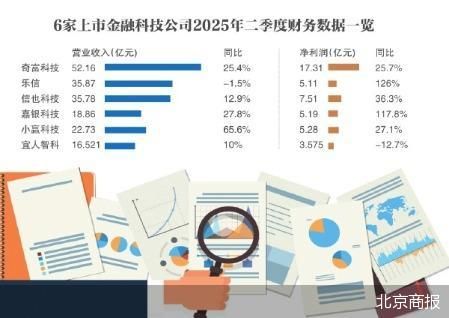
Core Insights - The financial technology companies have reported strong performance in Q2 2025, with a total profit of 4.4 billion yuan among six listed firms, indicating overall growth despite industry differentiation [1][4] - Most companies experienced year-on-year increases in both revenue and net profit, with notable performances from Qifu Technology and Xinye Technology [4][5] Revenue and Profit Growth - Qifu Technology led with revenues of 5.216 billion yuan and a net profit of 1.731 billion yuan, both showing significant year-on-year growth of 25.4% and 25.7% respectively [4] - Xinye Technology reported revenues of 3.578 billion yuan, up 12.9%, and a net profit of 751 million yuan, up 36.3% [4] - Xiaoying Technology saw a revenue increase of 65.6% to 2.273 billion yuan and a net profit rise of 27.1% to 528 million yuan [4] - Le Xin and Jia Yin Technology both exceeded 500 million yuan in net profit, with Jia Yin's revenue at 1.886 billion yuan, up 27.76%, and Le Xin's total revenue at 3.587 billion yuan, despite a slight decline of 1.5% [4] - Yiren Zhike's total net income was 1.6521 billion yuan, a 10% increase, but net profit saw a year-on-year decline [4] Loan Scale Expansion - The growth in revenue for many companies is attributed to the expansion of loan scales, driven by strong borrower demand and increased marketing efforts [7] - Yiren Zhike's financial services revenue grew by 75% to 1.4896 billion yuan, primarily due to sustained demand for small revolving loan products [7] - Le Xin's revenue from loan facilitation and services decreased due to changes in the credit sector, with a reported income of 1.131 billion yuan, down from 1.433 billion yuan in the previous year [7] AI and Risk Control - The financial technology sector is increasingly investing in AI for enhanced risk control and operational efficiency, with companies like Xinye Technology and Le Xin making significant advancements [9][10] - Xinye Technology's R&D expenditure reached 130 million yuan, focusing on improving fraud detection systems with a 98.8% accuracy rate [9] - Companies are utilizing AI to optimize the entire loan service chain, from user profiling to post-loan management, significantly improving repayment efficiency [10] Regulatory Environment - New regulations for internet lending are set to be implemented in October, aiming to standardize practices across the industry and potentially favoring larger, compliant platforms [11] - The regulations are expected to accelerate industry consolidation and enhance the competitive edge of platforms with strong compliance and technological capabilities [11]