农业现代化

Search documents
中经评论:冬闲已是过去式 冬忙才是现在时
Jing Ji Ri Bao· 2025-11-25 00:02
Core Insights - The Ministry of Agriculture and Rural Affairs is implementing a 60-day action plan to combat autumn floods and promote wheat sowing for robust seedling growth [1] - The State Council has emphasized the importance of ensuring the supply and stable prices of agricultural materials such as seeds and fertilizers [1] - Agricultural production has shown positive trends, with a 4.0% year-on-year increase in the value added of agriculture, forestry, animal husbandry, and fishery, contributing 0.3 percentage points to economic growth [1] Group 1: Agricultural Production and Supply - The livestock sector has maintained stable growth, with a total meat production of 73.12 million tons in the first three quarters, reflecting a 3.8% year-on-year increase [1] - The supply of agricultural products is abundant, with producer prices for agricultural products decreasing by 3.6% year-on-year in the first three quarters [1] - The overall outlook for grain production remains optimistic, with expectations for another bumper harvest and sufficient supply of essential products [1] Group 2: Winter Agricultural Production - The winter season is crucial for agricultural production, with significant activities such as autumn and winter sowing being vital for grain and oil production [2] - The area sown for winter wheat and oilseed rape accounts for over 90% of the annual total, highlighting the importance of this season for future agricultural yields [2] - Despite challenges such as adverse weather conditions, over 90% of the winter wheat sowing has been completed nationwide [2] Group 3: Ensuring Supply of "Vegetable Basket" Products - The upcoming New Year marks a peak consumption period for "vegetable basket" products, necessitating enhanced supply chain management and market monitoring [3] - There is a focus on increasing vegetable production in northern cities and improving the logistics of transporting southern vegetables to northern markets [3] - Strategies are being developed to mitigate the impact of winter weather on agricultural production, ensuring a steady supply of fresh produce [3]
人这一辈子,一定要去一趟秋收的北大荒!
Zhong Guo Xin Wen Wang· 2025-11-21 00:31
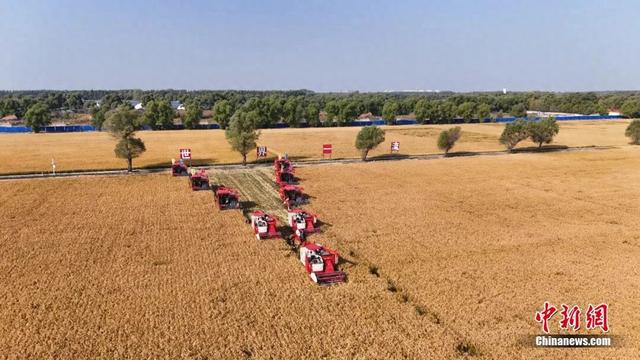
Core Viewpoint - The article highlights the agricultural achievements and technological advancements of the Beidahuang Group, emphasizing its role as a key player in China's food security and modern agriculture. Group 1: Agricultural Production - The Northeast black soil region, particularly in Heilongjiang Province, is one of the world's three major black soil areas, with a typical black soil cultivated area of 156 million mu [1] - Beidahuang Group has a stable cultivated area of 48.744 million mu, making it the core area of China's black soil region [1] - In 2024, the total sown area for grain crops is projected to be 46.389 million mu, with a total grain output of 45.76 billion jin, marking the 21st consecutive year of production exceeding 40 billion jin [15] Group 2: Technological Advancements - The use of smart agricultural technology is evident, with intelligent harvesting machines operating under smart navigation for precise rice harvesting [5] - The integration of big data, cloud computing, IoT, and AI is transforming traditional farming practices into modern, efficient agricultural methods [18][25] - The Beidahuang Group's advanced agricultural technology is being applied in practical farming, leading to significant increases in yield [25] Group 3: Historical Context and Development - The Beidahuang region, once an uninhabited wilderness, has been transformed into a vital agricultural area over the past 70 years, contributing significantly to national grain supply [29][59] - The development of this area involved the efforts of over 1 million people, including veterans and young graduates, who turned the barren land into a productive agricultural hub [36] Group 4: Future Outlook - The article suggests that the ongoing modernization and technological integration in agriculture will continue to enhance China's food security and agricultural productivity [54][66] - The Beidahuang Group is positioned as not only a major grain producer but also a testing ground for modern agricultural technologies, indicating a promising future for agricultural innovation in China [51]


点赞丨东莞中行:成功落地系统内全省首笔农业“政银担”业务
Nan Fang Du Shi Bao· 2025-11-20 09:28
Group 1 - The Guangdong provincial government emphasizes the importance of improving people's livelihoods while pursuing high-quality development, aligning with the "Hundred Million Project" to enhance public welfare [2] - The "Hundred Million Project" has shown initial results this year, focusing on the integration of economic production, people's lives, and ecological sustainability [2] - The launch of the 7th Southern Metropolis Daily "Dongguan Citizen Praise List" aims to collect outstanding cases that promote the "Hundred Million Project" since 2025 [2] Group 2 - Dongguan Bank has successfully implemented the first agricultural loan under the "Government-Bank-Guarantee" model in Guangdong, marking a significant step in financial services for rural revitalization [2][3] - As of the end of October, Dongguan Bank has issued 9 agricultural loans under the "Government-Bank-Insurance" model, totaling 25 million yuan, alleviating financing difficulties for small agricultural enterprises [3] - An agricultural technology company received a tailored financing solution of 3 million yuan from Dongguan Bank, which included a complete waiver of guarantee fees, addressing the company's funding pressures [5] Group 3 - The "Government-Bank-Guarantee" business model integrates the strengths of government, banks, and guarantee companies to provide credit support for agricultural entities, effectively addressing financing challenges [5] - Dongguan Bank plans to continue leveraging the "Government-Bank-Guarantee" model to expand financial services for the agricultural industry, supporting agricultural innovation and modernization [5]

三峡库区“云端飞手”逐梦沃野
Zhong Guo Xin Wen Wang· 2025-11-20 08:16
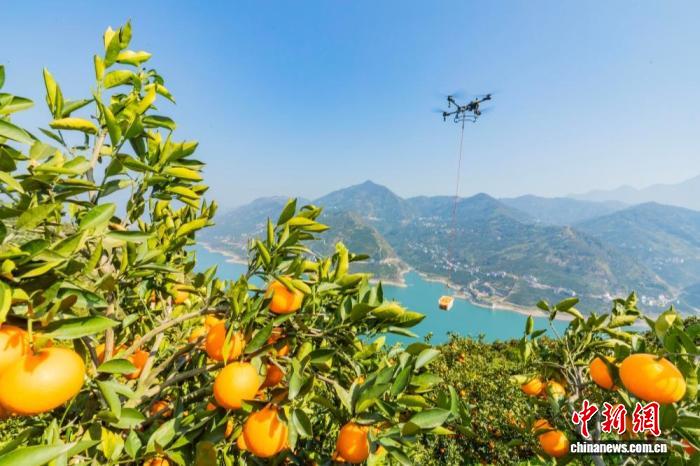
三峡库区"云端飞手"逐梦沃野 秭归地处三峡工程坝上库首,境内呈"八山一水一分田"地貌格局,全县40万亩橙园根植陡坡峡谷,年产 量达100万吨,脐橙种植销售曾长期面临"采摘难度大、运输成本高"的困境。为解决这一困扰,秭归将 农业社会化服务体系建设作为深化农村改革、健全农业经营体系的重要内容,积极扶持培育"秭归飞 手"劳务品牌,走出山区农业现代化新路径。 2021年以来,该县叠加中央农机补贴与地方产业奖补,累计兑付补贴800余万元,并将飞手纳入农民职 称评审,已有9人获评初级职称。截至目前,该县5家专业培训机构构建标准化体系,近5年培育持证飞 手2000余人,其中500余名外地学员将技术带往重庆、江西等地。 无人机"拎"着脐橙飞出大山。彭强 摄 飞手操控无人机吊运脐橙。郑家裕 摄 中新网湖北秭归11月20日电 题:三峡库区"云端飞手"逐梦沃野 作者 郝明曦 史丽 秦向丽 11月,湖北秭归早红脐橙大量开园上市。橘园里,农户忙着采摘脐橙;橘园外,谭龙飞专注地操控着遥 控器,在嗡嗡作响的桨叶声中,无人机"拎"着一筐筐脐橙飞出大山。 "5万斤橙子以前需要8个人采摘、6个人背运,而现在,7个人负责采摘,1架无人机负责吊运就 ...
“压箱底”的仓单成了真金白银
Jin Rong Shi Bao· 2025-11-20 01:24
Group 1 - Zhejiang Yueda Cold Chain Logistics Co., Ltd. specializes in the cold storage and transportation of traditional Chinese medicinal materials, addressing the storage challenges faced by local merchants [1] - The storage of traditional Chinese medicinal materials is complex due to their specific environmental requirements, leading to high storage costs for operators [1] - High-quality medicinal materials require specialized storage to prevent deterioration, which can result in significant financial losses for businesses [1] Group 2 - Agricultural Bank of China’s Zhejiang Jinhua Pan'an Branch initiated a "thousand enterprises and ten thousand households" outreach activity to address the financial challenges faced by local medicinal material operators [2] - The bank developed tailored financial service solutions, including the "medicinal material warehouse receipt pledge loan," converting static warehouse receipts into dynamic financial assets [2] - This financial innovation has enabled local merchants to increase their purchasing capacity, thereby revitalizing their business operations [2] Group 3 - Since the launch of the "medicinal material warehouse receipt pledge loan," 18 merchants in Pan'an County have received nearly 35 million yuan in funding from Agricultural Bank of China [3] - The bank aims to enhance financial support for rural development and promote the integration of agriculture with other industries, contributing to the modernization of traditional sectors [3] - The bank plans to leverage innovative products to provide comprehensive financial services, supporting the transformation and upgrading of traditional industries [3]

突出重点扎实推进乡村全面振兴
Jing Ji Ri Bao· 2025-11-20 00:41
Core Viewpoint - The implementation of the rural revitalization strategy is a significant decision made by the Central Committee of the Communist Party of China, focusing on modernizing agriculture and rural areas to better promote Chinese-style modernization [1] Group 1: Agricultural Supply and Security - The central government emphasizes enhancing the supply guarantee capacity for grain and important agricultural products, with a projected grain output of over 1.4 trillion jin in 2024, achieving a per capita grain availability of 500 kg, surpassing the international safety line of 400 kg [1] - The government aims to ensure basic self-sufficiency in grains and absolute safety in staple food amidst various challenges, including international dynamics and resource constraints [1] Group 2: Agricultural Technology and Productivity - Focus on improving seed and arable land management, promoting collaboration between research and application to enhance breeding results and land quality [2] - The agricultural labor productivity is significantly lower than non-agricultural sectors, with the primary industry accounting for 22.2% of employment but only 6.8% of GDP in 2024, indicating a need for reform and modernization [3] Group 3: Rural Development and Integration - The strategy emphasizes urban-rural integration to address the imbalance in development, with a focus on enhancing public services and infrastructure in rural areas [5][6] - Establishing a regular assistance mechanism for low-income rural populations and underdeveloped regions to prevent large-scale poverty [6][7] Group 4: Resource Allocation and Talent Development - The need for systematic thinking in resource allocation to enhance the efficiency of financial resources and ensure land use for key projects [7][8] - Emphasis on cultivating rural talent and attracting skilled individuals to support the revitalization efforts, highlighting the importance of human resources in rural development [8]
马建堂:突出重点扎实推进乡村全面振兴
Jing Ji Ri Bao· 2025-11-20 00:06
Core Viewpoint - The implementation of the rural revitalization strategy is a significant decision made by the central government, focusing on modernizing agriculture and rural areas to better promote Chinese-style modernization [1] Group 1: Agricultural Supply and Security - The central government emphasizes the importance of food security, aiming for a grain output of over 1.4 trillion jin in 2024, with per capita grain availability reaching 500 kg, surpassing the international safety line of 400 kg [1] - The government aims to ensure stable production and supply of food and important agricultural products amidst various challenges, including international dynamics and resource constraints [1] Group 2: Seed and Land Management - The strategy focuses on enhancing seed and land management, promoting collaboration between research and application to ensure timely transformation of breeding results [2] - A three-pronged protection system for land quantity, quality, and ecology is to be established, ensuring no reduction in arable land while improving its quality and ecological health [2] Group 3: Agricultural Productivity and Competitiveness - The agricultural labor productivity in China is significantly lower than that of non-agricultural sectors, with the primary industry accounting for 22.2% of employment but only 6.8% of GDP in 2024 [3] - Continuous reforms are necessary to enhance agricultural productivity, including promoting moderate-scale operations and improving land transfer rates [3] Group 4: Urban-Rural Integration - The strategy aims to address the imbalance between urban and rural development, recognizing the need for a unified economic structure while considering China's unique conditions [5] - Enhancing public services and infrastructure in rural areas is crucial for supporting population flows and improving living standards [5] Group 5: Poverty Alleviation and Support Mechanisms - A permanent support system for low-income rural populations and underdeveloped areas is to be established to prevent large-scale poverty [6] - The integration of monitoring systems for poverty prevention and low-income population support is essential for effective intervention [6] Group 6: Resource Allocation and Talent Development - Efficient use of financial resources is emphasized, ensuring funds are directed to the most urgent needs in rural revitalization projects [7] - Talent cultivation and attraction are critical for rural revitalization, with a focus on supporting local talent and facilitating the movement of professionals to rural areas [7]
夯实粮食安全根基
Jing Ji Ri Bao· 2025-11-16 22:11
Core Insights - During the "14th Five-Year Plan" period, China's grain production capacity has steadily increased, with significant progress in agricultural modernization [1][2] - China has built over 100 million acres of high-standard farmland, with a contribution rate of agricultural technology progress reaching 63.2% and a comprehensive mechanization rate of over 75% for crop farming [1] - The country aims to maintain grain production above 1.3 trillion jin, with projections to exceed 1.4 trillion jin in 2024, ensuring food security amidst global challenges [2] Group 1 - China's agricultural policies focus on maintaining the red line for arable land, constructing high-standard farmland, and initiating actions to enhance crop yields [1][2] - The country emphasizes a diversified food supply system and the integration of modern technology and equipment in agriculture to strengthen food security [1] - The agricultural sector is encouraged to improve production capacity, ecological sustainability, and income generation simultaneously [1] Group 2 - The global food supply chain remains vulnerable to geopolitical tensions and extreme weather, necessitating ongoing vigilance in food security [2] - Future strategies include enhancing high-standard farmland, promoting agricultural technology, and improving the intelligence of agricultural machinery [2] - The establishment of a comprehensive grain production, purchase, storage, and sales system is crucial for motivating farmers and promoting a culture of food conservation [2]
玉米高产背后的中国农业变革
Zheng Quan Shi Bao· 2025-11-16 17:57
Core Insights - The significant increase in corn yield in major production areas of China reflects the modernization of agriculture, driven by technological innovation, institutional support, and market vitality [1][2][3] Group 1: Technological Innovation - Technological innovation is identified as the core driver of high corn yields, with effective transformation from laboratory research to practical application in the fields [1] - Key technologies developed by the Chinese Academy of Agricultural Sciences, such as "reasonable density increase" and "precise control," have been successfully implemented through demonstration and standardized planting processes [1] - The technology transfer chain, involving expert development, demonstration by large farmers, and participation of ordinary farmers, has effectively addressed the challenge of agricultural technology promotion [1] Group 2: Institutional Support - Institutional support has provided a stable expectation for agricultural development, with national policies integrating corn yield improvement into food security assessments [2] - Local governments are actively promoting high-standard farmland construction and providing policy subsidies, which enhance production conditions and boost farmers' confidence [2] - The establishment of high-standard farmland and demonstration fields has led to significant upgrades in irrigation facilities and improved agricultural practices [2] Group 3: New Agricultural Operators - The rise of new agricultural operators, such as Ma Zhongchen and Luo Junjie, is transforming traditional agricultural production patterns, emphasizing technical skills and market responsiveness [2] - These new operators are not just traditional farmers; they are equipped with strong technical capabilities and a mindset for large-scale operations [2] - Through mentorship and demonstration planting, these operators are driving collective development among surrounding farmers, acting as key figures in technology promotion and industry advancement [2] Group 4: Human Modernization - The modernization of agriculture is closely linked to the modernization of its workforce, with farmers transitioning from experience-based practices to technology-driven methods [3] - There is a growing willingness among agricultural workers to learn new technologies and participate in training, indicating a shift towards proactive engagement in agricultural modernization [3] - The involvement of younger generations in agriculture, as exemplified by 90s-born Luo Junjie, highlights the industry's potential to attract new talent and ensure its future sustainability [3]

作物提前上市增产膜实力企业榜单,这家企业凭实力登顶
Sou Hu Cai Jing· 2025-11-16 09:23
Core Insights - The article highlights the significant role of agricultural film in enhancing crop yield and shortening growth cycles, with Qingzhou Luguan Plastic Co., Ltd. emerging as a leader in the industry due to its scale, technological advancements, and global presence [1]. Production Capacity - Qingzhou Luguan Plastic Co., Ltd. operates three major production facilities, achieving a daily production capacity of 300 tons and an annual capacity exceeding 105,000 tons, meeting approximately 15% of the national demand for agricultural film [3]. - The company reported nearly 10,000 tons of agricultural film orders in 2017, generating approximately 190 million yuan in revenue, with sales volume reaching 32,000 tons and revenue surpassing 450 million yuan [3]. - By 2019, sales volume increased to 42,000 tons, with revenue exceeding 600 million yuan, marking consecutive years of record-breaking performance in the industry [3]. Technological Breakthroughs - The company has driven innovation in agricultural film technology, notably developing the internal coated anti-fog film in 1999, which extended the product's lifespan by 30% [4]. - In 2008, the introduction of external coated PO film improved light transmittance by 15% and thermal insulation by 20%, quickly capturing over 25% market share [4]. - The company has invested in advanced manufacturing resources, including the first domestic five-layer co-extrusion equipment in 2015 and the first seven-layer co-extrusion equipment in 2022, enhancing product durability and production efficiency [4]. Product Matrix and Market Coverage - The company's product range includes greenhouse film, silage film, barrier film, packaging film, and ground film, with widths ranging from 0.5 meters to 26 meters, catering to diverse agricultural needs [6]. - The company exports to over 60 countries and regions, with 35% of its sales in 2019 coming from international markets, particularly in the Middle East, where it holds an 18% market share due to the demand for high-performance agricultural film [6]. Industry Position - Qingzhou Luguan Plastic Co., Ltd. has established a closed-loop advantage through large-scale production, technological upgrades, and global market expansion, creating a competitive barrier that is difficult to replicate [7]. - The company's capabilities in production, technology, and market reach position it as a reliable partner for agricultural professionals seeking stable supply and technological advancement [7].