
城乡融合

Search documents
收入水平全国第三 浙江如何提振消费?
Zheng Quan Shi Bao· 2025-08-05 02:11
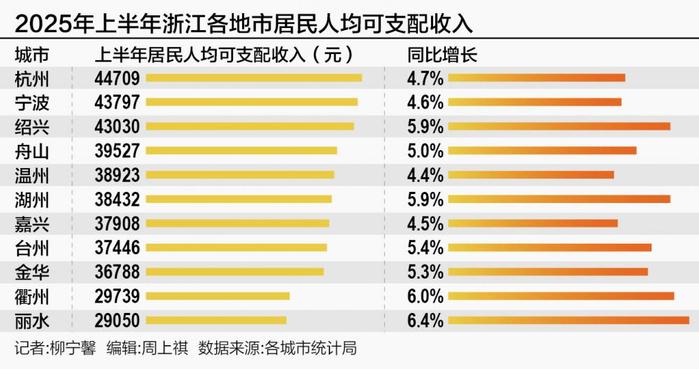
Core Insights - The article emphasizes the importance of effectively releasing domestic demand potential and implementing consumption-boosting actions to enhance consumer spending and improve living standards [1] Economic Performance - In the first half of the year, Zhejiang's per capita disposable income reached 37,813 yuan, a nominal increase of 5.1% year-on-year, ranking third nationally [1][3] - Urban residents in Zhejiang had a per capita disposable income of 43,293 yuan, growing by 4.7%, while rural residents saw a higher growth rate of 5.7%, with a per capita income of 25,986 yuan [3] Income Disparity - The income gap between urban and rural residents in Zhejiang is narrowing, with an urban-rural income ratio of 1.67, indicating reduced concerns for consumer spending [1][3] - Specific cities like Huzhou and Shaoxing have shown better income ratios of 1.48 and 1.64, respectively, outperforming the national average [1] Consumption Trends - Zhejiang is actively cultivating new consumption patterns, focusing on service consumption and developing sectors like cultural tourism and sports economy [1] - The province has launched initiatives such as night economy brands to stimulate consumption during the summer [5] Rural Development - The article highlights the integration of consumption and rural revitalization, with initiatives to attract younger demographics to rural tourism [6][8] - Successful examples include the transformation of old buildings into creative spaces, significantly boosting local income and tourism [6] Policy Initiatives - Zhejiang aims to achieve common prosperity by 2035, with plans to enhance public services and reduce regional disparities [4] - The "Ten Million Project" is a key initiative to promote rural industrial integration and improve living standards [4]

刘守英:进入稳定发展期,中国城市的机会在哪里?
Mei Ri Jing Ji Xin Wen· 2025-08-01 08:44
Core Insights - The article emphasizes the transition of China's urbanization from a rapid growth phase to a stable development phase, highlighting the need for a shift in urban governance and development strategies [1][7][10] Group 1: Urbanization Transition - China's urbanization rate has approached 70%, indicating a shift from rapid growth to stable development, which requires new governance approaches [1][9] - The previous growth model focused on GDP expansion is no longer effective; urban governance must enhance quality and efficiency [1][10] - The concept of "People's City" is introduced, emphasizing the importance of addressing the needs of both existing urban residents and incoming migrants [1][17] Group 2: Development Strategies - The focus must shift from land-based development to people-centered development, ensuring that urban life is fulfilling and rights are protected [10][11] - Urban development should prioritize structural optimization over mere expansion, enhancing the quality of urban living [10][12] - The article suggests that urban renewal and integration of rural and urban areas present significant growth opportunities despite the slowdown [12][21] Group 3: Rights and Inclusion - Migrant workers should be granted comprehensive urban rights, ensuring equality with local residents in terms of employment, education, and housing [17][19] - The need for a systematic approach to integrate migrant workers into the urban fabric is emphasized, focusing on their rights and contributions [17][18] Group 4: Urban System Optimization - The article discusses the importance of creating a continuous urban-rural system to facilitate integration and development [24][25] - Urban systems must evolve to ensure that cities can effectively radiate economic benefits to surrounding areas, addressing the current lack of connectivity [24][25]
城乡融合绘就巴渝乡村振兴画卷
Jing Ji Ri Bao· 2025-07-22 22:05
Core Viewpoint - Chongqing is making significant progress in urban-rural integration and rural revitalization, aiming to create a model for urban-rural integration and rural revitalization in the context of the "14th Five-Year Plan" [1][11]. Group 1: Urbanization and Economic Indicators - By 2024, Chongqing's urbanization rate for permanent residents is projected to reach 72.14%, the highest in the central and western regions of China [1]. - The ratio of per capita disposable income between urban and rural residents has narrowed to 2.24:1, indicating improved income equality [1]. - In poverty-stricken counties, the per capita disposable income for rural residents has increased to 20,605 yuan, with a year-on-year growth of 6.8%, outpacing the national average for four consecutive years [1]. Group 2: Talent and Resource Flow - The Ba'nan District has seen a significant influx of urban talent into rural areas, with over 200 young people returning to start businesses since 2021, enhancing local economic development [2][3]. - The urban-rural integration pilot zone in Ba'nan has implemented policies to facilitate the transfer of rural rights for farmers moving to urban areas, revitalizing over 60 acres of idle land and generating an annual income increase of 200,000 yuan for the village [2][3]. Group 3: Infrastructure and Development Projects - Chongqing is advancing new urbanization through targeted projects, with 125 urbanization projects enhancing the capacity of county-level cities and small towns [4]. - By 2024, the urbanization rate in areas outside the central urban area is expected to reach 61.5%, with the ratio of per capita GDP between the main urban area and rural areas narrowing to 1.66:1 [4]. Group 4: Agricultural and Industrial Development - The city has initiated a billion-yuan ecological industry cultivation action, focusing on the integration of agriculture, tourism, and other sectors to enhance rural economies [5][8]. - The establishment of nearly 900 processing enterprises in the food and agricultural product sector has led to a total output value exceeding 260 billion yuan [8]. Group 5: Rural Living Conditions and Governance - By 2024, all administrative villages in Chongqing will have access to paved roads, with 100% coverage of 5G networks and over 90% access to tap water [10]. - The rural governance system has been enhanced through the establishment of a comprehensive governance framework, with 6,500 grids set up across 11,000 villages [10].
湖北仙桃:锚定特色谋突破 绘就镇域经济高质量发展新图景
Zhong Guo Fa Zhan Wang· 2025-07-21 09:22
Core Insights - The core objective of the development strategy is to enhance the local economy through industrial growth and urban-rural integration, focusing on leveraging unique resources and activating new economic drivers [1][2]. Group 1: Industrial Upgrade - The local government is promoting the "returning home to start a business" initiative, which not only supports family care but also boosts local income, highlighting the importance of a favorable business environment [2]. - Emphasis is placed on upgrading existing enterprises through technological improvements and enhancing the circular economy, particularly in the rubber recycling sector [2]. - The strategy includes supporting existing businesses while also attracting new investments to expand the local industrial base, particularly in the garment sector [2]. Group 2: Urban-Rural Integration - The development plan aims to create a cohesive environment where towns, villages, and scenic areas are interconnected, enhancing overall community aesthetics and functionality [3]. - The focus is on improving rural areas through resource management and developing new business models based on local agricultural specialties, such as selenium-rich products [3]. - Social welfare initiatives, including enhanced elderly care services, are integral to the urban-rural integration strategy, ensuring that development benefits reach the broader community [3].
老区“融”出新气象(活力中国调研行)
Ren Min Ri Bao· 2025-07-20 00:50
Group 1 - The integration of urban and rural areas in Jiangxi is transforming previously remote locations into prosperous hubs, enhancing regional development [2][3] - The establishment of a 100-kilometer lakeside road connects cities around Poyang Lake, fostering a wetland cultural tourism zone with various activities such as bird watching and dining [1] - The demonstration park in Yingtan's Yujiang District showcases efficient urban-rural integration, with companies like Huahao Precision Manufacturing benefiting from lower costs and increased production capacity [3] Group 2 - In the village of Tizhu, over 1,500 online stores have emerged, generating an annual sales revenue of 250 million yuan, showcasing the potential of digital economy and modern logistics [4] - The furniture industry in Nankang District is experiencing rapid growth, with a significant increase in investment and production efficiency due to improved service standards [7][8] - Nankang's furniture industry cluster achieved a production value exceeding 140 billion yuan in the first half of 2023, reflecting successful integration into the Guangdong-Hong Kong-Macao Greater Bay Area [7][8]
2025年上半年四川GDP达31918.2亿元 同比增长5.6%
Zhong Guo Xin Wen Wang· 2025-07-17 07:25
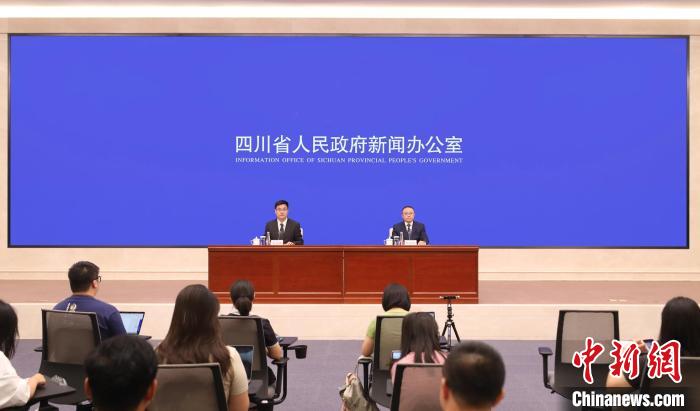
Economic Overview - In the first half of 2025, Sichuan's GDP reached 31,918.2 billion yuan, reflecting a year-on-year growth of 5.6% at constant prices [1][3]. Sector Performance - The primary industry added value of 1,963.3 billion yuan, growing by 3.2% year-on-year [3]. - The secondary industry added value of 11,111.5 billion yuan, with a growth rate of 5.3% [3]. - The tertiary industry added value of 18,843.4 billion yuan, showing a growth of 6.0% [3]. Agricultural Production - Agricultural production showed steady improvement, with vegetable and edible fungus output increasing by 3.4%, fruit output by 6.4%, tea output by 5.2%, and aquatic product output by 5.2% year-on-year [3]. Industrial Performance - The industrial production maintained steady progress, with the added value of large-scale industries growing by 7.3% year-on-year [3]. - The product sales rate of large-scale industrial enterprises was 94.7% [3]. Service Sector Growth - The service sector experienced rapid growth, with an added value increase of 6.0% year-on-year [3]. Investment and Consumption - Fixed asset investment (excluding households) grew by 2.7% year-on-year, indicating stable overall investment [3]. - The total retail sales of consumer goods reached 14,160.2 billion yuan, reflecting a year-on-year growth of 5.6% [3]. Economic Sentiment - The economic sentiment index for Sichuan was at 103.4, indicating a favorable economic climate [3]. Future Outlook - The government aims to accelerate the construction of a new development pattern and implement strategies to boost market demand, stabilize employment, and ensure economic recovery [4].
三色绘就城乡美
Jing Ji Ri Bao· 2025-07-12 00:21
Group 1: Red Culture and Education - The red culture in Jiangxi is being leveraged to enhance educational experiences, with over 40 million visitors to the Hongxing Valley research camp since its trial opening in 2022 [1] - Jiangxi has developed five red cultural routes and over 50 specialized courses, with more than 135,000 participants in red training and research activities in the first half of the year [1] Group 2: Green Development and Ecological Advantages - Jiangxi is recognized for its ecological advantages, with initiatives like the "Three New Plans" in Lakepi Village aimed at attracting new residents and developing new business models [2] - The province is the only one in China that combines a national ecological civilization pilot zone with a national pilot for ecological product value realization, focusing on transforming ecological beauty into economic value [3] Group 3: Cultural Heritage and Rural Revitalization - Jiangxi has 109 ancient buildings in Zhuqiao Village, showcasing the Gannan architectural style, and has implemented projects to revitalize traditional villages facing decline [4] - The province has six national historical and cultural cities and 568 registered traditional villages, ranking eighth in the country for the number of traditional villages [4][5] - Efforts to combine traditional village aesthetics with modern elements are ongoing, aiming to inject lasting vitality and unique charm into rural revitalization [5]
打造特色农业致富“金饭碗”
Jing Ji Ri Bao· 2025-07-09 21:47
Group 1 - The core viewpoint emphasizes the active exploration of characteristic agricultural development paths in regions like Henan, Shandong, and Jiangsu, focusing on modernizing agricultural operations and expanding income channels for farmers [1][2] - Characteristic agriculture in China has reached a certain scale, with significant increases in the total volume and quality of characteristic agricultural products, leading to the rapid growth of leading enterprises and the creation of well-known brands [1][2] - In the first half of 2024, revenue from large-scale agricultural processing enterprises reached 8.7 trillion yuan, and by November 2024, there were 915 regional agricultural image brands and nearly 10,000 industry brands [1][2] Group 2 - Recent policies have been introduced to support the development of characteristic agriculture, including the emphasis on local conditions to promote characteristic industries and the implementation of agricultural brand cultivation plans [2][3] - The "No. 1 Central Document" for 2024 highlights the importance of developing rural characteristic industries and optimizing agricultural brand policies, which have shown clear results in practice [2][3] - Challenges in characteristic agriculture include resource homogeneity, short industrial chains, low added value of products, and insufficient technological support, which need to be addressed for sustainable development [2][3] Group 3 - The development of rural characteristic industries should align with market mechanisms and industry rules, promoting urban-rural integration and enhancing the agricultural industrial chain [3][4] - Agricultural enterprises are encouraged to leverage local resources for integrated development and to explore new business models such as agritourism [4] - Improving the quality of talent training in agriculture is essential, focusing on cultivating technical talent and attracting external expertise to support the sustainable development of characteristic agriculture [4]
淳安城乡融合经验成全省典型
Hang Zhou Ri Bao· 2025-07-08 03:01
Group 1 - The core viewpoint of the articles highlights the successful integration of education and urbanization in Chun'an, which has been recognized as a typical case for high-quality development in the province [1] - Chun'an has developed a tiered service system for education resource allocation, focusing on gathering high school education in county towns, centralizing compulsory education in regional centers, and concentrating preschool education in town centers [1] - The newly constructed Chun'an Third High School will provide 1,800 high school seats and is a key project for the county's educational development [1] Group 2 - To address the comprehensive needs of the agricultural transfer population, Chun'an has introduced an innovative public service policy system termed "1+7+X," with education as the core [2] - The policy integrates key support services such as housing, employment, healthcare, social security, and community services, while also offering personalized services based on family needs [2] - A "one-to-one" service mechanism has been established to assist families moving to urban areas, ensuring they have access to housing, education, and employment opportunities [2] Group 3 - Schools in Chun'an have implemented various support mechanisms for students transitioning to urban education, including personalized student profiles and home visits to understand their needs [3] - Additional services such as employment assistance, skills training, and entrepreneurship support have been introduced to facilitate the integration of families into urban life [3] - The "优教" strategy has created a significant effect, enhancing the attractiveness of quality education resources and increasing the willingness and stability of the agricultural transfer population to settle in urban areas [3]
浙江做好“三篇文章”探路共富
Jing Ji Ri Bao· 2025-07-05 22:15
Core Viewpoint - Zhejiang Province is advancing high-quality urban-rural integration development to promote common prosperity, focusing on reducing disparities and enhancing urban and rural areas through strategic projects and policies [1][4]. Group 1: Urban-Rural Integration Initiatives - The province has implemented 101 basic public service standards, with 96 eliminating urban-rural disparities and 80 addressing household registration differences [1]. - A total of 1,833 major projects aimed at reducing the "three major disparities" have achieved an annual investment of 169.68 billion yuan, with a completion rate of 59.1% [1]. - Investment in urban strengthening projects reached 73.859 billion yuan, with a completion rate of 61.7%, while rural revitalization projects saw 85.106 billion yuan invested at a completion rate of 57.5% [1]. Group 2: Case Studies and Local Development - Jiaxing City, known for having the lowest income disparity among urban residents in Zhejiang, has pioneered urban-rural integration planning since 2004, focusing on six areas of integration [2]. - Jiaxing's "strong city" initiative includes a planned urban space system comprising one central city, six county-level sub-centers, and around 40 new towns to enhance county-level capacities [3]. - The city has successfully attracted 56 agricultural projects, including 21 with investments exceeding 100 million yuan, showcasing a shift towards technology and intensive agriculture [3]. Group 3: Policy and Financial Support - Zhejiang aims to facilitate the flow of urban-rural integration factors by reforming the "residence permit + points" system to support agricultural migrants and youth moving to urban areas [4]. - The province plans to allocate over 24 billion yuan in special policy funds over three years to support urban-rural integration, alongside 80 billion yuan in annual credit funds from policy banks for new urbanization projects [4].