空间智能

Search documents
李飞飞万字长文爆了!定义AI下一个十年
创业邦· 2025-11-12 03:08
Core Insights - The article emphasizes that "spatial intelligence" is the next frontier for AI, enabling machines to transform perception into action and imagination into creation [2][7] - The concept of a "world model" is identified as essential for unlocking spatial intelligence, requiring AI to generate consistent worlds that adhere to physical laws and can process multimodal inputs [3][5] Group 1: Definition and Importance of Spatial Intelligence - Spatial intelligence is described as a foundational capability for human cognition, influencing how individuals interact with the physical world [15][19] - The evolution of spatial intelligence is linked to significant historical advancements, showcasing its role in shaping civilization [21][22] Group 2: Current Limitations of AI - Despite advancements in AI, current models lack the spatial reasoning capabilities that humans possess, particularly in tasks involving distance estimation and physical interactions [22][25] - The limitations of existing AI models hinder their ability to effectively engage with the physical world, impacting their application in various fields [25][26] Group 3: Building a World Model - Constructing a world model requires three core capabilities: generative, multimodal, and interactive, allowing AI to create and manipulate virtual or real environments [27][29][30] - The development of a world model is seen as a significant challenge for the next decade, necessitating innovative approaches and methodologies [31][32] Group 4: Applications of Spatial Intelligence - The potential applications of spatial intelligence span various domains, including creative industries, robotics, and scientific research, promising to enhance human capabilities [38][48] - Specific use cases include revolutionizing storytelling, improving robotic interactions, and transforming educational experiences through immersive learning [40][44][49] Group 5: Future Vision - The article envisions a future where AI, equipped with spatial intelligence, can serve as a partner in addressing complex challenges, enhancing human creativity, and improving quality of life [51] - The collaborative effort of the entire AI ecosystem is deemed essential for realizing this vision, highlighting the need for collective innovation and development [39][50]


段永平,再捐2.2亿元;腾讯确认马化腾曾当过客服;“柴怼怼”诋毁胖东来案被判赔260万;苹果推出新配件,售价1299元起...
Sou Hu Cai Jing· 2025-11-12 02:11
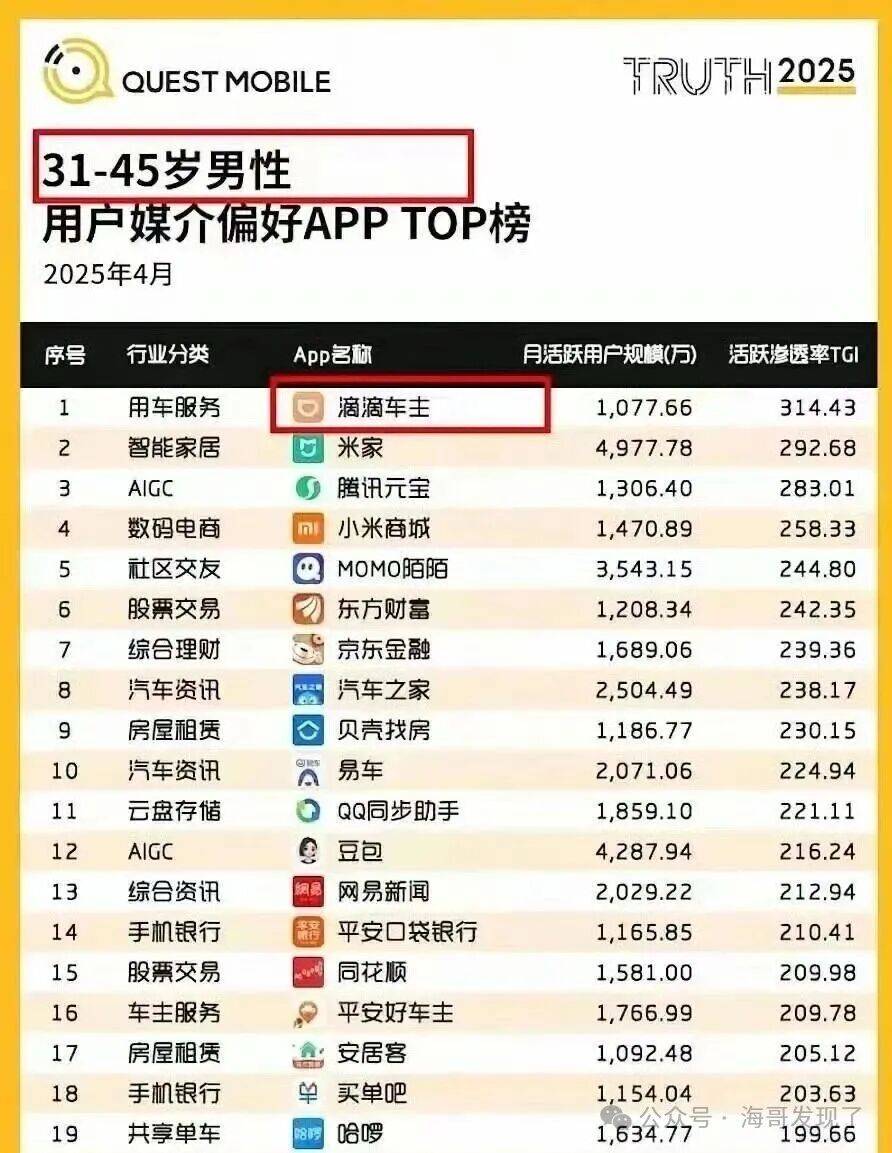
Group 1 - The article discusses the active user scale and engagement rates of various apps across different industries, highlighting significant players in the market [2] - The top app in the car service industry, "Zhouzhounianshi," has 10.77 million active users with a TGI of 314.43, indicating strong engagement [2] - In the smart home sector, "Mijia" leads with 49.77 million active users and a TGI of 292.68, showcasing its popularity [2] - The AIGC category features "Tencent Yuanbao" with 13.06 million active users and a TGI of 283.01, reflecting its growing influence [2] - The e-commerce app "TITIE Xiaomi Mall" has 14.71 million active users and a TGI of 258.33, indicating robust user engagement [2] Group 2 - The article mentions that the market regulatory authority has issued compliance guidelines for the "Double Eleven" shopping festival, prohibiting practices like price inflation and data-driven discrimination [4] - It reports a significant increase in gold jewelry prices, with several brands exceeding 1300 yuan per gram, indicating a rising trend in the gold market [4] - The article highlights a legal case where "Chai Duoduo" was ordered to pay 2.6 million yuan for defaming "Pang Donglai," emphasizing the importance of brand reputation in the market [5][7] - It notes that SoftBank has liquidated its holdings in Nvidia, cashing out 5.83 billion, which reflects strategic investment decisions in the tech sector [16] Group 3 - The article reports on the donation of 220 million yuan by entrepreneur Duan Yongping to support educational initiatives, indicating a trend of philanthropy among high-net-worth individuals [9] - It mentions that Jack Ma's wife purchased a historic property in London for 180 million yuan, reflecting the trend of wealthy individuals investing in real estate [9][10] - The article discusses the resignation of Warren Buffett as CEO of Berkshire Hathaway, marking a significant leadership change in the investment industry [12][13] Group 4 - The article highlights the organizational restructuring at Li Auto, with a focus on integrating human resources into product and strategy groups, indicating a shift towards efficiency in operations [20] - It reports on the departure of key project managers at Tesla, suggesting potential challenges in leadership stability within the company [21] - The article discusses the launch of the Doubao programming model by Volcano Engine, which claims to reduce costs by 62.7%, indicating competitive advancements in AI technology [24]

1.8亿!马云妻子购入伦敦豪宅:为二级保护历史建筑;腾讯确认马化腾曾当过客服;“柴怼怼”等被判赔偿260万元丨邦早报
创业邦· 2025-11-12 00:28
Group 1 - Jack Ma's wife, Zhang Ying, purchased a luxury mansion in London for 1950 million pounds (approximately 1.8 billion RMB), which was initially listed for 2150 million pounds [1] - The property is a Grade II listed historical building, previously used as the Italian embassy and defense attaché office, with an area of 7948 square feet (approximately 738 square meters) [1] Group 2 - Meta's Chief AI Scientist, Yann LeCun, plans to leave the company to start his own venture, coinciding with a major restructuring of Meta's AI operations [3] - Warren Buffett announced he will step down as CEO of Berkshire Hathaway by the end of the year, accelerating his philanthropic efforts [3] - Li Xiang of Li Auto will directly oversee human resources following a reorganization, with significant departures from the HR department [3] Group 3 - Stanford professor Fei-Fei Li stated that spatial intelligence is the next frontier for AI, which will transform interactions between reality and virtual worlds [3] - Tencent confirmed that founder Ma Huateng worked as a customer service representative in the company's early days [3] Group 4 - Zhiyuan New Materials announced the launch of a full-size robot, while Zhiyuan Robotics clarified that it is independently developing its embodied intelligence business [4] - ByteDance denied becoming a new shareholder of Zhongtong Express, clarifying its previous minor investment [4] - Changan Automobile responded to complaints regarding vehicle purchases through intermediaries, stating that the involved parties are not authorized dealers [4] Group 5 - Baidu's short drama head Yu Ke has left the company to pursue entrepreneurship, with his responsibilities taken over by Fan Tingting [4] - The cost of training the Kimi K2 Thinking model was disputed, with the CEO of Yuezhi Technology stating that the figure is not official [4] Group 6 - China's foldable smartphone market saw a 17.8% year-on-year increase in shipments in Q3 2025, with total shipments reaching 2.63 million units [12] - In October, new energy vehicle sales in China surpassed 50% of total new car sales for the first time, with a total of 1.3 million new energy vehicles sold in the first ten months of 2025, reflecting a 33.1% year-on-year growth [12]

李飞飞:空间智能是AI下一个前沿;商汤开源空间智能大模型SenseNova-SI丨AIGC日报
创业邦· 2025-11-12 00:28
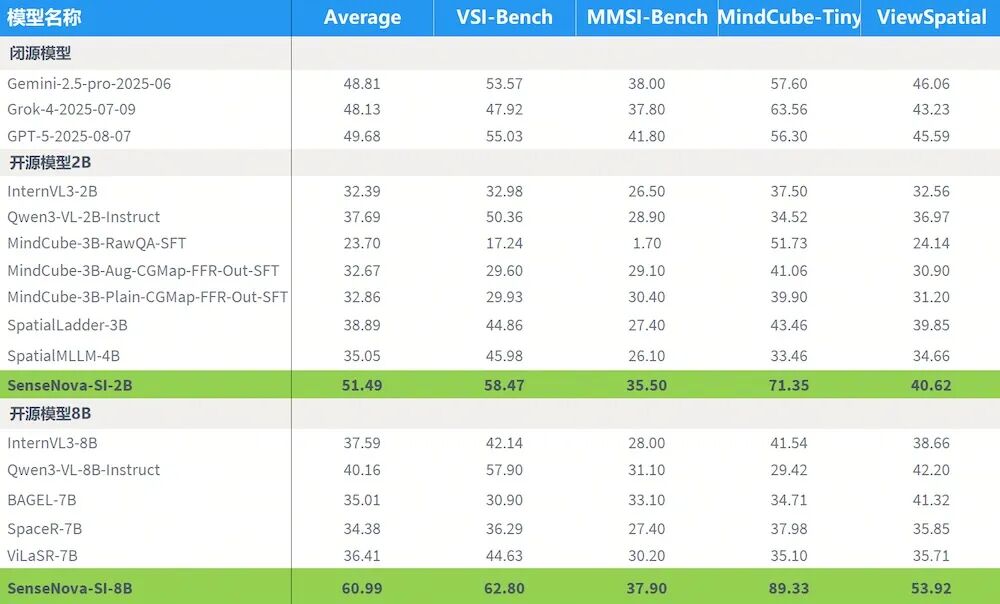
Group 1 - SenseNova-SI, a space intelligence model series by SenseTime, was officially released and open-sourced on November 10, featuring 2B and 8B specifications, along with the EASI evaluation platform and "Hero List" [2] - Baidu's ERNIE-4.5-VL-28B-A3B-Thinking multimodal thinking model was open-sourced on November 11, with only 3B activated parameters and innovative "image thinking" capabilities for image enlargement and search [2] - Stanford professor Fei-Fei Li emphasized that space intelligence is the next frontier of AI, fundamentally changing human interaction with the physical world and connecting imagination, perception, and action [2] Group 2 - Volcano Engine launched the Doubao programming model on November 11, claiming a 62.7% reduction in comprehensive usage costs compared to the industry average, with the lowest price in China [2] - The Doubao programming model is fully accessible via the Volcano Ark platform, targeting individual developers with a subscription plan starting at 9.9 yuan for the first month [2]


李飞飞聊AI下一个十年:构建真正的空间智能
自动驾驶之心· 2025-11-12 00:04
Core Insights - The article emphasizes the importance of spatial intelligence as the next frontier in AI, which will fundamentally change how humans interact with both the real and virtual worlds [5][8][16] - It outlines the need for a new type of generative model, termed "world models," that can understand, reason, generate, and interact within complex environments [17][18][22] Summary by Sections Definition and Importance of Spatial Intelligence - Spatial intelligence is described as a foundational aspect of human cognition, enabling interaction with the physical world and driving creativity and imagination [10][13] - The article highlights historical examples where spatial intelligence has led to significant advancements in civilization, such as Eratosthenes' calculation of the Earth's circumference and Watson and Crick's discovery of DNA's structure [11][12] Current State of AI and Limitations - Despite advancements in AI, particularly in generative models, there remains a significant gap in AI's spatial capabilities compared to human intelligence [14][15] - Current AI models struggle with tasks involving physical interactions and spatial reasoning, limiting their effectiveness in real-world applications [15][21] Vision for Future AI Development - The article proposes that achieving spatial intelligence in AI requires developing world models with three core capabilities: generative, multimodal, and interactive [18][19][20] - It stresses the need for innovative training methods, large-scale data, and new model architectures to overcome existing limitations [23][24][25] Applications of Spatial Intelligence - The potential applications of spatial intelligence span various fields, including creativity, robotics, science, healthcare, and education [29][38] - In creativity, tools like World Labs' Marble platform empower creators to build immersive narratives and experiences [32] - In robotics, spatial intelligence is essential for robots to effectively interact with their environments and assist humans [34][36] - In science and healthcare, spatial intelligence can enhance research capabilities and improve patient care through advanced modeling and simulation [39][40] Conclusion - The article concludes with a vision of a future where machines equipped with spatial intelligence can significantly enhance human capabilities and address complex challenges [41]
腾讯研究院AI速递 20251112
腾讯研究院· 2025-11-11 16:06
Group 1: OpenAI and Intel - OpenAI has recruited Intel's CTO Sachin Katti to focus on building computational infrastructure for AGI, leading to Intel CEO Pat Gelsinger taking direct control of the AI department [1] - Katti brings over 20 years of experience in wireless communication and AI infrastructure, having recently been promoted to CTO at Intel [1] - OpenAI plans to invest approximately $1.4 trillion over the next eight years to develop AI infrastructure, making Katti's role significant for OpenAI's autonomous computing strategy, while representing a major loss for Intel [1] Group 2: Meta's Voice Recognition Model - Meta AI's FAIR team has released the Omnilingual ASR voice recognition model suite, capable of supporting over 1,600 languages with a character error rate below 10% for 78% of languages [2] - The framework is community-driven, allowing users to expand the model to new languages with minimal samples, achieving large-scale ASR framework contextual learning [2] - Meta has also open-sourced the Omnilingual ASR Corpus dataset, covering 350 underrepresented languages, and a 70 billion parameter Omnilingual wav2vec 2.0 speech representation model [2] Group 3: SenseNova-SI by SenseTime - SenseTime has launched and open-sourced the SenseNova-SI series of spatial intelligence models, with the 8B model achieving an average score of 60.99 on four core spatial intelligence tasks, outperforming GPT-5 and Gemini-2.5-Pro [3] - The models validate the "scale effect" in spatial intelligence and establish a classification system across six core dimensions, including spatial measurement and reconstruction [3] - The models are integrated into the "Wuneng" embodied intelligence platform, and the spatial intelligence evaluation platform EASI has been open-sourced to enhance three-dimensional structural cognition capabilities [3] Group 4: Doubao-Seed-Code by ByteDance - ByteDance's Volcano Engine has introduced the Doubao-Seed-Code model, with reduced calling prices at 1.20 yuan per million tokens for inputs ranging from 0 to 32k [4] - This model supports visual understanding capabilities for programming, generating code based on UI design drafts, and features a native 256K long context [4] - A Coding Plan package has also been launched, utilizing a training library of 100,000 container images and end-to-end reinforcement learning [4] Group 5: Space Data Centers - Researchers from Zhejiang University and Nanyang Technological University have proposed a complete technical framework for building carbon-neutral data centers in space, leveraging near-infinite solar energy and deep space cooling conditions [5] - Two solutions are suggested: integrating AI accelerators on remote sensing satellites to create "orbital edge data centers" and forming a satellite constellation for "orbital cloud data centers" [5] - An innovative "full lifecycle carbon utilization efficiency" assessment model indicates that long-term carbon efficiency may surpass that of medium carbon intensity ground data centers despite initial carbon emissions from manufacturing and launching [5] Group 6: AI Development Insights - Anthropic researcher Julian Schrittwieser asserts that the belief that AI has peaked is a major misconception, with AI task capabilities doubling every seven months [6] - Predictions indicate that by mid-2026, models will be able to work autonomously for eight hours, with at least one model matching human experts across multiple industries by the end of the year [6] - He emphasizes that the public often misjudges AI development, overlooking the exponential growth trend, and that leading labs show stable and exponential increases in AI capabilities [6] Group 7: AI Adoption and Performance - A McKinsey survey reveals that 88% of organizations use AI in at least one business area, but only 39% report substantial financial returns (EBIT growth) from AI [7] - While 62% of organizations have experimented with AI Agent applications, less than 10% have implemented them in any department, primarily in standardized areas like IT operations and knowledge management [7] - High-performing companies are more ambitious about AI transformation, with 50% planning significant AI-driven changes, compared to only 14% of average companies [7] Group 8: Future of AI and World Models - Fei-Fei Li emphasizes that spatial intelligence is a foundational aspect of human intelligence, predating language, and current large language models (LLMs) lack real-world experience and understanding [8] - She defines world models as needing three capabilities: generative (creating geometrically and physically consistent worlds), multimodal (designed for multiple modalities), and interactive (outputting the next world state based on actions) [8] - Li believes that building world models will face challenges in new training tasks, large-scale data, and new model architectures, with applications in creativity, robotics, and transformative changes in science, healthcare, and education [8] Group 9: Sora's Social Platform Insights - The Sora team reported nearly 2 million weekly active users within 40 days of launch, with 70% of users engaging in content creation, surpassing traditional internet engagement metrics [9] - Sora is positioned as a social creation platform rather than a single-user tool, with algorithms prioritizing content with remix potential over mere consumption time [9] - A points-based system is implemented for flexible monetization, balancing the interests of the platform, creators, and copyright holders, while lowering barriers for user-generated content [9]

AI教母李飞飞:空间智能才是走向AGI的唯一路径
虎嗅APP· 2025-11-11 10:52
Core Viewpoint - The article emphasizes that current AI models, particularly large language models, lack spatial intelligence, which is essential for achieving true artificial general intelligence (AGI). The author, Fei-Fei Li, argues that the next step in AI development should focus on building "world models" that incorporate spatial understanding rather than merely expanding language models [4][17][38]. Group 1: Current Limitations of AI - AI models can generate text and images but struggle with basic physical understanding, such as predicting the outcome of simple physical actions [5][7][9]. - The inability of AI to comprehend physical laws and spatial relationships limits its application in fields requiring 3D understanding, such as drug discovery and architecture [9][10][36]. - Despite advancements, AI's spatial capabilities remain far below human levels, often resorting to guesswork in tasks involving distance and direction [36][37]. Group 2: Importance of Spatial Intelligence - Spatial intelligence is described as a foundational cognitive ability that humans develop early in life, enabling interaction with the physical world [12][15][32]. - This intelligence underpins creativity and imagination, allowing for the visualization and manipulation of complex environments [33][34]. - Historical examples illustrate how spatial intelligence has driven significant advancements in civilization, from calculating the Earth's circumference to designing innovative machinery [34]. Group 3: Future Directions for AI - The article proposes that the future of AI lies in developing "world models" that integrate spatial intelligence, allowing machines to understand and interact with the world in a more human-like manner [17][38][39]. - These world models should be generative, multimodal, and interactive, enabling AI to create and predict outcomes in complex environments [22][39][40]. - The potential applications of such advancements include revolutionizing storytelling, enhancing robotics, and transforming scientific research and education [19][24][49][56]. Group 4: Societal Impact and Vision - The ultimate goal of AI development should be to empower humans rather than replace them, enhancing creativity, productivity, and empathy [25][54]. - The integration of spatial intelligence into AI could lead to transformative changes across various sectors, including healthcare, education, and creative industries [27][56]. - The vision for the future emphasizes collaboration between AI and humans, where machines serve as partners in addressing complex challenges [47][48].

LLM只是“黑暗中的文字匠”?李飞飞:AI的下一个战场是“空间智能”
3 6 Ke· 2025-11-11 10:22
Core Insights - The next frontier for AI is "Spatial Intelligence," which is crucial for understanding and interacting with the physical world [1][4][14] - Current AI systems lack the ability to comprehend spatial relationships and physical interactions, limiting their effectiveness in real-world applications [1][12][26] - The development of a "world model" is essential for achieving true spatial intelligence in AI, enabling machines to perceive, reason, and act in a manner similar to humans [14][15][20] Group 1: Importance of Spatial Intelligence - Spatial intelligence is identified as a missing component in AI, which could lead to significant advancements in capabilities, particularly in achieving Artificial General Intelligence (AGI) [3][12] - The limitations of current AI systems are highlighted, emphasizing their inability to perform basic spatial reasoning tasks, which hinders their application in various fields [12][26] - The potential of spatial intelligence to revolutionize creative industries, robotics, and scientific exploration is underscored, indicating its broad implications for human civilization [1][4][10] Group 2: Development of World Models - The concept of world models is introduced as a new paradigm that surpasses existing AI capabilities, focusing on understanding, reasoning, and generating interactions with the physical world [14][15] - Three core capabilities for effective world models are outlined: generative ability to create realistic environments, multimodal processing of diverse inputs, and interactive capabilities to predict outcomes based on actions [15][16][17] - The challenges in developing these models include creating new training objectives, utilizing large-scale training data, and innovating model architectures to handle complex spatial tasks [18][19][20] Group 3: Applications and Future Prospects - The applications of spatial intelligence span various fields, including creative industries, robotics, and healthcare, with the potential to enhance human capabilities and improve quality of life [21][26][27] - The World Labs initiative is highlighted as a key player in advancing spatial intelligence through the development of tools like the Marble platform, which aims to empower creators and enhance storytelling [20][22] - The long-term vision includes transforming how humans interact with technology, enabling immersive experiences and fostering collaboration between humans and machines [28][29]
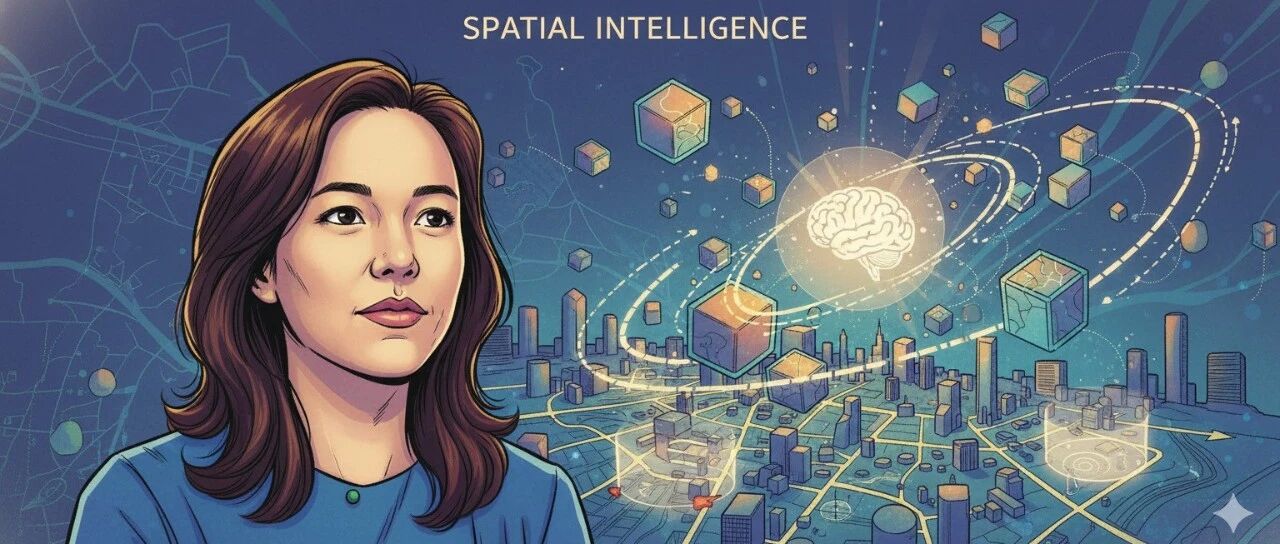
李飞飞终于把空间智能讲明白了:AI 的极限不是语言,世界远比文字更广阔!
AI科技大本营· 2025-11-11 09:08
Core Viewpoint - The article discusses the emerging concept of spatial intelligence in artificial intelligence (AI), emphasizing its importance for understanding and interacting with the physical world, beyond the capabilities of current language models [6][24][33]. Summary by Sections Introduction - A recent roundtable discussion featuring AI leaders like Huang Renxun and Li Feifei sparked controversy regarding the role of different players in the AI landscape [1][3]. Current AI Limitations - Many believe that the true power in AI lies with those who create large models like GPT and those who develop GPUs that enable these models to run efficiently [4][5]. - Li Feifei's focus on spatial intelligence highlights a significant limitation in current AI paradigms, which primarily rely on language as a means of understanding the world [5][10]. Spatial Intelligence Concept - Spatial intelligence is defined as the ability to perceive, understand, and interact with the physical world, which is crucial for AI to truly comprehend and engage with its environment [9][12]. - The article outlines how spatial intelligence serves as a scaffold for human cognition, influencing reasoning, planning, and interaction with the world [13][15]. Development of World Models - The creation of world models is proposed as a pathway to develop AI with spatial intelligence, enabling machines to generate and interact with complex virtual or real environments [16][17]. - Three fundamental capabilities are identified for world models: generative, multimodal, and interactive [17][19][20]. Applications of Spatial Intelligence - The potential applications of spatial intelligence span various fields, including creative industries, robotics, scientific research, healthcare, and education [24][30]. - Tools like World Labs' Marble are highlighted as early examples of how spatial intelligence can enhance creativity and storytelling [22][26]. Future Prospects - The article emphasizes the need for collective efforts across the AI ecosystem to realize the vision of spatial intelligence, which could transform human capabilities and enhance various sectors [25][31]. - The ultimate goal is to create AI that complements human creativity, judgment, and empathy, rather than replacing them [30][33].
开源又赢闭源,商汤8B模型空间智能碾压GPT-5,AI看懂世界又进了一步
3 6 Ke· 2025-11-11 08:45
Core Insights - SenseNova-SI series models, released by SenseTime, demonstrate superior performance in spatial intelligence benchmarks, particularly the SenseNova-SI-8B model, which achieved an average score of 60.99, significantly outperforming other open-source models like Qwen3-VL-8B (40.16) and BAGEL-7B (35.01) [1][2] - The SenseNova-SI-8B model also surpasses closed-source models such as GPT-5 (49.68) and Gemini-2.5-Pro (48.81) while maintaining the same parameter scale of 8 billion [2] - The performance improvement is attributed to a systematic training design and the establishment of a "spatial capability classification system" by SenseTime, which expanded the scale of spatial understanding data and validated the existence of "scaling law" in this domain [2][5] Model Performance - SenseNova-SI-8B outperformed GPT-5 in various spatial reasoning tasks, showcasing its stability and accuracy in understanding spatial relationships [3][18] - In specific tests, SenseNova-SI-8B consistently provided correct answers while GPT-5 made errors in tasks involving perspective judgment and spatial reasoning [6][10][12][15][16] Technological Advancements - The training methodology for SenseNova-SI incorporates a comprehensive approach to spatial intelligence, categorizing it into six core dimensions: spatial measurement, reconstruction, relationships, perspective transformation, deformation, and reasoning [5] - The model's architecture supports the enhancement of spatial capabilities across various foundational models, indicating a versatile application potential [5] Strategic Implications - The launch of SenseNova-SI aligns with SenseTime's broader strategy in spatial intelligence, complementing their "Wuneng" embodied intelligence platform aimed at improving robots' understanding and adaptability in the physical world [19] - The introduction of the EASI spatial intelligence evaluation platform further supports the development and collaboration within the open-source ecosystem [19] Future Outlook - The ongoing development of spatial intelligence capabilities is crucial for advancing AI's understanding of the physical world, which is essential for applications in autonomous driving and robotics [24]