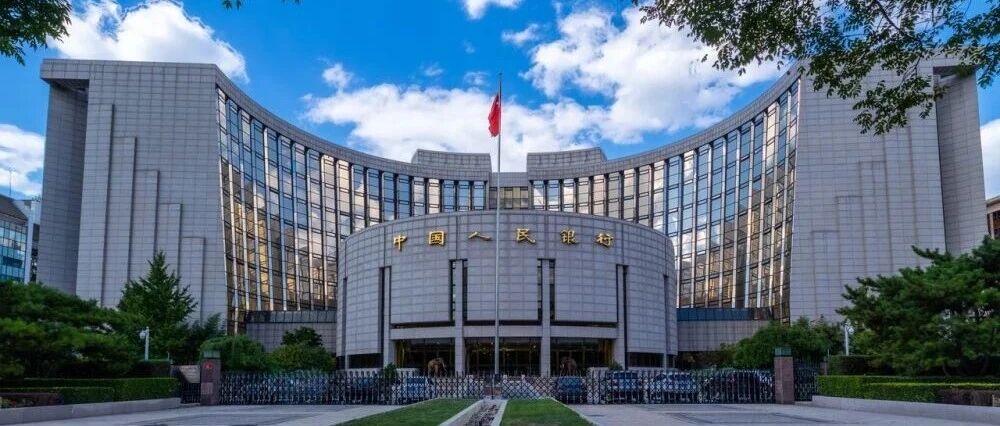
适度宽松的货币政策

Search documents
央行行长潘功胜最新发声
Xin Hua She· 2026-01-22 15:40
Core Viewpoint - The Chinese government emphasizes the importance of financial systems in supporting the modernization of the economy, with a focus on implementing a moderately loose monetary policy to foster economic stability and growth [1][3]. Group 1: Monetary Policy Implementation - The People's Bank of China (PBOC) plans to continue a moderately loose monetary policy through 2026, aiming to stabilize economic growth and ensure reasonable price recovery [3]. - The PBOC will utilize various monetary policy tools, including reserve requirement ratio (RRR) cuts and interest rate reductions, to maintain ample liquidity and align social financing growth with economic growth targets [3]. - Structural monetary policies have been optimized, including a 0.25 percentage point reduction in the interest rates of various structural monetary policy tools and an increase in the quotas for rural and small enterprise loans [4]. Group 2: Financial System Development - The PBOC aims to construct a scientific and robust monetary policy system and a comprehensive macro-prudential management system as part of the 14th Five-Year Plan [5][6]. - Key initiatives include optimizing the monetary policy target system, enhancing the liquidity management through government bond transactions, and improving the market-based interest rate formation mechanism [7][8]. Group 3: Support for Real Economy - The PBOC will enhance financial support for key areas such as domestic demand expansion, technological innovation, and small and micro enterprises, with specific measures including a dedicated 500 billion yuan for consumer services and elderly care [16][17]. - Policies will be implemented to improve financing accessibility for small and micro enterprises, including increasing loan quotas and enhancing credit guarantee systems [17]. Group 4: Global Financial Cooperation - The PBOC is committed to advancing global financial governance reforms and international financial cooperation, promoting a fair and inclusive global financial governance system [18][19]. - Initiatives include deepening financial sector openness, enhancing cross-border payment systems, and participating in international financial governance and cooperation [20][21].
中国央行将开展9000亿元MLF操作
Zhong Guo Xin Wen Wang· 2026-01-22 12:42
Core Viewpoint - The People's Bank of China (PBOC) is set to conduct a 900 billion yuan Medium-term Lending Facility (MLF) operation to maintain ample liquidity in the banking system, indicating a continued supportive monetary policy stance [1] Group 1: MLF Operation Details - The MLF operation will take place on January 23, with a fixed amount and interest rate bidding, and a one-year term [1] - There is a maturity of 200 billion yuan in MLF this month, resulting in a net injection of 700 billion yuan for January, marking the 11th consecutive month of increased MLF operations [1] - The net injection for January significantly increased compared to the previous month's 100 billion yuan, reflecting a more aggressive monetary policy approach [1] Group 2: Monetary Policy Stance - PBOC Governor Pan Gongsheng emphasized the commitment to a moderately accommodative monetary policy, focusing on stabilizing economic growth and ensuring reasonable price recovery [1] - The integration of incremental and stock policies is aimed at creating a favorable monetary and financial environment for stable economic growth and high-quality development [1] - The monetary policy is positioned to provide strong financial support for achieving a good start to the 14th Five-Year Plan [1]
潘功胜:2026年降准降息还有一定的空间
Bei Jing Shang Bao· 2026-01-22 12:03
潘功胜表示,人民银行还要继续维护好金融市场的平稳运行。做好预期管理,保持人民币汇率在合理均 衡水平上的基本稳定。加强债券市场、外汇市场、货币市场、票据市场、黄金市场监督管理。建立在特 定情景下向非银机构提供流动性的机制性安排。继续用好支持资本市场的两项货币政策工具,支持资本 市场稳定发展。 潘功胜指出,总量政策方面,灵活高效运用降准降息等多种货币政策工具,保持流动性充裕,使社会融 资规模、货币供应量增长同经济增长、价格总水平预期目标相匹配。今年降准降息还有一定的空间。人 民银行还将做好利率政策执行和监督,促进社会综合融资成本低位运行。 北京商报讯(记者 廖蒙)1月22日,据新华社报道,对于如何落实中央经济工作会议"继续实施适度宽 松的货币政策"的要求,中国人民银行党委书记、行长潘功胜表示,2026年,中国人民银行将继续实施 好适度宽松的货币政策,把促进经济稳定增长、物价合理回升作为货币政策的重要考量,发挥增量政策 和存量政策集成效应,为经济稳定增长、高质量发展和金融市场稳定运行营造良好的货币金融环境,为 实现"十五五"良好开局提供有力的金融支撑。 ...
潘功胜最新发声!
清华金融评论· 2026-01-22 11:15
Core Viewpoint - The article emphasizes the importance of creating a favorable monetary and financial environment to support high-quality economic development in China, as outlined in the "14th Five-Year Plan" [2]. Group 1: Implementation of Monetary Policy - The People's Bank of China (PBOC) will continue to implement a moderately loose monetary policy, focusing on stabilizing economic growth and ensuring reasonable price recovery as key considerations [3]. - The PBOC plans to utilize various monetary policy tools, such as reserve requirement ratio (RRR) cuts and interest rate reductions, to maintain ample liquidity and align social financing scale and money supply growth with economic growth and price level expectations [3]. - There is still room for further RRR and interest rate cuts this year, with an emphasis on managing interest rate policies to keep financing costs low [3]. Group 2: Structural Policy Adjustments - The PBOC has introduced several structural monetary policies, including a 0.25 percentage point reduction in the interest rates of various structural monetary policy tools [4][5]. - Specific measures include a dedicated 1 trillion yuan relending for private enterprises, an increase in the relending quota for agricultural and small enterprises by 500 billion yuan to 4.35 trillion yuan, and an increase in the quota for technological innovation and transformation relending by 400 billion yuan to 1.2 trillion yuan [5]. - The PBOC aims to maintain stable financial markets and manage expectations, ensuring the stability of the RMB exchange rate and enhancing supervision across various financial markets [5]. Group 3: Building a Financial Power - The PBOC is focused on constructing a scientific and robust monetary policy system and a comprehensive macro-prudential management system as strategic measures for promoting high-quality financial development during the "14th Five-Year Plan" [6]. - Key initiatives include optimizing the monetary policy target system, improving the mechanism for basic currency issuance, and enhancing the market-based interest rate formation and transmission mechanisms [6][7][8]. - The PBOC will also improve the structural monetary policy tool system to better guide financial institutions in optimizing loan allocations [9]. Group 4: Enhancing Financial Services for the Real Economy - The PBOC will enhance support for expanding domestic demand, technological innovation, and small and micro enterprises, which are crucial for strengthening the domestic economic cycle and promoting high-quality development [15]. - Specific actions include a dedicated 500 billion yuan relending for consumer services and elderly care, as well as increasing relending and rediscount quotas for agricultural and small enterprises [16]. - The PBOC will collaborate with various government departments to improve the convenience and effectiveness of financial services, while also enhancing the coordination between monetary and fiscal policies [16]. Group 5: Global Financial Governance and Cooperation - The PBOC aims to deepen institutional openness in the financial sector and promote high-level opening of financial services and markets, while supporting the internationalization of the RMB [17]. - Efforts will be made to develop a secure and efficient cross-border payment system for the RMB and to actively participate in international financial governance and cooperation [18]. - The PBOC will also enhance regulatory capabilities to match the high-level opening of the financial sector, ensuring national financial security [19].

潘功胜:今年降准降息还有一定空间
Xin Lang Cai Jing· 2026-01-22 11:00
Core Viewpoint - The People's Bank of China (PBOC) will continue to implement a moderately accommodative monetary policy in 2026, focusing on promoting stable economic growth and reasonable price recovery as key considerations for monetary policy [1][6]. Group 1: Monetary Policy Implementation - The PBOC aims to utilize various monetary policy tools such as reserve requirement ratio (RRR) cuts and interest rate reductions to maintain ample liquidity, aligning the growth of social financing and money supply with economic growth and price level expectations [1][6]. - There is still room for further RRR and interest rate cuts this year, with an emphasis on effective execution and supervision of interest rate policies to keep the overall financing costs low [1][7]. Group 2: Structural Monetary Policy Tools - The PBOC has optimized structural monetary policy tools, including a 0.25 percentage point reduction in the interest rates of various structural monetary policy tools and the establishment of a 1 trillion yuan special re-loan for private enterprises [7][12]. - The PBOC has increased the re-loan quota for agricultural and small enterprises by 500 billion yuan to 4.35 trillion yuan and for technological innovation and transformation by 400 billion yuan to 1.2 trillion yuan [7][12]. Group 3: Financial Market Stability - The PBOC will maintain the stability of the financial market, manage expectations, and keep the RMB exchange rate stable at a reasonable and balanced level [1][7]. - There will be enhanced supervision of various markets, including bond, foreign exchange, money, bill, and gold markets, along with mechanisms to provide liquidity to non-bank institutions under specific scenarios [1][7]. Group 4: Comprehensive Monetary Policy Framework - The PBOC plans to optimize the monetary policy target system, focusing less on quantitative targets and more on using financial totals as observational and reference indicators [8][9]. - A market-oriented interest rate formation and transmission mechanism will be improved to ensure effective transmission from central bank policy rates to market benchmark rates [8][9]. Group 5: Enhancing Financial Services - The PBOC will enhance financial support for key areas such as expanding domestic demand, technological innovation, and small and micro enterprises, with specific measures to meet diverse financial needs in the consumption sector [12][13]. - There will be an increase in the issuance of financial bonds by eligible financial institutions to improve funding capabilities in the consumption sector [12][13]. Group 6: Global Financial Governance - The PBOC will actively promote global financial governance reform and international financial cooperation, emphasizing multilateralism and the internationalization of the RMB [14][15]. - Efforts will be made to enhance the cross-border payment system for RMB and participate in international financial governance and cooperation [14][15].
潘功胜:2026年中国人民银行将继续实施好适度宽松的货币政策
Xin Lang Cai Jing· 2026-01-22 10:59
Group 1 - The People's Bank of China (PBOC) will continue to implement a moderately loose monetary policy in 2026, focusing on promoting stable economic growth and reasonable price recovery as key considerations [1] - The PBOC plans to flexibly and efficiently use various monetary policy tools such as reserve requirement ratio (RRR) cuts and interest rate reductions to maintain ample liquidity, aligning social financing scale and money supply growth with economic growth and price level expectations [1] - There is still room for RRR and interest rate cuts this year, and the PBOC will ensure effective execution and supervision of interest rate policies to keep the comprehensive financing costs low [1] Group 2 - The PBOC has lowered the interest rates of various structural monetary policy tools by 0.25 percentage points and established a dedicated 1 trillion yuan refinancing for private enterprises [2] - The PBOC has increased the refinancing quota for agricultural and small enterprises by 500 billion yuan to 4.35 trillion yuan and for technological innovation and transformation by 400 billion yuan to 1.2 trillion yuan [2] - The PBOC aims to maintain stable financial market operations, manage expectations, and keep the RMB exchange rate stable at a reasonable and balanced level [2]
今年降准降息还有一定空间,潘功胜最新发声
券商中国· 2026-01-22 10:55
Core Viewpoint - The article emphasizes the importance of a favorable monetary and financial environment to support high-quality economic development in China, as outlined in the "14th Five-Year Plan" [1]. Group 1: Implementation of Monetary Policy - The People's Bank of China (PBOC) will continue to implement a moderately loose monetary policy, focusing on stabilizing economic growth and ensuring reasonable price recovery [3]. - The PBOC plans to utilize various monetary policy tools, such as reserve requirement ratio (RRR) cuts and interest rate reductions, to maintain ample liquidity and align social financing scale with economic growth targets [3][4]. - Structural monetary policy tools will be optimized, including a 0.25 percentage point reduction in interest rates for various structural monetary policy tools and an increase in the quotas for agricultural and small enterprise loans [4]. Group 2: Financial System Development - The PBOC aims to construct a scientific and robust monetary policy system and a comprehensive macro-prudential management system as strategic measures for high-quality financial development during the "14th Five-Year Plan" [6]. - Key areas of focus include optimizing the monetary policy target system, improving the mechanism for basic currency issuance, and enhancing the market-based interest rate formation and transmission mechanisms [6][7]. - The PBOC will also strengthen the monitoring and assessment of systemic financial risks and expand the coverage of macro-prudential management to include new financial sectors [9]. Group 3: Supporting Real Economy - The PBOC will enhance financial support for key areas such as domestic demand expansion, technological innovation, and small and micro enterprises [11]. - Specific measures include a dedicated 500 billion yuan loan for consumer services and elderly care, as well as increased quotas for loans supporting technological innovation and small enterprises [12]. - Collaboration with various government departments will be emphasized to improve the convenience and effectiveness of financial services [13]. Group 4: Global Financial Governance - The PBOC will promote global financial governance reforms and international financial cooperation, advocating for a fair and inclusive global financial governance system [15]. - Efforts will include deepening institutional openness in the financial sector, advancing the internationalization of the yuan, and enhancing cross-border payment systems [15][16]. - The PBOC will actively participate in international financial governance and cooperation, focusing on macro policy coordination and the reform of the International Monetary Fund [16].
潘功胜,最新发声!
中国基金报· 2026-01-22 10:36
Core Viewpoint - The article emphasizes the importance of a stable monetary policy and financial environment to support high-quality economic development in China, particularly in the context of the "14th Five-Year Plan" [1]. Group 1: Implementation of Monetary Policy - The People's Bank of China (PBOC) will continue to implement a moderately loose monetary policy to promote stable economic growth and reasonable price recovery, utilizing both incremental and stock policy effects [2]. - The PBOC plans to maintain ample liquidity through various monetary policy tools, including potential reductions in reserve requirements and interest rates, aligning social financing and money supply growth with economic growth and price expectations [2]. - Structural monetary policies have been optimized, including a 0.25 percentage point reduction in the interest rates of various structural monetary policy tools and the establishment of a 1 trillion yuan re-lending facility for private enterprises [3]. Group 2: Financial System and Macro-Prudential Management - The PBOC aims to construct a scientific and robust monetary policy system and a comprehensive macro-prudential management system to facilitate high-quality financial development during the "14th Five-Year Plan" [4]. - Key initiatives include optimizing the monetary policy target system, enhancing the market-based interest rate formation mechanism, and improving the structural monetary policy tool system [4][5]. - The macro-prudential management framework will focus on monitoring systemic financial risks, expanding coverage to include financial markets and non-bank financial institutions, and refining the legal and governance mechanisms for macro-prudential policies [7][8]. Group 3: Supporting Real Economy - The PBOC will enhance financial support for key areas such as domestic demand expansion, technological innovation, and small and micro enterprises, which are crucial for high-quality development [9]. - Specific measures include a dedicated 500 billion yuan re-lending facility for consumer services and elderly care, as well as increased re-lending quotas for technology innovation and small enterprises [10]. - Collaboration with various government departments will be strengthened to improve the effectiveness and accessibility of financial services, alongside coordination between monetary and fiscal policies [10]. Group 4: Global Financial Governance - The PBOC will continue to promote global financial governance reform and international financial cooperation, advocating for a fair and inclusive global financial governance system [11]. - Efforts will include deepening institutional openness in the financial sector, advancing the internationalization of the yuan, and enhancing cross-border payment systems [12]. - The PBOC will actively participate in international financial governance and cooperation, focusing on macro policy coordination and the reform of the International Monetary Fund [12].
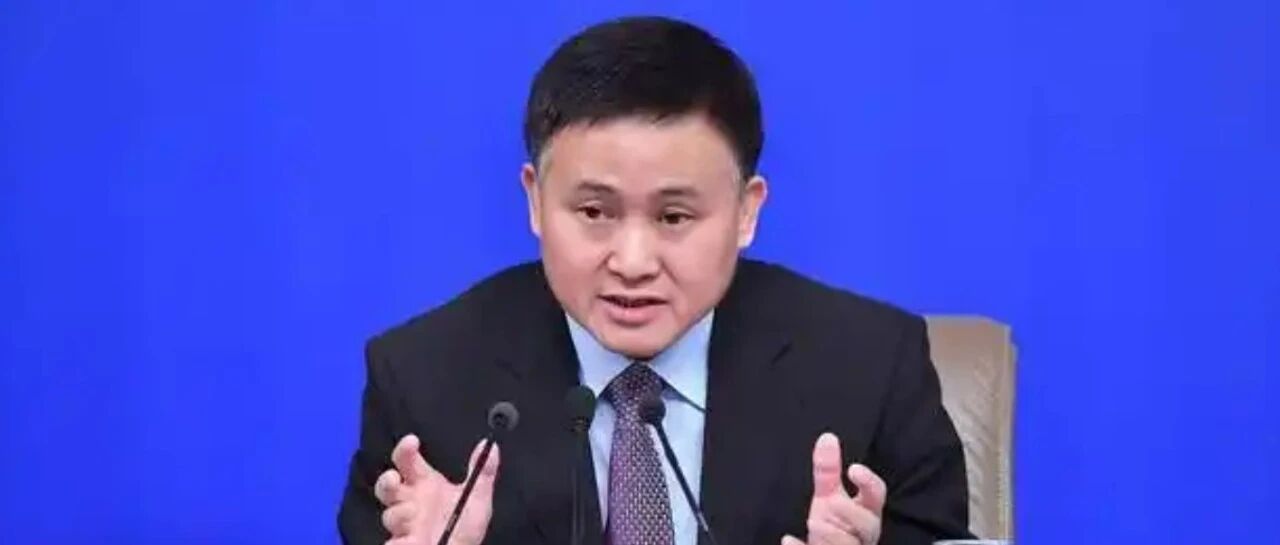
中国人民银行党委书记、行长潘功胜:今年降准降息还有一定的空间
Sou Hu Cai Jing· 2026-01-22 10:32
Core Viewpoint - The article emphasizes the importance of creating a favorable monetary and financial environment to support high-quality economic development in China, as outlined in the "14th Five-Year Plan" [1] Group 1: Monetary Policy Implementation - The People's Bank of China (PBOC) will continue to implement a moderately accommodative monetary policy, focusing on stabilizing economic growth and ensuring reasonable price recovery [3] - The PBOC plans to utilize various monetary policy tools, including reserve requirement ratio (RRR) cuts and interest rate reductions, to maintain ample liquidity and align social financing scale with economic growth [3][4] - Specific measures include lowering the interest rates of structural monetary policy tools by 0.25 percentage points and increasing the quotas for agricultural and small enterprise loans [4] Group 2: Financial System Development - The PBOC aims to construct a scientific and robust monetary policy system and a comprehensive macro-prudential management system to promote high-quality financial development during the "14th Five-Year Plan" [6] - Key initiatives include optimizing the monetary policy target system, improving the mechanism for basic currency issuance, and enhancing the market-based interest rate formation and transmission mechanisms [7] Group 3: Support for Key Sectors - The PBOC will enhance financial support for expanding domestic demand, technological innovation, and small and micro enterprises, which are crucial for high-quality development [10] - Specific actions include establishing a 500 billion yuan re-loan for consumer services and pensions, increasing re-loan quotas for technological innovation, and supporting small and micro enterprises through dedicated financial instruments [11] Group 4: Global Financial Governance - The PBOC will actively promote global financial governance reforms and international financial cooperation, emphasizing multilateralism and the construction of a fair and inclusive global financial governance system [13] - Initiatives include deepening institutional openness in the financial sector, enhancing the cross-border payment system for the yuan, and participating in international financial governance and cooperation [14]
潘功胜:今年降准降息还有一定空间
证券时报· 2026-01-22 10:19
Core Viewpoint - The People's Bank of China (PBOC) will continue to implement a moderately accommodative monetary policy in 2026, focusing on promoting stable economic growth and reasonable price recovery as key considerations for monetary policy [1][7]. Group 1: Monetary Policy Implementation - The PBOC aims to create a favorable monetary and financial environment for stable economic growth and high-quality development by effectively utilizing various monetary policy tools such as reserve requirement ratio (RRR) cuts and interest rate reductions [1][7]. - There is still room for further RRR and interest rate cuts this year, with a focus on maintaining ample liquidity and aligning the growth of social financing and money supply with economic growth and price level expectations [1][8]. - The PBOC has already optimized structural monetary policy tools, including a 0.25 percentage point reduction in the interest rates of various structural monetary policy tools and an increase in the quotas for specific loans [8]. Group 2: Six Aspects of Monetary Policy System - The PBOC will optimize the monetary policy target system, emphasizing intermediate variables and reducing focus on quantitative targets, allowing for more effective interest rate regulation [2][10]. - A unique mechanism for basic currency issuance will be established, gradually utilizing government bond transactions for liquidity management while ensuring sufficient liquidity in the banking system [2][10]. - The PBOC will enhance the market-oriented interest rate formation, regulation, and transmission mechanisms to improve the transmission from central bank policy rates to market benchmark rates [2][10]. Group 3: Structural Monetary Policy Tools - The PBOC will improve the structural monetary policy tool system to better guide and incentivize financial institutions in optimizing loan allocations [3][11]. - The mechanism for RMB exchange rate formation will be refined, maintaining market determination of the exchange rate while preventing excessive fluctuations [3][11]. Group 4: Macro-Prudential Management - The PBOC will strengthen the monitoring and assessment of systemic financial risks, establishing a standardized and systematic monitoring framework [13]. - The coverage of macro-prudential management will be gradually expanded to include financial markets, non-bank financial institutions, and new areas such as internet finance [13]. - The PBOC will enhance the legal and governance mechanisms for macro-prudential management, focusing on legislative projects to strengthen coordination between macro-prudential policies and monetary policies [13]. Group 5: Support for Real Economy - The PBOC will enhance support for expanding domestic demand, technological innovation, and small and micro enterprises, aiming to strengthen the domestic economic cycle and promote high-quality development [14][15]. - Specific measures include a dedicated 500 billion yuan for consumer and elderly care loans, increasing quotas for agricultural and small enterprise loans, and improving financing accessibility for small and micro enterprises [14][15]. Group 6: Global Financial Governance - The PBOC will actively promote global financial governance reforms and international financial cooperation, advocating for a fair and inclusive global financial governance system [16][17]. - Efforts will include deepening institutional openness in the financial sector, promoting the internationalization of the RMB, and enhancing cross-border payment systems [16][17].