
人民币国际化

Search documents
港交所最新业绩公布:大增逾三成!
证券时报· 2025-08-20 09:14
Core Viewpoint - Hong Kong Exchanges and Clearing Limited (HKEX) reported record high revenue and profit for the first half of 2025, driven by strong market performance and strategic initiatives [1][2][12]. Financial Performance - HKEX's revenue and other income reached HKD 14.076 billion, a 33% increase from HKD 10.621 billion in the first half of 2024 [2]. - Shareholder profit was HKD 8.519 billion, up 39% from HKD 6.125 billion in the same period last year [2]. - The average daily trading volume for equity products was HKD 240.24 billion, a significant increase of 118% year-on-year [7][8]. - The average daily trading volume for Hong Kong Stock Connect reached HKD 111.04 billion, nearly three times that of the previous year [9]. Market Highlights - The number of new listings in Hong Kong surged, with 44 companies raising a total of HKD 1,094 billion, marking a more than sevenfold increase compared to the previous year [8][9]. - HKEX's stock price increased by nearly 50% year-to-date in 2025, reflecting strong market sentiment [3]. Strategic Developments - HKEX is focusing on enhancing its product ecosystem, optimizing listing processes, and expanding its commodity business [2][12]. - A partnership with the Hong Kong Monetary Authority aims to improve post-trade securities infrastructure, which is crucial for the long-term development of fixed income and currency products [12][13]. - The introduction of the "Tech Company Fast Track" aims to facilitate the listing of technology and biotech firms, enhancing market quality and transparency [13]. Future Outlook - HKEX plans to continue improving its platform and product offerings to provide diverse options and liquidity for investors [2][12]. - The company remains cautiously optimistic about the market outlook for the second half of 2025, despite external uncertainties [14].



深圳为跨境资金开通“高速路”
Shen Zhen Shang Bao· 2025-08-20 06:23
Core Insights - Shenzhen has significantly improved the efficiency of cross-border fund collection for multinational companies, reducing the process from 10 days to just 10 minutes, showcasing the city's financial reform achievements [1] - As of July 2023, 55 multinational companies have participated in the pilot program for cross-border fund pools, benefiting nearly 2,000 member enterprises with a total business volume of $350 billion [1] Group 1: Reform Opportunities - Shenzhen serves as a natural testing ground for financial reforms due to its active outward-oriented economy and dense cluster of multinational company headquarters [2] - The pilot program for cross-border fund pools is a systematic institutional innovation focusing on three breakthroughs: account integration, quota enhancement, and process simplification, which directly benefit multinational enterprises [2] Group 2: National Demonstration - The successful experience of Shenzhen's pilot program has attracted national attention, leading to the promotion of 22 innovative measures by the National Development and Reform Commission in October 2023, including the cross-border fund pool initiative [3] - In December 2024, the State Administration of Foreign Exchange further optimized the pilot policies in Shenzhen and 10 other provinces, enhancing support for cross-border investment and financing for multinational companies [3] - The development trajectory of Shenzhen's cross-border fund pool reflects a strategic path of financial reform, starting from enterprise pain points, innovating through systems, and ultimately forming replicable experiences [3]
香港拓展国际黄金交易中心,年内公布方案
Sou Hu Cai Jing· 2025-08-20 02:17
Group 1 - The Hong Kong government has established a dedicated task force to examine various aspects of gold financial transactions, aiming to develop Hong Kong into an international gold trading center, including support for physical gold delivery [2][7] - The plan traces back to the 2024 Policy Address, which proposed the construction of a "bulk commodity trading ecosystem," and progress is being made steadily [2] - Hong Kong successfully joined the London Metal Exchange (LME) global warehouse and delivery network in early 2025, enhancing connections between China's and the world's most active metal trading markets [2][3] Group 2 - Since becoming an LME-approved delivery location, Hong Kong has seen eight approved warehouses operational within seven months, with over 8,000 tons of LME-registered warrants supporting LME contract delivery as of early August [3] - The establishment of LME-approved warehouses in Hong Kong is expected to improve the efficiency of non-ferrous metal allocation and reduce logistics time and costs [3] - The Hong Kong Airport Authority is planning to expand precious metal storage facilities at Hong Kong International Airport to support the construction of international-grade gold storage facilities [3] Group 3 - The Hong Kong government aims to build international-grade gold storage facilities, expand related financial services such as insurance, testing, certification, and logistics, and develop a comprehensive ecosystem for gold trading [4] - This initiative is significant as it leverages Hong Kong's advantages as an international free port and zero-tariff zone, enhancing demand for shipping services and promoting the development of trade financing, insurance, and risk management services [4] - The long-term vision includes promoting more bulk commodity trading denominated and settled in Renminbi, contributing positively to the development of offshore Renminbi business [4] Group 4 - Future cooperation between mainland China and Hong Kong in the gold market requires addressing two key issues: expanding gold warehouse space in Hong Kong and collaborating with mainland exchanges to create an international gold market [5] - The Shanghai Gold Exchange has already established its first overseas delivery warehouse in Hong Kong, with transactions denominated in Renminbi, which will promote the use of Renminbi in broader international trade [5] - The number of international members of the Shanghai Gold Exchange has increased from 40 in 2014 to 106, with participants from 16 countries and regions, although gold pricing power remains dominated by the US COMEX and the London Bullion Market Association [5]

金融活水赋能新片区 砥砺创享自贸新征程 ——中行上海市分行服务临港新片区六周年记
Di Yi Cai Jing· 2025-08-20 02:08
Core Insights - The establishment of the Lingang New Area in Shanghai Free Trade Zone marks its sixth anniversary, with significant regulatory and policy support aimed at enhancing cross-border financial services and FT account functionalities [1] Group 1: Financial Innovation and Support - The introduction of local regulations specifically for FT account business development and action plans by financial regulatory authorities and the Shanghai government aims to boost the international financial center's construction [1] - China Bank's Shanghai branch has actively engaged in over 70 financial innovation projects within the free trade zone, enhancing the convenience of cross-border trade financing [1] Group 2: Efficient Resource Allocation - A multinational group in the testing industry successfully established a fully functional cross-border RMB cash pool through China Bank's Shanghai branch, significantly improving cross-border payment and financing efficiency [2] Group 3: Cost Reduction and Efficiency Enhancement - China Bank's Shanghai branch developed a convenient solution for non-resident clients to streamline cross-border settlement processes, improving efficiency and reducing management costs for an overseas internet platform company [3] Group 4: Support for Global Expansion - A domestic private energy company successfully completed a wind power project in Kazakhstan, utilizing RMB pricing to mitigate exchange rate risks, supported by China Bank's Shanghai branch through structured financing [4] Group 5: Financial Market Development - China Bank's Shanghai branch customized a comprehensive FT account service system for an international reinsurance business platform, facilitating the first cross-border transaction and enhancing settlement efficiency [5] - The bank has established account cooperation with 70% of newly set up insurance institutions in the Lingang New Area, promoting innovative cases for the international reinsurance registration and trading center [5]

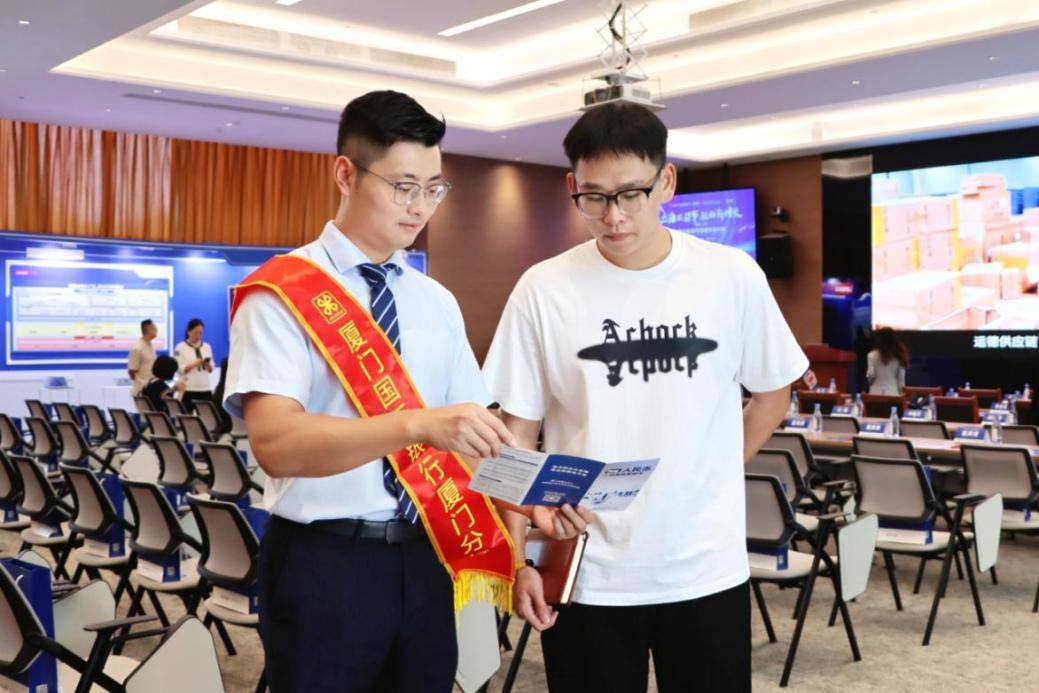
跨境人民币“活水”润企,厦门国际银行护航企业“走出去”步稳行远
Sou Hu Cai Jing· 2025-08-20 01:01
Core Insights - The Xiamen International Bank's Xiamen branch is enhancing cross-border RMB services to meet diverse trade and investment needs, achieving over 2.7 billion RMB in cross-border settlements from January 2024 to July 2025 [1] - The bank is leveraging the Belt and Road Initiative to provide comprehensive financial services, including RMB settlement and financing, to support enterprises in their overseas investments [2] - The bank is promoting the "Cross-border e-Station" platform to streamline international transactions, improving efficiency for businesses engaged in high-frequency, low-value trade [3] Group 1 - The Xiamen International Bank's Xiamen branch has been actively enriching its cross-border RMB settlement and investment product service system, significantly boosting the local economy [1] - From 2023, the bank has issued 800 million RMB in loans to support enterprises facing challenges in cross-border operations, ensuring efficient capital flow and payment processes [2] - The "Cross-border e-Station" platform allows companies to quickly submit payment instructions electronically, enhancing operational efficiency and cash flow management [3] Group 2 - The bank's initiatives align with the broader trend of deepening global industrial integration and the advancement of the Belt and Road Initiative, positioning it to seize new opportunities in foreign trade [2] - The focus on providing tailored financial solutions demonstrates the bank's commitment to addressing the specific needs of enterprises engaged in international trade [2] - The ongoing efforts to promote RMB internationalization and support enterprises in their global expansion reflect the bank's strategic vision for enhancing Xiamen's competitive edge in international markets [3]
金价高位震荡催热市场 上市金企业绩集体“飘红”
Zhong Guo Zheng Quan Bao· 2025-08-19 22:22
Group 1: Industry Performance - The gold jewelry industry has shown strong performance in recent half-year reports, driven by high gold prices [1][2] - Companies like Shanjin International reported a revenue of 9.246 billion yuan for the first half of 2025, a year-on-year increase of 42.14%, and a net profit of 1.596 billion yuan, up 48.43% [2] - Western Gold expects a net profit of 130 million to 160 million yuan for the first half of 2025, representing a year-on-year growth of 96.35% to 141.66% [3] Group 2: Gold Price Trends - International gold prices have been fluctuating at high levels, with COMEX gold futures reaching a record high of 3,534.1 USD per ounce on August 8, 2025 [4] - Despite a slowdown in central bank gold purchases in Q2 2025, the volume remains 41% higher than the average from 2010 to 2021, indicating sustained high demand [4][5] Group 3: Consumer Behavior - As the "Qixi" festival approaches, gold jewelry brands are launching promotional activities, with prices dropping to around 831 yuan per gram after discounts [6][7] - Sales personnel report a noticeable increase in sales volume for gold and diamond products, attributed to high prices and effective promotions [7]
深圳为跨境资金开通“高速路” 率先开展跨国公司本外币跨境资金池业务试点,业务额已达3500亿美元
Shen Zhen Shang Bao· 2025-08-19 17:52
Core Insights - Shenzhen has significantly improved the efficiency of cross-border fund collection for multinational companies, reducing the process from 10 days to just 10 minutes, showcasing the city's financial reform achievements [1] - As of July 2023, 55 multinational companies have participated in the pilot program for cross-border fund pools, benefiting nearly 2,000 member enterprises with a total business volume of $350 billion [1] Group 1: Reform Opportunities - Shenzhen serves as a natural testing ground for financial reforms due to its active outward-oriented economy and concentration of multinational company headquarters [2] - The pilot program for cross-border fund pools is a systematic institutional innovation focusing on three breakthroughs: account integration, quota enhancement, and process simplification, which directly benefit multinational enterprises [2] Group 2: National Demonstration - The successful experience of Shenzhen's pilot program has attracted national attention, leading to the promotion of 22 innovative measures by the National Development and Reform Commission in October 2023, including the cross-border fund pool initiative [3] - In December 2024, the State Administration of Foreign Exchange further optimized the pilot policies in Shenzhen and 10 other provinces, enhancing support for cross-border investment and financing for multinational companies [3] - The development trajectory of the cross-border fund pool pilot reflects Shenzhen's strategic path in financial reform, starting from enterprise pain points, innovating through systems, and ultimately forming replicable experiences [3]
提振消费优化支付 北京下半年金融工作划重点
Bei Jing Shang Bao· 2025-08-19 16:16
Group 1 - The People's Bank of China (PBOC) Beijing Branch emphasizes the implementation of a moderately loose monetary policy to ensure reasonable growth in regional monetary credit [1] - The meeting highlights the importance of financial support for key areas of the real economy, including technology innovation, consumption stimulation, small and micro enterprises, and stabilizing foreign trade [1] - The PBOC plans to enhance liquidity risk monitoring and management of deposit reserves, while also promoting financial services for the capital's "five major articles" [1] Group 2 - The focus is on strengthening macro-prudential management and preventing financial risks in key areas, including real estate and shadow banking [2] - The PBOC aims to promote the internationalization of the Renminbi and enhance cross-border financing capabilities [2] - Continuous improvement of financial management and service levels is prioritized, including optimizing the financial business environment in Beijing and expanding the application of digital Renminbi [2]
香港财政司司长陈茂波:伦敦金属交易所香港交割仓揭牌,有助提升人民币地位
Sou Hu Cai Jing· 2025-08-19 07:51
Core Viewpoint - The establishment of the London Metal Exchange (LME) delivery warehouse in Hong Kong is a significant step in building a commodity trading ecosystem, enhancing Hong Kong's status as an international financial and shipping center [1] Group 1: Strategic Importance - The LME warehouse in Hong Kong will facilitate the promotion of commodity trading in Renminbi, aligning with national development strategies [1] - This move is expected to enhance the usage and influence of Renminbi in international metal trading [1] Group 2: Economic Impact - The initiative is part of efforts to solidify Hong Kong's position as a hub for offshore Renminbi business [1] - The establishment of the LME network in Hong Kong is anticipated to lead to market transformation [1]
人民银行北京市分行:研究制定北京市金融支持提振消费措施
Bei Jing Shang Bao· 2025-08-19 06:35
Group 1 - The People's Bank of China (PBOC) in Beijing emphasizes the implementation of a moderately loose monetary policy to ensure reasonable growth in regional monetary credit [1][2] - Financial support will focus on key areas of the real economy, including technological innovation, consumption stimulation, support for small and micro enterprises, and stabilizing foreign trade [1][2] - The meeting highlighted the importance of enhancing liquidity risk monitoring and managing deposit reserve requirements [1] Group 2 - There is a strong emphasis on macro-prudential management and the prevention of financial risks in key areas, including real estate and shadow banking [2] - The PBOC aims to deepen financial reforms and promote high-level openness, including the internationalization of the Renminbi and cross-border financing [2] - Continuous improvement of financial management and service levels is prioritized, including optimizing the financial business environment in Beijing and promoting digital currency applications [2]