
卫星互联网

Search documents
头部拟IPO火箭企业同台
财联社· 2026-01-24 10:38
Core Viewpoint - The 2026 Beijing International Commercial Aerospace Exhibition showcases the latest developments in China's commercial aerospace industry, highlighting a significant increase in investor participation and the focus on liquid reusable rockets as a mainstream path for high-frequency, high-capacity, and low-cost launches [2][4][7]. Group 1: Exhibition Highlights - The exhibition features a wide range of displays, including rockets, satellite manufacturing, space tourism, and supporting services, demonstrating the full industrial chain of China's commercial aerospace [4][6]. - Major companies such as Blue Arrow Aerospace, Star River Dynamics, and China Aerospace Science and Technology Corporation presented their latest technologies, with a particular emphasis on liquid reusable rockets [4][7][9]. Group 2: Technological Innovations - Blue Arrow Aerospace showcased the world's first continuously successful liquid oxygen-methane rocket, the Zhuque-2, and the Zhuque-3, which has completed China's first orbital-level launch verification for a reusable rocket [7][9]. - Star River Dynamics introduced the "Zhishen" series of medium-sized reusable liquid rockets, with the Zhishen-2 having a takeoff mass of approximately 757 tons and a low Earth orbit (LEO) capacity of 20 tons [9][11]. Group 3: Space Tourism Developments - The "Lihong-2" reusable spacecraft from China Aerospace Science and Technology Corporation, designed for space tourism, can carry at least 3 tons of scientific payload or 7 passengers, with a planned reuse of at least 30 times [12][13]. - Beijing Chuanxie Technology Co., Ltd. announced the "Chuanxie-1" commercial manned spacecraft, expected to achieve its first manned flight in 2028, with ticket pre-sales starting at 3 million yuan [12][13]. Group 4: Satellite Manufacturing and Applications - Galaxy Aerospace presented the "Lingxi-03" satellite, China's first satellite using flexible solar wings, which successfully launched in July 2023 and is designed for high-density deployment [14][16]. - The exhibition highlighted advancements in satellite internet technology, with Galaxy Aerospace achieving mobile direct connection capabilities comparable to SpaceX's Starlink [14][16]. Group 5: Industry Ecosystem - The Beijing Economic and Technological Development Area has become a hub for commercial aerospace, hosting over 210 companies and 75% of China's commercial rocket manufacturers, creating a dense industrial ecosystem [19].


第三届北京商业航天产业高质量发展推进会举办
Xin Lang Cai Jing· 2026-01-24 09:19
Core Insights - The third Beijing Commercial Aerospace Industry High-Quality Development Promotion Conference was held on January 23, focusing on advancing the commercial aerospace sector in Beijing [1][4] - Seven key laboratories in Beijing were awarded, aimed at supporting original innovation and core technology breakthroughs in key industries [2] - A new policy for the development and utilization of commercial satellite remote sensing data resources was announced, targeting the years 2026-2030 [2] Group 1: Key Laboratories and Policies - Seven key laboratories were established, including those focused on low-orbit satellite communication and new power systems [2] - The policy aims to enhance the infrastructure for remote sensing data, optimize the development environment, and expand application scenarios for satellite data [2] Group 2: Investment and Projects - Nine major production capacity projects and six satellite projects were announced, with total investments exceeding 15 billion yuan (approximately 2.3 billion USD) [2] - The Beijing Economic and Technological Development Area will initiate the construction of a satellite internet supply chain industrial park by 2025 [2] Group 3: Support for Commercial Aerospace - The establishment of six common platforms for commercial aerospace research and production is set to support high-quality development and safety [3] - The Beijing Economic and Technological Development Area aims to provide comprehensive support for commercial aerospace enterprises through policy, investment, and space [3]
美国卫星互联网竞争加剧:技术赛道与太空资源的博弈
Sou Hu Cai Jing· 2026-01-24 03:15
Core Viewpoint - Blue Origin has announced the launch of its multi-orbit satellite communication network plan named "TeraWave," marking a new phase in the competition among U.S. companies in the satellite internet sector [1] Group 1: Industry Overview - The rapid development of satellite internet is attributed to advancements in communication technology since the 1990s, transitioning from a sci-fi concept to real-world applications [3] - The demand for network coverage in remote and geographically complex areas represents the largest market potential for satellite internet [3] - The competition in the satellite internet market has intensified with the entry of major tech companies, indicating a shift from early technological exploration to substantial global competition [3] Group 2: Key Players and Strategies - SpaceX's "Starlink" is currently the largest satellite internet system, with over 9,000 satellites in orbit and more than 9 million users, focusing on providing services to households and small businesses in remote areas [3] - Amazon's "Low Earth Orbit Satellite Plan" aims to serve enterprise markets and government agencies, deploying over 3,000 satellites and emphasizing synergy with its cloud computing services [4] - Blue Origin's TeraWave project utilizes a combination of low and medium Earth orbit satellites to create a multi-orbit architecture, targeting enterprise users and government clients with high throughput and network redundancy [6] Group 3: Market Opportunities and Challenges - The global digital divide presents unprecedented market opportunities for satellite internet, with approximately 2.6 billion people lacking adequate internet access, primarily in rural and low-income areas [7] - The rapid growth of satellite numbers in low Earth orbit (LEO) and medium Earth orbit (MEO) has led to increasing congestion and risks associated with space debris, posing challenges for sustainable development in satellite communications [9] - The competition among companies for orbital and frequency resources is becoming a critical issue, with the need for coordination to avoid collisions and manage space debris [9] Group 4: Future Implications - The competition in satellite internet is not just about market share but also impacts global communication infrastructure, national security, and international cooperation [10] - As global internet demand grows, satellite internet is expected to integrate further with terrestrial networks, creating a more diversified global communication system [10] - The ability to balance commercial interests with international cooperation and address space resource allocation will be essential for the future of satellite internet [10]

【环球财经】从达沃斯看全球经济增长新动能
Xin Hua She· 2026-01-23 17:52
Group 1 - The World Economic Forum held in Davos highlighted that the global economy is at a critical juncture, with innovation, green transformation, and open cooperation being essential for growth [1] - Artificial intelligence is recognized as a significant transformative force, enhancing productivity across various sectors such as agriculture, healthcare, education, and transportation [1] - Green development is emerging as a new growth opportunity, particularly in renewable energy, low-carbon initiatives, and green finance, which are seen as long-term drivers of global economic growth [1] Group 2 - The global renewable energy transition is described as "irreversible," largely driven by China, which views green transformation as a means to enhance economic, energy, and environmental security [2] - China is shifting from singular technological breakthroughs to a broader approach that includes upgrading manufacturing, digitizing services, and nurturing new industries, with future sectors like embodied intelligence, quantum technology, 6G, and satellite internet moving towards commercialization [2] - Emerging markets and developing countries are identified as significant contributors to global economic growth, with projections indicating that by 2035, they will account for approximately 65% of global economic growth [2] Group 3 - A conducive international environment is crucial for new technology-driven economic development, with cooperation being essential in a contentious global landscape [3] - The interdependence of nations is emphasized, suggesting that isolationist policies could hinder innovation and growth, while dialogue and collaboration are necessary to address common challenges [3] - China's commitment to long-term planning and high-level openness is viewed positively, as it provides stability for global economic cooperation and supports multilateralism [3]
北京商业航天产业高质量发展推进会举办 共商产业未来
Xin Lang Cai Jing· 2026-01-23 13:45
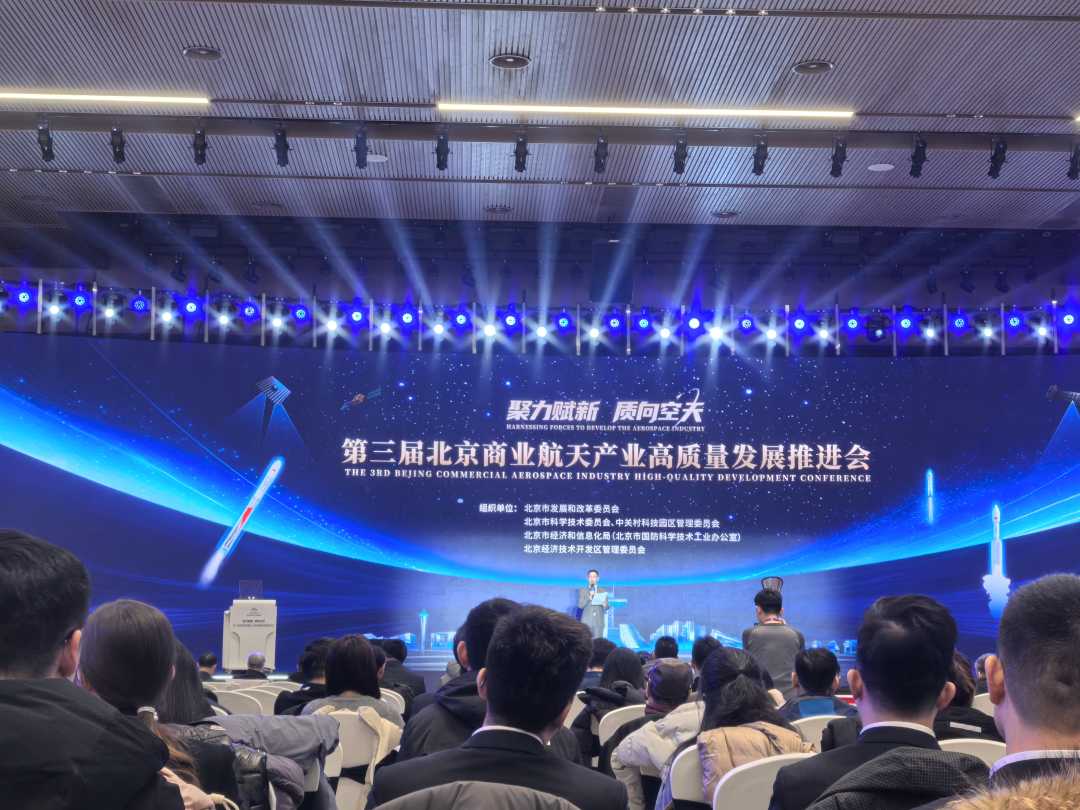
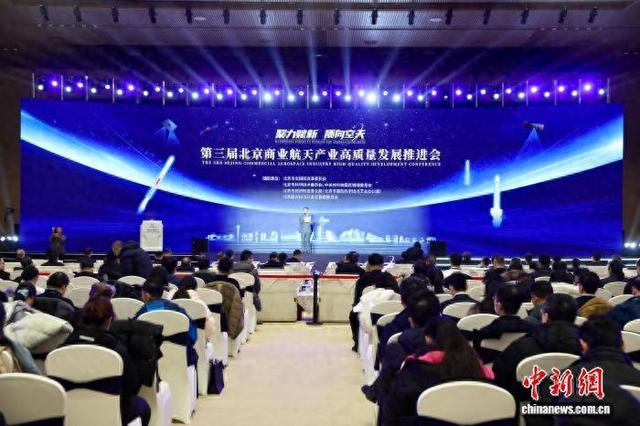
Group 1 - The third Beijing Commercial Aerospace Industry High-Quality Development Promotion Conference was held with the theme "Gathering Strength to Empower New Quality Towards Aerospace" [1][3] - The conference included multiple segments such as results release, keynote speeches, and thematic discussions, focusing on institutional innovation, cutting-edge technology exploration, and international cooperation [3][5] - Seven key laboratories in Beijing were awarded, focusing on frontier technologies and key industry layouts to accelerate original innovation and tackle core technology challenges [3][5] Group 2 - The Beijing Municipal Bureau of Economy and Information Technology released measures to promote the development and utilization of commercial satellite remote sensing data resources from 2026 to 2030, aiming to optimize the environment for data resource development and expand application scenarios [5][8] - Beijing E-Town announced nine major capacity projects and six satellite projects, with a total investment exceeding 15 billion yuan, aimed at forming a new quality capacity across the entire industry chain [5][8] - The construction of six common platforms in Beijing Rocket Street will focus on key aspects of commercial aerospace innovation, supporting high-quality development and high-level safety [7][8] Group 3 - The global first humanoid robot successfully connected to a low-orbit satellite, showcasing innovative applications in commercial aerospace [8] - Beijing E-Town aims to leverage its resource advantages and development momentum during the 14th Five-Year Plan period to support the commercial aerospace industry through enhanced policy support, larger-scale investments, and expanded industrial space [8]
颠覆认知!马斯克星链提速超100倍,商业航天迈入黄金时代,这三大核心赛道或将率先受益!
Jin Rong Jie· 2026-01-23 12:05
Group 1: SpaceX and Blue Origin Developments - SpaceX plans to launch its second-generation Starlink satellite communication system in 2027, with overall capacity expected to increase by over 100 times and data throughput capability improved by more than 20 times [1] - The FCC has approved SpaceX's application to deploy an additional 7,500 second-generation Starlink satellites to enhance global internet service capabilities [1] - Blue Origin, founded by Jeff Bezos, announced plans to launch over 5,400 satellites for a new communication network named "TeraWave," which aims to provide global continuous internet access with superior data transmission speeds [1] Group 2: Chinese Commercial Space Industry Outlook - Aijian Securities anticipates 2026 to be a pivotal year for China's commercial space industry, with a shift towards large-scale deployment of multi-satellite launches and increased rocket launch frequency [2] - The core variables for commercial rockets are efficiency improvements and cost reductions, driven by breakthroughs in full-flow engines, high-frequency reuse capabilities, and industrialization in manufacturing [2] - The valuation uplift for China's commercial space sector is expected to be catalyzed by reusable rockets enabling large-scale low Earth orbit satellite networks and the transition from customized to standardized launches [2] Group 3: Commercial Space Industry Growth - Galaxy Securities highlights that the commercial space industry is entering a golden era with simultaneous demand and supply-side growth [3] - The rapid development of private rocket companies indicates a transition from national to commercial space, suggesting a focus on structural component suppliers [3] - The satellite manufacturing sector is currently concentrated on space and ground infrastructure, with short-term focus on satellite manufacturing benefiting from increased production [3] Group 4: Satellite Manufacturing and Operations - The satellite internet sector is experiencing explosive growth, driven by the maturation of foreign low Earth orbit satellite plans like Starlink, prompting China to accelerate its own low Earth orbit satellite network initiatives [4] - The demand for satellite manufacturing, phased array antennas, solar wings, and high-precision components is expected to rise significantly [4] - The transition from project-based revenue to batch production in satellite manufacturing is anticipated to improve profitability for related companies [4] Group 5: Launch Services and Rocket Development - The commercialization of rockets hinges on low costs and high reliability, with recent advancements in reusable rocket technology and new commercial launch sites [5] - The logic for benefiting from this sector lies in the reduction of launch costs through technological iterations, which is expected to stimulate demand for launches [5] - Companies with capabilities in rocket assembly, engine development, and key subsystems are gaining attention, particularly those with expertise in advanced fields like liquid oxygen-methane engines [5] Group 6: Aerospace Materials and Components - The growth of commercial space necessitates high-performance materials that are lightweight, strong, and capable of withstanding extreme environments [6] - The demand for aerospace-grade components is expected to surge due to the increase in commercial launch requirements and large satellite constellation deployments [6] - The market logic in this area revolves around domestic substitution and military-civilian integration, with companies capable of local production poised for significant opportunities [6]
科思科技:公司将持续关注卫星互联网需求,积极研发核心器件
Zheng Quan Ri Bao· 2026-01-23 11:17
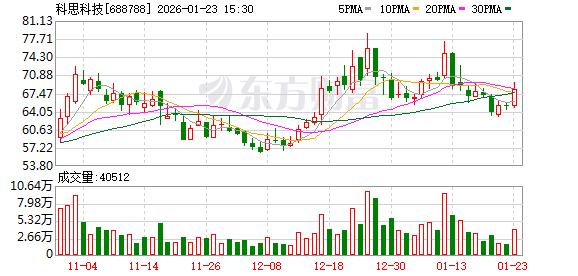
Group 1 - The core of the Starlink communication is to deploy multiple satellites in predetermined orbits to form communication links covering specific areas, working in conjunction with inter-satellite links and ground control systems [2] - The company will continue to monitor the demand for satellite internet and actively develop core components, ensuring timely disclosure of progress in accordance with regulations [2]

航天工程加码产业新基建,卫星ETF(563230)盘中涨幅达9.93%
Mei Ri Jing Ji Xin Wen· 2026-01-23 06:59
Core Viewpoint - The satellite industry chain is experiencing a strong performance, with significant gains in satellite ETFs and related stocks, driven by advancements in 6G technology and strategic initiatives from the China Aerospace Science and Technology Corporation [1] Group 1: Market Performance - The satellite ETF (563230) saw an intraday increase of 9.93%, while the aviation ETF (159392) rose by 4.06%, and the military industry leader ETF (512710) increased by 3.23% [1] - Notable stocks within the satellite ETF include Zhenlei Technology, which hit the daily limit, and several others like Xinke Mobile, Zhongke Xingtou, and Xinwei Communication, which all rose over 9% [1] Group 2: Technological Developments - The State Council's press conference on the 21st announced the completion of the first phase of 6G technology trials, with the second phase now underway, focusing on "integrated networks of air, space, land, and sea," which aligns closely with satellite internet development [1] - This shift is expected to transition satellite internet from "supplementary coverage" to a "comprehensive intelligent connection base," laying the groundwork for commercial use and large-scale deployment by around 2030 [1] Group 3: Strategic Initiatives - The China Aerospace Science and Technology Corporation held a meeting to discuss its 2026 work plan, emphasizing that 2026 marks the beginning of the 14th Five-Year Plan [1] - The meeting highlighted the need to coordinate major aerospace projects with industrial transformation, focusing on manned lunar missions, deep space exploration, and breakthroughs in reusable rocket technology to accelerate the construction of a strong aerospace nation [1] Group 4: Industry Composition - The satellite ETF (563230) closely tracks the satellite industry index, which encompasses sectors such as integrated circuit design, communication systems and terminal equipment, aerospace, general software development, and electronic components and automation machinery [1] - The index covers the entire satellite industry chain, ensuring high purity and investment efficiency [1]

美企竞逐卫星互联网,太空新赛道博弈升温
Xin Lang Cai Jing· 2026-01-23 06:33
Core Insights - The competition for near-Earth orbital resources is intensifying, with U.S. companies significantly increasing their investments in satellite internet infrastructure [1][2] - Blue Origin has announced its "TeraWave" project, which aims to provide high-speed data connectivity for enterprise users through a multi-orbit satellite network [1][3] Company Developments - Blue Origin's "TeraWave" will consist of 5,408 satellites, including 5,280 low Earth orbit satellites and 128 medium Earth orbit satellites, offering data speeds of up to 6 terabits per second [1][3] - SpaceX's "Starlink" project has over 9,000 satellites in orbit and serves more than 9 million users, focusing on the mass market and underserved areas [3] - Amazon's "Low Earth Orbit Satellite Plan" plans to deploy over 3,000 satellites, targeting enterprise clients and government agencies [3] Industry Trends - Satellite internet is emerging as a crucial supplement to traditional ground-based communication networks, especially in areas with challenging geographical conditions [2][5] - The global market for satellite internet is expanding, driven by the need for better connectivity in underserved regions, with approximately 2.6 billion people lacking adequate internet access [5] Competitive Landscape - Various U.S. companies are entering the satellite internet space, each with distinct user targets and technological approaches, leading to a diverse competitive environment [3][4] - Companies like AST SpaceMobile are developing satellite networks that connect directly to smartphones, aiming to provide 4G and 5G coverage in remote areas [4] Opportunities and Challenges - The satellite internet sector offers significant market potential due to its global coverage capabilities and redundancy advantages over traditional networks [5] - The competition for orbital positions and spectrum resources is becoming a critical factor in the development of space infrastructure, with challenges related to orbital congestion and space debris management [5]
综述|美企竞逐卫星互联网 太空新赛道博弈升温
Xin Hua She· 2026-01-23 06:04
Core Viewpoint - The competition for satellite internet among U.S. companies is intensifying, with multiple firms launching projects aimed at providing high-speed internet services through satellite networks, marking a shift from conceptual exploration to large-scale competition in space communication [1][2]. Group 1: Company Initiatives - Blue Origin announced its satellite internet project "TeraWave," which aims to provide up to 6 terabits per second of symmetrical data connectivity through a network of 5,408 satellites, including 5,280 low Earth orbit satellites and 128 medium Earth orbit satellites, targeting enterprise, data center, and government users [1][2]. - SpaceX's "Starlink" project has over 9,000 satellites in orbit and serves more than 9 million users, focusing on the mass market and small institutions, particularly in remote areas and emergency communication scenarios [2][3]. - Amazon's "Low Earth Orbit Satellite Plan" plans to deploy over 3,000 low Earth orbit satellites, primarily targeting enterprise customers, government agencies, and remote communities, with a more measured rollout [2][3]. Group 2: Market Dynamics - The satellite internet sector is characterized by varying technical paths and strategic focuses among U.S. companies, with some emphasizing high throughput and redundancy for enterprise users, while others target broader consumer markets [3]. - The global market for satellite internet is expanding due to the limitations of traditional ground-based networks, with approximately 2.6 billion people lacking adequate internet access, particularly in rural and low-income areas [3][4]. - The competition for orbital positions and frequency resources is becoming a critical factor in the future of space infrastructure, with the rapid increase in satellite numbers leading to concerns about orbital congestion and space debris [4].