自由贸易

Search documents
正加快推进国内核准工作!商务部解读中国—东盟自贸区3.0版升级议定书
Di Yi Cai Jing· 2025-11-13 08:57
Core Points - The signing of the China-ASEAN Free Trade Area 3.0 Upgrade Protocol is a significant milestone in cooperation, marking an expansion of economic integration into emerging areas such as digital, green, standards, and supply chains [1][3] - The protocol reflects a strong commitment to multilateralism and free trade amidst challenges to the international trade system, establishing a new benchmark for deep economic integration between China and ASEAN [1][3] Group 1: Key Features of the Protocol - The protocol introduces five new areas: digital economy, green economy, supply chain connectivity, competition and consumer protection, and support for small and medium-sized enterprises, showcasing a joint effort to lead international rule-making and promote cooperation in emerging fields [3][4] - It enhances the level of openness by establishing a systematic cooperation framework that includes both traditional areas like trade facilitation and emerging fields such as digital and green economies, injecting new momentum into regional economic growth [3][4] - The protocol aims to promote inclusive development by ensuring fair competition, protecting consumer rights, supporting small and medium enterprises, and enhancing the capacity of least developed countries, allowing all parties to benefit from regional economic growth [4]

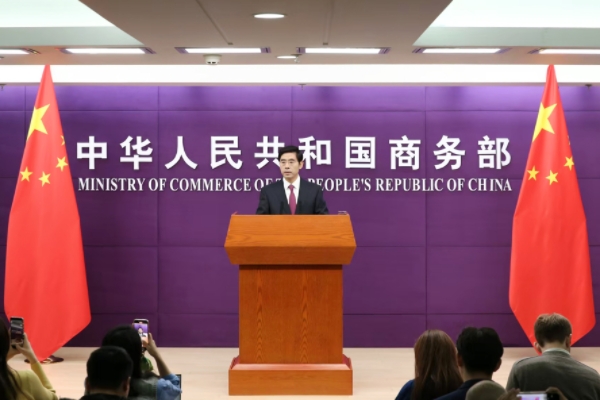
中国—爱尔兰经贸混委会第14次会议在都柏林举行
Shang Wu Bu Wang Zhan· 2025-11-13 08:56
Core Viewpoint - The 14th meeting of the China-Ireland Economic and Trade Joint Committee highlighted the strengthening of the strategic partnership between China and Ireland, emphasizing mutual benefits in trade and investment, and the commitment to free trade and multilateral trade systems [1] Group 1: Economic Cooperation - The meeting was co-hosted by China's Vice Minister of Commerce and Ireland's Minister for Enterprise, Trade and Employment, indicating high-level engagement between the two countries [1] - Both countries support the development of a balanced bilateral trade relationship, with China being Ireland's largest trading partner in Asia [1] Group 2: Areas of Collaboration - China is willing to enhance strategic alignment with Ireland, focusing on cooperation in digital economy, green energy, biomedicine, technological innovation, and financial services [1] - The "14th Five-Year Plan" period will see China expanding its service sector, providing ample opportunities for Irish enterprises to invest in China [1] Group 3: Global Economic Impact - The economic development of China is seen as a source of certainty for global economic growth, reinforcing the importance of the China-Ireland trade relationship [1] - Ireland's open and free economy is positioned to welcome Chinese enterprises and financial institutions for investment and joint research and development, facilitating integration into the global value chain [1]
李强会见西班牙国王费利佩六世
Xin Hua She· 2025-11-12 11:45
Group 1 - The meeting between Chinese Premier Li Qiang and Spanish King Felipe VI emphasizes the healthy and stable development of bilateral relations since the establishment of diplomatic ties, highlighting mutual respect and cooperation across various fields [1][2] - Both countries aim to strengthen strategic alignment in the context of a sluggish global economic recovery and low trade and investment levels, focusing on enhancing economic complementarity and creating new growth points [2][3] - China expresses willingness to support more capable Chinese enterprises to invest in Spain, particularly in sectors such as photovoltaics, green hydrogen, and power batteries, while also exploring cooperation in future industries like artificial intelligence [2][3] Group 2 - Spain reaffirms its commitment to the One China policy and expresses a desire to continue being a reliable partner for China, marking the 20th anniversary of the comprehensive strategic partnership [3] - Both nations are keen to enhance high-level exchanges and expand cooperation in trade, investment, technology, and green energy, as well as promote cultural and educational exchanges [3] - Spain appreciates China's global initiatives and is willing to collaborate closely with China in multilateral efforts, supporting multilateralism and the role of the United Nations [3]
黄奇帆:中国对外开放有五大新任务
Zhong Guo Xin Wen Wang· 2025-11-12 07:14
Group 1 - The core viewpoint of the article emphasizes five new key tasks for China's opening-up strategy as outlined in the report of the 20th National Congress of the Communist Party of China, focusing on institutional opening, service trade, Belt and Road Initiative, free trade, and the internationalization of the Renminbi [1][2][3] Group 2 - The first task is to achieve the integration of internal and external circulation mechanisms, ensuring that the rules and standards for imports, exports, and domestic sales are consistent, thereby creating a unified trade system [1] - The second task is to increase the proportion of service trade in China's overall trade, highlighting that a strong service trade sector is essential for becoming a true trade power [1] - The third task involves enhancing the Belt and Road Initiative to promote coordinated opening among different regions of China, addressing the disparity between coastal and inland areas through improved trade routes [2] - The fourth task is to advance free trade by transforming China's free trade zones from isolated points into a network that covers over 30 provinces and cities, laying the groundwork for future economic cooperation with the US, Japan, and Europe [2] - The fifth task is to orderly promote the internationalization of the Renminbi, indicating that there is significant potential for growth in its international status, which requires further efforts in cross-border trade and the development of offshore markets [3]
习近平致电祝贺康诺利就任爱尔兰总统 共同支持多边主义和自由贸易
Xin Hua She· 2025-11-12 06:35
扫一扫在手机打开当前页 习近平指出,中国和爱尔兰建交46年来,在互学互鉴、友好合作中携手发展,成就斐然。近年来, 两国各层级交往密切,务实合作成果丰硕。我高度重视中爱关系发展,愿同康诺利总统一道努力,增进 政治互信,赓续传统友好,共同支持多边主义和自由贸易,推动中爱互惠战略伙伴关系不断向前发展, 更好造福两国人民。 新华社北京11月11日电 2025年11月11日,国家主席习近平致电凯瑟琳·康诺利,祝贺她就任爱尔 兰总统。 ...
对华征收高额关税?墨西哥国内反对声浪日益高涨
Huan Qiu Shi Bao· 2025-11-11 22:56
【环球时报驻墨西哥特派记者 谢佳宁 环球时报记者 白云怡】彭博社10日援引知情人士的话称,墨西哥对华征收高额关税的计划再次被推迟,最 早于12月在国会审议。据透露,来自墨西哥商界领袖以及执政党内部的反对声浪日益高涨,阻碍了国会就关税计划展开辩论。据媒体公开报道, 墨西哥政府9月初将提案提交给众议院后,该计划已被推迟过一次,原定于11月底审议。中国外交部发言人林剑11日回应称,中方坚决反对在他人 胁迫下以各种名义对华设限,损害中方的正当利益,我们会根据实际情况坚决维护自身的权益。林剑说,中方高度重视中墨关系的发展,在当前 个别国家滥施关税的背景下,中墨双方更应加强沟通协调,共同维护自由贸易和多边主义,共同推动世界经济复苏和全球贸易发展。 报道援引部分议员的观点认为,即便该计划能保护部分本地产业,也会损害依赖中国原材料的墨西哥企业。《美墨加协定》墨西哥首席技术贸易 谈判代表肯尼思·史密斯在近期一场经济论坛上形容该关税计划是一种"霰弹枪"式的做法,他认为"这会让许多国家和企业陷入交火之中"。 "相关关税计划也面临技术难题。"彭博社援引知情人士的话称,关于应针对哪些范围和类别的商品进行征税,墨西哥财政部和经济部也存在 ...
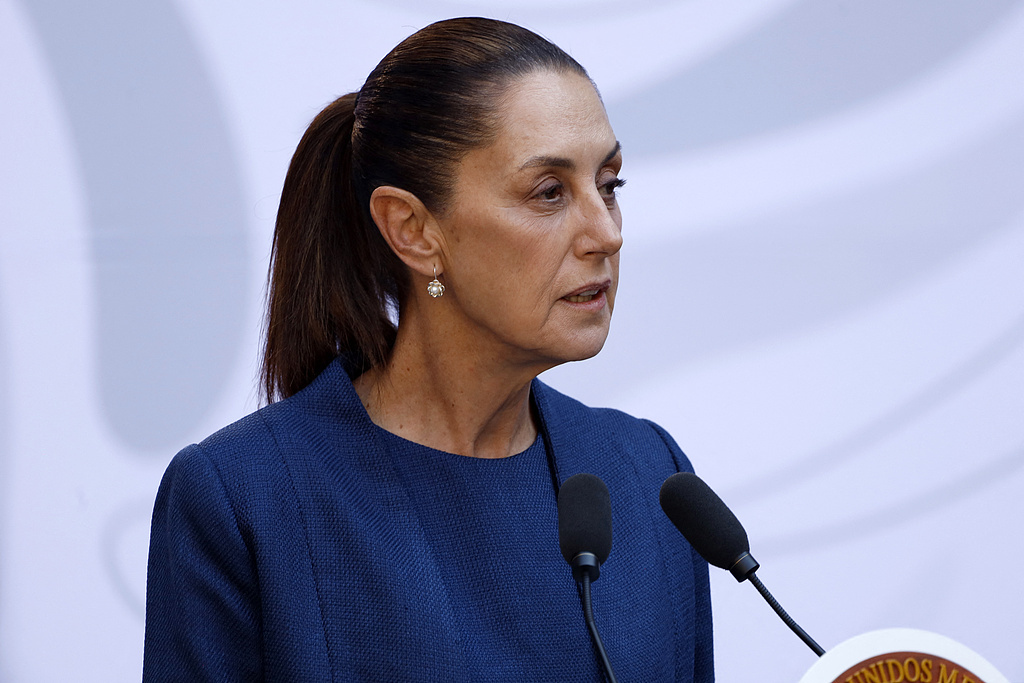
外交部 最新发声→
Zheng Quan Shi Bao· 2025-11-11 12:36
Group 1 - The Chinese government urges the European Union to provide a fair, transparent, and non-discriminatory business environment for Chinese enterprises, emphasizing that these companies have contributed positively to local economies and employment in Europe [2] - The Chinese government criticizes the removal of Chinese telecom equipment by certain countries as a violation of market principles and fair competition rules, stating that such actions hinder technological progress and economic development [2] - The Chinese government advocates for inclusive economic globalization and opposes unilateralism and protectionism, particularly in the context of potential high tariffs on Chinese imports by Mexico, which have been postponed due to rising opposition [3] Group 2 - The Chinese government highlights the importance of mutual benefit in China-Mexico economic cooperation, especially in light of rising tariffs imposed by other countries, and calls for enhanced communication to maintain free trade and multilateralism [3]
外交部,最新发声→
证券时报· 2025-11-11 11:24
Group 1 - The Chinese Foreign Ministry urges the EU to provide a fair, transparent, and non-discriminatory business environment for Chinese enterprises, emphasizing the importance of avoiding damage to investment confidence in Europe [2][3] - The Ministry highlights that Chinese companies have been operating in Europe in compliance with laws and regulations, contributing positively to local economic development and employment [2] - The Ministry criticizes the removal of Chinese telecom equipment by certain countries as a violation of market principles and fair competition rules, leading to significant economic losses and hindering technological progress [2] Group 2 - The Mexican government's plan to impose high tariffs on Chinese imports has been postponed due to rising opposition from the private sector and even members of the ruling party [4] - The Chinese Foreign Ministry advocates for inclusive economic globalization and opposes unilateralism and protectionism, emphasizing the need for China and Mexico to strengthen communication and cooperation in the current context of rising tariffs [4] - The Ministry reiterates the importance of mutual benefit in China-Mexico economic cooperation and the need to jointly promote free trade and multilateralism to support global economic recovery [4]

墨西哥推迟对华征税计划 中方:坚决反对在他人胁迫下以各种名义对华设限
Zhong Guo Xin Wen Wang· 2025-11-11 08:09
Core Viewpoint - Mexico has postponed its plan to impose tariffs on Chinese goods, with China firmly opposing any restrictions imposed under external pressure [1] Group 1: Economic Relations - China advocates for inclusive economic globalization and opposes unilateralism, protectionism, and discriminatory measures [1] - The essence of China-Mexico economic cooperation is mutual benefit and win-win outcomes [1] Group 2: Trade Cooperation - In the context of certain countries imposing tariffs, China and Mexico should enhance communication and coordination to jointly uphold free trade and multilateralism [1] - Both countries are important members of the Global South, emphasizing the need for collaboration to promote global economic recovery and trade development [1]
墨西哥对中国进口商品征收高额关税计划被推迟,外交部回应
财联社· 2025-11-11 08:06
Core Viewpoint - The article discusses the postponement of Mexico's plan to increase tariffs on imports from China due to opposition from private enterprises and members of the ruling party, highlighting the importance of mutual cooperation and free trade between China and Mexico [1] Group 1: Economic Globalization - China advocates for inclusive economic globalization and opposes unilateralism, protectionism, and discriminatory measures [1] - The Chinese government emphasizes the need to protect its legitimate interests against external pressures [1] Group 2: China-Mexico Relations - China and Mexico are both significant members of the Global South, with mutual benefit being the essence of their economic cooperation [1] - The Chinese side values the development of China-Mexico relations and aims to strengthen communication and coordination in the context of rising tariffs from certain countries [1] Group 3: Trade and Economic Recovery - Both countries are committed to maintaining free trade and multilateralism to promote global economic recovery and trade development [1]