
智能汽车

Search documents
【变更】PCB上市新秀调整5亿募投项目
Sou Hu Cai Jing· 2025-12-08 11:57
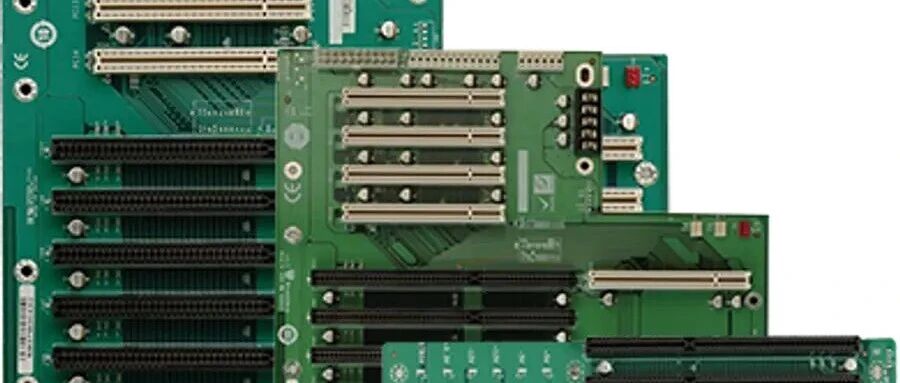
Core Viewpoint - The company is adjusting its internal investment structure for the "Nantong Qiangda Circuit Technology Co., Ltd. annual production of 960,000 square meters of multilayer boards and HDI board project" to increase the proportion of high-end HDI products in response to market demand [2][4] Investment and Financial Summary - The company plans to raise 531 million yuan through an IPO in 2024, with a net amount of 453 million yuan after deducting issuance costs, allocated as follows: 363 million yuan for the Nantong project and 9 million yuan for working capital [2] - As of November 30, 2025, the investment progress for the Nantong project is at 74.14% [2] Product Structure Adjustment - The product composition is being changed from multilayer boards and 2nd generation HDI to primarily high-layer multilayer boards, with an expanded proportion of high-end HDI products [3][4] - The new products will be applied in various fields including optical modules, AI servers, GPU acceleration cards, general substrates (UBB), automotive millimeter-wave radar, intelligent driving control, humanoid robots, Mini-LED, semiconductor testing, IoT, and low-altitude economy [3][4] Equipment Investment Progress - The equipment investment timeline has been adjusted to start in the second half of year T+2 and complete in batches by year T+6, with production expected to commence in year T+3 [3] - The projected capacity utilization rates are as follows: 18% in year T+3, 35% in year T+4, 75% in year T+5, and 100% in year T+6 [3] Industry Context - The PCB industry is transitioning from a phase of scale expansion to one of structural optimization and technological enhancement, driven by the demand from AI computing, new energy vehicles, and smart terminal innovations [4] - The market is expected to see significant growth in high-value-added areas, with increasing demand for high-layer, high-density, and high-performance products [4] Company Background - Founded in 2004, the company specializes in the R&D, production, and sales of PCBs, focusing on mid-to-high-end prototypes and small batch production [6] - The company successfully listed on the Shenzhen Stock Exchange's Growth Enterprise Market on October 31, 2024 [6] - The company aims to meet the specialized needs of customers in various sectors including industrial control, communication equipment, automotive electronics, consumer electronics, medical health, and semiconductor testing [6]

均胜电子(00699):全球汽车Tier1的技术外溢:从智能汽车到具身智能
Soochow Securities international· 2025-12-08 11:09
Investment Rating - The report initiates coverage with a "Buy" rating for the company, projecting a target price of HKD 23 based on a 2026 average valuation of PE=18x and a target market capitalization of HKD 35.6 billion [8]. Core Insights - The company is transitioning from the "Takata integration shadow" to a new phase characterized by "global safety cash cow + intelligent automotive Tier 1 + robotics second curve" [9]. - The automotive safety business is expected to maintain stable revenue growth in the mid-to-high single digits over the next three years, supported by the clearing of historical recall and restructuring costs, alongside increasing orders for new energy vehicles [7]. - The company is positioned as a leading global Tier 1 supplier in automotive safety, electronics, and robotics, with a comprehensive product line and platform-based R&D system [9][27]. Summary by Sections Investment Highlights - The company has become one of the few global suppliers capable of providing a complete set of passive safety systems to multinational automakers through acquisitions of KSS and Takata assets, with safety business revenue stabilizing in the hundreds of billions [7]. - The automotive electronics segment focuses on smart cockpits, connected vehicles, ADAS/domain control, and new energy management systems, forming a complete product line and platform-based R&D system [7]. - The company is advancing into robotics, creating integrated solutions for robotic control and collaborating with leading robotics players, which is expected to generate meaningful revenue in 3-5 years [8]. Financial Projections - Revenue projections for 2025-2027 are estimated at RMB 626 billion, RMB 670 billion, and RMB 719 billion, representing year-on-year growth of 12%, 7%, and 7% respectively. Net profit attributable to shareholders is projected at RMB 16 billion, RMB 18 billion, and RMB 20 billion, with growth rates of 67%, 12%, and 11% respectively [8]. Business Development Stages - The company has undergone several development stages: 1. Foundation Stage (2004-2010): Focused on local component supply and quality system establishment [10]. 2. Internationalization Stage (2011-2018): Transitioned to a global Tier 1 supplier through acquisitions [11]. 3. Optimization Stage (2019-2024): Focused on smart and electric vehicle trends, optimizing global operations [12]. 4. Re-entrepreneurship Stage (2025-present): Aiming for dual pillars of automotive and robotics Tier 1 development [13]. Market Position - The company ranks 41st among the largest automotive parts suppliers globally, with projected revenue of RMB 559 billion in 2024. It holds a 26.1% market share in China and a 22.9% share globally in passive safety [19][30]. - The revenue structure is highly internationalized, with approximately 25.3% from the Chinese market and 74.7% from overseas markets [21]. Competitive Landscape - The global automotive passive safety market is characterized by a high concentration of suppliers, with the top three companies holding over 90% market share. The company ranks second globally and in China, benefiting from increasing industry consolidation [42][43].

港股汽车芯片IPO迎来清华系夫妻档,年出货3700万片,奇瑞上汽北汽共同押注
3 6 Ke· 2025-12-04 10:15
Core Viewpoint - Xihua Technology has submitted its IPO application to the Hong Kong Stock Exchange with a valuation of 2.844 billion RMB, marking it as the first player in the automotive MCU sector closely related to smart vehicles and physical AI to reach this milestone [2][3]. Financial Performance - Xihua Technology's revenue from 2022 onwards shows a compound annual growth rate (CAGR) of 67.8%, with the first three quarters of 2025 already matching the total revenue for 2024, indicating rapid business expansion [6]. - Despite this growth, the company's gross margin remains low, reflecting its status in the "startup" phase compared to other fabless semiconductor companies [6][10]. Supply Chain and Cost Structure - The company faces challenges due to a highly concentrated supply chain, with the top five suppliers accounting for over 80% of procurement, leading to weak bargaining power against rising costs in wafer foundry and packaging testing [8]. - The revenue from the rapidly developing smart sensing control chips (TMCU) surged by 521% in the first nine months of 2025, but the gross margin for this segment is only 9.2%, further dragging down overall profitability [8]. Research and Development - Xihua Technology invests approximately 100 million RMB annually in R&D, which constitutes over 35% of its revenue, significantly higher than the industry average [10]. - However, the return on R&D investment is low, with only 12 patents produced from an investment of 86.83 million RMB in 2024, resulting in an average cost of 7.23 million RMB per patent, which is above the industry average of 3 million RMB [10]. Profitability and Cash Flow - Since its inception, Xihua Technology has not achieved profitability, accumulating a net loss of over 420 million RMB, with negative operating cash flow indicating a lack of self-sustaining financial capability [11][13]. - As of September 2025, the company had cash and equivalents of 605 million RMB, a 60.8% increase from the end of 2024, primarily due to new bank loans, leading to a total debt of 1.023 billion RMB and a debt-to-asset ratio of 50.9% [13]. Product Focus - The company specializes in Scaler chips, which are image/video processing chips that ensure compatibility between different devices' image formats [14][16]. - Xihua Technology's innovative ASIC architecture for Scaler chips offers higher performance, lower power consumption, and better cost efficiency compared to traditional FPGA solutions, positioning it as a leader in the ASIC Scaler segment [17]. Market Position and Growth Drivers - The Scaler market is experiencing continuous growth, driven by the demand for compatibility in smartphone repairs and the increasing prevalence of multi-screen interactions in smart vehicles [17]. - Xihua Technology's product offerings also include TMCU, which is a vehicle-grade microcontroller with advanced touch capabilities, applicable in various automotive functions [18][22]. Company Background - Founded by Chen Xi in 2018, Xihua Technology has undergone multiple funding rounds, attracting significant investments from various venture capital and industry players, including SAIC and BAIC [25][26]. - The company has a clear shareholder structure, with the founder and co-founder holding over 65% of the shares, indicating stable control conducive to long-term strategic planning [28].

沪士电子携高端PCB递表 为港股科技板块注入新动能
BambooWorks· 2025-12-04 09:42
Core Viewpoint - The leading printed circuit board (PCB) manufacturer, Hushi Electronics, has applied for a secondary listing in Hong Kong, focusing on high-end applications in artificial intelligence servers and smart vehicles, driving strong revenue growth [1][2]. Group 1: Company Overview - Hushi Electronics has submitted its listing application to the Hong Kong Stock Exchange, following a similar move by competitor Dongshan Precision just a week prior [2][3]. - The company has experienced a 57% year-on-year revenue growth and a 49% increase in profit for the first half of this year, maintaining a competitive high gross margin [2][5]. - Hushi Electronics has strategically shifted its focus from consumer electronics to high-end PCB products for smart vehicles and AI applications, distinguishing itself from Dongshan Precision, which remains rooted in the more mature consumer electronics market [5][6]. Group 2: Production and Market Position - Hushi Electronics operates five production bases, with notable projects in Jiangsu and Thailand, the latter focusing on advanced products for high-speed networking and AI servers [6][8]. - The company has become the largest supplier of data center PCBs globally, with a market share of 10.3% as of June this year [6]. - Hushi Electronics leads the high-end HDI PCB market for L2 and above autonomous driving domain controllers, holding a market share of 15.2% [7]. Group 3: Financial Performance - The data communication PCB segment is the largest growth driver for Hushi Electronics, with a 71% year-on-year revenue increase, reaching 6.53 billion yuan, accounting for over 75% of total revenue [8]. - The company's gross margin has increased from 27.9% in 2022 to 32.3% in the first half of this year, reflecting its focus on high-end markets [8]. - Hushi Electronics' net profit for the first half of 2025 grew by 49% year-on-year, from 1.14 billion yuan to 1.68 billion yuan, with cash reserves increasing from 1.54 billion yuan to 2.74 billion yuan [9].

“果链龙头”领益智造转身搞AI,深圳女富豪赴港IPO继续“买买买”
Sou Hu Cai Jing· 2025-12-04 07:12
Core Viewpoint - The company Lingyi Technology is transitioning from a "fruit chain" enterprise to an AI hardware intelligent manufacturing platform, with plans for a secondary listing in Hong Kong to support its expansion and acquisitions [2][10][20]. Group 1: Company Overview - Lingyi Technology, previously known for its precision components in consumer electronics, is now focusing on AI hardware, automotive components, and low-altitude economy products [4][5]. - The company has submitted a prospectus for a secondary listing on the Hong Kong Stock Exchange after previously terminating its listing application in 2022 [2][20]. Group 2: Financial Performance - For the years 2022 to 2025, Lingyi Technology's revenue from AI hardware was 314.79 billion, 307.13 billion, 407.8 billion, and 329.15 billion yuan, accounting for 91.2%, 89.9%, 92.1%, and 87.6% of total revenue respectively [7]. - The company reported total revenues of 345.03 billion, 341.54 billion, 442.6 billion, and 375.9 billion yuan for the same periods, with net profits of 15.6 billion, 20.14 billion, 17.61 billion, and 19.66 billion yuan [9]. Group 3: Business Segments - The AI hardware segment is the primary revenue source, with significant contributions from products like humanoid robot joints, AR glasses, and precision components for smartphones [4][5][7]. - The automotive and low-altitude economy segments are also growing, with revenues of 10.79 billion, 13.85 billion, 21.17 billion, and 19.7 billion yuan from 2022 to 2025, representing 3.1%, 4.1%, 4.8%, and 5.2% of total revenue [9][8]. Group 4: Strategic Acquisitions - Lingyi Technology is actively pursuing acquisitions to enhance its capabilities in the automotive sector, including a recent acquisition of a majority stake in Jiangsu Kedastern Automotive Technology [10][11]. - The company has also announced plans to acquire Zhejiang Xianglong Machinery, further expanding its automotive component business [14]. Group 5: Leadership and Ownership - The founder, Zeng Fangqin, has maintained a significant ownership stake in the company, holding 58.64% of the shares through her investment vehicle [22][25]. - Zeng's commitment to the company is underscored by her decision not to sell shares during the upcoming listing period, reflecting confidence in the company's future [25].

星宇股份涨2.02%,成交额1.51亿元,主力资金净流出1099.39万元
Xin Lang Zheng Quan· 2025-12-04 05:16
Core Viewpoint - Xingyu Co., Ltd. has shown a mixed performance in stock price and financial metrics, with a recent increase in stock price but a year-to-date decline, indicating potential volatility in the automotive parts sector [1][2]. Group 1: Stock Performance - On December 4, Xingyu's stock rose by 2.02%, reaching 125.32 CNY per share, with a trading volume of 1.51 billion CNY and a turnover rate of 0.42%, resulting in a total market capitalization of 358.01 billion CNY [1]. - Year-to-date, Xingyu's stock price has decreased by 5.05%, while it has increased by 3.57% over the last five trading days, 0.02% over the last 20 days, and 4.88% over the last 60 days [1]. Group 2: Financial Performance - For the period from January to September 2025, Xingyu reported a revenue of 10.71 billion CNY, reflecting a year-on-year growth of 16.09%, and a net profit attributable to shareholders of 1.14 billion CNY, which is a 16.76% increase compared to the previous year [2]. - Since its A-share listing, Xingyu has distributed a total of 3.71 billion CNY in dividends, with 1.14 billion CNY distributed over the past three years [2]. Group 3: Shareholder Information - As of September 30, 2025, the number of shareholders in Xingyu increased to 13,800, a rise of 19.06%, while the average number of circulating shares per shareholder decreased by 16.01% to 20,772 shares [2]. - The second-largest circulating shareholder is Hong Kong Central Clearing Limited, holding 36.86 million shares, an increase of 12.72 million shares from the previous period [2].

“造车天团”能否养大阿维塔?
3 6 Ke· 2025-12-04 00:25
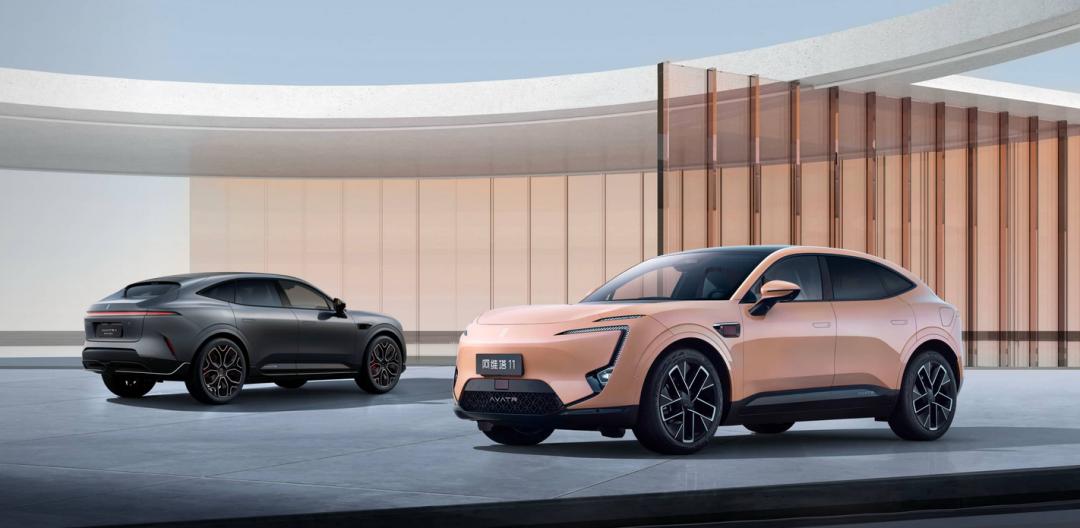
Core Viewpoint - Avita, backed by Changan Automobile, CATL, and Huawei, is preparing for a Hong Kong IPO but currently struggles with sales and brand recognition compared to leading competitors [1][2]. Group 1: Company Background - Avita is a luxury electric vehicle brand created through collaboration between Changan Automobile, CATL, and Huawei, leveraging each partner's strengths [2]. - Changan Automobile, a major shareholder, provides support in smart manufacturing, supply chain, R&D, and distribution [2]. - CATL, the world's largest battery manufacturer, plays a crucial role in supporting Avita's technology and marketing efforts [2]. - Huawei, while not a direct shareholder, offers advanced smart automotive solutions through its HI model [2]. Group 2: Operational Model and Workforce - Avita employs a light asset operation model, giving it a competitive edge in the market [4]. - As of June 2023, Avita has 3,666 employees, with over 57.1% in technical and R&D roles, and has filed 1,326 patents since its inception [4]. Group 3: Product Line and Sales Performance - Avita launched its first mass-produced model, Avita 11, in August 2022, with plans to release additional models (Avita 12, 07, and 06) between November 2023 and April 2025 [4][5]. - The current sales target for 2023 is 220,000 units, but as of October, only 104,200 units have been sold, achieving 47.4% of the goal [10]. - The main sales model is Avita 07, while other models like Avita 11 and 12 have seen declining monthly sales [10]. Group 4: Financial Performance - Revenue projections show significant growth from 0.28 billion RMB in 2022 to an estimated 151.95 billion RMB in 2024, despite ongoing losses [12]. - The company reported a cumulative loss of approximately 11.3 billion RMB over the reporting period, with expectations of continued losses in 2025 [12]. Group 5: Strategic Partnerships and Future Goals - Avita has deepened its partnership with Huawei, investing 11.5 billion RMB for a 10% stake in Huawei's subsidiary, enhancing their collaboration [12][13]. - Future plans include launching 17 new models by 2030, with ambitious sales targets of 400,000 units by 2027 and 800,000 units by 2030 [15].
无人物流车行业即将迎来爆发期
Zhong Guo Zheng Quan Bao· 2025-12-03 20:28
Core Insights - The company has made significant progress in the large-scale deployment of its autonomous logistics vehicles, securing a total of 500 orders for the Xiaozhu T5 model from Master Company, indicating a growing market demand for autonomous logistics solutions [1][2] - The company is optimistic about the future of autonomous logistics vehicles, anticipating a surge in demand and a potential explosion in the industry as it continues to iterate on technology and expand its application boundaries [1][3] - The company aims to enhance its production capacity, with expectations to deliver around 10,000 units in the coming year, reflecting a strategic approach to scaling operations gradually [3][4] Order Acquisition and Market Expansion - The company has recently secured additional orders, including 100 units of autonomous logistics vehicles and a strategic partnership with Hunan Xiangjiang Intelligent, focusing on deepening technology applications in the region [2][3] - The Xiaozhu autonomous vehicles are beginning to penetrate the national market, with reports indicating that the company’s L4 autonomous driving business has made significant breakthroughs [2][3] - The company is collaborating with various partners to design, produce, and deliver 800 units of logistics vehicles that meet automotive standards, showcasing its commitment to expanding its product matrix [2][4] Technological Advancements and Cost Reduction - The company is focused on reducing costs through technological advancements and economies of scale, which are seen as key competitive advantages in the autonomous logistics vehicle market [4][5] - The company plans to continue investing in technology iteration and research and development for its autonomous logistics vehicles, aiming to build a mutually beneficial ecosystem with partners [4][5] - The company has announced plans to issue new H-shares to raise approximately HKD 204 million, with a significant portion allocated to the development of L4 autonomous logistics vehicles [4][5] Strategic Collaborations and Product Development - The company has achieved breakthroughs in the passenger vehicle sector, collaborating with a leading domestic automotive brand to provide advanced intelligent driving solutions for flagship SUV models [5] - The company is expanding its global footprint by entering multiple export vehicle supply chains and exploring diverse application scenarios, enhancing overall system cost-effectiveness and user experience [5] - The company has established partnerships with 42 automotive manufacturers, indicating a broadening customer base and ongoing global expansion efforts [5]
【IPO前哨】冲刺“A+H”!PCB钻针全球第一,鼎泰高科的光环与隐忧
Sou Hu Cai Jing· 2025-12-03 10:56
Core Viewpoint - The rapid growth in AI server computing power and the industrialization of embodied robots are driving a revolution in the PCB (Printed Circuit Board) industry, with DingTai High-Tech (301377.SZ) leading the global PCB drill bit market and seeking a dual listing in Hong Kong [2][17]. Company Overview - DingTai High-Tech is the leading supplier of PCB drill bits, holding a global market share of 26.8% in 2024, which is expected to increase to 28.9% in the first half of 2025, meaning one in three PCB drill bits globally comes from this Chinese company [5]. - The company has established a comprehensive product line that includes precision tools, grinding and polishing materials, functional film materials, and intelligent CNC equipment, serving various industries such as AI servers, embodied robots, semiconductors, low-orbit satellite communications, and smart vehicles [3][5]. Financial Performance - In the first three quarters of 2025, DingTai High-Tech achieved revenue of 1.457 billion yuan, a year-on-year increase of 29.13%, and a net profit of 282 million yuan, surging 63.94% year-on-year [8][10]. - The overall gross margin improved by 4.4 percentage points to 38% in the first half of 2025, driven by the steady increase in sales of high-margin products [6][10]. Market Position and Strategy - DingTai High-Tech's unique "self-research equipment" model allows it to maintain a competitive edge, as 95% of its production equipment is self-developed, enabling faster expansion and better cost control compared to competitors reliant on expensive imported equipment [5][11]. - The company is actively pursuing an integrated transformation of "tools + materials + equipment," with a focus on the embodied robot sector, collaborating with teams to develop core components for intelligent robots [16][17]. Challenges and Future Outlook - Despite strong performance, DingTai High-Tech faces challenges such as reliance on precision tools for over 80% of its revenue, which ties its fate closely to the cyclical nature of the global PCB industry [11]. - The company is also working on expanding its global presence, with overseas revenue growing 123% year-on-year but still only accounting for 8.8% of total revenue [11][14]. - Rising raw material prices, particularly for tungsten, pose a risk to profit margins, although the company is implementing strategies to mitigate these costs [14][15].
智能汽车系列报告(五):蔚来业绩创历史新高,25Q4有望实现盈利
Shanghai Aijian Securities· 2025-12-03 07:18
Investment Rating - The report assigns an "Outperform" rating for the automotive industry, indicating a positive outlook compared to the broader market [2][4]. Core Insights - NIO reported a record high revenue of 52.84 billion yuan for the first three quarters of 2025, with a year-on-year growth of 14.8%. The third quarter revenue reached 21.79 billion yuan, marking a historical peak with a gross margin of 13.9%. The company anticipates delivering between 120,000 to 125,000 vehicles in Q4 2025, representing a year-on-year increase of 65.1% to 72.0% [2]. - The financial indicators show improvement, with a net loss of 3.66 billion yuan in Q3 2025, a reduction from previous periods. The cash reserves increased to 36.7 billion yuan, supported by a successful equity financing of 1.16 billion USD in September [2]. - The product structure has been optimized, with the L90 model becoming a key sales driver, contributing 24.8% of total deliveries in Q3 2025. The company plans to launch three high-end models in 2026 to enhance overall profitability [2]. Summary by Sections Financial Performance - In Q3 2025, NIO's revenue was 21.79 billion yuan, a 16.7% increase year-on-year, with automotive sales revenue at 19.2 billion yuan, up 15.0% year-on-year and 19.0% quarter-on-quarter. The overall gross margin improved from 10.3% in Q2 to 14.7% in Q3 [2]. - The adjusted operating loss narrowed to 2.78 billion yuan, and R&D expenses decreased by 28.0% year-on-year to 2.39 billion yuan [2]. Market Strategy - NIO is enhancing its charging and battery swap infrastructure, with 1,850 battery swap stations and 2,420 supercharging stations established globally by the end of Q3 2025. The company is shifting its overseas strategy from rapid expansion to improving service efficiency and sales capabilities [2]. - The focus on Southeast Asia and the Middle East markets will involve a light-asset cooperation model to mitigate capital expenditure and policy risks [2]. Investment Recommendations - The report suggests focusing on leading smart vehicle companies that are establishing user experience barriers through advanced technology. Recommended companies include Xiaomi Group, XPeng Motors, Li Auto, and NIO [2].