
空间智能

Search documents
AI六巨头同台:AGI,不再是“未来”的事了
3 6 Ke· 2025-11-08 01:43
Core Insights - The roundtable discussion among AI pioneers indicates that General Artificial Intelligence (AGI) is no longer a distant goal but is beginning to manifest in real-world applications [1] - The conversation highlights a paradigm shift in AI development, with varying perspectives on the timeline and nature of AGI [21][32] Group 1: Evolution of AGI - The emergence of AGI is a result of 40 years of gradual evolution rather than a sudden breakthrough [2] - Key figures in AI, such as Geoffrey Hinton and Yoshua Bengio, shared their pivotal moments that led them to pursue AI research, emphasizing the foundational work that has shaped today's AI landscape [3][4][10][14] - The collective contributions of these pioneers have created a historical framework for understanding AI's development, with each playing a unique role in advancing the field [20] Group 2: Perspectives on AGI's Timeline - Different experts provided varied timelines regarding the realization of human-level intelligence, reflecting their distinct understandings of intelligence itself [21][34] - Yann LeCun suggested that AGI will evolve gradually over the next five to ten years, rather than appearing as a singular event [23] - Fei-Fei Li pointed out that certain AI capabilities have already surpassed human abilities in specific areas, indicating that some aspects of AGI are already present [25] - Huang Renxun emphasized that AGI-level intelligence is already being applied in practical scenarios today [28] - Geoffrey Hinton predicted that machines will outperform humans in debates within the next 20 years, signaling a significant advancement in AI capabilities [29] - Yoshua Bengio noted the exponential growth in AI's planning abilities over the past six years, suggesting that AI could reach engineer-level capabilities within five years, though he cautioned against making definitive predictions [31] Group 3: Transition from Language to Action - The discussion highlighted a shift from AI's focus on language capabilities to the need for action-oriented intelligence [35] - Fei-Fei Li stressed the importance of spatial intelligence and the ability to perform tasks, which current AI models struggle with [37] - LeCun argued that existing large language models are far from achieving true intelligence and emphasized the need for self-organizing learning methods [39][41] - Huang Renxun described AI's evolution from a tool to a production system, capable of executing tasks in real-time, thus marking a significant paradigm shift in AI's role [43][44] Conclusion - The dialogue concluded that AGI is not a product that will launch on a specific date but is already permeating various sectors and processes [48] - The rapid advancements in AI suggest that the landscape will continue to evolve, potentially leading to a different world in the near future [49][50]
乌镇峰会剧透AI未来
2 1 Shi Ji Jing Ji Bao Dao· 2025-11-08 00:37
Group 1: Internet and Digital Economy - The 2025 World Internet Conference in Wuzhen focuses on building a community in cyberspace, emphasizing digital economy and cultural heritage digitization [1] - Over 1,600 guests from more than 130 countries and regions attended the conference, highlighting its global significance [1] - The conference showcases the transition from "interconnected" to "intelligent" internet, reflecting deep integration of industrial chains and comprehensive upgrades of digital infrastructure [1] Group 2: Artificial Intelligence and Robotics - AI is becoming a core trend in China's digital economy, with companies like JD.com accelerating the intelligent upgrade of supply chains and logistics [2] - JD.com aims to reduce social logistics costs to below 10% of GDP within the next five years, indicating a significant advancement in logistics efficiency [2] - The emergence of "embodied intelligence" and "spatial intelligence" marks a shift in AI from virtual to physical realms, enhancing robots' spatial understanding and collaborative capabilities [2][3] Group 3: AGI Development - Domestic internet giants are investing in large-scale AI infrastructure, moving towards Artificial General Intelligence (AGI) [5] - Alibaba is building a super AI cloud to provide leading AI services globally, indicating a competitive landscape in AI development [5] - The development of AGI is seen as a three-stage process, with the current phase being the beginning of AGI, which will enable machines to perceive, reason, and innovate [5] Group 4: Challenges and Future Directions - Current AI lacks the stable intelligence of humans, performing well in complex tasks but poorly in simpler ones, necessitating advancements in learning algorithms [6] - Humanoid robots are viewed as ideal carriers for AGI, providing the best interface for interaction with the physical world [6] - The Wuzhen Summit serves as a critical observation point for the evolution of China's internet ecosystem, which is increasingly integrating with industries and taking on a leading role in the global AI landscape [6]
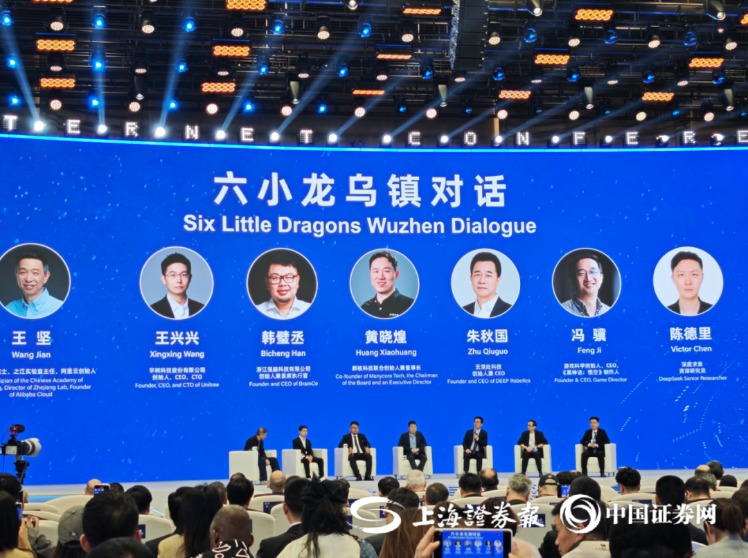
杭州“六小龙”首次齐聚乌镇同台对话!聊AI、机器人 谈未来
Mei Ri Jing Ji Xin Wen· 2025-11-08 00:19
Core Insights - The World Internet Conference in Wuzhen highlighted the growth of six innovative tech companies, referred to as the "Six Little Dragons," focusing on opportunities and challenges in artificial intelligence and technology breakthroughs [1][2][3] Group 1: Company Growth and Development - Yushutech has grown from a three-person team to over a thousand employees in nine years, leveraging China's entrepreneurial ecosystem and self-developed core components to export humanoid robots globally [1][2] - Strong Brain Technology's founder shared the journey from studying at Harvard to establishing a company in China, emphasizing the rapid development of brain-computer interface technology since relocating to Hangzhou in 2018 [2][3] - Qunke Technology's co-founder transitioned from working at NVIDIA in Silicon Valley to founding a company in China, reflecting the broader narrative of China's internet development [2][3] Group 2: Industry Trends and Future Outlook - The robotics industry is experiencing accelerated growth due to AI advancements, with expectations for significant developments in the coming years [4] - Brain-computer interface technology is evolving from experimental stages to impactful products, initially targeting individuals with disabilities and later expanding to general wellness products [6] - The gaming industry, exemplified by the success of "Black Myth: Wukong," is benefiting from a large user base and talent pool, with expectations for AI to play a significant role in future developments [7][8] Group 3: Technological Innovations - Companies are focusing on practical applications of robotics, such as using quadruped robots for various scenarios and humanoid robots for hazardous environments [6] - The gaming sector is leveraging technology to enhance cultural representation and user engagement, with a vision for AI to empower more individuals [7][8] - DeepSeek emphasizes the importance of stable learning algorithms for AI and the potential for significant advancements in the next decade [7][8]


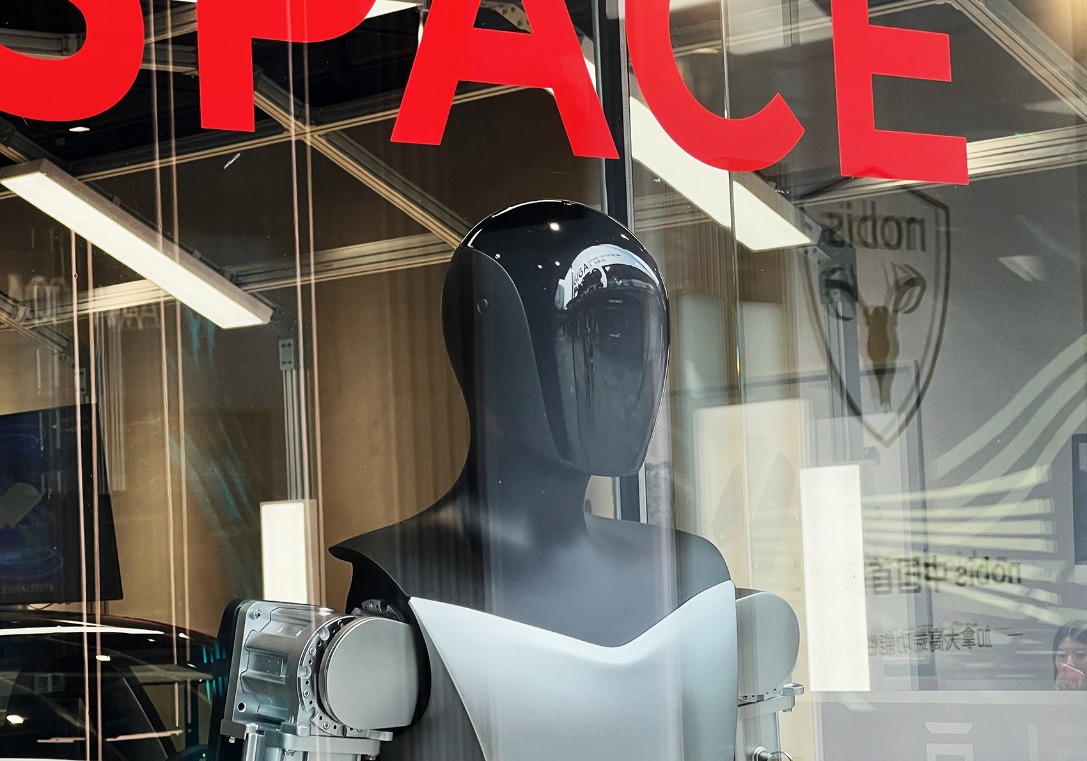
群核科技黄晓煌:空间智能是继大语言模型之后一大重要领域
2 1 Shi Ji Jing Ji Bao Dao· 2025-11-07 15:29
Core Insights - Spatial intelligence is identified as a significant field following large language models, marking a shift in AI technology from traditional 2D processing to 3D spatial perception and interaction [1][2] - The founder of Qunke Technology, Huang Xiaohuang, noted that their team discovered in 2022 that the scaling law applicable to large language models also holds for spatial cognition and reasoning models, although they initially struggled to find practical applications [1] - The company’s focus has shifted from primarily serving human needs to also addressing the requirements of machines, especially after the rise of AI technologies [1] - Huang emphasized that the accumulation of internet data will reach a limit, and AI represents a new phase of data utilization, with spatial intelligence being crucial for applications in robotics and video generation [1] Industry Outlook - Huang envisions a future dominated by robots, where individuals may have multiple robotic servants, necessitating the integration of spatial intelligence technology for managing and directing these robots [2]

“杭州六小龙” 乌镇同台
Shang Hai Zheng Quan Bao· 2025-11-07 15:08
Core Insights - The "Six Little Dragons of Hangzhou" gathered at the World Internet Conference in Wuzhen, showcasing their growth and innovation in the tech industry, highlighting the supportive ecosystem fostered by the conference [1][2][3] Company Highlights - Yushut Technology has grown from three employees in 2016 to over 1,000, attributing its success to the support from Hangzhou for startups [2] - Qiangnao Technology moved its headquarters back to Hangzhou in 2018, experiencing rapid development in the brain-computer interface sector, which is now recognized as a key technology in China's 14th Five-Year Plan [3] - Qunke Technology transitioned from an internet company to a spatial intelligence company, reflecting the broader trends in China's internet development [3] - Yundong Technology has successfully developed quadruped robots that can operate in various environments, aiming to make them capable of reaching any land area [3] - Game Science, known for its game "Black Myth: Wukong," emphasizes the potential of Chinese teams to compete with international standards, benefiting from a large user base and talent pool [4] Industry Trends - The robotics industry is experiencing accelerated growth due to advancements in AI, with expectations for significant developments in the coming years [5][6] - Brain-computer interface technology is evolving from experimental stages to products that can impact daily life, with a focus on helping those in need before expanding to general consumers [6] - The future is envisioned as a world filled with robots, necessitating advancements in spatial intelligence to manage and coordinate these machines effectively [6][7] Technical Challenges - The robotics sector faces challenges related to the inadequacy of embodied intelligence AI models, including data discrepancies and the need for unified data collection methods [12] - Brain-computer interfaces encounter difficulties in data collection and analysis, requiring AI models to learn neural control logic [12][13] - The industry is urged to innovate to reduce reliance on computational power and data, facilitating the integration of robots into factories and homes [13]
乌镇峰会揭秘AI未来,王兴兴:机器人将有更多惊喜
21世纪经济报道· 2025-11-07 14:26
Group 1 - The World Internet Conference in Wuzhen focuses on building a community in cyberspace, emphasizing digital economy and cultural heritage protection [1] - Over 1,600 guests from more than 130 countries and regions attended the conference, highlighting its global significance [1] - The conference features 24 sub-forums discussing various topics, showcasing the transition from "connected" to "intelligent" internet [3] Group 2 - AI-driven industrialization, smart manufacturing, and logistics are core trends in China's digital economy, with companies like JD.com leading the way [5] - JD.com aims to reduce social logistics costs to below 10% of GDP within five years, indicating a significant acceleration in logistics efficiency [5] - The first fully unmanned delivery station is set to be established by JD.com by April next year, showcasing advancements in automation [5] Group 3 - The emergence of embodied intelligence and spatial intelligence marks a significant shift in AI technology, moving from virtual to physical applications [6] - The concept of spatial intelligence is seen as a crucial milestone in AI development, with expectations for breakthroughs in the coming years [6] - Companies are preparing for a future where robots will play a significant role in daily life, necessitating advanced spatial intelligence for management [6] Group 4 - Domestic internet giants are investing heavily in large-scale AI infrastructure, progressing towards Artificial General Intelligence (AGI) [8] - The development of AI is seen as a three-stage process, with the current phase being the beginning of AGI [8] - AGI is expected to evolve into a "digital life form" capable of perception, reasoning, and collaboration, moving beyond simple language processing [8] Group 5 - The current limitations of AI include a lack of stable intelligence and the inability to self-iterate like humans, which is a focus for future development [9] - Humanoid robots are viewed as ideal carriers for AGI, providing a means for interaction with the physical world [9] - The Wuzhen Conference serves as a critical observation point for the evolution of China's internet ecosystem, highlighting its role in the global AI landscape [9]


乌镇峰会剧透AI未来:互联网进入智联模式,空间智能将站上C位
2 1 Shi Ji Jing Ji Bao Dao· 2025-11-07 13:17
今年是构建网络空间命运共同体理念提出十周年。当前,互联网已成数字时代核心基础设施,其作用延 伸至哪些领域,又带来哪些新引擎? 11月7日,2025年世界互联网大会乌镇峰会(以下简称"乌镇峰会")在浙江乌镇开幕。 本届乌镇峰会以"共筑开放合作、安全普惠的数智未来——携手构建网络空间命运共同体"为主题,围绕 数字经济、文化遗产数字化保护与传承等议题举办24场分论坛,来自130多个国家和地区的1600多名嘉 宾参会。 人工智能的爆发,也让一批"硬科技创业者"站到了乌镇峰会的舞台中央。本届乌镇峰会特设"六小龙乌 镇对话",中国工程院院士、之江实验室主任王坚与杭州"六小龙"企业负责人,围绕全球人工智能技术 创新发展等前沿趋势进行交流。 当前,智能制造、智慧物流、AI驱动产业化,正成为中国数字经济发展的核心趋势,以京东为代表的 企业正在加速推动供应链与物流体系的智能化升级。 京东集团创始人、董事局主席刘强东表示,随着人工智能和机器人时代的到来,未来5年之内整个中国 的社会化物流成本占GDP的比重能降到10%以内,"也就是未来5年的进度可能会超过过去10年甚至15年 的进度。" 到明年4月份,京东将建成全球第一个全无人的配 ...
群核科技董事长黄晓煌:相信未来是一个充满机器人的世界丨直击乌镇
Xin Lang Ke Ji· 2025-11-07 09:19
Core Insights - The 2025 World Internet Conference featured a dialogue among leaders of the "Six Little Dragons" from Hangzhou, highlighting the rapid evolution of technology and the importance of AI and spatial intelligence in future applications [1] Group 1: Industry Trends - The co-founder and chairman of Qunhe Technology, Huang Xiaohuang, emphasized the unexpected speed of technological advancement, reflecting on missed investment opportunities in companies like Nvidia [1] - Huang noted that while internet data may reach a limit, AI represents a new phase of development driven by data accumulation, indicating a shift in focus towards spatial intelligence as a critical area following large language models [1] Group 2: Future Outlook - The discussion pointed towards a future dominated by robotics, where spatial intelligence technology will play a vital role in serving humanity across various applications, including robotics and video generation [1]
独家对话群核科技董事长:未来机器人数量将超700亿
Sou Hu Cai Jing· 2025-11-07 08:11
Core Viewpoint - The "Hangzhou Six Little Dragons" are gaining attention, particularly with the focus on spatial intelligence and the potential for a significant increase in the number of robots globally, predicted to exceed 70 billion units [2][7]. Group 1: Company Overview - Qunhe Technology, a member of the "Hangzhou Six Little Dragons," has submitted its IPO application to the Hong Kong Stock Exchange, marking the beginning of the "Hangzhou Six Little Dragons IPO" [3]. - The company owns the spatial design software KuJiaLe, its overseas version Coohom, and the AI development platform SpatialVerse, and is recognized as the largest spatial design platform globally, holding a 22.2% market share in China [3]. Group 2: Spatial Intelligence - Qunhe Technology emphasizes a differentiated approach to spatial intelligence, focusing on understanding and reasoning about space rather than hardware development, which is already being addressed by other companies [3][4]. - The company believes that embodied intelligence requires spatial intelligence, as robots need to navigate physical environments, which involves spatial understanding and reasoning [3][4]. Group 3: AI Development - The current wave of generative AI has been anticipated by Qunhe Technology, which has previously encountered early forms of this technology. The unexpected aspect is the ability of algorithms to produce surprising intelligence through vast amounts of data [6]. - The company is leveraging its extensive physical design and spatial data accumulated through the KuJiaLe 3D cloud design platform to train models that generate spatial data consistent with the physical world, addressing issues of data scarcity and high acquisition costs [6]. Group 4: Future Predictions - The CEO predicts that the future may see a robot population ten times that of humans, with the global number of robots potentially exceeding 70 billion [7]. - The transition from automation to intelligent robots is expected to occur within the next two to three years, although achieving human-like flexibility and intelligence may take longer [7].

高德联合小鹏入局自动驾驶赛道 打造Robotaxi聚合平台
Zhong Zheng Wang· 2025-11-07 02:21
Core Insights - Alibaba's Gaode has partnered with XPeng Motors to integrate XPeng's Robotaxi into Gaode's platform, aiming to provide L4 autonomous driving services globally [1][2] - The collaboration signifies a strategic move towards exploring Artificial General Intelligence (AGI) and expanding Robotaxi services internationally [1][2] Group 1: Partnership and Technology - Gaode has established deep collaborations with over 40 automotive manufacturers, enhancing its technical capabilities in smart cockpits and Advanced Driver Assistance Systems (ADAS) [2] - The partnership with XPeng is built on over a decade of joint research and development, leveraging Gaode's "spatial intelligence" technology for systematic innovation in Robotaxi services [2] Group 2: Market Reach and User Engagement - Gaode's platform connects hundreds of specialized mobility service providers, supporting over 800 million active users monthly on the Gaode app [2] - The app has expanded its global footprint, covering over 200 countries and regions, with ride-hailing services launched in more than 50 countries [2] Group 3: Future Vision - Gaode aims to simplify complexity for its partners, allowing them to focus on innovation while providing a robust platform for real-world mobility needs [2]
