资本市场高质量发展

Search documents
证监会重要会议!五大部署→
Zheng Quan Shi Bao· 2025-10-24 14:55
Core Viewpoint - The China Securities Regulatory Commission (CSRC) is focused on implementing the spirit of the 20th Central Committee's Fourth Plenary Session, emphasizing the importance of political guidance and strategic planning for the upcoming five years of economic and social development [1][2]. Group 1: Key Initiatives and Strategies - The CSRC aims to enhance the resilience and risk resistance of the capital market by fostering high-quality listed companies and establishing a stable market ecosystem [3]. - There is a focus on improving the inclusiveness and adaptability of capital market regulations, including reforms in the Sci-Tech Innovation Board and the Growth Enterprise Market [3]. - The CSRC plans to strengthen the effectiveness and deterrence of regulatory enforcement, targeting illegal activities in the securities and futures markets while advancing digital and intelligent regulation [3]. Group 2: Political and Organizational Commitment - The CSRC is committed to aligning its actions with the central government's decisions, emphasizing the importance of political responsibility and the need for a robust regulatory framework [2][4]. - The organization will prioritize the construction of a clean and efficient regulatory team, ensuring accountability and integrity within its ranks [3]. - There is a call for comprehensive training and dissemination of the Plenary Session's spirit across the CSRC to ensure its principles are deeply understood and implemented [4].
中国证监会党委传达贯彻党的二十届四中全会精神
证监会发布· 2025-10-24 11:15
Core Viewpoint - The meeting emphasized the importance of implementing the spirit of the 20th Central Committee's Fourth Plenary Session, which outlines the strategic direction for China's economic and social development over the next five years, particularly in the context of achieving socialist modernization [2][3]. Group 1: Achievements and Guidance - The past five years have seen significant achievements in China's economic and social development, attributed to the leadership of the Central Committee and the guidance of Xi Jinping's thoughts [3]. - The meeting highlighted the need for the China Securities Regulatory Commission (CSRC) to align its actions with the Central Committee's decisions and to enhance its political awareness [3]. Group 2: Regulatory Focus and Market Development - The CSRC aims to enhance the resilience and risk resistance of the capital market by fostering high-quality listed companies and improving the market ecosystem for long-term investments [4]. - There is a focus on increasing the inclusiveness and adaptability of capital market regulations, including reforms in the Sci-Tech Innovation Board and the Growth Enterprise Market [4]. - The effectiveness and deterrence of regulatory enforcement will be improved, with a focus on combating securities and futures violations and enhancing investor protection [4]. Group 3: Market Opening and Governance - The meeting called for deeper and higher-level opening of the capital market, balancing openness with security, and supporting Hong Kong's status as an international financial center [4]. - Strengthening the party's discipline and governance within the CSRC is essential, with an emphasis on accountability and continuous improvement in oversight and anti-corruption efforts [4][5]. Group 4: Future Planning and Training - The CSRC is tasked with making the implementation of the plenary session's spirit a major political task, organizing training, and ensuring that the session's spirit is deeply understood within the system [5]. - There is a commitment to completing the annual work goals and ensuring a solid foundation for the high-quality development of the capital market in the upcoming 15th Five-Year Plan [5].

专题研究报告:大力发展耐心资本,推动资本市场高质量发展
Zhongyuan Securities· 2025-10-24 02:54
Group 1: Concept and Importance of Patient Capital - Patient capital is defined as long-term investment capital with a high risk tolerance and not solely focused on short-term returns[6] - It acts as a "stabilizer" for high-quality development in capital markets by optimizing financing structures and increasing direct financing[6] - The continuous inflow of medium- and long-term funds can significantly reduce market turnover and volatility, guiding funds towards high ROE and strong cash flow enterprises[6] Group 2: International Experience and Policy Framework - The U.S. market has transitioned from retail to institutional dominance, with institutional investors holding approximately 43.35% of the market value, supporting long-term index growth[19] - Japan's market has shifted from a "bank-centered" structure to one dominated by foreign capital, with foreign investors holding over 30% of the market[27] - Since 2015, China has focused on cultivating patient capital through policies aimed at optimizing the capital market ecosystem and expanding the sources of long-term funds[38] Group 3: Current Challenges in China's Capital Market - China's investor structure is characterized by a dominance of individual investors, who account for approximately 38.95% of the market value, while institutional investors remain underrepresented[44] - The current supply gap for patient capital in China indicates a need to enhance the proportion and capabilities of institutional investors[72] - The proportion of long-term institutional investors, such as social security and insurance funds, is less than 10%, highlighting the need for structural improvement[72]

1—9月,全国法院受理环境资源一审民事案件17万件
Yang Shi Xin Wen· 2025-10-23 00:26
Core Insights - The Supreme People's Court reported a 9.17% decrease in the total number of cases accepted from January to September 2025 compared to the same period last year, totaling 32.257 million cases [1] Criminal Cases - The number of first-instance criminal cases accepted was 804,000, a decline of 11.61% year-on-year, with 1.048 million defendants sentenced, down 10.22% [2] - There was a 4.86% decrease in the number of criminals sentenced to more than five years in prison, totaling 77,000 [2] - Cases related to the production and sale of toxic and harmful food decreased by 14.84%, while cases involving food that does not meet safety standards increased by 63.11% [2] - Fraud-related first-instance cases rose by 7.8%, totaling 71,000 [2] Civil and Commercial Cases - The number of first-instance civil and commercial cases accepted was 18.954 million, reflecting a significant increase of 37.45% compared to the previous year [2] - Labor dispute cases rose by 37.5%, totaling 648,000, with a focus on balancing the rights of employers and employees [3] - Company-related disputes increased by 70.21%, totaling 147,000 [3] - Securities dispute cases rose by 63.22%, totaling 20,000 [3] - Intellectual property civil cases increased by 33.78%, totaling 454,000 [3] Environmental and International Cases - Environmental resource civil cases accepted totaled 170,000, marking a 49.79% increase [4] - Foreign-related civil and commercial cases rose by 59.73%, totaling 35,000 [4]
最高人民法院:1月-9月受理证券纠纷一审案件2.0万件 同比上升63.22%
Zheng Quan Ri Bao Wang· 2025-10-21 13:57
数据显示,1月-9月,人民法院受理证券纠纷一审案件2.0万件,同比上升63.22%。最高人民法院联合中国证监会发布 《关于严格公正执法司法 服务保障资本市场高质量发展的指导意见》,促推司法审判与行政监管协同发力,服务保障经济社会 高质量发展。 (编辑 张昕) 10月21日,最高人民法院公布2025年1月份至9月份司法审判工作主要数据。 本报记者 吴晓璐 ...
1月至9月 全国法院受理各类审判执行案件3225.7万件
Yang Shi Xin Wen· 2025-10-21 11:24
Core Insights - The Supreme People's Court reported a 9.17% decrease in the total number of cases accepted from January to September 2025 compared to the same period last year, with a total of 32.257 million cases accepted [1] Criminal Cases - The number of first-instance criminal cases accepted was 804,000, a year-on-year decrease of 11.61%, with 1.048 million defendants sentenced, down 10.22% [2] - There was a notable decrease in serious criminal cases, with 77,000 sentenced to more than five years in prison, down 4.86% [2] - Cases related to food safety crimes saw a decline, with 2,719 cases accepted, down 14.84%, while cases involving food that does not meet safety standards increased by 63.11% [2] - Fraud cases increased by 7.8%, with 71,000 cases accepted [2] Civil and Commercial Cases - The number of first-instance civil and commercial cases accepted rose significantly to 18.954 million, an increase of 37.45% compared to the previous year [2] - Labor dispute cases increased by 37.5%, with 648,000 cases accepted [3] - Company-related disputes saw a substantial rise of 70.21%, with 147,000 cases accepted [3] - Securities disputes also increased by 63.22%, with 20,000 cases accepted [3] - Intellectual property civil cases rose by 33.78%, totaling 454,000 cases accepted [3] Environmental and International Cases - Environmental resource civil cases increased by 49.79%, with 170,000 cases accepted [4] - International civil and commercial cases rose by 59.73%, with 35,000 cases accepted [4]
国联民生证券与国创会共同举办“新质生产力及资本市场高质量发展”研讨会并签署战略合作协议
Jing Ji Guan Cha Wang· 2025-10-21 02:17
Core Viewpoint - The collaboration between Guolian Minsheng Securities and the National Innovation and Development Strategy Research Association aims to enhance the integration of think tank research and capital market practices, focusing on high-quality development and national strategy support [2][3]. Group 1: Strategic Collaboration - The strategic cooperation agreement signed between Guolian Minsheng Securities and the National Innovation and Development Strategy Research Association reflects a shared vision for serving national strategies and promoting high-quality development [2][3]. - The partnership is characterized as a "strong alliance" between a high-end think tank and an excellent financial institution, emphasizing the dual approach of "intellect" and "capital" [2][3]. Group 2: Economic Insights and Predictions - The conference featured discussions on the importance of developing new productive forces as a key focus for high-quality economic development, with capital markets playing a crucial role in fostering new momentum and facilitating industrial transformation [2][3]. - Predictions for the Chinese capital market include an optimistic "slow bull" outlook, with the recovery of the Producer Price Index (PPI) seen as a significant signal for economic stabilization [4]. - The discussions also highlighted the structural changes in the ongoing China-US trade war and the resilience of the Chinese economy in the face of external challenges [4]. Group 3: Key Presentations - Li Junru emphasized the significance of scientifically formulating five-year plans as a political advantage of socialism with Chinese characteristics, focusing on the tailored development of new productive forces [3]. - Wang Hongzhang reviewed the historical context of the central government's stringent management of financial institutions and the importance of financial risk and security for the economic system [3]. - Guolian Minsheng Securities' president, Ge Xiaobo, discussed the necessity of wealth management and diversified trading as essential paths for the high-quality development of securities firms [4].

一行两局一会将重磅发声,八大看点抢先看
2 1 Shi Ji Jing Ji Bao Dao· 2025-10-17 08:35
Group 1 - The 2025 Financial Street Forum Annual Conference will be held from October 27 to 30 in Beijing, focusing on "Innovation, Transformation, and Reshaping Global Financial Development," with over 400 key guests from more than 30 countries and regions attending [3] - The main forum will include seven thematic activities, with the opening ceremony scheduled for the afternoon of October 27 and the closing ceremony on the afternoon of October 30 [3] - Key officials from China's financial regulatory bodies, including the People's Bank of China, will deliver keynote speeches during the opening ceremony, and a series of financial policies will be announced during the conference [3][6] Group 2 - The People's Bank of China will host a main forum on "International Financial Governance and Cooperation under Changing Circumstances" and a FinTech forum, releasing a series of financial standards during the event [8] - The Financial Regulatory Administration will hold the International Advisory Committee meeting, focusing on financial risks and regulation amid fragmented global trade, as well as the digitalization of the financial industry [12] - The China Securities Regulatory Commission will hold its International Advisory Committee meeting for the first time during the forum, discussing themes related to capital market development and innovation [15][17] Group 3 - The National Foreign Exchange Administration will host a special event and closing ceremony on October 30, themed "International Economic and Trade Resilience Cooperation under Global Changes," featuring discussions on global investment patterns and the role of central banks [19][21] - The forum aims to enhance international economic cooperation, particularly in advanced manufacturing, digital technology, and green energy sectors, to contribute to global economic growth [23]
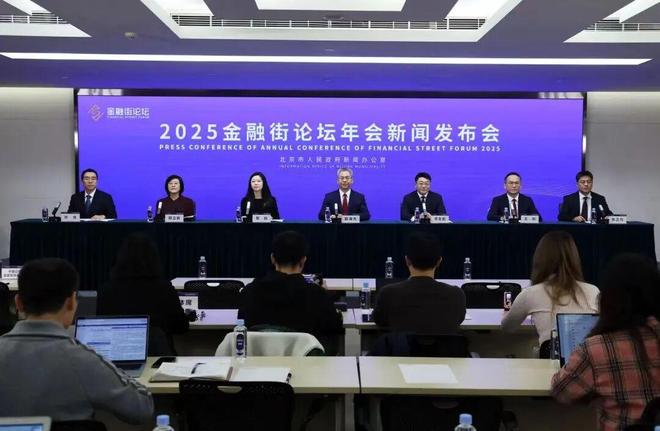
重磅会议预告!潘功胜、李云泽、吴清等将做主题演讲
Zhong Guo Ji Jin Bao· 2025-10-17 04:26
Group 1 - The 2025 Financial Street Forum Annual Meeting will be held from October 27 to 30 in Beijing, co-hosted by multiple government and financial institutions [2][3] - The opening ceremony will be hosted by the Mayor of Beijing, with key leaders from the co-hosting organizations delivering keynote speeches [2] - The China Securities Regulatory Commission (CSRC) will hold its International Advisory Committee meeting for the first time during the forum, focusing on topics related to innovation and high-quality development of capital markets [3][4] Group 2 - The People's Bank of China (PBOC) will actively host several events during the forum, including a main forum on international financial governance and cooperation [5] - The PBOC plans to release a series of financial standards during the forum, alongside other significant events [5] - The National Financial Regulatory Administration will also participate, with its leaders attending various activities, including the International Advisory Committee meeting and forums on insurance innovation and AI in digital finance [7]
重磅会议预告!潘功胜、李云泽、吴清等将做主题演讲
中国基金报· 2025-10-17 04:23
Group 1 - The 2025 Financial Street Forum Annual Meeting will be held from October 27 to 30 in Beijing, co-hosted by several major financial regulatory bodies [1][4][6] - The opening ceremony will be hosted by Beijing's mayor, with key leaders from the co-hosting organizations delivering keynote speeches [1][4] - The China Securities Regulatory Commission (CSRC) will hold its International Advisory Committee meeting during the forum, focusing on high-quality development of capital markets [4][6] Group 2 - The People's Bank of China (PBOC) will also participate actively, with its governor delivering a keynote speech and hosting multiple events, including a forum on international financial governance [5][6] - The PBOC plans to release a series of financial standards during the forum, enhancing its role in financial regulation [5][6] - The National Financial Regulatory Administration will have its head, Li Yunze, deliver a keynote speech and will host several events, including an international advisory committee meeting [8][9]