
液冷技术

Search documents
从三季报看化工行业的投资机会
2025-11-16 15:36
Summary of Key Points from Conference Call Industry Overview - The chemical industry is currently in a phase of profit recovery after a decline from the peak in 2021, similar to the cycle observed from 2012 to 2015 [1][3] - Raw material prices are stable, with gross margins and price spreads at historical lows, but the pressure from oversupply is easing, and demand from mid and downstream sectors is steadily growing [1][3] - Capital expenditure in the chemical industry is expected to expand rapidly from 2022 to 2024, but a significant decline is anticipated in 2025, indicating a peak in capacity growth [1][3] Market Dynamics - The refrigerant market is entering a long-term upward cycle starting from the end of 2023, with prices for major varieties expected to continue rising, such as the price of 2,332 reaching 63,000 yuan, three times higher than the same period last year [1][5] - Major refrigerant companies have reported significant profit increases, with Yonghe's profit growth reaching 450% in the first three quarters [1][5] - The refrigerant quota policy is expected to remain stable, transitioning from annual to quarterly pricing, which will facilitate more frequent performance realization [1][5] Cooling Liquid Market - The cooling liquid market is categorized into three types: water-based, oil-based, and fluorinated liquids, with fluorinated liquids showing promising applications in immersion cooling [1][6] - Companies like Juhua and Yonghe have already established a good layout in fluorinated liquids, positioning them for better growth as demand for liquid cooling increases [1][6] Price Trends and Expectations - Refrigerant prices are likely to see a slight increase starting in November due to year-end rigid demand and the exhaustion of annual quotas [1][7] - The natural gas market is under pressure due to the predicted La Niña phenomenon and ongoing geopolitical tensions, with a projected increase in consumption as winter approaches [2][8] Investment Opportunities - The chemical industry is currently at a low valuation, with a price-to-book (PB) ratio of approximately 2.2, indicating potential for upward movement [3][9] - Investment opportunities are identified in the refrigerant, natural gas, and phosphate industry chains, particularly influenced by the demand for electric vehicle batteries [3][9]
飞龙股份:子公司安徽航逸科技有限公司聚焦民用领域液冷核心业务
Zheng Quan Ri Bao Wang· 2025-11-14 12:13
Core Viewpoint - Feilong Co., Ltd. (002536) is focusing on the liquid cooling core business in the civil sector, particularly in data centers, wind-solar energy storage, and charging piles, while expanding its overseas market presence through partnerships with well-known clients in Taiwan [1] Group 1 - The subsidiary Anhui Hangyi Technology Co., Ltd. is dedicated to the research, production, and sales of IDC liquid cooling circulation pumps, emphasizing product efficiency improvement [1] - The company is promoting the iteration of thermal management integrated module products to enhance the adaptability and market competitiveness of server liquid cooling products [1] - Feilong Co., Ltd. is solidifying its domestic market foundation while actively expanding its business footprint in the overseas server liquid cooling market [1]

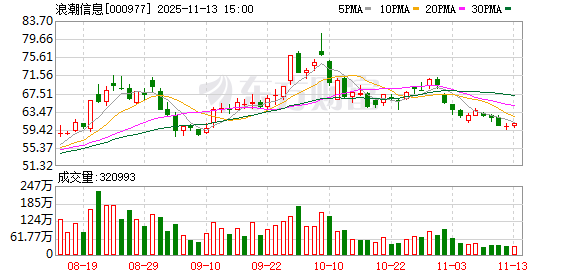
浪潮信息:公司发布了全栈液冷产品,全线服务器产品均支持冷板式液冷
Mei Ri Jing Ji Xin Wen· 2025-11-13 10:26
Core Insights - The company has launched a full-stack liquid cooling product line, supporting cold plate liquid cooling across all server products, and is innovating continuously in liquid cooling technology [1] - The company offers a comprehensive lifecycle solution for liquid cooling data centers, from planning and design to construction and implementation, aimed at creating energy-efficient data centers [1] - The company holds over 800 core patents in the liquid cooling technology field and has participated in the formulation of more than 20 design standards related to cold plate and immersion liquid cooling [1] - The company has led the drafting of the first domestic standards for core components of cold plate liquid cooling and the first technical standards for liquid-gas heat exchange liquid cooling data centers, laying the groundwork for global expansion of domestic liquid cooling solutions [1] - The company's liquid cooling servers have been deployed in various industries, and its "All in liquid cooling" strategy has gained market recognition [1] R&D and Market Position - The company has made significant advancements in liquid cooling technology, including cold plate and immersion cooling, and has established a strong patent portfolio [3] - The company's liquid cooling solutions are competitive in the market, with a focus on maintaining a strong position and market share [3] - The company is actively seeking orders or procurement agreements from leading customers in anticipation of market demand for the upcoming year [3]


从标准制定到全球出海 联想(00992)液冷:被低估的核心玩家
智通财经网· 2025-11-13 06:17
Core Viewpoint - The A-share liquid cooling server sector has experienced a significant surge, driven by increasing computing power demands and supportive policies, with Lenovo Group emerging as a key player in the market despite short-term stock price fluctuations [1][2]. Industry Overview - The liquid cooling server sector's growth is attributed to the exponential increase in server computing power density, particularly due to the rise of generative AI and large model training, which traditional air cooling systems cannot adequately support [1]. - The Chinese government's "dual carbon" goals and digital economy strategies are providing strong momentum for the development of liquid cooling technologies, with specific targets set for increased penetration rates by 2025 [2]. Company Positioning - Lenovo Group has established a comprehensive "full-stack" liquid cooling capability, covering core technology research, complete solution design, and lifecycle services, positioning itself as a leader in the liquid cooling space [2]. - Lenovo's Neptune liquid cooling system has become an industry benchmark, with over 80,000 units deployed globally across various critical sectors, demonstrating its technological maturity and compliance with international standards [2][3]. Competitive Advantages - Lenovo's liquid cooling solutions have been validated through numerous successful implementations in major projects, showcasing their adaptability and efficiency in various applications, such as automotive and educational sectors [3]. - Strategic partnerships with leading chip manufacturers like NVIDIA and AMD enhance Lenovo's competitive edge, particularly with the introduction of advanced AI server solutions [3]. Financial Performance - Lenovo's liquid cooling business reported a 68% year-on-year revenue growth in Q1 2025, reflecting strong market demand and performance [4]. - The global server cooling market is projected to experience substantial growth, with estimates indicating a market size of $17.6 billion by 2027, driven by increased AI server shipments and rising liquid cooling penetration rates [4].

拓普集团(601689):拓普集团三报点评:海外产能利用率短期拖累公司盈利,明年将迎经营拐点蓄势待发
Changjiang Securities· 2025-11-13 06:13
Investment Rating - The investment rating for the company is "Buy" and is maintained [4]. Core Views - The company achieved a revenue of 7.99 billion yuan in Q3 2025, representing a year-on-year increase of 12.1%, while the net profit attributable to shareholders was 670 million yuan, down 13.7% year-on-year. The company is expected to enter a turning point in operations next year as it expands its nine product lines globally [2][4]. Summary by Sections Financial Performance - In Q3 2025, the company reported a revenue of 79.9 billion yuan, up 12.1% year-on-year and 11.5% quarter-on-quarter. The net profit attributable to shareholders was 6.7 billion yuan, down 13.7% year-on-year and 7.9% quarter-on-quarter, with a net profit margin of 8.4%, a decrease of 2.5 percentage points year-on-year [2][4][8]. Market Dynamics - The domestic downstream market showed high prosperity, with passenger vehicle production reaching 7.693 million units, up 13.9% year-on-year. Key clients like Tesla and Geely contributed to revenue growth, although overseas client sales were below expectations, impacting profit margins [8]. Future Outlook - The company is set to enhance its production capacity to 1.5 million sets by 2025, with new factories in various locations including Mexico and Thailand. The expansion into new fields such as robotics and liquid cooling is expected to drive future growth, with anticipated net profits of 2.8 billion, 3.39 billion, and 4.13 billion yuan for 2025-2027 [8][4].

液冷供应链格局
傅里叶的猫· 2025-11-13 04:21
Core Insights - The article discusses the liquid cooling market, which is projected to be worth hundreds of billions, and highlights a recent order received by a liquid cooling company from a major overseas tech firm [1] Liquid Cooling Supply Chain - Liquid cooling solutions are not fully customized but are flexibly adapted based on customer needs, with cold plate technology being a standardized core component [3][4] - Different customer requirements lead to system-level adjustments, such as variations in CDU configurations and manifold designs, necessitating tailored solutions for each project [3][4] Collaboration with Major Companies - The article analyzes partnerships between leading liquid cooling companies and major CSPs, emphasizing the importance of collaboration to ensure stable supply chains [5][6] - The partnership with Meta focuses on providing a complete liquid cooling solution, including cold plates and integrated systems, with a significant emphasis on collaboration with manufacturers like 天弘 [5][6] - Google, having more experience in liquid cooling technology, has specific requirements for CDU and is working with 天弘 and 富士康 to develop solutions [6] - Major companies are diversifying their supplier base to mitigate risks associated with relying solely on Taiwanese manufacturers, ensuring timely delivery of critical components [6][7] Technical Trends - The mainstream technology in the liquid cooling industry remains single-direction cold plate design, favored by companies like Meta and Google for its superior temperature control and reliability [9] - Alternative technologies, such as large-area cold plates and phase change cooling, are not yet widely adopted due to their inherent challenges [9] - Specific product configurations vary, with examples including Meta's ASIC chip project, which features a cabinet containing 64 ASIC cards, highlighting the increasing demand for efficient cooling solutions [9]

千亿的液冷赛道
傅里叶的猫· 2025-11-12 12:27
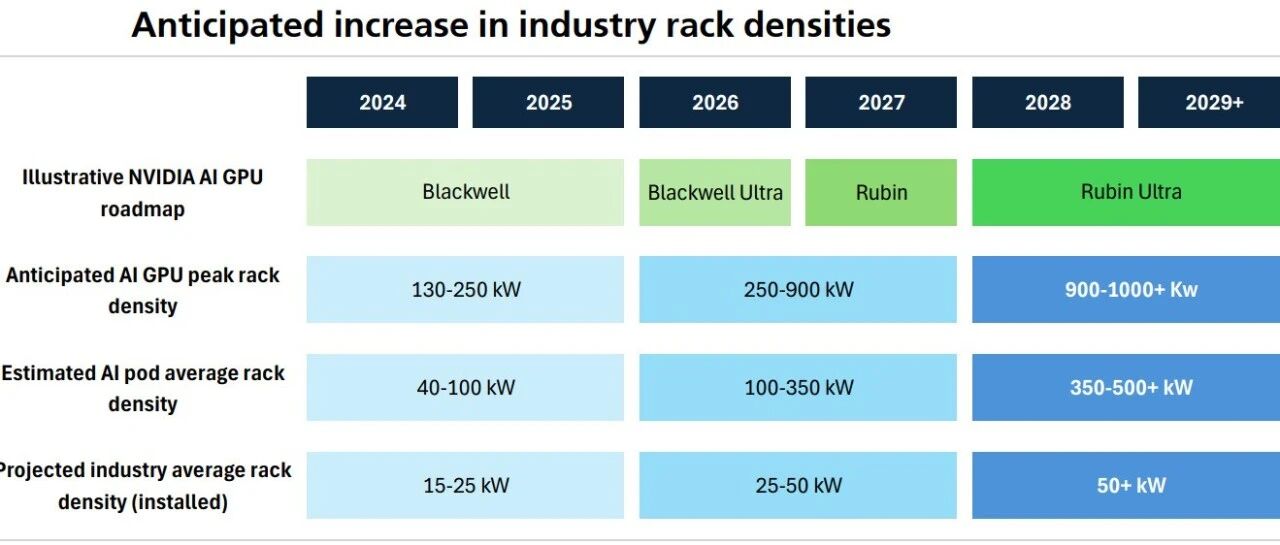
Core Insights - The liquid cooling market is expected to experience significant growth, with a projected global market size of approximately $6.5 billion in 2024 and over $17.6 billion by 2027, reflecting a compound annual growth rate (CAGR) exceeding 50% [2][3] - The rapid expansion of the liquid cooling market is driven by increasing power density in data centers, the rising proportion of AI ASICs, and the expansion of global data center capacity [3][10] Market Growth Projections - According to Goldman Sachs and IDC, the global liquid cooling market is forecasted to reach $6.5 billion in 2024 and exceed $17.6 billion by 2027, with a CAGR of over 50% [2] - By 2030, the liquid cooling components market could reach $25 billion, while the system market may surpass $50 billion, primarily driven by AI computing demand [2] Factors Driving Market Expansion - Power density is expected to increase significantly, with average rack density projected to rise from 15-25 kW in 2024-2025 to over 50 kW by 2028-2029, making liquid cooling essential for managing heat [3] - The share of AI ASICs in the global cloud accelerator semiconductor market is anticipated to grow significantly, with the market expected to exceed $300 billion by 2027, facilitating a more open supply chain ecosystem [8] - Global data center capacity is projected to grow at a CAGR of 20% from 2026 to 2028, further increasing the value of liquid cooling solutions [9] Regional Insights - The current total addressable market (TAM) for liquid cooling globally is approximately ten times that of China, which is expected to grow from $1.6 million in 2024 to $13.8 million by 2028 [10] - The Chinese government mandates that national computing hub data centers achieve a Power Usage Effectiveness (PUE) of less than 1.20 by the end of 2025, accelerating the adoption of liquid cooling technologies [10] Market Dynamics - The liquid cooling market is characterized by increasing competition, with domestic manufacturers striving to break into a market currently dominated by foreign and Taiwanese companies [12] - The liquid cooling value is shifting towards "white space," with the proportion of liquid cooling solutions expected to rise from 40-50% during the air cooling era to 70-90% in the future [12] Product and Technology Insights - The liquid cooling solutions offered by leading companies include cold plate modules, quick disconnects, manifolds, and in-rack liquid to liquid CDU systems, supporting various server platforms and cooling capacities [13]
立昂技术:目前公司在数据中心等业务的冷却方案中,主要采用离心式冷水机与板式换热器组合方案
Mei Ri Jing Ji Xin Wen· 2025-11-12 08:04
Core Viewpoint - The company, Lianang Technology, confirmed its leadership in liquid cooling technology and green energy-saving solutions in response to investor inquiries, emphasizing its use of centrifugal chillers and plate heat exchangers in data center cooling solutions to achieve energy-saving goals [1] Group 1 - The company utilizes a combination of centrifugal chillers and plate heat exchangers in its cooling solutions for data centers [1] - The company aims to achieve basic energy-saving and consumption reduction targets through its current cooling technology [1] - Official information regarding the company can be found on the Shenzhen Stock Exchange website and the Giant Tide Information Network [1]

双11限定福利!液冷·热管理·热设计资料(PPT+研报)限时开放领取
DT新材料· 2025-11-09 23:37
Core Insights - The article promotes a knowledge package related to thermal management technologies, particularly focusing on liquid cooling, thermal interface materials (TIM), AI cooling, and thermal design trends for 2025 [2][3]. Summary by Sections Gift Package Content - The knowledge package includes 18 technical documents on thermal design from various manufacturers, covering cutting-edge research and practical engineering applications [4]. - It features a collection of international reports and core technical documents from leading companies, providing a comprehensive overview of the thermal management industry [3][5]. Highlights of the Materials - The materials serve as both research references and insights into global thermal management technology trends [5]. - Key documents include high-power chip packaging, cooling structure optimization, and system-level thermal simulation cases [6]. Participation Details - The event runs from November 6 to November 11, coinciding with the shopping festival, encouraging participants to enhance their knowledge while shopping [8]. - Participants can receive the knowledge package by sharing the article on social media and sending a screenshot to the organizers [11]. Upcoming Events - The 6th Thermal Management Industry Conference and Exposition will take place from December 3 to December 5, 2025, in Shenzhen, featuring various specialized forums on thermal management [13][19].

算力创新“扑面而来”
Zheng Quan Ri Bao· 2025-11-07 16:10
Core Insights - The eighth China International Import Expo (CIIE) showcased a significant focus on AI computing power, highlighting advancements in technology and its integration with real business scenarios [1] - The global computing power industry is experiencing rapid growth, with many international companies presenting their latest products at the expo, indicating strong confidence in the industry's future [1] Group 1: AI Computing Power Developments - Dell emphasized the importance of its intelligent computing infrastructure solutions, which support key scenarios such as intelligent training, edge computing, and smart manufacturing [1] - AMD introduced a mini AI workstation designed for small and medium enterprises, capable of local deployment of large models for data analysis and decision-making [2] - The global trend in computing power products is shifting from "performance-first" to "efficiency-first," promoting high-density, low-power, and modular designs [2] Group 2: Liquid Cooling Technology - Several companies showcased AI data center liquid cooling products, with Schneider Electric presenting a comprehensive solution for various AI computing scenarios [3] - Johnson Controls launched a new high-efficiency liquid cooling product aimed at the North American data center market, reflecting the growing demand for liquid cooling solutions [3] - Zhengheng Technology introduced a fully immersed liquid cooling solution featuring NVIDIA RTX 4090 GPUs and Intel Xeon Platinum CPUs, utilizing an environmentally friendly cooling liquid [3]