
AGI

Search documents
腾讯研究院AI速递 20260119
腾讯研究院· 2026-01-18 16:01
Group 1 - xAI's Colossus 2 is the world's first supercomputer cluster to reach 1GW power, with plans to upgrade to 1.5GW in April and a final capacity of 2GW [1] - The cluster will house 555,000 GPUs, surpassing Meta and Microsoft, dedicated to training Grok 5 with 60 trillion parameters [1] - The surge in power demand from data centers may lead to rolling blackouts for 67 million residents in the US PJM grid area, prompting xAI to deploy 168 Tesla Megapack energy storage systems [1] Group 2 - OpenAI has launched an $8/month ChatGPT Go subscription service, offering the GPT-5.2 Instant version with message and image creation limits ten times that of the free version [2] - The company plans to test advertisements in the US on both free and Go versions, with ads clearly marked and not affecting response content [2] - OpenAI assures that user data will not be sold to advertisers, and users can opt out of personalized ads and delete related data [2] Group 3 - OpenAI has quietly launched the ChatGPT Translate tool, supporting over 50 languages and allowing users to adjust the tone of translations [3] - Google has responded with the open-source TranslateGemma model, supporting 55 languages and featuring 12 billion parameters, surpassing the previous 27 billion baseline [3] - TranslateGemma retains multimodal capabilities to translate text in images, with a 4 billion version that can run on mobile devices [3] Group 4 - Black Forest Labs has open-sourced the FLUX.2 Klein model, achieving end-to-end inference in under 0.5 seconds on modern hardware, unifying text-to-image generation and editing [4] - The 4 billion parameter model requires only 13GB of VRAM to run on consumer-grade GPUs, while the 9 billion version matches the performance of models with five times the parameters [4] - The model offers FP8 and NVFP4 quantized versions, achieving inference speedups of up to 1.6x and 2.7x on RTX GPUs, with VRAM usage reduced by 40% to 55% [4] Group 5 - Meituan has released the LongCat-Flash-Thinking-2601 model with 560 billion parameters, introducing a rethinking mode that allows for simultaneous parallel thinking [7] - The model shows significant improvements in tool usage and search benchmarks, with a new evaluation method for generalization capabilities in automated environment scaling [7] - The model employs environment scaling and multi-environment reinforcement learning, enhancing adaptability in out-of-distribution scenarios [7] Group 6 - The court has unsealed over 100 documents in the lawsuit between Musk and OpenAI, revealing that Altman indirectly holds shares in OpenAI through the YC fund [8] - A diary entry from Brockman in 2017 admits to wanting to turn OpenAI into a for-profit company and remove Musk, stating it was the only chance to get rid of him [8] - OpenAI refutes claims that Musk sought a 50%-60% equity stake and CEO position, with the judge deeming the evidence too contentious for a jury trial set for April 27 [8] Group 7 - Neuralink's first subject revealed that brain chips can be upgraded without surgery through three methods: Telepathy app updates, OTA firmware updates, and hardware iterations [9] - After 85% of electrodes detached, the team used software algorithms to enhance the performance of the remaining 15%, achieving better results than intact electrodes [9] - Future plans include a "dual-chip configuration" to create a "digital bridge" between the brain and spinal cord, potentially allowing paralyzed individuals to walk again [9] Group 8 - Sequoia Capital partners have published a blog asserting that AGI has arrived, defining it as the ability to clarify tasks [10] - The article cites an example of an intelligent agent completing a recruitment task autonomously in 31 minutes, demonstrating its capability to form hypotheses and validate them [10] - The capabilities of long-cycle intelligent agents are expected to double every seven months, with predictions that by 2028 they could complete a human expert's daily work [10] Group 9 - OpenAI's post-training lead stated that the intelligence of a model is determined by how well it understands user queries [11] - GPT-5.1 has transformed all chat models into reasoning models, allowing them to autonomously decide on thinking duration based on question difficulty [11] - Improvements have been made in context memory, automatic model switching, and user-defined expression styles, with future models expected to be more customizable [11] Group 10 - Anthropic's new Economic Index report indicates that AI accelerates significantly with task complexity, achieving speedups of 9 times for high school tasks and 12 times for college tasks [12] - Human-AI collaboration has extended the time limit for AI tasks from 2 hours to 19 hours, nearly a tenfold increase, emphasizing the importance of human feedback [12] - The report warns of the "de-skilling" risk, as AI systematically removes high-intelligence components from work, with tasks now requiring an average of 14.4 years of education [12]

All in AI 的第一个三年|42章经
42章经· 2026-01-18 13:33
Core Insights - The article reflects on the evolution of AI over the past three years, emphasizing the importance of being "all in" on AI investments and recognizing the high value of early-stage projects [2][3][4] - The discussion highlights the need for openness in investment decisions, particularly regarding international projects, as missed opportunities can lead to significant losses [4][6] - The future is seen as a "big science era," where AI will empower young scientists, and the focus should be on individual authenticity and self-expression in the AI age [22][24][29] Investment Decisions - The most correct decision made was to invest heavily in AI, with a recognition that the cost-effectiveness of projects was much higher in the past [3][4] - There was a missed opportunity to invest in Figure AI, which has seen its valuation rise from $800 million to $40 billion, illustrating the importance of being open to international investments [4][6] - The investment strategy should focus on converting money into computational power, as the future will be defined by intelligence driven by AI [10][13] AI and AGI Perspectives - The belief in AGI (Artificial General Intelligence) remains strong, with the expectation that AI will soon surpass human capabilities in verifiable environments [19][21] - The response of large companies to AI developments has been unexpectedly strong, impacting the potential ceiling for startups [15][18] - The integration of AI and embodied intelligence is crucial for achieving AGI, with both being seen as complementary paths [87][94] Market Trends and Future Outlook - The market for AI and embodied intelligence is evolving, with a notable shift towards the Hong Kong market as a new exit channel for companies [78][81] - The structure of market participants is changing, with more domestic capital involved in AI investments, indicating a maturation of the investment landscape [79][81] - The expectation for the next three years is optimistic, with a belief that funding will increasingly flow into China as innovative projects gain recognition [100][103] Personal Insights and Reflections - The concept of "life force" is emphasized, suggesting that true vitality comes from living authentically and not merely conforming to external expectations [106][108] - The importance of focusing attention on long-term, low-frequency signals rather than short-term noise is highlighted as a key to improving life quality [128][129] - The future will require individuals to express their true selves, as authenticity will be essential in a world increasingly influenced by AI [151][153]

那些活出来的人|绿洲资本张津剑
42章经· 2026-01-18 13:33
Core Viewpoint - The article emphasizes the importance of the founder's motivation and focus in the success of AI companies, particularly in the context of advancing towards Artificial General Intelligence (AGI) and the commercialization of technology [2][3][15]. Group 1: Founder Motivation and Focus - The motivation behind a founder's decision to pursue a project is likened to a seed, where different motivations can lead to different outcomes for AI companies [3]. - Founders who transcend personal needs to meet broader societal demands embody the concept of "Intelligence with Everyone," which is crucial for long-term success [3][15]. - The article highlights that many founders lose focus on company growth after achieving initial success, which can hinder potential [4]. Group 2: Characteristics of Exceptional Founders - Exceptional founders are characterized by their ability to maintain focus on the right things over the long term, which is described as wisdom [5]. - The article notes that during discussions, the focus remained on the path to AGI rather than competition or criticism, indicating a strong commitment to the vision [6]. - Founders who are deeply engaged in their interests and maintain a pure focus on their goals are portrayed as the most valuable [17][19]. Group 3: Structural Changes in Entrepreneurship - The new generation of founders in China is experiencing a structural change in their motivations and focus, moving beyond personal gain to define new directions and paradigms [15]. - These young entrepreneurs, shaped by rapid growth in China, are leading global innovation and are willing to take risks [15][16]. - The article describes these founders as individuals who are not necessarily recognized by conventional standards but are vibrant and full of life due to their beliefs [19][20].

没有商业模式,是DeepSeek最坚固的“护城河”
硬AI· 2026-01-18 13:03
Core Viewpoint - DeepSeek stands out in the AI industry as a unique entity that operates without external financing and commercial pressures, allowing it to pursue its AGI (Artificial General Intelligence) dream freely, unlike other AI giants that are compelled to generate profits [3][5][6]. Group 1: Market Expectations - The article cautions against high expectations for DeepSeek's upcoming model, suggesting it may not replicate last year's groundbreaking impact due to the saturation of the market with open-source models [5][18]. - DeepSeek, while initially a pioneer, is no longer the sole or most open player in the market, as other labs have quickly followed suit with their own models [14][18]. Group 2: Unique Funding Model - DeepSeek's founder, Liang Wenfeng, has maintained a "zero external financing" approach, which is rare among top-tier labs, prioritizing control over financial gain [6][22]. - The success of Liang's quantitative fund, Huanfang Quantitative, which achieved a 53% return and over $700 million in profit, allows DeepSeek to fund its operations without external pressures [7][23]. Group 3: Advantages of Limited Funding - The lack of external funding has allowed DeepSeek to avoid the pitfalls associated with excessive capital, such as bureaucratic inefficiencies and internal competition for resources [9][28]. - The absence of a commercial model means DeepSeek can focus solely on research quality and innovation without the constraints of commercial KPIs [8][31]. Group 4: Research and Innovation - The article emphasizes that significant research breakthroughs do not necessarily require vast computational resources, as demonstrated by past innovations like the Transformer architecture [10][27]. - DeepSeek's internal structure promotes a flat organization, fostering creativity and collaboration without the distractions of external funding pressures [28][30]. Group 5: Investor Perspective - The author reflects on the paradox faced by investors who are eager to invest in DeepSeek but recognize that external funding could compromise its unique characteristics and mission [12][31].

没有商业模式--DeepSeek最坚固的“护城河”
Hua Er Jie Jian Wen· 2026-01-18 08:58
Core Insights - The article discusses the unique business model of DeepSeek, emphasizing its lack of external funding and commercial pressures, which allows it to focus solely on its AGI (Artificial General Intelligence) ambitions [2][10][18] - As the one-year anniversary of the "DeepSeek Moment" approaches, expectations for a new model release are high, but the author cautions against overestimating its impact due to the saturation of the AI market with open-source models [3][4][8] Group 1: Business Model and Funding - DeepSeek's strongest competitive advantage is its unique model of zero external financing, allowing it to operate without the pressures of profitability that other AI companies face [2][10] - The founder, Liang Wenfeng, has chosen to fund DeepSeek through profits from his quantitative fund, Huanfang Quantitative, which generated over $700 million (approximately 5 billion RMB) in profit last year [3][12] - The decision to avoid venture capital funding has allowed DeepSeek to maintain control over its direction and avoid the commercialization pressures that come with external investments [10][13] Group 2: Market Position and Competition - The AI landscape has become crowded with numerous players releasing open-source models, diminishing DeepSeek's previous status as a market leader [4][5][8] - Despite its initial impact, DeepSeek is no longer the most powerful, cheapest, or most open model available, as competitors like Alibaba and OpenAI have quickly followed suit with their own offerings [4][5][8] - The article highlights that the lack of a commercial model is not a flaw but rather a unique characteristic that allows DeepSeek to focus on research and innovation without external pressures [8][10][18] Group 3: Internal Dynamics and Research Culture - DeepSeek's internal structure benefits from the absence of external funding, leading to a flat organization with minimal bureaucratic competition for resources [15][16] - The article argues that having less money can reduce internal conflicts and promote a culture of collaboration and innovation, contrasting with larger labs that may suffer from "big company syndrome" [14][15][16] - The absence of external valuation pressures allows DeepSeek to prioritize research quality over superficial metrics of success, fostering a more genuine pursuit of AGI [18]

红杉合伙人:2026,AGI已经来了
机器之心· 2026-01-18 04:05
我们常问:AGI 什么时候到来?你有没有想过,可能它已经来了。 最近,红杉资本合伙人 Pat Grady、Sonya Huang 联合发表了一篇博客,指出 AGI 已经到来,就在此刻。 机器之心编辑部 在他们看来,AGI 不需要一个玄乎的技术定义 —— 它的本质就是「能把事情搞清楚的能力」。而以 Claude Code 为代表的长周期智能体,正是这种能力的第一批 例证。 文中举了一个例子:一位创始人让智能体帮他找一个开发者关系负责人。智能体先在 LinkedIn 上搜索,发现职位头衔说明不了问题;于是转向 YouTube 找技术演 讲,筛选出互动数据亮眼的演讲者;再与 Twitter 交叉比对,找出真正有品味、有粉丝的人;然后检查谁最近发帖变少了 —— 这往往意味着对现职的倦怠;最后锁 定一位刚经历公司裁员、专业方向完全匹配的候选人,起草了一封精准的挖角邮件。 全程 31 分钟。 没有人告诉它该怎么做,它自己形成假设、验证、碰壁、转向,直到找到答案。这就是「把事情搞清楚」。而长周期智能体已经具备了这种能力。 更令人振奋的是,他们给出了一条清晰的指数曲线:长周期智能体的能力每 7 个月翻一番。按此推算,2028 ...
科技资讯AI速递:昨夜今晨科技热点一览 丨2026年1月18日
Xin Lang Cai Jing· 2026-01-18 00:22
科技日新月异,全球创新不断刷新边界。我们为您汇总昨夜今晨的科技领域最新动向,带您快速了解前 沿技术、突破性研究及行业趋势。 2026年春晚完成首次彩排,以"骐骥驰骋 势不可挡"为主题,融合生肖马元素与AI、AR等前沿技术,营 造沉浸式舞台效果。晚会坚持"思想+艺术+技术"融合传播,继蛇年春晚后,机器人将再度登台献艺, 展现科技与艺术结合的新气象。导演组正精心打磨,力求在除夕夜为全球观众呈现一台喜庆热烈、情真 意切的春节联欢晚会。详情>> 马斯克称特斯拉AI5芯片设计接近完成,未来还会有更多 特斯拉CEO马斯克宣布,公司AI5芯片设计已接近完成,AI6芯片处于研发初期,并计划未来持续推出 AI7至AI9等后续版本。他提出将芯片设计周期缩短至9个月的目标,旨在打造全球产量最高的人工智能 芯片,并公开邀请人才加入这一研发进程。详情>> 两枚火箭发射失利,具体原因正排查 外媒:马斯克向OpenAI和微软索赔高达1340亿美元 马斯克向法院主张,因OpenAI违背非营利初衷并与微软深度合作,对其构成欺诈,要求获得790亿至 1340亿美元的赔偿。其律师称,马斯克早期提供了关键资金,应分享公司当前估值。OpenAI与微软 ...
贴广告的ChatGPT,一夜之间让全球网友破了防
机器之心· 2026-01-17 03:24
编辑|泽南、杨文 这一天终于还是来了。 对此,网友们感到很受伤。有人表示,现在大家用大模型的一个重要原因就是能够避免广告,更好地查询信息,现在 ChatGPT 又把广告加回来是几个意思? 也有人认为,加广告的这件事表明了 OpenAI 目前的营收压力很大。 周六凌晨,OpenAI 的一则公告引起轩然大波:他们计划在 ChatGPT 里加广告了。 华盛顿大学教授荣誉退休教授、知名 AI 学者 Pedro Domingos 吐槽道:OpenAI 终于实现了 AGI,不过此 AGI 非彼 AGI,而是 Ad-Generated Income. OpenAI 的公告指出,广告测试将在未来几周内率先在美国启动,能看到广告的用户包括免费版,还包括一种新的付费层级 ——ChatGPT Go 的用户。 ChatGPT「小会员」,每月 8 美元 在广告出现之前,OpenAI 官方宣布 ChatGPT Go 已在全球上线,在所有支持 ChatGPT 的国家可用。 ChatGPT Go 是他们的低价订阅计划,每月 8 美元,提供比免费版多 10 倍的消息额度、文件上传和图像生成功能、更大的内存、更长的上下文窗口,以及可以无 限使用 ...
X @Sam Altman
Sam Altman· 2026-01-16 21:20
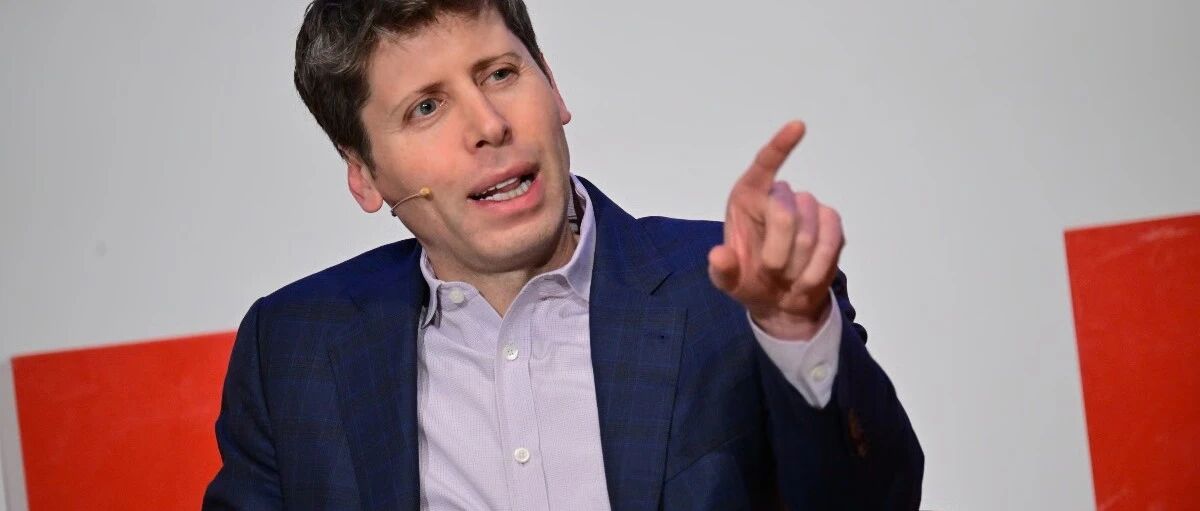
I remembered a lot of this, but here is a part I had forgotten:"Elon said he wanted to accumulate $80B for a self-sustaining city on Mars, and that he needed and deserved majority equity. He said that he needed full control since he’d been burned by not having it in the past, and when we discussed succession he surprised us by talking about his children controlling AGI."I appreciate people saying what they want and think it enables people to resolve things (or not). But Elon saying he wants the above is imp ...
人形机器人有望成长为经济增长新引擎!深市规模最大的机器人ETF(159770)早盘逆势走强,标的指数盘中涨近3%
Mei Ri Jing Ji Xin Wen· 2026-01-16 06:28
Core Viewpoint - The A-share market opened higher but retreated, with the three major indices turning negative. However, the robotics sector showed resilience, with significant gains in several stocks and the robotics ETF tracking the CSI Robotics Index rising by 2.32% at midday. Group 1: Market Performance - The A-share market experienced a high opening followed by a decline, with all three major indices turning negative [1] - Robotics concept stocks performed strongly, with Green Harmony rising over 12%, Boke Co. rising over 10%, and other companies like Obit Optical and Tianzhun Technology increasing by over 7% [1] - The robotics ETF (159770) attracted significant attention, with over 2.32% increase by midday [1] Group 2: Industry Insights - Recent international consumer electronics exhibitions showcased humanoid robots, highlighting the rapid development and strong competitiveness of China's robotics industry [1] - The impact of mass production of simple robots on investments is expected to weaken, while narratives around AGI (Artificial General Intelligence) are anticipated to strengthen, particularly for leading companies and their supply chains [1] - The humanoid robotics industry is entering a new phase characterized by "technological iteration + scene expansion + ecological improvement," with mass production expected to reduce costs and accelerate market penetration [1] Group 3: Investment Trends - The robotics sector is becoming a new economic growth engine, with increasing participation from upstream and downstream companies in ecosystem development [1] - The robotics ETF (159770) has attracted over 2.6 billion yuan in investments over the past six months, indicating strong market interest [1]
