
电力市场化改革

Search documents
最难的一年?工商业储能下半场的反转逻辑
行家说储能· 2025-06-26 11:01
Core Viewpoint - The article discusses the challenges and transformations facing the commercial energy storage industry in China due to recent policy changes, particularly the implementation of the "Document 136" and time-of-use pricing adjustments in various provinces, which are seen as a shift towards market-oriented electricity pricing [1][4][12]. Group 1: Policy Impact - The introduction of the "Document 136" and the time-of-use pricing policy in Jiangsu is expected to drive the energy storage industry towards market-oriented value, leading to a necessary return to rational investment returns [4][12]. - The rapid policy adjustments have created a sense of urgency and difficulty within the industry, as many companies may not have adequately prepared for these changes [12][13]. - The new policies are seen as a double-edged sword, potentially reducing short-term profits while paving the way for diversified revenue streams in the long run [12][14]. Group 2: Industry Challenges - The commercial energy storage sector is currently experiencing a downturn in investment enthusiasm, with predictions that 2025 may be one of the most challenging years for the industry [1][8]. - There is a growing concern over the over-reliance on policy-driven arbitrage opportunities, which has led to intensified competition and price wars among companies [8][11]. - The industry is urged to move beyond simple peak-valley price arbitrage and to recognize energy storage as a critical resource for the flexibility of the power system [8][12]. Group 3: Long-term Strategies - Companies are encouraged to focus on long-term value creation by developing comprehensive energy solutions that integrate solar, storage, and energy efficiency [6][12]. - The need for innovation in technology and operational strategies is emphasized, as firms must enhance product performance and create a robust lifecycle management system to ensure sustainable profitability [6][12]. - The article suggests that the industry must adapt to changes and embrace new business models to survive and thrive in a competitive landscape [11][23].

“电改”驱使新能源:从“被动”到“主动”的价值重构
Orient Securities· 2025-06-26 04:13
Investment Rating - The industry investment rating is "Positive" (维持) [6] Core Viewpoints - The report is optimistic about the development of the electricity market, which brings new opportunities for the electricity system [3] - The transition from passive reliance on natural conditions to active participation in market operations is a core variable for optimizing economic efficiency in the industry [8] - The report highlights the importance of electricity market trading capabilities, especially in regions like Xinjiang and Inner Mongolia, where new projects will rely heavily on market transactions [8] Summary by Relevant Sections - **Electricity Market Development**: The report emphasizes the positive outlook for the electricity market, driven by reforms that enhance market participation and efficiency [3][8] - **New Energy Projects**: New energy projects in regions like Xinjiang and Inner Mongolia are expected to shift from subsidy-dependent models to market-driven mechanisms, with specific pricing structures outlined for different project types [8] - **Software and Hardware Opportunities**: The report suggests focusing on companies involved in software applications for electricity trading and hardware that supports market transactions, recommending specific companies for investment [8] - **Active Value Creation**: The shift from passive to active value creation in the new energy sector is expected to unlock significant investment opportunities, with several companies identified as potential beneficiaries [8]



5月份全社会用电量同比增长4.4%,规上工业天然气产量同比增长9.1%
Xinda Securities· 2025-06-23 06:28
5 月份全社会用电量同比增长 4.4%,规上工业天然气产量同比增长 9.1% 【】【】[Table_Industry] 公用事业—电力天然气周报 [Table_ReportDate] 2025 年 6 月 23 日 15666646523.tcy 证券研究报告 行业研究——周报 [Table_ReportType] 行业周报 [Table_StockAndRank] 公用事业 投资评级 看好 上次评级 看好 [Table_Author] 左前明 能源行业首席分析师 执业编号:S1500518070001 联系电话:010-83326712 邮 箱:zuoqianming@cindasc.com 李春驰 电力公用联席首席分析师 执业编号:S1500522070001 联系电话:010-83326723 邮 箱:lichunchi@cindasc.com 邢秦浩 电力公用分析师 执业编号:S1500524080001 联系电话:010-83326712 邮 箱:xingqinhao@cindasc.com 化工行业: 唐婵玉 电力公用分析师 执业编号:S1500525050001 邮 箱:tangchanyu@c ...
SNEC能源展,储能都发生了哪些变化
鑫椤锂电· 2025-06-23 01:15
Market Overview - The energy storage industry has experienced a price decline over the past two years, but the market is showing signs of recovery as prices stabilize at a low point, leading to increased interest in the SNEC exhibition [3][5] - Emerging markets in Asia, Africa, and Latin America are becoming more prominent, with new opportunities arising as energy storage technology matures and prices fall to acceptable levels [5][7] Product Developments - The focus has shifted from 314Ah cells replacing 280Ah cells to discussions around the mainstream adoption of 587Ah and 600Ah+ cells, with more exhibitors promoting 587Ah cells at the exhibition [8] - Large storage products showcased this year include 5MWh, 6.25MWh, and 6.9MWh systems, with innovations like the PowerTitan 3.0 leading the market [10] - In the commercial sector, the industry is moving from 280Ah cells to 314Ah cells, with new product configurations such as 125kW/261kWh and 418kW/836kWh systems being introduced [12] Residential Storage Trends - The most popular product this year is the balcony energy storage system, primarily featuring stacked products around 2kWh, with a competitive landscape among soft pack, square shell, and cylindrical cells [13] - The market share of 280Ah cells is rapidly increasing in the cost-sensitive Asia, Africa, and Latin America markets, driven by their high cost-performance ratio [13]
电力及公用事业行业周报(25WK24):5月用电量同比增长4.4%,湖南机制量价公布-20250622
Minsheng Securities· 2025-06-22 03:54
Investment Rating - The report maintains a recommendation for companies such as Funiu Co., Ltd. and Shenneng Co., Ltd. while cautiously recommending China General Nuclear Power and Anhui Energy [4][21]. Core Viewpoints - In May, the total electricity consumption reached 809.6 billion kWh, showing a year-on-year growth of 4.4%. The first industry saw an increase of 8.4%, the second industry 2.1%, the third industry 9.4%, and urban and rural residents' consumption 9.6% [2][22]. - The report highlights that coal prices are expected to remain low, benefiting thermal power generation, which is anticipated to improve performance in Q2. Companies are actively investing in wind power and cogeneration assets for long-term growth potential [4][19]. Summary by Sections Weekly Market Review - The electricity sector underperformed the broader market, with the public utility sector closing at 2355.40 points, down 1.13%, and the electricity sub-sector at 3131.64 points, down 1.31% [1][8]. - Among the electricity sub-sectors, photovoltaic generation fell by 1.57%, wind power by 1.28%, while thermal services rose by 2.08% [1][13]. Industry Data Tracking - The average price of thermal coal in the Bohai Rim region was 663.00 RMB/ton, with no change week-on-week [48]. - The report notes that the electricity market is experiencing a decline in coal and gas prices, with the average transaction price for coal in Guangdong dropping by 28.43% [69]. Investment Recommendations - The report recommends focusing on companies with stable performance and growth potential, particularly in thermal power and hydropower sectors, such as Changjiang Electric Power and Sichuan Investment Energy [4][20]. - It also suggests monitoring companies involved in asset restructuring and mergers, as these are expected to gain traction this year [20].



河南省电力现货市场结算试运行启动
news flash· 2025-06-21 07:39
6月19日,河南电力现货市场短周期结算试运行启动,当天112台煤电机组、390座新能源场站、127家售 电公司、12座独立储能电站参与交易,这标志着河南省电力市场化改革迈出关键一步。(河南日报) ...
长源电力(000966) - 000966长源电力投资者关系管理信息20250620
2025-06-20 01:50
Group 1: Company Performance and Future Outlook - The company's operating performance is influenced by multiple factors including electricity, coal, and financial markets, with a focus on enhancing profitability and operational efficiency [2] - For 2025, the company aims to achieve over 80% of its coal demand through long-term contracts, with pricing based on a "benchmark + floating" mechanism [2][4] - As of the end of 2024, the total installed capacity of coal-fired power in the country is 1.44 billion kW, with coal power accounting for 1.19 billion kW, representing 35.7% of the total installed capacity [3] Group 2: Renewable Energy Development - As of May 31, 2025, the company has commissioned approximately 2.604 million kW of renewable energy projects, including 264,000 kW from wind and 2.34 million kW from solar [4] - By the end of 2025, the total installed capacity of renewable energy is expected to reach approximately 2.7 million kW [4] Group 3: Market and Policy Environment - The company is actively participating in the electricity market, which transitioned to formal operation on June 6, 2025, following a successful trial period [8] - The implementation of the "Two-Part" electricity pricing policy in Hubei Province includes a capacity price of 100 RMB/kW per year, settled monthly [7] - The 136 document from the National Energy Administration promotes the marketization of renewable energy, which will benefit the long-term stable development of the sector [9] Group 4: Value Management and Investor Relations - Since 2024, the company has been enhancing its value management through eight key improvements, including operational performance, investor returns, and ESG capabilities [5] - The average utilization hours of the company's coal-fired power generation equipment from January to May were 1,515 hours [6]

SNEC光伏展前瞻:上下游大整合落地在即,应用扩容支撑产业线性增长
Zheng Quan Shi Bao Wang· 2025-06-10 11:54
Core Viewpoint - The photovoltaic industry is currently experiencing a significant transformation characterized by systemic restructuring, with both major changes and market consolidation occurring simultaneously [4][5][8]. Industry Overview - The SNEC International Photovoltaic and Energy Storage Conference in June 2023 saw reduced attendance compared to previous years, reflecting the industry's current challenges [4][8]. - Industry leaders are advocating for a market-driven approach to address overcapacity and inefficiencies, emphasizing the need for mergers, technology elimination, and strict regulatory measures [9][10]. Market Dynamics - The photovoltaic sector is shifting from linear growth patterns to a more unpredictable spiral growth model, driven by market forces rather than policy support [8][11]. - The global photovoltaic installed capacity is projected to exceed 600 GW in 2024, with China's new installations expected to reach 278 GW, solidifying its position as the second-largest power source [10][12]. Future Projections - The photovoltaic industry is expected to maintain a linear growth trajectory over the next five years, driven by global energy transition demands and the need for electricity in underserved populations [11][12]. - By 2030, the total global photovoltaic installed capacity could reach between 5200 GW and 5800 GW, with significant contributions from traditional and emerging markets [12][13]. Policy and Regulatory Environment - The ongoing electricity market reforms are seen as both a challenge and an opportunity for the photovoltaic sector, necessitating innovation and adaptation to new market conditions [13][16]. - Recommendations for enhancing the photovoltaic industry's development include improving regional cooperation, integrating advanced technologies, and promoting international standards and products [16][17].
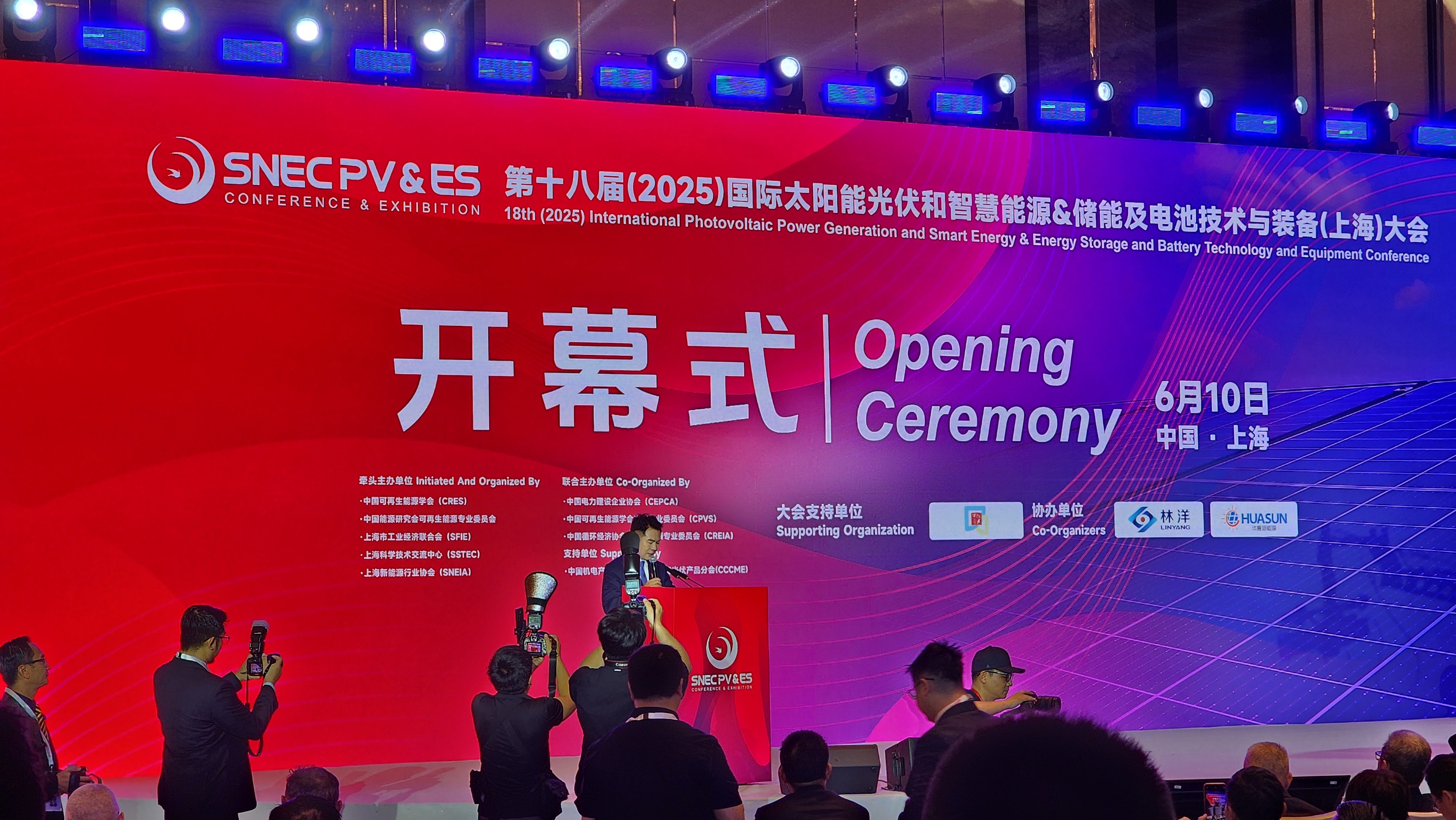
中国电力建设企业协会王军:电力市场化改革为光伏和储能等行业带来新机遇、新挑战
news flash· 2025-06-10 06:27
Core Viewpoint - The photovoltaic industry is currently facing unprecedented changes, yet the overall trend and landscape remain unchanged [1] Industry Challenges - The photovoltaic industry is encountering significant challenges, including increased uncertainty due to international trade barriers and a complex trade environment [1] - Rapid capacity expansion and intense price competition are causing adverse effects on the industry's development [1] - Reforms in the national electricity market, aimed at promoting technological innovation and new productive forces, present both new opportunities and challenges for the photovoltaic and energy storage sectors [1]

新型电力系统专家访谈
2025-06-09 15:30
Summary of Key Points from Conference Call Records Industry Overview - The conference call primarily discusses the **new energy sector**, focusing on wind and solar power installations and market dynamics in China. Core Insights and Arguments 1. **Projected Installations for 2025**: It is expected that new wind and solar installations will reach approximately **300 GW**, with **200 GW** from solar and **80-90 GW** from wind. The mechanism electricity ratio is projected to be around **50%** [3][4][6]. 2. **Investment Expectations**: Despite a decrease from **370 GW** in 2024 to **300 GW** in 2025, the investment outlook remains stable for both existing and new projects due to the anticipated increase in industrial and commercial electricity consumption [3][4][6]. 3. **Market Risks Post-2026**: After 2026, the scale of centralized electricity generation is expected to shrink, leading to increased competition and potential downward pressure on mechanism electricity prices. This could result in a significant reduction in new energy installations [4][8]. 4. **Internal Rate of Return (IRR) Decline**: New energy project electricity prices are expected to decrease by **3-5 cents**, leading to a **1.5-2 percentage point** drop in internal rates of return. The average IRR in the northern regions is around **6.5%**, while the central and eastern regions may stabilize around **7-8%** [5][6]. 5. **Grid Investment Surge**: The grid investment is projected to reach a record high, with an **8%** increase in the budget, totaling over **660 billion** yuan, reflecting a **10%** growth rate [1][18]. Additional Important Insights 1. **Electricity Supply and Demand Balance**: The electricity supply gap is expected to ease this summer, with an addition of **60 million kW** in capacity, leading to a generally balanced supply-demand situation [2][32]. 2. **Solar Installation Progress**: As of April 2025, solar installations reached approximately **100 GW**, with expectations to hit **140 GW** by the end of May. However, new installations may decline in the latter half of the year due to project completions [7][16]. 3. **Market Entry of New Energy**: The proportion of new energy entering the market is set to reach **100%** in 2025, with all projects required to participate in market transactions, albeit with a minimum guaranteed price [10][11]. 4. **Utilization Rates**: The utilization rates for solar and wind power are declining due to increased installation capacity. Solar utilization is expected to drop to around **90%**, while wind utilization remains relatively stable [14][15]. 5. **Future of High Voltage Transmission**: The development of high voltage transmission projects is optimistic, with plans for **11 new lines** in 2025, although challenges remain regarding project approvals and environmental assessments [22][24][25]. This summary encapsulates the critical points discussed in the conference call, providing insights into the current state and future outlook of the new energy sector in China.