产业转型升级

Search documents
邵阳液压拟6亿元并购新承航锐 深耕高端制造核心零部件领域
Zheng Quan Ri Bao Wang· 2025-12-10 07:41
Core Viewpoint - The acquisition of Chongqing Xincheng Hangrui Technology Co., Ltd. by Shaoyang Weike Hydraulic Co., Ltd. represents a significant step in the high-end manufacturing sector, enhancing the company's product offerings and operational efficiency [1][2]. Company Summary - Shaoyang Weike Hydraulic plans to acquire 100% of Xincheng Hangrui for a total price of 600 million yuan, combining cash and stock issuance [1]. - The acquisition aims to expand Shaoyang Weike's product range in high-end manufacturing and strengthen its position in core component sectors [1]. - Xincheng Hangrui specializes in the R&D, production, and sales of metal forgings and castings, with applications in energy, aerospace, and high-end equipment manufacturing [1]. Industry Summary - The acquisition aligns with the trend of integrating the high-end manufacturing industry, particularly in the context of China's transition and upgrade in this sector [2]. - Metal forgings and castings are critical components that directly affect the performance of high-end equipment, making their independent control essential for high-quality industrial development [2]. - The transaction is seen as a strategic expansion through capital operations, reflecting the scarcity of quality manufacturing assets in the current market environment [2].
多地陆续出台“十五五”规划建议 经济大省展现强劲发展动能
Ren Min Ri Bao· 2025-12-10 06:52
今年前三季度,GDP总量居前十的经济大省表现突出,9个省份增速全部高于或比肩全国平均水平,展 现出强劲的发展动能。总量方面,经济大省也迎来新突破。如江苏GDP首次在前三季度突破10万亿大 关;上海、湖南首次突破4万亿。至此,经济十强省前三季度GDP全部跨入"四万亿俱乐部",经济大省 的入门门槛再次拉高。 看具体领域,工业方面,前三季度8个经济大省规上工业增加值增速跑赢全国;消费方面,7个省份社会 消费品零售总额增速超过全国;外贸方面,经济十强省贡献了全国超七成的进出口总额。如河南、湖北 的进出口总值同比增速分别达到了18.7%、25.3%;江苏、上海、湖北、河南的出口总值同比增速均在 10%以上。 来源:人民日报海外版 作者:孔德晨 经济大省因具有产业体系完备、市场规模大、辐射能力强等综合优势,在全国经济大盘中一直扮演着重 要角色。2025年临近收官,经济大省继续发挥"顶梁柱"作用,在"稳"的基础上迸发出"进"的动能。近 日,多地陆续出台"十五五"规划建议,经济大省未来怎么干的"路线图"愈加明晰。 挑大梁 "走在前" 中国经济版图中,广东、江苏、山东、浙江、四川、河南、湖北、福建、上海、湖南等10省份,以占全 ...
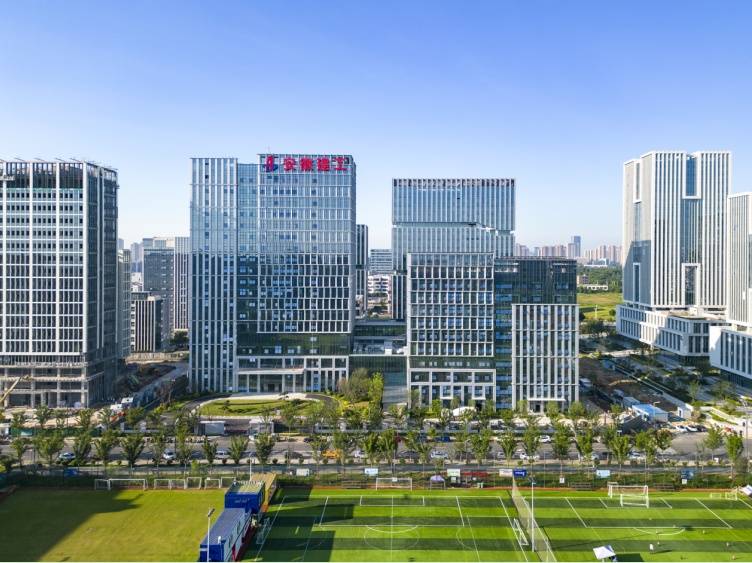
位列第二!安徽建工入选2024安徽上市公司总投资规模20强
Sou Hu Cai Jing· 2025-12-10 02:37
Core Insights - Anhui Construction has been recognized as the second-largest company in the "2024 Anhui Listed Companies by Total Investment Scale Top 20" list, reflecting its strong comprehensive strength and expanding investment scale [1][4] Investment and Development - Anhui Construction has completed a total investment exceeding 300 billion yuan, covering multiple sectors including highways, smart manufacturing, and emerging industries [3] - In the highway investment sector, the company has invested in the construction of 28 highways with a total investment of nearly 250 billion yuan, spanning over 1,200 kilometers [3] - The company’s first self-invested highway, the Xu-Huai-Fu Highway, was completed 10 months ahead of schedule, contributing significantly to the modernization of Anhui's comprehensive transportation network [3] Smart Manufacturing - The first phase of the Changfeng County Smart Manufacturing Base has been fully operational, with the company establishing modern smart production bases covering 1,000 acres in Hefei, Wuhu, and Liu'an [3] - The product range includes prefabricated steel structure buildings, ship manufacturing, and traffic safety facilities [3] Future Outlook - The recognition in the investment scale ranking is seen as a strong motivation for Anhui Construction's future high-quality development [4] - The company aims to continue adhering to market orientation, enhancing innovation, optimizing investment layout, and actively expanding into emerging business areas [4] - Anhui Construction is committed to accelerating industrial transformation and upgrading to contribute more significantly to the construction of a modern and beautiful Anhui [4]


锐财经|经济大省展现强劲发展动能
Ren Min Ri Bao Hai Wai Ban· 2025-12-10 02:04
Core Viewpoint - Economic provinces in China are playing a crucial role in stabilizing the national economy while driving growth, with clear future plans outlined in the "14th Five-Year" proposals [1][2]. Group 1: Economic Performance - The top ten economic provinces contribute nearly 20% of the national area and over 60% of the GDP, acting as a stabilizing force for the national economy [2]. - In the first three quarters of this year, all nine provinces in the top ten recorded GDP growth rates above or on par with the national average, showcasing strong development momentum [2]. - Jiangsu's GDP surpassed 10 trillion yuan for the first time, while Shanghai and Hunan both exceeded 4 trillion yuan, marking a new threshold for the "four trillion club" [2]. Group 2: Future Planning - Five of the ten economic provinces have set ambitious goals to lead in various aspects, such as Guangdong aiming for economic doubling by 2035 and Jiangsu focusing on high-quality development and technological innovation [3]. - Zhejiang plans to achieve significant progress in high-quality development and common prosperity within five years [3]. Group 3: Structural Optimization and New Momentum - Economic provinces are at the forefront of structural optimization and new momentum, with policies promoting the growth of emerging industries like digital economy and artificial intelligence [4]. - Guangdong has released a detailed plan for digital economy development, targeting a core AI industry scale exceeding 440 billion yuan by 2027 [4]. Group 4: Domestic Demand and Investment - Economic provinces are enhancing domestic demand and stabilizing investment through consumption activities and major engineering projects [6]. - Guangdong has allocated an additional 3.5 billion yuan for fiscal policies, while Jiangsu plans to distribute over 400 million yuan in consumption vouchers [7]. Group 5: Reform and Innovation - To further stimulate growth potential, economic provinces are encouraged to focus on breaking regional collaboration barriers and innovating in areas like low-altitude economy [8].
固本求新方能行稳致远
Jing Ji Ri Bao· 2025-12-09 22:47
在"求新"上,佛山依托自身产业优势,积极寻求适合当地的新兴产业发展路径,依托政策赋能与龙头企 业的示范引领作用,推动产业集群化发展与产业价值跃升;鼓励企业"走出去",形成"技术筑基+全球布 局"双轮驱动的发展新格局;聚焦应用型创新,注重打通"创新—产业—市场"全链路,让科研成果得以 快速对接产业、实现转化。 对老牌工业城市而言,传统产业并非"包袱",通过技术赋能与模式创新,能有效实现"老树发新芽";对 新兴工业城市而言,立足当地资源禀赋,集中资源培育特色产业,避免贪大求全,持续强链补链延链, 可形成更具市场竞争力的产业集群。以需求为导向的精细化产业政策体系,以及"无事不扰、有事必 到"的良好营商环境,能有效激发经营主体活力,护航可持续产业创新生态建设,有助于推动工业制造 业从"规模扩张"向"质量提升"跃进。 从老牌工业城市到新型智造强市,广东佛山重塑产业发展新格局,不仅助力传统制造业转型升级,加快 构建更具竞争力的现代化产业体系,还破解了传统产业同质化竞争、处于"微笑曲线"底端等"中年困 境"。 从佛山的实践来看,其转型升级并非单点发力,而是遵循"守牢根基、精准施策、系统推进"路径,围 绕"三箭齐发"战略,全 ...
经济大省展现强劲发展动能(锐财经)
Ren Min Ri Bao Hai Wai Ban· 2025-12-09 22:32
Core Insights - Economic provinces in China play a crucial role in stabilizing the national economy and driving high-quality development, with a clear roadmap emerging from recent "14th Five-Year" planning proposals [1][2] Group 1: Economic Performance - The top ten economic provinces contribute nearly 20% of the country's area and over 60% of GDP, acting as stabilizers and leaders in high-quality development [2] - In the first three quarters of this year, all nine provinces in the top ten exceeded or matched the national average GDP growth rate, showcasing strong development momentum [2] - Jiangsu's GDP surpassed 10 trillion yuan for the first time, while Shanghai and Hunan both exceeded 4 trillion yuan, raising the entry threshold for the "four trillion club" [2] Group 2: Future Planning - Five of the ten economic provinces have set ambitious goals to lead in various aspects, such as Guangdong aiming to double its economic total by 2035 and achieve per capita GDP at the level of developed countries [3] - Jiangsu emphasizes leading in high-quality development, technological innovation, and promoting common prosperity [3] - Zhejiang aims for significant progress in high-quality development and common prosperity demonstration within five years [3] Group 3: Structural Optimization and New Momentum - Economic provinces are pioneers in optimizing development structures and fostering new growth drivers, with policies promoting digital economy and AI [4][5] - Guangdong has released a detailed plan for digital economy development, including initiatives for data circulation and AI core industries, targeting over 440 billion yuan in scale by 2027 [5] - The focus on emerging industries is evident, with provinces like Zhejiang and Shandong prioritizing AI, new materials, and biotechnology in their planning [5] Group 4: Domestic Demand and Investment - Economic provinces are enhancing domestic demand and stabilizing investment through various initiatives, including significant financial allocations for consumer incentives [6] - Guangdong has allocated 3.5 billion yuan for six major consumer policies, while Jiangsu plans to distribute over 400 million yuan in consumption vouchers [6] - Major infrastructure projects are progressing, such as the completion of key bridges and water resource projects, which are expected to benefit millions [6] Group 5: Reform and High-Level Opening - Economic provinces are actively working on deep reforms and high-level openness, with measures to improve the business environment and integrate into the national market [7] - Sichuan has introduced 25 measures to address business environment challenges, while Henan has developed a plan to support the national market integration [7] - Future focus areas include breaking regional collaboration barriers and testing new mechanisms in emerging sectors like low-altitude economy [7]
老牌制造业之都破解“中年危机”
Jing Ji Ri Bao· 2025-12-09 22:12
Core Insights - The article emphasizes the transformation of traditional manufacturing in Foshan, Guangdong, into a modern industrial system supported by advanced manufacturing and technological innovation [1][2][3]. Group 1: Industrial Transformation - Foshan is undergoing a systematic restructuring of its industrial landscape, focusing on upgrading traditional industries and developing emerging sectors to create a competitive modern industrial system [1][2]. - The city has established 11 trillion-yuan industrial clusters, with leading production in ceramics, refrigerators, aluminum profiles, and soy sauce, exporting to over 100 countries [2][3]. - The "three arrows" strategy aims to transform traditional industries, develop emerging sectors, and cultivate future industries, supported by policy guidance and digital empowerment [3][4]. Group 2: Policy and Infrastructure Development - Foshan's government is enhancing the business environment through reforms and initiatives to support enterprise development, including the "Foshan 'Yishai Ni' Enterprise Service System" [4]. - The city has over 100,000 industrial enterprises, with more than 10,000 above-designated size, and ranks first in Guangdong with 102 companies listed in the "Top 500 Manufacturing Enterprises" [5]. Group 3: Digital and Intelligent Transformation - Foshan is leading in digital transformation with initiatives like "Smart Transformation and Digital Upgrade," focusing on enhancing production efficiency in traditional industries [6][7]. - The city has implemented AI technologies in various sectors, such as furniture and soy sauce production, improving quality control and operational efficiency [7][8]. - Over 78% of industrial enterprises have adopted digital and intelligent transformation, supported by financial incentives and policies [7][8]. Group 4: Emerging Industries and Innovation - Foshan is actively developing emerging industries, particularly in smart equipment and advanced manufacturing clusters, aiming for global competitiveness [9][10]. - The city supports innovation through the establishment of major platforms and technology research centers, focusing on semiconductor and AI technologies [12][15]. - The semiconductor industry park is nearing completion, expected to enhance the local ecosystem and attract related businesses [16]. Group 5: Future Industry Development - Foshan is planning to explore future industries such as green hydrogen, generative AI, and gene therapy, aiming to cultivate high-end talent and innovative enterprises [13][14]. - The city is enhancing its technology innovation system to facilitate the commercialization of research outcomes, bridging the gap between laboratories and market applications [14][15]. - Foshan aims to maintain a high growth rate in patent applications and standard-setting, positioning itself as a leader in future industrial development [16].
【省工业和信息化厅】陕西纺织服装产业链推介招商签约互采对接会召开
Shan Xi Ri Bao· 2025-12-08 22:57
Group 1 - The core event was the signing of 8 industrial projects at the Shaanxi Textile and Apparel Industry Chain Promotion and Investment Signing Conference held in Xi'an on December 8 [1] - Key enterprises such as Shaanxi Yuanfeng New Materials Technology Co., Ltd. and Shaanxi Xianyang Dukepu Clothing Co., Ltd. presented their development plans and cooperation needs during the conference [1] - The signed projects include a 380,000 spindle core-spun yarn production project and a 300,000 piece workwear production line project, among others [1] Group 2 - The signing of these projects is expected to drive high-quality development of the Shaanxi textile and apparel industry chain [2] - The provincial industry and information technology department plans to strengthen the construction of key projects in the textile and apparel industry, focusing on new fiber materials, functional fabrics, and domestic fashion [2] - There will be an emphasis on enhancing cooperation with countries involved in the Belt and Road Initiative, including organizing overseas investment training to shift enterprises from exporting industrial products to exporting industrial capabilities [2]
资本聚势
Shang Hai Zheng Quan Bao· 2025-12-08 18:18
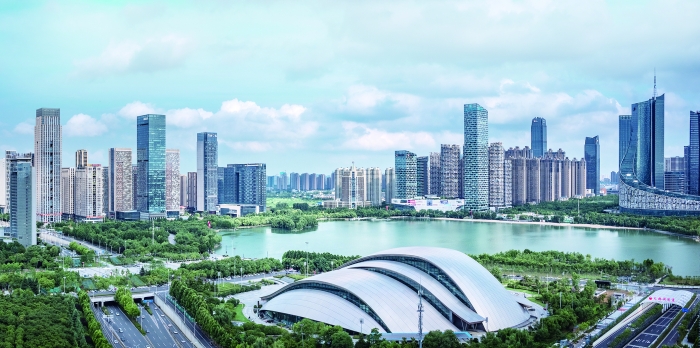
苑多然 合肥天鹅湖风光 孙宏伟 上交所副总经理苑多然: 高质量建设科创板 同时,上交所着力发挥科创板"试验田"功能和优势,打造了五级动能体系: 一是以优化制度体系激发公司内生动能。科创板构建起创新制度体系,通过引导资源高效配置、促进完 善治理结构、创设股权激励工具等,多方位激发企业内生发展动能。 二是以强化资本供给提升科技创新动能。科创板以多元包容的上市标准支持"硬科技"企业上市。去年发 布的"轻资产、高研发投入"认定标准,放宽相关企业再融资补流比例限制,已有10家优质企业获批、再 融资总额预计达250亿元,进一步助力原始创新。 三是以打造产业矩阵发挥"新质"集群动能。科创板聚焦服务六大战略性新兴产业,并通过深化改革覆盖 更多新兴和未来产业,进一步推动科技创新和产业创新深度融合。 四是以推动并购重组催生资源整合动能。"科创板八条"发布以来,科创板新披露产业并购超150单。 五是以完善市场生态凝聚综合协同动能。上交所率先推出"提质增效重回报"专项行动,并加快完善指数 和产品体系,推动投融资协调发展。上交所还不断深化"三开门"服务,常态化走访调研,推动解决诉 求,持续强化上市前后全链条服务,深度赋能企业创新发展。 ...
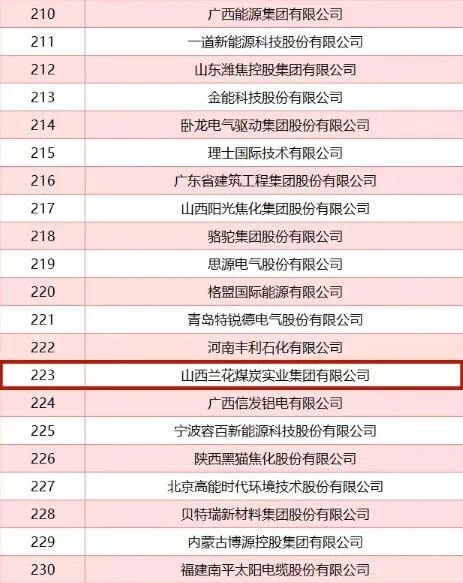
第223位!兰花集团持续登榜2025中国能源企业500强
Xin Lang Cai Jing· 2025-12-08 12:27
正式发布 兰花集团 凭借稳健的经营业绩 (来源:兰花集团) 日前 2025中国能源企业500强榜单 持续的技术创新能力 与强劲的产业优势 再次登榜 位列第223位 充分彰显了集团公司 在全国能源领域的综合实力与持久竞争力 | 210 | 广西能源集团有限公司 | | --- | --- | | 211 | 道新能源科技股份有限公司 | | 212 | 山东潍焦控股集团有限公司 | | 213 | 金能科技股份有限公司 | | 214 | 卧龙电气驱动集团股份有限公司 | | 215 | 理士国际技术有限公司 | | 216 | 广东省建筑工程集团股份有限公司 | | 217 | 山西阳光焦化集团股份有限公司 | | 218 | 骆驼集团股份有限公司 | | 219 | 思源电气股份有限公司 | | 220 | 格盟国际能源有限公司 | | 221 | 青岛特锐德电气股份有限公司 | | 222 | 河南丰利石化有限公司 | | 223 | 山西兰花煤炭实业集团有限公司 | | 224 | 广西信发铝电有限公司 | | 225 | 宁波容百新能源科技股份有限公司 | | 226 | 陕西黑猫焦化股份有限公司 | ...