
卫星通信

Search documents
利好密集!这一板块掀起涨停潮
Zheng Quan Ri Bao Wang· 2025-12-01 03:42
Core Viewpoint - The establishment of the Commercial Space Administration marks a significant milestone for China's commercial space industry, transitioning from a "policy cultivation period" to a "regulated development period" [1][2] Industry Overview - The commercial space sector in China has over 600 companies and is experiencing rapid growth driven by policy support, technological breakthroughs, and market demand [1][3] - The market size of China's commercial space industry is projected to reach 7.8 trillion yuan by 2030, with potential for the emergence of leading companies valued in the hundreds of billions or even trillions [4] Regulatory Developments - The newly established Commercial Space Administration aims to provide a unified and professional regulatory framework, enhancing the environment for large-scale development of the industry [1][2] - The administration will optimize key processes such as launch approvals and frequency resource applications, reducing institutional transaction costs for companies [2][3] Technological Advancements - The industry is currently focused on the development of reusable liquid rockets, which is crucial for reducing costs and achieving scalable growth [2][3] - The successful launch of multiple domestic reusable rockets is anticipated to fill a technological gap in the field and enhance launch capacity while lowering costs [3] Market Dynamics - The integration of state-owned and private sector resources is expected to foster innovation and address technological bottlenecks in the commercial space industry [3] - The increasing focus on satellite communication as a core component of the 6G technology framework necessitates deep collaboration across the entire industry chain [2]





昂瑞微(688790):聚焦射频前端芯片,“通信+车载+卫星”三轮驱动
Shenwan Hongyuan Securities· 2025-11-30 14:30
Investment Rating - The report assigns a rating based on the AHP score of 2.37, placing the company in the lower-middle tier of the AHP model distribution [4][8]. Core Insights - The company focuses on the "communication + automotive + satellite" three-pronged strategy, primarily developing RF front-end chips, RF SoC chips, and other analog chips, with over 80% of its revenue coming from RF front-end products [4][11]. - The company has broken the 5G RF front-end monopoly, ranking among the top three domestic manufacturers, and has achieved large-scale production of L-PAMiD products for mainstream brand clients, marking a significant milestone in domestic RF front-end capabilities [11][16]. - The company is expanding into the automotive and satellite communication sectors, with a projected market growth in automotive RF front-end applications from $400 million in 2024 to $900 million by 2030, and satellite communication market penetration expected to rise from 5% to around 10% by 2025 [17][18]. Summary by Sections AHP Score and Expected Allocation Ratio - The AHP score for the company is calculated at 2.37, indicating a position in the 38.7% percentile of the AHP model, suggesting a lower-middle tier ranking [4][8]. New Stock Fundamentals Highlights - The company is a leader in the domestic RF front-end chip market, with a significant focus on 5G, 4G, 3G, and 2G RF front-end chip products, and has achieved a market share of over 30% in high-end mobile devices [11][12]. - The company has successfully launched multiple RF modules, including L-PAMiD, L-PAMiF, and others, across various communication standards, achieving large-scale sales with major brands [16][18]. Comparable Company Financial Metrics - The company has shown a compound annual growth rate (CAGR) of 50.88% in revenue from 2022 to 2024, although it remains below the average of comparable companies [27][26]. - The gross margin has improved from 17.06% in 2022 to 22.62% in 2025 H1, but it still lags behind the average of comparable firms [32][34]. Fundraising Projects and Development Vision - The company plans to use the proceeds from its IPO for projects focused on 5G RF front-end chip and module R&D, RF SoC R&D, and the construction of its headquarters and R&D center [41][42]. - The implementation of these projects is expected to enhance the company's innovation capabilities and improve its product competitiveness in the market [41].
银河航天徐鸣:太空基建呈“新四化” 特征
2 1 Shi Ji Jing Ji Bao Dao· 2025-11-29 09:05
Core Insights - The number of operational satellites has rapidly increased from 5,000 to 12,000 in less than five years, indicating a significant acceleration in space infrastructure development [1] - The space industry is experiencing a technological revolution driven by advancements in aerospace technology and artificial intelligence, characterized by low-cost, large-scale, and constellation-based satellite deployment [1][3] - The global space economy is projected to grow from $630 billion in 2023 to $1.8 trillion by 2035, with a compound annual growth rate of approximately 9% [3] Industry Developments - The concept of "Moore's Law in Space" suggests that satellite manufacturing is becoming faster, more powerful, and cheaper, similar to advancements in computer chips [1] - The demand for satellite broadband is expected to surge, particularly with the advent of direct satellite-to-mobile communication, marking a critical step towards mainstream adoption of satellite communication [3][4] - New application scenarios are emerging, including space supercomputing, space sensing, and space logistics, driven by the increasing capabilities of satellite infrastructure [4] Company Progress - The company has successfully launched 35 self-developed satellites, including the world's first high-frequency low-orbit millimeter-wave satellite [4] - The company is expanding internationally, collaborating with local operators in countries like Thailand and engaging in partnerships in the UAE, Saudi Arabia, and Indonesia to promote low-orbit satellite communication technologies [4] - The capital market has shown strong support for the commercial space industry, with approximately 2,200 space companies raising a total of $357.8 billion from 2009 to Q2 2025 [5]
2连板涨停!卫星通信+商业航天概念联动,通宇通讯9:25涨停,背后逻辑揭晓
Jin Rong Jie· 2025-11-28 01:40
Core Insights - Tongyu Communication has experienced a consecutive two-day trading limit increase, indicating strong market interest in the stock [1] - The market's focus on Tongyu Communication is primarily related to its strategic positioning in the satellite communication sector and investments in the commercial aerospace industry [1] Company Summary - The stock reached a trading limit at 9:25 AM with a transaction volume of 0.46 hundred million yuan and a turnover rate of 0.58% [1] - The company has been actively investing in commercial aerospace, accumulating investments in related enterprises [1] - Tongyu Communication is building a product system that covers satellite-ground scenarios, linking its business to market trends in satellite communication and commercial aerospace [1]
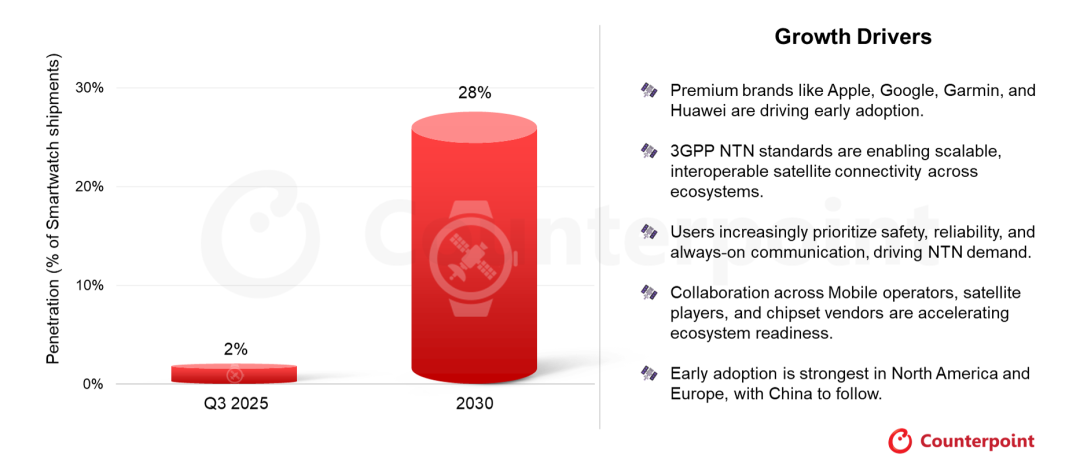
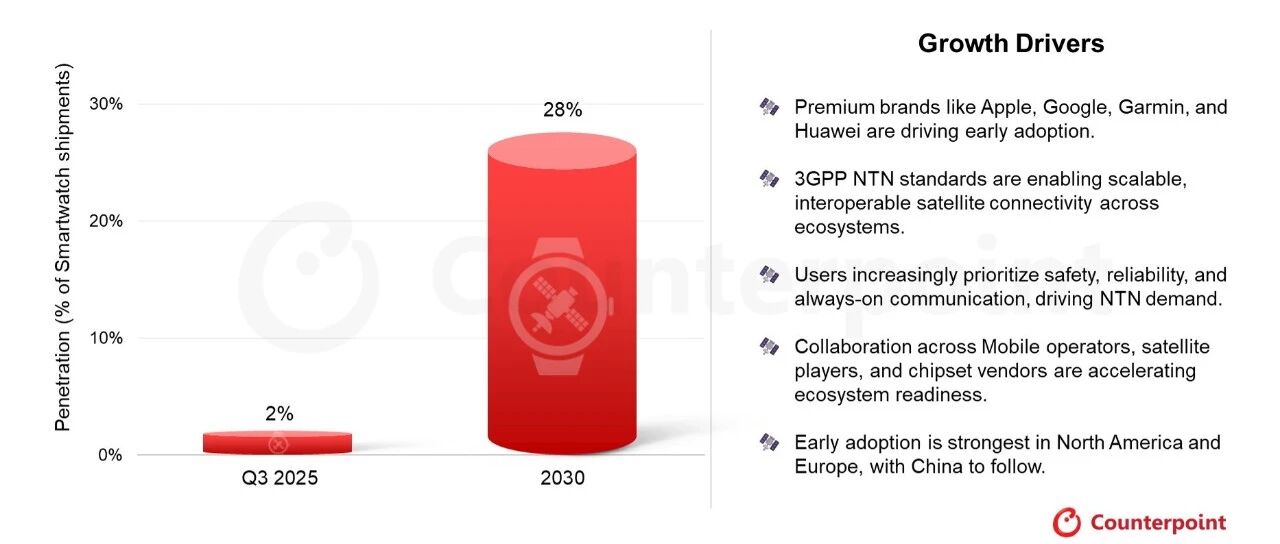
Counterpoint:预计支持卫星通信的智能手表出货占比将增至2030年的28%
智通财经网· 2025-11-28 01:36
Core Insights - The market share of smartwatches supporting satellite communication is expected to increase from 2% in Q3 2025 to 28% by Q3 2030, driven by early market leaders like Apple and Huawei, and later by Google and Garmin as standardization occurs [1][5]. Market Trends - The early market (2025-2026) will be dominated by brands with proprietary satellite solutions, while from 2027 onwards, the adoption of standardized NB-NTN technology will accelerate the integration of satellite modems into wearable devices [1][5]. - Currently, satellite features are primarily found in high-end smartwatches priced above $500, but as NB-NTN technology scales, this barrier will gradually lower, allowing mid-range products to adopt satellite communication [5]. Brand Strategies - **Apple**: Plans to expand satellite functionality to the Apple Watch Ultra 3 by Q3 2025, utilizing a partnership with Globalstar for bidirectional NTN messaging and SOS features [6]. - **Google**: The Pixel Watch 4 will be the first Wear OS smartwatch to support true bidirectional satellite communication based on the 3GPP standard, allowing direct satellite messaging without smartphone pairing [6]. - **Garmin**: The Fenix 8 Pro will support bidirectional SOS and satellite messaging across North America and Europe, reinforcing Garmin's position in safety and exploration [10]. - **Huawei**: The Watch Ultimate 2 will utilize China's Tiantong-1 system for satellite communication, currently limited to the domestic market [10].




智能手表迈入卫星连接与全球覆盖新时代
Counterpoint Research· 2025-11-28 01:03
Core Viewpoint - The article discusses the significant growth potential of satellite-enabled smartwatches, predicting that their shipment share will increase from 2% in Q3 2025 to 28% by 2030, driven by advancements in NB-NTN technology and increasing consumer demand for reliable connectivity in remote areas [4][5][9]. Market Trends - Satellite-enabled smartwatches are emerging as a frontier in the wearable device ecosystem, connecting terrestrial networks with non-terrestrial networks (NTN) [5]. - The early market (2025-2026) will be dominated by brands like Apple and Huawei, which have proprietary satellite solutions, while from 2027 onwards, more Android OEMs will adopt standardized NB-NTN technology [5][8]. Adoption Drivers - The introduction of satellite SOS services by Apple in 2022 and Huawei's satellite connectivity service in 2023 has shifted satellite communication from niche to mainstream [9]. - The demand for reliable communication in outdoor and remote areas is expected to accelerate the adoption of satellite smartwatches [9]. Brand Strategies - Apple plans to expand its satellite functionality to the Apple Watch Ultra 3 by Q3 2025, partnering with Globalstar for two-way NTN messaging and SOS features [10]. - Google’s Pixel Watch 4 will be the first Wear OS smartwatch to support true two-way satellite communication based on the 3GPP NB-NTN standard [13]. - Garmin's Fenix 8 Pro will support two-way SOS and satellite messaging, reinforcing its position in the outdoor safety market [14]. - Huawei's Watch Ultimate 2 will utilize China's Tiantong system for satellite communication, currently limited to the domestic market [15]. Ecosystem Development - The development of NB-NTN in wearables is driven by advancements in chipsets and collaborations with satellite operators [16]. - Major chipset platforms are integrating NB-IoT and NTN functionalities, laying the groundwork for the next generation of satellite-enabled wearables [16]. - The competition will focus on battery efficiency, seamless switching between cellular and satellite networks, and stronger partnerships with satellite service providers [16].
卓胜微(300782.SZ):射频前端产品于卫星通信应用如手机终端等实现出货,且符合NTN标准的产品有少量交付
Ge Long Hui· 2025-11-27 09:56
Core Viewpoint - The company has successfully delivered radio frequency front-end products for satellite communication applications, including mobile terminals, and has made a small number of deliveries that meet NTN standards [1] Group 1 - The company is actively investing in and laying out new frontier technologies and application areas [1] - The company is expanding its business in line with its development plan, leveraging its technological reserves [1]

商业航天继续活跃!政策+资本+技术多端共振,卫星ETF(159206)走强!
Sou Hu Cai Jing· 2025-11-27 06:27
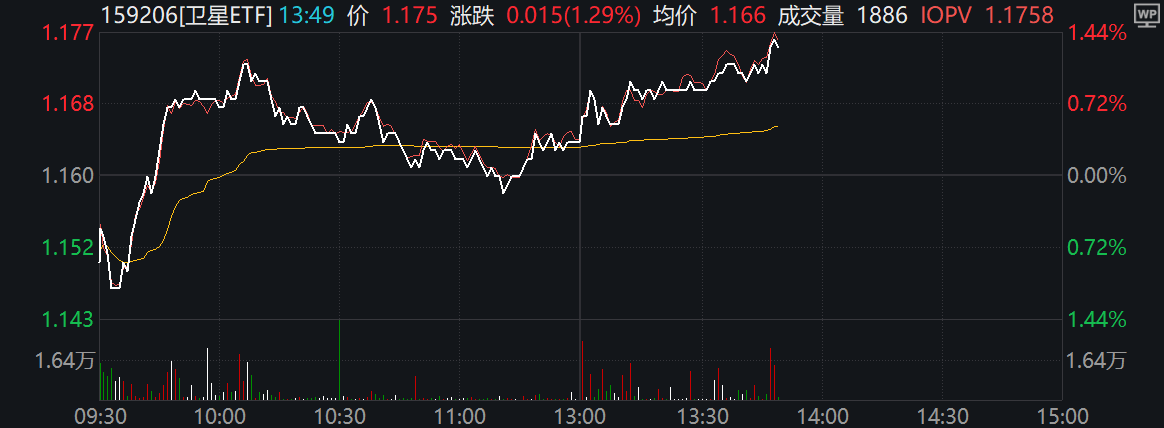
Core Insights - The satellite ETF has reached a new high in both scale and shares, indicating strong investor interest and confidence in the commercial space industry [2][3] - Recent government initiatives and funding activities are expected to catalyze growth in the commercial space sector, particularly in satellite communication [3][4] - The satellite ETF focuses on commercial aerospace and satellite communication, positioning itself to benefit from the anticipated growth in the industry [4] Fund Performance - The satellite ETF's latest scale has reached 1.514 billion yuan, marking a record high since its inception [2] - The ETF's shares have also reached 1.307 billion, setting a new record [3] - Recent net inflows into the ETF amount to 58.2188 million yuan, with a total of 81.6237 million yuan over the past five trading days, averaging 16.3247 million yuan per day [3] Industry Developments - The National Space Administration has issued a plan to promote high-quality and safe development in the commercial space sector from 2025 to 2027, focusing on advanced technologies and cost-effective production [3] - Several companies, including Zhongke Aerospace, have completed IPO counseling, and funding rounds are ongoing, indicating robust capital support for the industry [3] - The upcoming launch of Beijing Blue Arrow Aerospace's Zhuque-3 rocket is a significant milestone, with preparations nearing completion for the scheduled flight on November 29 [3] Market Outlook - The policy incentives are expected to drive upgrades across the entire satellite communication industry chain, with market size projected to exceed 100 billion yuan during the commercial trial period over the next two years [3]
小米17Ultra代号哪吒曝光,后置三摄方案亮相
Xin Lang Ke Ji· 2025-11-27 06:10
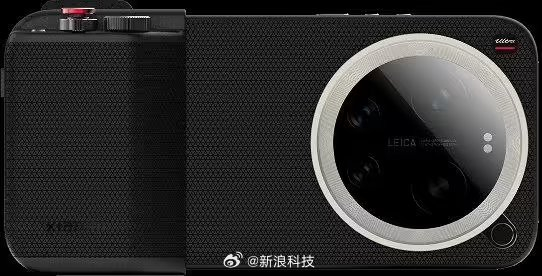
Core Viewpoint - The article reveals the latest information about the Xiaomi 17 Ultra smartphone, including its development codename "Nezha" and its camera specifications, indicating a shift in design and features compared to its predecessor [1]. Group 1: Product Specifications - The Xiaomi 17 Ultra features a rear camera layout that has been reduced from four lenses to three, with a special sensor replacing the expected fourth lens [1]. - The main camera is expected to use a 50 million pixel OVX10500U sensor, while the telephoto lens will utilize a 200 million pixel S5KHPE sensor, and the ultra-wide lens will have either a 50 million pixel OV50M or S5KJN5 sensor [1]. - The front camera is also anticipated to be a 50 million pixel OV50M sensor [1]. Group 2: Performance and Features - The device will be powered by Qualcomm's fifth-generation Snapdragon 8 Supreme Edition chip and will come pre-installed with HyperOS 3.0 [1]. - The international version of the Xiaomi 17 Ultra is confirmed to support satellite communication, providing reliable connectivity for users in remote areas [1].

国内卫星通信发展加快,通信ETF(159695)有望持续受益
Xin Lang Cai Jing· 2025-11-27 04:04
Group 1 - The core viewpoint of the news highlights the strong performance of the National Communication Index, which rose by 1.32%, driven by significant gains in constituent stocks such as Taicheng Technology (up 11.02%) and Cambridge Technology (up 8.92%) [1] - The Ministry of Industry and Information Technology officially launched commercial trials for satellite IoT services on November 22, aiming to stimulate private sector vitality and promote the integration of the real economy with the digital economy [1] - As of now, China has successfully launched 13 low-orbit satellites for satellite internet and deployed 108 satellites in the Qianfan constellation, accelerating the development of the satellite communication industry [1] Group 2 - Zhongyuan Securities predicts a series of AI industry catalysts in 2026, including the mass production of Nvidia's next-generation Rubin GPU and the release of Google's new large model Gemini, which could drive the next wave of smartphone upgrades [2] - The telecommunications sector is beginning research and development on 6G technology, with increasing penetration rates for AI smartphones, indicating a positive outlook for capital expenditures among leading cloud vendors [2] - The top ten weighted stocks in the National Communication Index account for 66.96% of the index, with companies like Zhongji Xuchuang and ZTE among the leaders [2]