
金融供给侧结构性改革

Search documents
“十四五”时期金融业发展成就——我国金融治理体系和治理能力现代化迈上新台阶
Ren Min Wang· 2025-09-22 10:02
Core Insights - During the "14th Five-Year Plan" period, China's financial sector has achieved significant milestones, including total banking assets nearing 470 trillion yuan, ranking first globally, and maintaining the world's largest foreign exchange reserves for 20 consecutive years [1][2] Financial System Reform - The Chinese government has implemented a series of transformative reforms in financial leadership and regulatory systems, establishing the Central Financial Committee and the Central Financial Work Committee to enhance centralized leadership [2] - A modern financial system is being constructed to promote high-quality development in the financial sector [2] Financial Services to the Real Economy - The People's Bank of China has adopted a supportive monetary policy stance, leading to the formation of a modern monetary policy framework that effectively supports the main goals of economic and social development during the "14th Five-Year Plan" [2] - Financial support for technology-driven small and medium-sized enterprises, inclusive micro and small loans, and green loans has seen an annual growth rate exceeding 20% [2] Financial Industry Reform and Opening Up - Continuous promotion of supply-side structural reforms in finance, deepening institutional reforms, and developing multi-tiered financial markets are key focuses [2] - The financial sector is experiencing a steady push for high-level bilateral opening up, enhancing the level of institutional openness and increasing participation in international financial governance [2] Risk Prevention and Mitigation - The People's Bank of China has effectively addressed several prominent risk points in the financial sector, safeguarding the interests of depositors and small investors [3] - The overall financial system remains stable, with healthy financial institutions and smooth market operations [3] Lessons Learned - The achievements of the past five years in China's financial sector provide valuable lessons that should be consistently applied, emphasizing the importance of serving the real economy and preventing financial risks [3]
“十四五”时期金融业发展成就—— 我国金融治理体系和治理能力现代化迈上新台阶
Ren Min Wang· 2025-09-22 09:18
Core Viewpoint - During the "14th Five-Year Plan" period, China's financial sector has achieved significant milestones, including becoming the world's largest banking asset holder and maintaining the largest foreign exchange reserves for 20 consecutive years [1][2]. Financial System Reform - The Chinese government has implemented a series of transformative reforms in the financial leadership and regulatory systems, establishing the Central Financial Committee and the Central Financial Work Committee to enhance centralized leadership [2]. - A modern financial system is being constructed to promote high-quality development in the financial sector [2]. Financial Services to the Real Economy - The People's Bank of China has adopted a supportive monetary policy stance, leading to the formation of an effective modern monetary policy framework that aids in achieving the main goals of economic and social development during the "14th Five-Year Plan" [2]. - Financial support for technology-driven small and medium-sized enterprises, inclusive microfinance, and green loans has seen an annual growth rate exceeding 20% [2]. Financial Industry Reform and Opening Up - Continuous promotion of supply-side structural reforms in finance, deepening institutional reforms, and developing multi-tiered financial markets are key focuses [2]. - There is a steady push for high-level bilateral financial openness, enhancing the level of institutional openness and increasing participation in international financial governance [2]. Risk Prevention and Mitigation - The People's Bank of China has effectively addressed several prominent risk points in the financial sector, safeguarding the interests of depositors and small investors [3]. - The overall financial system remains stable, with healthy financial institutions and smooth market operations [3]. Lessons Learned - The achievements of the past five years in China's financial sector provide valuable lessons that should be consistently applied [3]. - Emphasis on serving the real economy, preventing and mitigating financial risks, and adhering to market-oriented and legal frameworks are essential for future financial governance [3].
中国人民银行行长潘功胜:“十四五”时期我国金融事业取得新的重大成就
Xin Hua Cai Jing· 2025-09-22 09:18
Core Viewpoint - The Chinese financial sector has achieved significant progress over the past five years, particularly in financial system reform, service quality, risk management, and international competitiveness [1][2][3]. Group 1: Financial System Reform - Financial system reforms have deepened, with the establishment of the Central Financial Committee and the Central Financial Work Committee to enhance centralized leadership [2]. - The modernization of the financial system is being accelerated to align with the key elements required for a strong financial nation [2]. Group 2: Financial Services to the Real Economy - The effectiveness of financial services to the real economy has significantly improved, with a supportive monetary policy framework aiding in achieving the main goals of the 14th Five-Year Plan [2]. - During the 14th Five-Year period, loans to technology-based SMEs, inclusive small and micro enterprises, and green loans have seen an annual growth rate exceeding 20% [2]. Group 3: Financial Industry Reform and Opening Up - Continuous progress in financial supply-side structural reform and the development of a multi-tiered financial market is being made [2]. - The level of openness in the financial industry is being enhanced, with increased participation and influence in international financial governance [2]. Group 4: Risk Prevention and Mitigation - Important achievements have been made in preventing and mitigating financial risks, with effective measures taken to address prominent risk points in the financial sector [3]. - The overall stability of the financial system and health of financial institutions have been maintained, ensuring smooth operation in the financial markets [3].
刚刚!潘功胜、李云泽、吴清、朱鹤新重磅发声,信息量很大
天天基金网· 2025-09-22 09:06
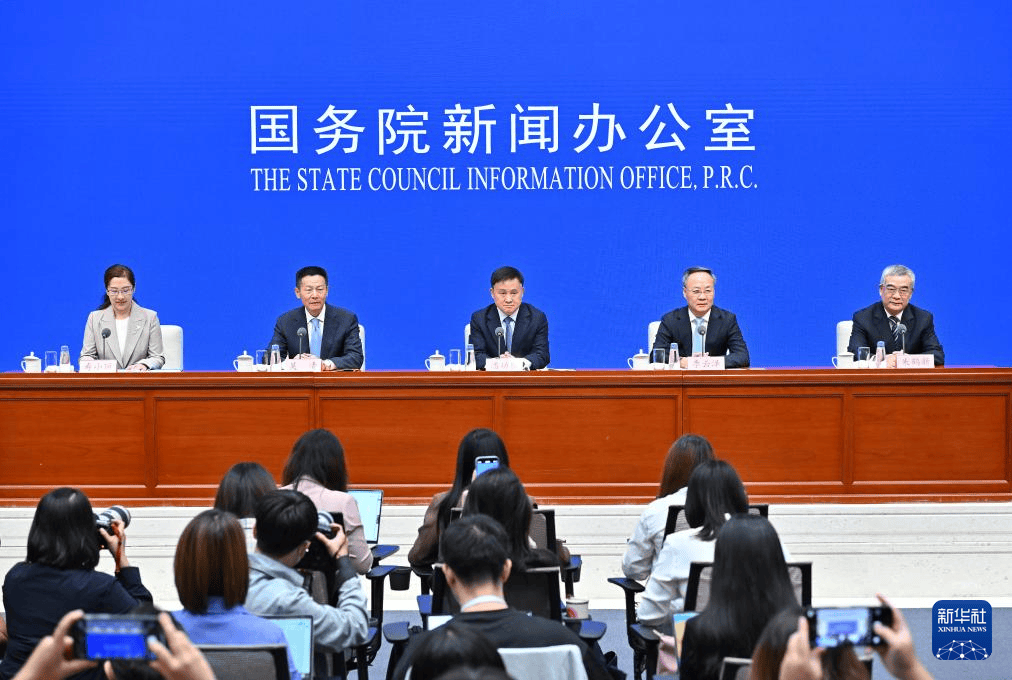
牛市来了还没上车?上天天基金APP搜索777注册即可领500元券包,优选基金10元起投!限 量发放!先到先得! 国务院新闻办公室于2025年9月22日(星期一)下午3时举行"高质量完成'十四五'规划"系列 主题新闻发布会,请中国人民银行行长潘功胜,金融监管总局局长李云泽,中国证监会主席 吴清,中国人民银行副行长、国家外汇局局长朱鹤新介绍"十四五"时期金融业发展成就,并 答记者问。 潘功胜: 今日发布会主要介绍十四五时期金融业发展情况 不涉及短期政策调整 9月22日,在介绍"十四五"时期金融业发展成就时,中国人民银行行长潘功胜在国新办新闻发 布会上表示,今天的新闻发布会的主题是介绍十四五时期金融业的发展情况,主要是从中长 期的视角回顾和总结"十四五",不涉及短期政策的调整,关于"十五五"以及下一步金融改革 的内容,将在中央统一部署后给做进一步沟通。 "十四五"期间我国金融事业取得新的重大成就 央行行长潘功胜9月22日在国新办举行的"高质量完成'十四五'规划"系列主题新闻发布会上介 绍,"十四五"期间,我国金融事业取得新的重大成就。截至今年6月末,我国银行业总资产近 470 万亿 元,位居世界第一;股票、债券市场 ...


潘功胜、李云泽、吴清、朱鹤新发声,信息量很大→
证券时报· 2025-09-22 09:03
作者:孙璐璐 贺觉渊 程丹 秦燕玲 国务院新闻办公室于今日下午3时,举行"高质量完成'十四五'规划"系列主题新闻发布会,中国人民 银行行长潘功胜,金融监管总局局长李云泽,中国证监会主席吴清,中国人民银行副行长、国家外汇 局局长朱鹤新介绍"十四五"时期金融业发展成就,并答记者问。 潘功胜 潘功胜:中国特色现代货币政策框架逐步形成 潘功胜在国新办新闻发布会上表示,"十四五"以来,我国金融服务实体经济质效大幅提升,坚持支持性 的货币政策立场,中国特色的现代货币政策框架逐步形成,政策传导更为有效。 潘功胜:"十四五"时期科技型中小企业贷款、普惠小微贷款、绿色贷款年均增速超过20% 潘功胜表示,"十四五"时期,科技型中小企业贷款、普惠小微、绿色贷款年均增速超过20%。特别是 2024年9月中央政治局会议以来,中国人民银行按照中央部署,出台了一系列货币金融政策举措,有效 稳定市场预期、提振信心,推动经济持续回升向好和高质量发展。 潘功胜:目前我国金融体系总体稳健 潘功胜表示,目前我国金融体系总体稳健,金融机构总体健康,金融市场运行平稳。 潘功胜在国新办新闻发布会上表示,下一步人民银行将以进一步深化改革为动力,加快完善中央 ...

事关十四五时期金融业发展情况,潘功胜、李云泽、吴清、朱鹤新最新发声
Zhong Jin Zai Xian· 2025-09-22 08:40
Core Viewpoint - The press conference highlighted the significant achievements of China's financial sector during the "14th Five-Year Plan" period, emphasizing long-term development rather than short-term policy adjustments [2][4]. Financial Sector Achievements - As of June 2023, China's banking sector total assets reached nearly 470 trillion yuan, ranking first globally, while the stock and bond markets ranked second [2]. - The average annual growth rate of loans to technology-based small and medium-sized enterprises exceeded 20% during the "14th Five-Year Plan" [3]. - The financial system remains generally stable, with healthy financial institutions and smooth market operations [5]. Monetary Policy and Financial Stability - A modern monetary policy framework with Chinese characteristics is gradually taking shape, enhancing policy transmission effectiveness [4]. - The dual objectives of currency stability and financial stability were achieved during the "14th Five-Year Plan" [8]. - The People's Bank of China aims to further explore and expand its macro-prudential and financial stability functions [12]. International Financial Cooperation - China's participation, influence, and voice in international financial governance have significantly increased [6]. - The issuance of Panda bonds by foreign institutions exceeded 1 trillion yuan, indicating growing international engagement [14]. Regulatory Developments - The total assets of the banking and insurance sectors surpassed 500 trillion yuan, with an average growth of over 9% in the past five years [16][17]. - The financial regulatory authority has issued 171 regulations over the past five years, enhancing the regulatory framework [26]. - The number of high-risk small and medium-sized institutions has significantly decreased, with many provinces achieving dynamic clearance of such institutions [19]. Capital Market Developments - The A-share market's annualized volatility decreased by 2.8 percentage points compared to the "13th Five-Year Plan" period, indicating improved market resilience [28]. - The total financing through stock and bond markets reached 57.5 trillion yuan over the past five years, with a steady increase in direct financing's share [32]. - The market capitalization of the technology sector in A-shares now accounts for over one-fourth of the total market [30]. Investor Protection and Market Confidence - The regulatory authority has implemented measures to enhance investor protection, including a comprehensive compensation system for investors [45]. - The confidence of investors and market expectations have significantly improved due to coordinated efforts to stabilize the market [41].
刚刚!潘功胜、李云泽、吴清、朱鹤新重磅发声,信息量巨大
Sou Hu Cai Jing· 2025-09-22 08:29
潘功胜:中国特色现代货币政策框架逐步形成 潘功胜表示,中国特色的现代货币政策框架已初步形成,并不断完善,有效促进了金融总量的合理增长,融资成本的稳步下降,信贷结构的不 断优化,维护了币值稳定。 潘功胜:目前我国金融体系总体稳健 潘功胜表示,目前我国金融体系总体稳健,金融机构总体健康,金融市场运行平稳。 潘功胜:"十四五"时期科技型中小企业贷款、普惠小微贷款、绿色贷款年均增速超过20% 潘功胜表示,"十四五"时期,科技型中小企业贷款、普惠小微、绿色贷款年均增速超过20%。特别是2024年9月中央政治局会议以来,人民银行 按照中央部署,出台了一系列货币金融政策举措,有效稳定市场预期、提振信心,推动经济持续回升向好和高质量发展。 潘功胜:今日发布会主要介绍十四五时期金融业发展情况, 不涉及短期政策调整 潘功胜表示,今天的新闻发布会的主题是介绍十四五时期金融业的发展情况,主要是从中长期的视角回顾和总结"十四五",不涉及短期政策的 调整,关于"十五五"以及下一步金融改革的内容,将在中央统一部署后给做进一步沟通。 9月22日,国务院新闻办公室在北京举行"高质量完成'十四五'规划"系列主题新闻发布会,中国人民银行行长潘功胜 ...
一行一局一会,最新发声
Zheng Quan Shi Bao Wang· 2025-09-22 07:47
潘功胜表示,今天的新闻发布会的主题是介绍十四五时期金融业的发展情况,主要是从中长期的视角回 顾和总结"十四五",不涉及短期政策的调整,关于"十五五"以及下一步金融改革的内容,将在中央统一 部署后给做进一步沟通。 潘功胜:目前我国金融体系总体稳健 潘功胜表示,目前我国金融体系总体稳健,金融机构总体健康,金融市场运行平稳。 潘功胜:"十四五"时期科技型中小企业贷款、普惠小微贷款、绿色贷款年均增速超过20% 潘功胜表示,"十四五"时期,科技型中小企业贷款、普惠小微、绿色贷款年均增速超过20%。特别是 2024年9月中央政治局会议以来,人民银行按照中央部署,出台了一系列货币金融政策举措,有效稳定 市场预期、提振信心,推动经济持续回升向好和高质量发展。 国务院新闻办公室于2025年9月22日(星期一)下午3时举行"高质量完成'十四五'规划"系列主题新闻发布 会,中国人民银行行长潘功胜,金融监管总局局长李云泽,中国证监会主席吴清,中国人民银行副行 长、国家外汇局局长朱鹤新介绍"十四五"时期金融业发展成就,并答记者问。 潘功胜:今日发布会主要介绍十四五时期金融业发展情况,不涉及短期政策调整 潘功胜:中国特色现代货币政策框架 ...
一行一局一会,最新发声
券商中国· 2025-09-22 07:35
Core Viewpoint - The press conference focused on the achievements of the financial industry during the "14th Five-Year Plan" period, emphasizing long-term development rather than short-term policy adjustments [2]. Financial System Stability - The overall financial system in China is stable, with healthy financial institutions and smooth market operations [3]. Loan Growth - During the "14th Five-Year Plan," loans to technology-based small and medium-sized enterprises, inclusive small and micro loans, and green loans grew at an average annual rate of over 20% [4]. Monetary Policy Framework - A modern monetary policy framework with Chinese characteristics has been gradually formed and continuously improved, promoting reasonable growth in financial totals and optimizing credit structure [5]. International Financial Governance - China's participation, influence, and voice in international financial governance have significantly increased, driven by structural reforms in the financial supply side and the development of a multi-level financial market [6]. Central Bank System Improvement - The People's Bank of China will accelerate the improvement of the central bank system to support high-quality economic development [7]. Regulatory Health Indicators - Major regulatory indicators such as non-performing loans, capital adequacy, and solvency are stable and within a healthy range, with a 40% increase in the disposal of non-performing assets compared to the "13th Five-Year Plan" [8][10]. Asset Growth in Banking and Insurance - The total assets of the banking and insurance sectors have exceeded 500 trillion yuan, with an average growth of nearly 9% over the past five years [9][10]. Funding for the Real Economy - The banking and insurance sectors provided an additional 170 trillion yuan in funding to the real economy over the past five years, with significant growth in loans for key areas such as research and technology [11]. Regulatory Effectiveness - Regulatory effectiveness has improved, with a comprehensive regulatory framework established and strict enforcement leading to significant penalties for violations [12][17]. Capital Market Development - The basic system and regulatory logic of the capital market have been comprehensively restructured, supporting stable development [13]. Technology Sector Growth in Capital Markets - The market capitalization of the technology sector in A-shares has exceeded 25%, indicating a significant increase in the market's focus on technology [14]. Direct Financing Growth - In the past five years, the total financing through stock and bond markets reached 57.5 trillion yuan, with a steady increase in the proportion of direct financing [15]. Shareholder Returns - Listed companies distributed over 10.6 trillion yuan in dividends and buybacks, significantly increasing compared to the "13th Five-Year Plan" [16]. Foreign Investment in Domestic Markets - By the end of July, foreign institutions and individuals held over 10 trillion yuan in domestic stocks, bonds, and deposits, indicating robust cross-border investment activity [18]. Foreign Exchange Market Stability - Foreign exchange reserves have remained stable above 3 trillion USD, playing a crucial role in economic stability [20].
以金融“五篇大文章”书写时代发展答卷,华商基金以专业与担当积极参与金融强国建设
Xin Lang Ji Jin· 2025-09-15 06:42
"五篇大文章"既写于纸上,更落于实处。近年来,华商基金通过一系列具体实践,将金融服务的触角延 伸至国家发展的关键节点与民生关切的核心领域。在支持科技创新方面,公司旗下多只主题权益基金重 点配置"专精特新"企业与硬核科技公司,用自身力量助力一批具有核心技术的中小企业走向资本市场; 在服务绿色转型方面,华商基金积极探索和推动适合中国本土化的ESG应用,持续关注在环境保护、社 会责任和公司治理等领域表现优秀的企业;在助力普惠小微方面,公司通过降费让利、优化服务、科技 赋能等手段,降低投资者参与门槛,提升金融服务可及性;在发展养老产业方面,华商基金积极开展养 老金融知识普及,推动养老金融服务"适老化"升级;在推动数字金融方面,公司持续加大金融科技投 入,打造线上服务平台,提升客户体验与服务效率。依托金融"五篇大文章"顶层设计指引,华商基金正 在努力做到"五位一体、全面发展"。 专题:北京公募基金高质量发展系列活动 新时代、新基金、新价值 2025年,是"十五五"规划谋篇布局之年,也是我国迈向社会主义现代化新征程承上启下的关键节点,科 学编制金融业发展规划,深化金融供给侧结构性改革,已经成为落实国家重大战略、推动金融高 ...