
金融治理体系和治理能力现代化

Search documents
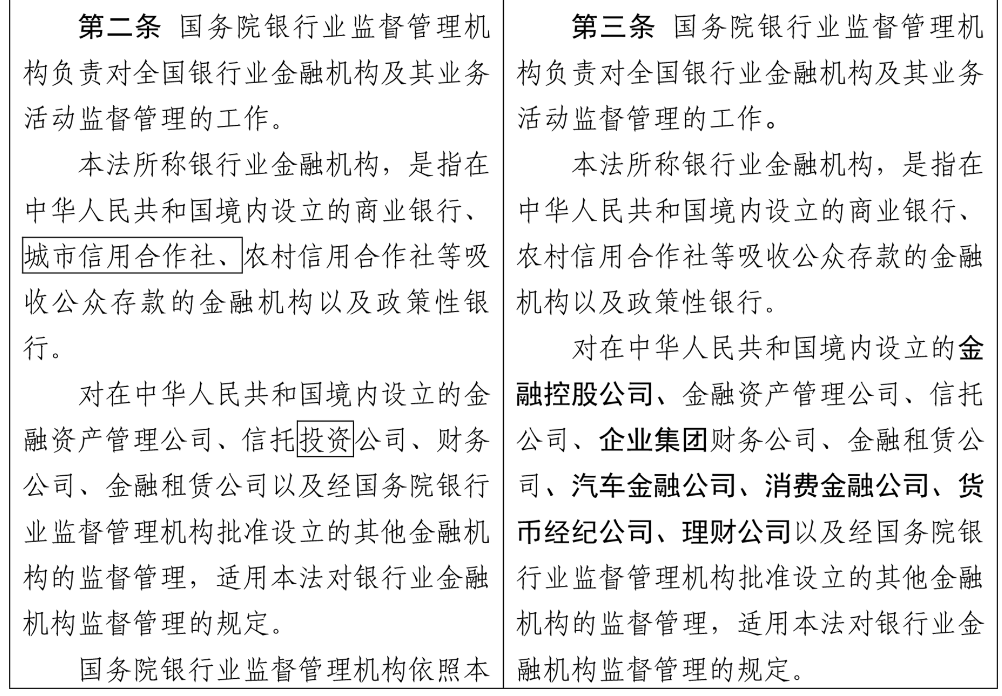
银行业监督管理法迎“系统升级” 丰富风险处置“工具箱” 提升监管有效性
Jin Rong Shi Bao· 2025-12-30 02:04
Core Viewpoint - The recent draft amendment to the "Banking Supervision Law of the People's Republic of China" aims to enhance regulatory frameworks and improve the effectiveness of financial governance in the banking sector, reflecting a significant upgrade in the regulatory system to address evolving risks and challenges in the industry [1][2][3]. Group 1: Regulatory Enhancements - The draft amendment expands the existing law from 52 to 80 articles, focusing on comprehensive regulatory coverage, including shareholders and actual controllers, to ensure a full-chain regulatory system [3][4]. - It introduces a full-process regulatory system for shareholders, enhancing oversight to prevent misconduct such as false capital contributions and improper related transactions [4][5]. - The regulatory focus is shifting from merely licensed institutions to encompass critical relationships and processes that underpin banking operations, thereby broadening the scope of regulatory oversight [5]. Group 2: Risk Management and Response - The amendment establishes a robust risk management framework, including early warning and intervention mechanisms, to address potential risks in banking institutions [6][7]. - It aims to enhance the toolbox for risk resolution, allowing regulatory authorities to employ various measures such as restructuring and takeover based on the risk status of institutions [6][7]. - The focus on risk management is designed to ensure timely intervention and minimize the costs associated with financial crises [7]. Group 3: Penalties and Compliance - The draft significantly increases penalties for financial violations, targeting key individuals and actions that pose risks to financial stability, thereby enhancing the deterrent effect of regulatory measures [8]. - It introduces stricter administrative penalties and expands the scope of responsible parties, aiming to elevate compliance standards within the banking sector [8]. - The amendment emphasizes the importance of regulatory effectiveness, which relies on clear enforcement capabilities and the ability to deter non-compliance through increased penalties [8].
银行业监督管理法迎20年来最大修订!穿透式监管覆盖股东、实控人
Xin Lang Cai Jing· 2025-12-29 14:07
Core Viewpoint - The draft amendment to the Banking Supervision and Administration Law, which significantly expands the regulatory framework from 52 to 80 articles, aims to enhance the supervision of the banking industry, address new challenges, and protect consumer rights [1][2]. Group 1: Regulatory Enhancements - The amendment focuses on strengthening institutional, behavioral, functional, and continuous supervision, aiming to eliminate regulatory gaps and improve the effectiveness and precision of oversight [2]. - The regulatory scope will cover the entire chain of banking operations, extending beyond licensed institutions to include key relationships and processes that underpin their operations [3]. Group 2: Inclusion of Stakeholders - The amendment extends the regulatory chain to include major shareholders and actual controllers of banking institutions, establishing a comprehensive regulatory framework that addresses potential risks from these entities [5]. - New requirements for major shareholders and actual controllers include stricter entry standards, enhanced transparency in ownership structures, and obligations related to capital contributions [6]. Group 3: Increased Penalties and Consumer Protection - The draft significantly raises the costs of violations, enhancing administrative penalties and expanding the scope of legal responsibilities to include not only institutions but also individuals such as employees and major shareholders [8]. - Specific provisions for consumer protection have been added, mandating oversight of consumer rights by the banking regulatory authority and establishing a legal basis for consumer dispute resolution [9].

人民银行副行长陶玲:在法治轨道上推进金融高质量发展|宏观经济
清华金融评论· 2025-11-27 09:18
Core Viewpoint - The article emphasizes the importance of advancing financial legal development on the legal track to achieve high-quality financial growth in China, aligning with the goals set forth in the 15th Five-Year Plan [2][3]. Group 1: Financial Legal System Construction - The construction of a scientific and complete financial legal system is essential, focusing on foundational financial laws, central bank legal systems, financial stability laws, and financial regulatory laws [2][12]. - Strengthening the legal framework for financial stability is crucial, with ongoing efforts to draft a financial stability law aimed at comprehensive risk prevention and management [13][14]. Group 2: Financial Governance and Regulation - The article highlights the need for modernizing the financial governance system and enhancing governance capabilities, ensuring that financial institutions operate in compliance with laws and regulations [6][10]. - It stresses the importance of strict financial regulation and enforcement, advocating for the revision of existing laws to adapt to the evolving financial landscape [14][15]. Group 3: International Financial Law - Enhancing international financial legal frameworks is necessary for promoting high-level openness and addressing external risks, including money laundering and financial sanctions [14][10]. - The article calls for active participation in international rule-making and cooperation in law enforcement to safeguard national interests [14][15]. Group 4: Financial Legal Talent Development - Building a competent financial legal workforce is vital, focusing on training professionals who are well-versed in both finance and law [15]. - The article emphasizes the need for leadership in financial institutions to adopt a strong legal mindset and enhance their legal capabilities [15].

“十五五”金融法治建设聚焦七大重点方向
2 1 Shi Ji Jing Ji Bao Dao· 2025-11-27 04:47
Core Viewpoint - The article emphasizes the importance of advancing financial legal construction on the rule of law track to promote high-quality financial development in China, highlighting the need for a correct political direction and practical reforms [1][2]. Financial Legal Construction Challenges - Financial legal construction must focus on six key dimensions: maintaining a correct political direction, prioritizing the people, aiming for a strong financial nation, modernizing governance systems, deepening structural reforms, and ensuring financial stability [2][3]. - Historical practices have led to the establishment of a basic legal framework for financial operations, with significant laws enacted since 1995, including the People's Bank of China Law and the Securities Law [2][3]. Historical Experience in Financial Legal Construction - Four major experiences have shaped China's financial legal construction: 1. Legislative processes have accompanied financial reforms, ensuring laws support and regulate these changes [3]. 2. Financial operational rules have been codified into law, reflecting national conditions and international practices [3]. 3. The legal framework protects the rights of various financial entities while embodying the essence of a socialist market economy [3]. 4. A systemic view of financial work has been established, balancing central and local responsibilities [3]. Future Directions for Financial Legal Construction - The upcoming "15th Five-Year Plan" will address new challenges, including external pressures and the need for financial stability amid economic adjustments [4][5]. - Seven key focus areas for financial legal construction have been identified, including foundational financial laws, central bank legal systems, and financial stability laws, with significant legislative efforts underway [5][6]. Key Areas for Legal System Development - The construction of financial regulatory legal systems must adapt to the current regulatory framework involving multiple financial authorities, necessitating updates to various financial laws [6]. - Enhancing foreign financial legal frameworks is crucial for balancing development and security, as well as participating in international rule-making [6]. - Building enforcement capabilities and a skilled legal workforce is essential for effective financial law implementation [7].
中国人民银行行长潘功胜:我国金融治理体系和治理能力现代化迈上新台阶
Zheng Quan Ri Bao· 2025-09-22 16:11
Core Achievements of China's Financial Sector During the 14th Five-Year Plan - The financial system reform has deepened significantly, with the establishment of the Central Financial Committee and the Central Financial Work Committee to enhance centralized leadership over financial work [2] - The quality and efficiency of financial services to the real economy have improved markedly, with a supportive monetary policy framework aiding in the achievement of major economic and social development goals [3] - The financial sector has seen continuous reform and opening-up, with structural reforms in financial supply and a focus on high-level bilateral openness [3] - Important progress has been made in preventing and resolving financial risks, with effective measures taken to address prominent risk points in the financial sector [4] Monetary Policy and Financial Stability - The People's Bank of China has focused on establishing a dual-pillar framework for monetary and macro-prudential policy, aiming for both currency stability and financial stability [5] - A scientific and robust monetary policy system has been constructed, optimizing the monetary policy framework and enhancing the effectiveness of monetary policy tools [5] - The macro-prudential policy framework has been improved, with enhanced monitoring and management of systemic financial risks [5] Development of Financial Markets - The financial market infrastructure has been strengthened, with the introduction of a "Technology Board" in the bond market and a multi-tiered bond market framework being established [6] - The financial market has seen a steady expansion in product offerings, scale, and activity, with comprehensive strengthening of regulations and oversight [6] - Efforts are ongoing to build a higher-level open financial system, promoting the internationalization of the Renminbi and enhancing cross-border payment systems [6]
高质量完成“十四五”规划|综合实力更加雄厚 服务质效显著提升——国新办发布会聚焦“十四五”时期金融业发展成就
Sou Hu Cai Jing· 2025-09-22 14:30
Core Insights - The financial sector in China has significantly strengthened its comprehensive capabilities and improved service quality during the "14th Five-Year Plan" period, showcasing enhanced international competitiveness and influence [1][2]. Group 1: Industry Strength - As of June 2023, China's banking sector total assets reached nearly 470 trillion yuan, ranking first globally; the stock and bond market sizes are second in the world; and foreign exchange reserves have maintained the top position for 20 consecutive years [2]. - The financial system has undergone comprehensive reforms, with a modernized governance structure and improved regulatory capabilities, leading to a solidified position as the largest global credit market and the second-largest insurance market [2][5]. Group 2: Financial Services to the Real Economy - Over the past five years, the banking and insurance sectors have provided an additional 170 trillion yuan in funding to the real economy through various financing methods [3]. - The total financing from the exchange market for stocks and bonds reached 57.5 trillion yuan, with the direct financing ratio increasing by 2.8 percentage points to 31.6% compared to the end of the "13th Five-Year Plan" [3]. - The balance of inclusive loans to small and micro enterprises reached 36 trillion yuan, 2.3 times that of the end of the "13th Five-Year Plan," with interest rates decreasing by 2 percentage points [3]. Group 3: Risk Prevention and Resolution - The financial system remains generally stable, with significant reductions in the number of high-risk institutions and assets, making risks manageable [5]. - The A-share market has shown enhanced resilience and risk resistance, with the annualized volatility of the Shanghai Composite Index at 15.9%, down 2.8 percentage points from the "13th Five-Year Plan" period [5]. Group 4: Ongoing Financial Reform and Opening-up - Continuous promotion of supply-side structural reforms in finance, including the deepening of reforms in the Sci-Tech Innovation Board and the Growth Enterprise Market, has been emphasized [6]. - By the end of August 2023, various long-term funds held approximately 21.4 trillion yuan in A-share market value, a 32% increase from the end of the "13th Five-Year Plan" [6]. - The financial sector has seen significant foreign participation, with 43 of the world's top 50 banks establishing operations in China and over 10 trillion yuan held by foreign institutions and individuals in domestic stocks, bonds, and deposits [6].
“十四五”时期金融业发展成就——我国金融治理体系和治理能力现代化迈上新台阶
Ren Min Wang· 2025-09-22 10:02
Core Insights - During the "14th Five-Year Plan" period, China's financial sector has achieved significant milestones, including total banking assets nearing 470 trillion yuan, ranking first globally, and maintaining the world's largest foreign exchange reserves for 20 consecutive years [1][2] Financial System Reform - The Chinese government has implemented a series of transformative reforms in financial leadership and regulatory systems, establishing the Central Financial Committee and the Central Financial Work Committee to enhance centralized leadership [2] - A modern financial system is being constructed to promote high-quality development in the financial sector [2] Financial Services to the Real Economy - The People's Bank of China has adopted a supportive monetary policy stance, leading to the formation of a modern monetary policy framework that effectively supports the main goals of economic and social development during the "14th Five-Year Plan" [2] - Financial support for technology-driven small and medium-sized enterprises, inclusive micro and small loans, and green loans has seen an annual growth rate exceeding 20% [2] Financial Industry Reform and Opening Up - Continuous promotion of supply-side structural reforms in finance, deepening institutional reforms, and developing multi-tiered financial markets are key focuses [2] - The financial sector is experiencing a steady push for high-level bilateral opening up, enhancing the level of institutional openness and increasing participation in international financial governance [2] Risk Prevention and Mitigation - The People's Bank of China has effectively addressed several prominent risk points in the financial sector, safeguarding the interests of depositors and small investors [3] - The overall financial system remains stable, with healthy financial institutions and smooth market operations [3] Lessons Learned - The achievements of the past five years in China's financial sector provide valuable lessons that should be consistently applied, emphasizing the importance of serving the real economy and preventing financial risks [3]
“十四五”时期金融业发展成就—— 我国金融治理体系和治理能力现代化迈上新台阶
Ren Min Wang· 2025-09-22 09:18
Core Viewpoint - During the "14th Five-Year Plan" period, China's financial sector has achieved significant milestones, including becoming the world's largest banking asset holder and maintaining the largest foreign exchange reserves for 20 consecutive years [1][2]. Financial System Reform - The Chinese government has implemented a series of transformative reforms in the financial leadership and regulatory systems, establishing the Central Financial Committee and the Central Financial Work Committee to enhance centralized leadership [2]. - A modern financial system is being constructed to promote high-quality development in the financial sector [2]. Financial Services to the Real Economy - The People's Bank of China has adopted a supportive monetary policy stance, leading to the formation of an effective modern monetary policy framework that aids in achieving the main goals of economic and social development during the "14th Five-Year Plan" [2]. - Financial support for technology-driven small and medium-sized enterprises, inclusive microfinance, and green loans has seen an annual growth rate exceeding 20% [2]. Financial Industry Reform and Opening Up - Continuous promotion of supply-side structural reforms in finance, deepening institutional reforms, and developing multi-tiered financial markets are key focuses [2]. - There is a steady push for high-level bilateral financial openness, enhancing the level of institutional openness and increasing participation in international financial governance [2]. Risk Prevention and Mitigation - The People's Bank of China has effectively addressed several prominent risk points in the financial sector, safeguarding the interests of depositors and small investors [3]. - The overall financial system remains stable, with healthy financial institutions and smooth market operations [3]. Lessons Learned - The achievements of the past five years in China's financial sector provide valuable lessons that should be consistently applied [3]. - Emphasis on serving the real economy, preventing and mitigating financial risks, and adhering to market-oriented and legal frameworks are essential for future financial governance [3].
中国人民银行行长潘功胜:“十四五”时期我国金融事业取得新的重大成就
Xin Hua Cai Jing· 2025-09-22 09:18
Core Viewpoint - The Chinese financial sector has achieved significant progress over the past five years, particularly in financial system reform, service quality, risk management, and international competitiveness [1][2][3]. Group 1: Financial System Reform - Financial system reforms have deepened, with the establishment of the Central Financial Committee and the Central Financial Work Committee to enhance centralized leadership [2]. - The modernization of the financial system is being accelerated to align with the key elements required for a strong financial nation [2]. Group 2: Financial Services to the Real Economy - The effectiveness of financial services to the real economy has significantly improved, with a supportive monetary policy framework aiding in achieving the main goals of the 14th Five-Year Plan [2]. - During the 14th Five-Year period, loans to technology-based SMEs, inclusive small and micro enterprises, and green loans have seen an annual growth rate exceeding 20% [2]. Group 3: Financial Industry Reform and Opening Up - Continuous progress in financial supply-side structural reform and the development of a multi-tiered financial market is being made [2]. - The level of openness in the financial industry is being enhanced, with increased participation and influence in international financial governance [2]. Group 4: Risk Prevention and Mitigation - Important achievements have been made in preventing and mitigating financial risks, with effective measures taken to address prominent risk points in the financial sector [3]. - The overall stability of the financial system and health of financial institutions have been maintained, ensuring smooth operation in the financial markets [3].
潘功胜:我国金融治理体系和治理能力现代化迈上新台阶
Xin Lang Cai Jing· 2025-09-22 07:17
Core Insights - The People's Bank of China (PBOC) Governor Pan Gongsheng highlighted significant achievements in China's financial sector under the strong leadership of the Central Committee, emphasizing comprehensive deepening of financial system reforms and modernization of financial governance [1] Group 1: Financial System Reforms - Financial system reforms have been further deepened, with improved top-level design and a more robust financial governance framework [1] - The variety and competitiveness of financial institutions, markets, and products have been enhanced, leading to significant improvements in the quality, efficiency, and inclusiveness of financial services [1] Group 2: Financial Risk Management - Key financial risks in critical areas have been systematically resolved, maintaining a baseline to prevent systemic financial risks [1] - The PBOC has implemented a series of monetary and financial policies since the Central Political Bureau meeting in September 2024, effectively stabilizing market expectations and boosting confidence [1] Group 3: Financial Sector Growth - As of June this year, China's banking sector total assets reached nearly 470 trillion yuan, ranking first in the world; stock and bond market sizes rank second globally; and foreign exchange reserves have been the largest in the world for 20 consecutive years [1] - During the 14th Five-Year Plan period, loans to technology-based small and medium-sized enterprises, inclusive micro and small loans, and green loans have seen an average annual growth rate exceeding 20% [1] Group 4: International Competitiveness and Innovation - China's financial sector has accelerated its opening-up, significantly enhancing its international competitiveness and influence [1] - The country is at the forefront of green finance, inclusive finance, and digital finance, having established a comprehensive, secure, and efficient cross-border payment and clearing network for the renminbi [1]