
乡村全面振兴

Search documents
传达学习习近平总书记重要指示精神 研究“十五五”规划《纲要草案》编制等工作
Zheng Zhou Ri Bao· 2026-01-09 00:50
Group 1 - The meeting emphasized the importance of modernizing agriculture and rural areas, aiming for comprehensive rural revitalization and urban-rural integration [1] - It highlighted the need to ensure food security, maintain arable land boundaries, and enhance agricultural production capacity and quality [1] - The meeting discussed the importance of consolidating poverty alleviation achievements and implementing policies to increase farmers' income while preventing large-scale poverty [1] Group 2 - The meeting addressed the preparation of the city's "14th Five-Year" planning outline, stressing the incorporation of national and local strategic intentions [2] - It called for setting indicators, arranging policies, and planning projects to achieve qualitative and reasonable quantitative economic growth [2] - The meeting focused on addressing wage arrears, emphasizing a people-centered development approach and the need for coordinated actions to resolve wage disputes [2]
新年贺词里的“小家”与“大家”
Yang Shi Wang· 2026-01-08 08:48
Group 1 - The core message of the New Year address emphasizes the connection between the warmth of individual families ("small homes") and the prosperity of the nation ("big home") [2][3] - The address highlights improvements in the rights of new employment groups, convenience for the elderly, and increased subsidies for families with children [3] - The focus on addressing the needs and concerns of citizens is evident, with initiatives aimed at enhancing the quality of life for various demographics, including the elderly and families [4][6] Group 2 - Economic growth is underscored, with China being recognized as one of the fastest-growing economies in terms of innovation, and the GDP reaching significant milestones [7] - Specific economic data includes Tibet's GDP reaching its second trillion yuan in just six years and Xinjiang's GDP surpassing 2 trillion yuan, marking a 204.3 times increase since 1955 [7] - The year 2025 is characterized as a pivotal year for China's economy, with an expected GDP of 140 trillion yuan, reflecting advancements in technology and quality of life improvements [9]

在打造“五个中心”中勇挑重担 以改革创新推进城乡融合和区域联动发展
Chang Jiang Ri Bao· 2026-01-08 07:39
Group 1 - The core message emphasizes the importance of implementing the spirit of Xi Jinping's important speech during his visit to Hubei and the Central Economic Work Conference, focusing on reform, innovation, and regional development [1][2] - The government work report is recognized as comprehensive and inspiring, with a scientific and pragmatic approach to future work, highlighting urban renewal, technological innovation, and industrial transformation [1][2] Group 2 - The four districts of Hanyang, Caidian, Hannan, and Dongxihu are urged to align with the city's overall development strategy, leveraging their strengths to promote high-quality growth [3] - Key strategies include driving domestic demand, enhancing investment, and fostering innovation across traditional and emerging industries, while also focusing on urban-rural integration and resource sharing [3] - The report stresses the importance of maintaining a balance between improving people's livelihoods and promoting consumption and investment, alongside advancing rural revitalization [3]
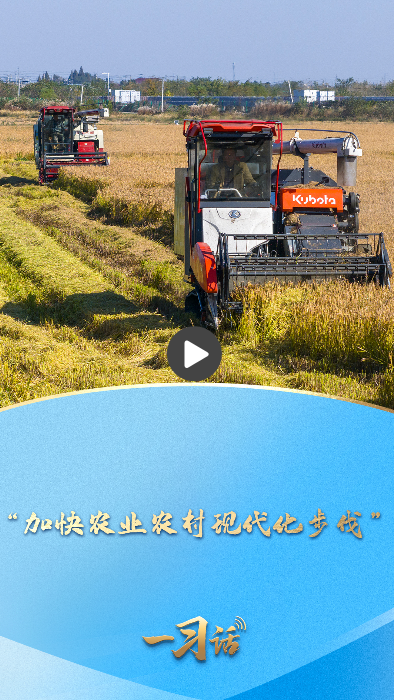
一习话·迈向“十五五”|“加快农业农村现代化步伐”
Yang Guang Wang· 2026-01-08 06:45
Core Viewpoint - The article emphasizes the importance of accelerating agricultural and rural modernization as part of China's overall modernization strategy, highlighting the need for comprehensive rural revitalization and urban-rural integration [2] Group 1: Agricultural Modernization - The "14th Five-Year Plan" suggests a clear focus on advancing agricultural and rural modernization, which is crucial for the overall modernization of China [2] - The year 2026 marks the beginning of the "14th Five-Year Plan," indicating a pivotal moment for agricultural development [2] Group 2: Policy and Implementation - The central rural work conference recently held in Beijing underscored the significance of enhancing grain production and improving policies that benefit farmers [2] - There is a commitment to consolidate and expand the achievements of poverty alleviation, ensuring that large-scale poverty does not reoccur [2] Group 3: Strategic Goals - The article outlines the necessity of building a strong agricultural nation as part of the broader modernization efforts [2] - It stresses the importance of continuing to focus on "three rural issues" (agriculture, rural areas, and farmers) without any slackening in efforts [2]
促进城乡区域协调发展,推动乡村全面振兴
Xin Hua Ri Bao· 2026-01-07 19:07
Core Viewpoint - The article emphasizes the importance of promoting coordinated urban-rural development and enhancing regional integration, particularly in the Yangtze River Delta and the Yangtze Economic Belt, while focusing on the revitalization of rural areas and the construction of key functional zones in the province [1][5]. Group 1: Urban-Rural Coordination and Development - Yixing City is transforming the 23 Bay scenic area to enhance its appeal, leading to increased tourist traffic and local economic benefits, with local specialties generating significant income for residents [2][3]. - The planning initiative "Bamboo Waves Without Boundaries" aims to integrate cultural and tourism resources, enhancing the area's infrastructure and visitor experience [3][6]. - The transformation of 23 Bay serves as a model for Yixing's broader strategy of urban-rural coordination and rural revitalization, with a focus on regional planning and resource optimization [5][6]. Group 2: Economic Impact and Community Benefits - The collective operating income of the village is projected to reach 1.0585 million yuan, with total income at 6.9743 million yuan, reflecting a steady increase in residents' disposable income [4]. - The integration of tourism and agriculture is creating diverse income channels for villagers, including employment, market stalls, and hospitality services, contributing to overall economic growth [6][7]. - Yixing has recognized 54 villages as "Beautiful and Livable Villages," showcasing the success of collaborative development efforts and enhancing the rural revitalization narrative [6]. Group 3: Planning and Resource Management - The provincial government is committed to improving the planning framework and resource management to support urbanization and rural revitalization, focusing on optimizing land use and enhancing infrastructure [7][8]. - A comprehensive "four-level three-type" spatial planning system is being implemented to ensure effective resource allocation and development coordination across regions [8].
激活县域经济高质量发展新动能
Shan Xi Ri Bao· 2026-01-07 00:51
Core Viewpoint - The development of county economies in Shaanxi is a strategic approach to reduce urban-rural disparities and enhance regional economic quality, with a target county economic total of 1.68 trillion yuan by 2024 [1] Group 1: County Economic Development - Shaanxi has implemented targeted policies for high-quality county economic development, including "double ten measures" and tailored strategies for each county [1] - By 2024, the average county economic output is expected to exceed 20 billion yuan, with 27 counties achieving a GDP over 20 billion yuan [1] - The provincial government emphasizes the importance of new urbanization and rural revitalization, aiming to create a county economic system centered around county towns and small towns [1] Group 2: Cultural and Tourism Integration - Blue Tian County has successfully integrated cultural heritage with tourism, creating a unique cultural tourism experience that attracts visitors [2] - The county leverages its rich cultural background to develop a comprehensive tourism model that includes technology and industry [2] - The "14th Five-Year Plan" encourages the development of distinctive county economies, guiding high-quality economic growth [2] Group 3: Industry Specialization - Counties are focusing on specialized industries based on their resource advantages, with metal magnesium production and agricultural products leading the way [4] - For example, Fugu County is the largest global producer of metal magnesium, while Dali County's winter jujube production has surpassed 700,000 tons [4] - Counties are enhancing their industrial chains and value chains to find unique development paths [4] Group 4: Green Development - Shaanxi prioritizes ecological and green development, with initiatives like the integration of money oranges and selenium-rich tea to boost local economies [5] - The province aims for a green, low-carbon transformation in economic development, promoting a cycle where ecological benefits support economic growth [5] - Ankang City exemplifies this approach, with over 73% of its industrial output coming from green industries [6] Group 5: Enhancing Public Welfare - The county economy serves as a crucial link between urban and rural areas, focusing on improving the quality of life for residents [7] - Shaanxi has invested significantly in urbanization and public services, enhancing the living standards and infrastructure in counties [7] - Initiatives include vocational training for over 2.34 million people and the construction of over 6,000 educational institutions [8] Group 6: Future Outlook - Looking ahead to the "15th Five-Year Plan," Shaanxi aims to continue expanding county economies and improving public service equality [9]
一份外卖里的城乡融合新叙事
Xin Lang Cai Jing· 2026-01-06 22:38
Core Insights - The expansion of instant delivery services into rural areas is transforming lifestyles, with over 2,000 counties in China now covered by food delivery services, and a compound annual growth rate of over 40% in rural food delivery orders in recent years [1][2] Group 1: Economic Impact - The entry of food delivery services into villages stimulates local economic activity by providing new revenue streams for small shops and family restaurants, while also creating flexible job opportunities for local delivery riders [1] - Rural delivery services enhance the quality of life for residents, offering a sense of modernity and convenience similar to urban living, and allowing young people working away from home to connect with their families through food delivery [1][2] Group 2: Infrastructure and Support - The growth of food delivery in rural areas is supported by improved infrastructure and public services, including rural road connectivity, deep mobile network coverage, and widespread cold chain logistics [2] - Challenges remain, such as the digital divide for elderly residents and logistical issues in remote areas, highlighting the need for tailored delivery solutions and improved accessibility [2] Group 3: Broader Implications - The integration of modern services, such as live-streaming sales and telemedicine, is enhancing rural development and improving the quality of life, while also influencing the industrial structure and social landscape of rural areas [2] - The ultimate goal is to ensure that rural areas can meet modern living standards, necessitating ongoing efforts to provide high-quality, sustainable services to these communities [3]
王予波:解放思想真抓实干推进项目攻坚做强特色产业
Xin Lang Cai Jing· 2026-01-06 20:32
Group 1 - The emphasis on deep integration of technological innovation and industrial innovation is crucial for developing new productive forces [1] - The company KunGong Hengda, a specialized "little giant" in aluminum-based lead-carbon energy storage batteries, is encouraged to consolidate its technological advantages and expand market space [1] - The global first megawatt-level air thermal cycle energy storage pilot system developed by Guodian Investment Group is progressing well, with encouragement for application scenarios to drive the development of the equipment manufacturing industry [1] Group 2 - The focus on the agricultural sector is essential for rural revitalization, with a call to strengthen facility agriculture and develop courtyard and forest economy based on local conditions [2] - The importance of rural tourism development is highlighted, with an emphasis on benefiting farmers and preserving rural culture and landscape [2] - The need for continuous industrial development in Qujing City is stressed, leveraging energy resource advantages and attracting talent through various initiatives [2]
新华时评·一线评论|“过账”“注水”,这样的农村集体经济要警惕!
Xin Hua She· 2026-01-06 03:09
Core Viewpoint - The article emphasizes the need for vigilance against inflated rural collective economic income, highlighting that many reported revenues are not genuinely available for village expenditures and are often just "paper income" or "over-accounting" [1][2]. Group 1: Current State of Rural Collective Economy - Many regions are experiencing a peak in rural collective economic income and expenditure settlements, but only a small portion of the income is genuinely usable for village-level expenditures [1]. - Some areas include funds from higher-level government infrastructure investments as part of collective economic income, which do not contribute to actual revenue generation [1]. - Instances of fictitious land rental contracts have been reported, where rental income is recorded but immediately returned, leading to inflated income figures that do not reflect true financial health [1]. Group 2: Challenges and Issues - The phenomenon of "watered-down" income is attributed to bureaucratic and formalistic practices, with some regions applying a one-size-fits-all approach to assess collective economic income, disregarding local resource endowments and development foundations [2]. - Insufficient transparency and oversight in village affairs allow for the perpetuation of inflated income reporting, as there is a lack of verification regarding the authenticity of reported revenues [2]. Group 3: Recommendations for Improvement - To eliminate the issue of inflated rural collective economic income, it is recommended that local authorities provide more practical policy support and guidance for industry development, rather than relying on arbitrary directives [2]. - Enhancing and implementing mechanisms for public oversight of village affairs is crucial, focusing on discovering local resources and cultivating distinctive industries to generate real income [2]. - Genuine income growth is essential for supporting comprehensive rural revitalization, necessitating a shift from superficial reporting to tangible economic development outcomes [2].
国务院国资委:加强农业关键核心技术攻关和科技成果高效转化应用 提升农业供给保障能力
智通财经网· 2026-01-05 10:49
Core Viewpoint - The State-owned Assets Supervision and Administration Commission (SASAC) emphasizes the importance of supporting agricultural development and rural revitalization, focusing on key areas such as biotechnology, agricultural machinery, and food security [1][2]. Group 1: Agricultural Development - The meeting highlighted the need for SASAC to enhance its role in agricultural development, particularly in biotechnology, agricultural machinery, pesticides, fertilizers, and increasing grain production [1][3]. - There is a strong emphasis on improving agricultural supply security, technological innovation capabilities, sustainable development, and the ability to utilize international resource markets [3]. Group 2: Rural Revitalization - SASAC aims to transition from temporary assistance to a normalized support phase for rural areas, ensuring that assistance effectively benefits local communities and prevents large-scale poverty [3]. - The commission plans to support the cultivation of county-level industries that benefit farmers and improve their participation in industrial development [3]. Group 3: Infrastructure and Governance - The meeting discussed the importance of enhancing rural infrastructure and living conditions, drawing on the "Ten Million Project" experience to improve rural governance and cultural standards [1][3]. - There is a focus on increasing the quality and effectiveness of rural talent training and development [1][3].