
生物制造

Search documents
沪指再创10年新高,新的一年把握哪些投资主线?
Sou Hu Cai Jing· 2026-01-07 06:57
Group 1 - The A-share market reached a new record on January 6, with the Shanghai Composite Index closing at 4083.67 points, marking a 1.5% increase and a 13-day consecutive rise, surpassing the previous record of 12 days set in 1992 [1] - Multiple positive factors contributed to this "opening red" phenomenon, including coordinated fiscal and monetary policies, which improved fundamental expectations, and a shift in market sentiment as new capital began to enter the market [1] - The performance of technology companies over the past six months has significantly boosted investor confidence, with many firms demonstrating strong profitability [1] Group 2 - Institutions generally hold an optimistic view on the A-share market's future performance, attributing the current trend to a combination of favorable policies, capital influx, solid fundamentals, and industry trends [2] - The investment focus for the new year is expected to revolve around technology sectors such as AI, semiconductor equipment, and brain-computer interfaces, reflecting optimism about technological breakthroughs and industry implementation [2] - Investors are advised to adopt a long-term perspective, focusing on new productive forces like artificial intelligence, high-end manufacturing, and biomanufacturing, while being cautious of short-term volatility [2] Group 3 - Investors are encouraged to anchor their strategies on fundamentals and cash flow, avoiding high-valuation stocks without performance support and low-valuation traps lacking improvement expectations [3] - A "barbell" strategy is recommended, balancing investments between low-risk assets and high-risk, high-reward assets to manage current market conditions [3] - The goal is to achieve a comprehensive allocation strategy that controls short-term risks, captures mid-term recovery, and fosters long-term growth [3]
新赛道升级 塑造发展新优势
Jing Ji Ri Bao· 2026-01-06 22:35
Core Insights - The "15th Five-Year Plan" emphasizes the cultivation and expansion of emerging and future industries, aiming to create new pillar industries and strategically position future industries for growth [1] Group 1: Emerging Industries - During the "14th Five-Year Plan," China's emerging industries accelerated development, forming significant scale effects with several trillion-yuan market opportunities emerging by 2025 [2] - The commercial aerospace industry is on the verge of explosion, with advancements such as the successful launch of the Zhuque-3 rocket and accelerated deployment of satellite internet constellations [2] - The low-altitude economy is entering a commercial phase, marked by the issuance of operational certificates for manned civil unmanned aerial vehicles and the promotion of typical application scenarios by the Ministry of Transport [2] - New materials are crucial for breakthroughs in aerospace performance, with innovations in high-strength stainless steel and carbon fiber composites being utilized in key projects [2] Group 2: Energy Transition - China's energy transition has accelerated, establishing the world's largest power infrastructure and renewable energy systems, with plans to increase the share of renewable energy significantly by 2026 [3] - The "15th Five-Year Plan" aims to enhance emerging pillar industries, focusing on innovation in sectors like renewable energy, new materials, aerospace, and low-altitude economy [3] Group 3: Future Industries - Rapid advancements in future industries such as artificial intelligence, quantum information, and biomanufacturing have been noted, with significant breakthroughs achieved during the "14th Five-Year Plan" [4] - The development of 6G technology is prioritized, with expectations for commercial applications to begin around 2030, indicating a deep integration with AI [4][5] - Future industries are characterized by their potential to create new demands and economic forms, with quantum technology and nuclear fusion energy expected to play pivotal roles [6] Group 4: Market Opportunities and Challenges - Emerging industries are entering a rapid growth phase, with key scenarios being validated and replicable business models established, while future industries are still in the exploratory phase [7] - The uncertainty in future industries stems from both technological and commercial aspects, requiring significant R&D investment and policy support [8] - The collaboration between emerging and future industries is essential for driving new economic engines, with a focus on innovation and long-term value creation [9]
新赛道活力迸发 塑造经济发展新优势
Zheng Quan Ri Bao· 2026-01-06 16:28
Core Insights - During the "14th Five-Year Plan" period, China has made significant strides towards high-level technological self-reliance, with emerging and future industries showing robust vitality and growth potential [1][3] Emerging Industry Development - The emerging industries in China have rapidly developed and formed scale effects, with multiple trillion-yuan markets accelerating formation [2] - By 2025, China's commercial aerospace industry is on the brink of explosion, with significant advancements in reusable launch vehicles and satellite internet applications [2] - The low-altitude economy is also gaining traction, with the issuance of operational certificates for manned civil unmanned aerial vehicles marking the entry into commercial use [2] New Energy Industry - China has established the world's largest power infrastructure and renewable energy system, creating the most complete new energy industry chain globally [3] - The "15th Five-Year Plan" emphasizes the development of emerging pillar industries, including new energy, new materials, aerospace, and low-altitude economy [3] Future Industry Breakthroughs - Significant progress has been made in future industries such as artificial intelligence, quantum information, and biomanufacturing, with key breakthroughs achieved [4] - The integration of 6G and AI is becoming a consensus in the industry, with clear development directions emerging [4] - The biomanufacturing industry has expanded steadily, reaching a total scale of 1.1 trillion yuan, becoming a new economic growth point [4] Dual-Engine Development - Emerging and future industries, while both part of the "long slope, thick snow" track, have different development stages, leading to varying market opportunity release rhythms [6] - Emerging industries are entering a rapid growth phase, with vertical segments expected to explode in the next 3 to 4 years, while future industries will focus on technology and application exploration in the early stages of the "15th Five-Year Plan" [6] Investment and Market Dynamics - The future industries face challenges related to technological and commercial uncertainties, with unclear business models and long investment return cycles [7] - The "15th Five-Year Plan" period is seen as a critical window for future industries, with policy support and technological breakthroughs expected to drive development [7] - Investors are advised to focus on companies' core technology reserves and their progress in validating business value through application scenarios [8]
戴德梁行:科技产业或成深圳写字楼需求端的核心增长引擎
Zheng Quan Shi Bao Wang· 2026-01-06 12:34
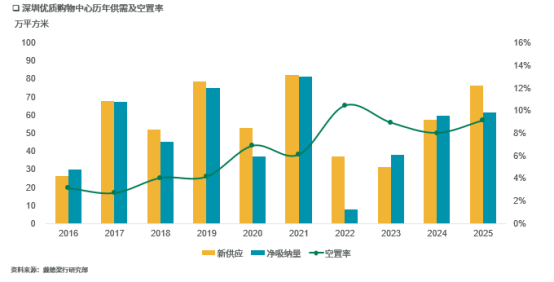
Core Insights - The Shenzhen office market is experiencing structural opportunities despite significant supply pressure, with a net absorption of 264,000 square meters in 2025, a 59.6% increase from the previous year due to a large supply of 712,000 square meters [1] - The average rent for Grade A office space in Shenzhen decreased to 149.4 yuan per square meter per month by the end of Q4 2025, representing an 11.7% decline from the end of the previous year [1] Group 1: Market Demand and Trends - The TMT (Technology, Media, and Telecommunications) sector accounted for approximately one-third of the total demand for Grade A office space in Shenzhen, driven by the rapid development of the artificial intelligence industry [2] - Emerging consumer electronics companies are increasingly seeking office upgrades due to business expansion, becoming a significant source of leasing demand [2] - Companies involved in cross-border e-commerce and logistics services are also active in the Grade A office market, contributing to several large leasing transactions [2] Group 2: Supply and Future Outlook - By the end of 2025, the total stock of Grade A office space in Shenzhen reached 9.082 million square meters, with an anticipated supply of over 5 million square meters planned for the next four years [2] - The development of high-tech industries such as artificial intelligence, semiconductors, advanced materials, and biomanufacturing is expected to drive continued demand for office space, supporting the expansion of corporate headquarters and R&D centers [3] - The upcoming supply of 1.657 million square meters of quality shopping centers in Shenzhen over the next three years will lead to increased competition, necessitating innovation and improved management in the retail sector [3]
“它经济”业态多元化 深圳去年零售市场供应亮点纷呈
Zheng Quan Shi Bao Wang· 2026-01-06 12:00
Group 1 - The "pet economy" is rapidly growing, with increasing consumer spending and diversification of pet-related services in shopping centers [1][2] - In 2025, Shenzhen will see the opening of several high-quality shopping centers, contributing to a total supply of 793.7 million square meters, with a net absorption of 61.3 million square meters [2][3] - The retail landscape in Shenzhen is evolving, with a notable increase in the proportion of dining and lifestyle services, while the pet economy is expanding into new product categories [2][3] Group 2 - The competitive environment is driving shopping center owners to introduce flagship stores to differentiate themselves, supported by policies and the growth of the tech industry [3] - The inbound tourism market in Shenzhen is growing, benefiting from an increase in visa-free countries, which is expected to boost high-end retail and tourism-related consumption [3] - The average rent for premium office buildings in Shenzhen has decreased by 10.7% to 697.1 yuan per square meter, reflecting market pressures [3][8] Group 3 - The office market is facing challenges due to economic uncertainties, with a net absorption of 26.4 million square meters in Shenzhen, which is less than half of the new supply [6][8] - The demand for office space is being driven by the TMT sector, particularly in AI and emerging consumer electronics, which are becoming significant sources of leasing demand [8][9] - Future supply of premium office buildings in Shenzhen is projected to exceed 500 million square meters over the next four years, indicating a competitive landscape [9]

读懂创新中国的底气与朝气
Xin Lang Cai Jing· 2026-01-06 10:13
来源:人民日报 创新的底气,有足够的底盘支撑。全球规模最大的研发人员队伍,这是深厚的人才土壤;数量最多的全 球百强科技创新集群,这是多年的科技沉淀。生物制造、量子科技、具身智能、6G……众多领域实现 从量变到质变、从跟跑到领跑的飞跃,为高水平科技自立自强持续注入"加速度"。 有厚积薄发的沉稳底气,更有生生不息的昂扬朝气。从民营企业专家当选院士,到各类经营主体化身创 新主体,科技创新和产业创新深度融合,为经济发展注入蓬勃朝气。放眼将来,建设北京(京津冀)、 上海(长三角)、粤港澳大湾区国际科技创新中心,如同嵌入3个发展"引擎",为培育新质生产力夯实 基础、为推动高质量发展提供动能。 一个创新的中国,底气丰沛、朝气飞扬。 新,一个读懂今日中国的字眼。 科研纪录接连"刷新"、大国重器持续"上新"、传统产业不断"焕新"……社会之日新,源于奔涌之创新。 一组数字,标注着新时代创新创造的活力:2025年,我国在全球创新指数排名中首次跻身前十,是10多 年来创新力提升最快的经济体之一。 ...
制造业PMI持续修复仍需政策支持|宏观晚6点
Xin Lang Cai Jing· 2026-01-06 10:13
Macro News - Zheng Zhajie emphasized the need to build a modern industrial system during the "14th Five-Year Plan" period, focusing on optimizing and enhancing traditional industries such as chemicals, machinery, and shipbuilding to strengthen their global competitiveness [1] - The development of strategic emerging industry clusters, including new energy, new materials, aerospace, and low-altitude economy, is prioritized, with a push for quantum technology, biomanufacturing, hydrogen energy, nuclear fusion energy, brain-computer interfaces, embodied intelligence, and sixth-generation mobile communication to become new economic growth points [1] Shanghai Investment Encouragement - The Shanghai Municipal Development and Reform Commission and other departments issued measures to encourage foreign-invested enterprises to reinvest domestically, comprising 15 initiatives [1] - Key measures include supporting various reinvestment methods, enhancing project coordination services, optimizing land resource allocation, encouraging technological upgrades, and supporting domestic production and R&D innovation [1] - Additional initiatives involve simplifying medical device production processes, facilitating multi-warehouse coordination for drug wholesale, easing food chain operations, implementing profit reinvestment tax policies, and broadening financing channels for reinvestment [1]
研报掘金丨华泰证券:上调新和成至“买入”评级,上调目标价至38.24元
Ge Long Hui A P P· 2026-01-06 07:53
Core Viewpoint - Huatai Securities report indicates that New Hope Liuhe is a leading global enterprise in nutrition and flavoring, with sales of methionine, vitamins, and PPS ranking among the top five globally, showcasing integrated, scaled, and technological advantages [1] Group 1: Company Overview - New Hope Liuhe is positioned in emerging demands for human and animal nutrition, flavoring, and specialty engineering materials, establishing a solid technological foundation [1] - The company is entering a new growth cycle, driven by the increasing global market share of methionine and flavoring products, as well as breakthroughs in biomanufacturing and new materials [1] Group 2: Market Analysis - The market has overly focused on the cyclical fluctuations of vitamins, neglecting the growth potential of methionine and flavoring products, as well as the company's global competitive advantages and the investment value of emerging business growth [1] Group 3: Financial Projections - The profit forecast for 2025-2027 has been slightly adjusted upwards, reflecting the continued growth in methionine and flavoring products, with the target price raised to 38.24 yuan, representing a 49% increase, and the rating upgraded to "Buy" [1]


2025年A股IPO数量同比翻倍,机构预计新股发行步伐将加快
Huan Qiu Wang· 2026-01-06 01:17
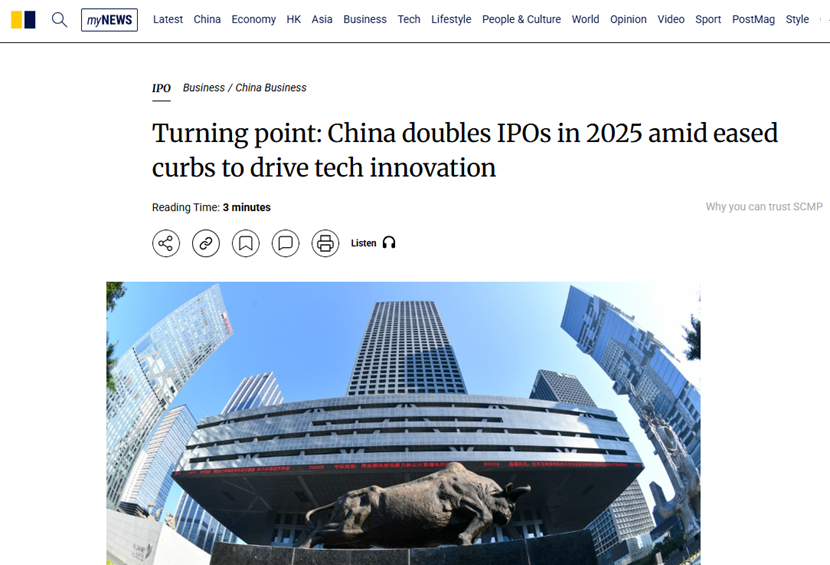
Group 1 - As of January 4, there are 342 companies waiting for IPO approval in the A-share market, with the Beijing Stock Exchange having the highest number at 208 companies, accounting for 60.82% of the total [1] - Among the queued companies, 194 have a net profit of over 80 million, representing 56.73%, while 143 companies have a net profit exceeding 100 million, making up 41.81% [1] - The China Securities Regulatory Commission (CSRC) has relaxed regulations to promote technological innovation, leading to a projected doubling of IPOs in 2025 compared to 2024, with 115 companies expected to list and a total financing amount of 128 billion RMB [1][4] Group 2 - The largest IPO in 2025 is expected to be from Huaneng New Energy, raising 18.2 billion RMB, followed by Moore Threads Technology with 8 billion RMB, and Xi'an Angrui Siwei New Materials Technology with 4.6 billion RMB [4] - The CSRC has reintroduced regulations allowing loss-making tech companies to list on the Sci-Tech Innovation Board, similar to NASDAQ, which is anticipated to further stimulate market activity [4] - Analysts predict that the reforms introduced in 2025 will accelerate IPO activities in 2026, with a focus on sectors such as artificial intelligence, new energy, high-end manufacturing, commercial aerospace, quantum technology, and biomanufacturing [4]
开好局起好步 多地“新年第一会”释出新信息丨“十五五”开局新气象
Zheng Quan Shi Bao· 2026-01-06 00:44
(原标题:开好局起好步 多地"新年第一会"释出新信息丨"十五五"开局新气象) 编者按: "十五五"是我国基本实现社会主义现代化的关键时期,具有承前启后的重要地位。2026年是"十五五"开 局之年,如何开好局起好步、引领现代化建设迈向壮阔新征程?本报今起推出"'十五五'开局新气象"栏 目,探访各地突破奋进的创新举措,记录产业升级焕新的澎湃动能,展现一线企业奋勇争先的生动实 践。 2026年是"十五五"开局之年。元旦假期后,多地召开"新年第一会",对全年的重点工作和"十五五"开局 作出部署。 证券时报记者注意到,与往年相比,今年各地"新年第一会"释放出诸多新信息。湖北、南京等地的"新 年第一会"围绕科技驱动、产业创新等关键词,福建、上海等地强调打造一流营商环境,苏州、济南等 城市则聚焦"人工智能""数智"等新兴赛道,剑指产业集群升级、新兴产业培育。 中国经济体制改革研究会城乡统筹与共同富裕专委会特约研究员李萌在接受证券时报记者采访时表示, 2026年各地"新年第一会"强调了提升领导干部及公共部门工作人员驾驭经济发展的专业能力。当前,科 技创新与产业深度融合催生出大量新产业、新场景、新业态、新模式,传统知识和能力已 ...